There are Ferrari names that behave like numbers, and there are Ferrari names that behave like weather. Testarossa belongs to the second group. Say it aloud and the air changes temperature: red cam covers, white Miami nights, black side strakes, flat-twelve heat rising from a rear deck wide enough to seem architectural. Before the new 849 Testarossa can be understood as a 1,050-cv plug-in hybrid berlinetta with a re-engineered twin-turbo V8, three electric motors, active aerodynamics, ABS Evo, and Ferrari’s new FIVE digital vehicle estimator, it has to be understood as an act of naming. Ferrari has revived one of its most combustible words, and words like this do not return quietly. They arrive carrying memory, expectation, and the suspicion that Maranello is once again asking a body shape to carry more than speed. The 849 Testarossa replaces the SF90 Stradale at the top of Ferrari’s range, but its true predecessor is larger than a single model. It is an idea: that a Ferrari’s bodywork should reveal the pressure beneath it, that engineering should leave a visible trace, and that speed, in Maranello, has always been allowed to look dramatic.
That idea reaches back to the beginning. Ferrari did not emerge as a maker of luxury objects that later learned to race; it was born in the opposite direction, from competition, obsession, and the private fury of Enzo Ferrari’s will. The 125 S of 1947, officially recognized by Ferrari as the first car to wear the Ferrari badge, was a racing machine built around a compact V12 designed by Gioacchino Colombo, with contributions from Giuseppe Busso and Luigi Bazzi. This is the useful starting point for any Ferrari story because it explains why the marque’s greatest road cars carry tension even when they are upholstered in leather and sold to clients rather than entered at Le Mans. Ferrari’s road cars became desirable because they never fully escaped racing. The best of them feel as though they have been civilized rather than domesticated. They may gain carpets, glass, luggage space, stereo systems, air conditioning, or hybrid driving modes, but beneath the polish there remains the sense of a machine designed by people who understand that performance is emotional long before it becomes numerical.
The phrase Testa Rossa, literally “red head,” came from Ferrari’s racing world, originally describing the red-painted cam covers of engines such as the 1956 500 TR before the name later became attached to the 1984 Testarossa, one of Maranello’s most recognizable road cars. That history matters because the name was born from hardware, not nostalgia. The 1984 car turned cooling into iconography: its side-mounted radiators, immense width, and Pininfarina strakes made the management of heat visible, transforming a functional requirement into one of the most famous silhouettes in supercar history. The new 849 Testarossa faces a different form of heat. It must cool a twin-turbo V8, three electric motors, a high-voltage battery, inverters, brakes, intercoolers, and an aerodynamic package capable of generating 415 kg of downforce at 250 km/h. The old Testarossa expressed the drama of combustion. The new one expresses the drama of energy management.
The New Red Head
The 849 Testarossa arrives as the successor to the SF90 Stradale, placing the revived name at the most technically intense point of Ferrari’s series-production range. It is a plug-in hybrid berlinetta with a mid-rear twin-turbo V8, three electric motors, on-demand four-wheel drive, torque vectoring, brake-by-wire, ABS Evo, and a new vehicle-dynamics brain called FIVE, short for Ferrari Integrated Vehicle Estimator. The numbers are deliberately overwhelming: 1,050 cv in total, 50 more than the SF90 Stradale; 830 cv from the combustion engine alone; 220 cv from the hybrid system; a dry weight of 1,570 kg with optional lightweight content; a claimed 0–100 km/h time of less than 2.3 seconds, 0–200 km/h in 6.35 seconds, and a maximum speed beyond 330 km/h. In Ferrari language, this is not a return to the Eighties. It is the red head rewritten for an age of pressure, voltage, and computation.
The internal-combustion engine is still the emotional center of the car, and Ferrari has worked hard to make that point clear. The F154FC V8 keeps the familiar 3,990 cc displacement, but almost everything around it has been revised: cylinder heads, engine block, exhaust manifolds, intake plenums, fuel rail, valve-train system, titanium fasteners, and, most dramatically, the largest turbocharger ever fitted to a Ferrari production car. The result is a specific output of 208 cv per liter and a maximum engine speed of 8,300 rpm, figures that suggest Ferrari still wants the combustion side of the car to feel alive rather than merely supported by electric torque. The hybrid system, derived from the SF90 architecture, places two electric motors on the front axle for four-wheel drive and torque vectoring, while a third rear motor, the MGU-K, draws directly from Ferrari’s Formula 1 experience. A 7.45-kWh battery allows up to 25 km of electric driving, but the more important story is how the electric system sharpens the car’s behavior: filling response, managing traction, and giving the front axle an active role in corner exit rather than leaving it as passive luggage.
This is where the burden of the Testarossa name becomes interesting. The original road car was defined by the sensation of a large, naturally aspirated twelve-cylinder engine placed behind the driver and wrapped in bodywork that seemed to radiate heat. The 849 cannot recreate that world, and it would be weaker if it tried. Its drama comes from the coordination of systems: turbochargers forcing air into the V8, electric motors shaping acceleration, cooling circuits fighting thermal load, and software interpreting the car’s behavior in real time.
That is the modern Ferrari problem: how to make extreme complexity feel instinctive from the driver’s seat.
Air, Heat, and the Shape of Pressure
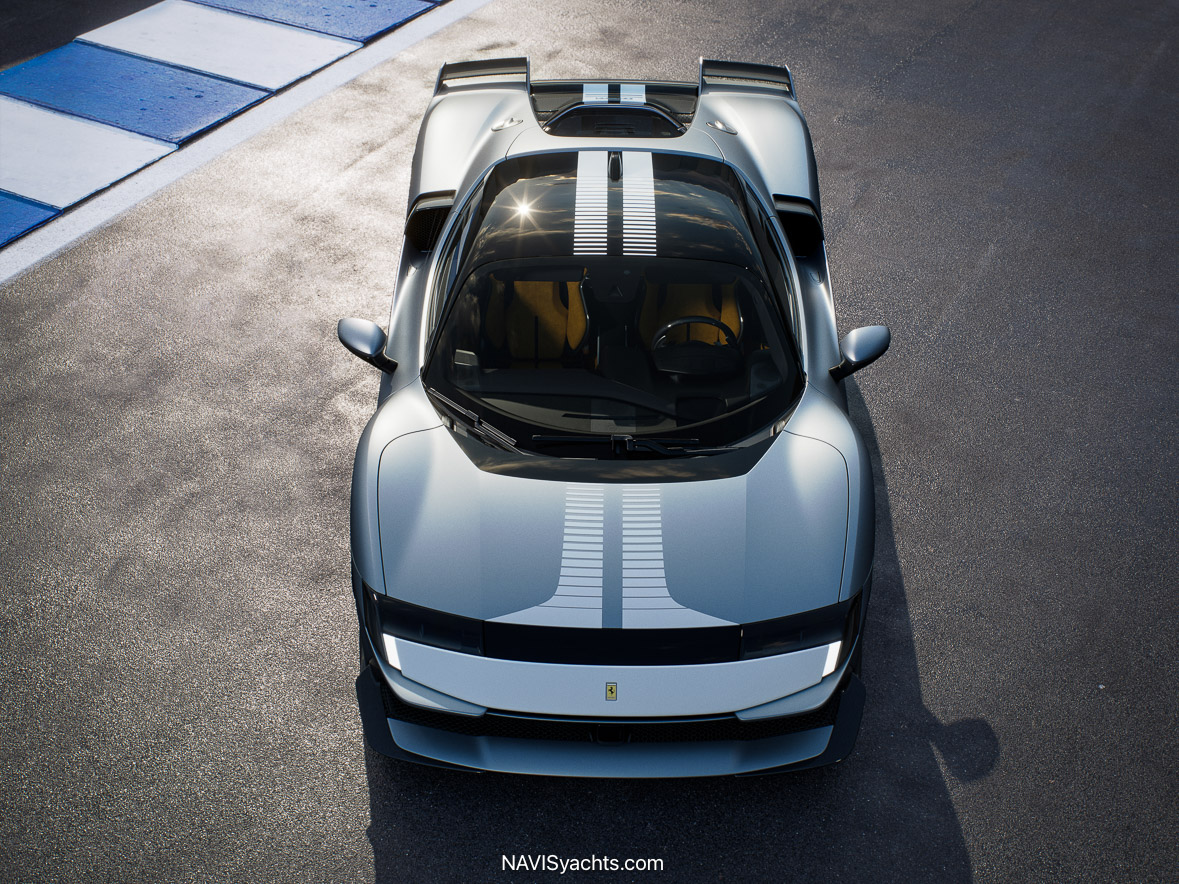
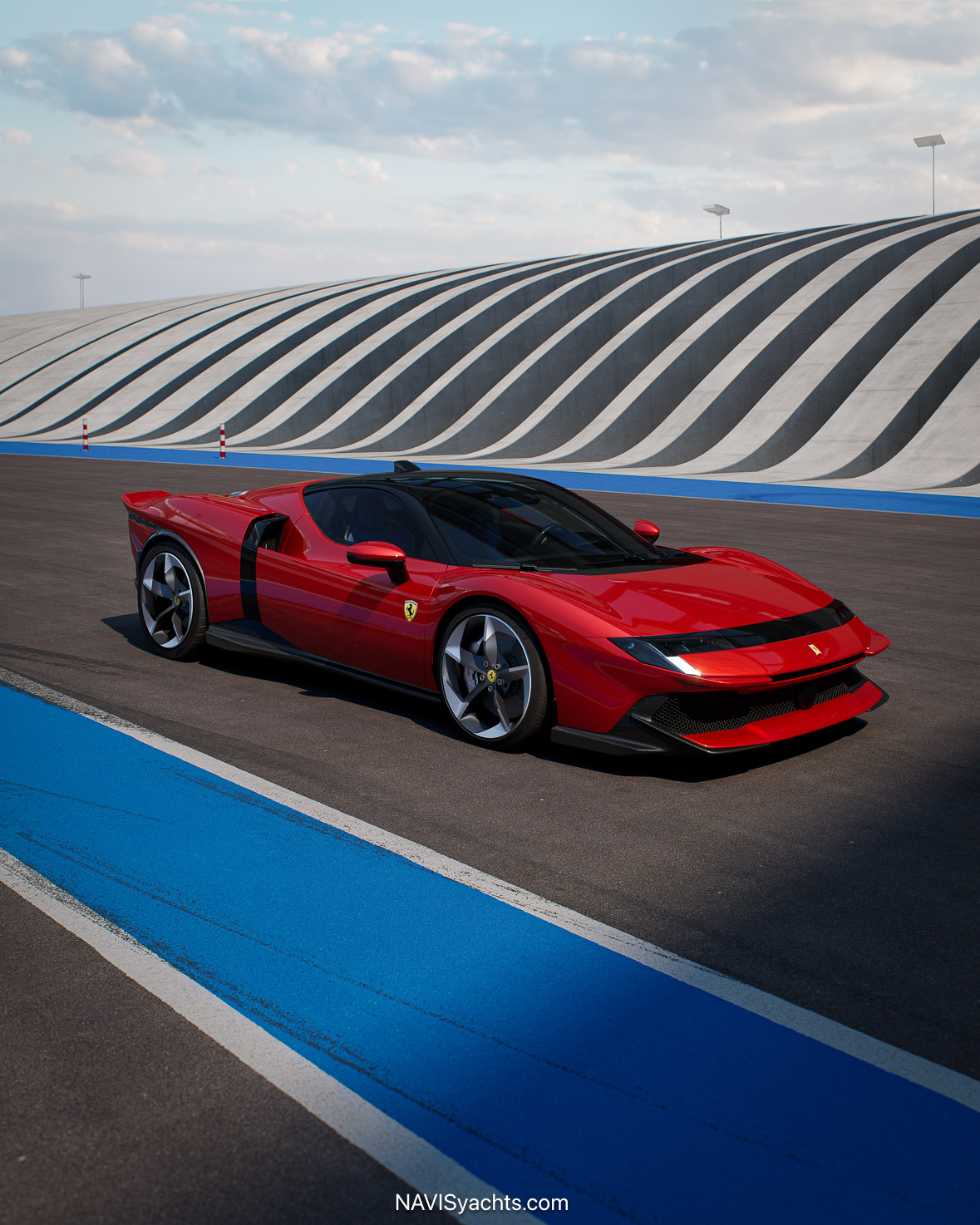
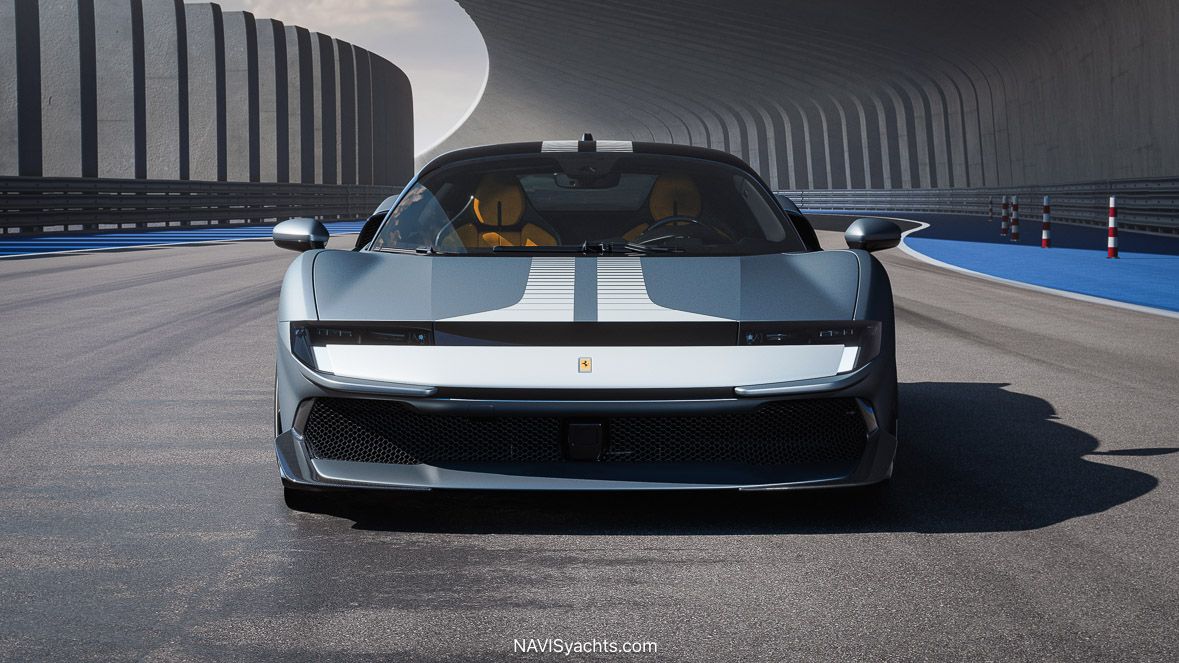
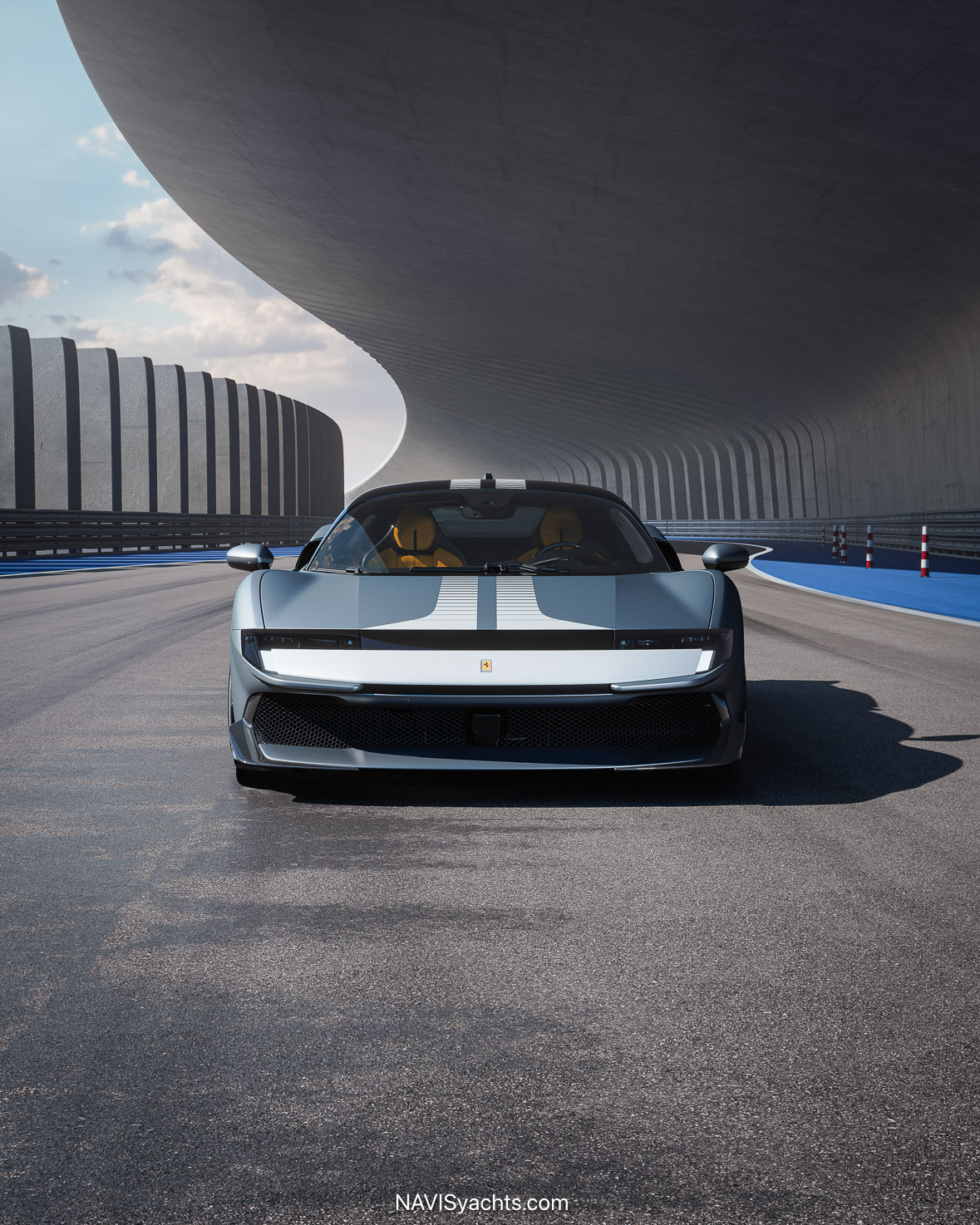
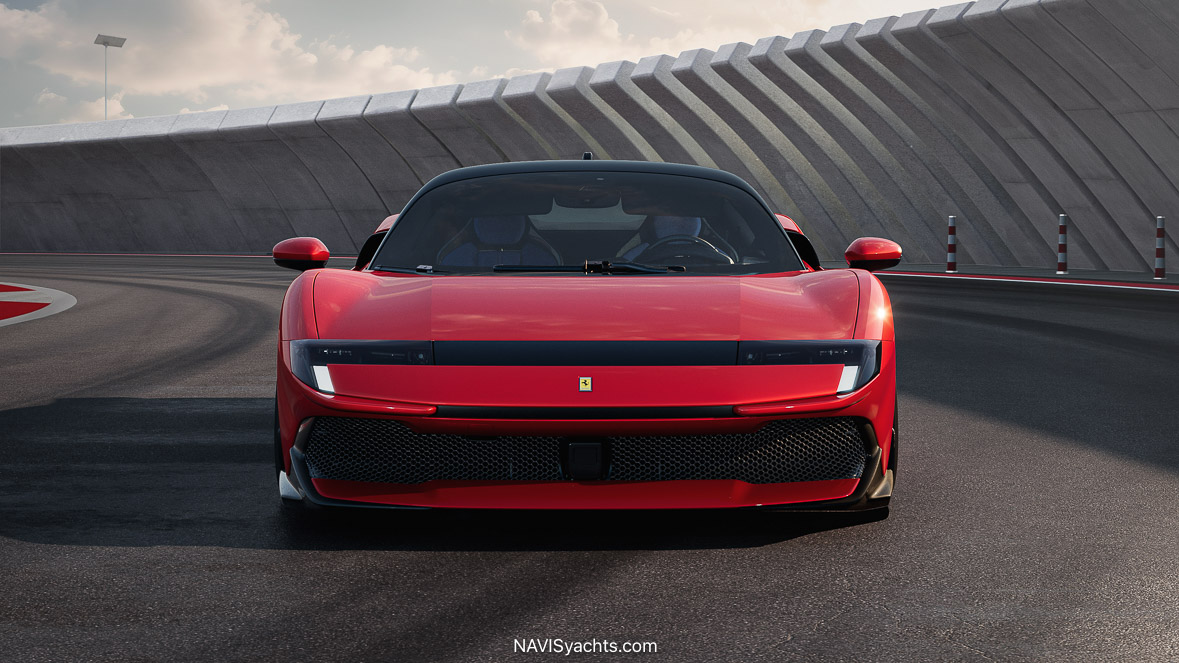
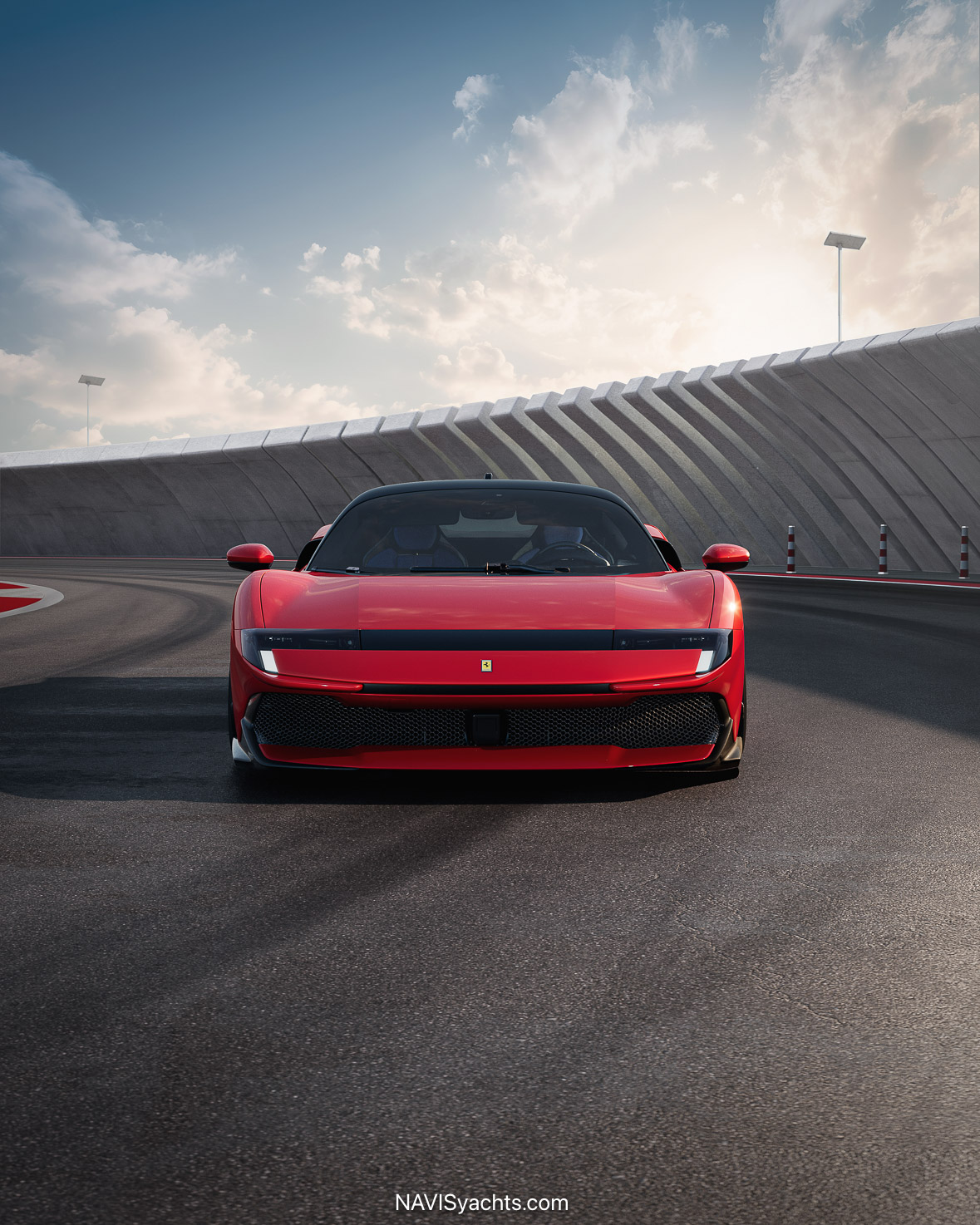
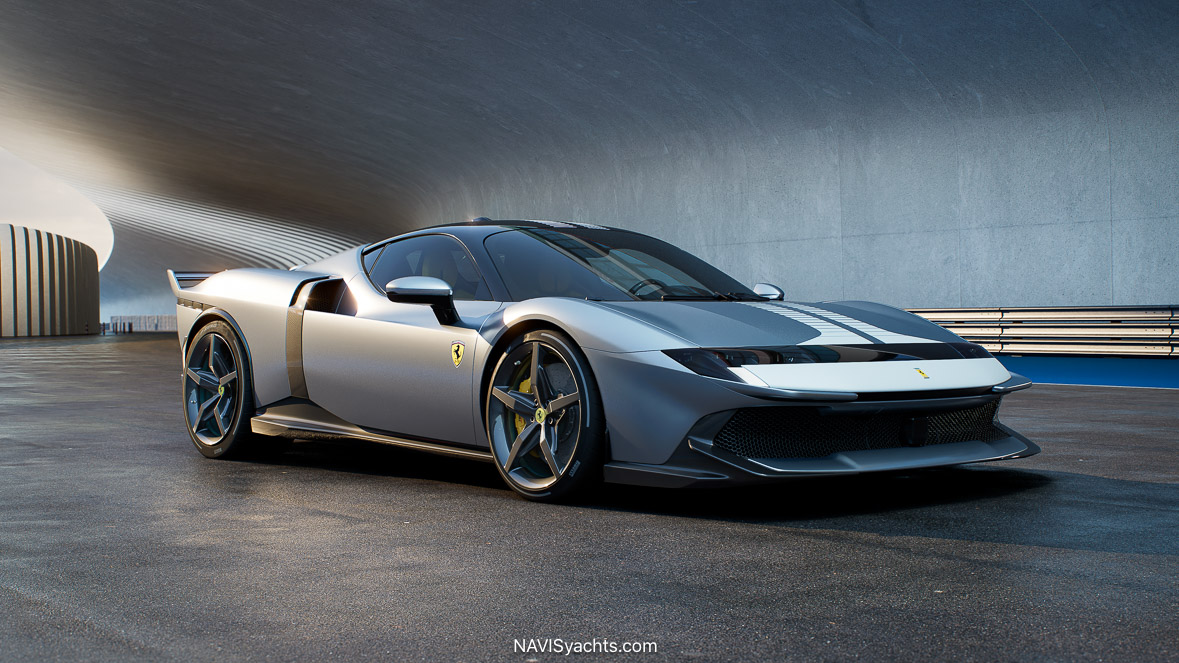
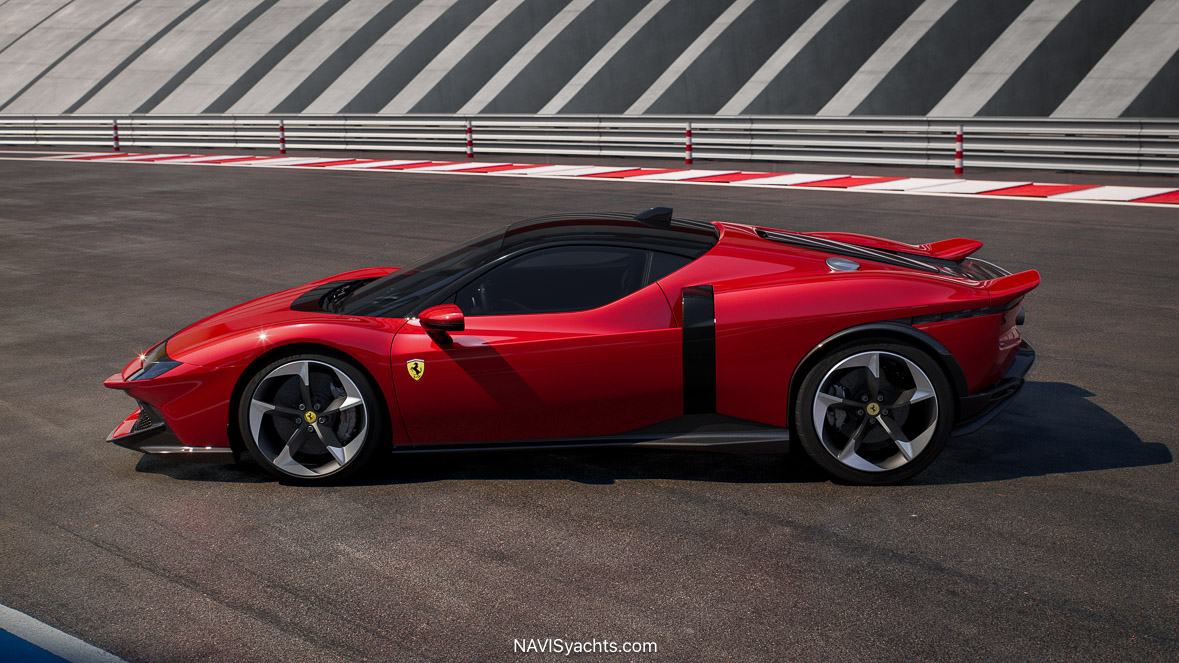
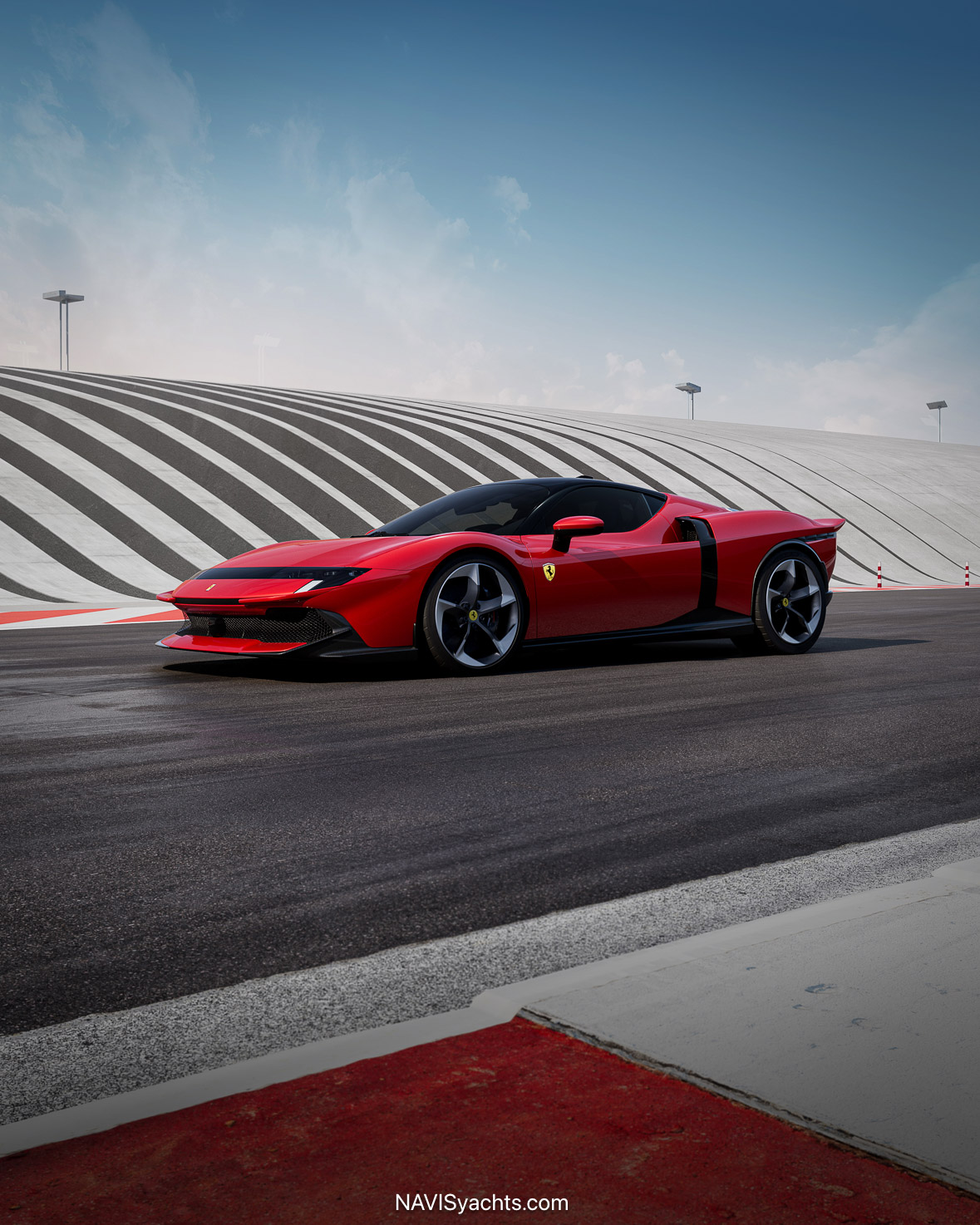
The body of the 849 Testarossa makes its strongest argument before the powertrain ever fires. Ferrari says its design language was shaped by the Sports Prototypes of the 1970s, with references to cars such as the 512 S and 512 M, and that influence gives the 849 a harder, more architectural presence than the SF90 Stradale it replaces. The surfaces are sharper, the volumes more deliberate, the relationship between cabin and body more compressed. It is a Ferrari drawn less as a flowing sculpture than as a machine under aerodynamic command, with the front fascia stretched horizontally across the car, the flanks cut open for cooling, and the rear split into a twin-tail architecture that recalls prototype racing rather than road-car nostalgia. The 849 does not quote the old Testarossa’s side strakes. That would have been too easy, and too sentimental. Instead, it returns to the same original problem: how to make the work of air visible.
The most revealing detail is the door. On the original Testarossa, the flank became famous because it had to feed side-mounted radiators; on the 849, the door itself becomes an aerodynamic duct, its sculpted upper surface and black vertical intake guiding air toward the intercoolers and the rear brake duct while also feeding the engine intake. Ferrari says the volume of the bodywork flanks has been optimized to increase the air flowing to the intercoolers by 30 percent, while the side intercooler itself, borrowed from the F80, has a 19 percent larger surface area. The result is design that feels honest in a very Ferrari way: beauty emerging from thermal anxiety. A twin-turbo V8, three electric motors, a high-voltage battery, inverters, brakes, and active aerodynamic systems create a more complex burden than the original flat-twelve ever did, and the 849’s body turns that burden into form.
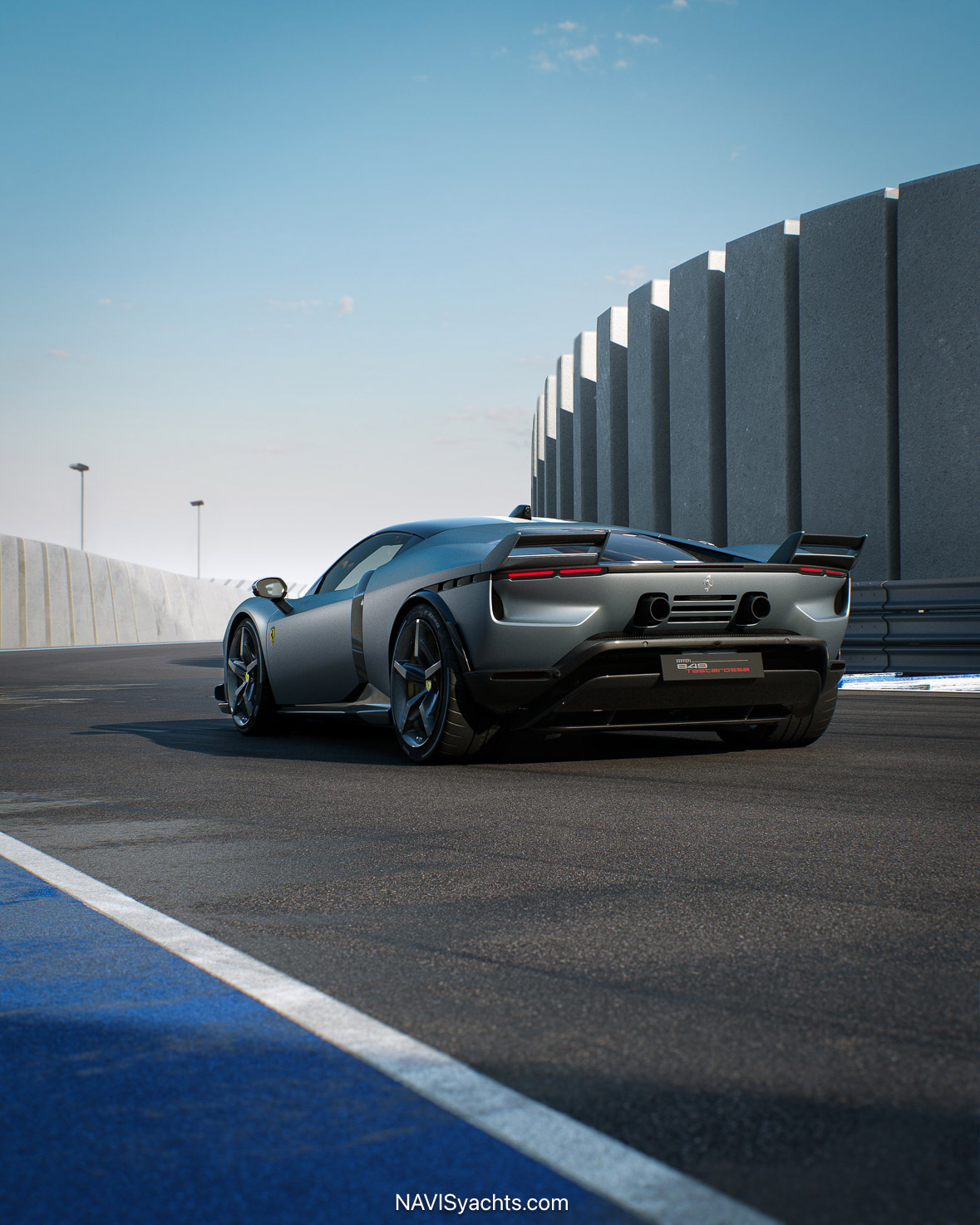
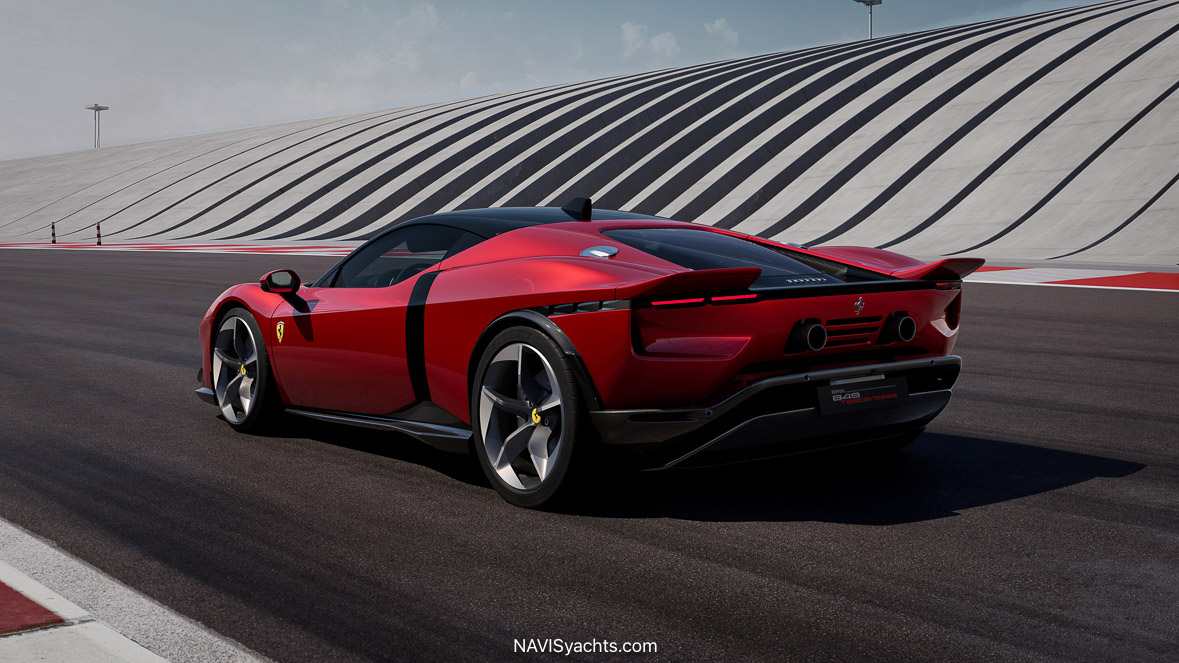
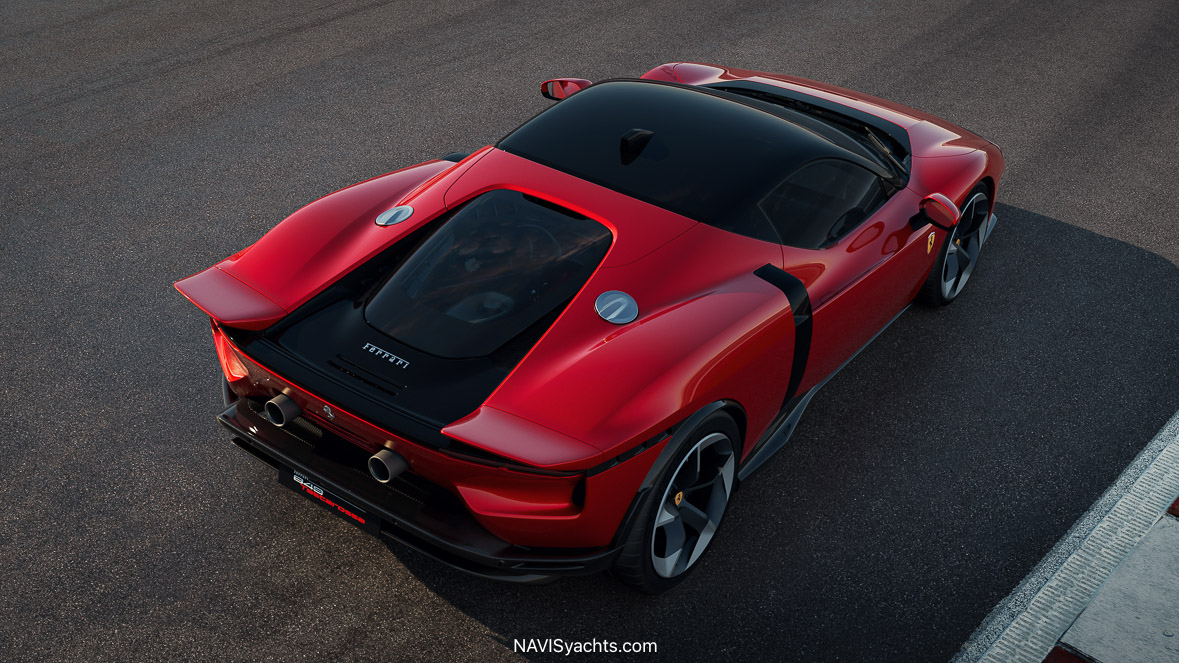
That same logic continues underneath the car, where the old romance of bodywork gives way to the invisible violence of pressure zones and vortices. Ferrari claims the front underfloor alone is responsible for 35 percent of the car’s total downforce, helped by three pairs of cascading vortex generators that produce a 20 percent increase in front downforce compared with the SF90 Stradale. At the rear, the twin-tail sections generate 10 percent of rear downforce by exploiting the high-energy airflow over the muscular rear wheelarches, while an active rear spoiler switches between Low Drag and High Downforce configurations in less than a second. In its most aggressive position, that spoiler contributes up to 100 kg of downforce at 250 km/h. Total load reaches 415 kg at 250 km/h, 25 kg more than the SF90 Stradale, while cooling performance improves by 15 percent. These numbers matter because they explain the car’s visual attitude. The 849 looks tense because the air around it is being disciplined from every angle.
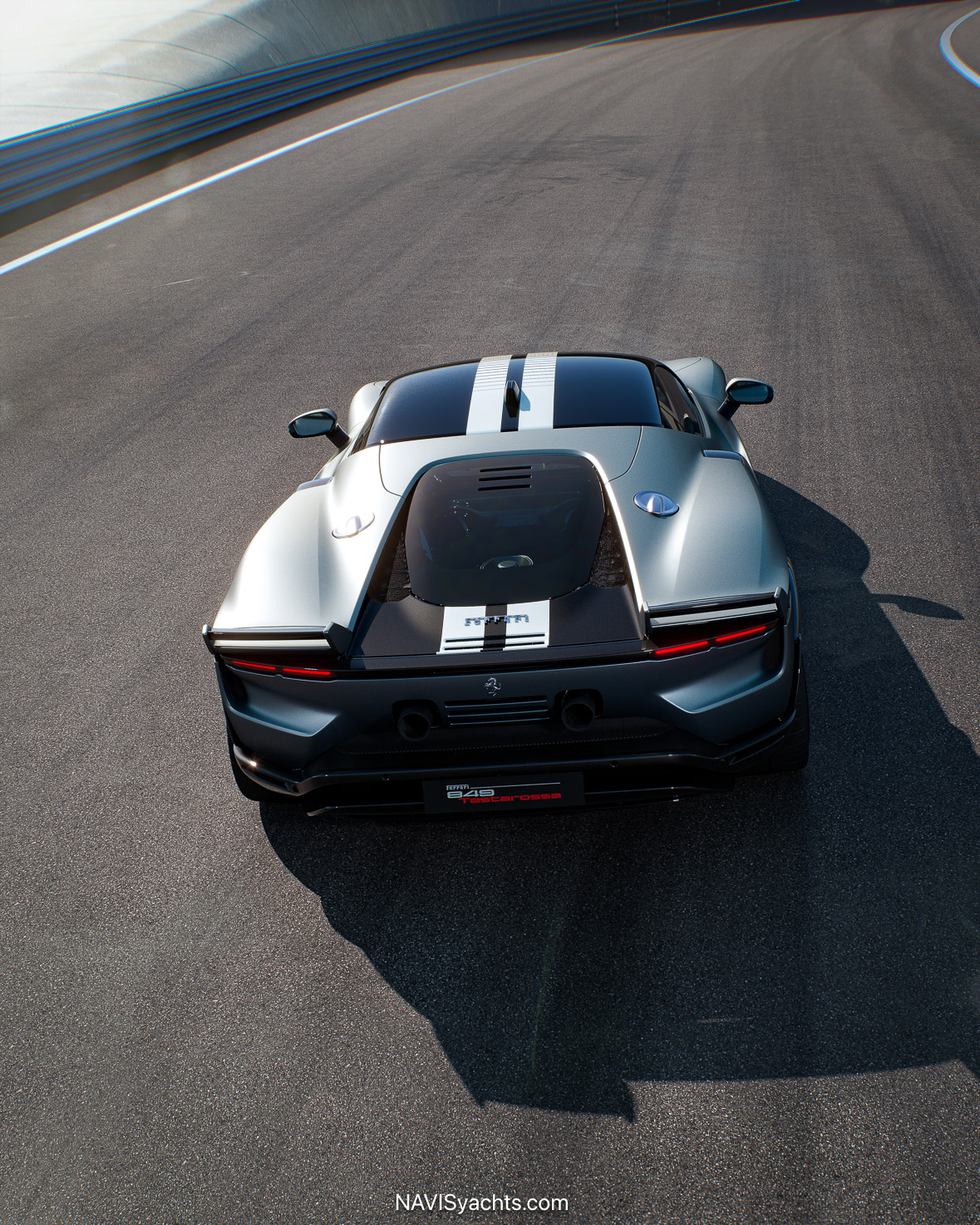
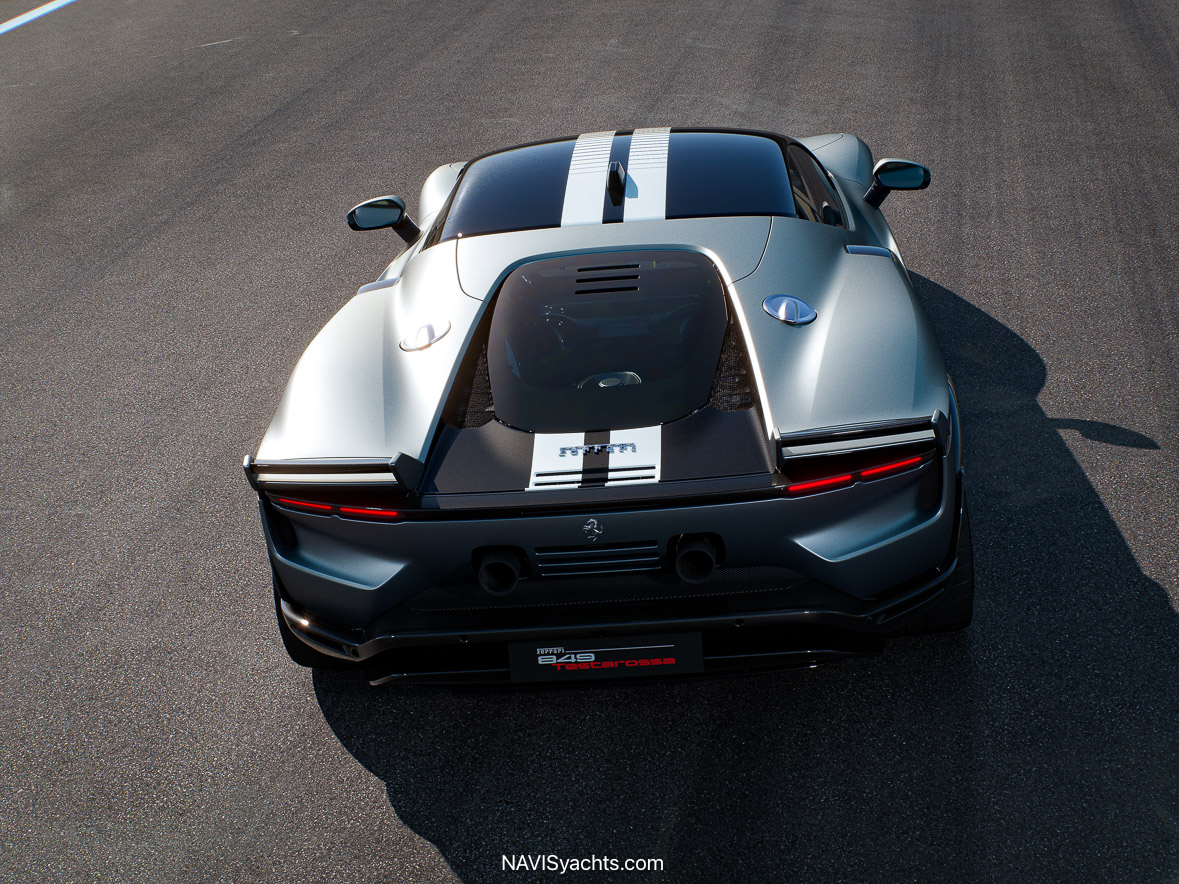
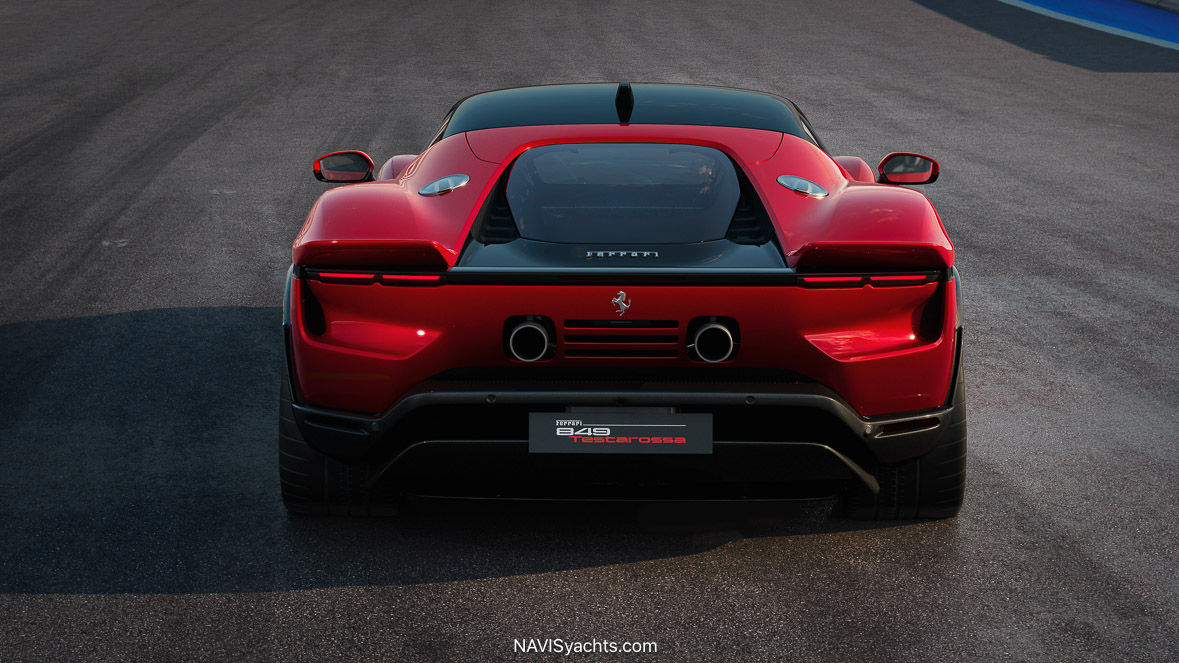
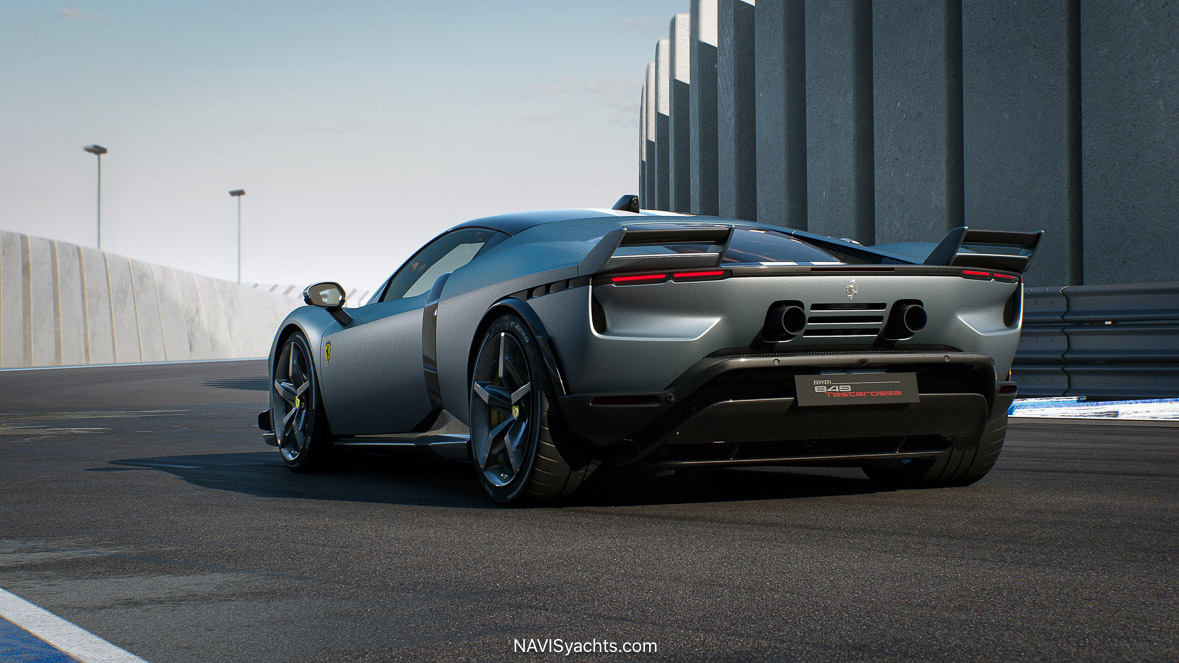
The rear gives the 849 its clearest visual link between memory and future. The old Testarossa ended in a broad horizontal wall of heat and width; the new car finds a different expression through its twin-tail architecture, integrated active wing, pronounced diffuser, central round tailpipes, and carved bumper. Ferrari says the solution is inspired by the 512 S and forms part of a patented aerodynamic arrangement, but its emotional value is simpler: it gives the car a sense of exit velocity even at rest.
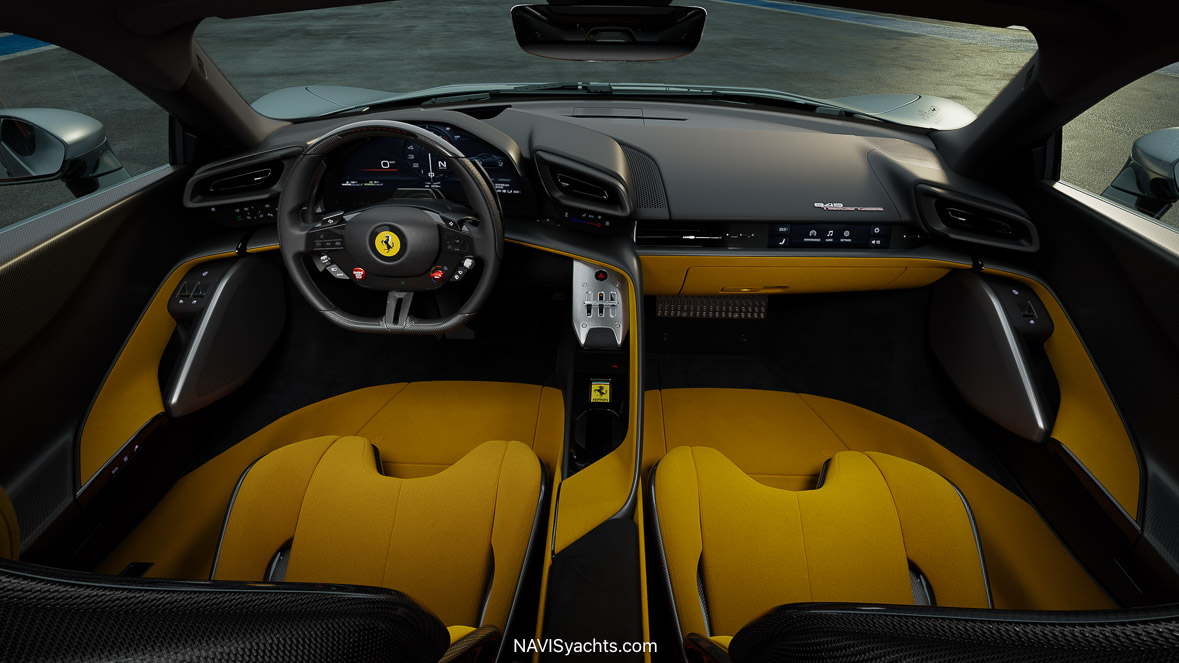
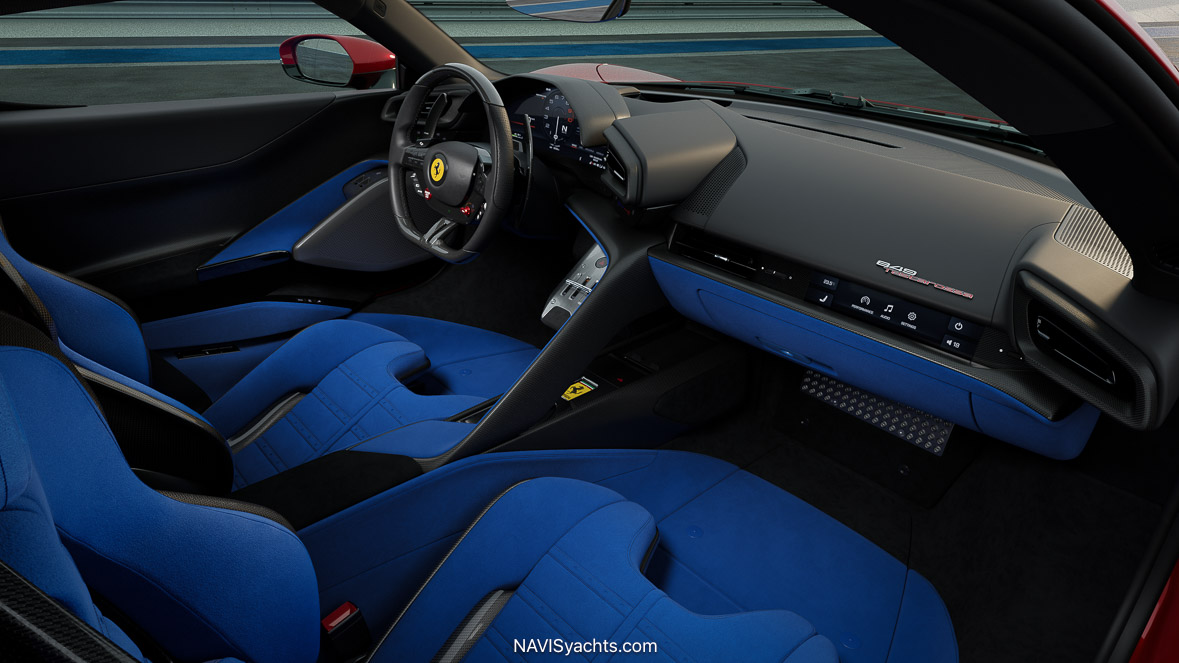
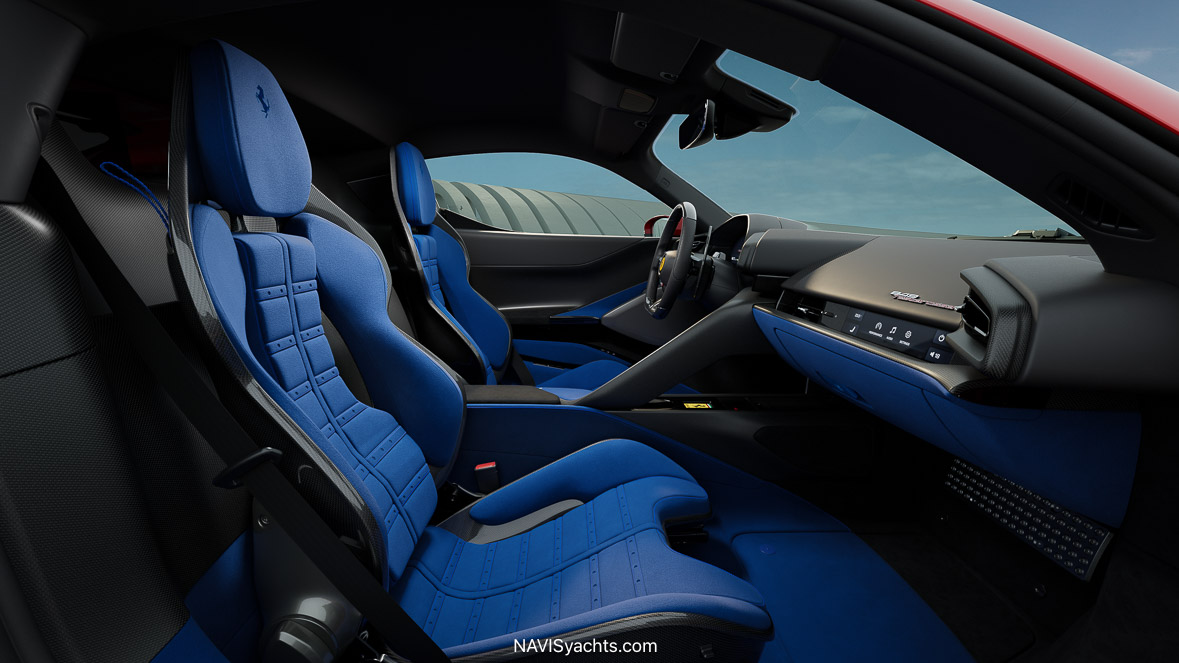
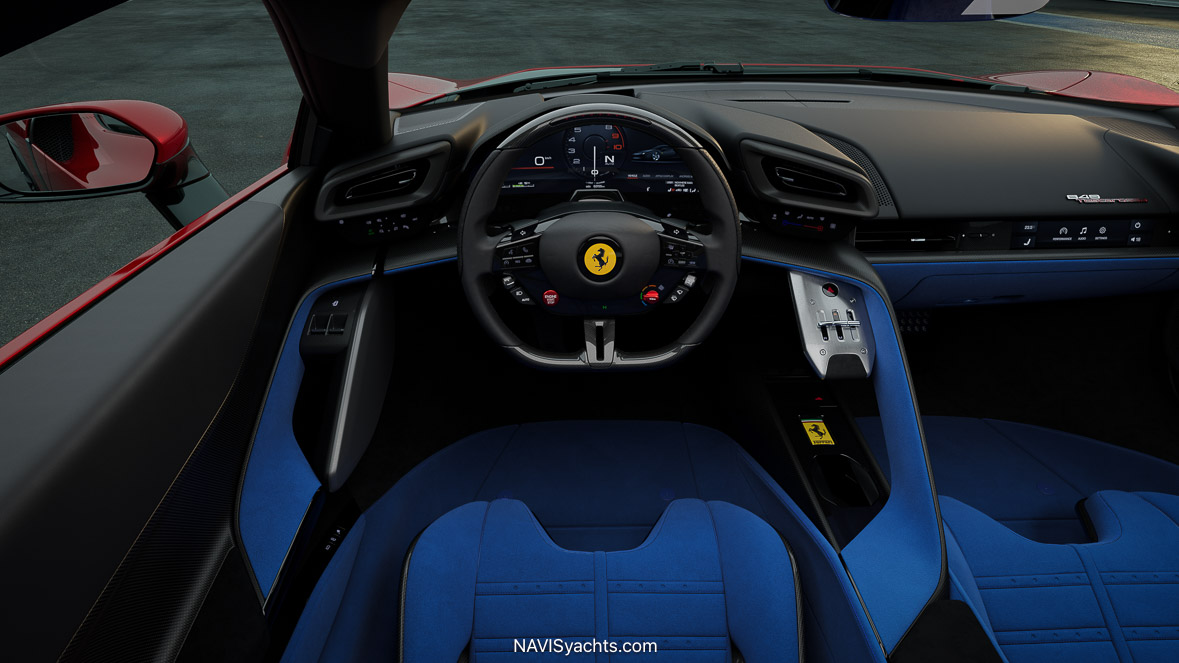
The cabin follows the same philosophy, though with a more human emphasis. Ferrari describes the interior as a synthesis between a berlinetta’s horizontal dashboard and a single-seater cockpit, with a floating upper dash, C-shaped aluminum-framed air vents, a passenger display, and a central sail motif that carries an F80-inspired gear-change gate. More important for the driver, the steering wheel restores mechanical controls, including the engine start button, while the eManettino allows rapid switching between electric driving modes.
When the drivetrain, aerodynamics, brakes, front axle, rear axle, and battery are all speaking through software, the driver needs physical gestures that feel deliberate. The 849’s cockpit tries to turn complexity into ceremony, wrapping the driver in technology without allowing the ritual to dissolve into glass.
The Question Beneath the Speed
The remaining question is whether all of this machinery can disappear into sensation. By the time Ferrari quotes a Fiorano lap of 1 minute 17.5 seconds, the numbers have already done their work; the harder task is emotional. Can a plug-in hybrid Ferrari with three electric motors, brake-by-wire, torque vectoring, active aerodynamics, and a real-time digital control system still make the driver feel like the center of the event?
Ferrari’s answer is the FIVE system, short for Ferrari Integrated Vehicle Estimator. It creates a live digital model of the car’s behavior using real measurements, allowing the control systems to estimate vehicle speed with an error of less than 1 km/h and yaw angle with an error of less than one degree. That information feeds the traction control, electronic differential, e4WD system, and ABS Evo, helping the car manage power, slip, braking force, and front-axle intervention with greater precision. In simpler terms, the 849 is always reading itself so the driver can ask more of it. The old Testarossa demanded trust in metal, tyres, judgment, and courage. The new one adds a nervous system.
Ferrari seems aware that control alone is not emotion. The 849’s dynamics were developed around five channels of feedback: lateral acceleration, longitudinal acceleration, gearchange, braking, and sound. The suspension geometry has been revised, rear mechanical grip improved, braking upgraded with ABS Evo, and regenerative braking recalibrated to make pedal travel smoother and the blend between electric and hydraulic deceleration more natural. The V8, meanwhile, revs to 8,300 rpm, uses revised exhaust manifolds, and receives a new shift strategy derived from the SF90 XX Stradale to give upshifts a more dramatic acoustic signature from Race mode onward. In a car this complex, drama has to be engineered as carefully as downforce.
That is where the Testarossa name finds its modern justification. The 849 does not need to imitate the old car’s strakes, flat-twelve soundtrack, or Eighties proportions. Its inheritance is more elemental. The first Testa Rossa gave heat a color. The 1984 Testarossa made cooling visible because its body had to breathe. The 849 belongs to a more complicated age, but its subject is still heat: turbo pressure, battery discharge, brake temperature, aerodynamic extraction, and the emotional temperature of a driver learning to trust a car this fast. Ferrari has brought back the problem, then answered it in the language of today.
Photos: Ferrari Media | Words: Pablo Ferrero