
A Year in Motion, a Pause in Art
There are years that ask for motion, for discovery through contrast, through the shock of the new, the thrill of the far. Mine had been a year like that: reaching the forgotten islands of Setouchi, diving through the coral reefs of Dhevvadhoo, tracing winding passes through the Julian Alps, and witnessing the opulence of Atlantis The Royal rise out of the desert’s edge. Every journey had been extraordinary. Every setting had left its mark. But somewhere between jet bridges and passport stamps, I began to feel the quiet weight of saturation. I found myself longing not for somewhere else, but for something closer.
I wanted to find art again. Not the curated kind, not sculpture halls or museums full of masterpieces, but the other kind. The kind we miss when we’re moving too quickly to see. Because if you look carefully, art is everywhere: in the composition of a table laid for two, in the warmth of wood chosen by hand, in the rhythm of a well-plated dish served by someone who believes in it. There is art in the quiet mastery of a perfectly executed hotel stay. In a landscape shaped by time and seasons. And above all, there is art in nature, the ultimate, patient artist, who once a year, paints the Northeast in gold, ember, and flame, only to watch it disappear again into winter’s gray. That was the moment I chose to go, to return to something I had missed entirely: the sensation of being still while the world moves around you.
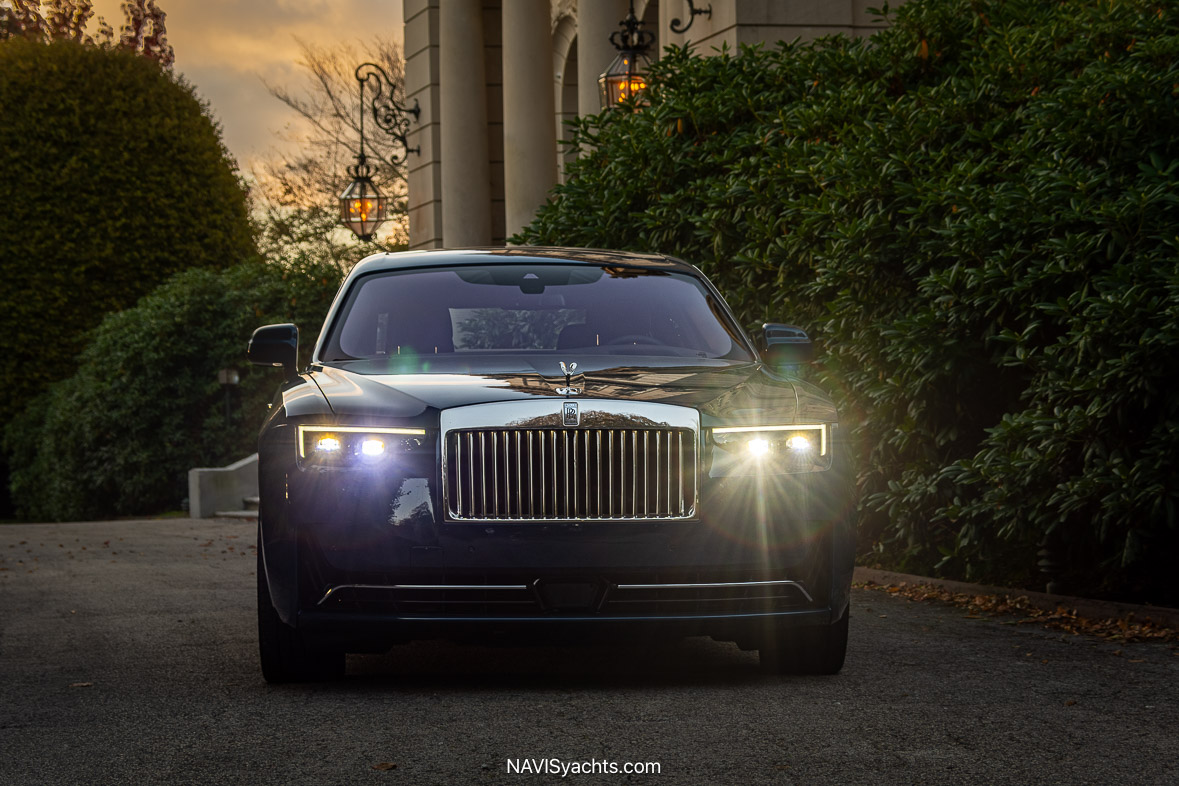
There is a particular kind of stillness found only on the road, not in staying, but in gliding through space with no urgency. I wanted a journey that allowed me to dissolve into that feeling, to move without rush, to let the landscape unfold at its own quiet pace. For that, I needed a companion that understood calm. Not simply a machine, but an artwork in motion, one shaped by many hands, each adding intention, precision, and care. The Rolls-Royce Ghost Series II felt like the only possible choice. She is a dynamic composition, crafted with the same reverence that nature shows in painting the Northeast each fall, layer by layer, tone by tone, texture by texture. Just as autumn spreads gold and crimson across hillsides with quiet confidence, the Ghost reveals her artistry not through spectacle, but through presence. She is a creation born of patience, of deep listening, of human skill made visible. And like the landscape she would travel through, she invites you not to hurry, but to notice.
And so, with a destination defined by fall foliage and the artistry of hospitality, and with a vessel built by many artists working in harmony, we packed our cameras, shed the weight of expectations, and turned north. We were not chasing art on this journey.
We were moving inside it.
The Art of the City
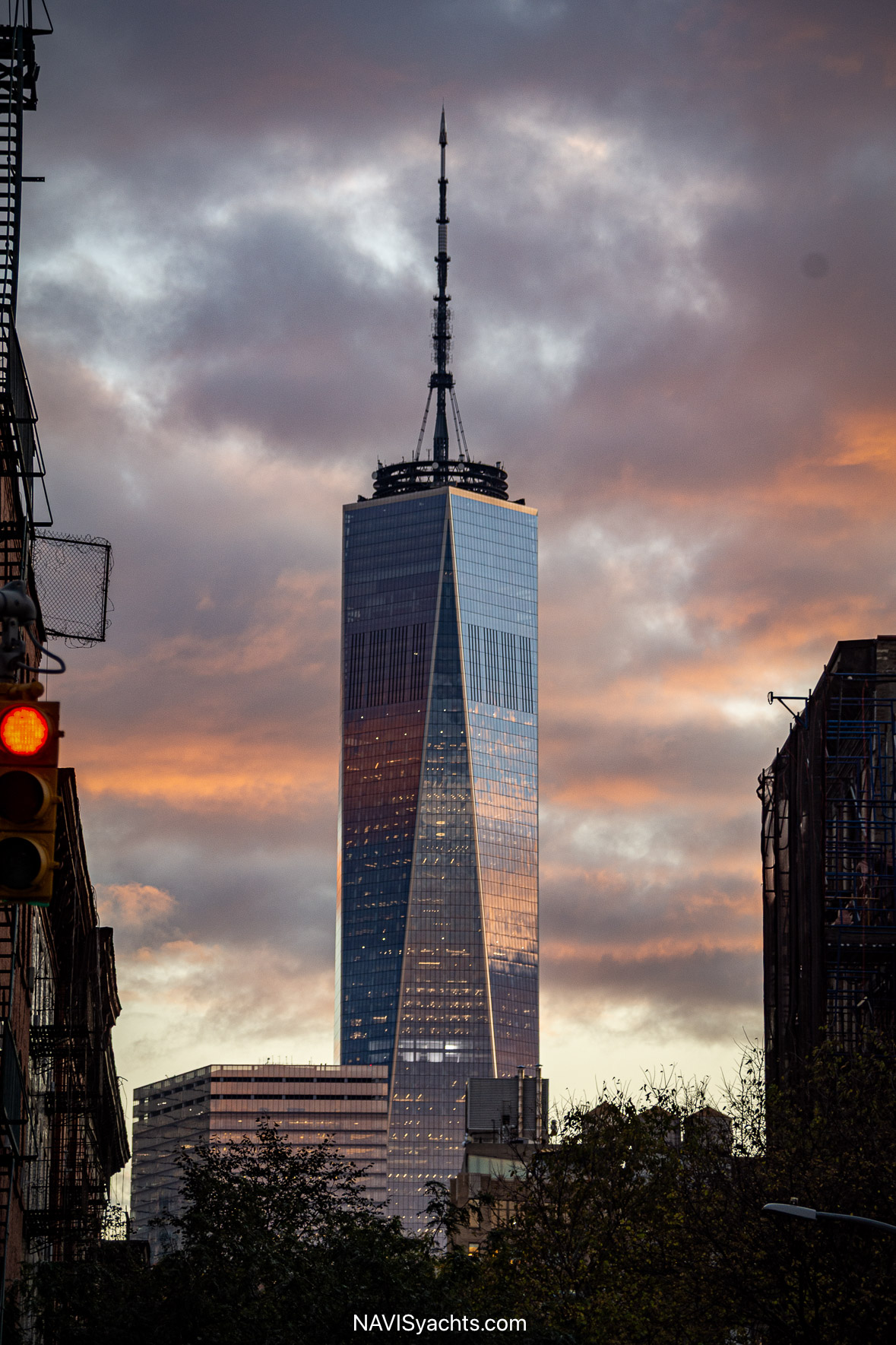
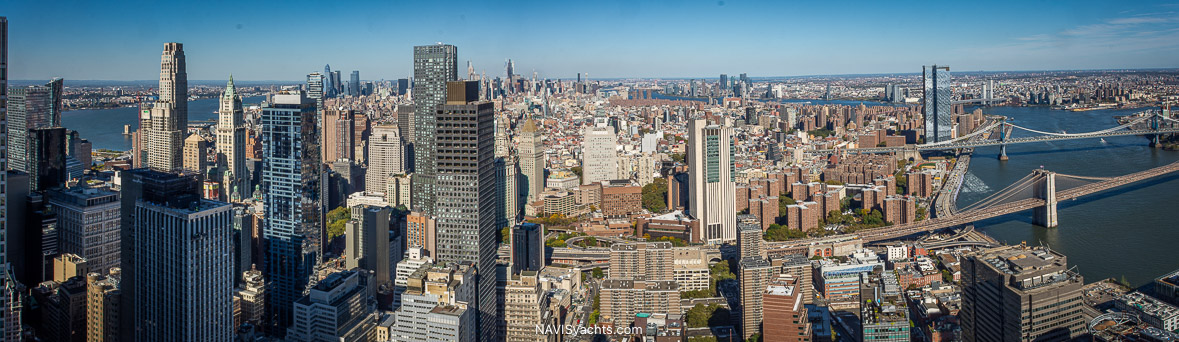
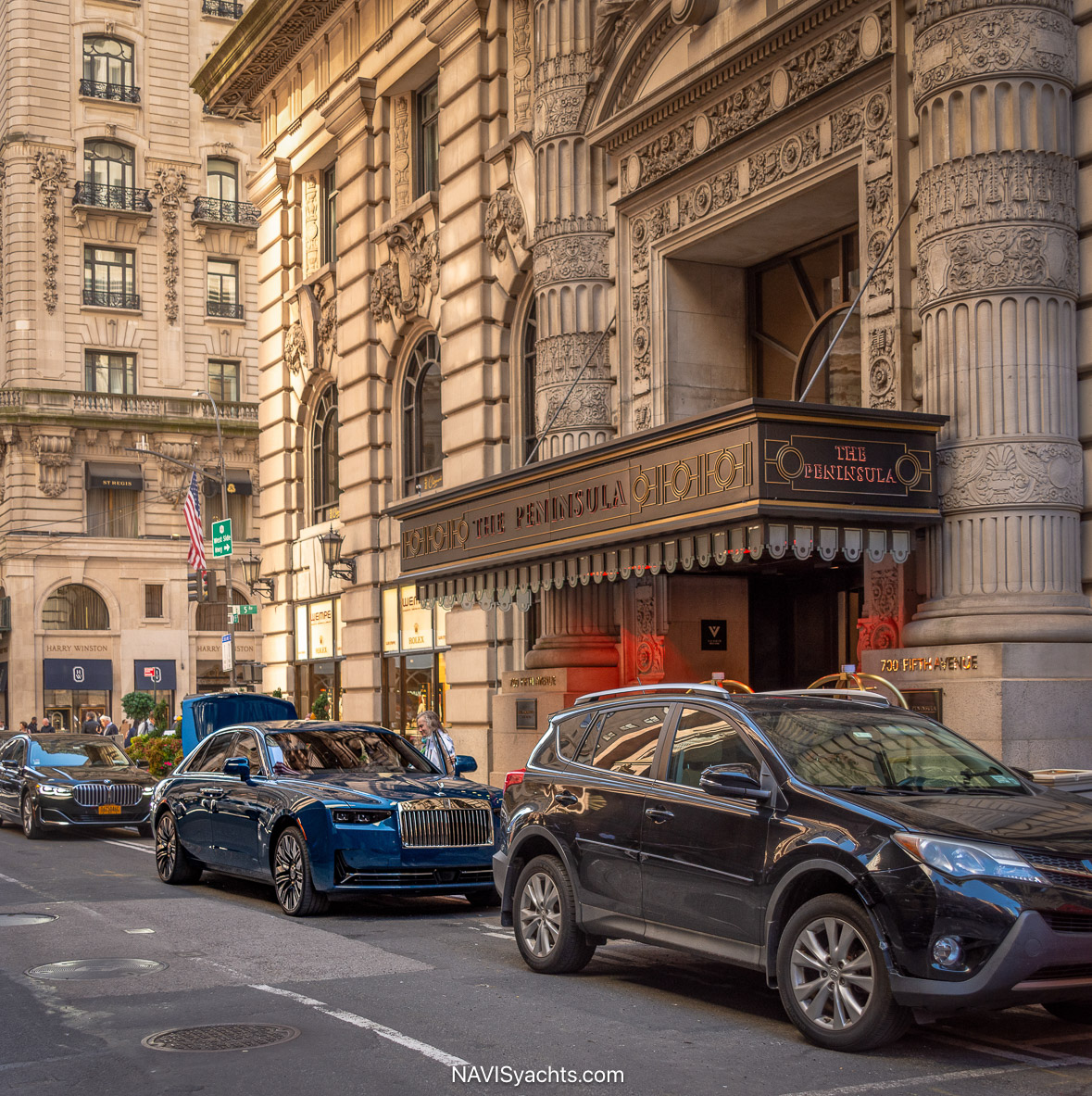
Every journey has a threshold, a moment of stillness before movement. Ours began in New York City, not in the rush of its avenues or the noise of its corners, but high above it all, in a room at The Peninsula New York. From the window, Fifth
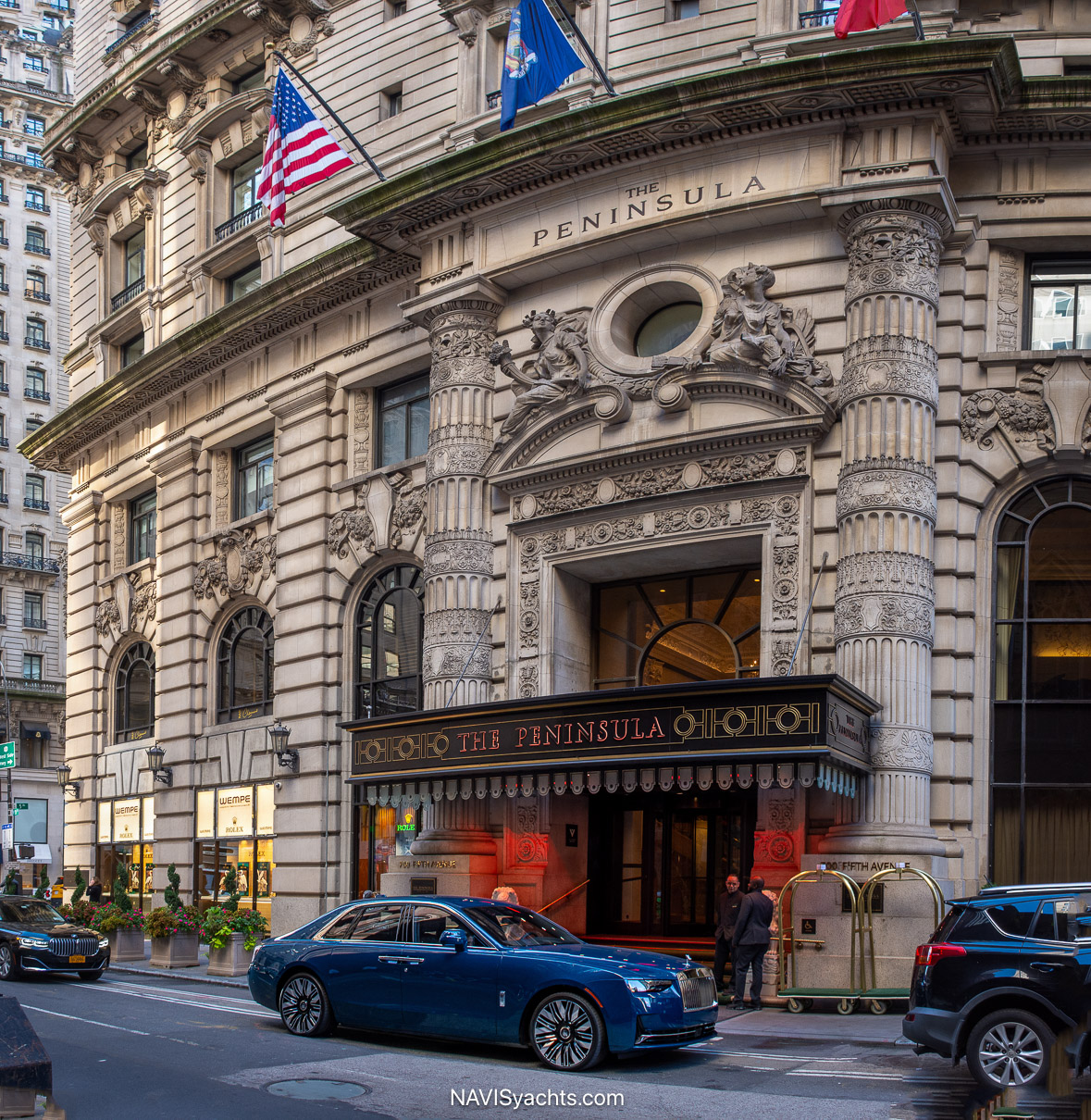
Avenue stretched below like a river of silent choreography, cabs, pedestrians, lights, yet none of it reached us. Instead, the room wrapped us in quiet. Superbly situated at the center of Manhattan’s most glamorous midtown shopping and entertainment district, The Peninsula New York occupies a 1905 Beaux-Arts landmark. The Grand Entrance, crowned by a magnificent chandelier, opens into a dramatic double-height lobby where a sweeping marble staircase and an intimate reception space offer a first impression of poised elegance. Opulent, yes, but with a sense of privacy that whispers rather than announces.
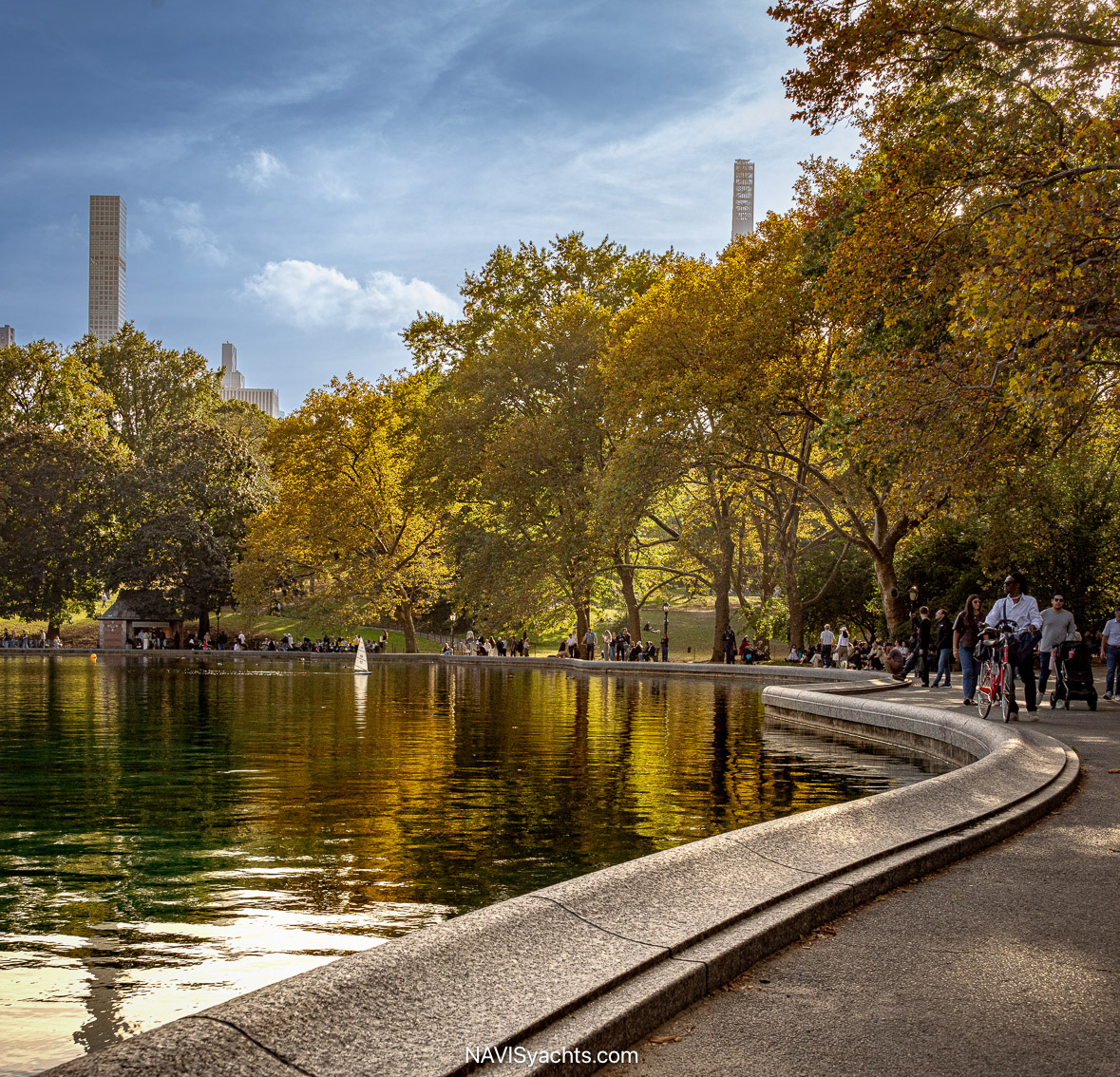
Our spacious room was designed as a light-filled, luxurious retreat, infused with subtle modernity. Updated with the latest comforts and The Peninsula’s proprietary in-room technology, it balanced refinement with ease. A residential ambiance unfolded in every layer, white-on-white jacquard textiles, Quagliotti linens, and plush furnishings, complemented by etched glass, molded headboards, and carefully considered lighting. The view, framing Central Park and the skyline in equal measure, reminded us that beauty doesn’t demand attention. It waits to be seen. This was hospitality as art, every element, every gesture, every member of the staff part of a living composition you could inhabit, feel, and slowly unfold.
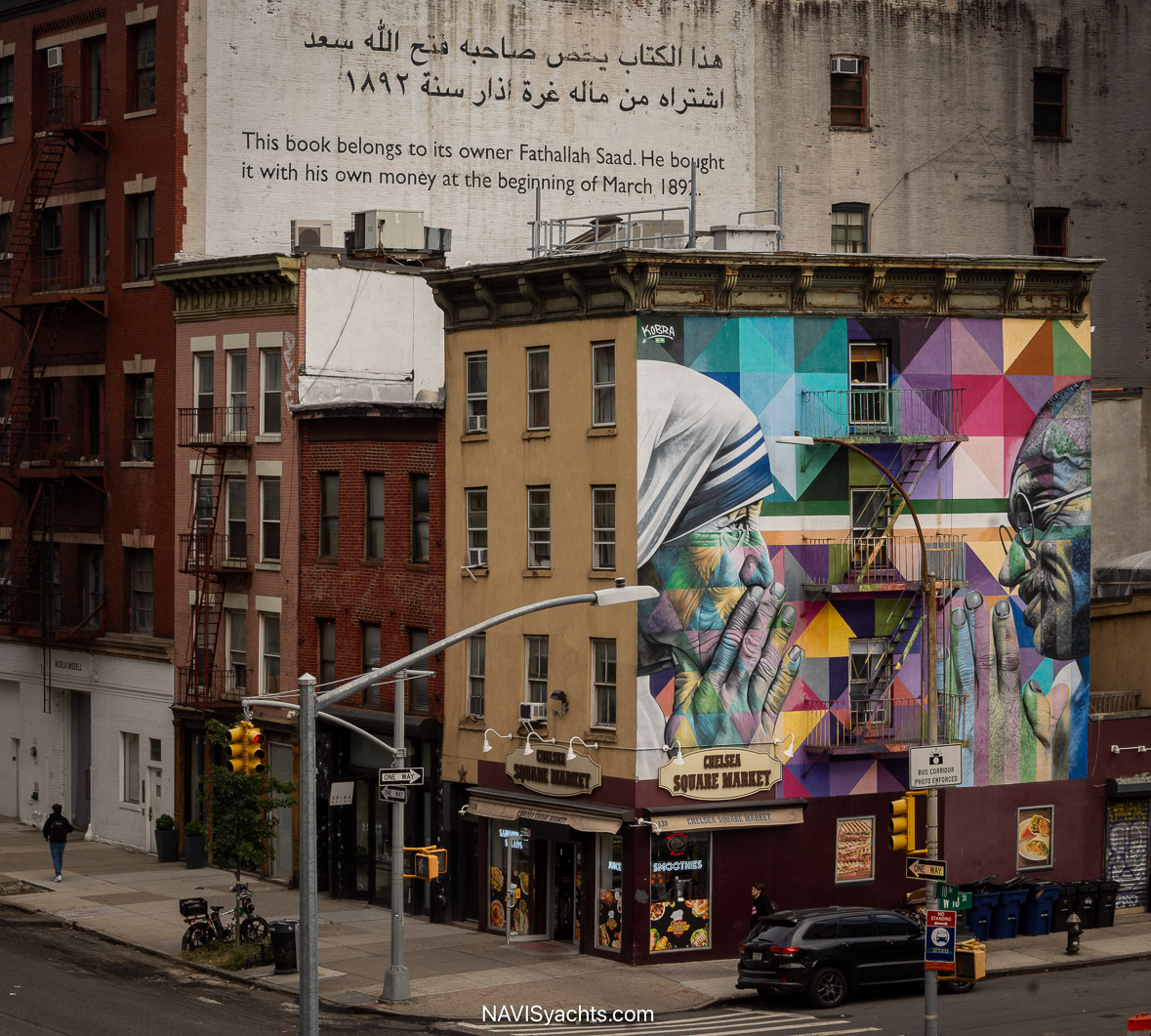
In the days of preparation before our departure, we wandered through the city in search of other forms of artistry, culinary expressions where chefs, spaces, and service aligned with the same reverence for detail. We discovered three gastronomic galleries that stood out as essential destinations for anyone who believes food can be both craft and canvas.
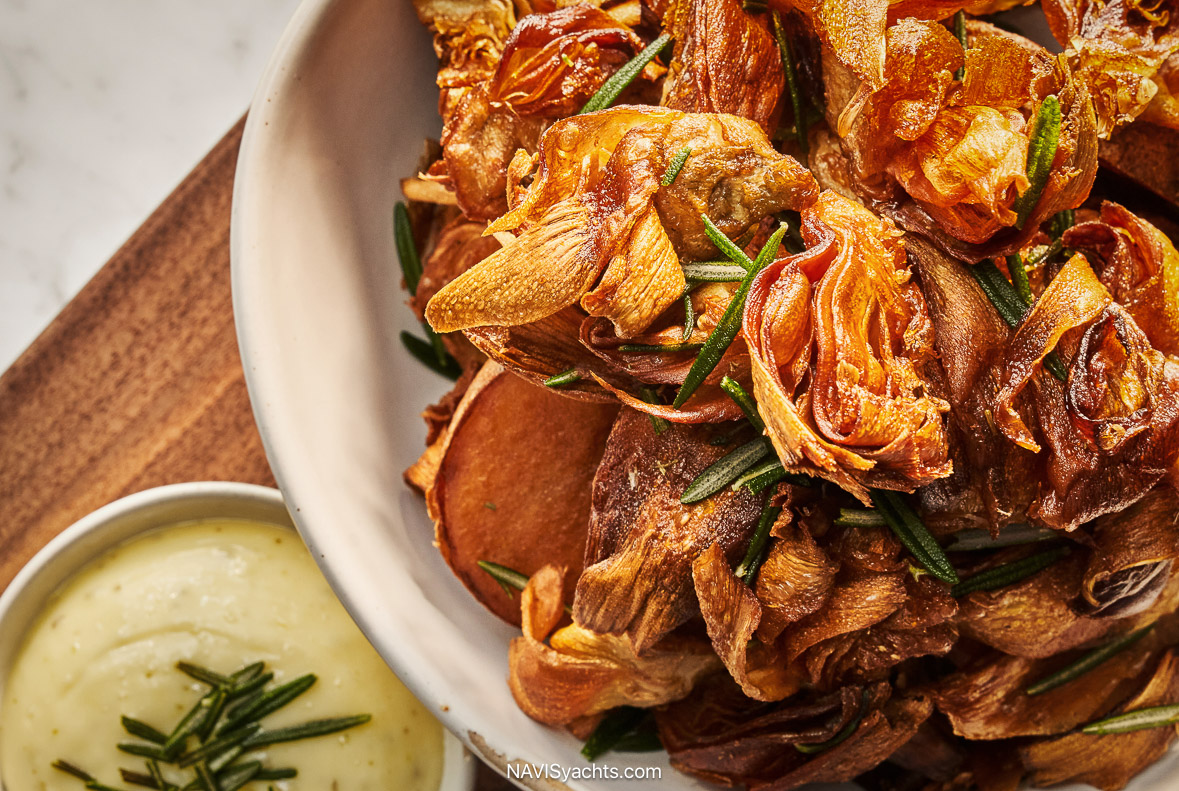
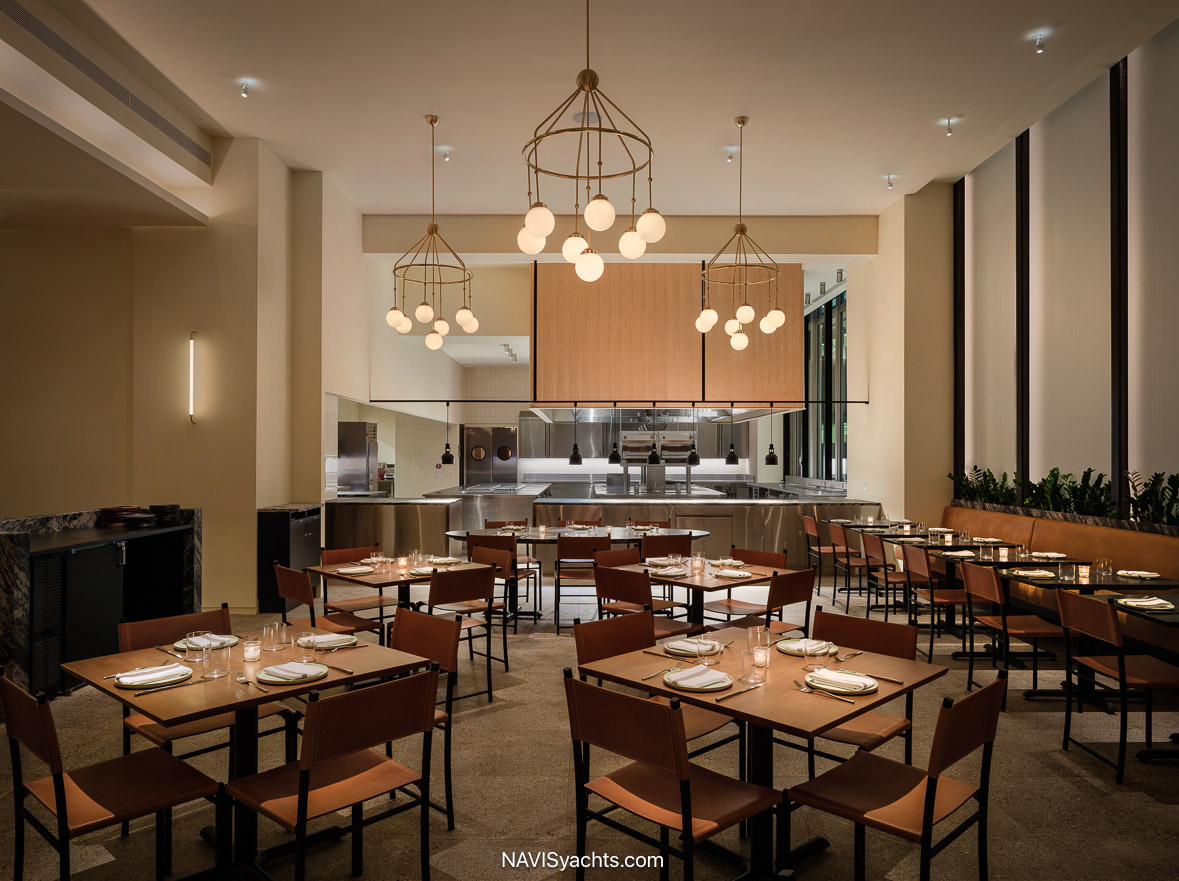
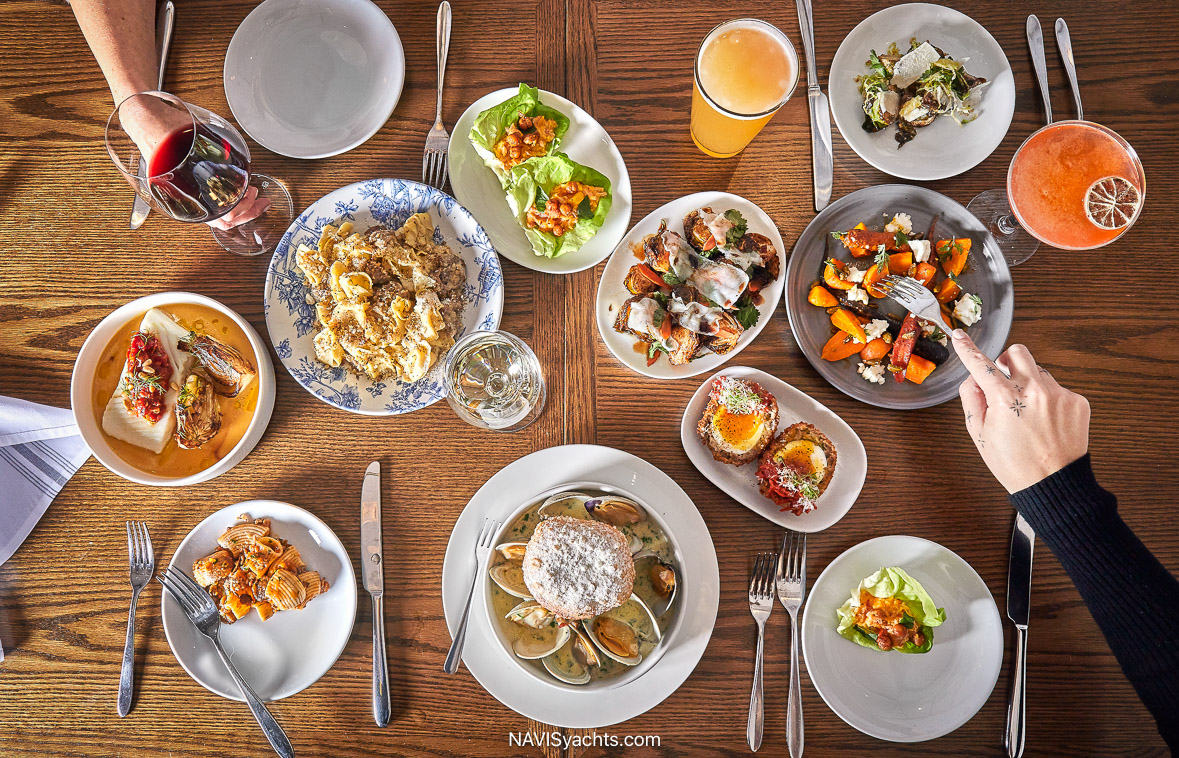
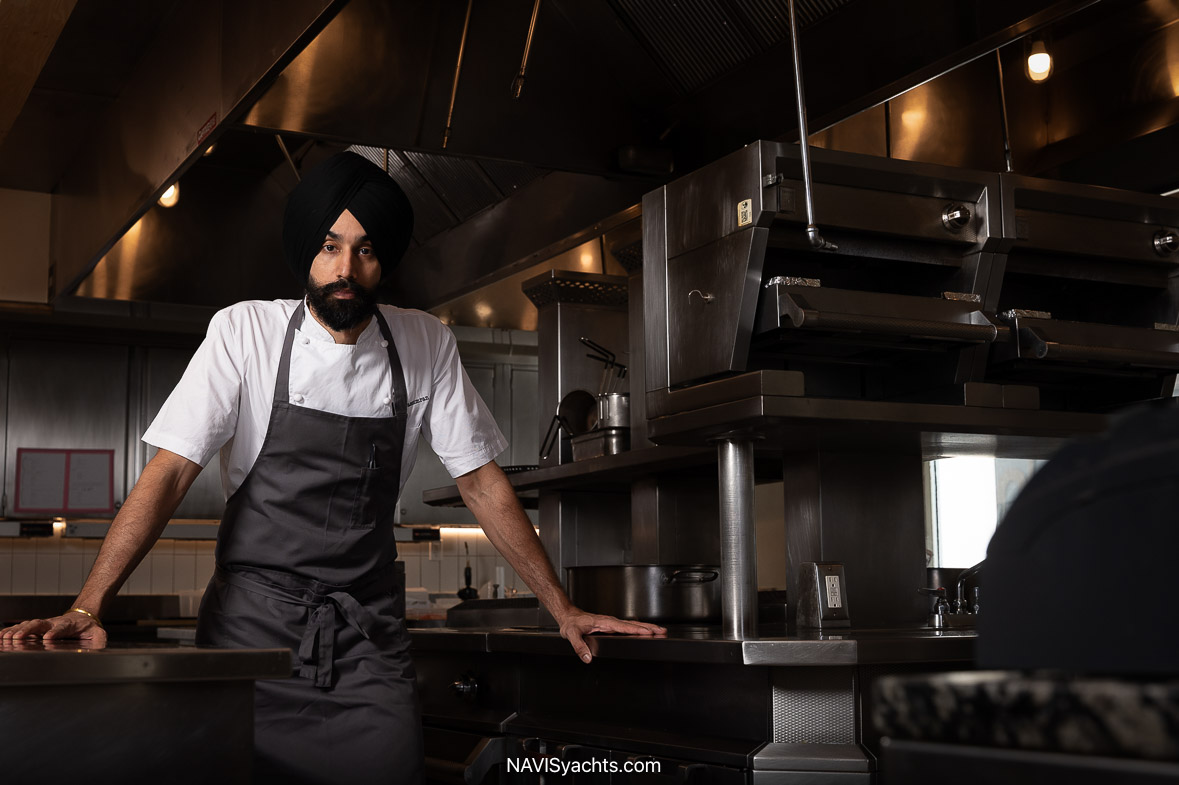
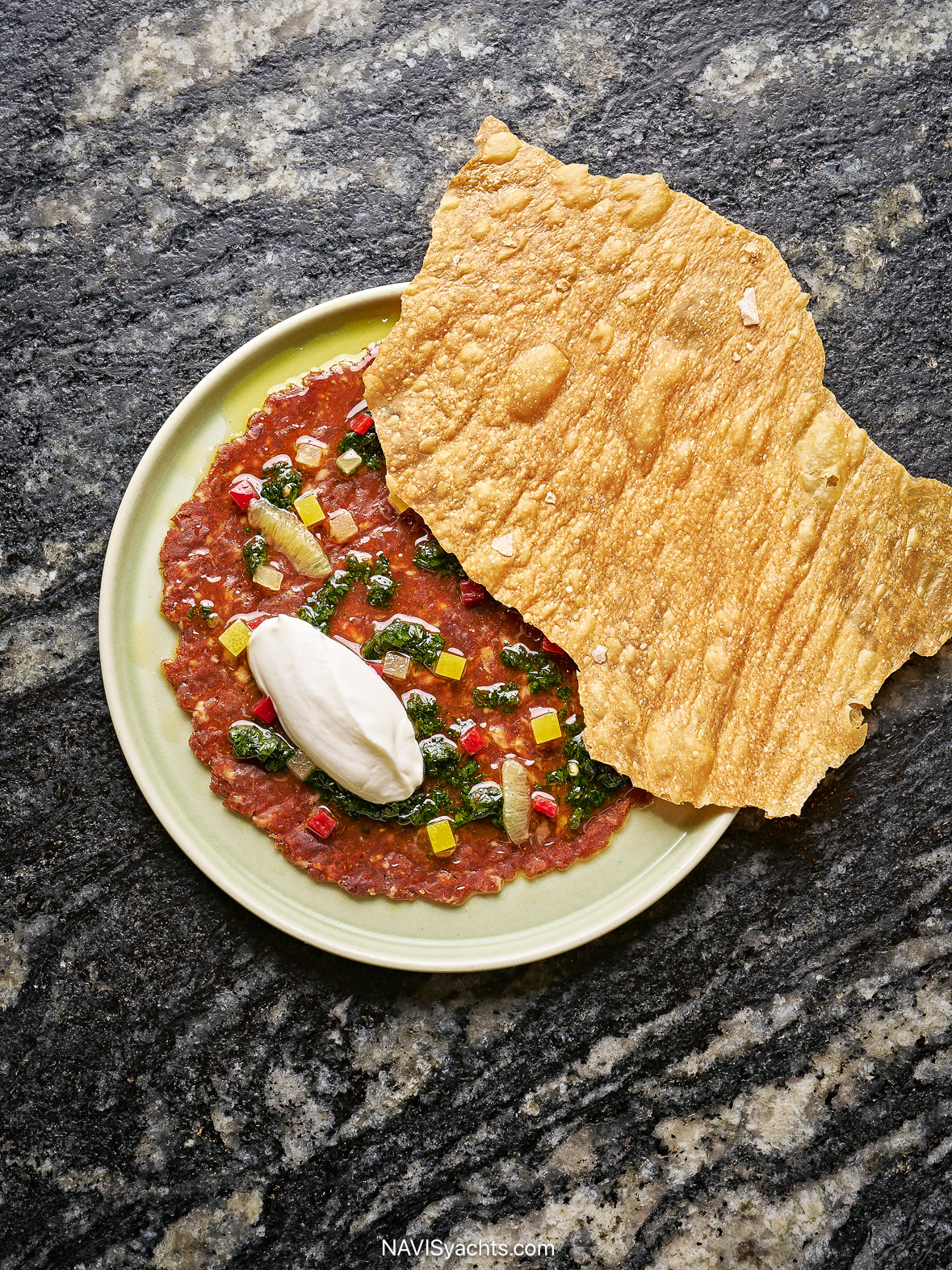
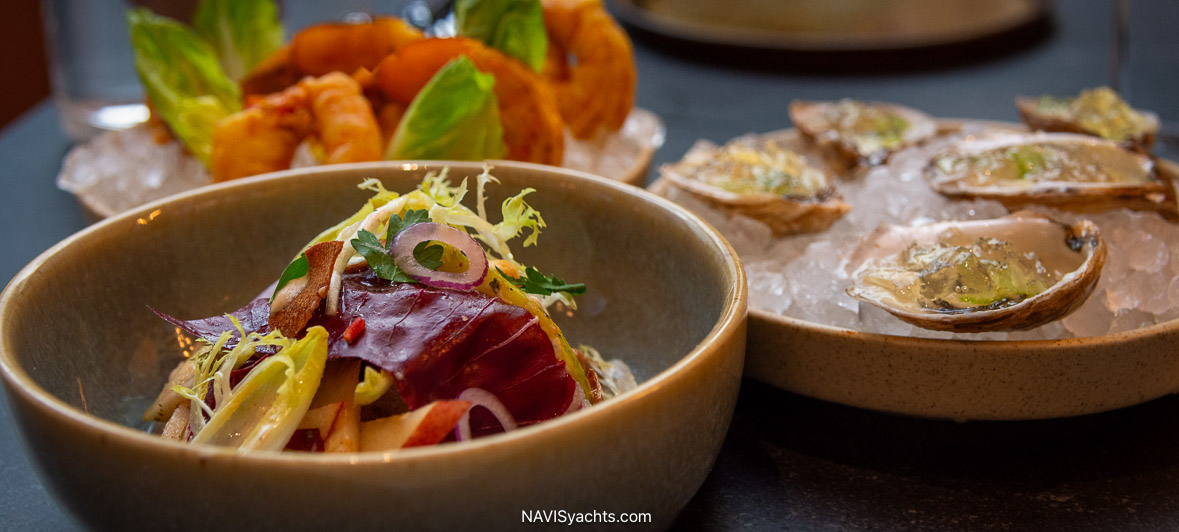
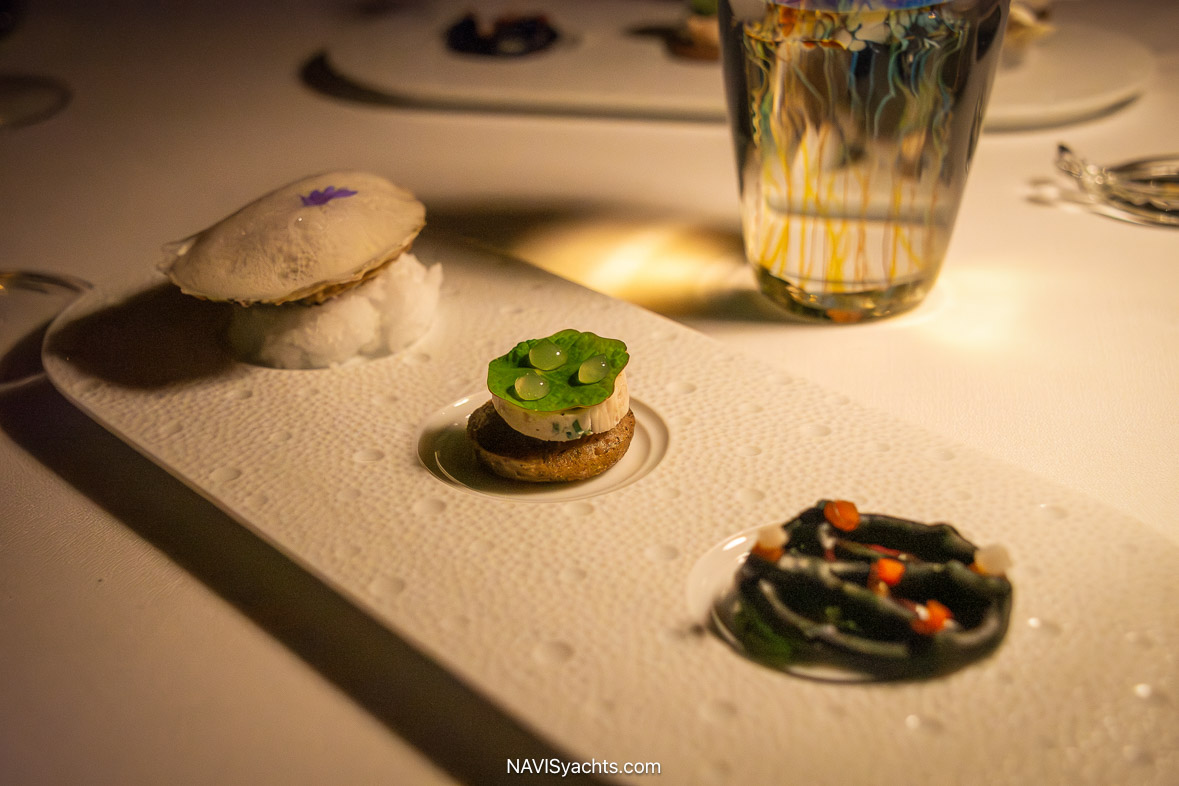
Among the shadows of the Financial District, we stepped into Crown Shy, a restaurant whose quiet humility belies its bold culinary voice. Tucked into the ground floor of the Art Deco landmark at 70 Pine Street, this Michelin-starred destination was founded by Chef Jamal James Kent, who shaped it as a tribute to his native New York, elevated by techniques he mastered at Bouley, Eleven Madison Park, and The NoMad. Following Chef Kent’s passing in 2024, his protégé, Jassimran Singh, now leads the kitchen with equal devotion and technical precision. The meal unfolded like a sonata: oysters in a sherry consommé opened the palate with layered salinity and warmth; a spiced shrimp cocktail followed, vibrant with yuzu and chili; and a short rib flatbread arrived fragrant with horseradish and crushed black pepper. Each plate demonstrated restraint, purpose, and polish. We paired it with a Kumusha Sauvignon Blanc from South Africa, fresh, clean, and assertive enough to meet the structure of the dishes without competing with them. Dessert was an elegant close, sticky rice with toasted coconut and mango sorbet, followed by a perfect espresso. In its entirety, the experience felt composed and choreographed.
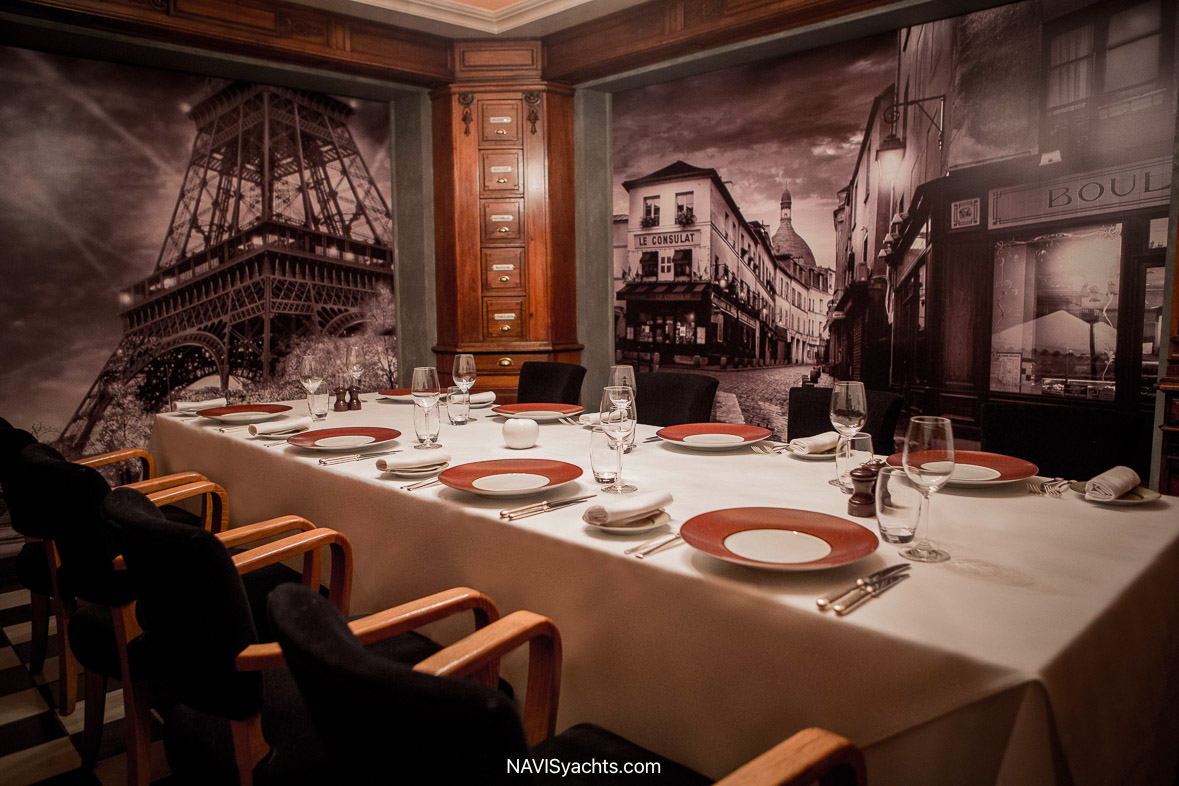
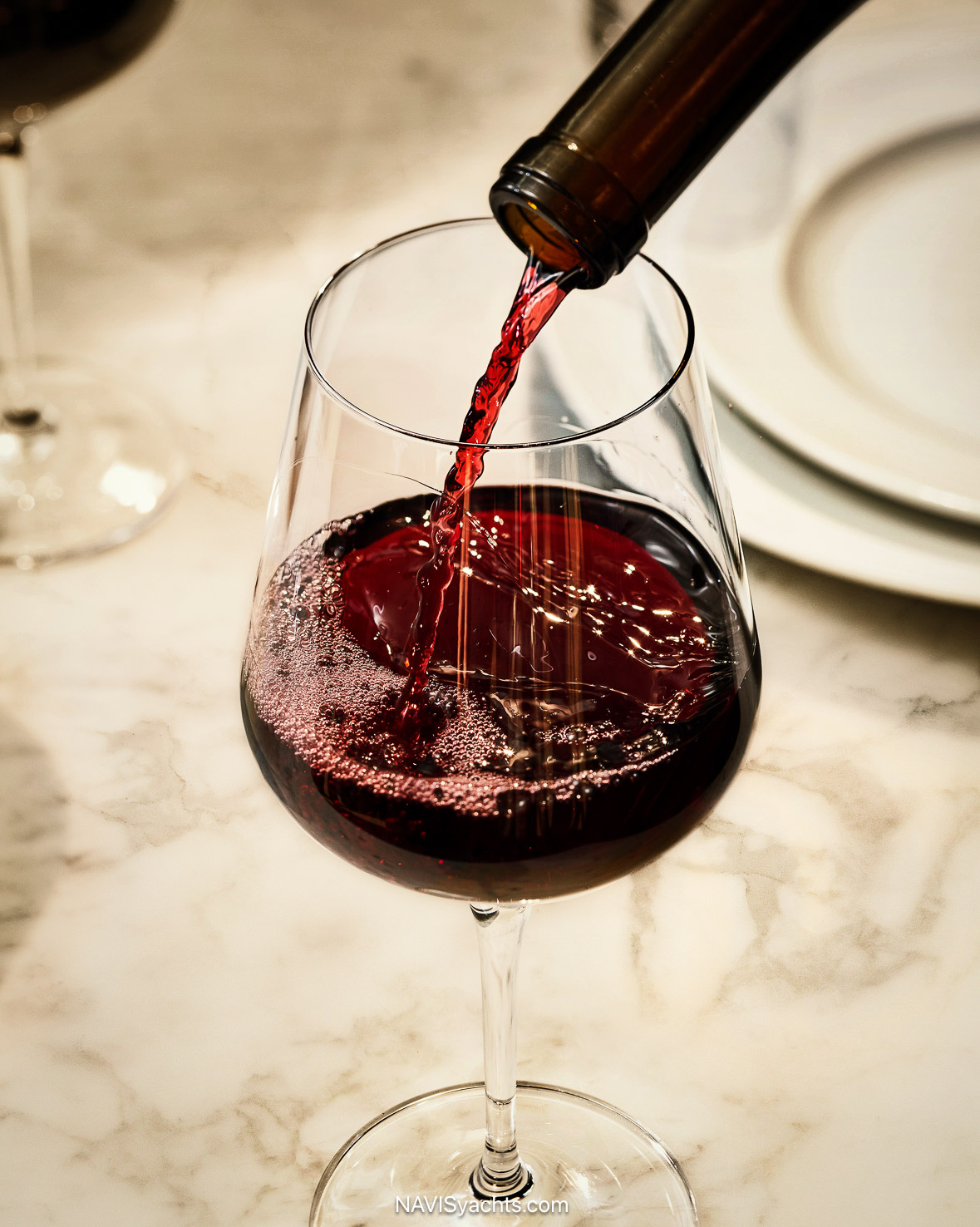
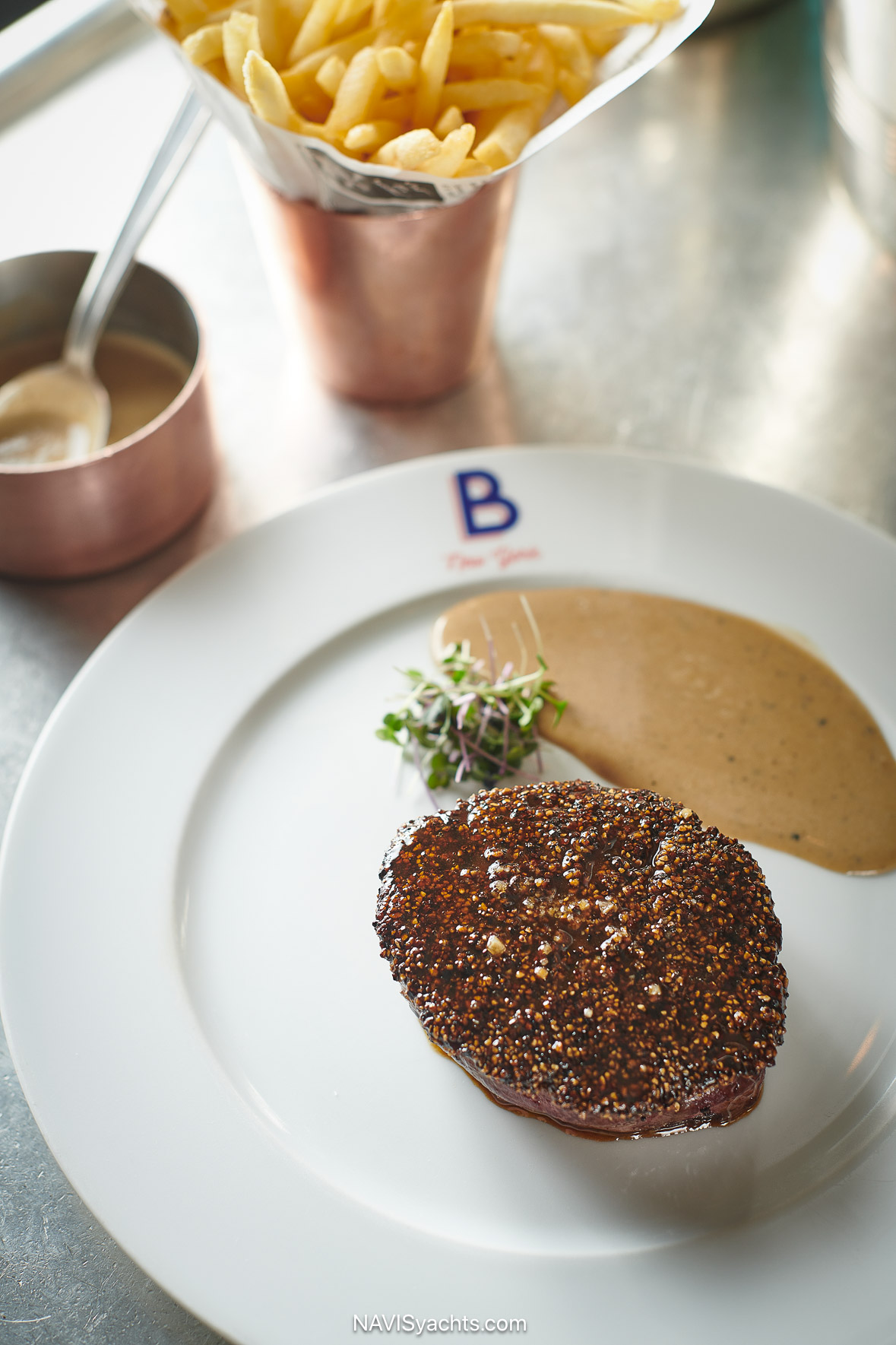
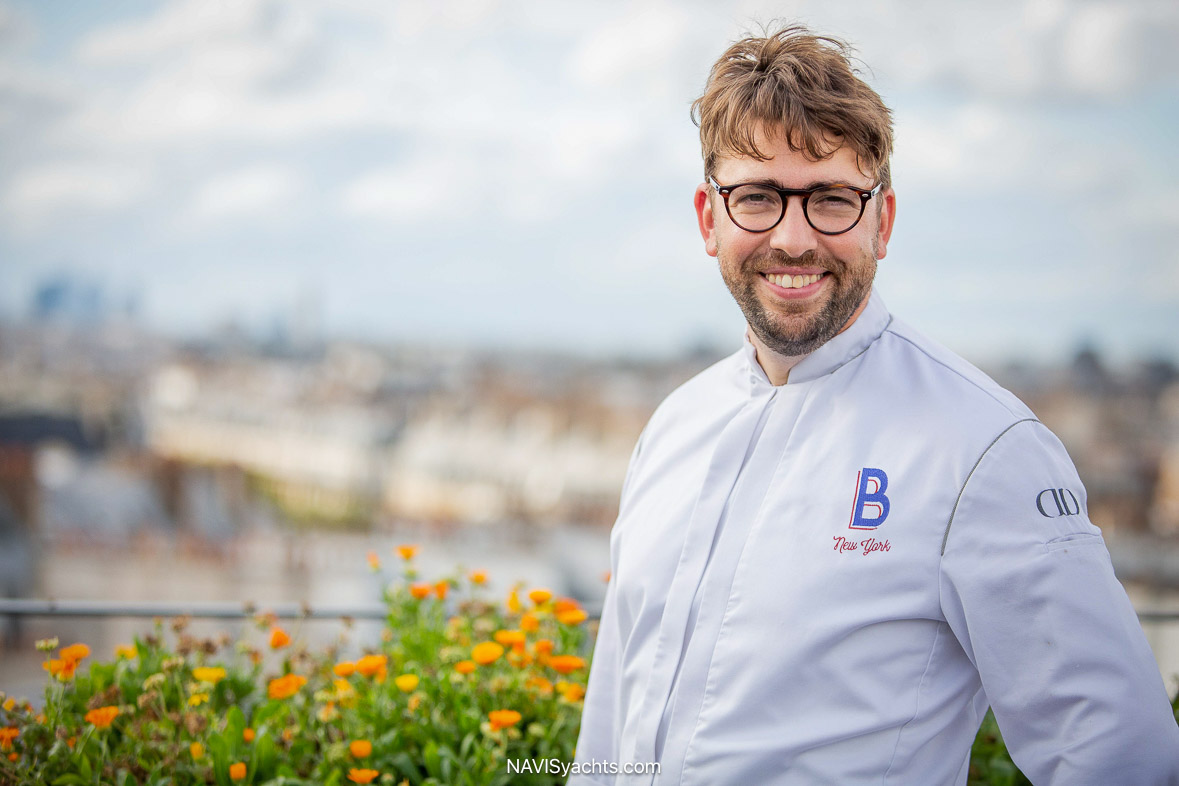
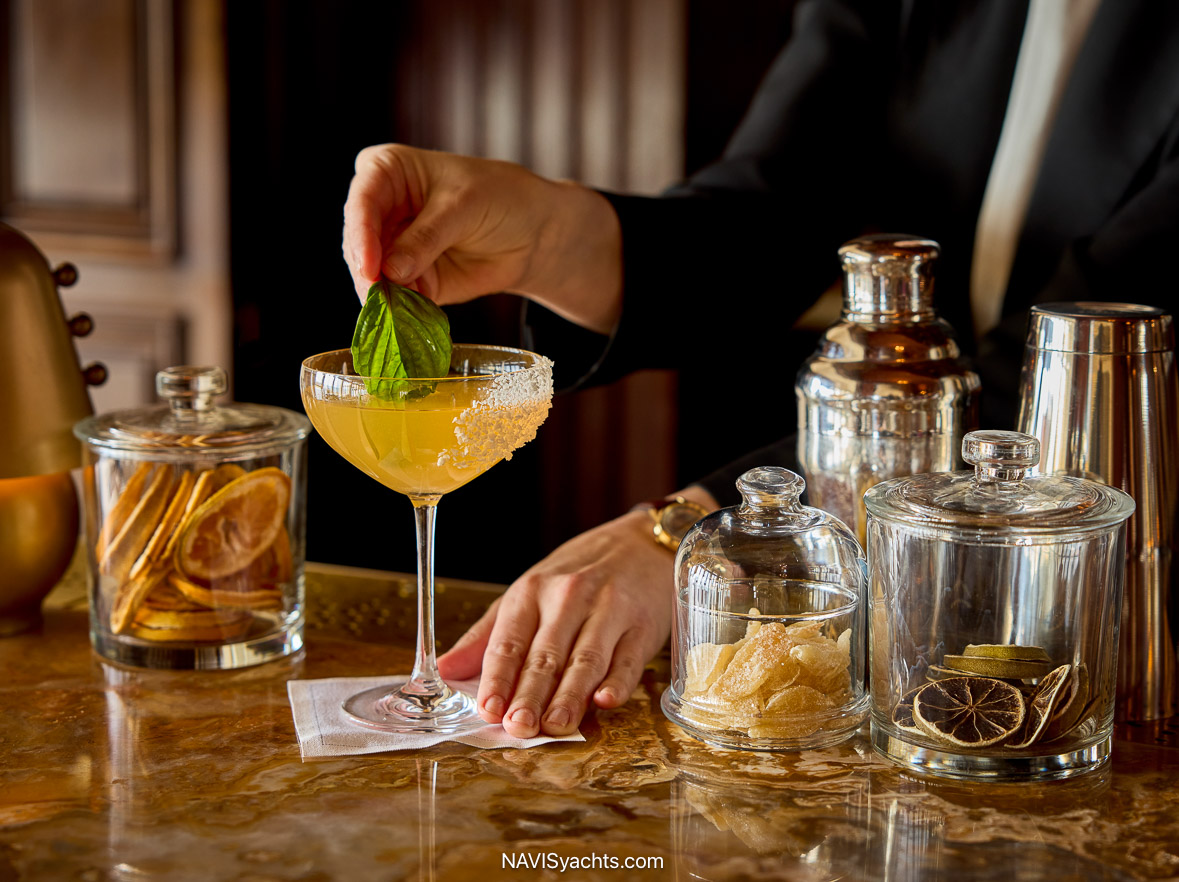
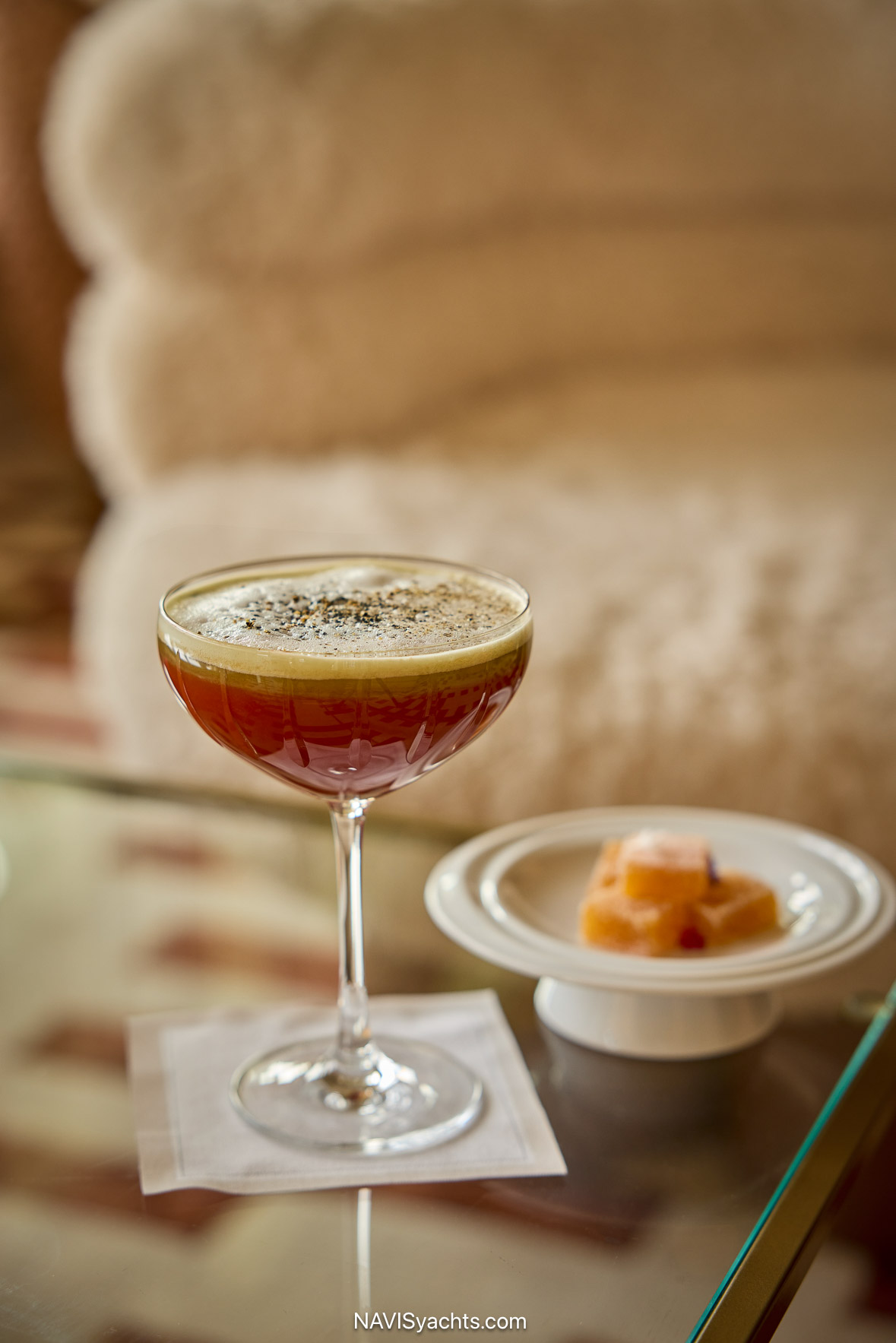
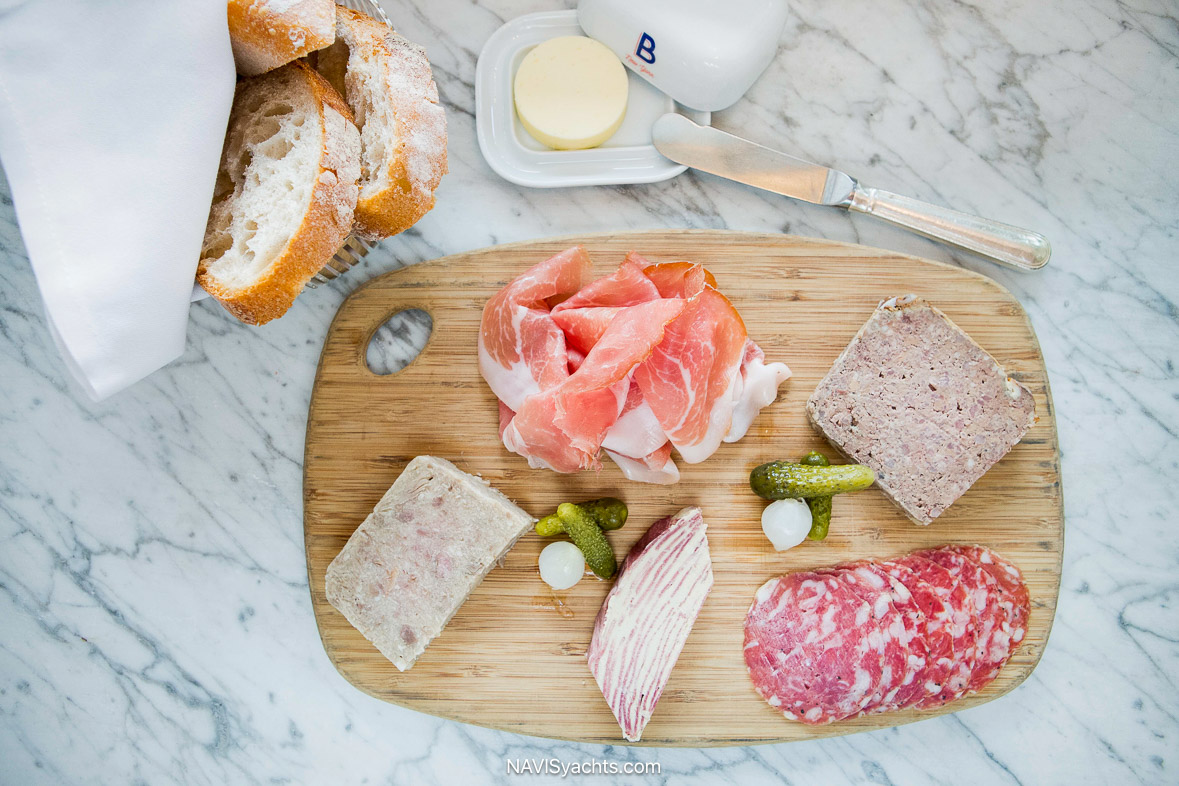
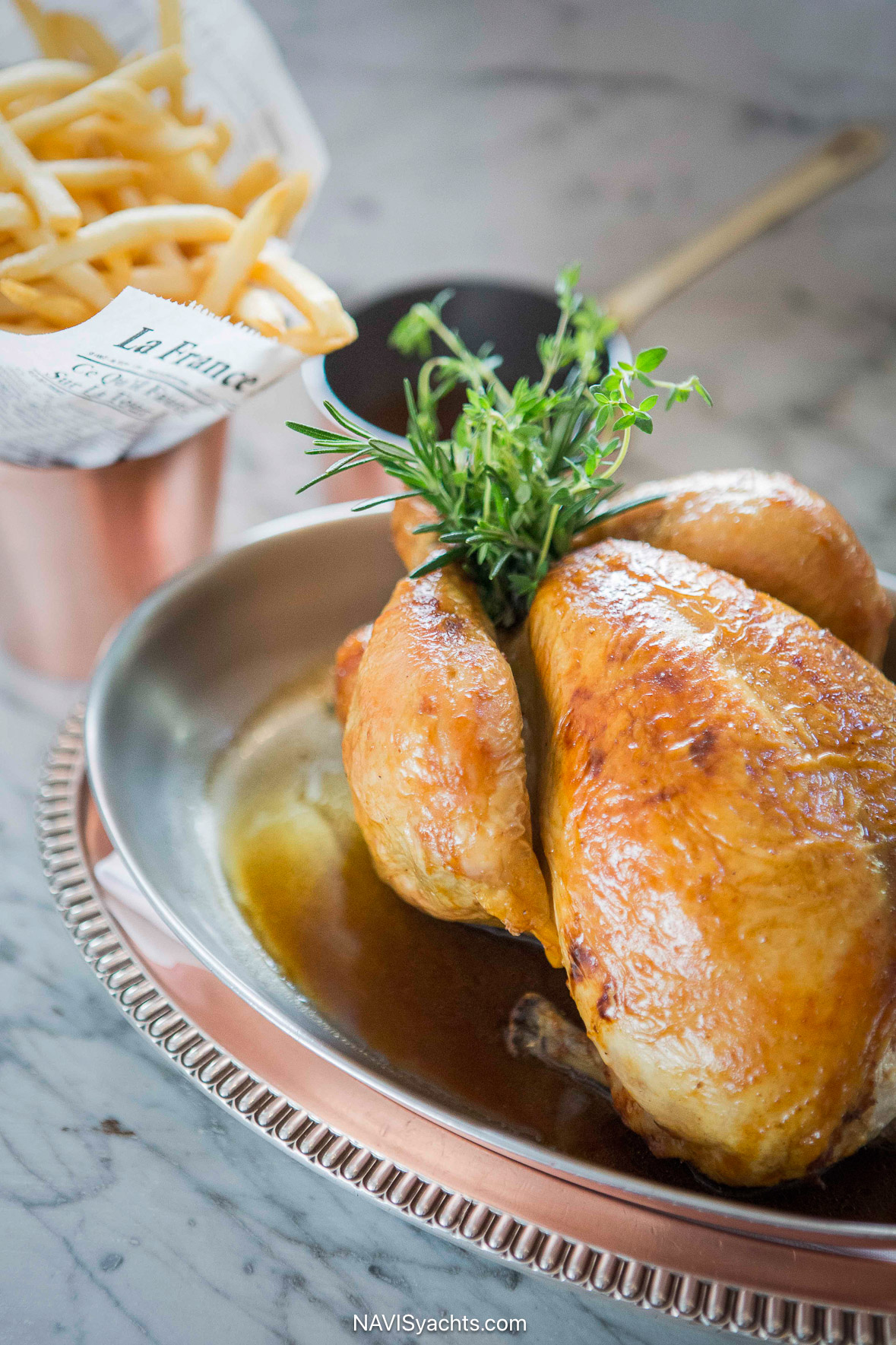
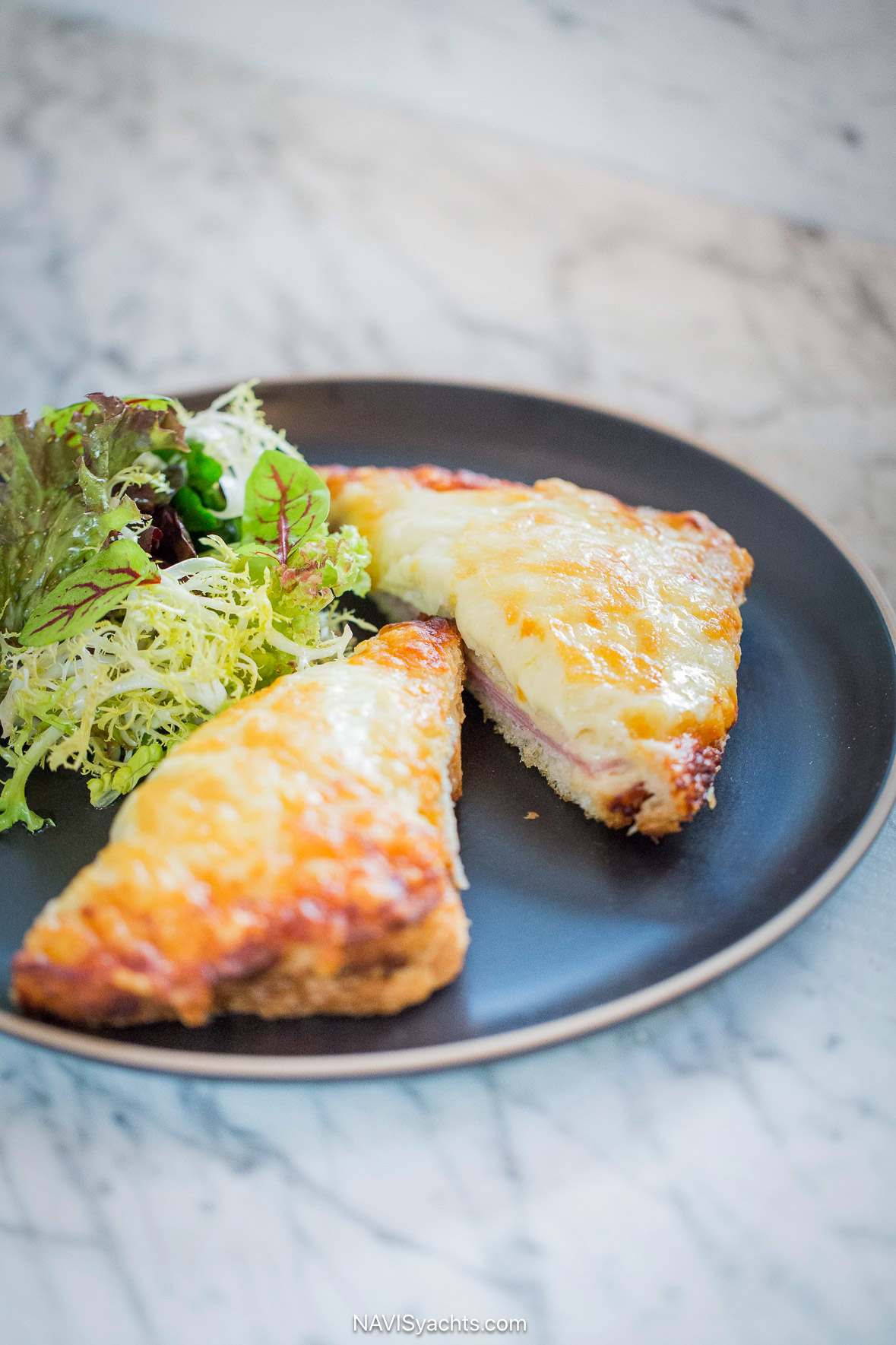
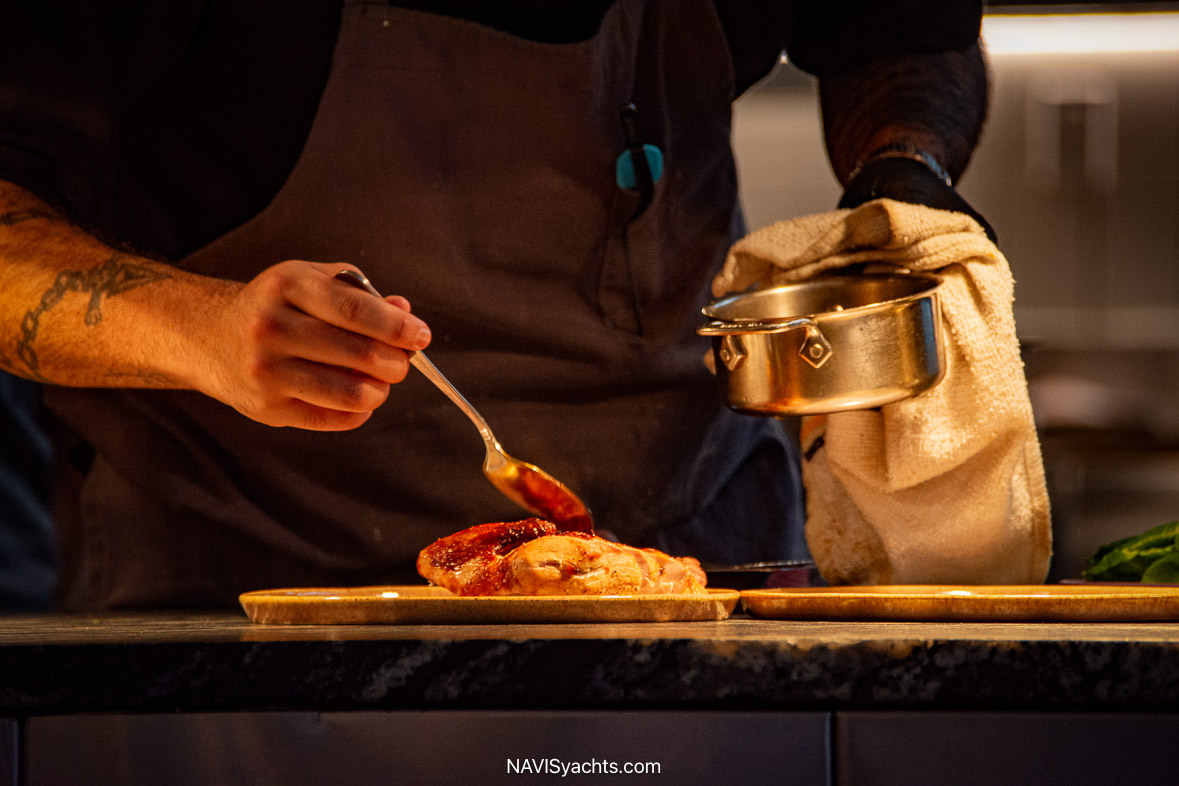
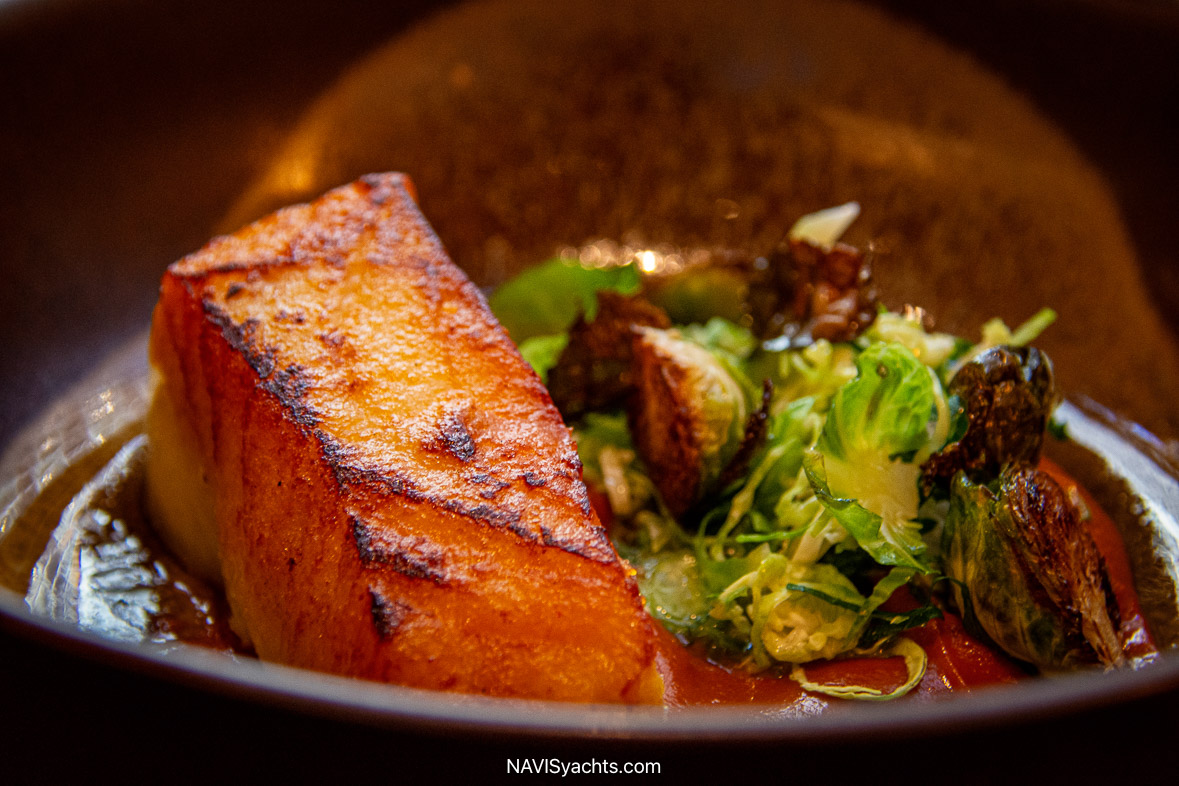
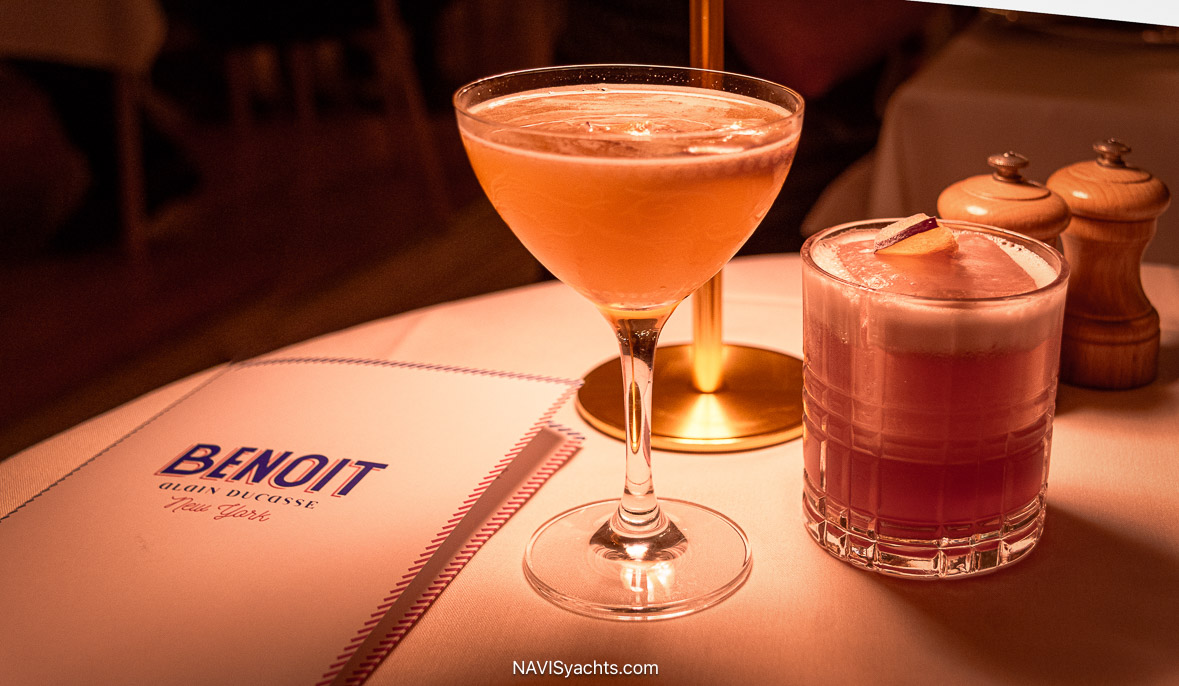
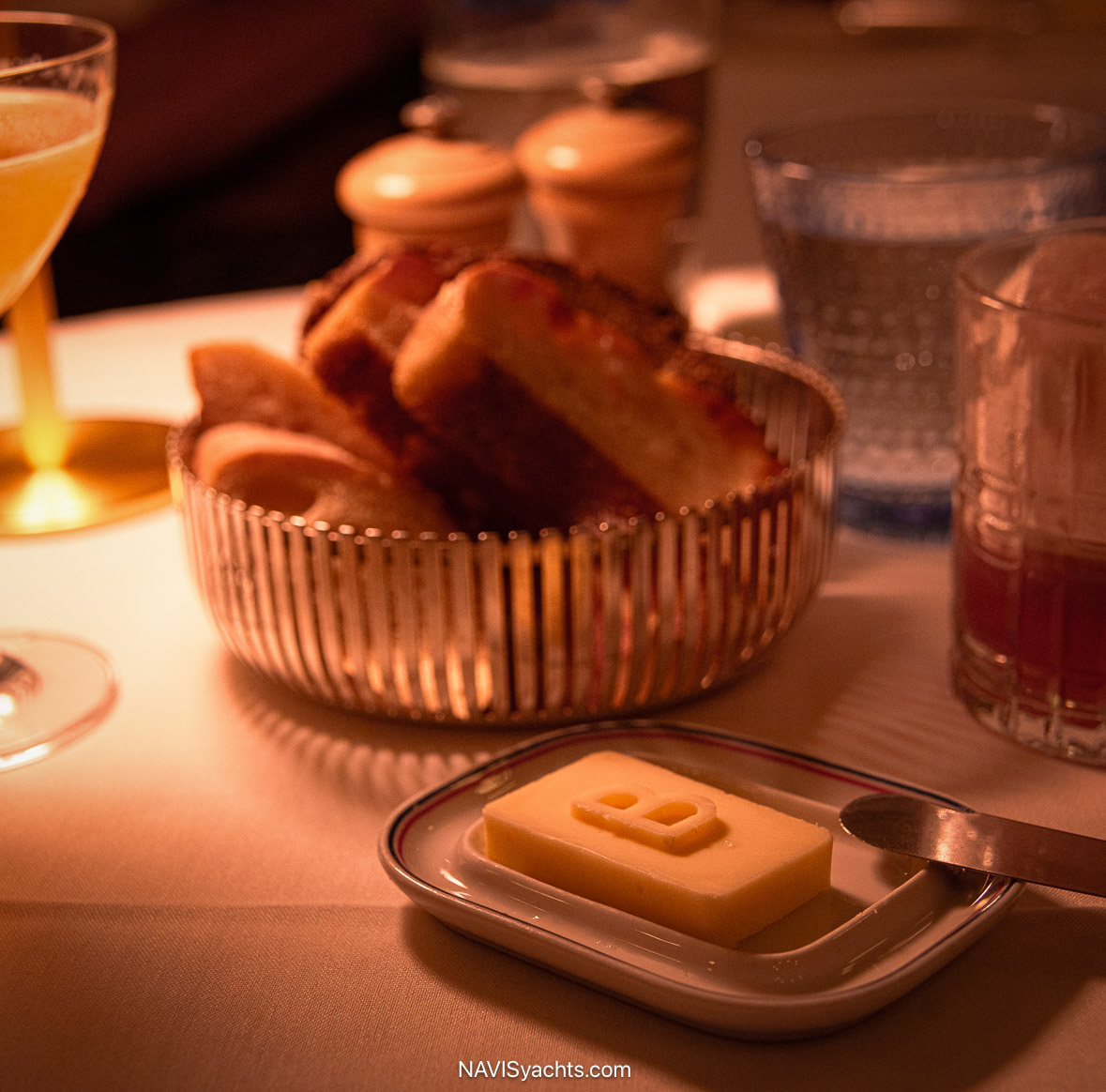
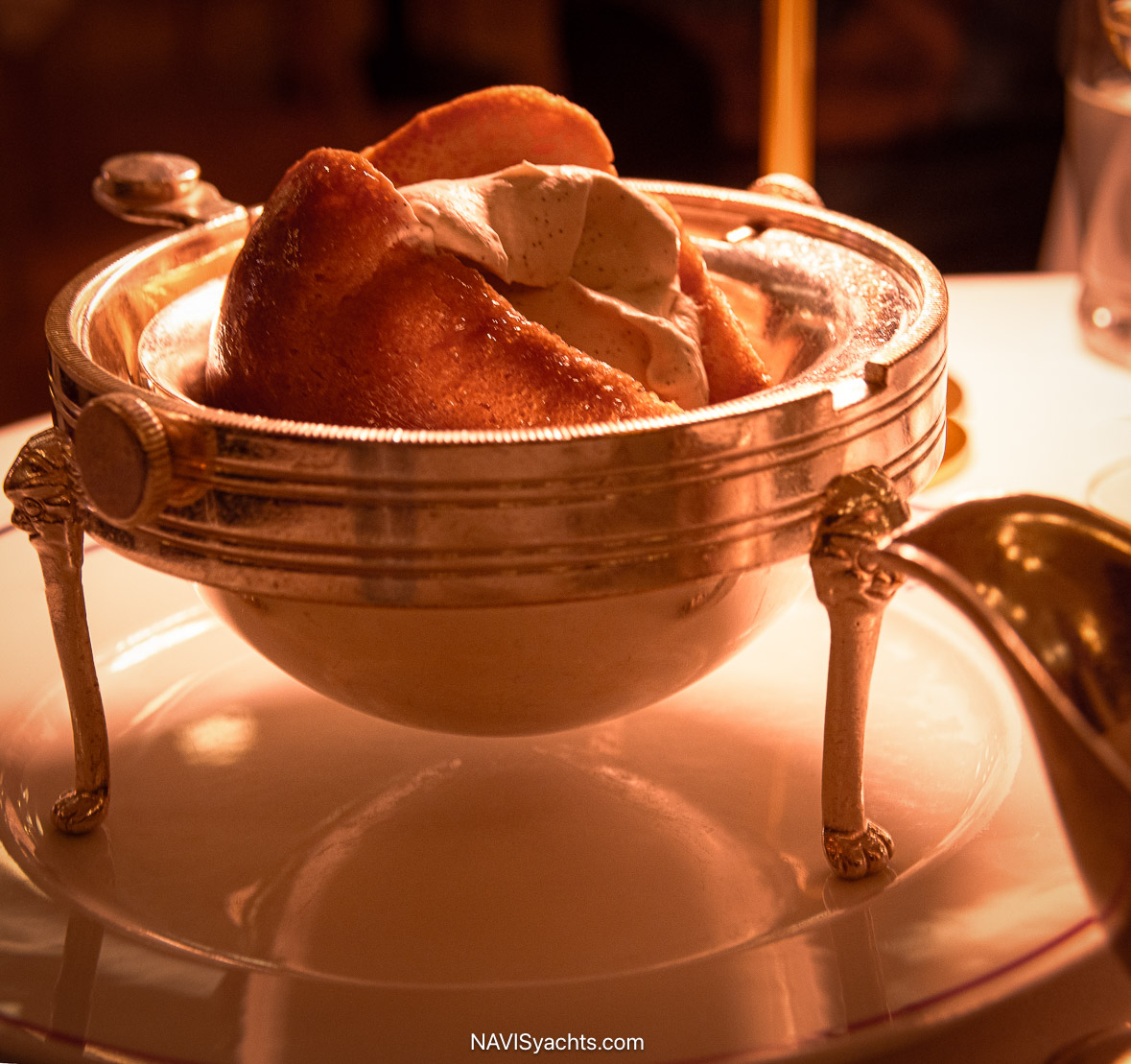
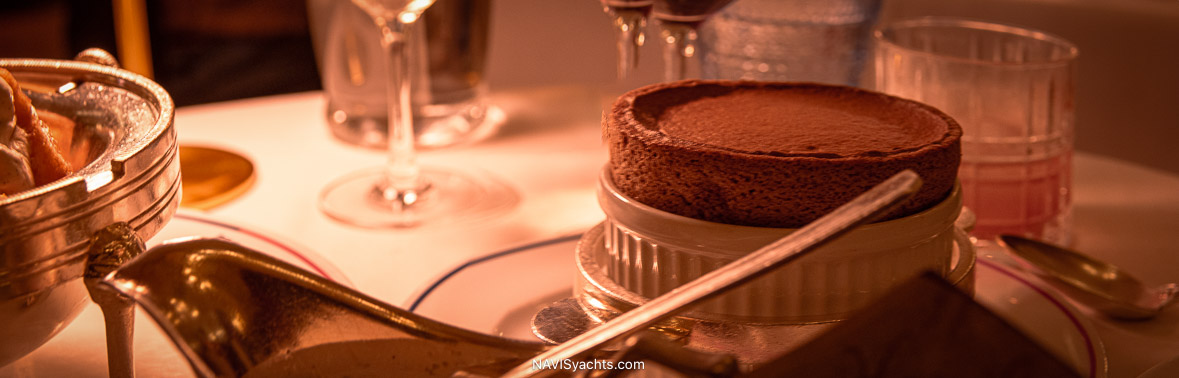
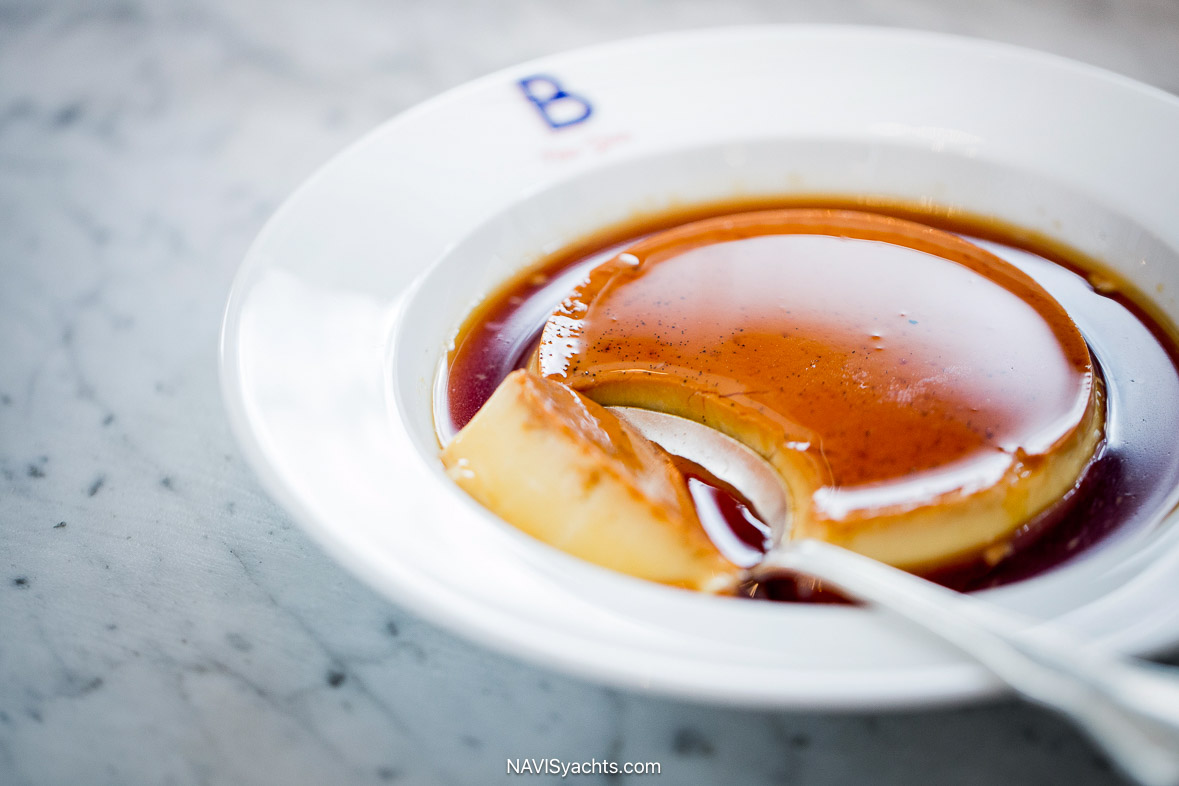
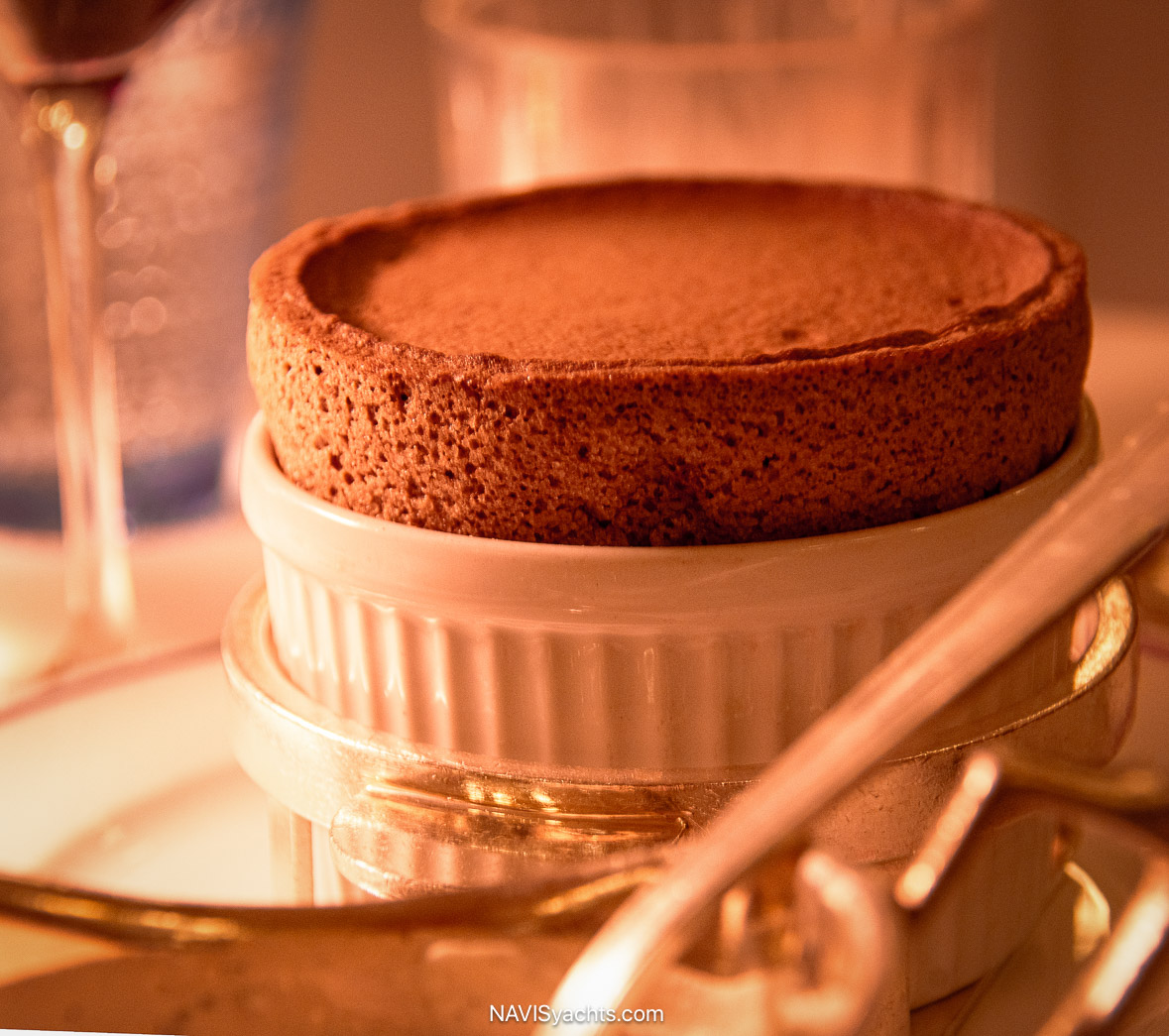
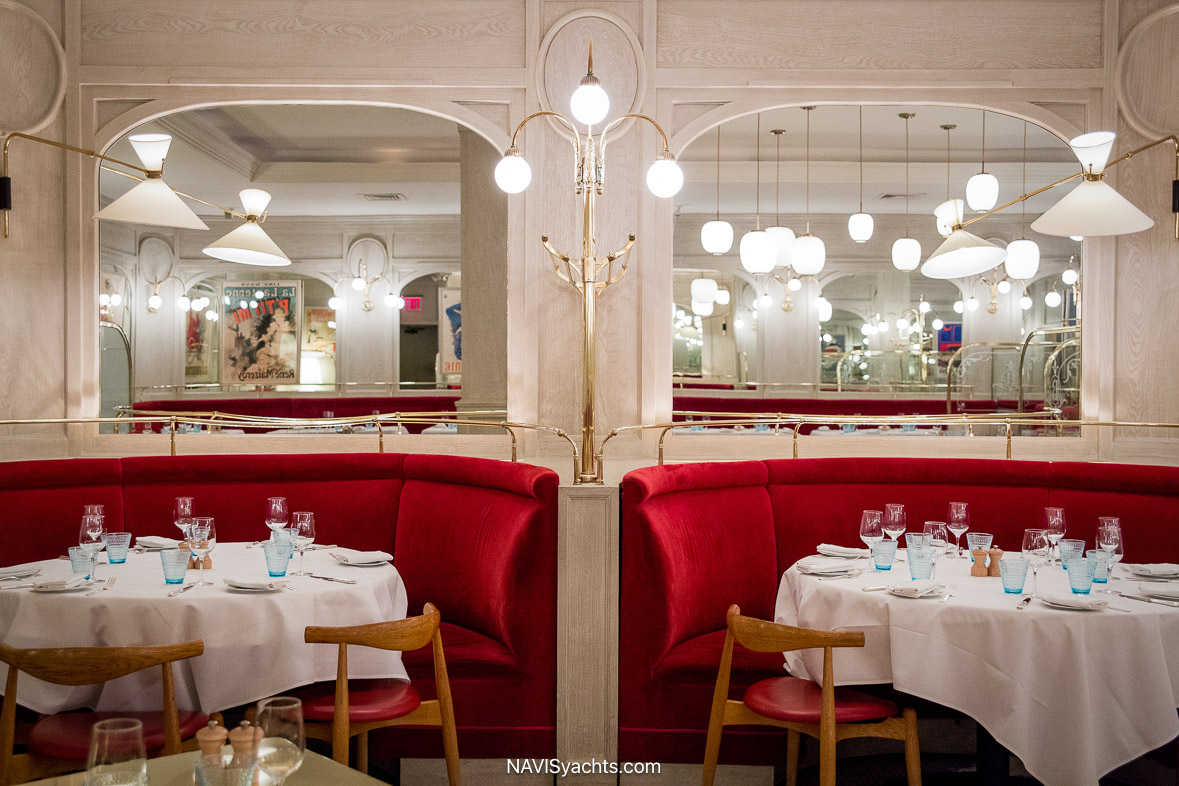
Our next stop was one of personal significance, Benoit New York, the Alain Ducasse bistro that has long been a fixture in the city’s fine dining scene. Located just off Fifth Avenue on West 55th Street, Benoit has mastered the rare art of balancing heritage with innovation. Its interiors still evoke the archetype of the Parisian bistro, red velvet banquettes, mirrored walls, but the palette has softened, and the space now breathes with light and ease. Led by Executive Chef Alberto Marcolongo, whose Veronese roots meet French discipline, Benoit offered us a journey through the foundations of classical cuisine, reimagined. We opened with two cocktails: Not Too Far from the Tree, a Calvados and apple cider blend, and Once in Pearis, built around vodka, pear, and a delicate vanilla gastrique. The savory courses began with a deeply layered onion soup gratinée, followed by a foie gras terrine served with seasonal chutney and brioche. The foie was paired masterfully with Château La Tour Blanche, its sweetness offsetting the richness with noble balance. A standout, roasted duck with turnips in dolce forte sauce, its skin crisped to perfection, the sauce a chiaroscuro of sweet and acid. This was paired with a 2022 Menthelie from Vielles Vignes, anchoring the dish with Burgundian elegance. For dessert, a rum-soaked baba, theatrical and rich, followed by a soufflé so ethereal it seemed designed to vanish. Everything here was executed with a discipline that only comes from decades of refinement, technique elevated by soul.
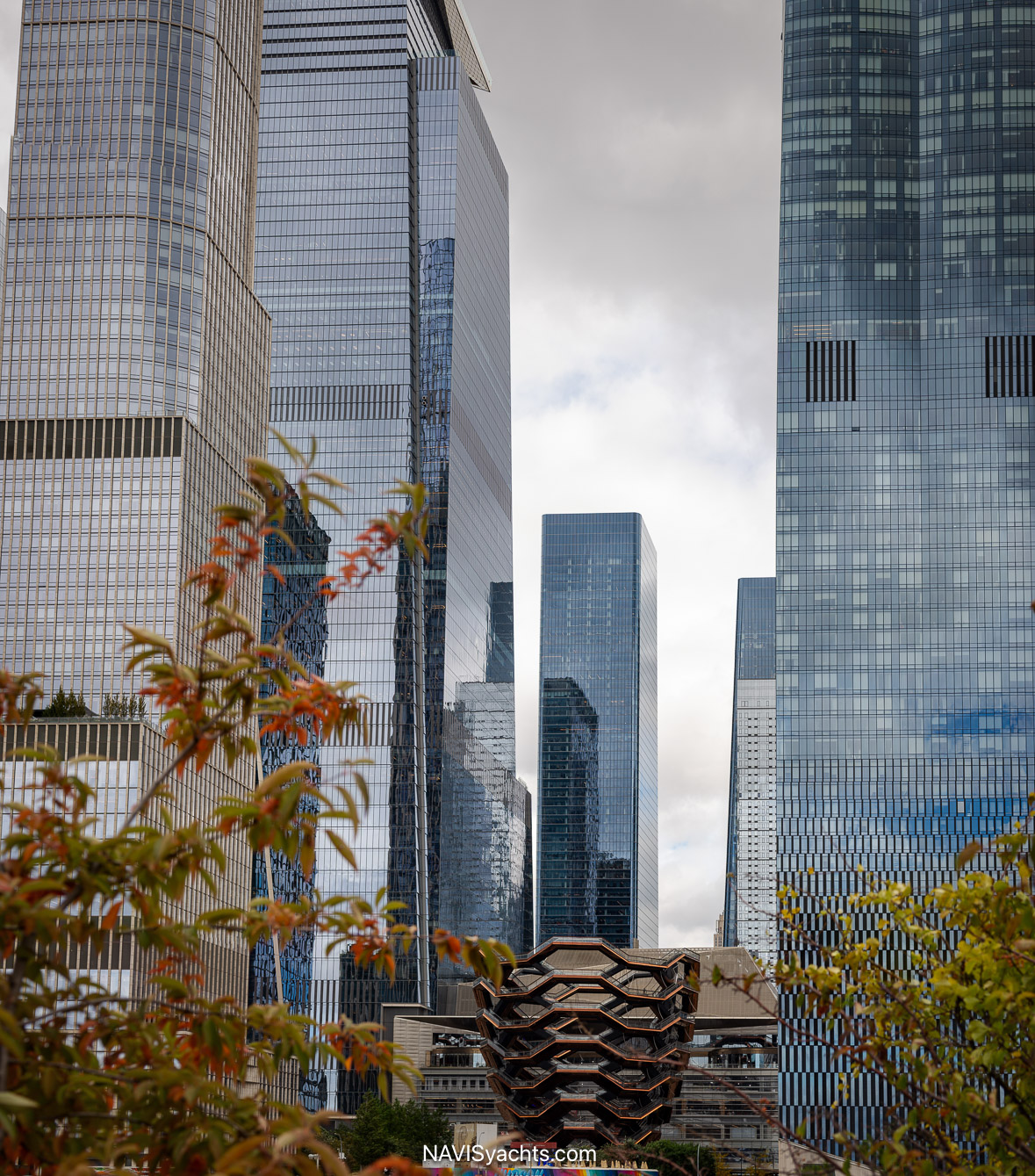
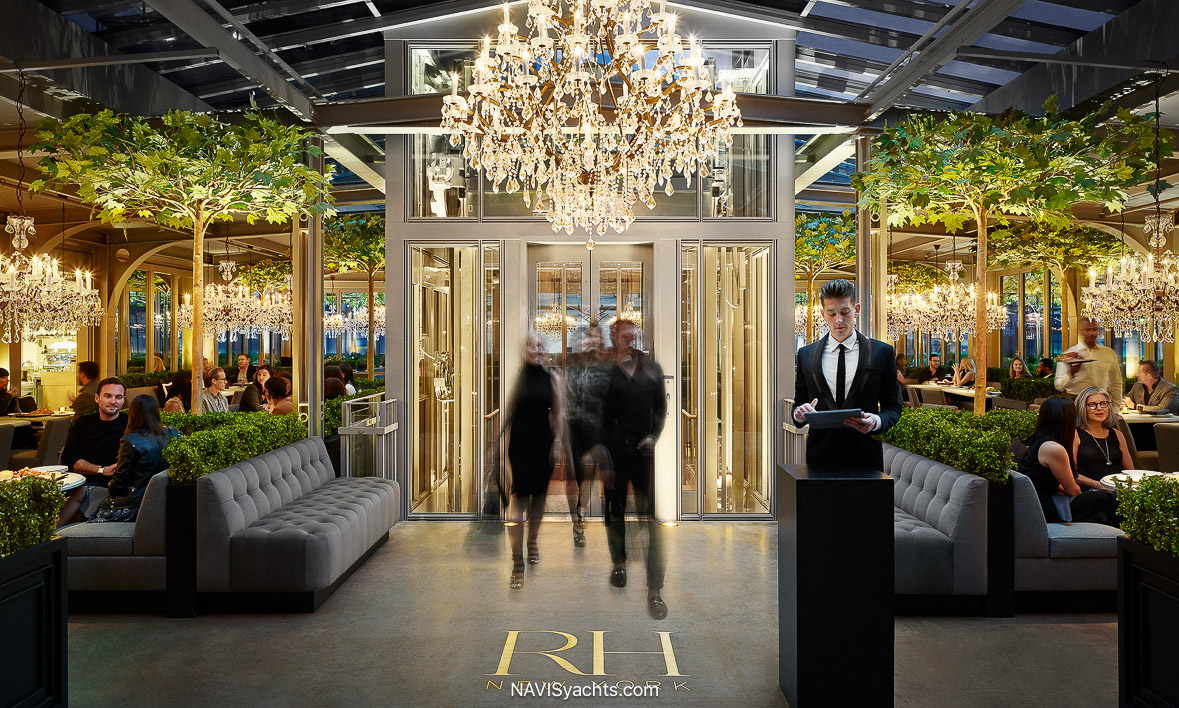
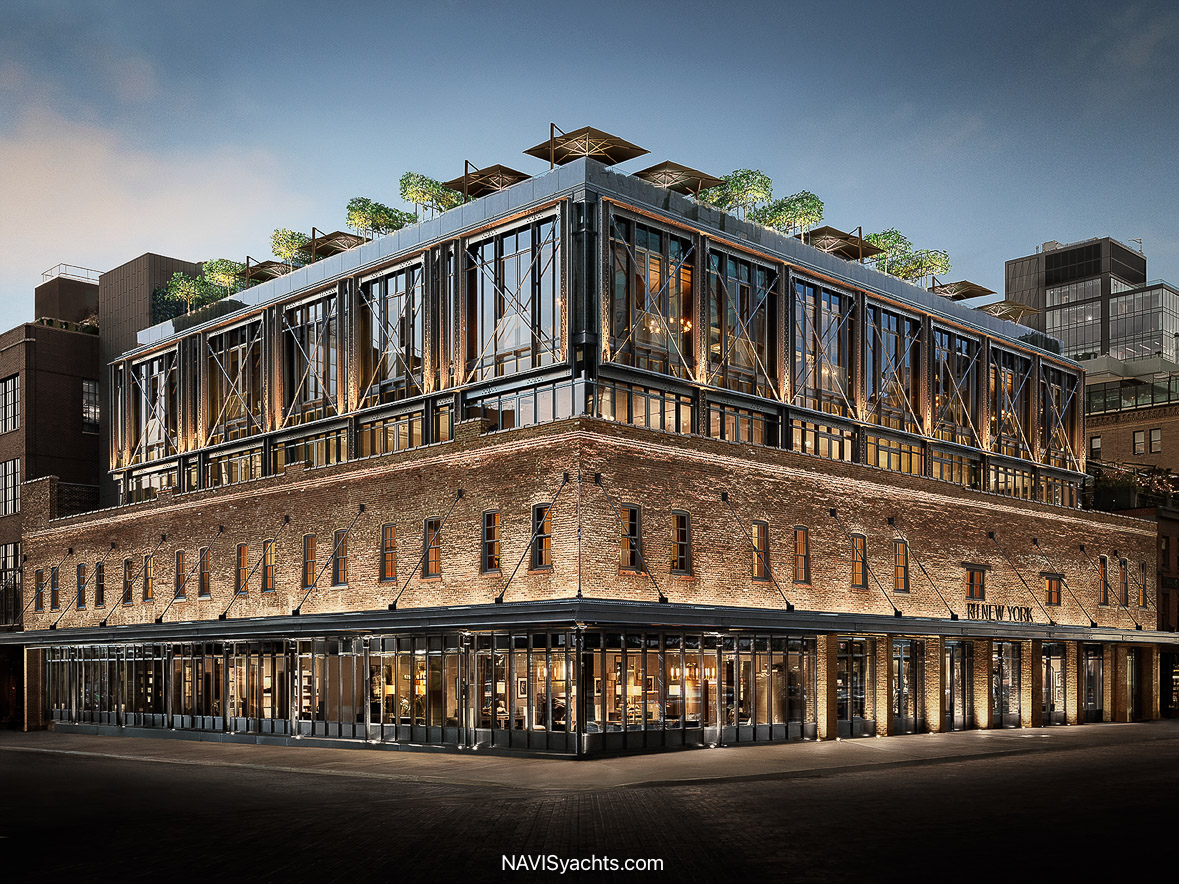
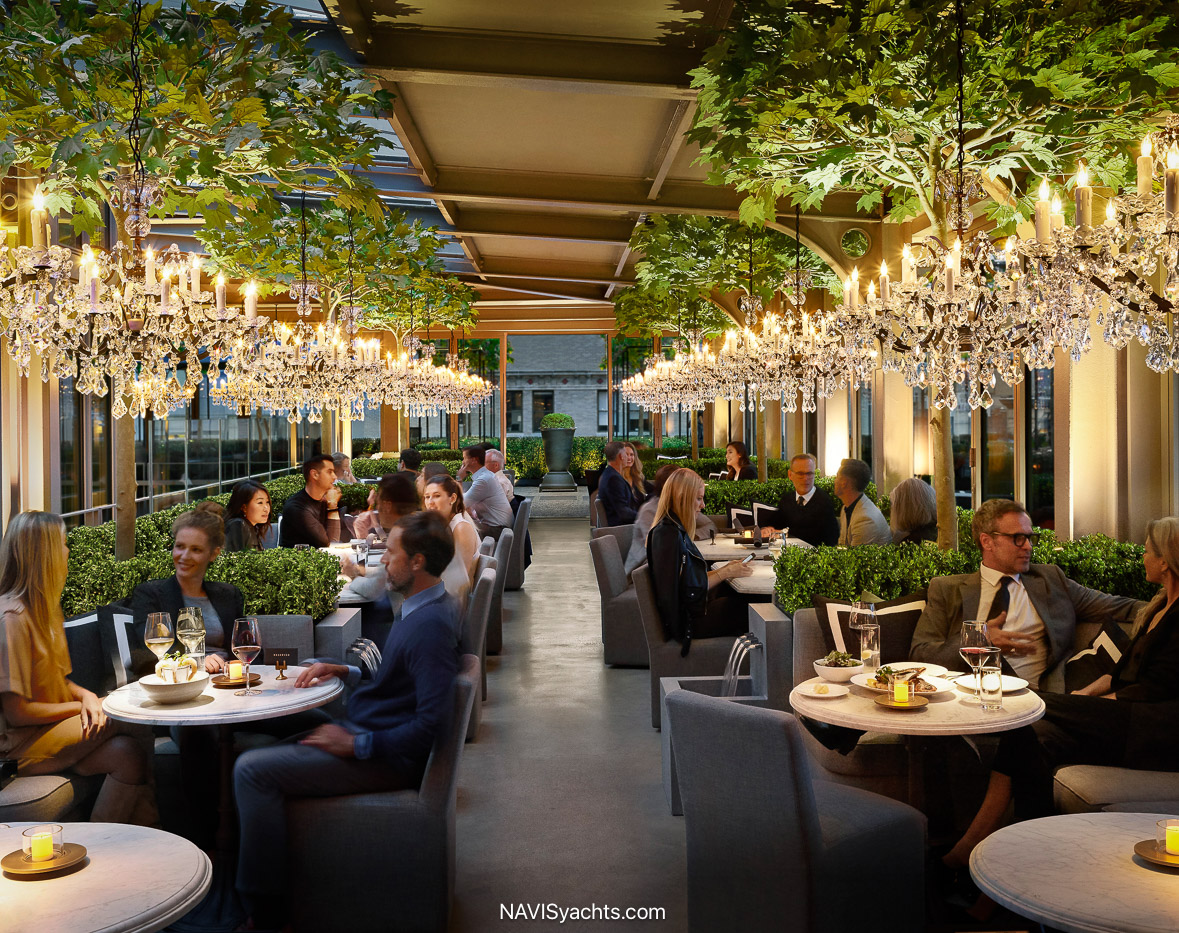
At the Meatpacking District, a friend invited us to discover a secret. Atop the RH New York gallery, a maze of curated interiors and luxurious design, we took the glass elevator to the sixth floor and emerged into a hidden greenhouse of glass and chandeliers. The restaurant, unnamed and unmarked, exists like a mirage, chandeliers hanging above minimalist tables, surrounded by floor-to-ceiling windows. The space is drenched in natural light by day, warmed by candle glow at night. The food mirrored the setting, fresh, clean, composed. This was the art of curation, ingredients placed with precision in a setting built to slow you down.
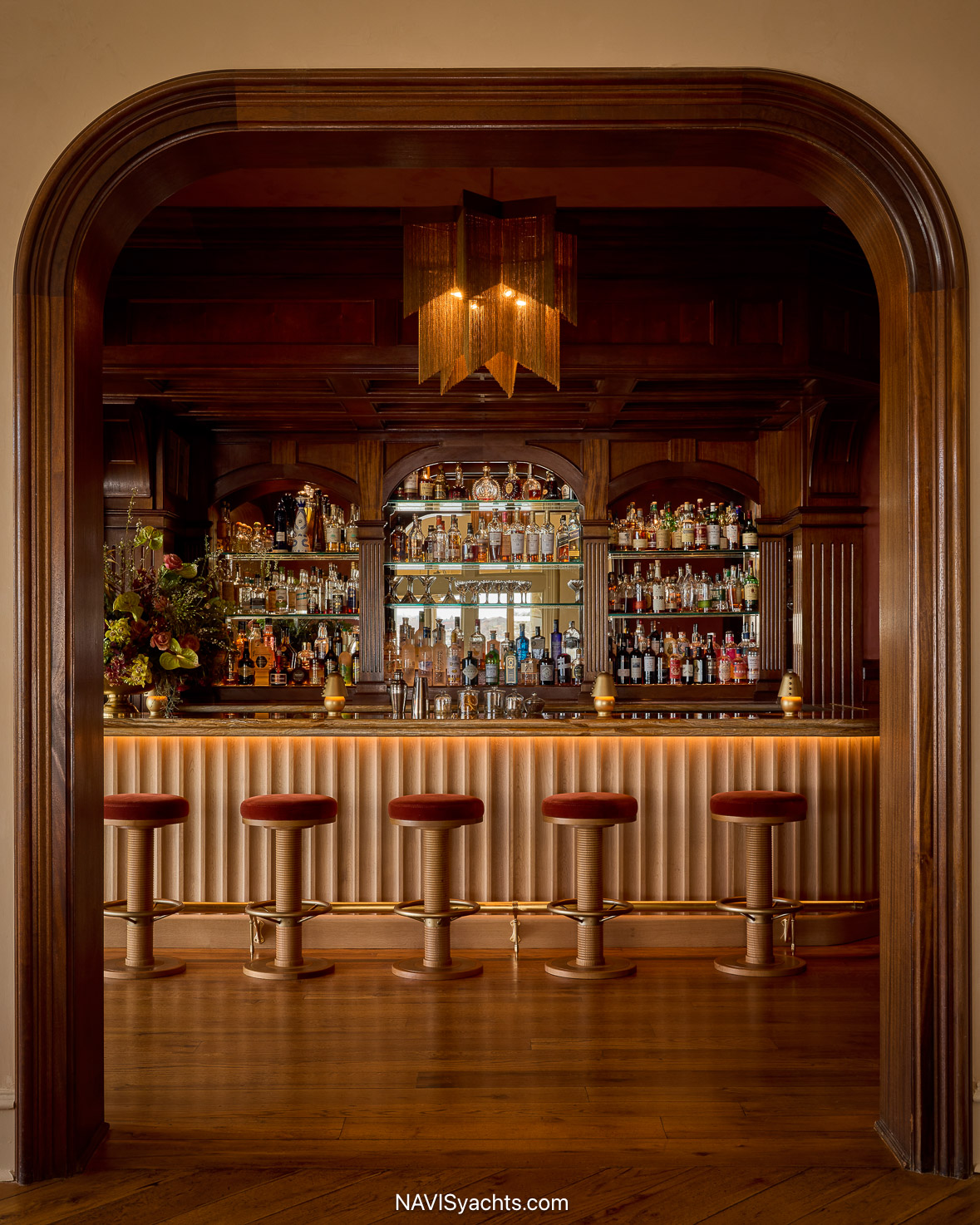
And to close this immersive journey through culinary craftsmanship, we returned to the rooftop of The Peninsula for one final moment of stillness at Pen Top. As the sun dissolved into the horizon, the city softened. From that height, Manhattan became sculpture, its reflections catching fire in the glass, its edges blurring into night. We sat with our cocktails and let the skyline shift. That was the moment we knew it was time to go.
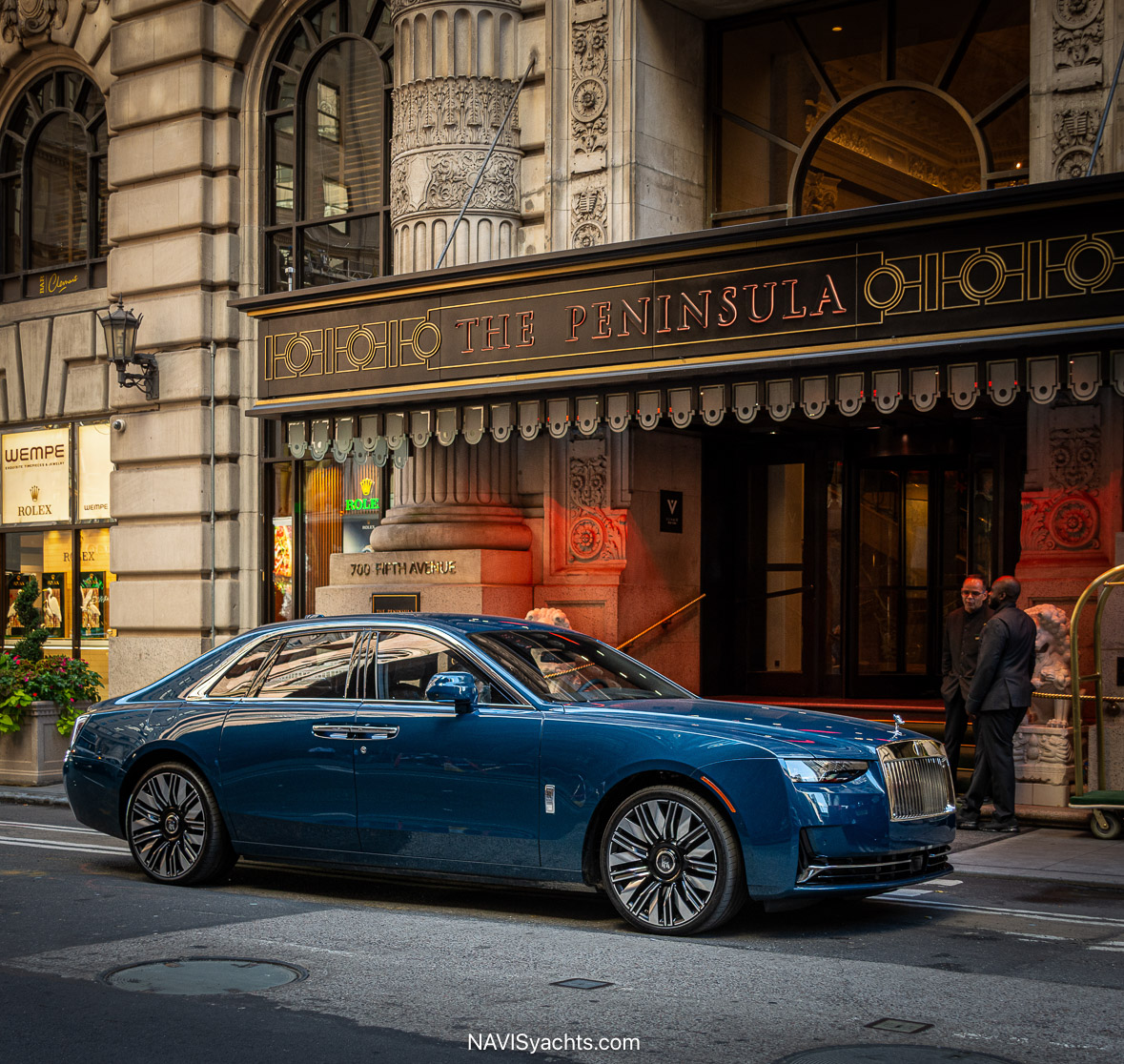
The next morning, the concierge delivered the news, the Ghost had arrived. She waited in front of The Peninsula, poised and still, cutting through the morning’s rhythm like a line drawn in graphite. Between the rush of commuters and hotel guests, she stood with the confidence of something that doesn’t need to prove itself. The staff had already loaded our luggage. We stepped inside, the doors closed softly, and the noise of the city vanished. It was as if we had stepped into a vacuum, a private world stitched in leather and silence. The hi-fi system came alive with Ravel’s Boléro, conducted by Pierre Boulez with the New York Philharmonic. We selected the volume, pressed the ignition, and the trip began.
Art in Hospitality, Heritage, and the Sea
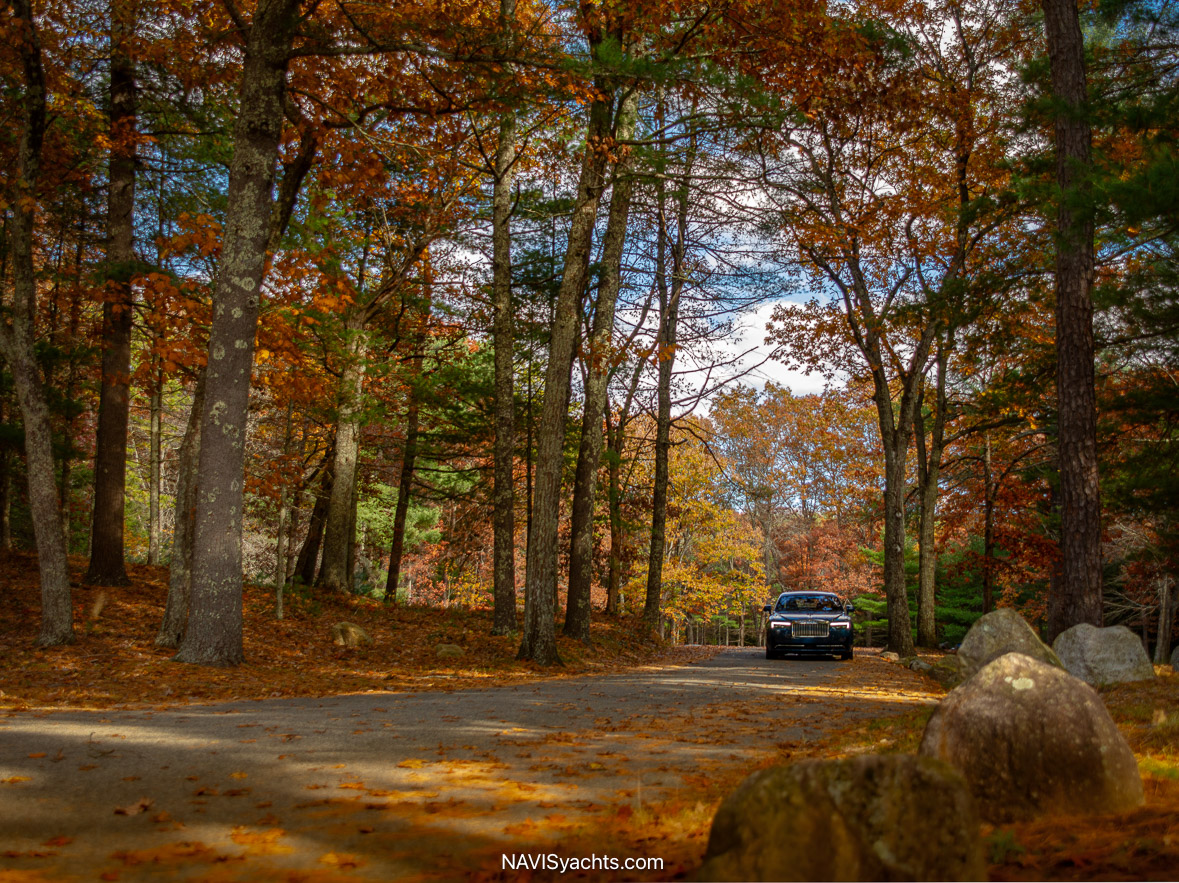
Leaving New York behind with a shift in rhythm. We sought out the Hutchinson River Parkway, affectionately known as The Hutch, a historic route carved in the 1930s as part of a grand vision for scenic American highways. This was a ceremonial corridor, its low stone bridges and canopy of oaks carrying us deep into the Northeast’s fall palette. It was here, beneath arches of granite and flaming leaves, that we saw the first brushstrokes of autumn’s masterpiece. Orange bled into rust, gold into crimson, every curve in the road another colorful revelation.
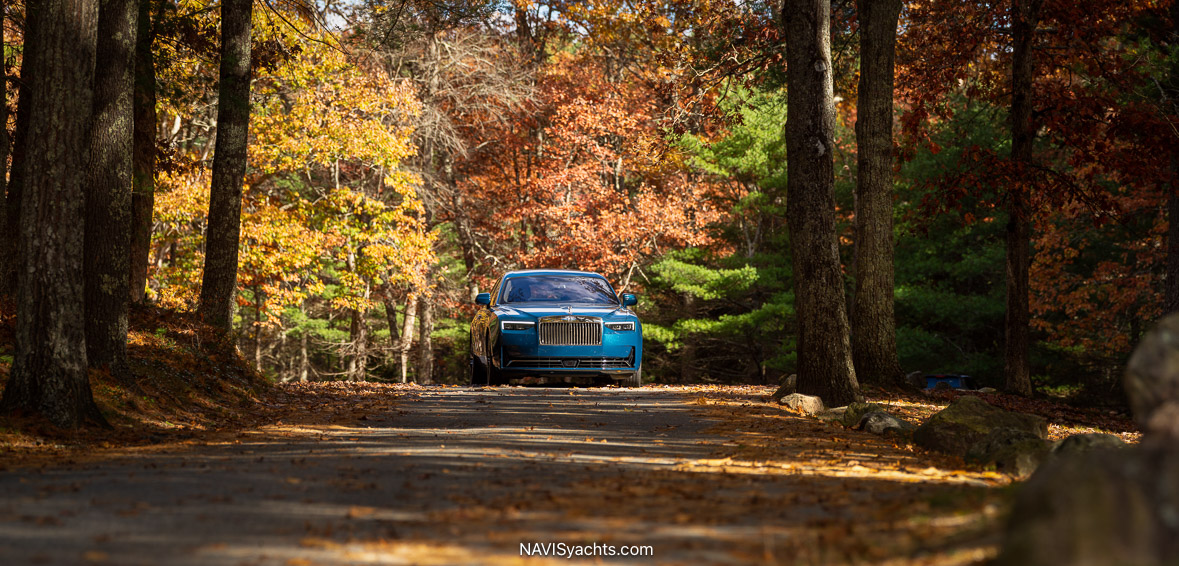
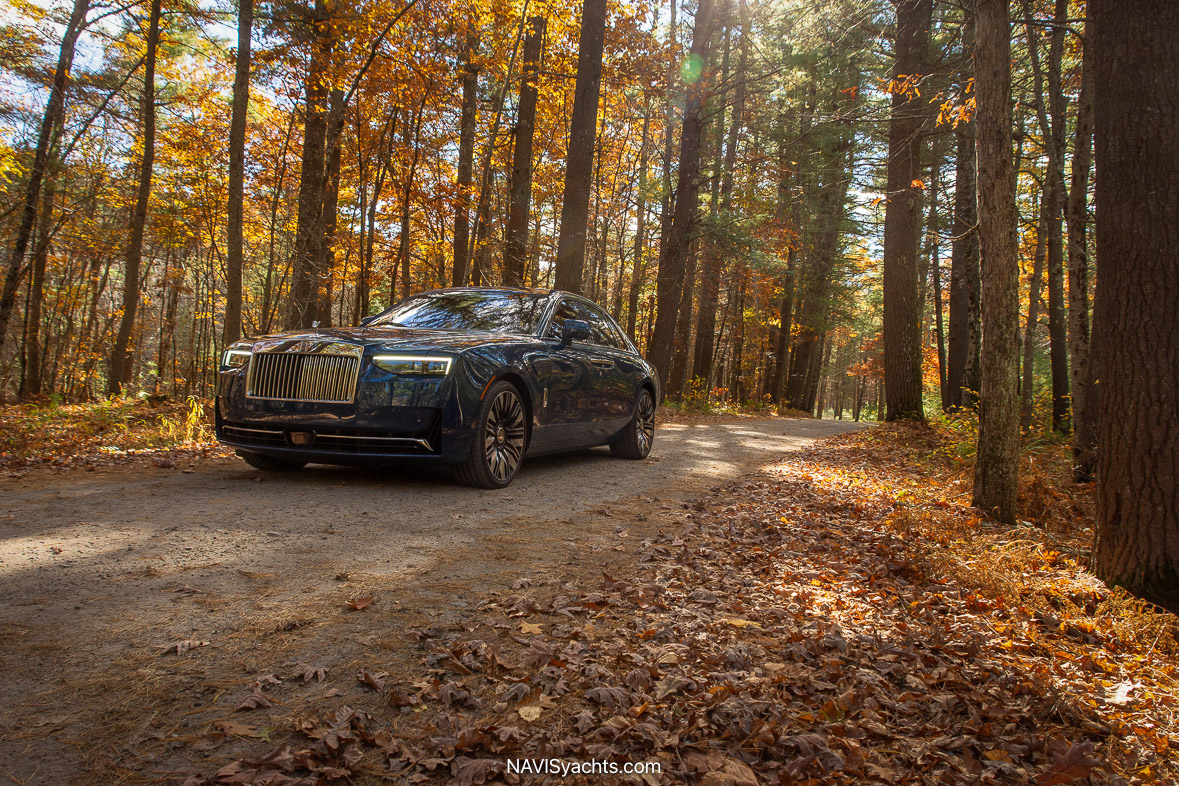
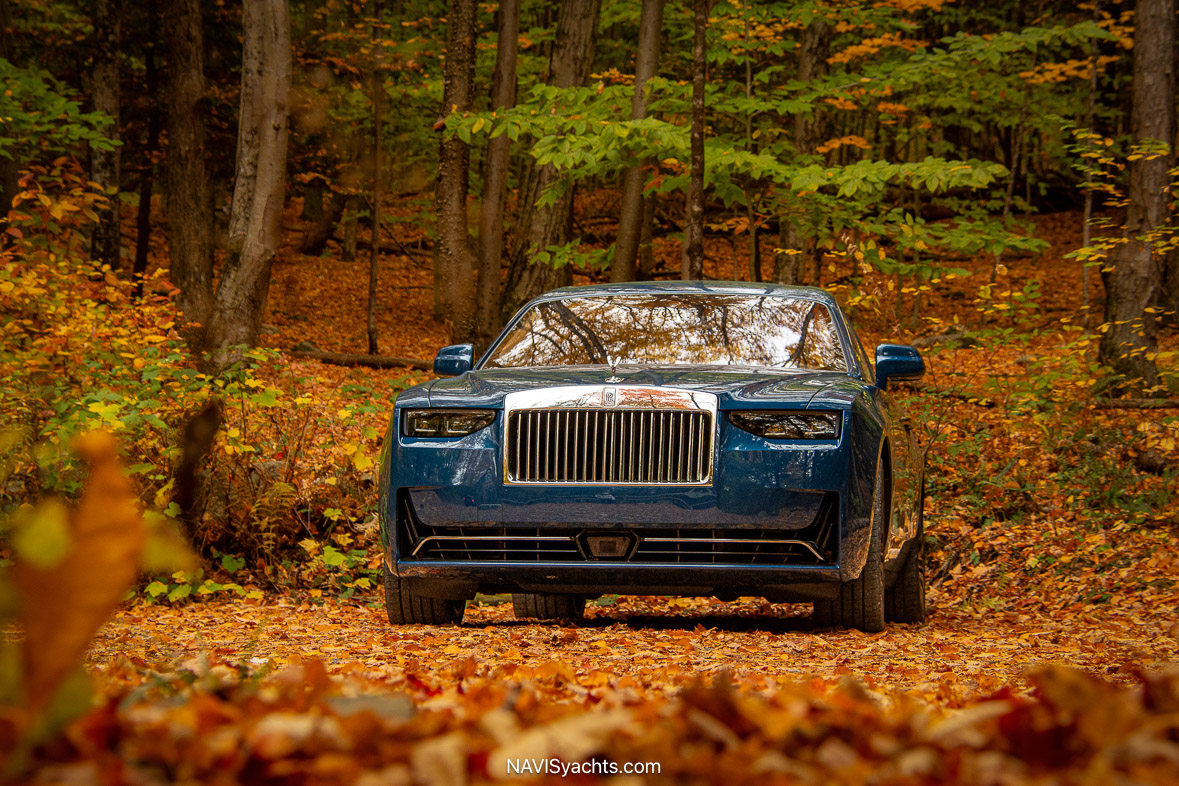
The Ghost became the ideal interpreter of this sensory landscape. Riding in her is unlike any form of travel; it’s as if the road is being read aloud by a silent narrator. The V12 engine exhales quietly. Power arrives not in bursts, but in a continuous wave, and the suspension system renders every imperfection irrelevant. This is the “magic carpet ride” promised by Rolls-Royce, and it’s no metaphor. Wrapped in silence, beneath starlight headliner and lambswool softness, we moved through the painted forest as invited guests.
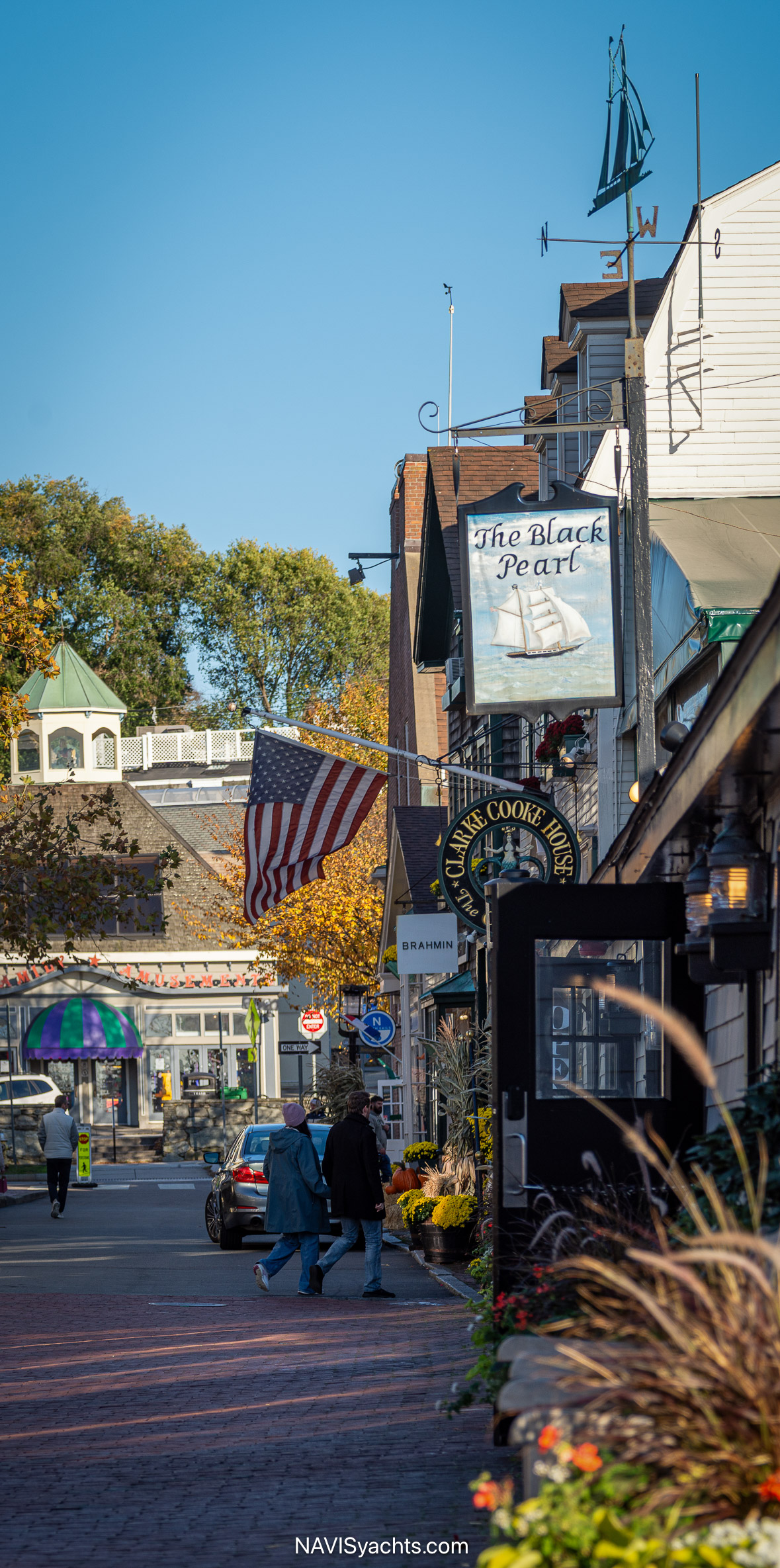
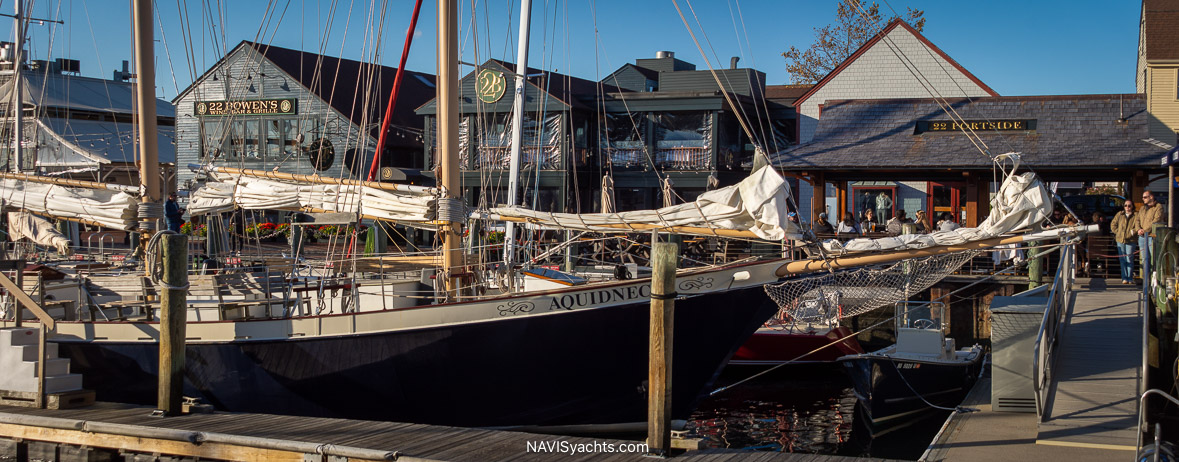
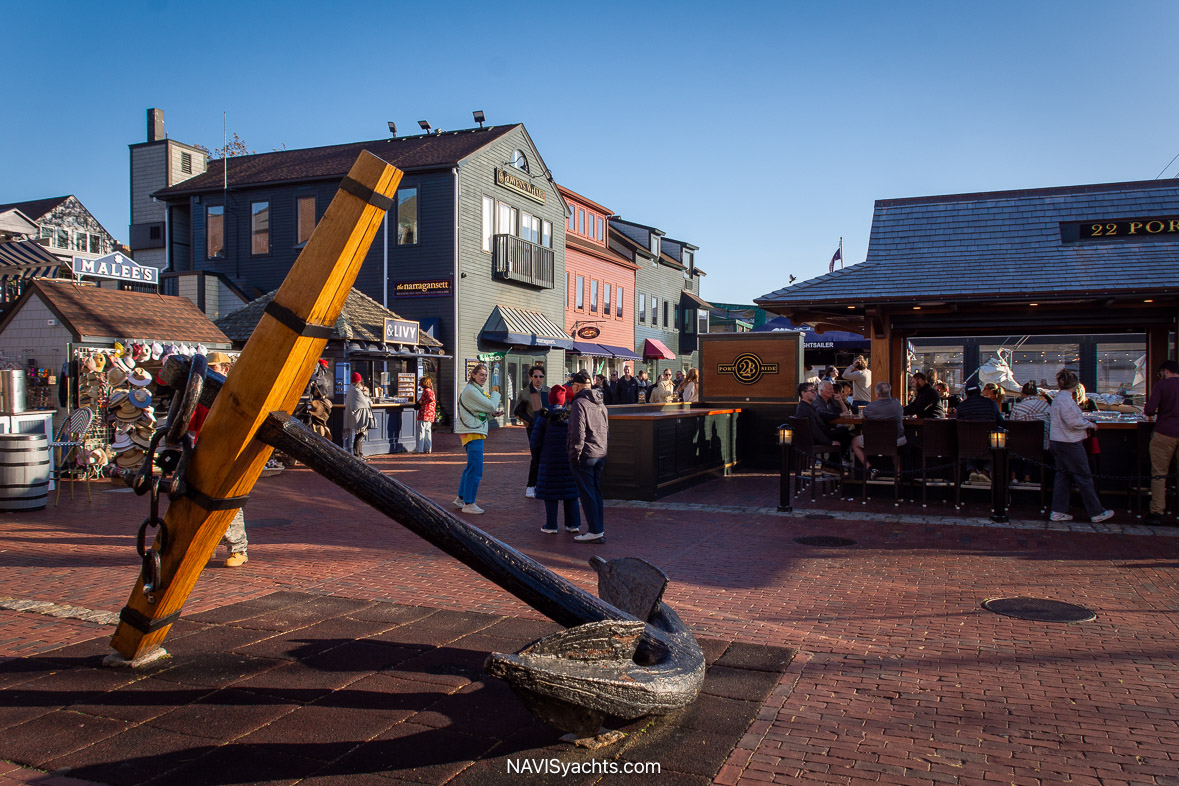
We arrived in Newport, Rhode Island, greeted by the scent of salt and the whisper of canvas sails. Newport wears its history without costume, the America’s Cup, the Gilded Age mansions, the carved wooden hulls of racing yachts that once defined a nation’s obsession with maritime elegance. This is a town where heritage is lived. Beneath the polished clapboards and steep gables, there is engineering, craft, and the sea as muse.
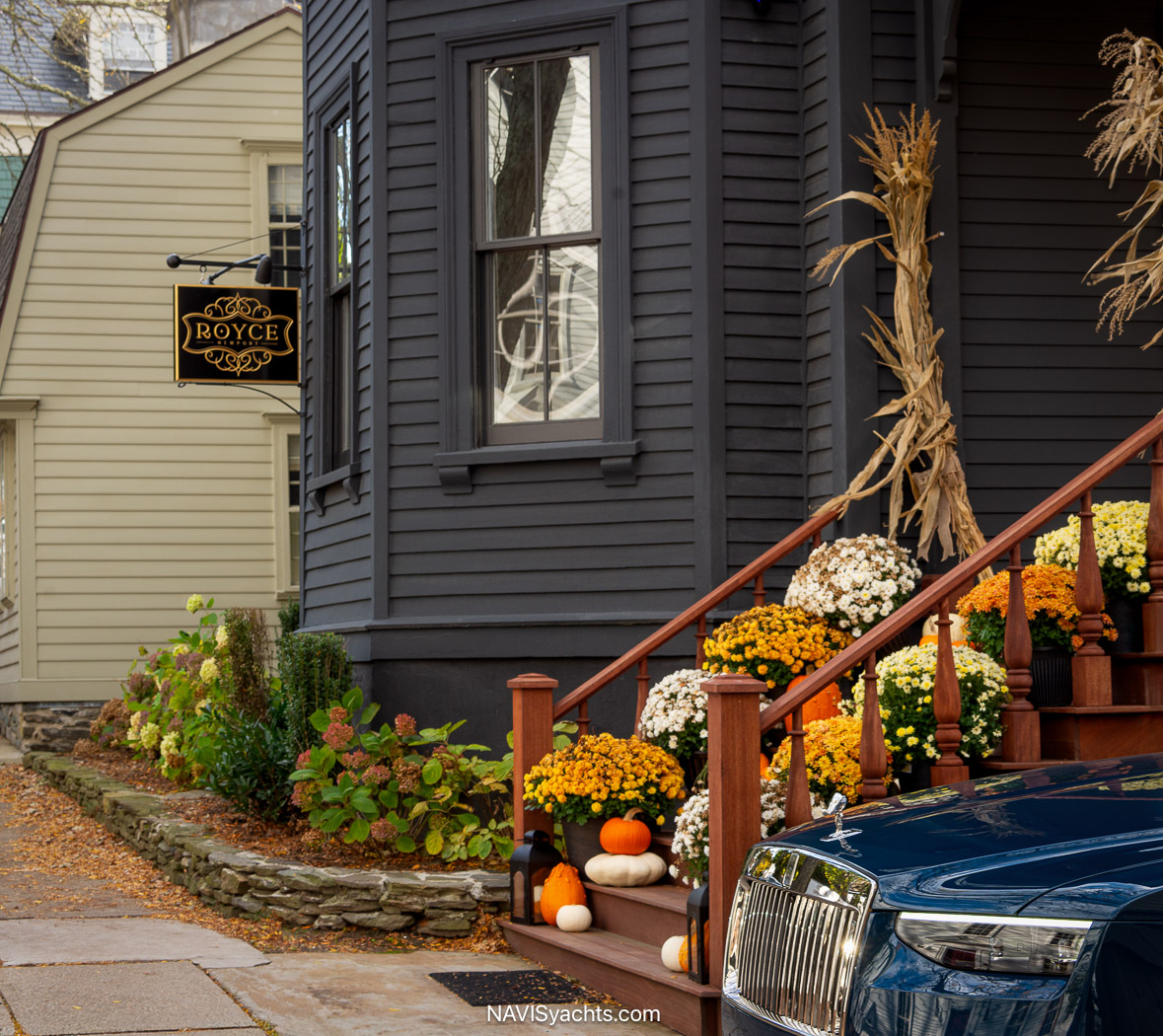
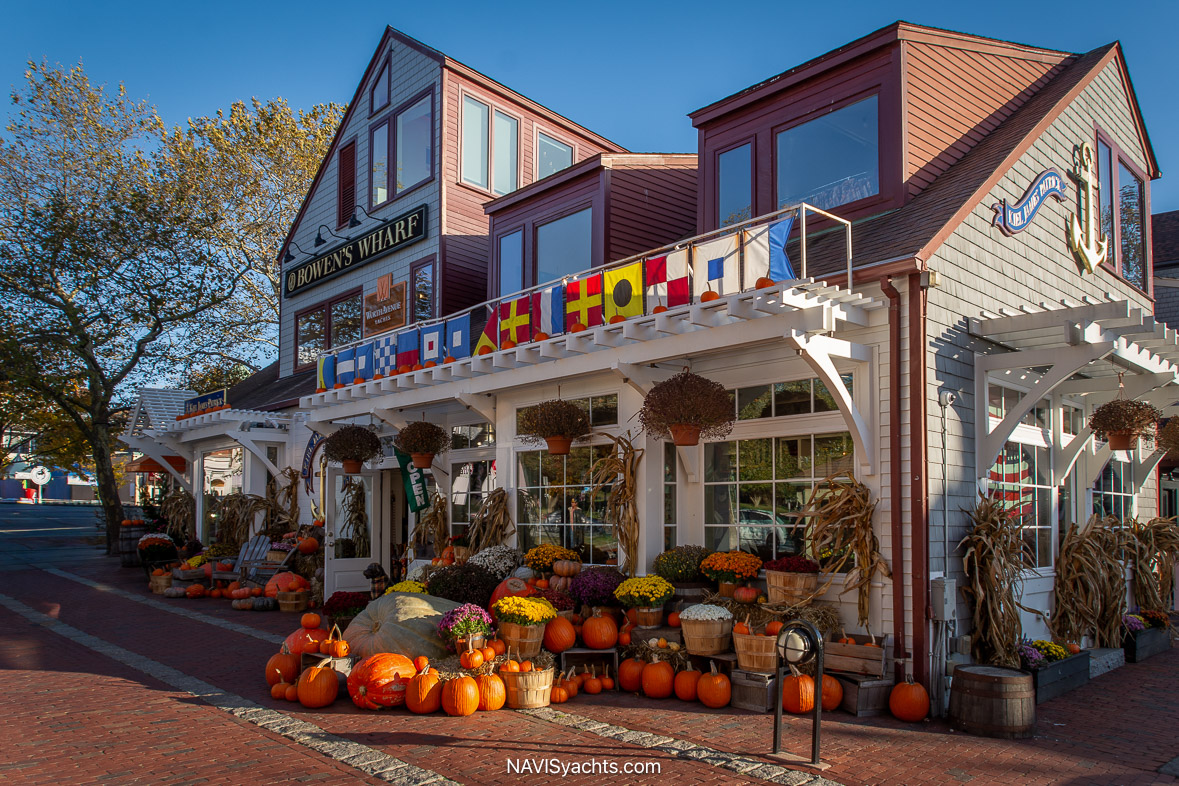
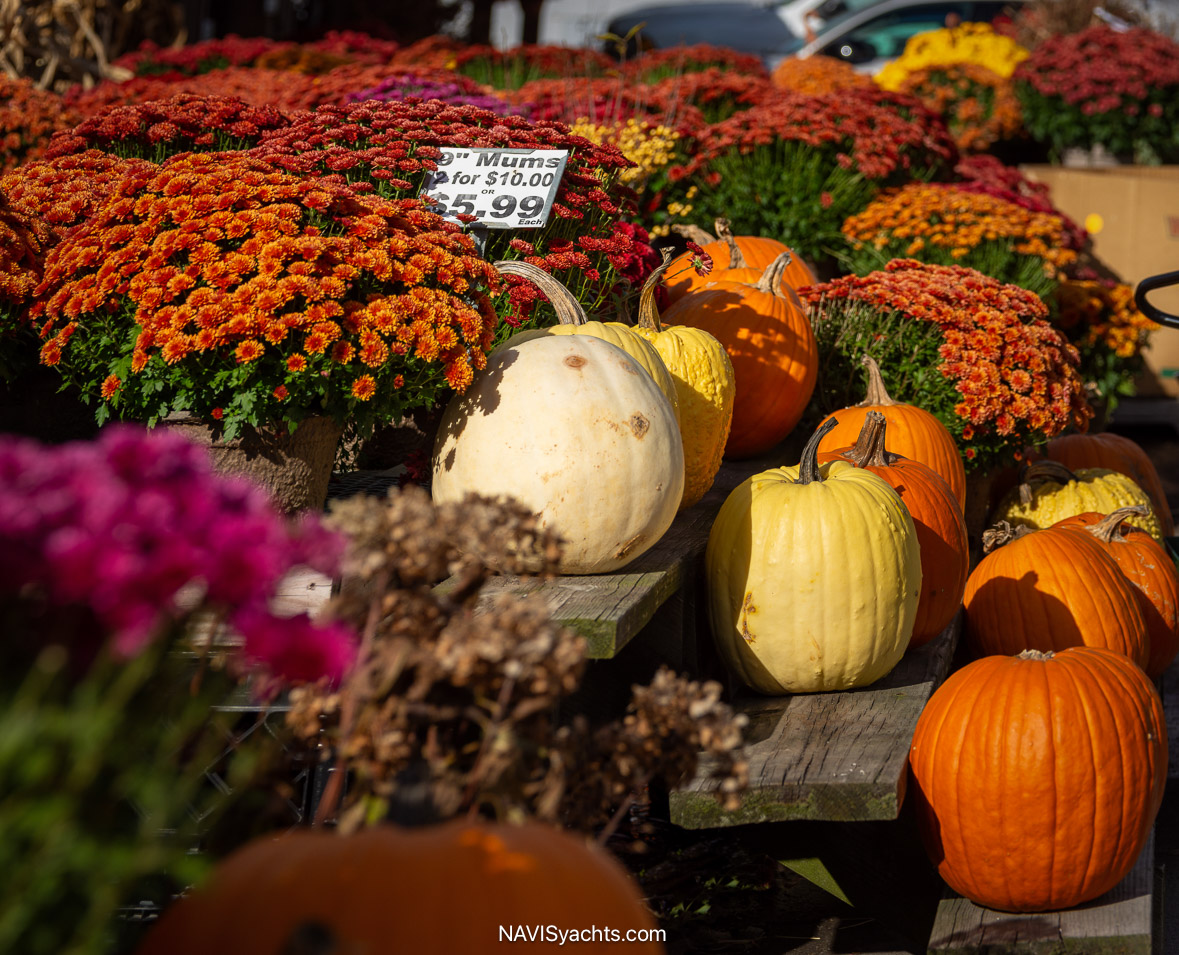
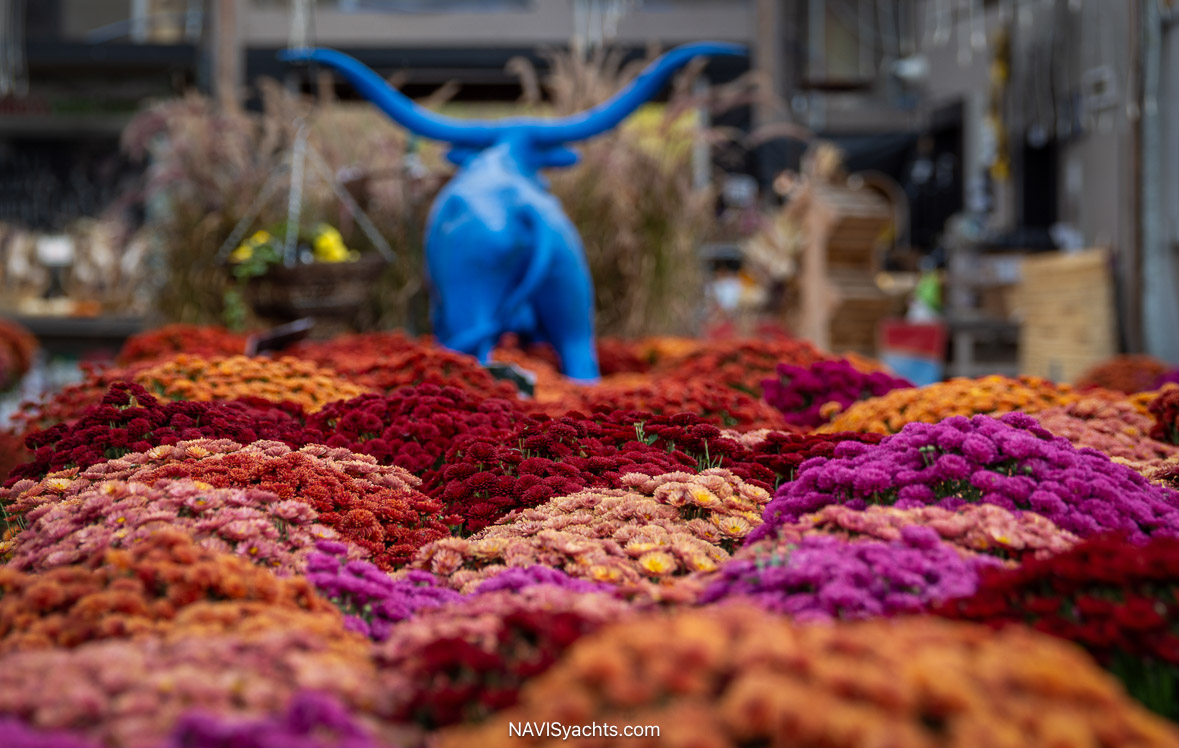
Newport itself feels like a painting that’s never quite finished. Walking its narrow, cobblestone streets, flanked by colonial facades and timber-framed storefronts, you feel like you’re moving through eras. Window boxes spill with mums, and pumpkins gather on steps like brushstrokes of seasonal color. The whole town had dressed for autumn. There’s a kind of dignity here, a quiet continuity that honors what has come before. Founded in 1639, Newport flourished as a major trading port in the 18th century, its harbor once crowded with merchant vessels and privateers. By the time the Gilded Age arrived, it became a canvas for wealth and architecture, where summer homes rivaled European palaces in scale and detail. And yet, Newport never lost its soul as a working harbor. Today, those layers are visible in every corner, a sailor’s bar beside a French patisserie, a colonial wharf lined with superyachts, flags and rigging moving in the same wind that shaped the city’s past.
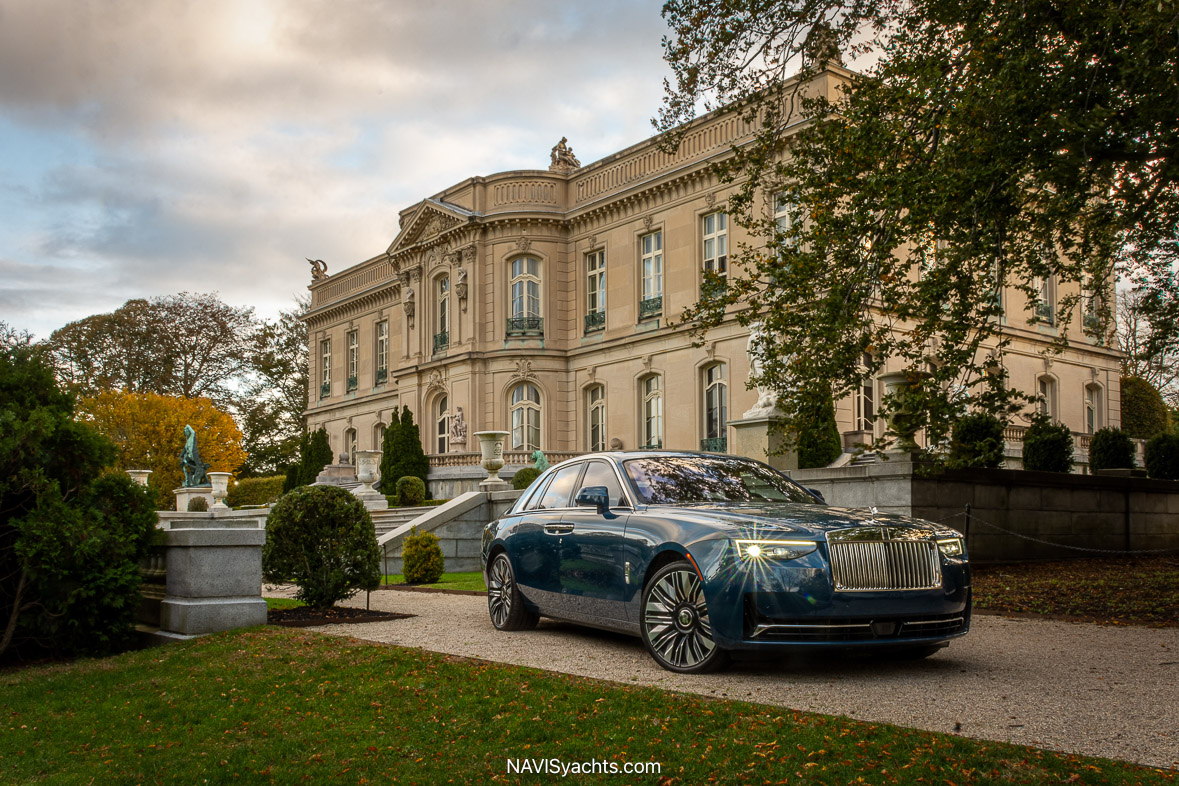
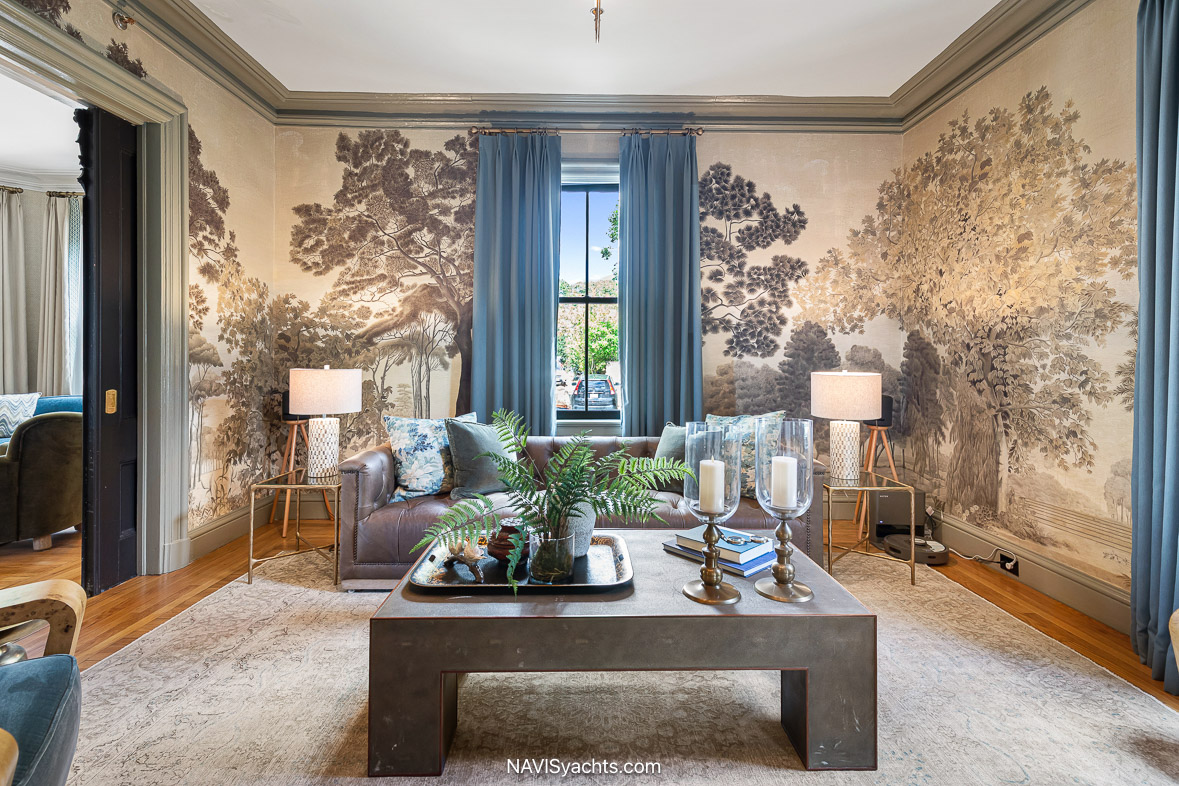
Our residence here was The Royce, a retreat so flawlessly integrated into the landscape of Newport that it felt like being invited into a private residence curated by someone with a deep respect for New England design. Its trim elegance and autumnal bloom of pumpkins and chrysanthemums mirrored the colors we’d just crossed states to see. The Ghost, dignified in deep blue, slipped into the driveway like it belonged, like it was designed for this address.
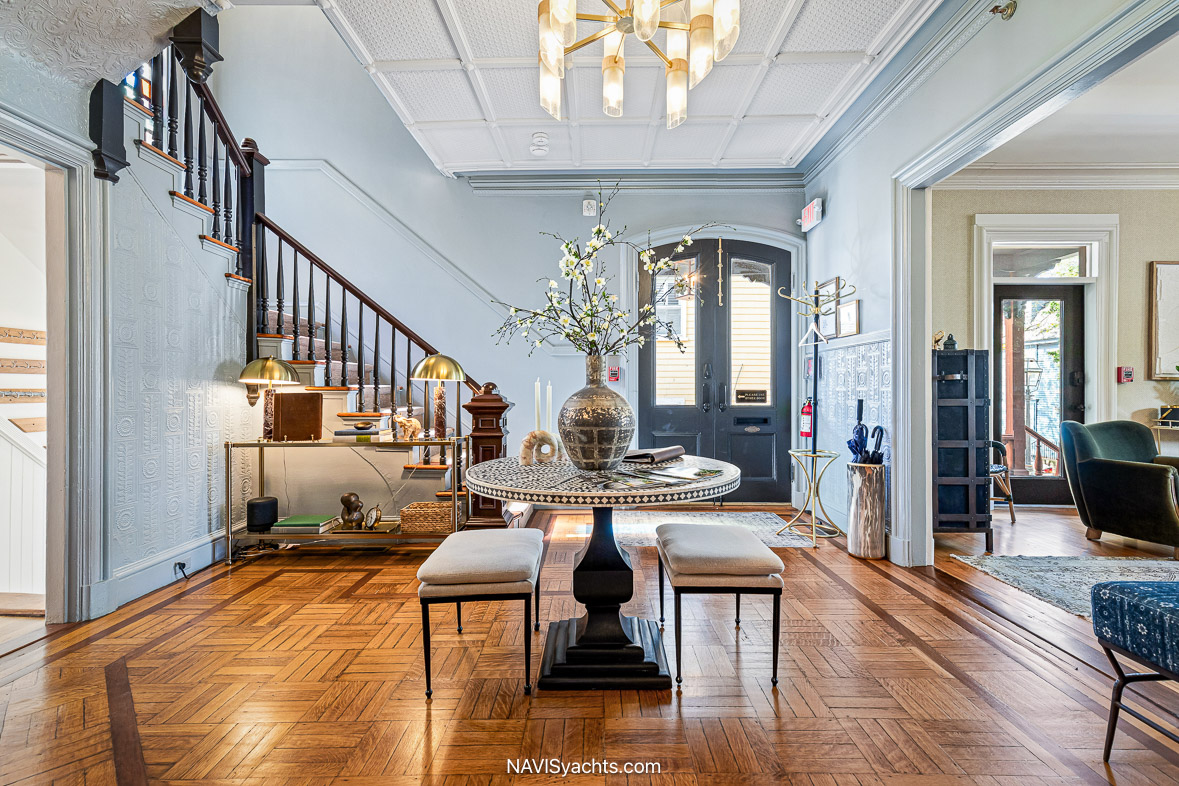
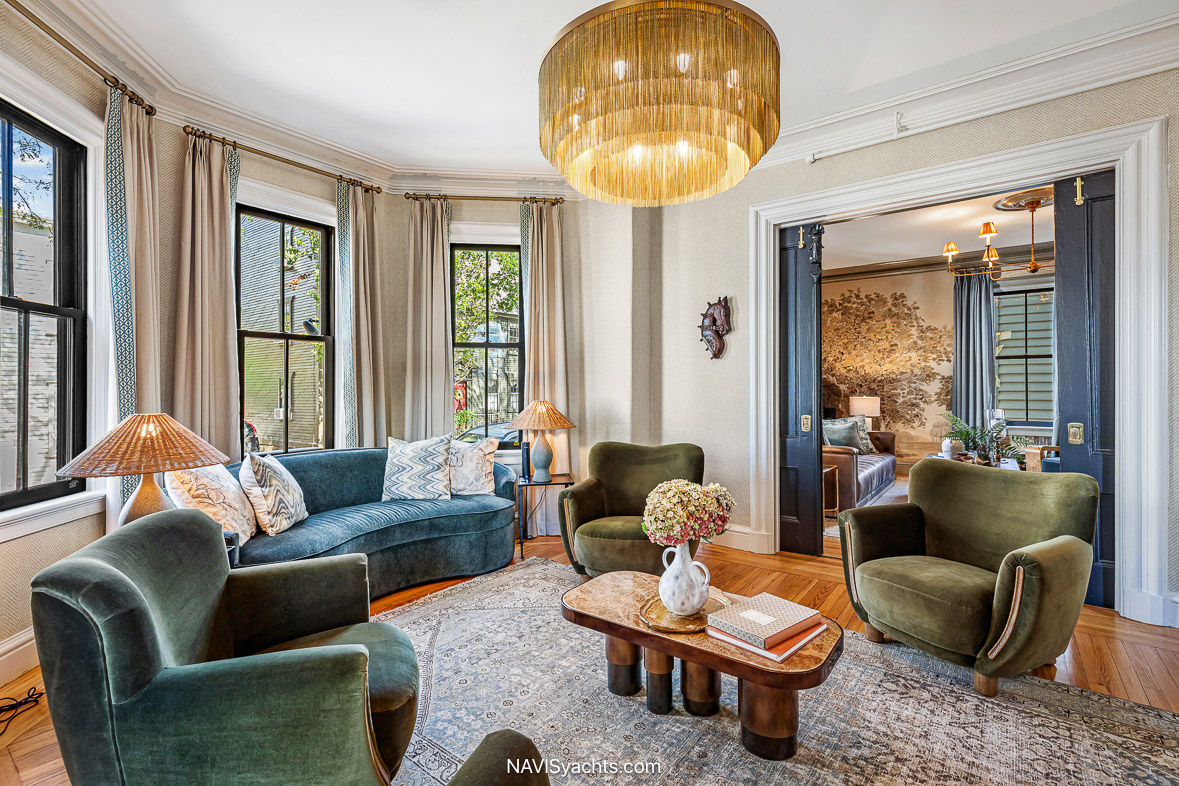
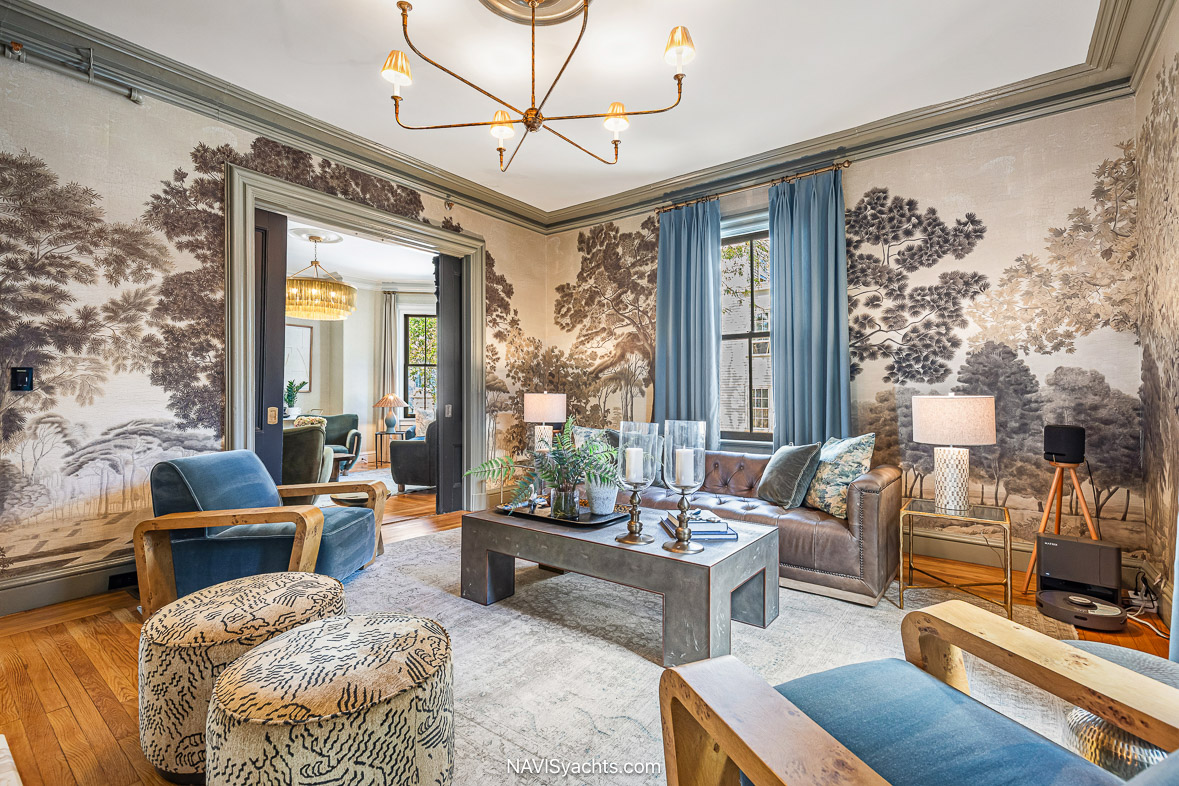
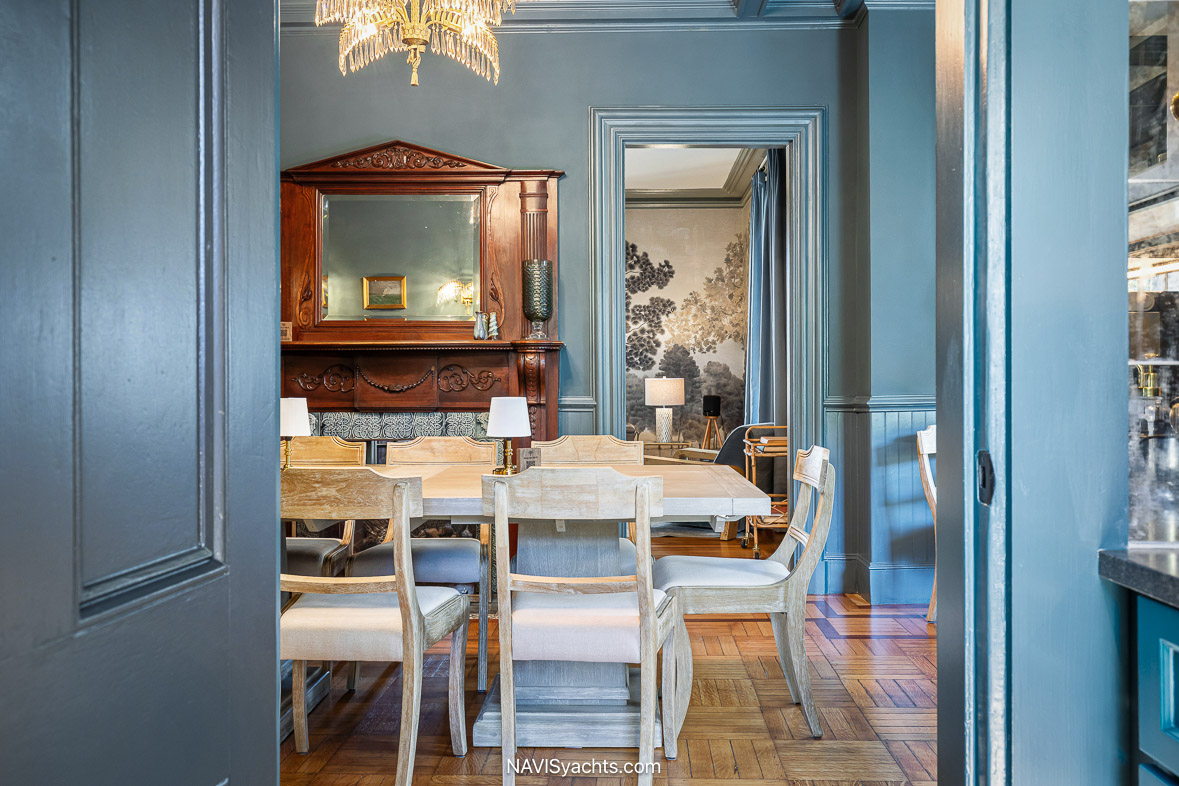
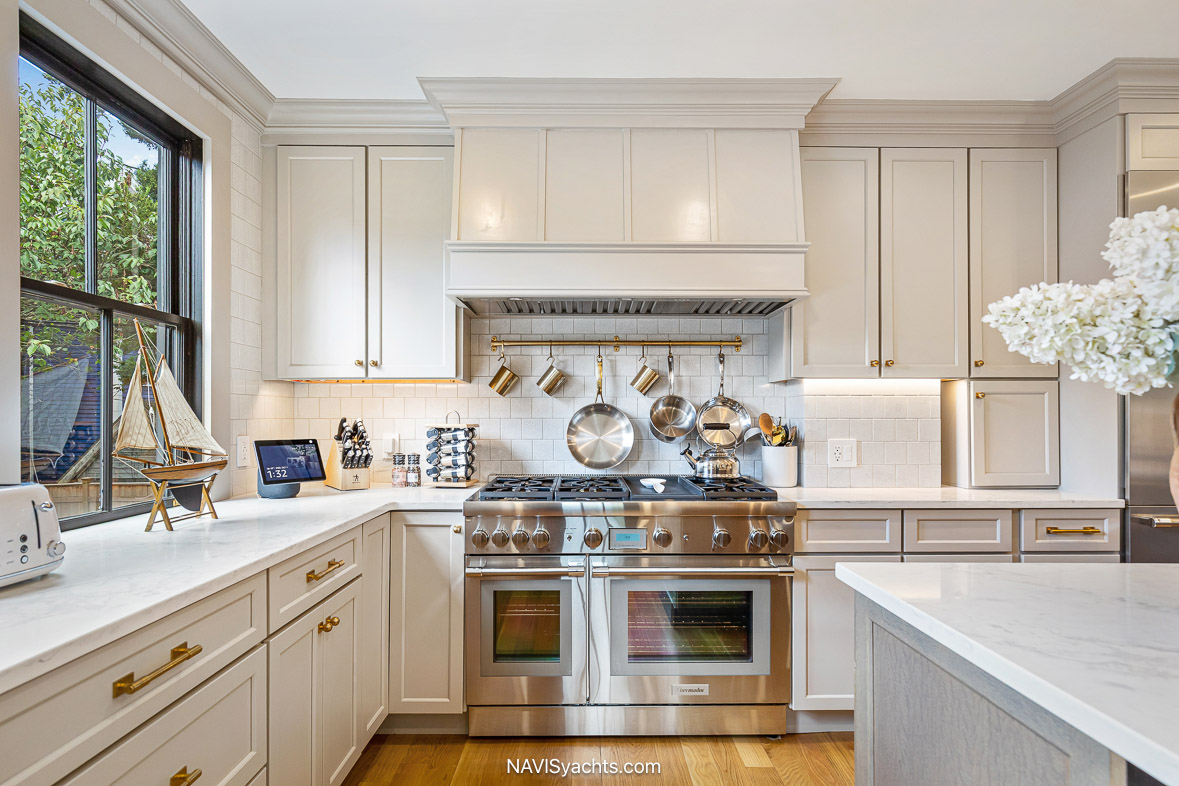
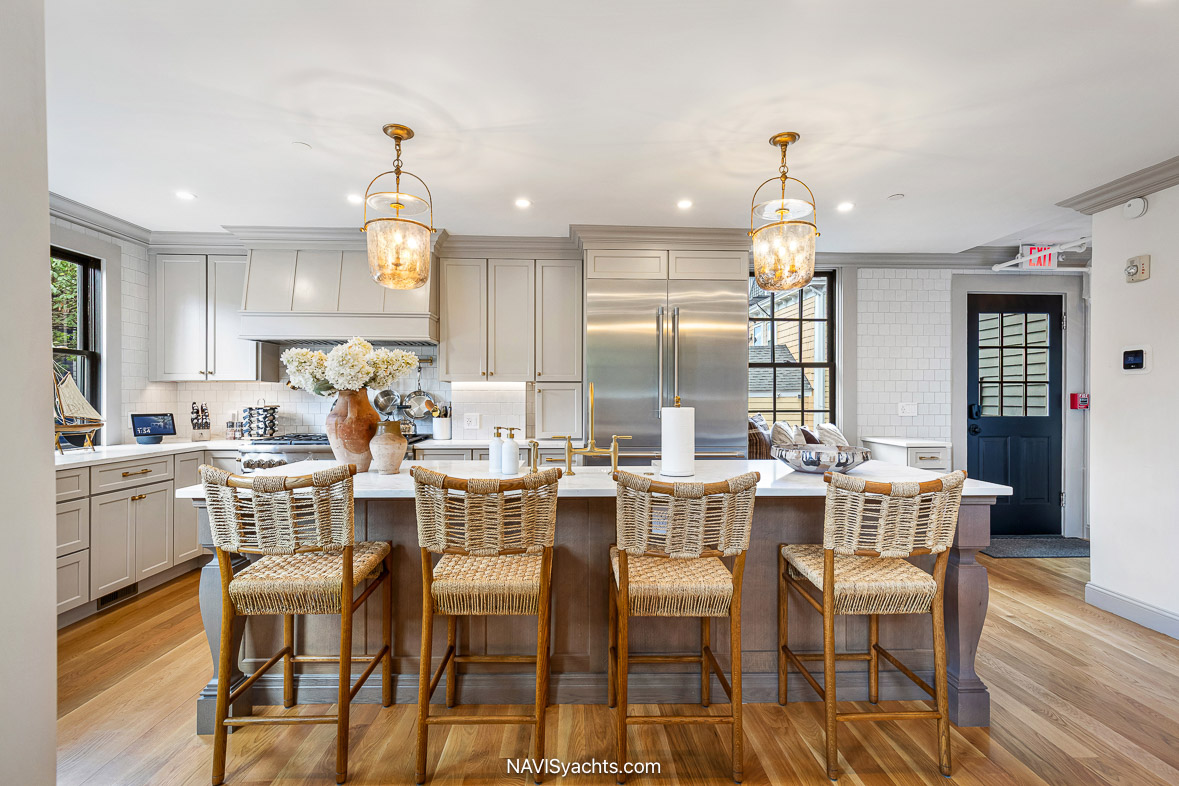
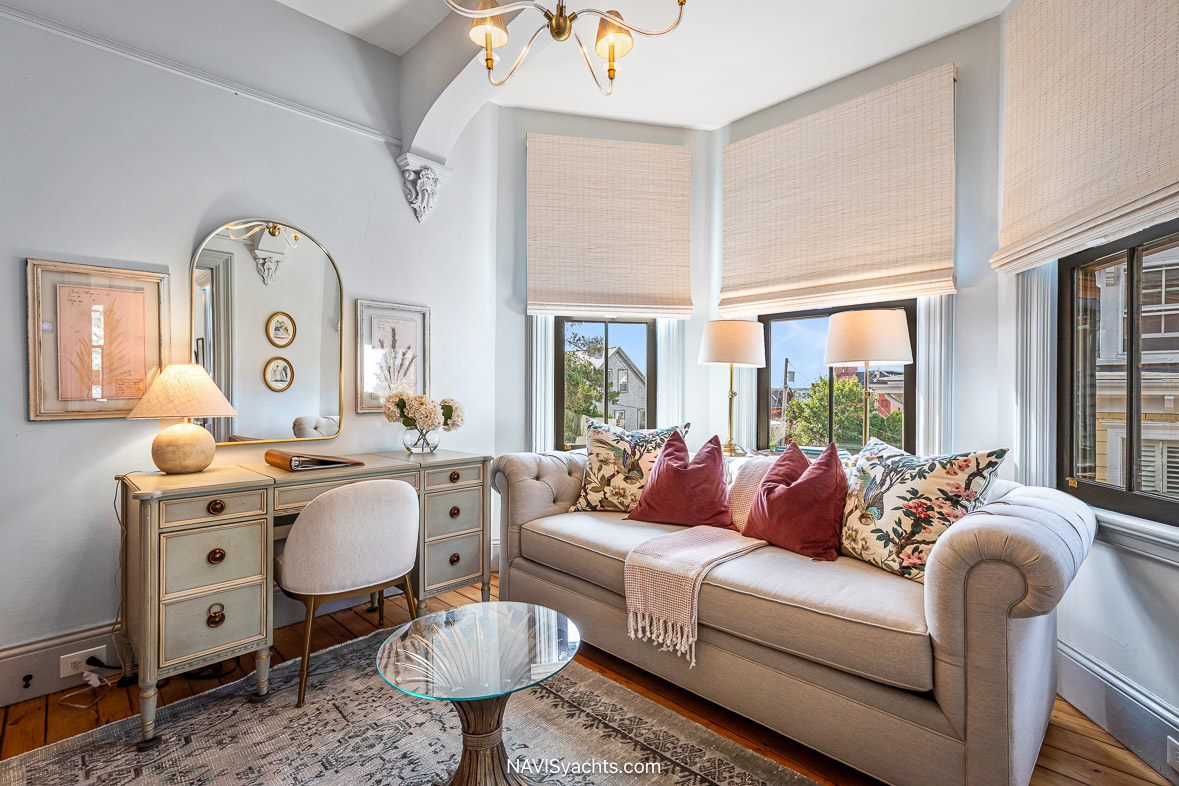
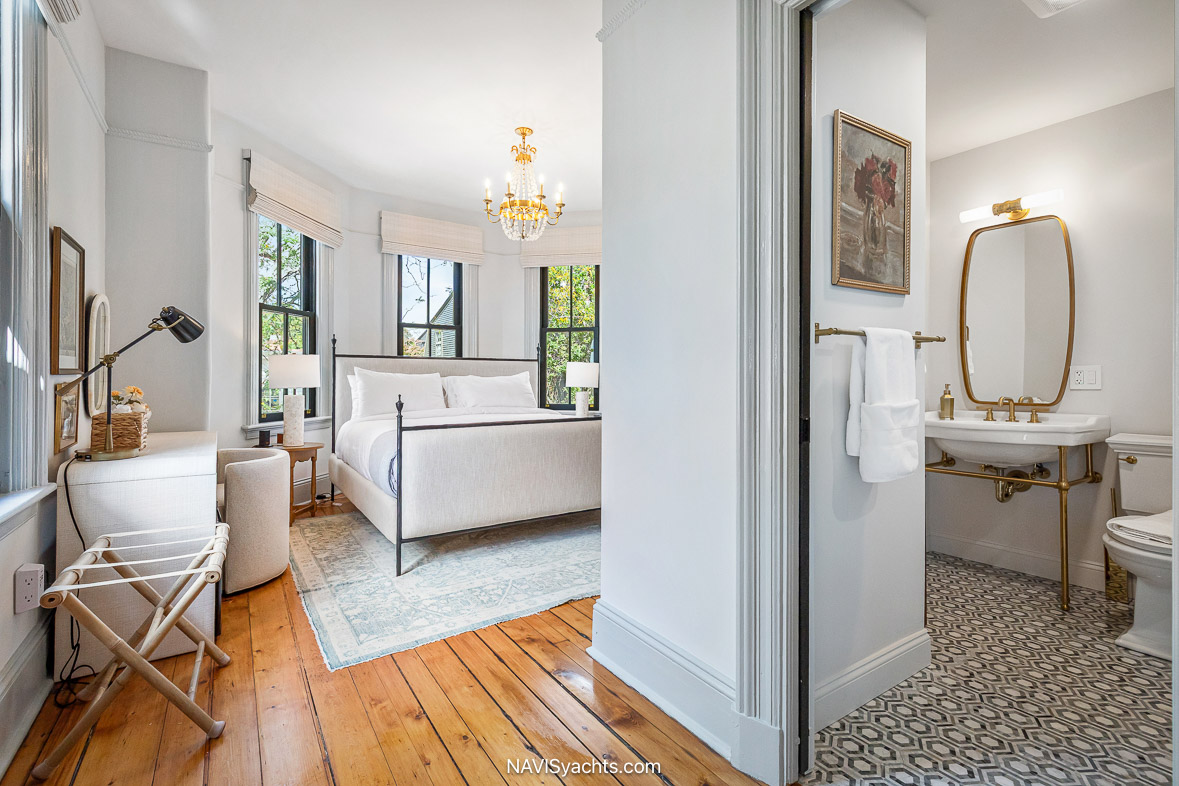
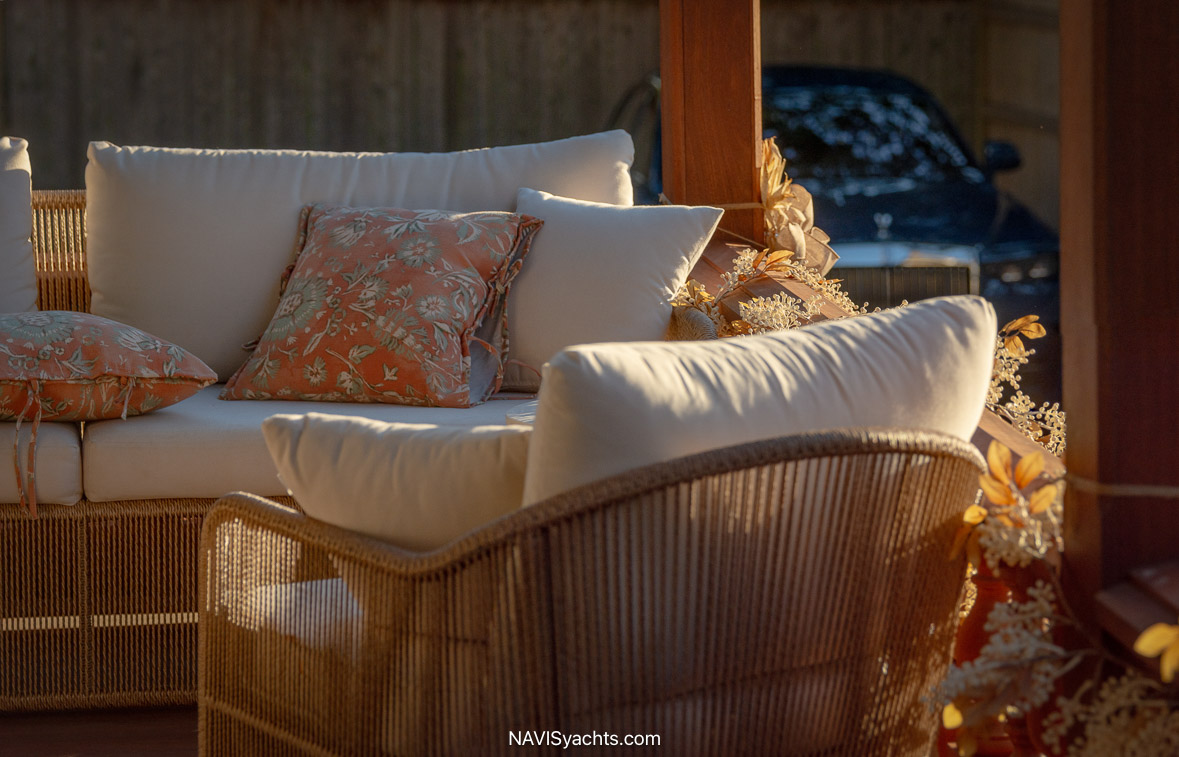
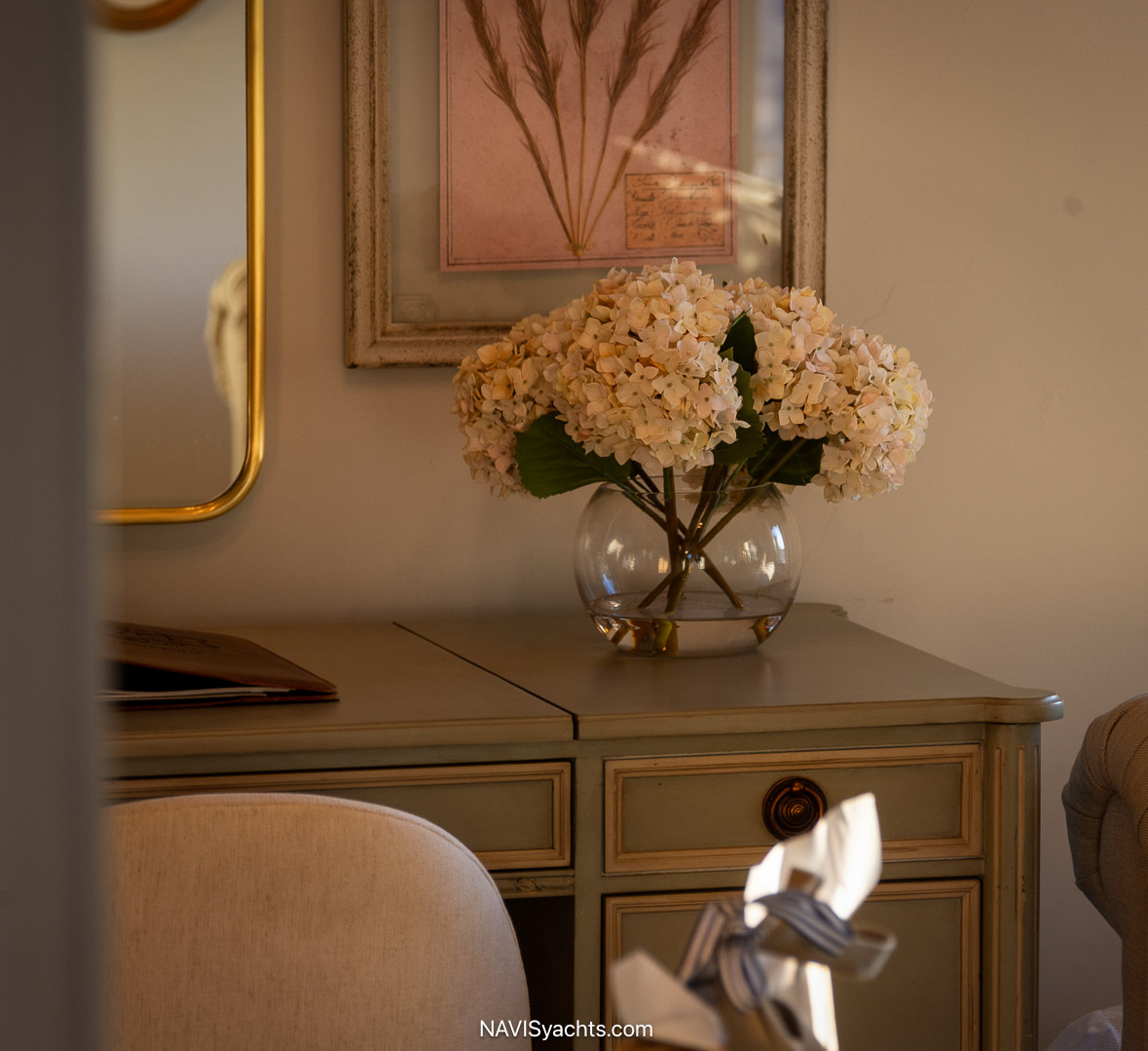
The Royce is a private residence, restored and curated with the kind of care usually reserved for heirlooms. Renting the entire house means stepping into your own chapter of Newport’s living history. And yet, there’s nothing antique about the experience. Each room is a study in restraint and refinement, sunlight spilling across restored hardwood floors, hand-pressed wallpaper, velvet and linen textures in muted, thoughtful tones. Brass fixtures gleamed beside marble vanities.
Chandeliers hung like punctuation over spaces meant to be lived in slowly. Inside these walls, Newport’s heritage felt preserved, reinterpreted, and modernized without losing its soul. Just like the Ghost, The Royce was art that you live within.
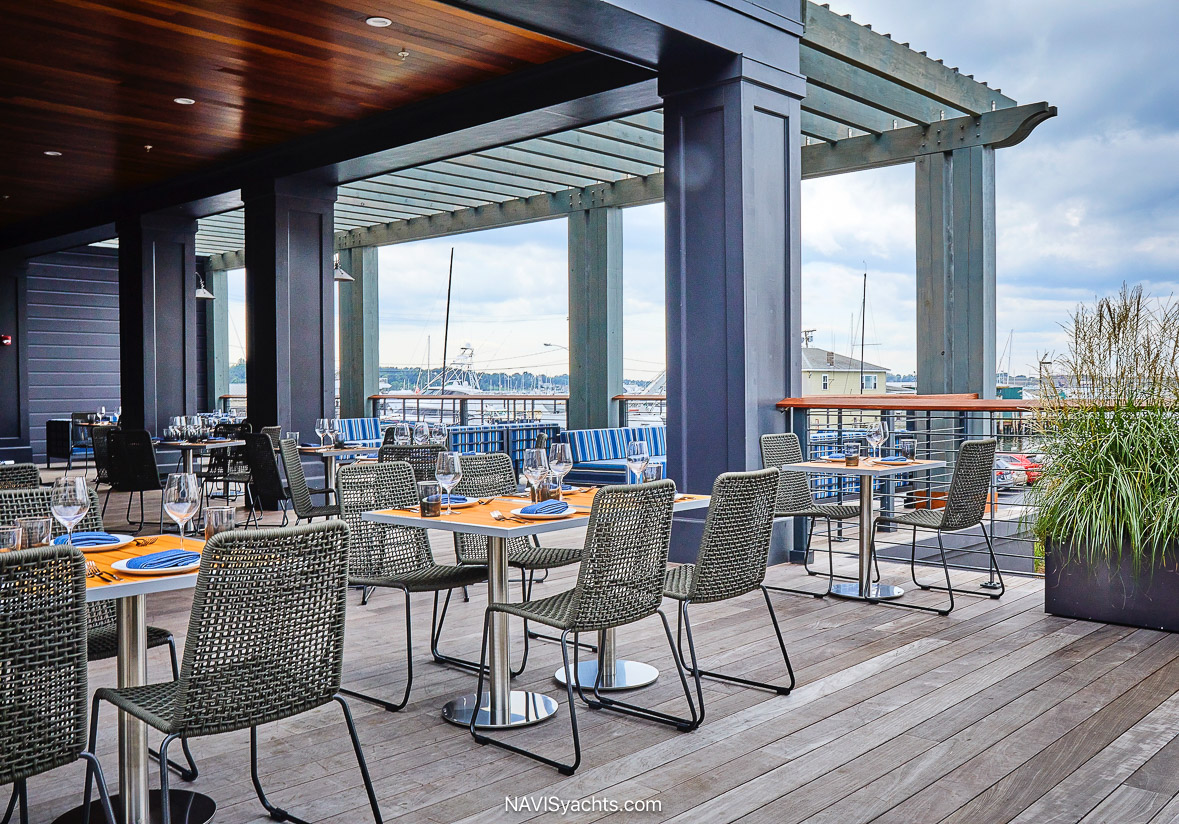
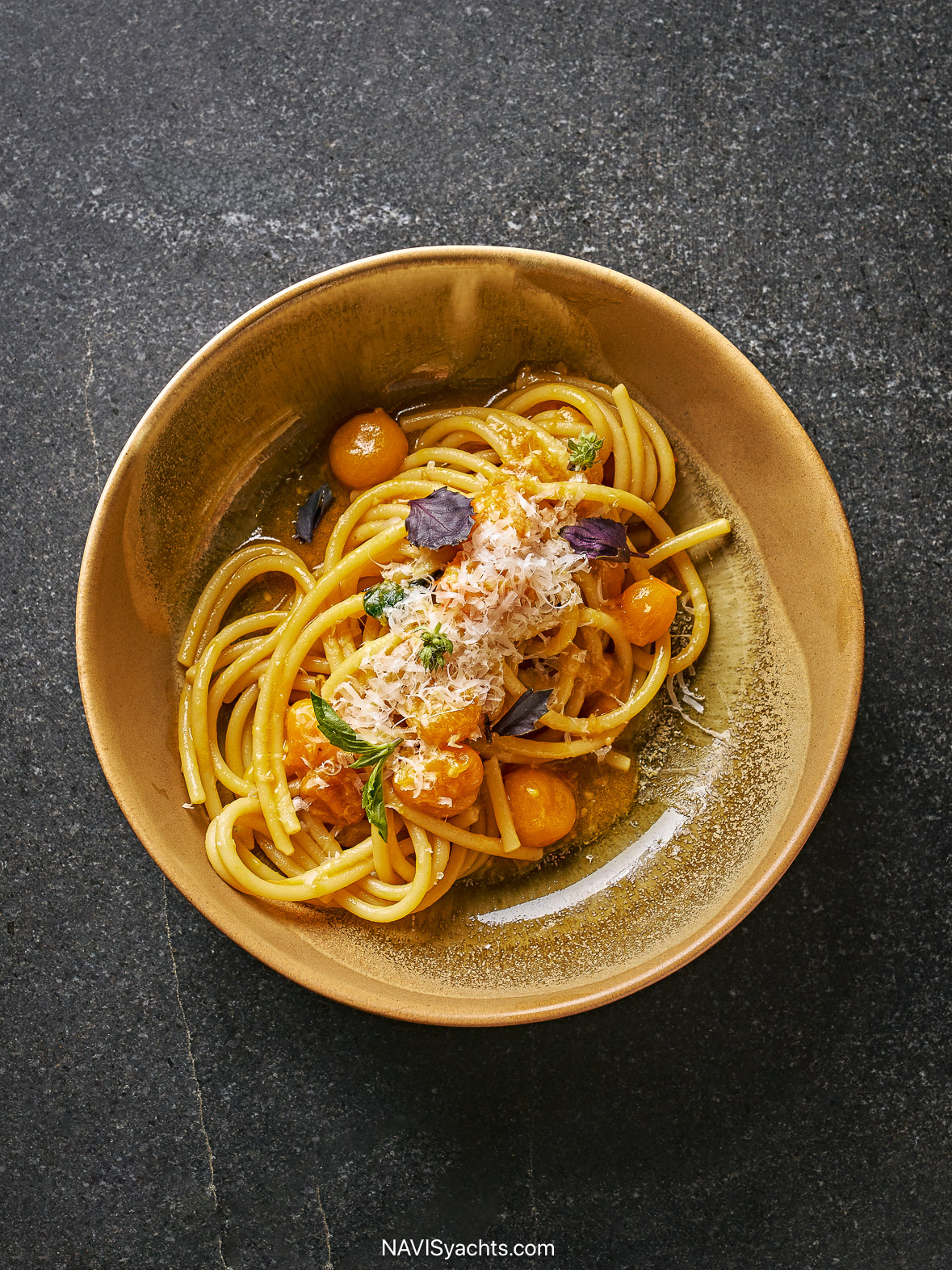
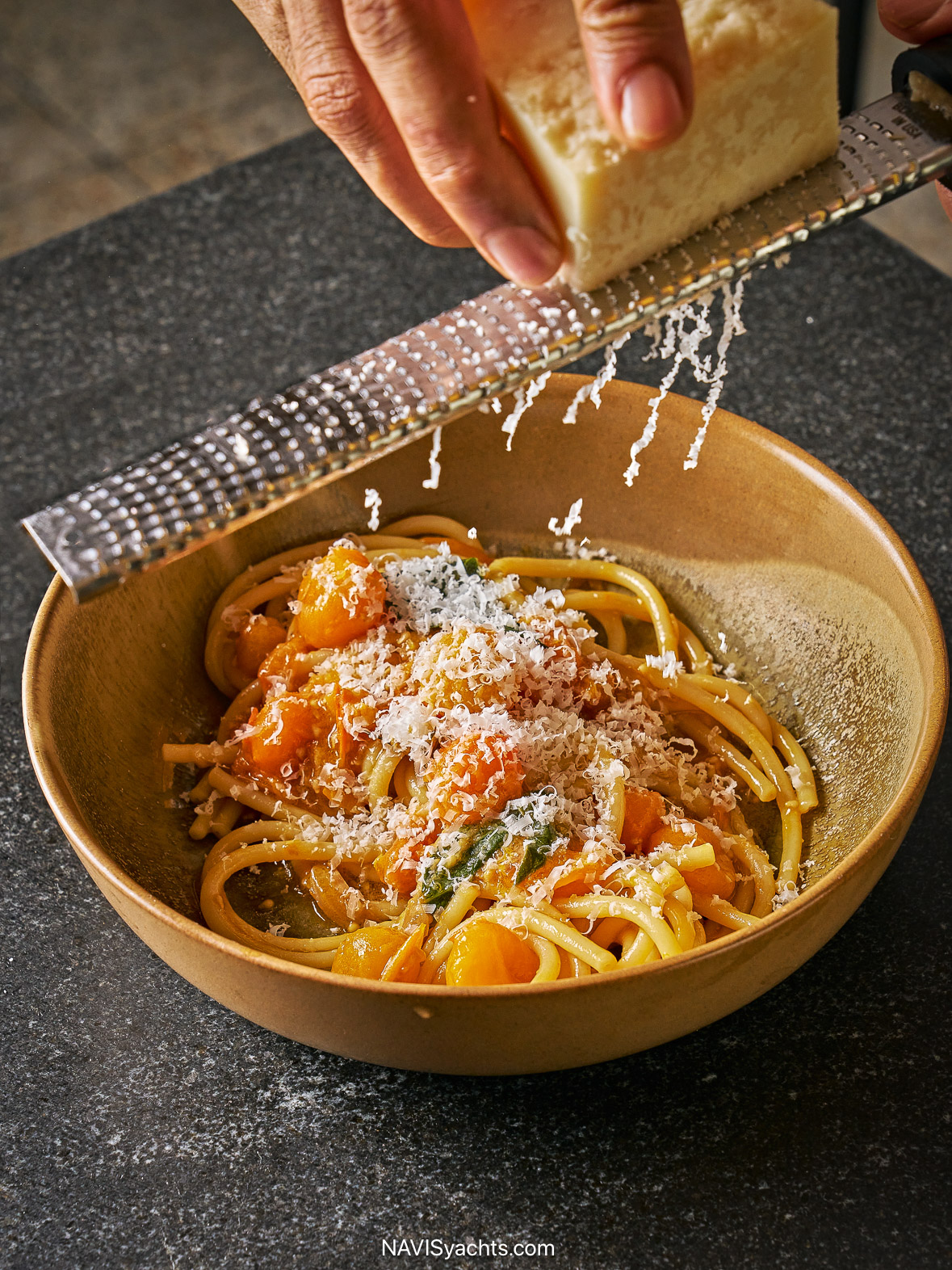
That evening, just before the sun slipped into the harbor, we took a table on the terrace at Giusto. The marina below mirrored the sky, sailboats at rest as if paused mid-stroke. Here, Italian cuisine unfolded with surprising clarity and soul. The standout, Ricotta Gnudi, served with heirloom squash, brown butter, and black truffle, a dish so seasonally pure, so perfectly executed, it could justify the entire journey. It tasted like October itself: earthy, soft, and warm with complexity.
Giusto delivered a kind of culinary honesty, no overstatement, just ingredients in quiet harmony, executed by hands that understood the art of balance.
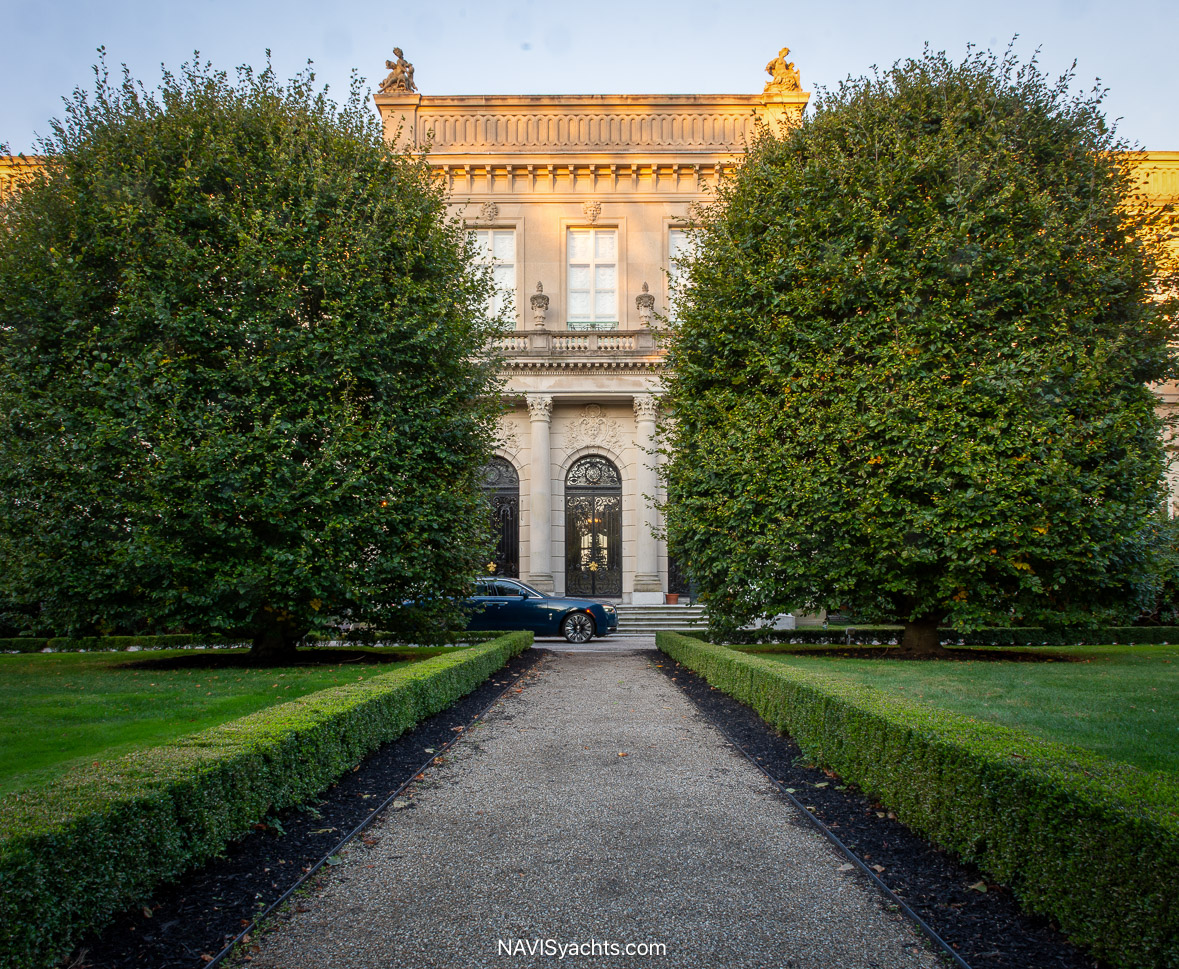
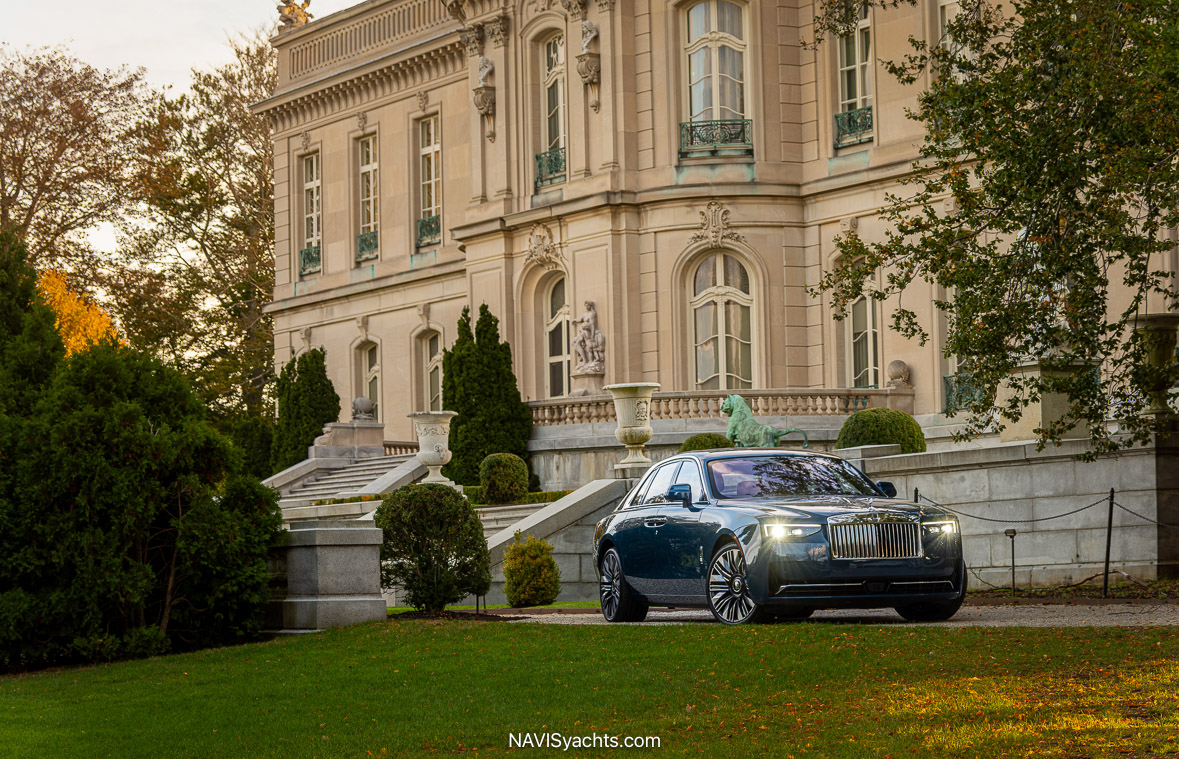
We were honored with a private invitation to The Elms from the Preservation Society of Newport County, the organization responsible for safeguarding the city’s architectural and cultural legacy. Their work ensures that places like this, once private sanctuaries of Gilded Age opulence, remain open, intact, and alive for future generations. Originally the summer residence of coal magnate Edward Berwind, The Elms was modeled after a French château. Here, architecture becomes sculpture. Light moves through towering windows, slips across marble floors, dances on gilded mirrors. In the gardens, designed in the style of André Le Nôtre, geometry and nature find harmony, framed with such precision that even the morning sun seems choreographed. It was art in architecture, yes, but also in how space, shadow, and silence were composed.
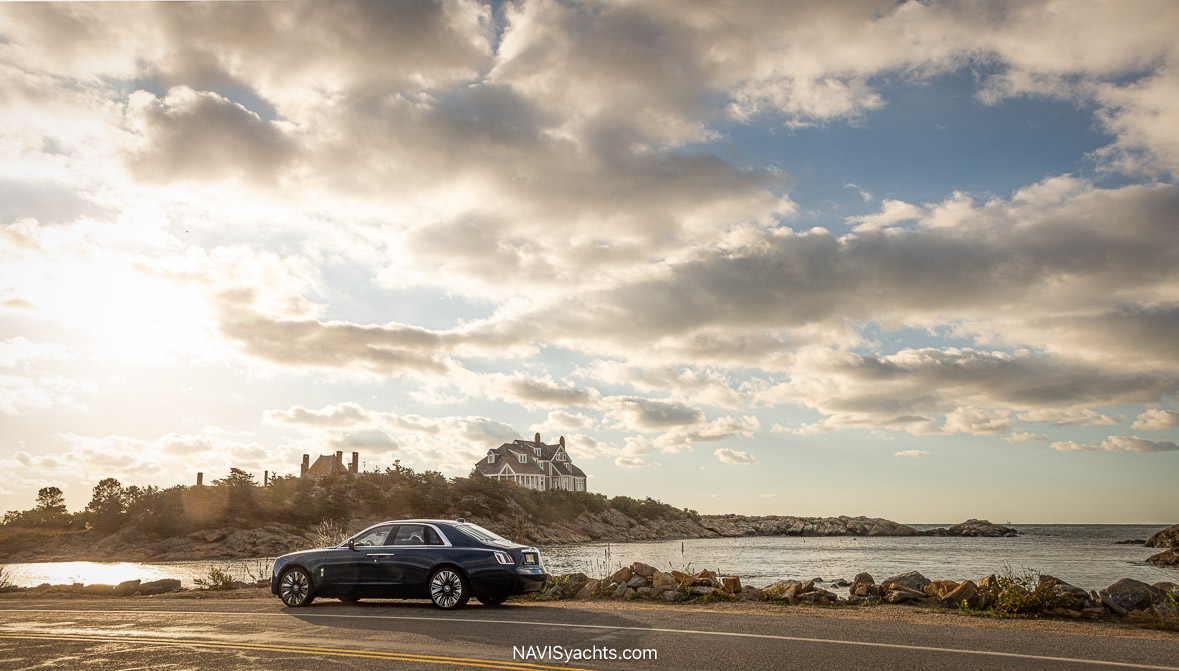
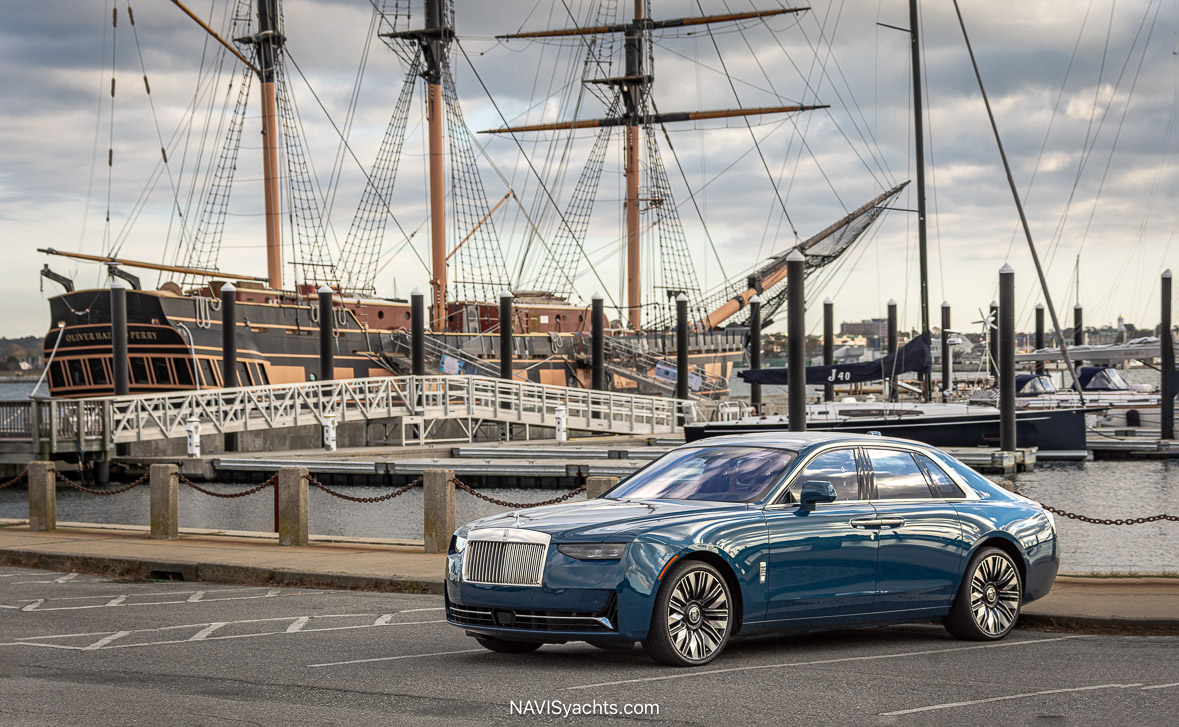
We followed Ocean Avenue that afternoon, where the coastline unspools into dramatic vistas and the sea begins to speak louder. At Fort Adams, the stone bastions still stand against the wind, and just beyond them, the tall ship Oliver Hazard Perry rested at anchor. She is a vessel of purpose, used to train youth in the time-honored disciplines of seamanship. A floating school where lines, sails, and timber become tools of education. Here, we saw craftsmanship passed down, not preserved behind glass, but practiced in real time, with salt and rope.
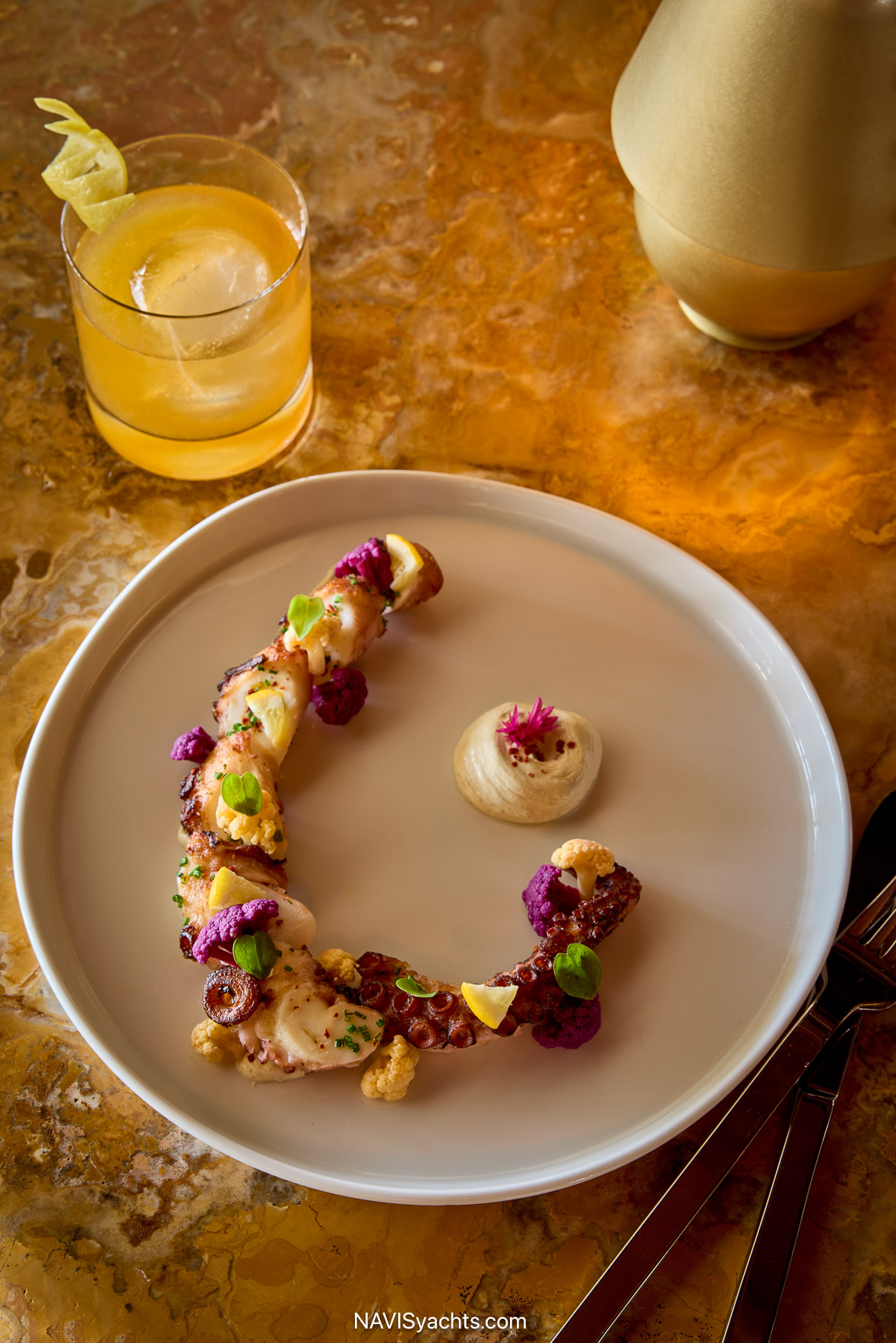
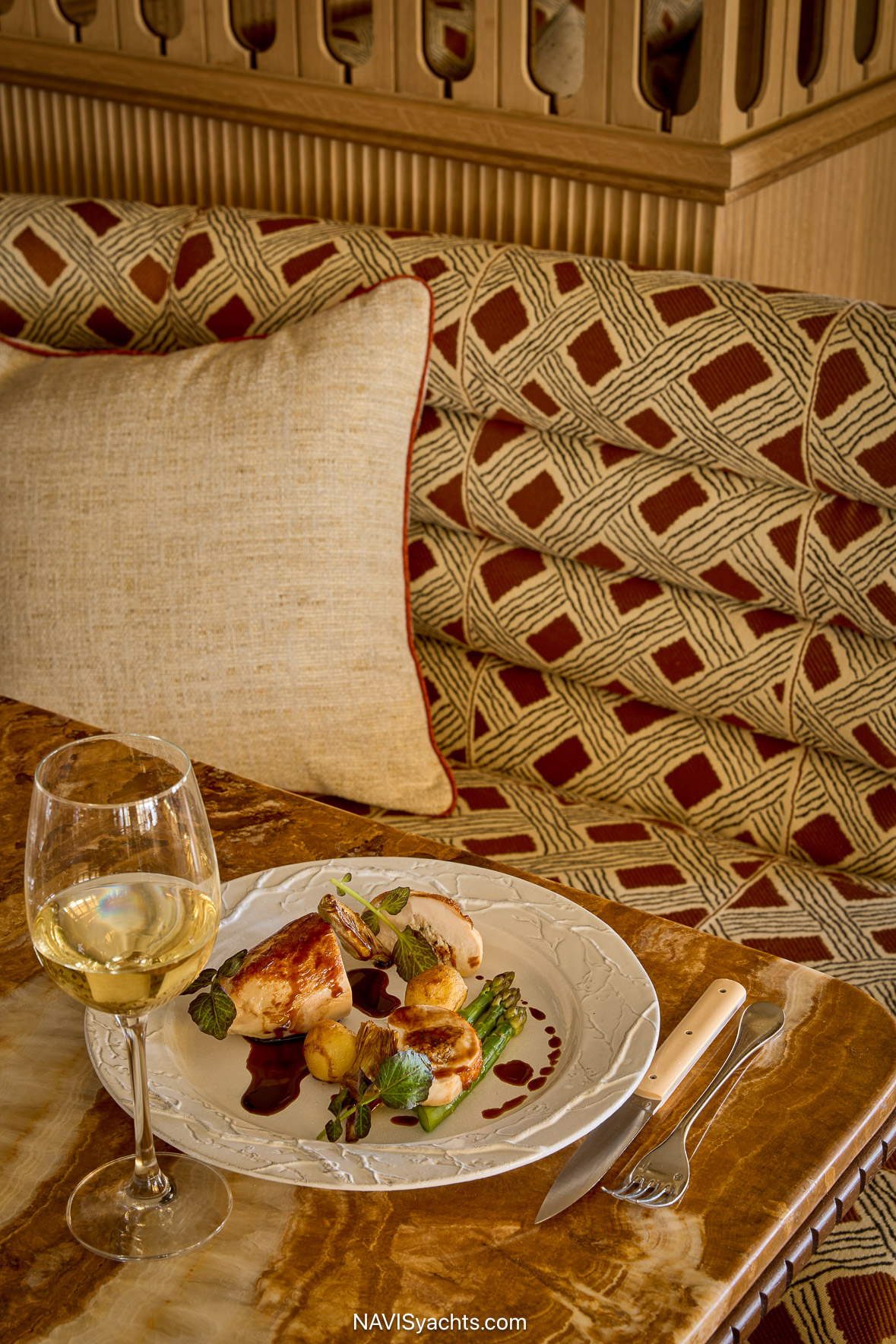
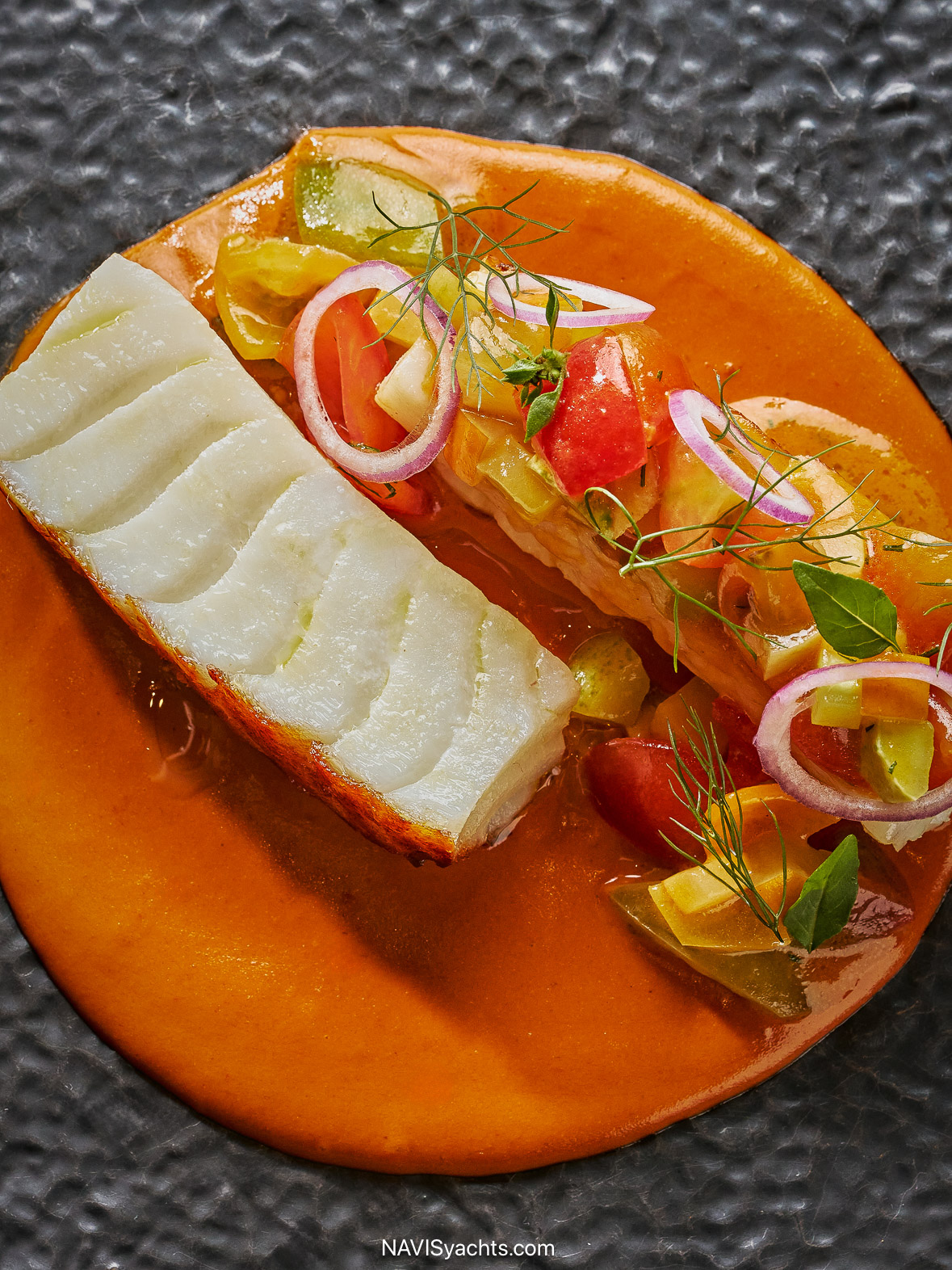
Dinner that night took us to Remy’s Loose at The Chanler, perched at the start of the Cliff Walk, where waves crash against rock just meters from your table. The evening’s composition opened with Spanish Octopus, delicate and briny, balanced with Meyer lemon and bagna cauda. Then came Grilled Yellowtail, layered with avocado, fried green tomatoes, and a tomato-basil confiture that was both bright and grounding. Dessert was a study in contrast: the Opera Cake, rich with Valrhona chocolate and espresso, followed by Berries & Cream, airy and precise with mascarpone and delicate lady fingers. Each plate felt painterly in its presentation, each flavor placed with purpose. We left with the kind of stillness that comes only after harmony.
The next day, our compass pointed toward Cape Cod, drawn to its raw Atlantic edge. This slender peninsula, curling like a sailor’s arm into the ocean, has long been a threshold between land and sea, a vital part of America’s maritime story.
Once a strategic point for whaling fleets and fishing vessels, Cape Cod helped shape the nation’s earliest coastal industries. From the fog-wrapped harbors of Chatham to the historic boatyards of Hyannis, the region has bred generations of mariners, shipwrights, and yacht designers. Nantucket, just offshore, was once the whaling capital of the world, and even today, its salt-weathered cottages and polished decks reflect a legacy of oceanic precision. Together, Cape Cod and Nantucket form a nautical dialogue, past and present, working sail and luxury, Atlantic wildness and human craft.
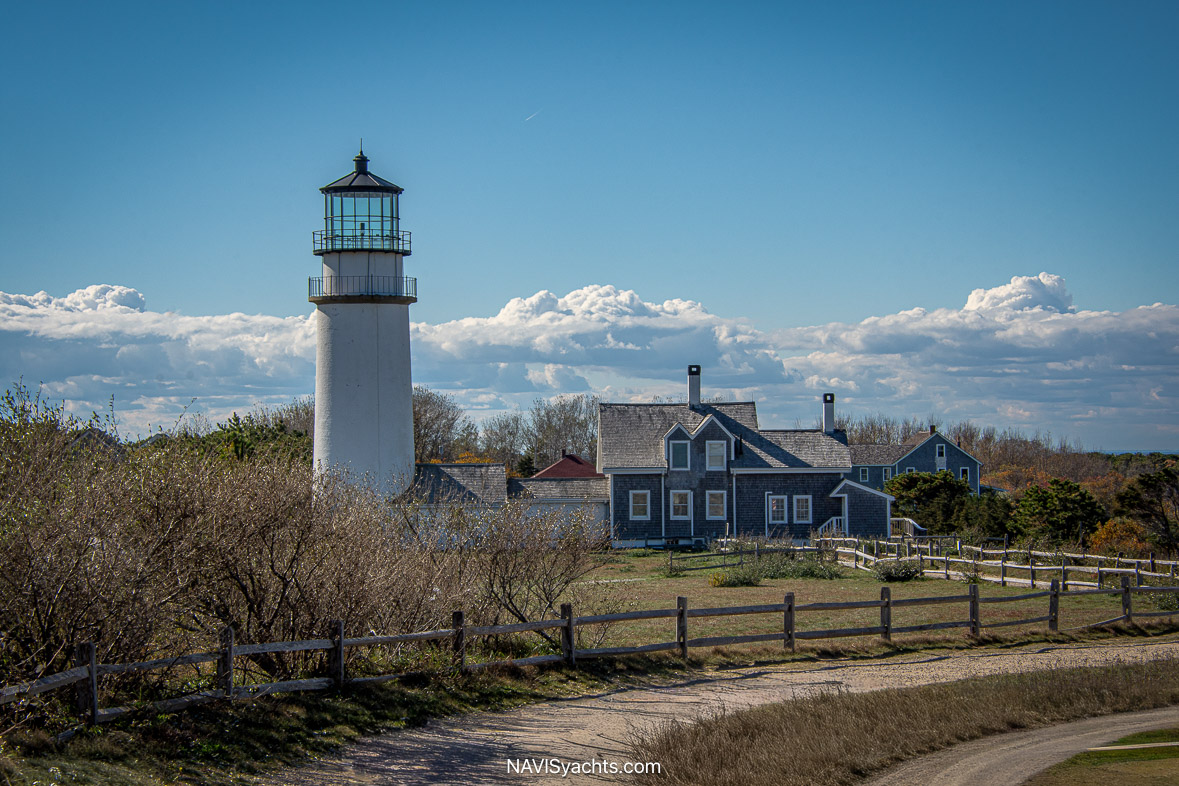
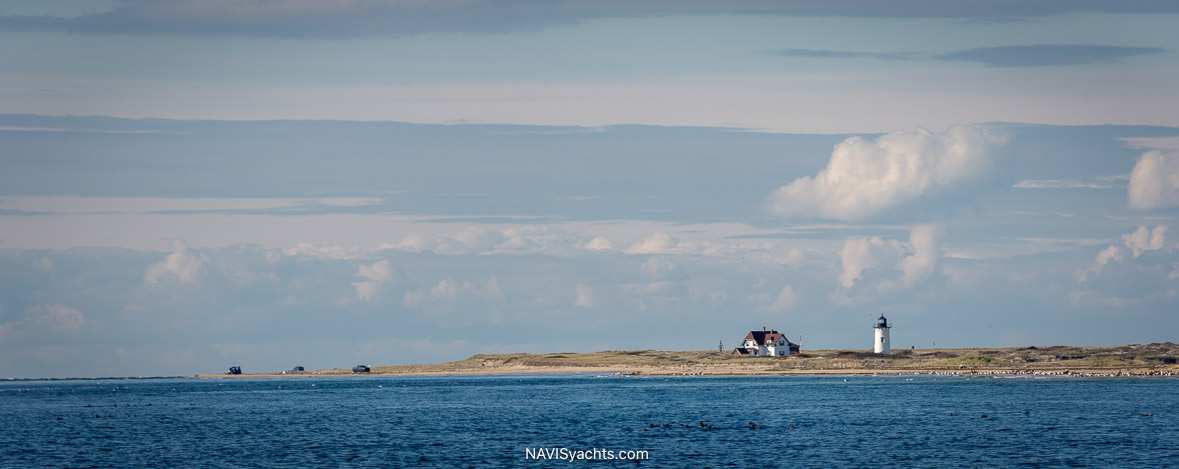
At Highland Light, the wind hit our coats with force. The lighthouse stood firm at the edge of the continent, the cliffs beneath it carved and recarved by erosion. Further on, Herring Cove Beach appeared almost otherworldly, empty, windswept, radiant with late-season light. There was no architecture here, only the sculptural movement of sand and sea. A canvas in flux.
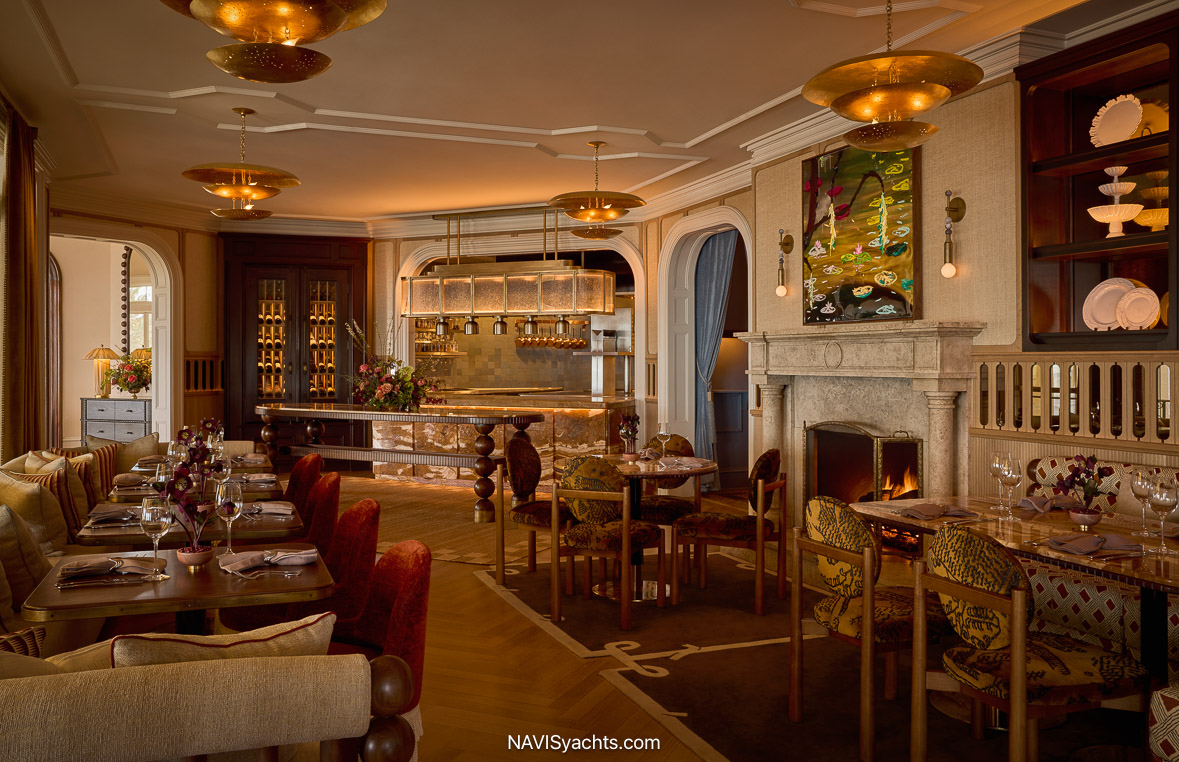
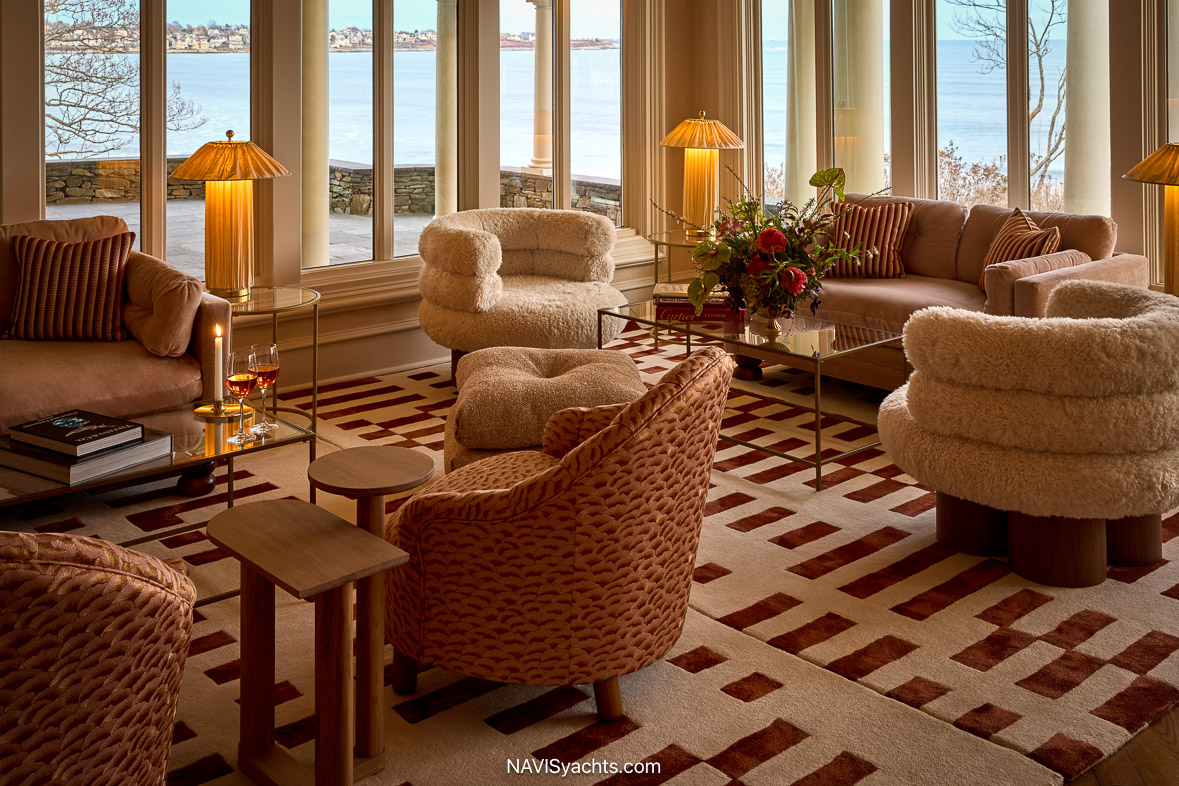
Our final night in Newport brought us to Aurelia, the fine dining restaurant tucked within the storied walls of Castle Hill Inn. Approaching the property felt like arriving at a coastal estate from a century ago, a large, shingled mansion poised on the edge of the sea, its entire structure seemingly shaped by the wind and softened by time. The entrance, framed in weathered woodwork and warm lantern light, hinted at the craftsmanship within. Inside, we were greeted by polished timber, soft light, and the quiet hum of something elegant in motion.
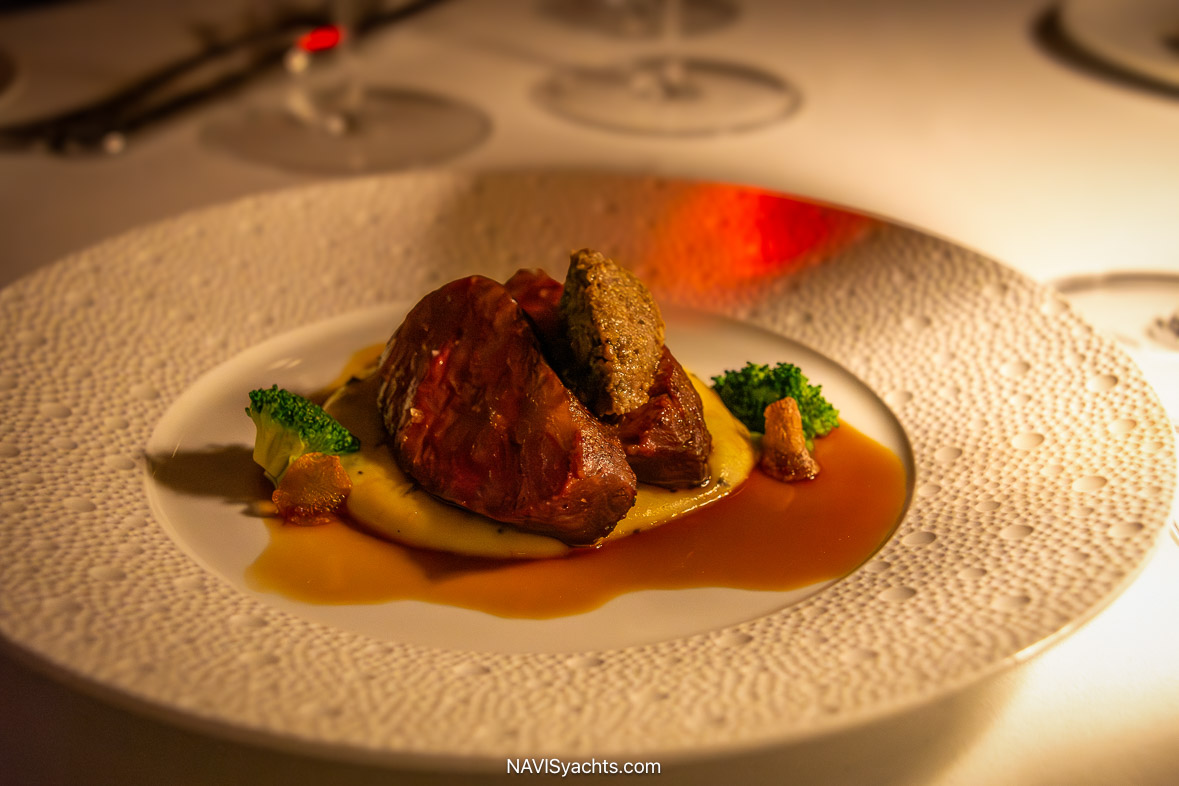
At Aurelia, the dining room itself became a stage. What struck us first was the youthful precision of the team, poised, graceful, and composed. There was a sense of collective awareness, a rhythm in their movements. Each course emerged from the kitchen like a stanza in a carefully composed poem. The Seasonal Tart, topped with feta and herbs, arrived like a breath of the garden. The Tuna and Kampachi Mosaic, geometric and gleaming, played with texture and tone, citrus, ocean, shiso. The Corn Agnolotti, delicate and yielding, gave way to a deeper silence at the table. Then the mains, where culinary architecture met restraint, a flawlessly executed Rhode Island Tautog in beurre blanc with heirloom carrots, or a Wagyu Sirloin, rich with truffle and roasted greens. Those who opted for the Miyazaki A5 found themselves in rarefied territory, indulgence distilled into a single cut.
As the lights dimmed and we stepped out into the cool air again, we knew we had experienced something rare, a dialogue between place, craft, and care. In Newport, and along this stretch of sea, art lives in heritage, and in the reverent act of creating something beautifully lived. The road ahead would take us inland, away from the coastline and into the forests, where the next expression of art awaited, composed not by human hands, but by the changing trees and the shifting light.
The Art of the Land
We left Newport in the early light, navigating past quiet docks and shuttered cafés, the morning mist still hanging over the marina. Our first stop was not far, breakfast at Franklin Spa, a no-frills classic we’d come to love during our stay. There was comfort in its simplicity: the clatter of plates, the scent of coffee, the casual warmth of locals greeting one another. A grounding start to what we knew would be a day in motion, tracing color across the map.
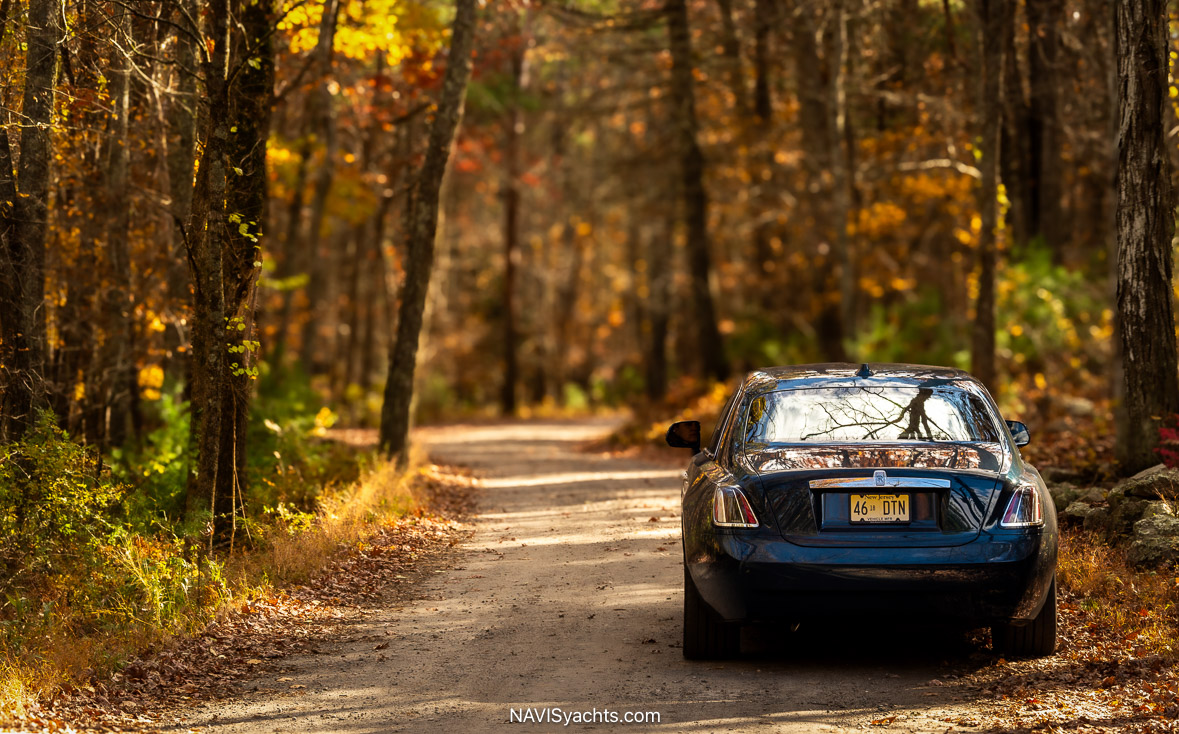
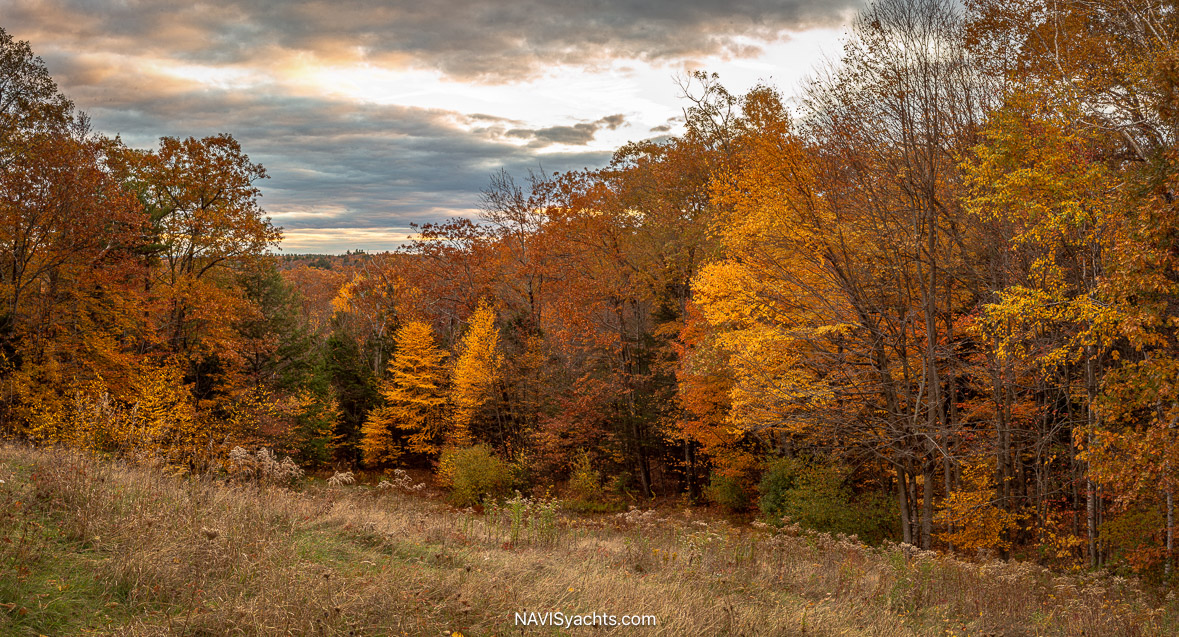
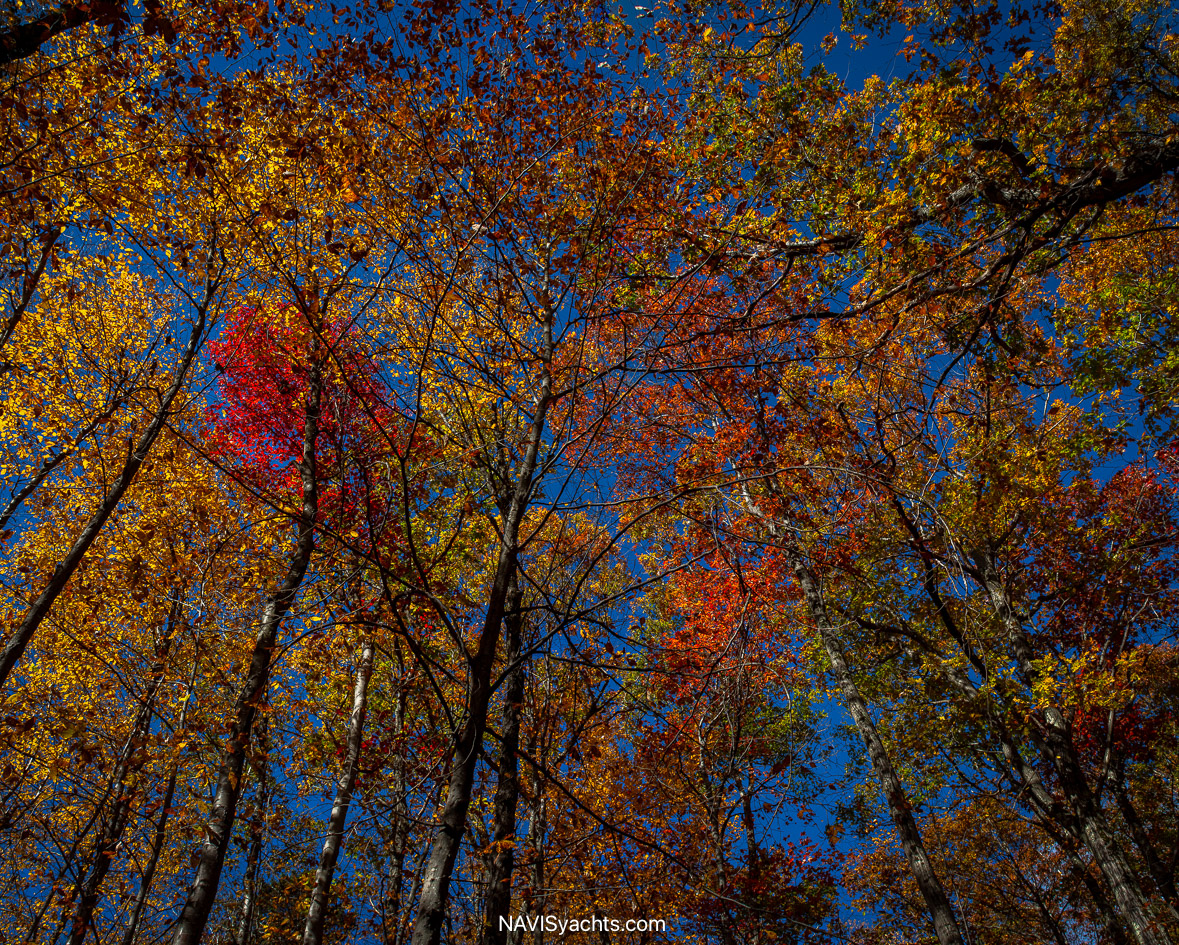
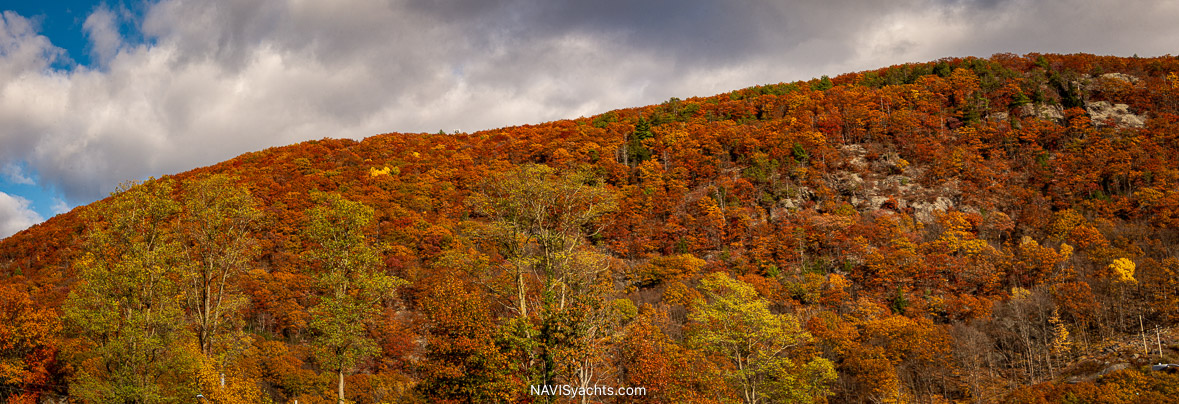
With time on our side and no desire for the dull roar of the highway, we set the Ghost’s course west, instructing her to avoid interstates and guide us through the hidden veins of New England. As soon as we passed US Route 1, the terrain changed. We entered a maze of narrow roads, shaded by golden canopies, weaving through small towns still wrapped in the calm of morning. Autumn had reached its crescendo here. The trees, ash, maple, birch, stood in flaming rows, brushing the air with gold, copper, rust, and flame. With the windows down and the music low, the experience felt like drifting inside a living canvas.
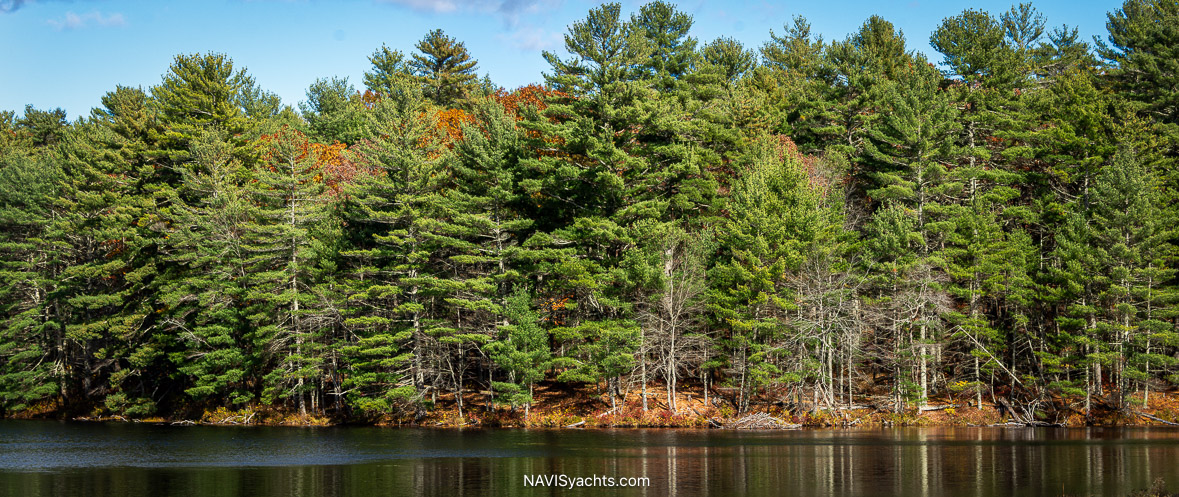
At Pulaski State Park, we paused at Clarkville Pond, where the forest gathered around still water like a painter studying her own reflection. The surface mirrored every branch and leaf with such clarity it was difficult to separate the real from the reflected. The air was still, and even our footsteps seemed reluctant to interrupt it. We stood beneath trees that draped themselves in warm hues, the light pouring through like honey; it all felt composed, as if we had just stepped into the first brushstroke of a vast, living painting.
Later, Mount Monadnock rose before us like a sculpture of earth and light, just as the sun began to descend behind the mountains. Mount Monadnock, one of the most climbed peaks in the world, stood in noble silence, bathed in golden light. For centuries, artists, writers, and wanderers have come here to walk its trails and seek solitude in its forests. Emerson and Thoreau wrote about this mountain; its name is carved into the history of American transcendentalism.
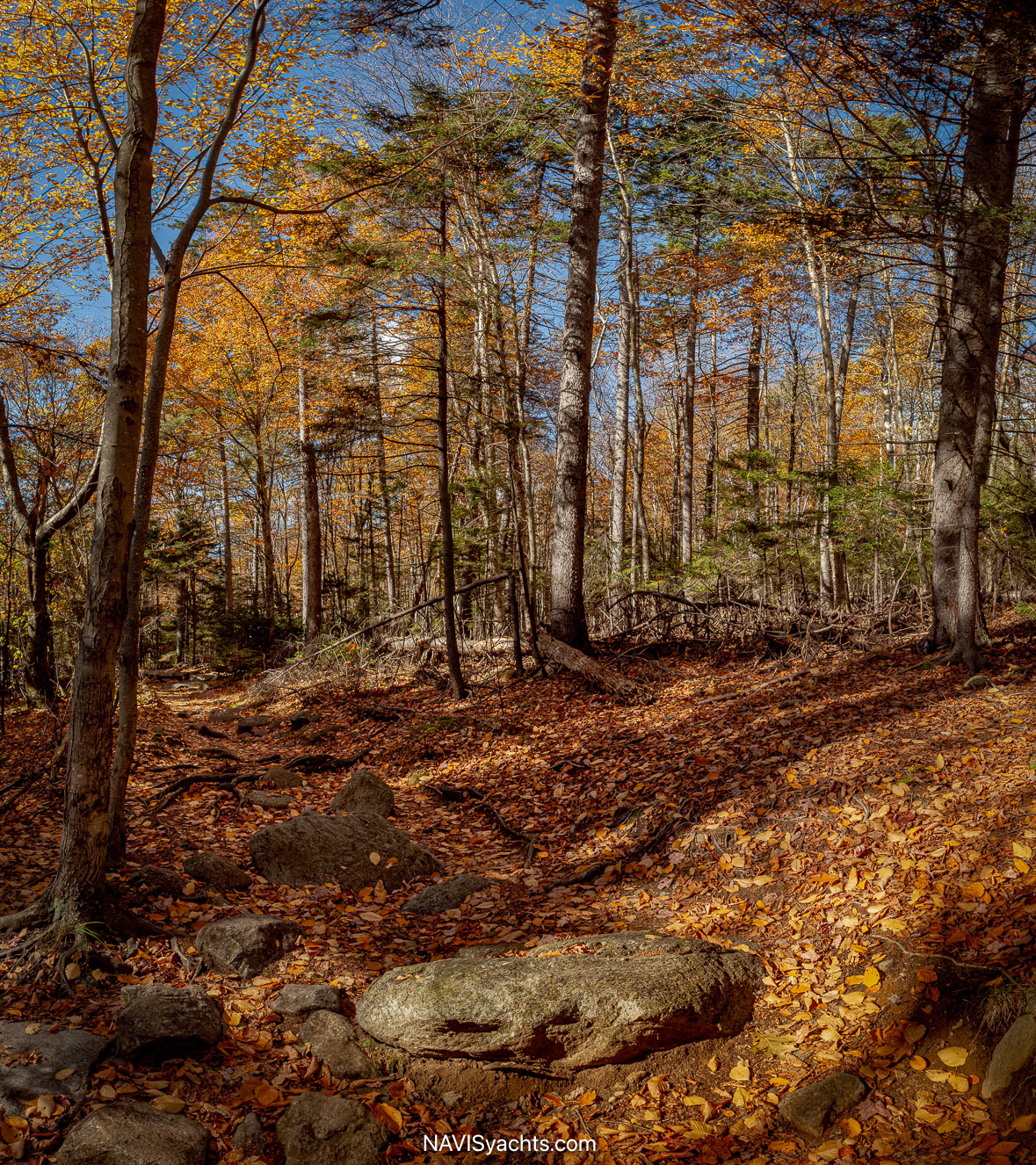
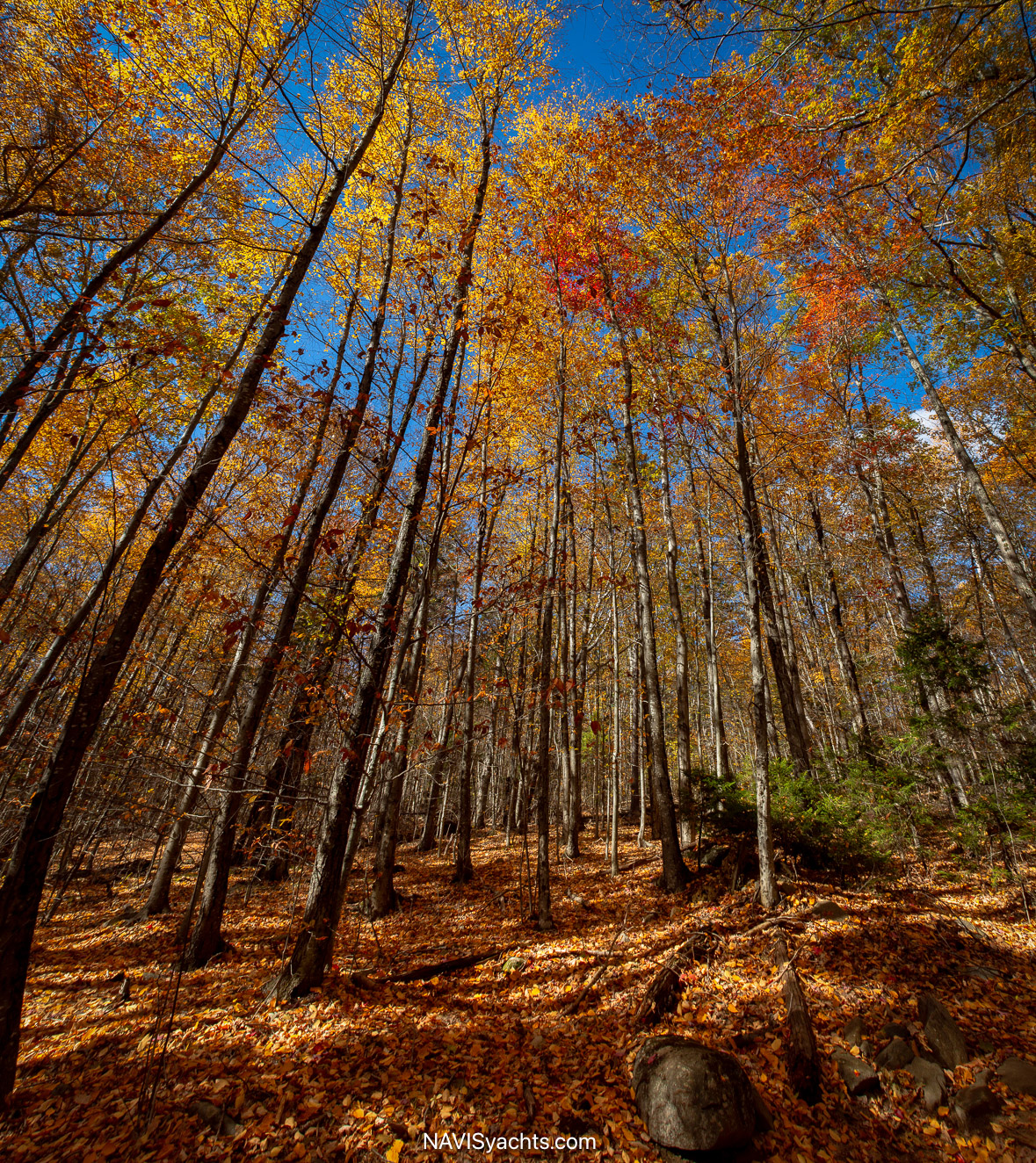
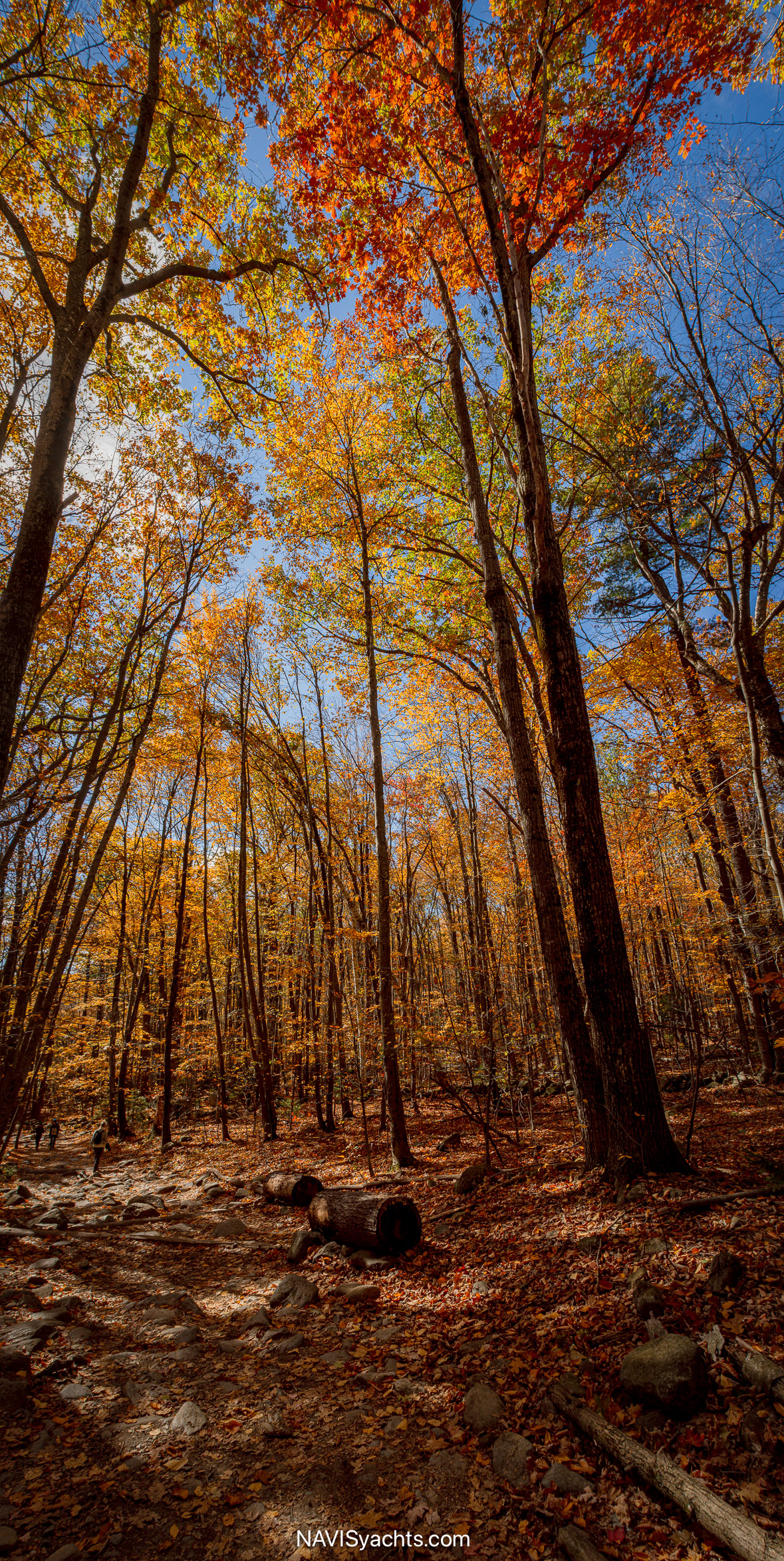
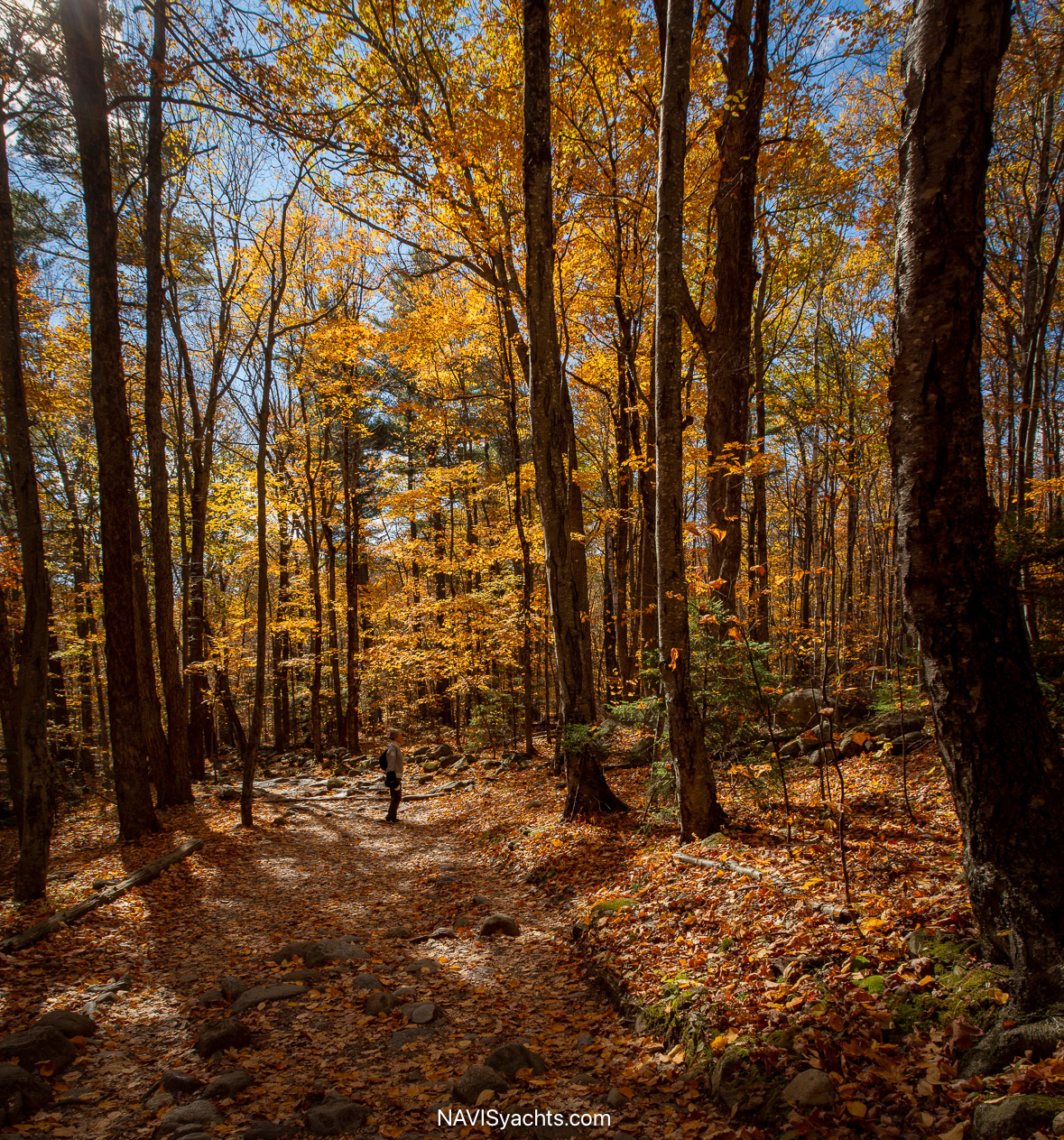
Winter had begun to trace its breath along the leaf edges, a quiet hush settling over the forest floor. The day began at The Optimist Café, where the scent of strong coffee mingled with the warmth of live folk music, an intimate overture before the grand performance of the trail. At Mount Monadnock, we stepped into a golden cathedral. The trees rose tall and slender, their canopies ablaze with amber, rust, and flickers of crimson, filtering the sun like stained glass. The path, blanketed in fallen leaves and soft shadow, wound over smooth stone and under arching limbs, guiding us through a world entirely shaped by light. Around every bend, the forest offered another perfect composition, balanced, radiant, and startlingly still. It felt like a slow walk through a living painting, curated not by man, but by time, wind, and sun. No gallery could offer this. No exhibition could equal the quiet generosity of this mountain, giving beauty without asking for anything in return.
Henry David Thoreau once wrote, “It is remarkable what haste the visitors make to get to the top of Monadnock… while I am contented to sit at its base and let it whisper to me what it has to say.” We felt that too, not the urge to conquer the mountain, but the desire to be still with it, to listen. And in that quiet, the forest spoke in color, in filtered light, in the soft percussion of leaves underfoot.
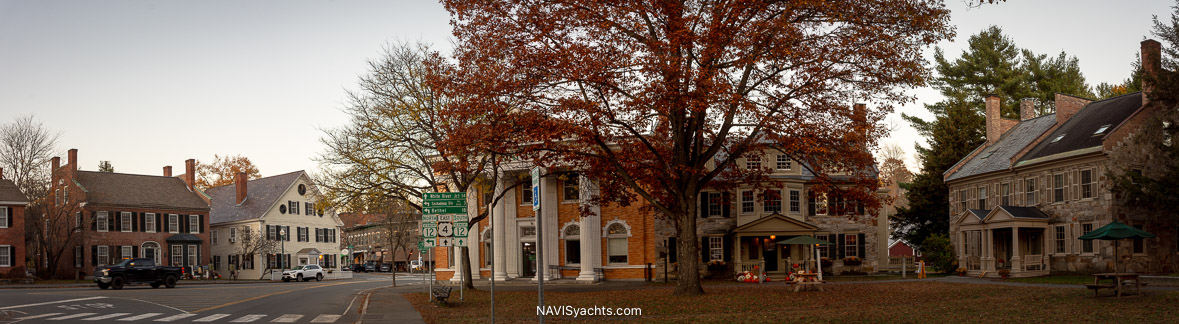
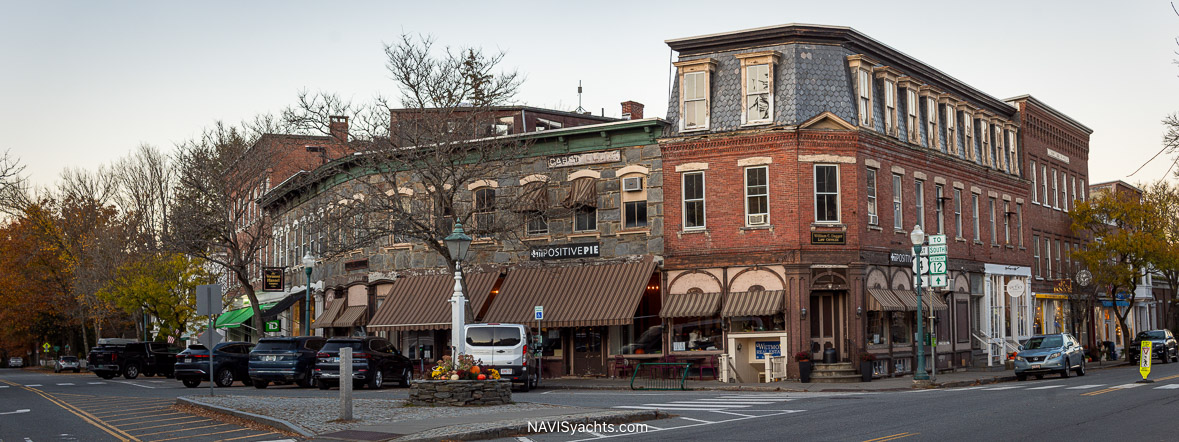
From Monadnock, the road led us into Vermont, toward Woodstock, a town we remembered from summers past, now transformed by fall. The drive was gentle, the roads curling through rolling hills like ribbons painted in amber and burgundy. As we approached, the sky shifted. Woodstock greeted us with a watercolor sunset, soft, golden, precise in its silence.
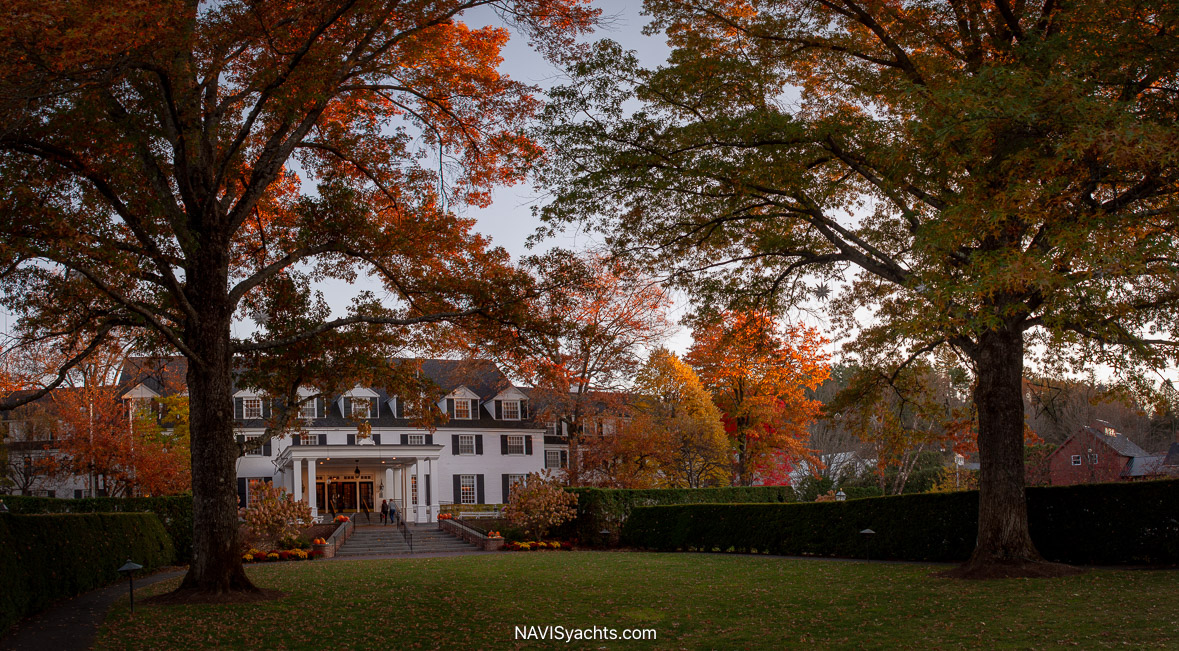
Tucked in the center of town, we arrived at Jimmy’s, the B&B of our friends John and Jimmy. A place we now count as our own, it is also home to Boss Yoga & Pilates, their in-house studio. The beautifully restored property offers just a few rooms, each spacious and refined, where comfort and character speak in the same language. We settled in, the windows open to let in the scent of dry leaves and chimney smoke, then set out for a walk through town.
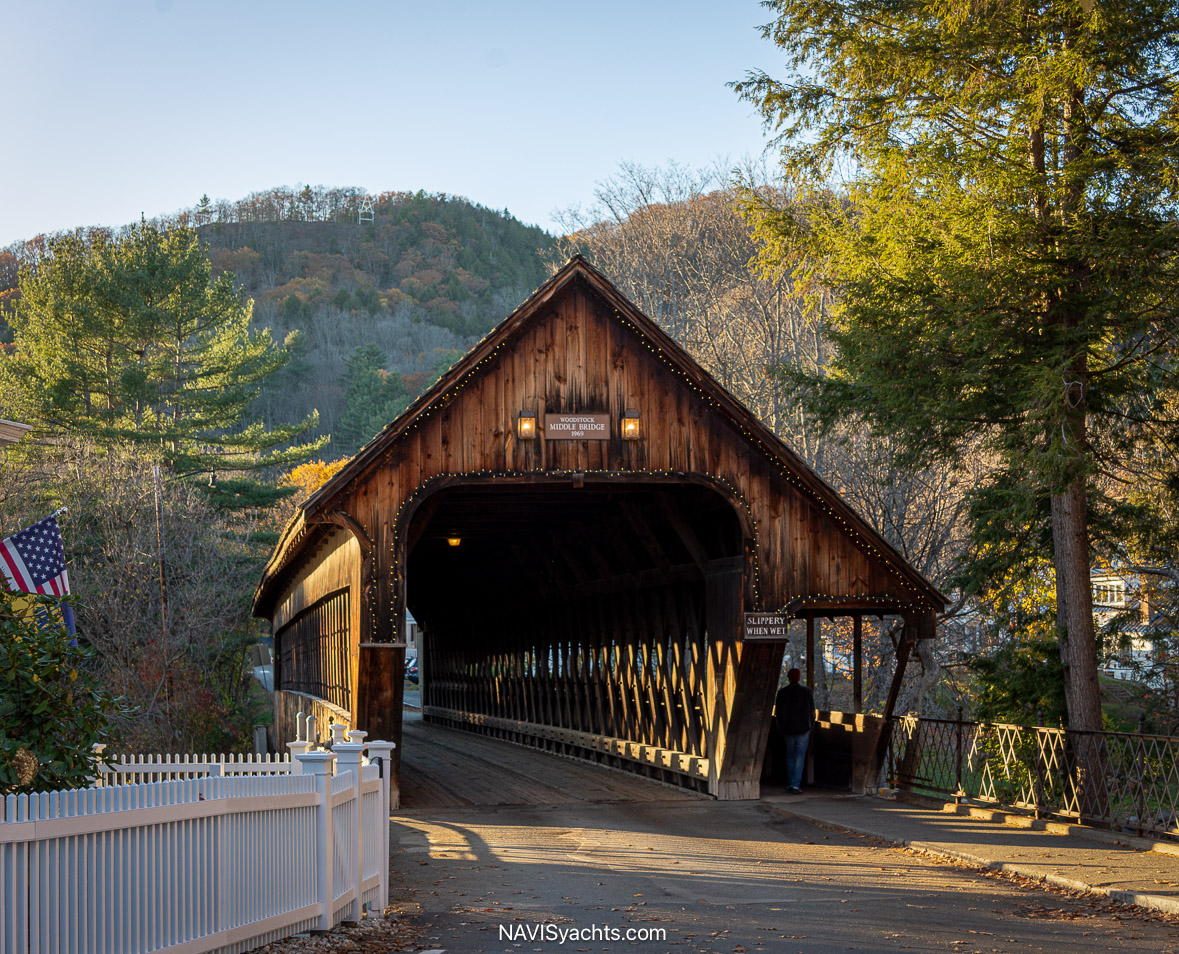
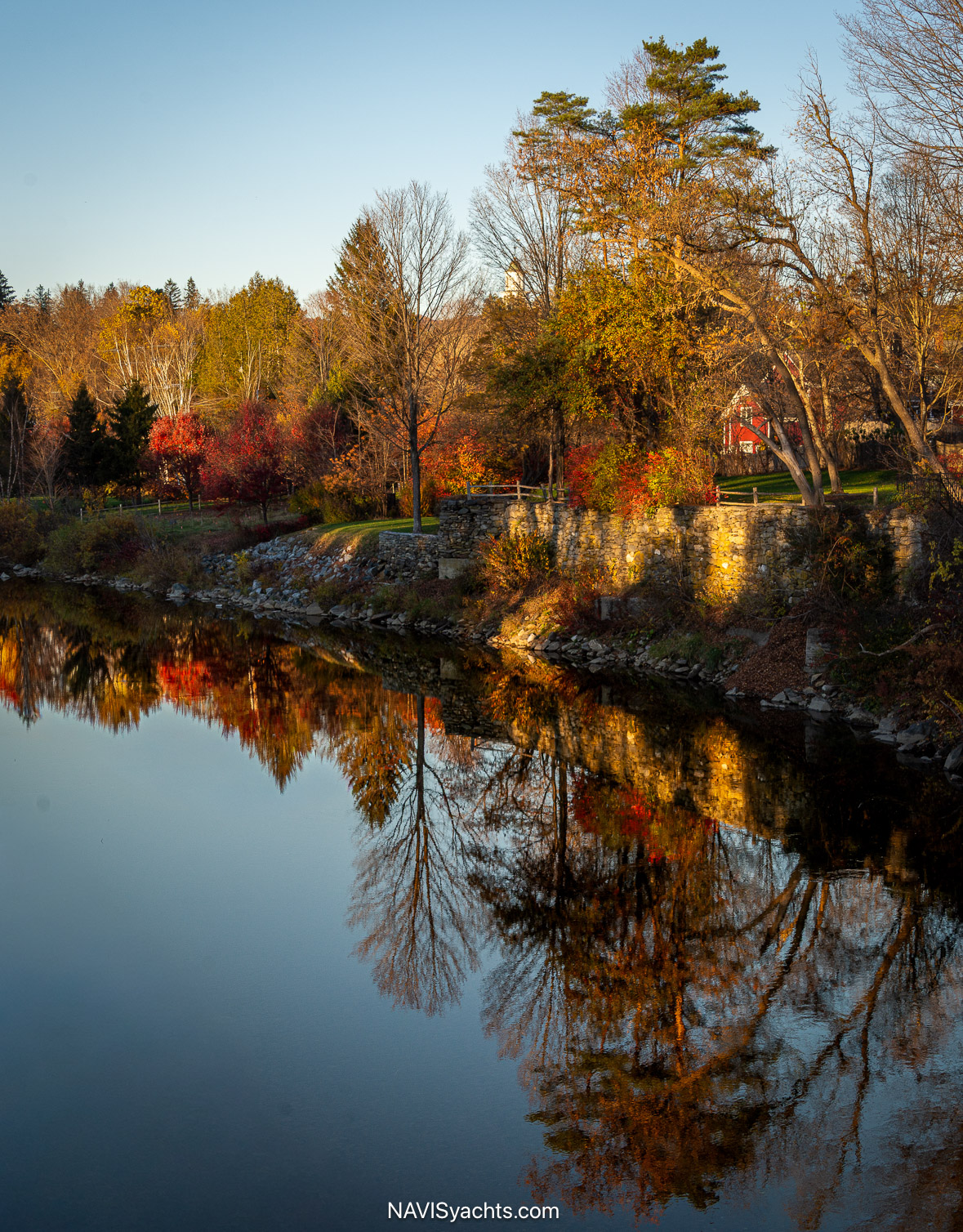
At sunset, Middle Bridge shone in the last light, its timber frame catching the warm glow. Below, the river mirrored the town’s rooftops and fiery trees. The scene felt timeless, as if nothing had changed for decades, or needed to. We wandered slowly, taking in the hush that only comes with small towns and late autumn, ending our walk with a cocktail at Au Comptoir, a quiet gem tucked just off the main street, where every drink feels like a secret shared.
Morning brought with it a gentle melancholy, the kind that follows beauty too perfect to hold. It was time to begin our return, though not before one final communion with the land. We chose a lesser road, a scenic back route winding south through Vermont’s fading woods and into the Catskills, the final frame in our journey.
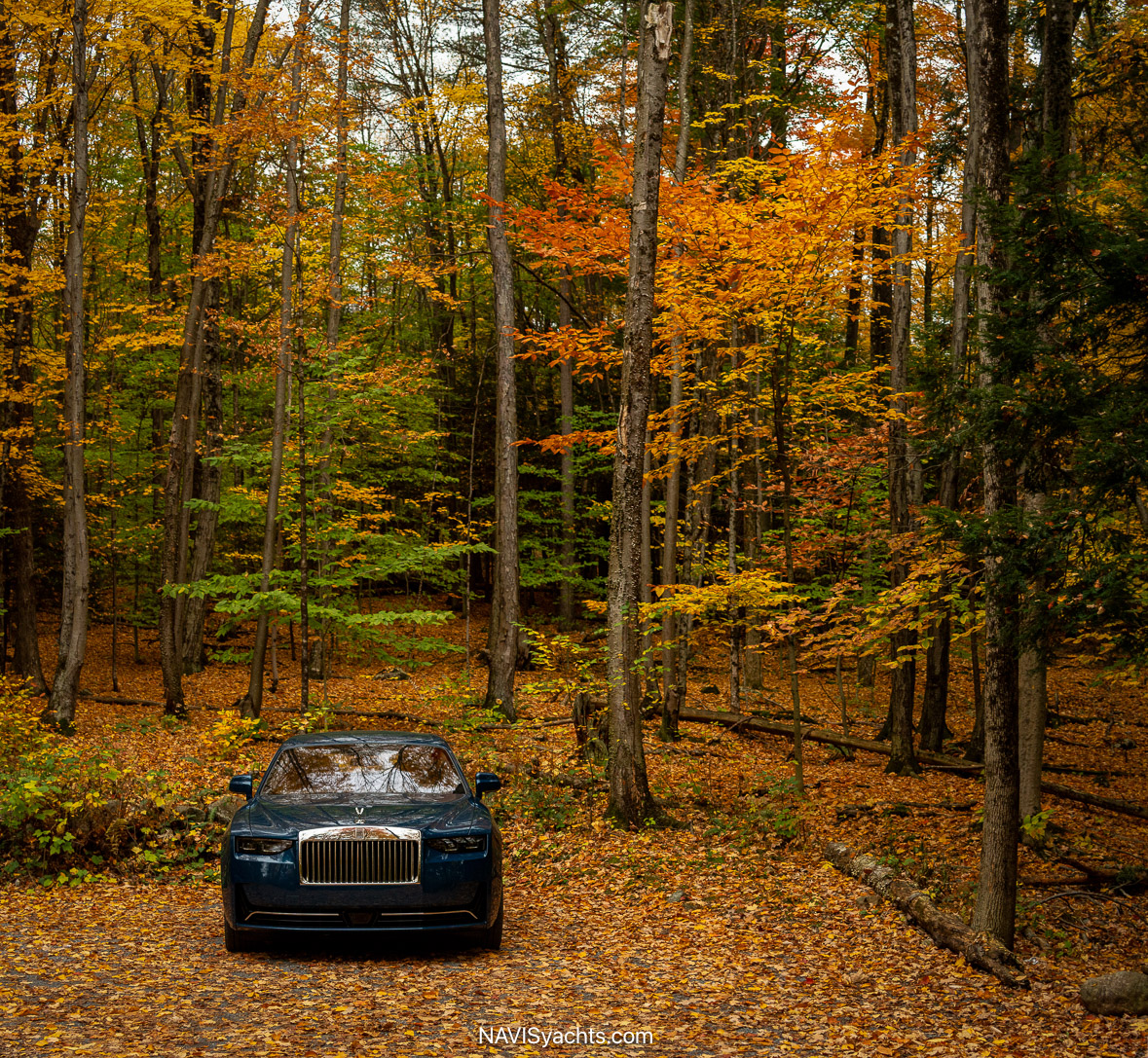
Here, the forests thinned slightly, giving way to open fields and farmhouses, yet the colors persisted, fierce, glowing, defiant. The road moved through small towns and over soft hills. In the Schumann Preserve at Pilot Knob, we took one last walk, leaving the Ghost at the edge of a clearing. She stood there like a sculpture, calm and dignified, as if taking in the view herself. The valley below laid out like a dreamscape, all fire and softness, the lake catching the sky in still silver. We walked until the trail ended, then sat for a while, saying nothing.
We returned to the Ghost, stepped inside, and continued the drive toward New York. The city waited with its pace, its noise, its vertical energy, but within the cabin, there was still silence. The kind of silence that stays with you. This journey had not only revealed art, it had become an experience of art itself. Every curve of the road, every plate served, every color seen, every silence shared. We arrived back in the city changed, not by what we had done, but by what we had felt.
And the Ghost, our quiet companion, carried it all home with us.
We set out to slow the pace, to interrupt the constant asking of a year in motion. What we found was a living gallery, shaped by weather, memory, the quiet generosity of people, and the patience of time. Autumn reimagined the world around us.
If there is an invitation here, it is this: next fall, take the time. Steal a few days. Step away from the calendar, the screens, the speed. Point yourself toward the quiet. Follow the small roads. Let the forests speak. Let the light do what it does best.
Because art, in the end, is not always hung on walls. Sometimes it is driven. Sometimes it is walked through. And sometimes, it is simply found, in a moment of stillness, under golden trees, where the world pauses long enough for you to catch up to yourself.
With Gratitude
This journey was shaped not only by landscapes and quiet roads, but by the hands, vision, and generosity of those who welcomed us along the way. From the warm embrace of historic homes to the precision of unforgettable cuisine, every element of this experience was elevated by artists in their own right, hoteliers, chefs, designers, and storytellers of space and taste.
To all those who collaborated with us, thank you for making this journey not just possible, but truly unforgettable.
Featured Partners & Collaborators
- Rolls-Royce Motor Cars
https://www.rolls-roycemotorcars.com
Hospitality
- The Peninsula New York – New York
https://www.peninsula.com/en/new-york/ - The Royce – Newport, RI
https://www.theroycenewport.com/ - Stay at Jimmy’s – Woodstock, VT
https://www.stayatjimmys.com/
Gastronomy
- Crown Shy – New York, NY
https://www.crownshy.nyc/ - Benoit New York – Alain Ducasse
https://www.benoitny.com/ - Giusto – Newport, RI
https://www.giustonewport.com/ - Remy’s Loose at The Chanler – Newport, RI
https://www.thechanler.com/dining/remys-loose - Aurelia at Castle Hill Inn – Newport, RI
https://aurelianewport.com/
Cultural & Preservation Partners
- Preservation Society of Newport County
https://www.newportmansions.org/

Photos: Andrew Bui, P Monetta, Jason Varney, NAVIS Media | Words: Pablo Ferrero