
In September 1864, Johannes Badrutt made a wager that would change the history of Alpine tourism. The Swiss hotelier had spent the summer entertaining four British guests at his establishment in St. Moritz. As their departure approached, he proposed something unusual: they should return for Christmas and discover what the Engadin was like in winter. If they found the experience disagreeable, he would reimburse their journey. If they enjoyed themselves, they could remain as his guests for as long as they wished.
The Englishmen accepted. They returned in December, expecting the harsh conditions generally associated with an Alpine winter. Instead, they discovered clear skies, brilliant sunshine, and a mountain landscape that seemed particularly suited to the pleasures of being outdoors. According to the account that has become part of St. Moritz folklore, they remained until Easter.
Badrutt had won his bet. The wager would become part of St. Moritz folklore and the origin story of Alpine winter tourism.
Before that winter, St. Moritz was already an established destination, although its reputation rested on something quite different. For thousands of years, visitors had been drawn to the mineral springs rising from the ground in what is now St. Moritz Bad. Archaeological evidence places their use in the Bronze Age, and by the sixteenth century the waters had attracted the attention of the Swiss physician Paracelsus. During the nineteenth century, European visitors arrived to take the waters and enjoy the mountain climate, generally restricting their stays to the warmer months.
The settlement itself was modest. In 1830, St. Moritz counted approximately 200 inhabitants. Its location, however, was remarkable.
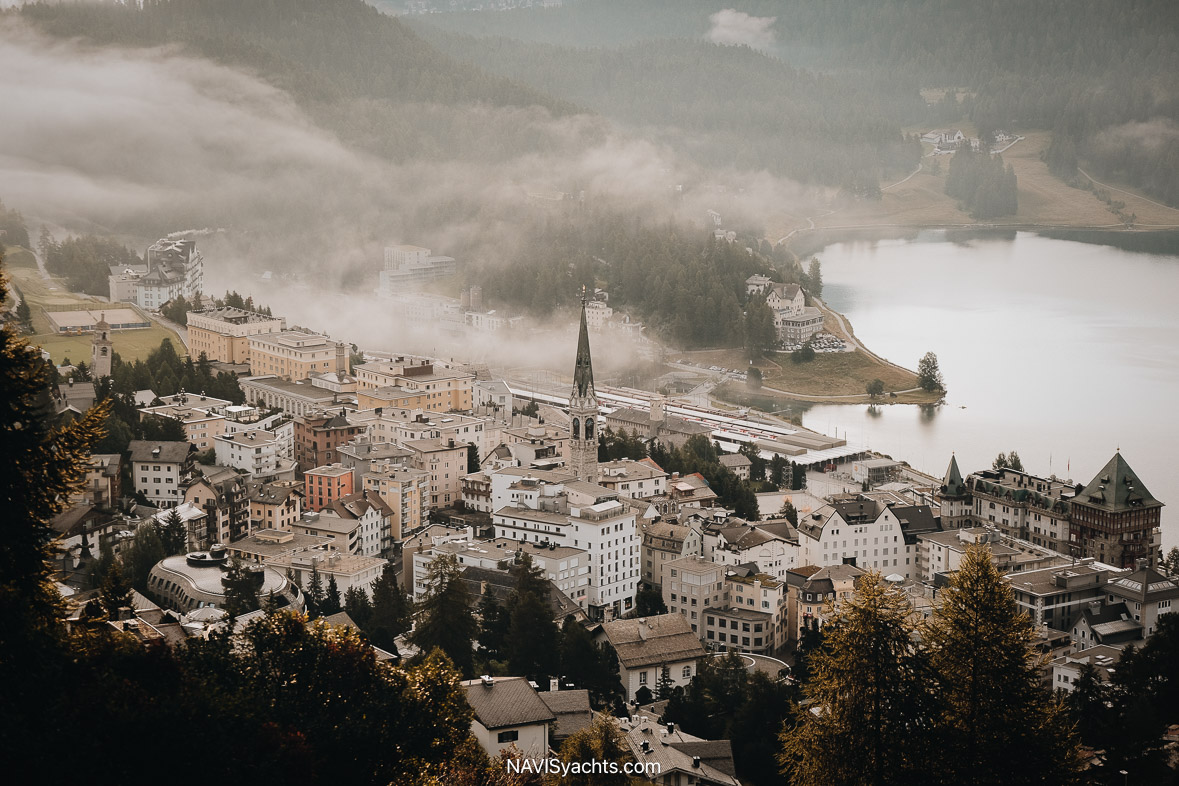
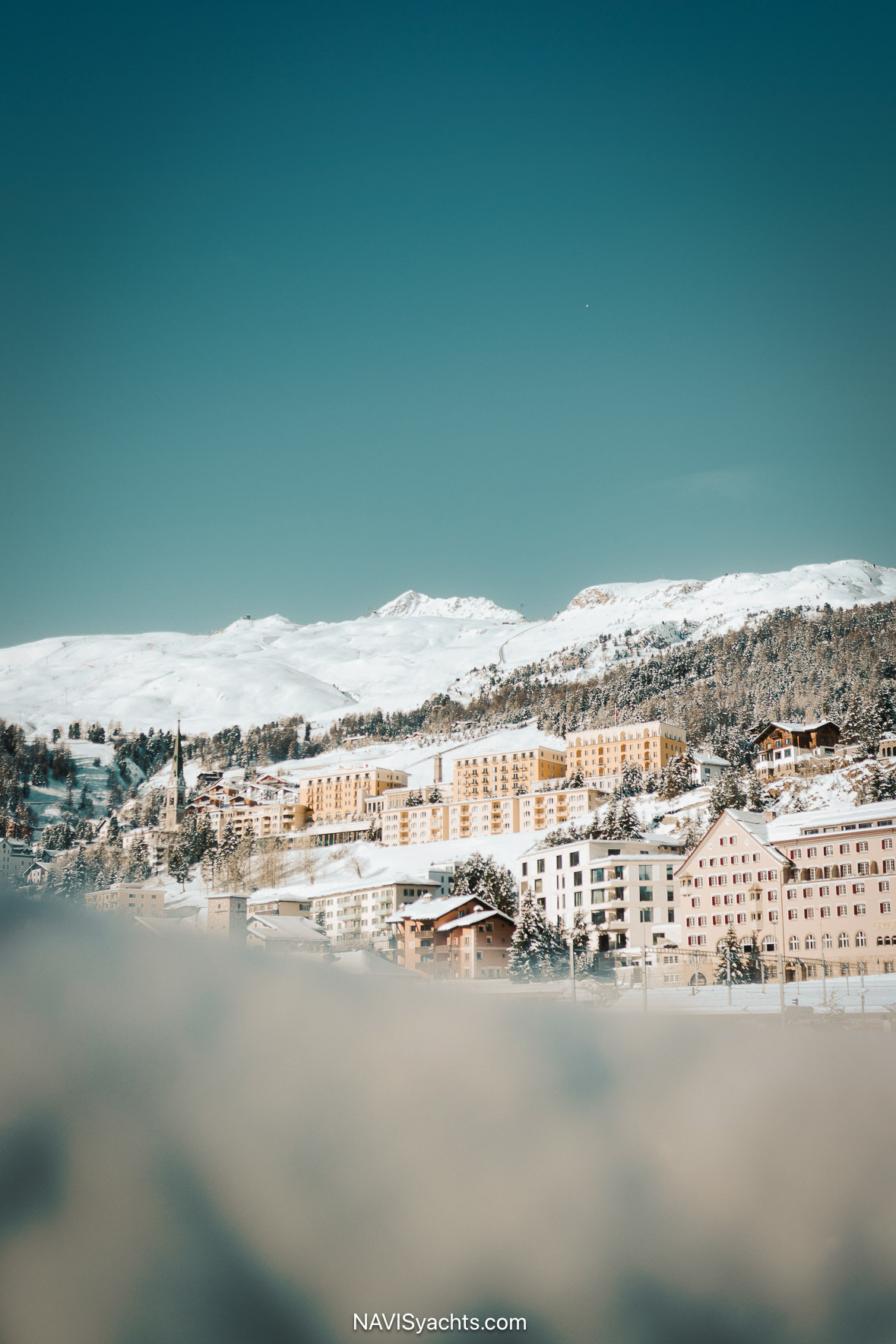
Set at 6,089 feet (1,856 m) above sea level in the Upper Engadin, in the Swiss canton of Graubünden, St. Moritz occupies a broad valley surrounded by the peaks of the Eastern Alps. Lakes stretch along the valley floor, bordered by forests and mountain slopes that rise toward elevations well above 9,800 feet (3,000 m). The altitude, the clarity of the mountain air, and the region’s celebrated sunshine gave the early visitors something they had rarely associated with winter: the opportunity to spend long days outdoors in the heart of the Alps.
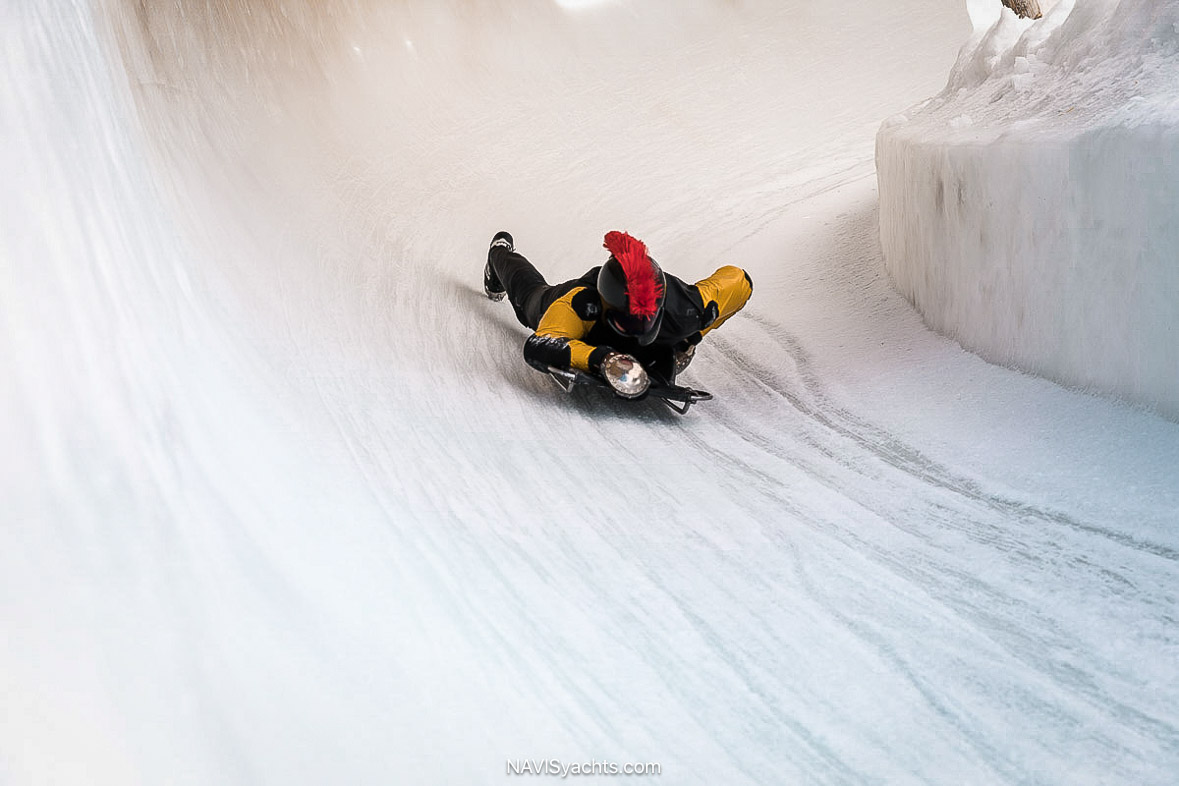
The decades following Badrutt’s wager brought a remarkable transformation. British visitors introduced and popularized sporting activities that would eventually become part of the town’s identity. Curling, skating, tobogganing, and bobsleigh attracted an increasingly international winter clientele. The Cresta Run, first constructed for the winter of 1884–85, established a tradition of headfirst racing down a natural-ice course that survives today. It was an unusual pastime for gentlemen on holiday, requiring considerable courage and a willingness to accept the consequences of getting a corner wrong.
St. Moritz was also surprisingly progressive. In 1879, the dining room of Badrutt’s Kulm Hotel was illuminated by electric light, an innovation that preceded widespread electrification in Switzerland. An electric tram began operating between St. Moritz Dorf and St. Moritz Bad in 1896. Grand hotels expanded, attracting European aristocracy and a growing international society whose winter visits gradually became an established seasonal ritual.
Sport remained central to this development. St. Moritz hosted the Winter Olympic Games in 1928 and again in 1948, becoming one of the few destinations to welcome the event twice. Alpine skiing grew into a major attraction, while the town’s natural-ice bobsleigh course and the Cresta Run preserved sporting traditions that had originated generations earlier.
As the twentieth century progressed, another St. Moritz emerged alongside the athletes and winter sports enthusiasts. Its hotels attracted prominent figures from business, entertainment, fashion, and European society. Restaurants, boutiques, and private gatherings became as much a part of the winter calendar as competitions on the mountain. The resort developed a reputation for extravagance, although beneath the glamour there remained a genuine fascination with winter sports, sometimes in forms that could hardly have been imagined elsewhere.
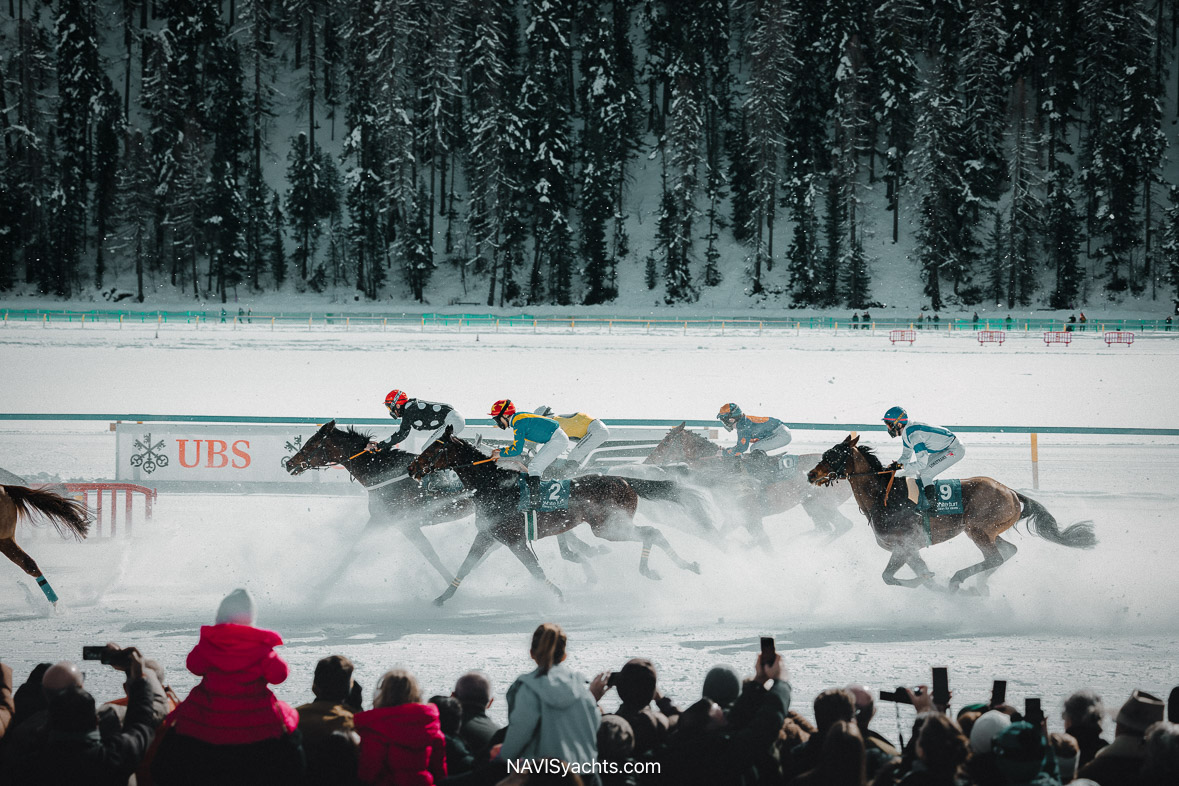
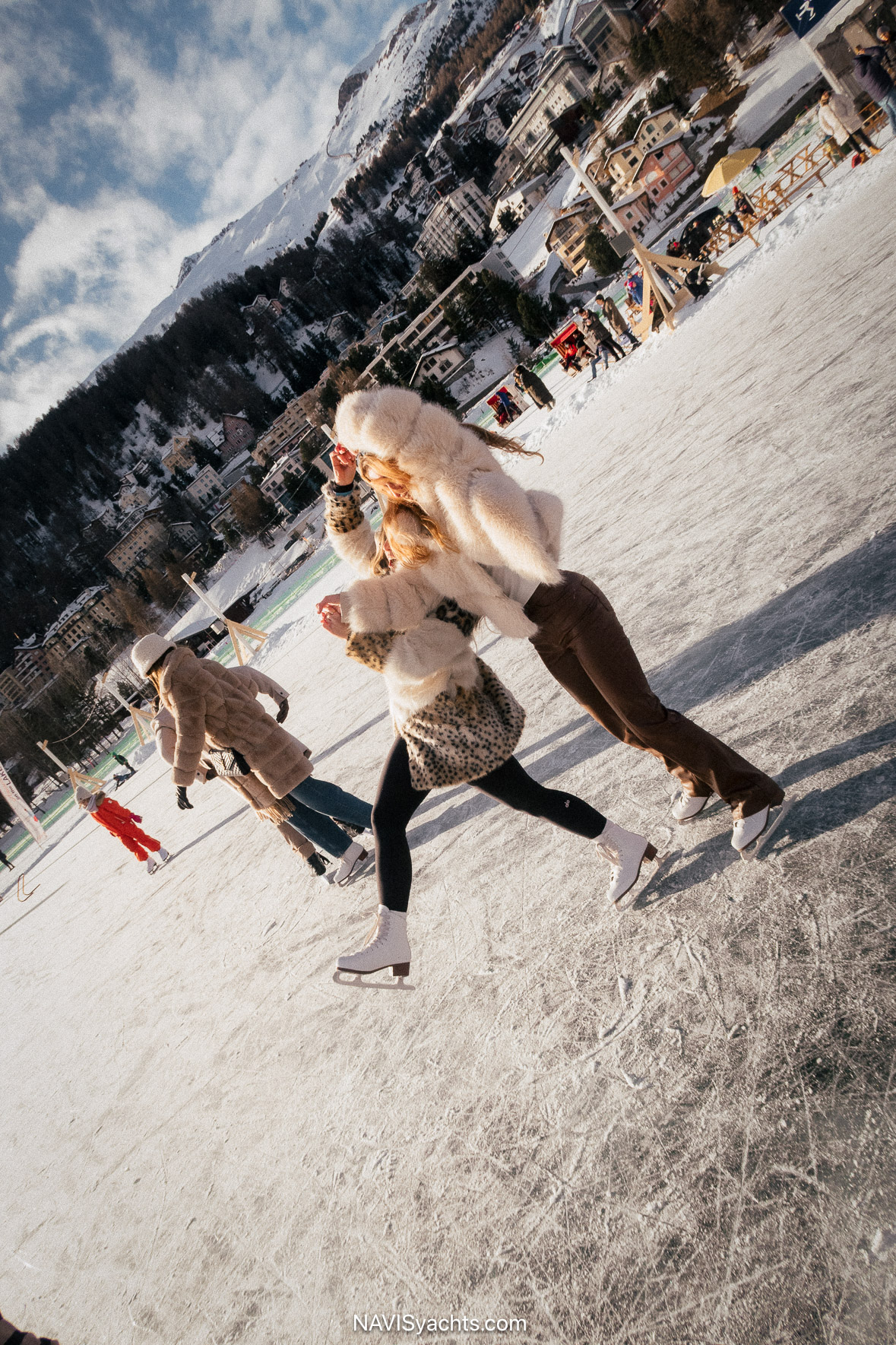
Consider the frozen lake. In most Alpine villages, a lake in winter is part of the scenery. In St. Moritz, it becomes a venue. Horse races have been contested on its frozen surface since 1907.
Polo tournaments, automobile gatherings, and other events have subsequently brought competitors and spectators onto the ice, provided conditions permit. Few places have made such imaginative use of their winter landscape.
Contemporary St. Moritz still carries the influence of those early pioneers. Historic palace hotels share the town with contemporary architecture and international luxury boutiques. Art galleries have become an important part of its cultural life, while the surrounding mountains continue to attract skiers and snowboarders whose interests have relatively little to do with the social calendar.
There is also the Engadin itself, whose character extends far beyond the fashionable streets of St. Moritz. Traditional villages, Romansh heritage, regional cuisine, and a long-established mountain culture provide a connection to the valley’s past. For visitors willing to explore, the region offers a considerably richer experience than its international reputation might initially suggest.
Our journey to St. Moritz began in Engelberg, after several days exploring Central Switzerland (featured in NAVIS edition 92). With four travelers and a considerable collection of luggage, we entrusted the transfer to SwissChauffeur, whose professional drivers and brand-new vehicles had already made traveling through Switzerland a pleasure. The new Mercedes-Benz V-Class comfortably accommodated all four of us and our luggage. Swiss chocolates and refreshments were waiting inside.
Our route initially took us north toward Lucerne before turning east across Switzerland, passing through the landscapes surrounding Lake Zurich and continuing toward Chur. From there, the road began heading south, deeper into the mountains of Graubünden.
The journey’s most memorable section came as we approached the Julier Pass.
At 7,490 feet (2,284 m) above sea level, the pass has connected the valleys of Graubünden for centuries. In late February, it presented a spectacular winter landscape. The road climbed through a succession of bends and hairpins, cutting across slopes buried in snow. As we gained altitude, the mountains opened around us into immense expanses of white, with the dark ribbon of asphalt providing one of the few interruptions to the snow-covered terrain.
It was difficult to stop looking through the windows. Each turn revealed another mountain face, another broad field of snow, another perspective on the scale of the landscape. From the comfort of the Mercedes, we could enjoy the ascent while our driver handled the mountain road, its changing gradients, and the winter conditions.
Beyond the pass, the road descended toward Silvaplana and the Upper Engadin, bringing us gradually into the world of St. Moritz.
The first impression was of two very different wardrobes sharing the same streets. Skiers and snowboarders moved through the streets alongside people dressed for an entirely different sort of afternoon, creating a scene in which technical winter clothing and high fashion appeared equally at home. The contrast was unmistakable.
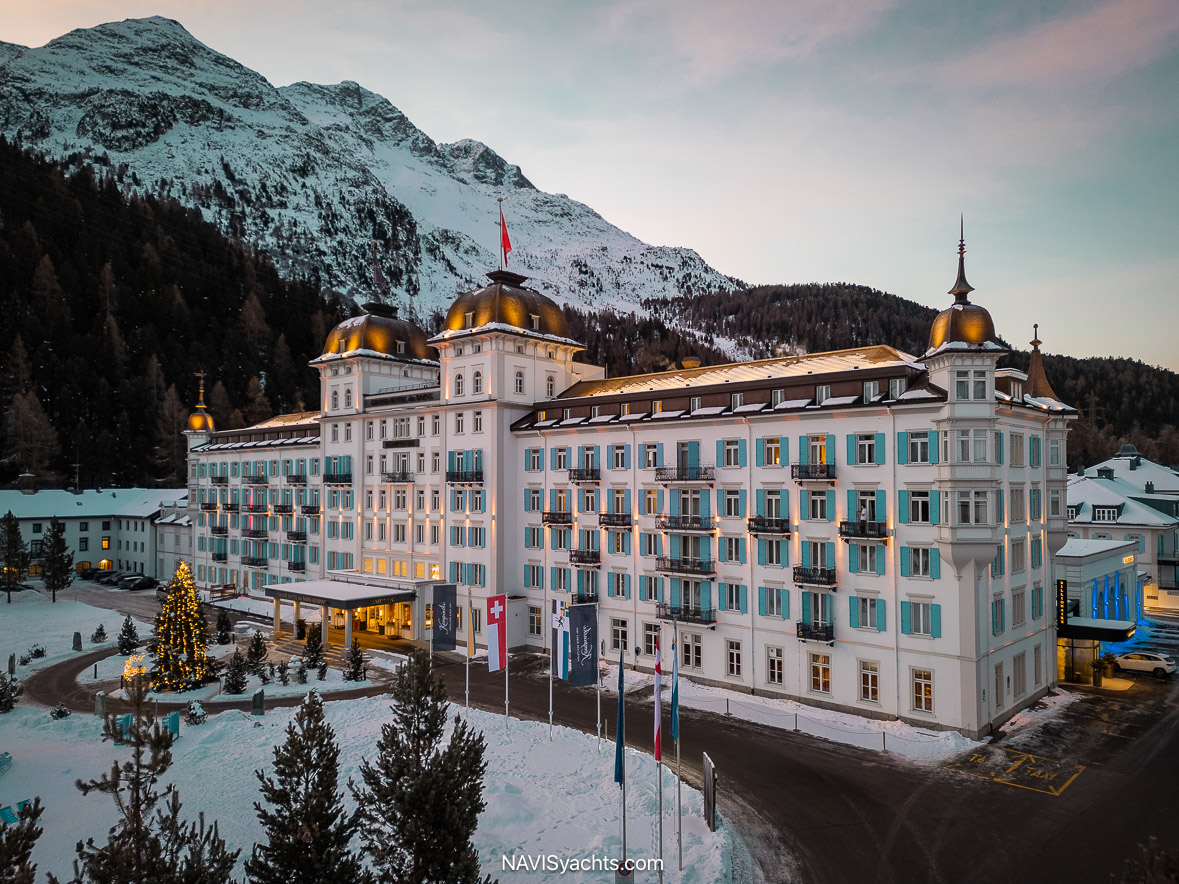
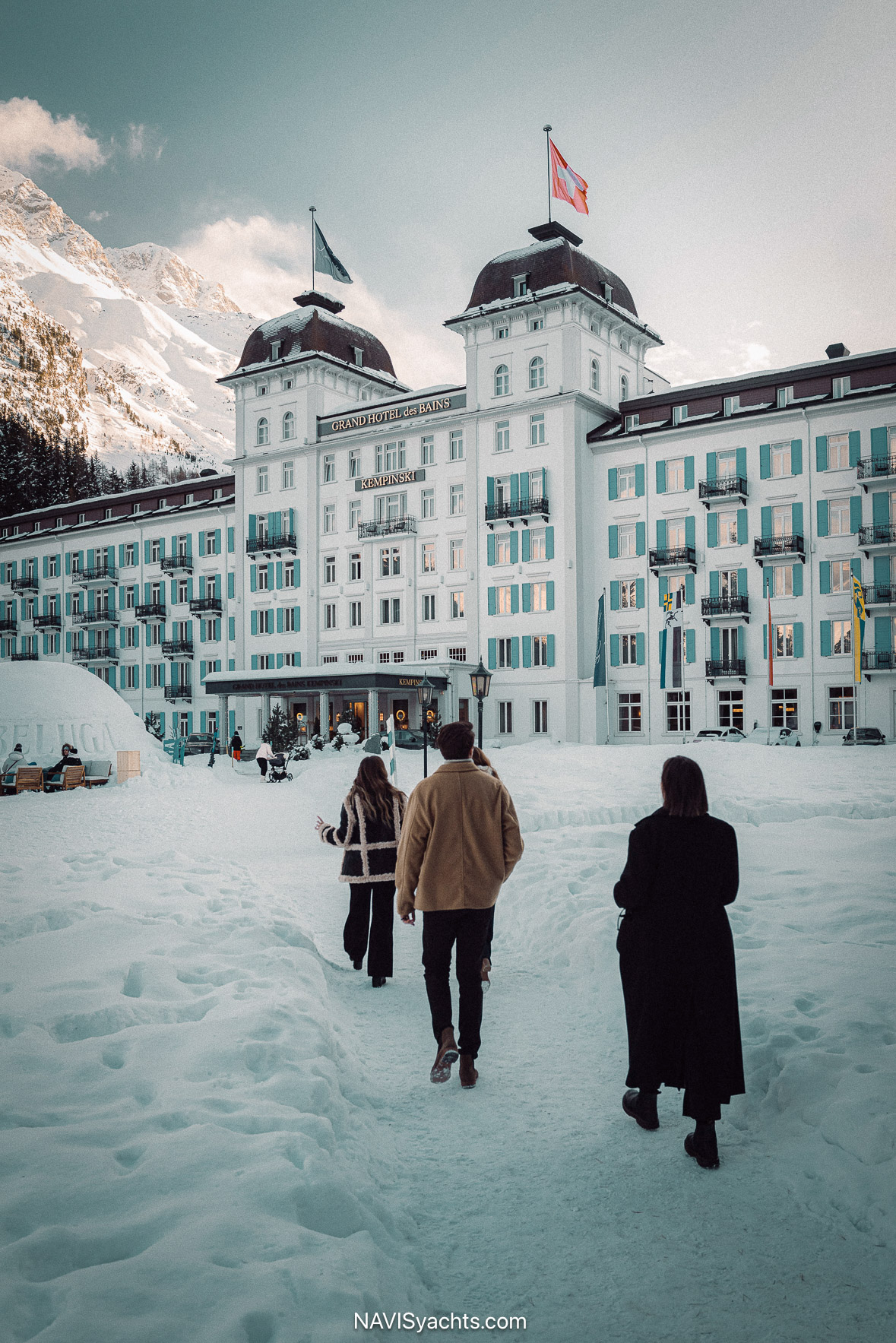
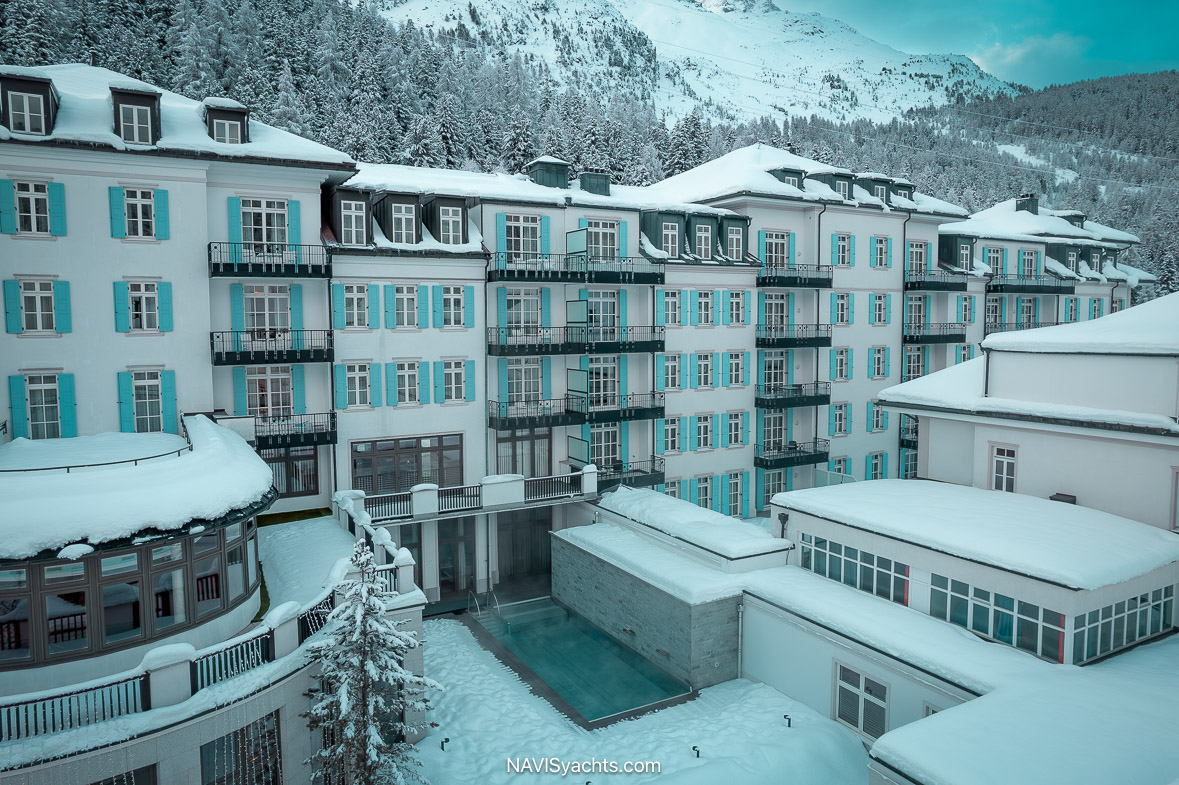
Our destination was the Grand Hotel des Bains Kempinski St. Moritz. Its imposing white façade, pale-blue shutters, and symmetrical towers recalled the grand age of Alpine hospitality that had helped establish the town’s international reputation. Our Mercedes pulled beneath the entrance portico, where the atmosphere changed again. Outside, skiers and shoppers were still coming and going. Inside, the pace was measured and the welcome quietly assured.
We had prepared an itinerary that would take us onto the slopes of Corviglia, into some of the town’s celebrated restaurants, through its galleries and museums, and inside the grand-hotel tradition that has shaped its identity for generations.
More than 160 years after Badrutt persuaded his English guests to return, St. Moritz continues to draw visitors from around the world.
We wanted to understand what had kept them coming back.
The Mountains of the Engadin
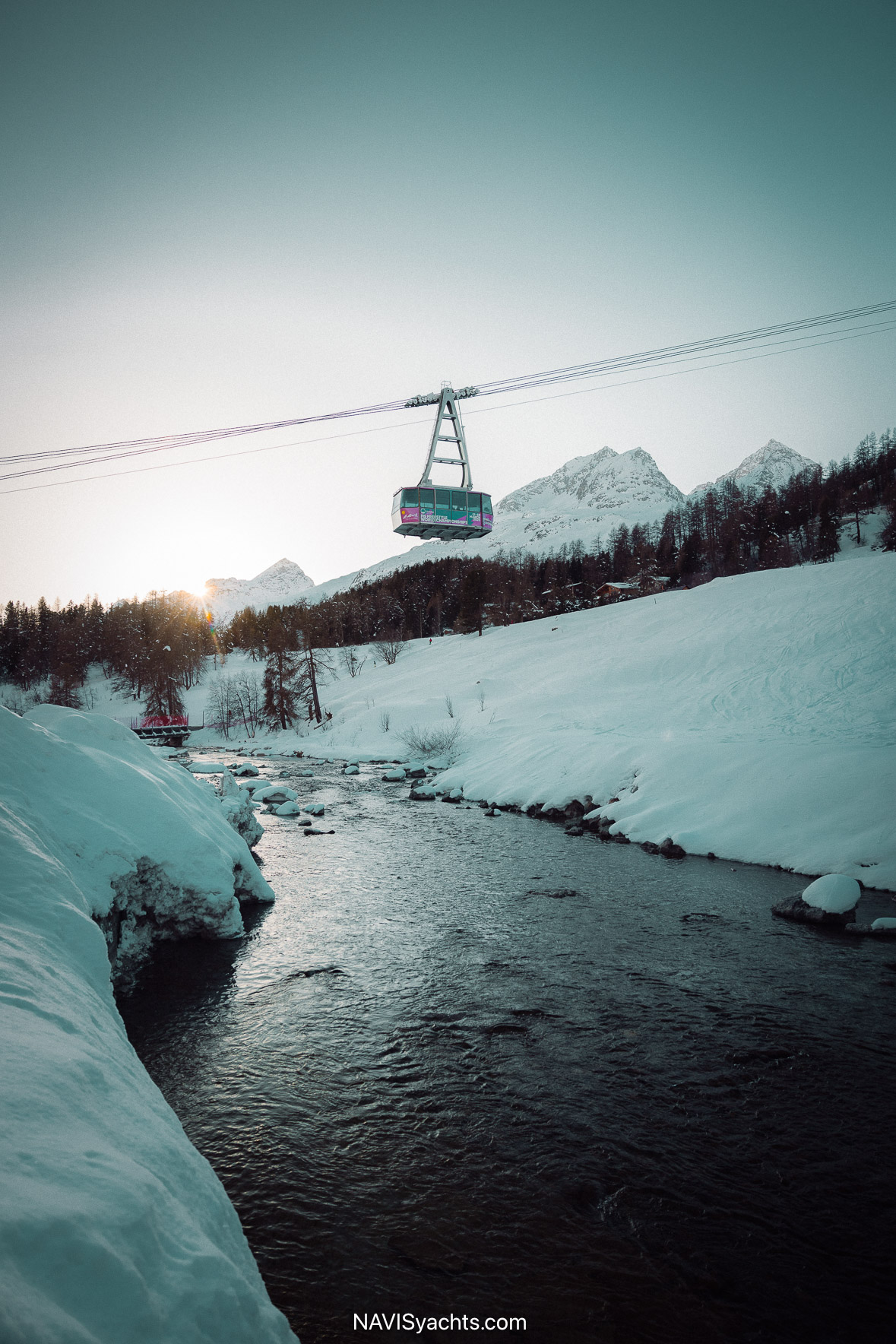
The mountain was almost on our doorstep. The Signal cable car was a three-minute walk from the Kempinski. A short ride brought us into the heart of the ski area, where a network of lifts spread across the surrounding mountains. Within minutes of leaving the hotel, we were standing on snow, deciding which direction to explore first.
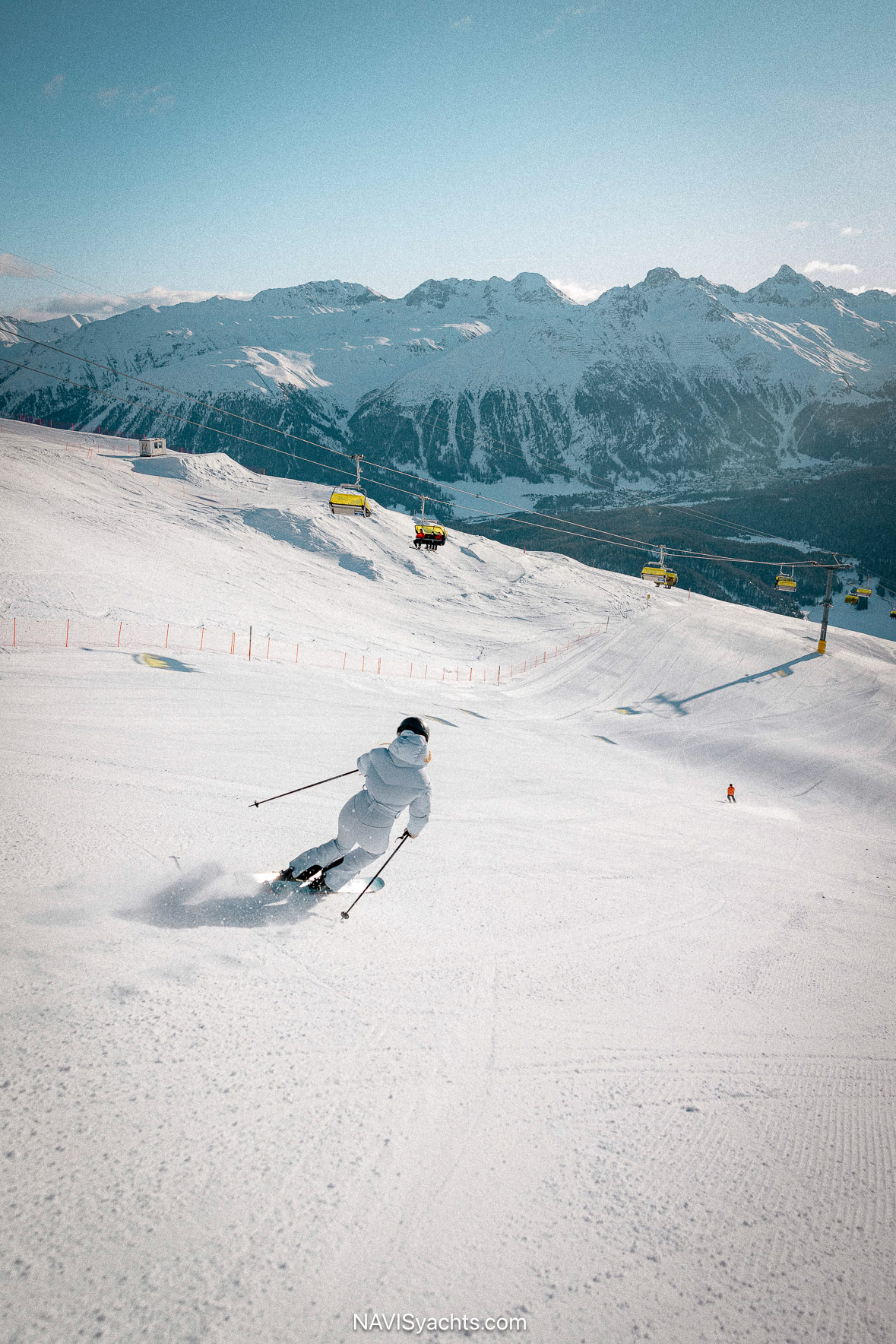
Corviglia covers an enormous area above St. Moritz, with 96 miles (155 km) of prepared pistes served by 24 lifts, climbing from approximately 5,900 feet (1,800 m) to Piz Nair at 10,030 feet (3,057 m). Its connections extend across several mountain sectors, with descents leading toward different communities in the valley. Understanding how those sectors fit together takes some time. A skier unfamiliar with the mountain could easily spend the day following one excellent piste after another and eventually discover that the most convenient way back to the hotel lies several lifts away.
Fortunately, we had arranged two instructors from Swiss Ski School St. Moritz to accompany us on our first day. Both were young, enthusiastic, and clearly delighted to introduce visitors to their mountain. Their approach was wonderfully relaxed, with plenty of conversation between runs and an attentive eye on everyone’s technique. They offered useful suggestions without turning the day into a formal lesson, and their knowledge of the lift connections proved particularly valuable.
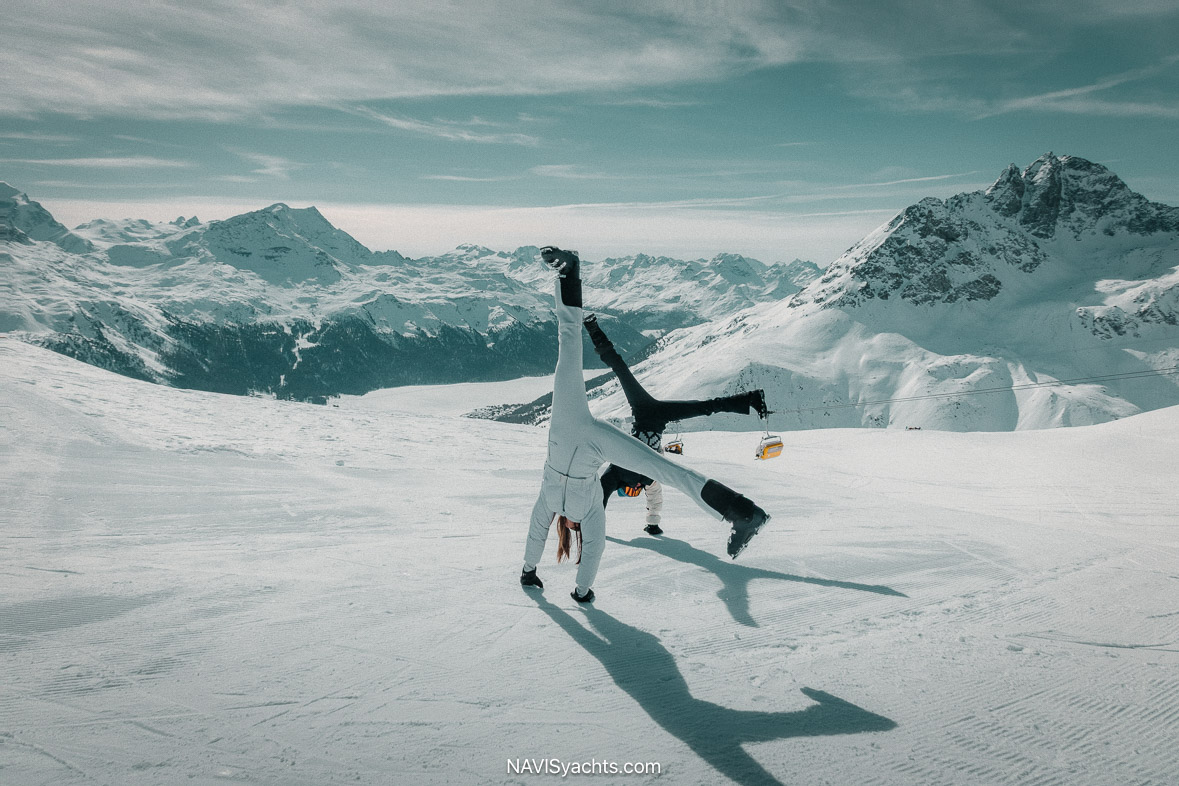
Seen from the upper stations, Corviglia appears almost limitless. Broad slopes descend from high ridges, crossing an immense landscape of exposed mountains and sheltered valleys. Lifts seem to reach every corner of the resort, and the well-developed infrastructure makes moving between sectors remarkably straightforward.
What impressed us most, was the width of the pistes.
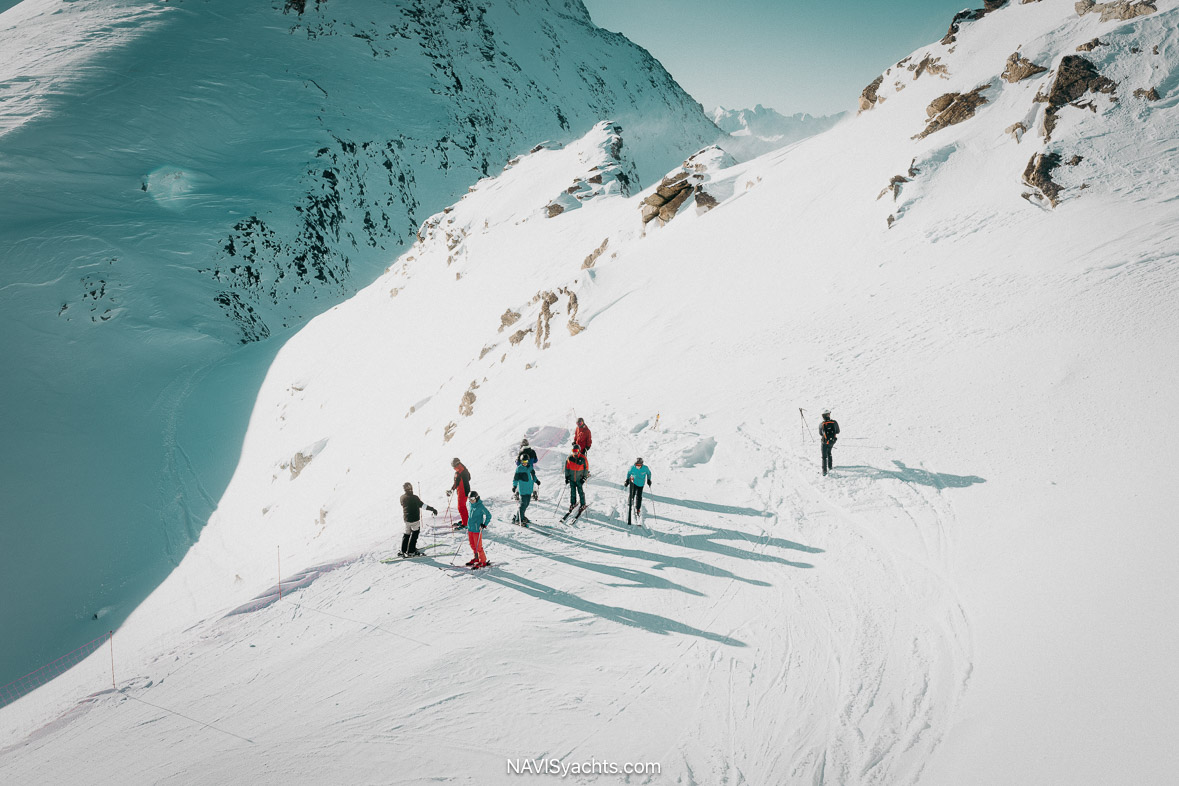
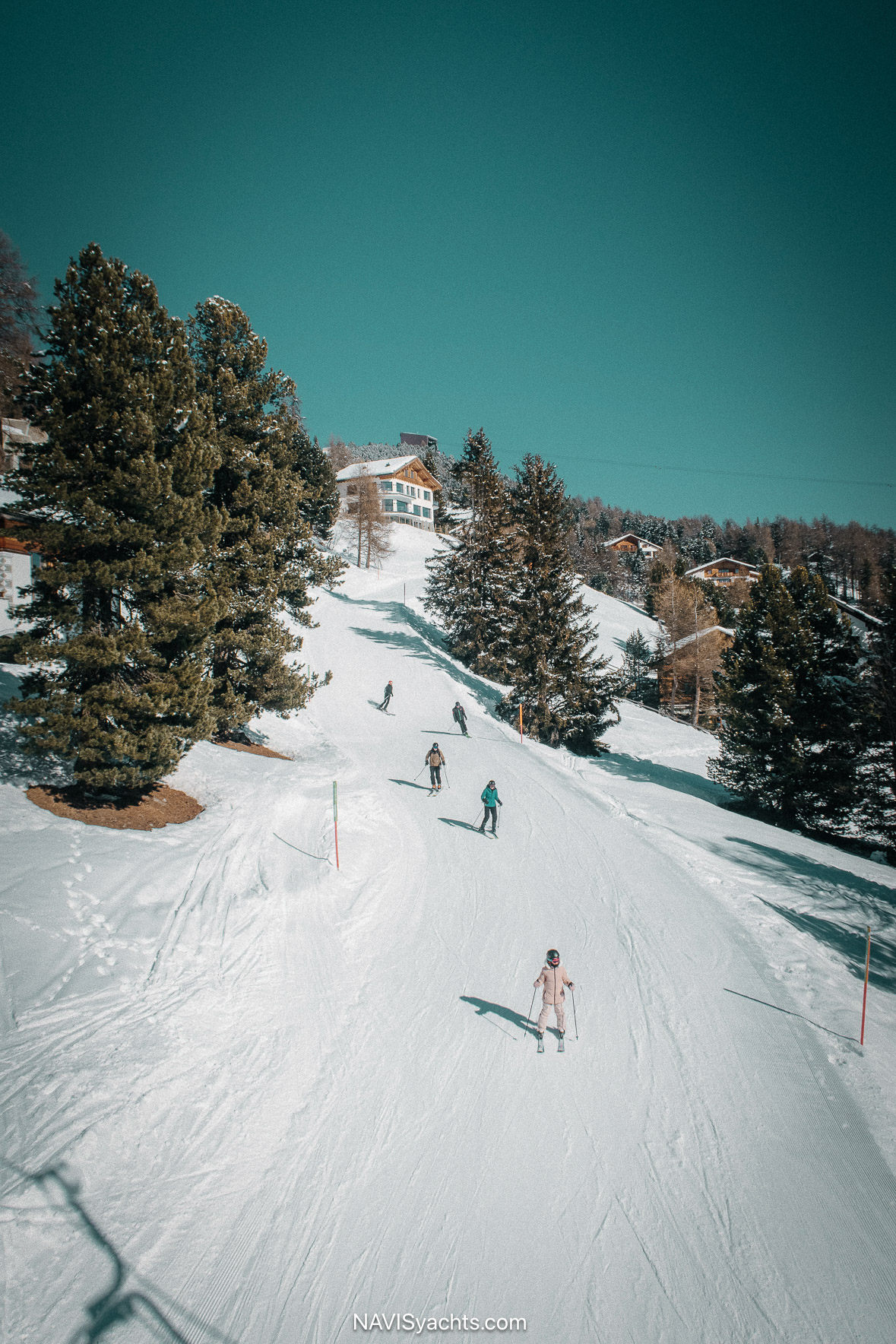
We had rarely skied on pistes so wide. Long, beautifully groomed runs invite wide, flowing turns and sustained speed, with sufficient space for skiers to establish their own rhythm. Even during busy hours, the mountain never felt crowded. There were plenty of people enjoying the excellent conditions, yet lift queues were almost nonexistent and the pistes remained wonderfully open.
We had arrived at the end of February to find abundant snow and days of exceptional weather. The surrounding peaks were completely white, the skies clear, and the prepared slopes in excellent condition. Each morning, the grooming teams had left the mountain in immaculate shape.
Corviglia particularly rewards confident intermediate and advanced skiers. The upper sectors offer steeper terrain and challenging descents, while lower areas provide broad, approachable runs suitable for those still developing their technique. The pistes are carefully marked and secured, and the entire operation has that unmistakable Swiss precision: modern lifts, clear signage, logical connections, and an impressive standard of maintenance.
For skiers accustomed to seeking the most demanding off-piste terrain, Corviglia’s highly organized environment may initially appear rather civilized. The mountain has freeride possibilities, of course, but the strength of the prepared ski area lies in the freedom to cover considerable distances over exceptionally good snow.
Our favorite discovery came at Piz Nair.
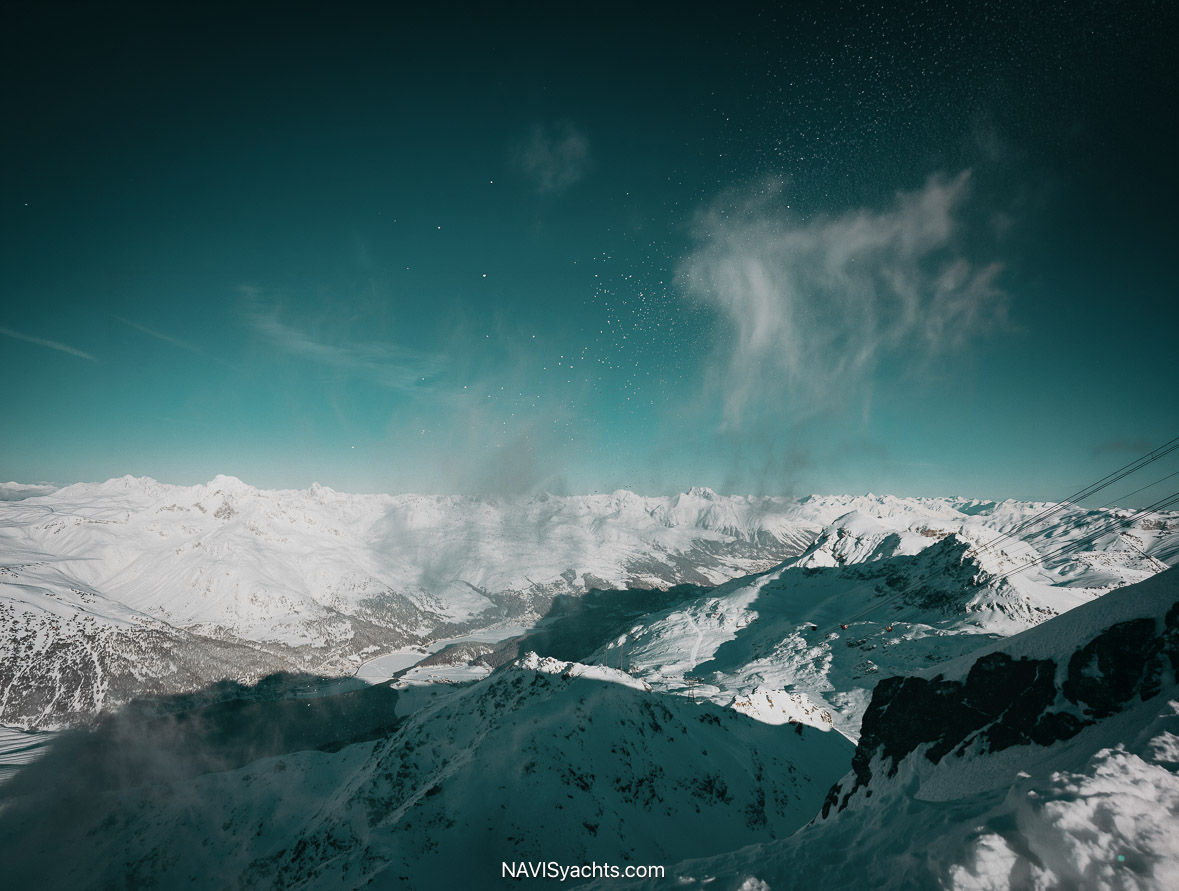
Reaching the summit by cable car is an experience worth making even before considering the descent. At more than 10,000 feet, the panorama stretches across an immense landscape of snow-covered peaks, with the valleys of the Engadin far below. Skiers gather briefly at the upper station, adjust their equipment, take photographs, and then set off toward the pistes.
Rather than immediately following the other passengers down the mountain, we waited. One group departed, followed by another, until the area grew quiet. With several minutes remaining before the next cable car arrived, we finally set off.
For that brief interval, the mountain seemed entirely ours.
There was no one immediately ahead, no need to adjust our line around other skiers, and nothing to interrupt the pleasure of carving turns across the perfectly prepared snow. We followed the contours of the mountain at our own pace, with an extraordinary Alpine panorama unfolding around us.
Another memorable descent took us toward the western reaches of the resort. From the Munt da San Murezzan sector, we followed piste 1, a long run that carries skiers across a particularly scenic part of the mountain. Fewer visitors appeared to venture this far, and the resulting quiet made the descent especially enjoyable. The views across the valley were exceptional, and the length of the run allowed us to settle into a rhythm of uninterrupted skiing.
By our second day, having learned the principal connections with our instructors, we were comfortable exploring independently. The scale of Corviglia no longer seemed intimidating. We understood which lifts led toward the higher slopes, how to move between sectors, and, perhaps most importantly, which descent would eventually bring us back to the Kempinski.
Of course, a day on Corviglia includes considerably more than time spent on the pistes. The mountain has developed an extensive collection of restaurants and bars, and stopping for lunch is an essential part of the experience.
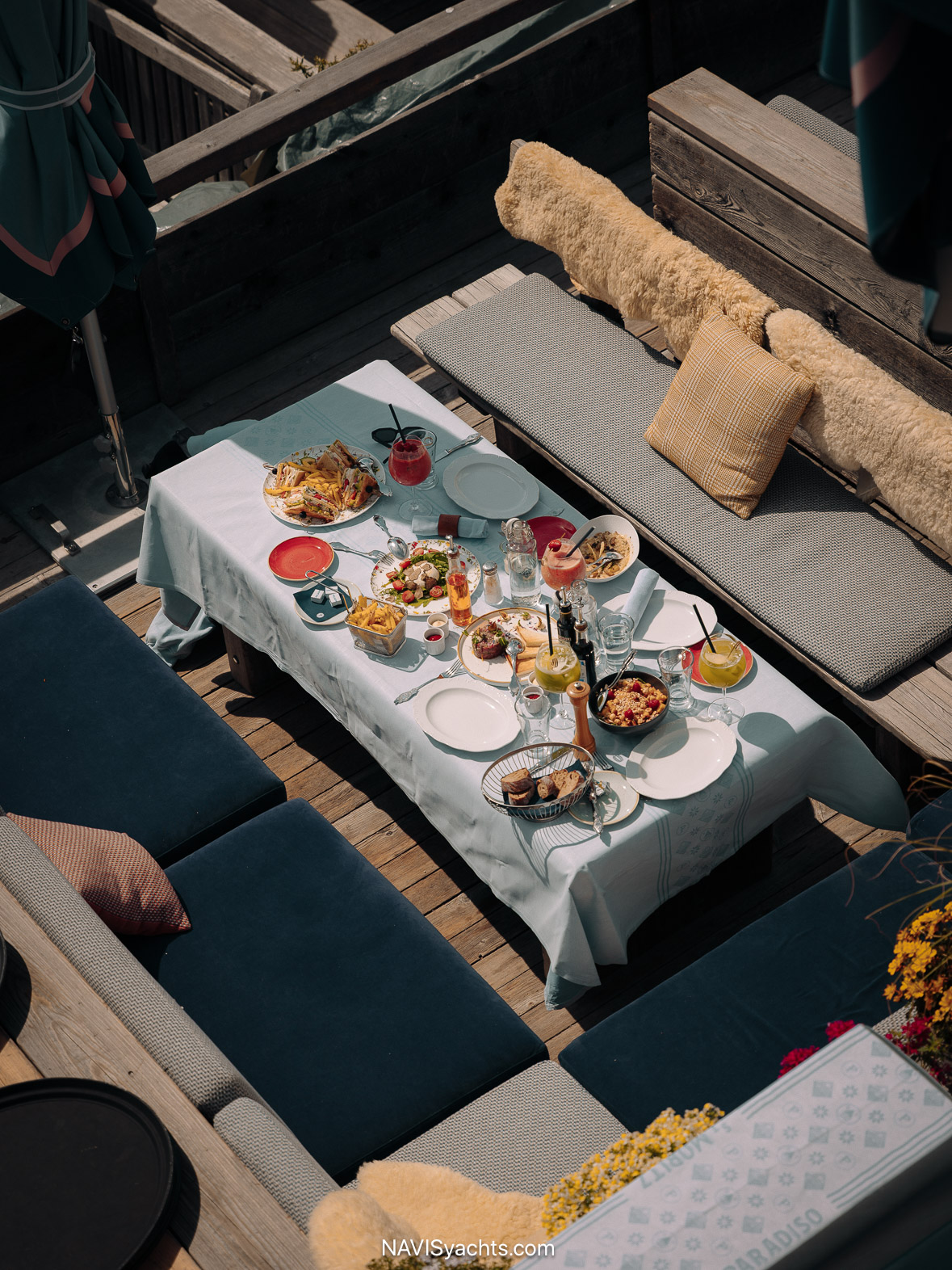
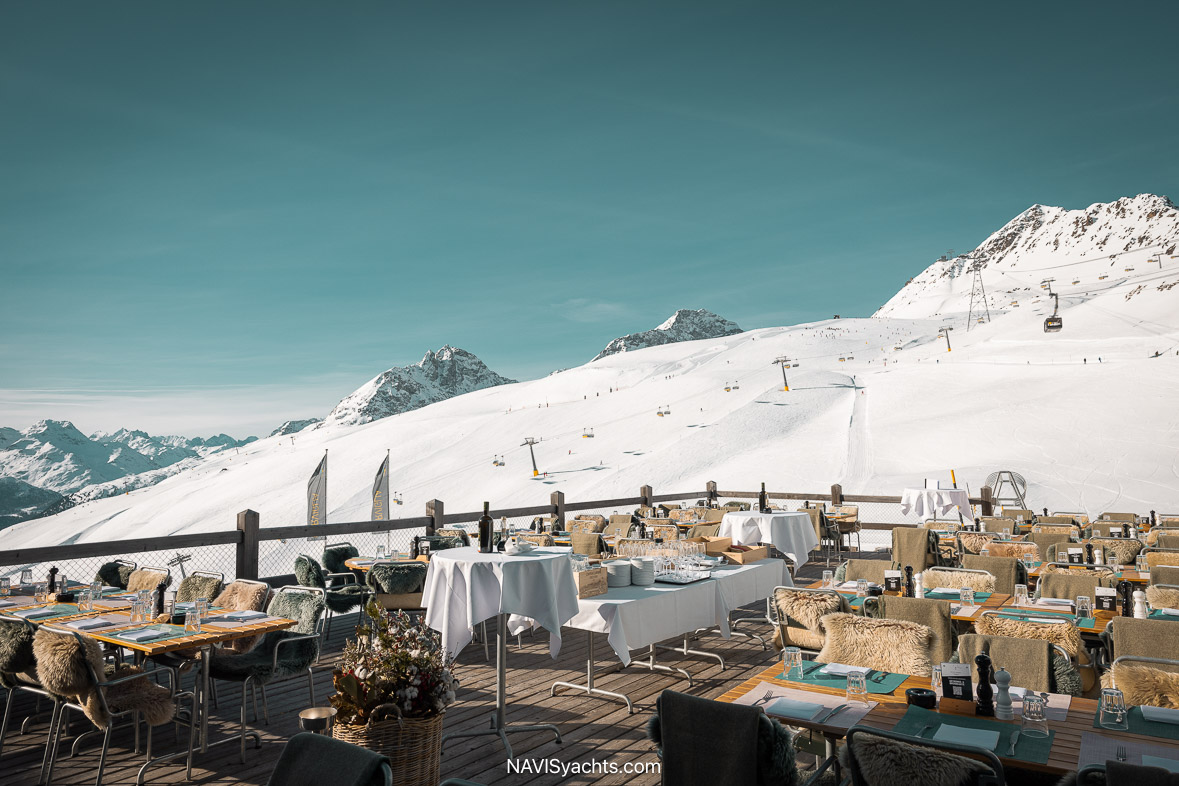
On our first day, we arrived at Salastrains, a traditional mountain property occupying a sunny plateau overlooking the Engadin. Renovation work was underway during our visit, with completion scheduled for the beginning of the upcoming winter season. Despite the ongoing improvements, the restaurant remained open, and its expansive wooden terrace was filled with skiers enjoying lunch in the sunshine. Live music accompanied the lively conversations, while the surrounding mountains provided a view that would have justified the stop on its own.
The atmosphere was relaxed, with ski jackets hanging from chairs and equipment resting nearby. The menu, however, revealed an entertaining expression of St. Moritz luxury. Alongside familiar Alpine dishes, soups, pasta, and regional specialties was a separate metal Salastrains Card featuring caviar, truffles, premium seafood, and extravagant interpretations of mountain classics. A truffle pizza and a particularly elaborate rösti with caviar were among the offerings.
It was an amusing reminder of where we were. Even halfway up a mountain, St. Moritz has its own ideas about lunch.
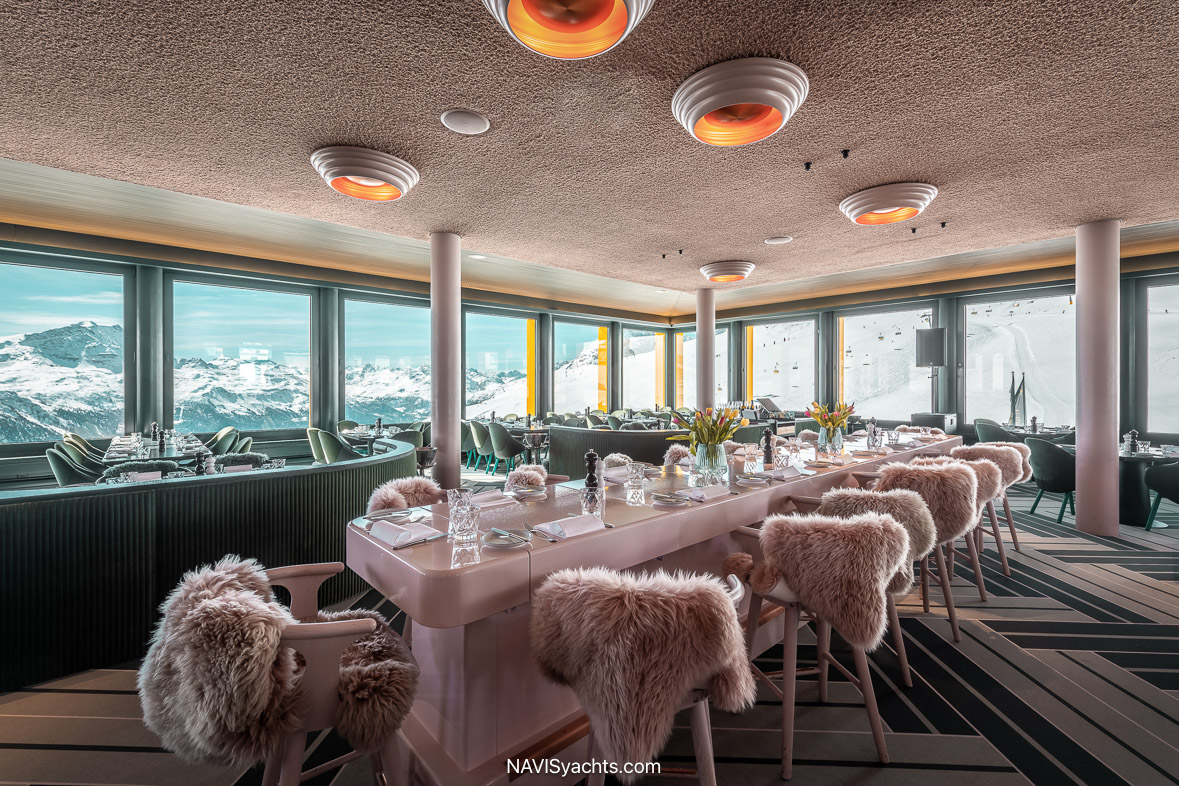
The following day brought us to White Marmot, near the central Corviglia station, high on Corviglia. Entering a beautifully designed fine-dining restaurant while wearing ski boots is always slightly entertaining, especially when the interiors, attentive service, and sophisticated menu would be entirely at home in a fashionable city establishment.
White Marmot approaches mountain gastronomy with considerable ambition. Its kitchen combines regional ingredients with Mediterranean influences. Its dining rooms and outdoor terrace enjoy magnificent views, while the menu ranges from carefully prepared seafood and beef dishes to truffles and creative interpretations of Alpine cooking.
We sat down in ski boots and soon forgot about the next lift.
Late in the afternoon, and the question becomes how best to return to the valley.
For us, the answer was wonderfully convenient. By selecting the appropriate descent, we could ski all the way down to St. Moritz Bad, finishing directly across the street from the Kempinski.
It was another reason to appreciate the guidance we had received on our first morning.
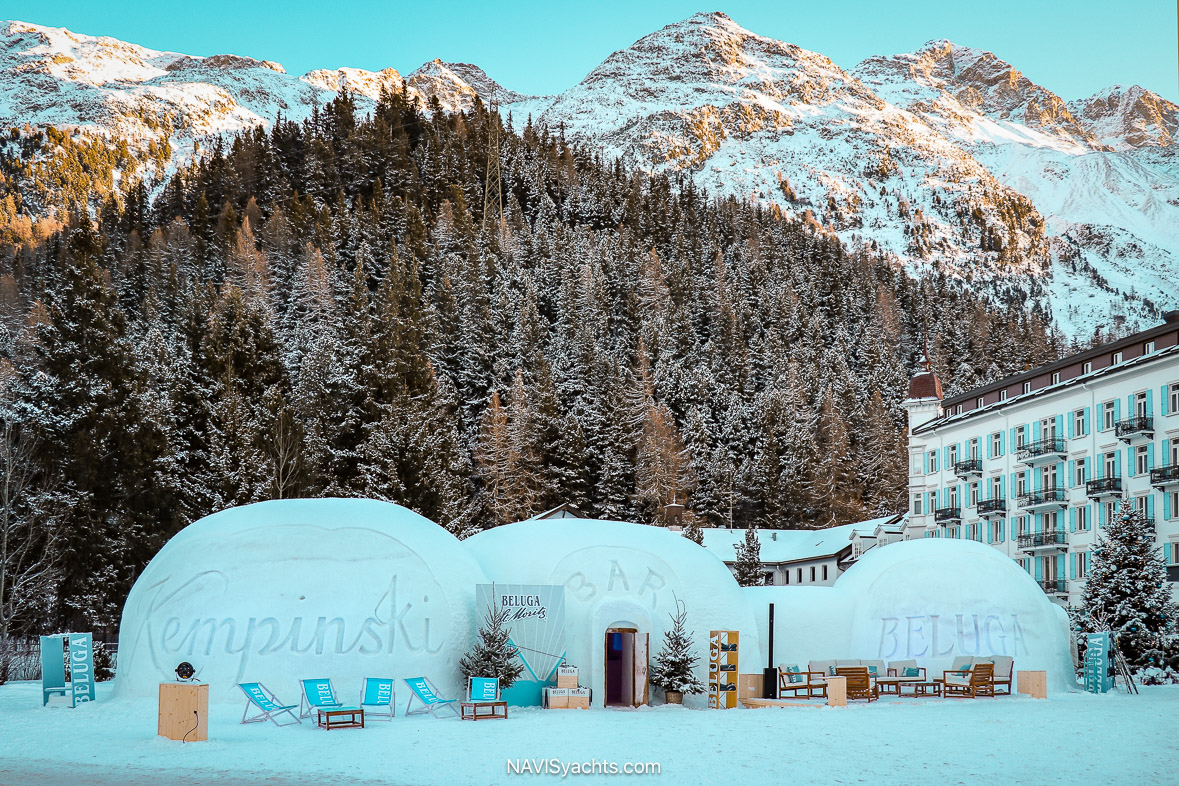
In the snow-covered park outside the hotel stood the Beluga Igloo, an unusual après-ski retreat composed of three interconnected snow domes, with indoor seating and an outdoor deck. It offered an appealing place to settle after the final descent, listen to relaxed music, enjoy a cocktail, and exchange stories about the day’s discoveries.
We would return to the Igloo at the end of our ski days, before putting away the equipment and heading for the spa.
Yet the memory that remains clearest is wonderfully simple: standing at the top of Piz Nair, watching the other skiers disappear, and realizing that the next few turns would be ours alone.
The Grand Tradition of Alpine Hospitality
St. Moritz has one of the most distinguished hotel traditions in the Alps, with an impressive collection of grand properties that have welcomed international travelers for generations. The legendary Kulm Hotel, where Johannes Badrutt helped establish winter tourism, remains a cornerstone of the town’s history, while Badrutt’s Palace has been a symbol of St. Moritz society since 1896. Suvretta House offers a more secluded Alpine setting, the Carlton commands magnificent views over the lake, and the contemporary Grace La Margna introduces a different interpretation of luxury hospitality. Each offers its own perspective on the St. Moritz experience, and choosing where to stay can significantly shape a winter holiday. For our nights, we selected the Grand Hotel des Bains Kempinski, attracted by its historic character, exceptional facilities, and, particularly important for our itinerary, its convenient access to the mountains.
For five nights, the Kempinski became our base: close to the skiing, spacious enough to relax in, and welcoming when we returned tired.
Its location is perhaps the greatest advantage. The Signalbahn is just three minutes away on foot, and the appropriate descent from Corviglia brings skiers back almost to the hotel’s entrance. During our stay, this proximity made an enormous difference. There were no complicated morning transfers or long journeys back after skiing. We could leave our suites, walk across the street, and begin exploring the mountain within minutes.
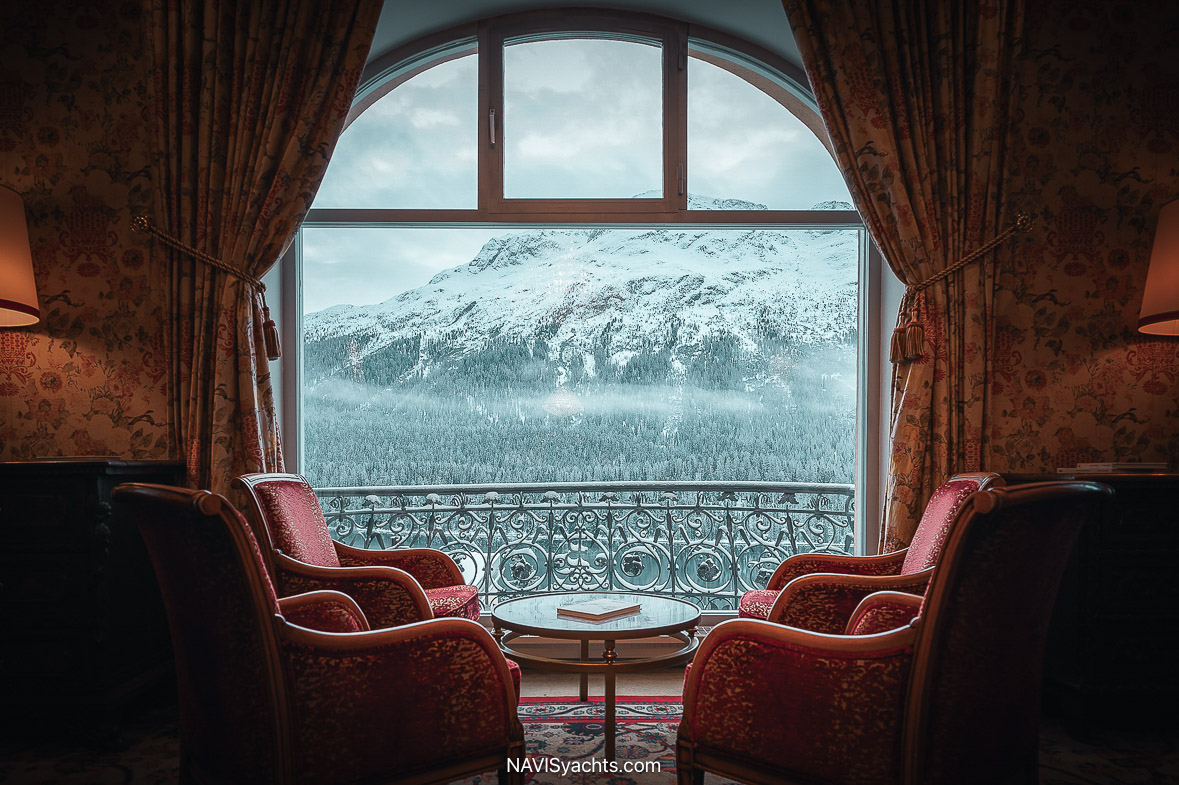
The building itself belongs to another era of Alpine tourism. Originally established in 1864, the Grand Hotel des Bains carries the architectural confidence of the nineteenth century, with its symmetrical white façade, pale-blue shutters, and distinctive towers. Inside, generous public spaces and contemporary furnishings give the historic property a comfortable, residential atmosphere.
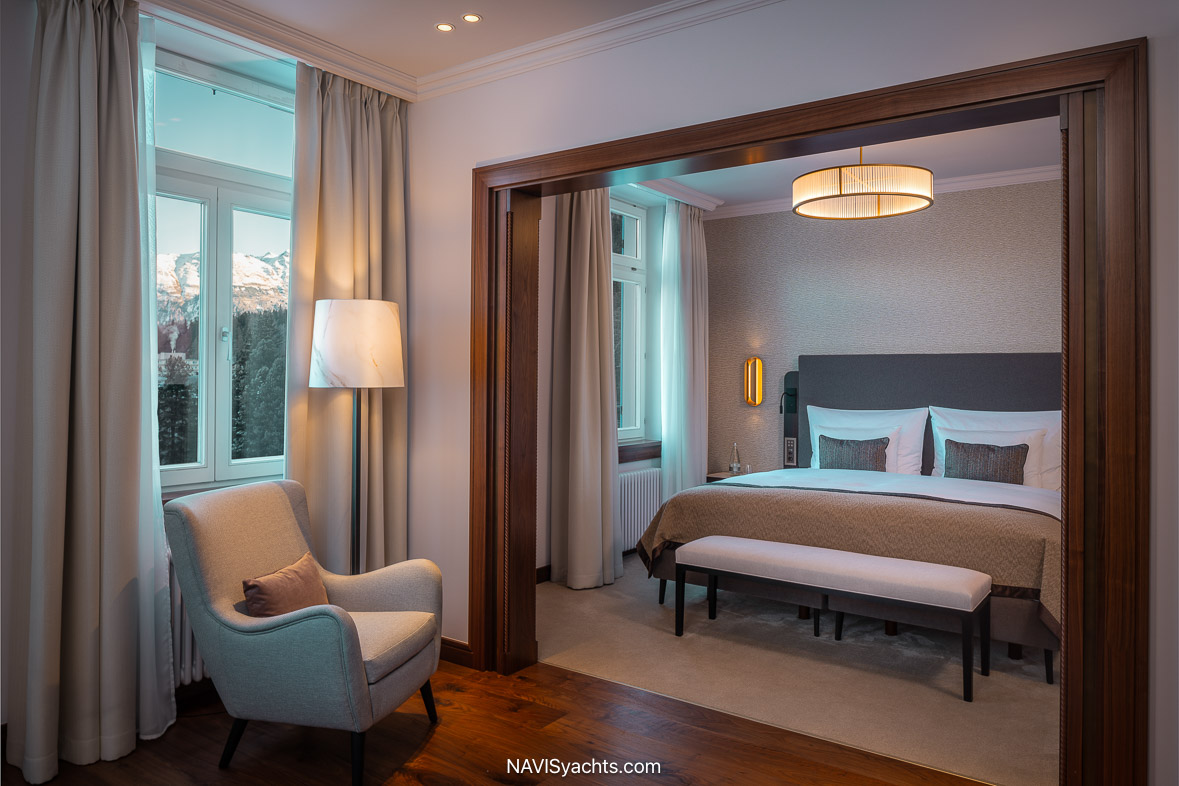
We stayed in two suites overlooking the hotel’s park, where large windows framed the snowy grounds and the surrounding mountain landscape. Both were exceptionally spacious, with comfortable living areas, thoughtful layouts, and an inviting sense of warmth. After spending most of the day outdoors, returning to a suite with enough room to relax, change, and prepare for the evening became one of the small pleasures of the trip.
Of course, the most appealing winter hotels understand that the day continues after the skis come off.
The Alpine Spa became part of our afternoon routine, a pleasure worth examining in its own right.
The choice of restaurants was another advantage: a quiet, carefully prepared dinner at NEORA or a louder evening at Crazy Pizza, both within the property.
Evenings often brought us to the Quintessence Bar & Lounge, where live music added a welcome dimension to the hotel’s atmosphere. The piano, the comfortable seating, and the relaxed conversations created an appealing setting for a drink before dinner or a final stop afterward. It became one of those familiar places we naturally returned to as the days progressed.
Breakfast deserves particular mention. The hotel’s morning buffet is extensive, but one of our most enjoyable experiences came on our final morning, when breakfast was served in our suite.
With the snowy park visible beyond the windows, an unhurried breakfast in the privacy of our accommodations was a wonderful way to conclude the stay. It was an indulgence we would happily repeat.
The Grand Hotel des Bains Kempinski had already undergone a comprehensive NAVIS Curated evaluation during our visit, earning an exceptional score of 4.98 out of 5. Our detailed review, published in NAVIS edition 91, examined the hotel’s design, accommodations, service, restaurants, wellness facilities, and hospitality standards. That evaluation remains one of the strongest we have awarded.
For the winter traveler, however, what we appreciated most was the ease with which all these elements came together. The mountain was minutes away, our suites offered a comfortable retreat, the spa provided an excellent place to recover, and the restaurants and bar gave us plenty of reasons to remain at the hotel after dark.
It was a very good place to come home to after skiing.
The Art of Living Well
The waters of St. Moritz were attracting visitors long before the village became a ski resort. The iron-rich Mauritius Spring, used since the Bronze Age, gave the place its first reputation as a health destination. It is fitting that our afternoon routine should have ended in the spa.
The Grand Hotel des Bains Kempinski occupies a particularly meaningful place in that history. Built beside the famous spring, its extensive Alpine Spa offers some 30,140 square feet (2,800 m²) dedicated to wellness, with swimming pools, saunas, steam rooms, and contemporary recovery treatments.
Our afternoons developed a familiar routine. After the final descent from Corviglia, we would meet at the Beluga Igloo for a cocktail and a conversation about the day’s skiing. From there, it was only a short walk to the hotel, where we returned our equipment to the ski lockers, changed in our suites, and headed downstairs to the spa.
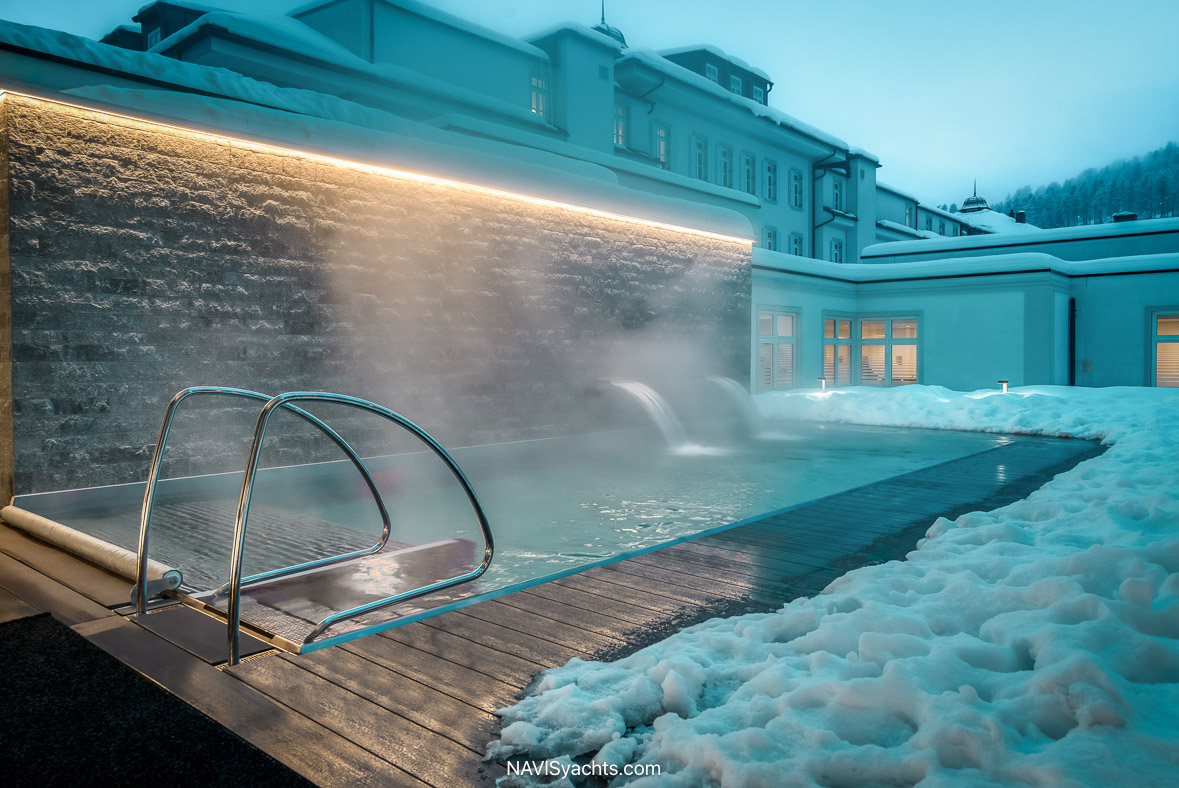
We generally began in the swimming pool, taking a few minutes to relax after several hours on the mountain. The spacious indoor pool was particularly comfortable, while outside, the heated swimming pool offered the unusual pleasure of being surrounded by a snow-covered garden. The contrast between the warm water and the winter landscape was reason enough to linger.
The sauna complex soon became our favorite part of the experience. Several different saunas, steam facilities, and relaxation areas allow guests to develop their own sequence of heat and recovery. One particularly memorable feature was a shallow cold-water walking circuit, where the sudden chill around the feet and lower legs provided a sharp awakening after the warmth of the sauna. We often finished with a period of quiet relaxation before returning to our suites.
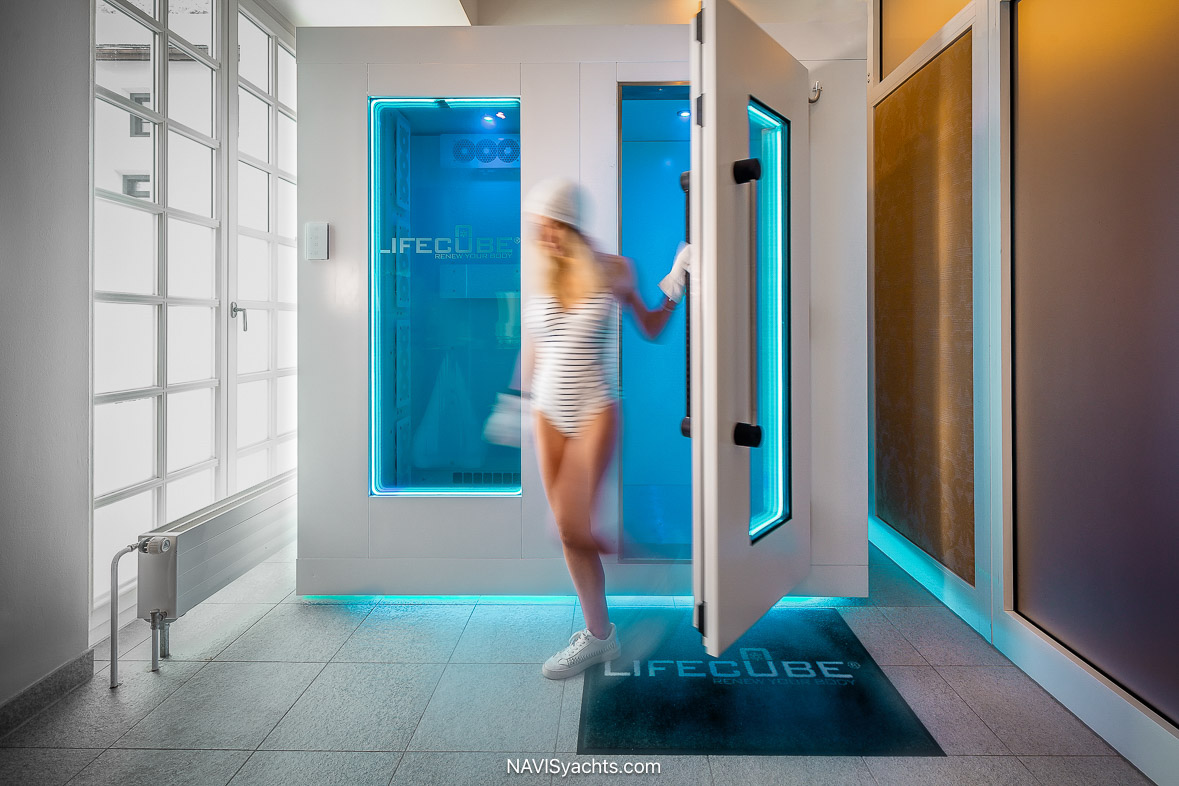
For Mathias, whose skiing demanded a more intensive approach to recovery, the hotel arranged an altogether different experience: cryotherapy.
In the LifeCube cryotherapy chamber, which operates at temperatures as low as −110°C (−166°F), Mathias spent less than a minute in intense cold. The treatment is marketed for post-exercise recovery, although its benefits remain an area of scientific investigation. It was certainly the most extreme wellness experience among our group, and one that contrasted sharply with our leisurely afternoons moving between warm pools and saunas.
What surprised us was how much we came to appreciate this daily ritual. After six or seven hours outdoors, the body responds almost immediately to the warmth. Tired legs begin to relax, the exertion of the mountain gradually fades, and the prospect of an excellent dinner becomes increasingly appealing.
By the time we had showered and dressed for the evening, we felt ready to enjoy another side of St. Moritz. Dinner might be followed by live music and a final drink at the hotel bar, although we rarely remained awake for very long afterward.
There is a particular kind of exhaustion that follows a full day skiing, an afternoon in the spa, and a memorable dinner. By the time our heads reached the pillows, sleep arrived almost immediately.
The following morning, breakfast and another day on Corviglia awaited.
It was a routine we could have happily continued for weeks.
At the Tables of St. Moritz
St. Moritz has developed a remarkably diverse restaurant scene for a town of its size. Traditional Swiss kitchens, Italian restaurants, contemporary international cuisine, and elaborate fine-dining establishments coexist within a relatively small area. The dining culture reflects the international society that has gathered here for generations, although some of the most enjoyable experiences remain firmly connected to the region’s Alpine traditions.
Our first dinner at Kulm Pizzeria, caught us off guard.
The name had led us to anticipate a relatively casual dinner. Instead, we entered a collection of intimate, wood-paneled dining rooms, with beautifully arranged tables, warm lighting, and an open kitchen that immediately established a more sophisticated atmosphere. The warmth of the room felt Italian; the service was as polished as the setting.
We sampled several dishes, including gnocchi, risotto, carbonara, and fish, each prepared with excellent technique and presented with care. The service was equally accomplished, attentive without interrupting conversation and paced to make the evening thoroughly enjoyable.
Yet the surprise came with dessert.
The Crème Brûlée Cappuccino was extraordinary, easily among the most memorable desserts we encountered during our Alpine journey. It is a dish we would enthusiastically recommend to anyone dining here, even those who might ordinarily consider skipping dessert.
Our NAVIS Curated assessment reflected the quality of the entire experience. Kulm Pizzeria achieved a perfect 5 out of 5, earning full marks across every evaluated category, from culinary execution and service to dining-room atmosphere and attention to detail. It was an exceptional beginning to our gastronomic exploration of St. Moritz.
A very different experience awaited us at NEORA, within the Grand Hotel des Bains Kempinski. Its contemporary interpretation of Greek cuisine brought freshness, distinctive flavors, and creative combinations to a beautifully conceived dining experience. The flavours were fresh and the combinations memorable.
NEORA became one of our favorite discoveries. We examined the restaurant in greater depth in NAVIS edition 91, but for visitors interested in a sophisticated dinner in St. Moritz, it remains one of our strongest recommendations.
Only a few steps away, Crazy Pizza offered an entirely different evening. Here the atmosphere was energetic and festive, with music, entertaining presentations, and excellent pizzas creating a restaurant particularly appealing to younger guests.
Our exploration of traditional Alpine cuisine brought us to Le Lapin Bleu, inside Hotel Steffani, in the center of St. Moritz.
The restaurant has an established place in the town’s dining history, and its interiors preserve a distinctly traditional character. Small decorative details, including heart-shaped motifs carved into the chairs and tableware carrying the restaurant’s rabbit emblem, give the dining room a personality that feels genuinely local.
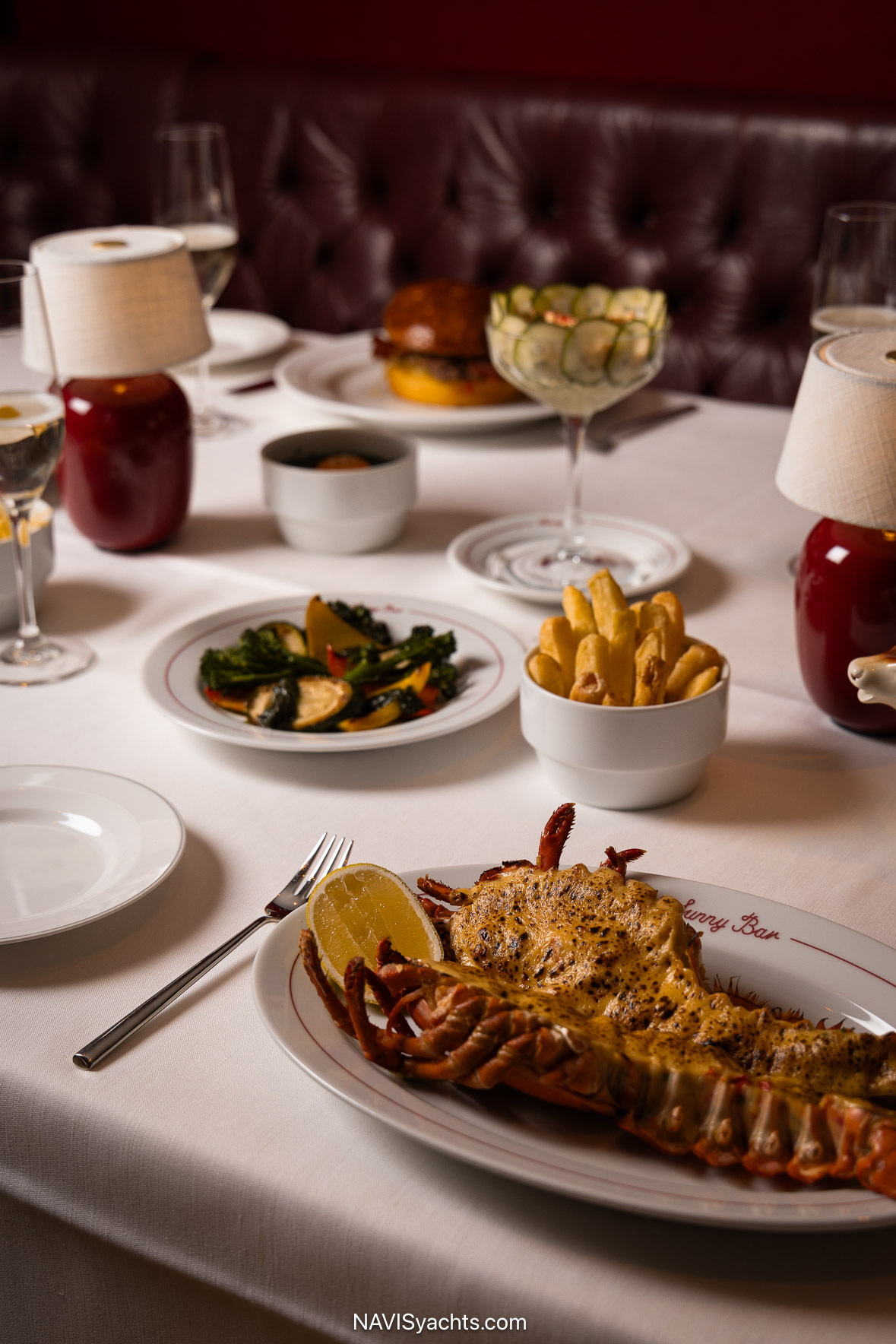
We began with a traditional cheese fondue, an almost obligatory pleasure during a Swiss winter, before continuing with a selection of regional specialties. Venison with mushroom sauce and rösti, bison steak accompanied by onions and mushrooms, and other hearty dishes reflected the substantial cooking traditions of the mountains.
The kitchen handled these familiar preparations with considerable skill. Flavors were rich and satisfying, portions generous, and the service attentive throughout. Our NAVIS Curated evaluation awarded Le Lapin Bleu an excellent 4.79 out of 5, reflecting its strong culinary quality, welcoming atmosphere, and consistent hospitality.
Outside, the restaurant’s sunny terrace offered another appealing side of the experience. Overlooking the streets of central St. Moritz, it attracts visitors who prefer a leisurely coffee or an afternoon spent watching the town go about its business. On a clear winter day, that simple pleasure can be every bit as enjoyable as an elaborate lunch.
Across our days, we had eaten our way from Italian classics to contemporary Greek cooking and Swiss game dishes. Each restaurant had a different kind of confidence.
There were still menus we wanted to return for.
A Town of Art and Distinction
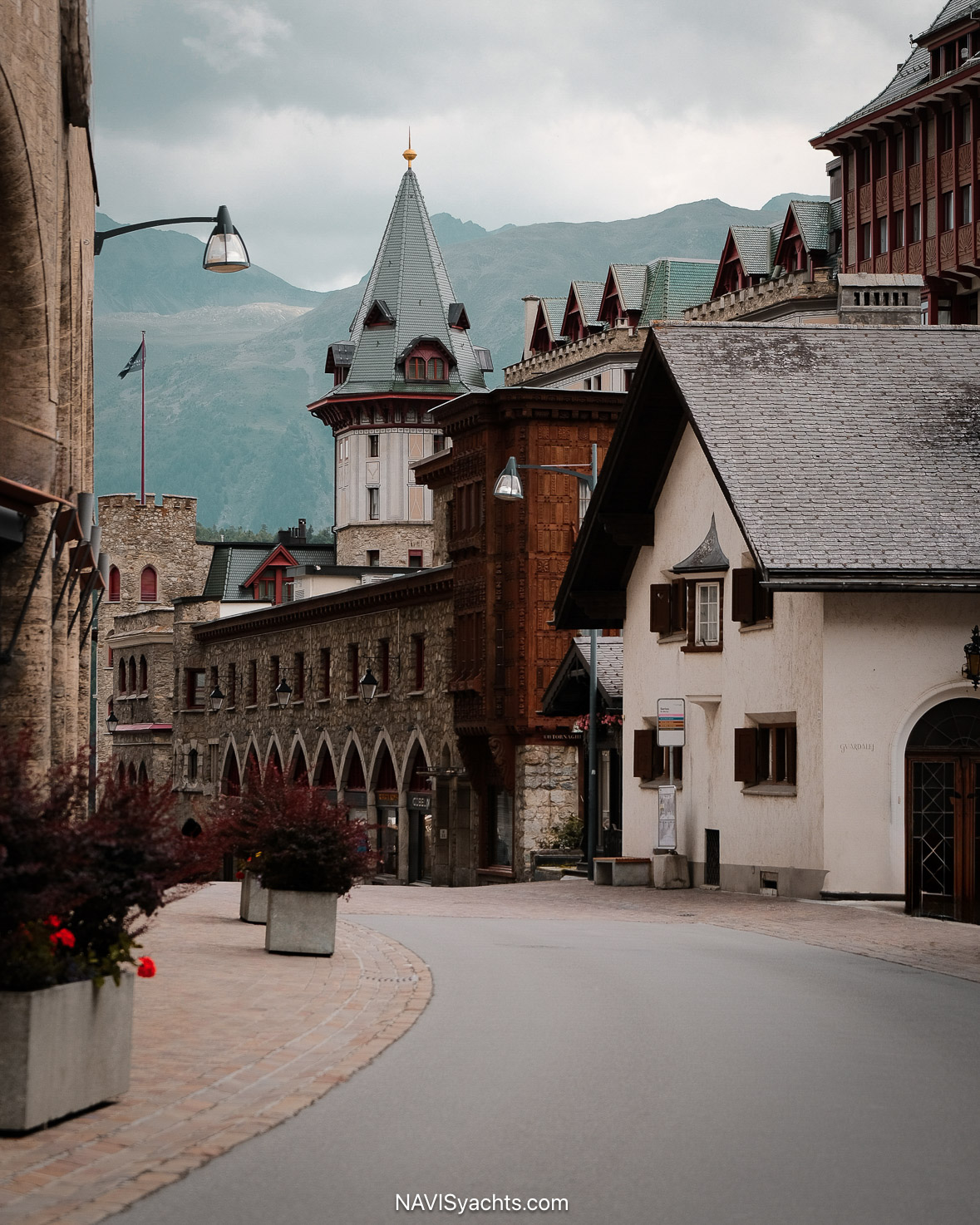
Walking through the streets of St. Moritz reveals a side of the resort that its glamorous reputation does little to explain. Luxury boutiques and international fashion houses occupy some of its most desirable addresses, yet the surrounding architecture retains a character that belongs unmistakably to Switzerland. Narrow streets wind between traditional buildings, old stone towers rise above the rooftops, and historic façades display elaborate decorations inspired by centuries of Alpine life.
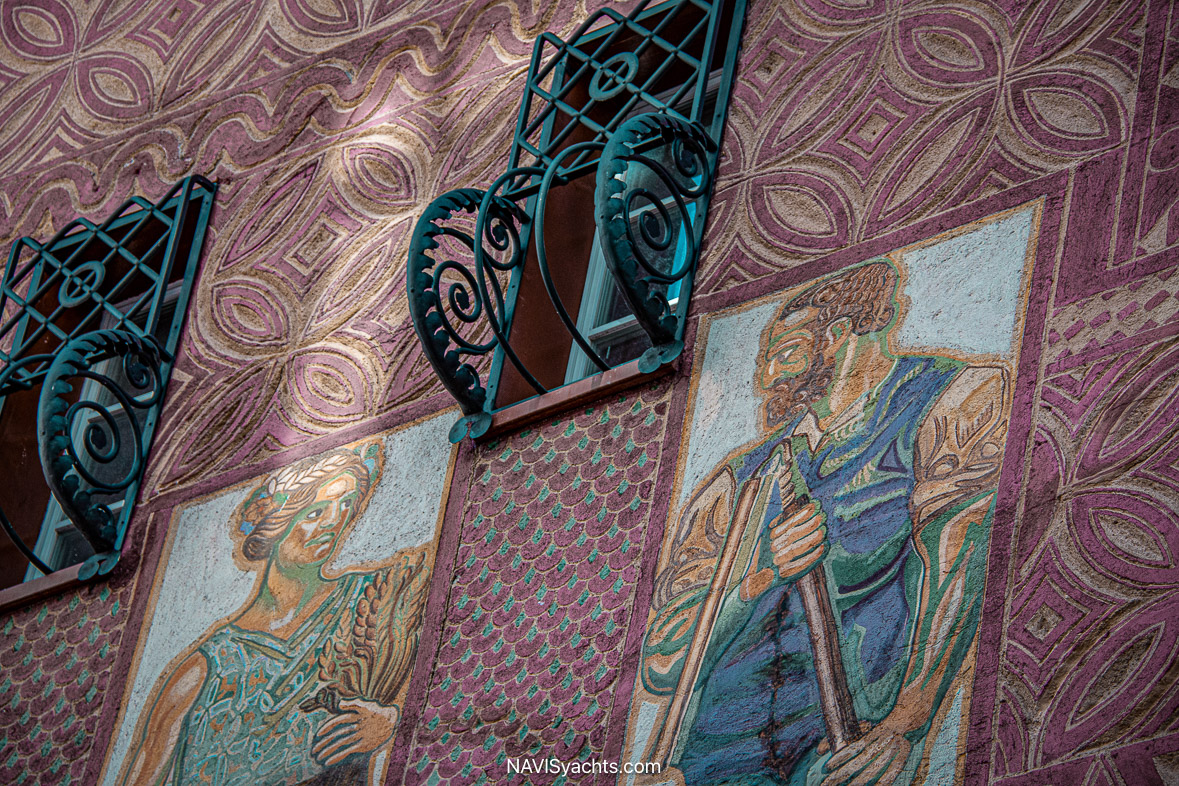
The Engadin has a particularly beautiful architectural tradition known as “sgraffito”, in which decorative patterns and illustrations are created by scratching through layers of plaster to reveal contrasting colors beneath. Geometric borders, ornamental motifs, and scenes of rural life transform otherwise modest façades into works of craftsmanship. These details are easy to overlook in a town whose shop windows compete for attention with the world’s most recognizable luxury brands.
One architectural curiosity is considerably harder to miss. Near the historic center stands the Leaning Tower of St. Moritz, a surviving part of the twelfth-century St. Mauritius Church. Rising approximately 108 feet (33 m), the tower inclines by an astonishing 5.5 degrees, leaning even farther than its famous counterpart in Pisa. The church itself disappeared in the nineteenth century, but its unusual tower remains one of the town’s most recognizable landmarks.
As we explored, we became increasingly aware of how closely the town’s international identity is tied to its geography. St. Moritz enjoys exceptional sunshine, a characteristic that helped establish winter tourism here and continues to shape daily life. The clear mountain light, so prominent during our visit, has also played a remarkable role in the region’s artistic history.
Few artists are as closely associated with the Engadin as Giovanni Segantini.
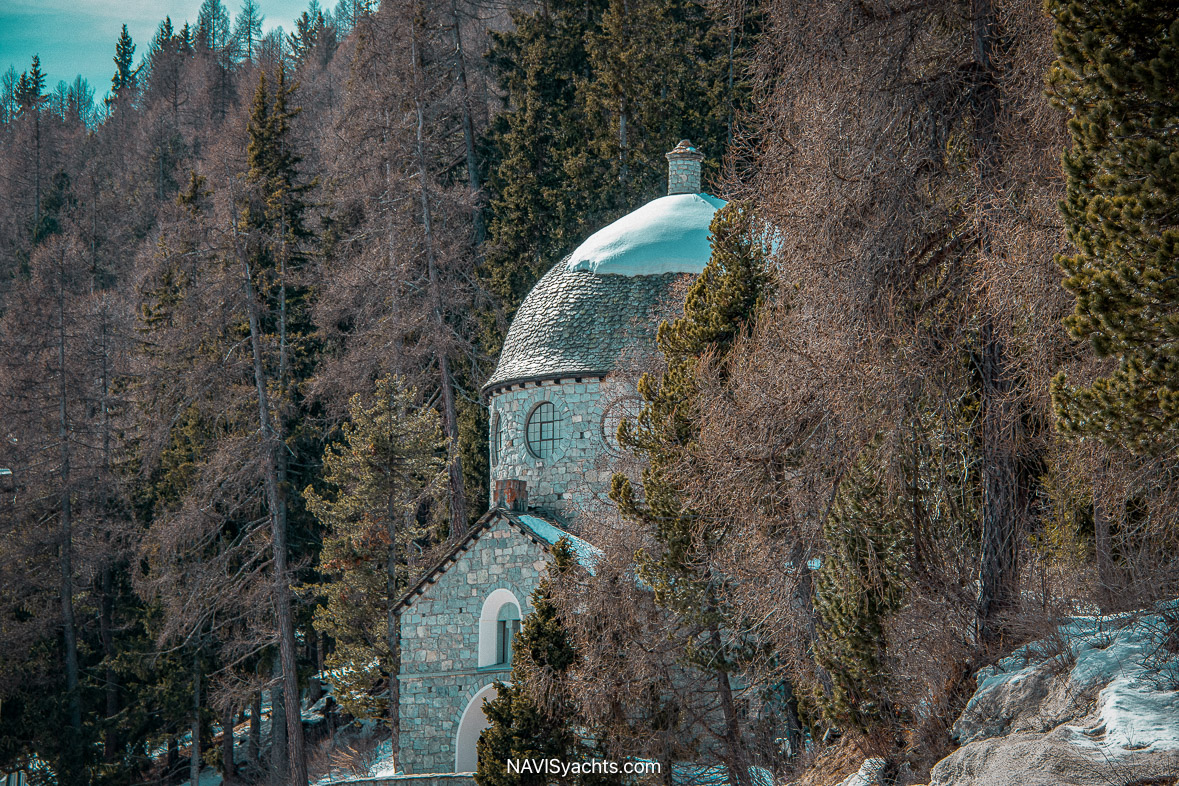
Our introduction to his work came at the Segantini Museum, a distinctive domed building overlooking St. Moritz. Although we were familiar with his name, we had never properly explored his paintings. The visit proved one of the most rewarding cultural experiences of our stay.
Segantini moved to the Engadin in 1894 and spent the final years of his life painting its landscapes, rural inhabitants, and changing seasons. His distinctive technique, associated with Divisionism and Symbolism, uses carefully placed strokes of color to create extraordinary effects of light. Seen up close, the surfaces are intricate and almost abstract. Step back, and they resolve into luminous mountain scenes of remarkable depth and atmosphere.
His monumental Alpine triptych, “Life, Nature, and Death”, dominates the museum’s central hall. The paintings explore the relationship between human existence and the natural world, incorporating the mountains, animals, and daily lives of the people who inhabited the region. Their scale and composition are impressive, but what stayed with us was Segantini’s extraordinary ability to capture the particular luminosity of the Engadin.
After spending several days skiing beneath those same mountains, we could understand his fascination with the place.
The town’s artistic interests certainly did not end with Segantini. As we continued walking, contemporary galleries appeared regularly among the shops and historic buildings. Some displayed photography exploring the extravagant lifestyles and sporting passions associated with St. Moritz; others presented modern sculpture and painting. Independent bookstores added another welcome dimension to the cultural landscape. We had little time to explore the galleries in depth, but their presence was impossible to ignore.
Ferraris, Rolls-Royces, and the occasional Bugatti moved along streets where skiers crossed paths with immaculately dressed couples. Some visitors arrived in striking designer winter clothes; others, particularly older couples, favored a quieter elegance. Cafés were as much places to watch the passing scene as to stop for coffee. In the distance came the occasional sound of aircraft approaching the Engadin airport.
By the end of our walk, St. Moritz felt less like a luxury resort assembled around prestigious brands than a longstanding Alpine community that had made room for the world. People came to ski, certainly, but also to enjoy art, automobiles, fashion, food, and each other’s company.
The Winter That Stays With You
Our days in St. Moritz had passed remarkably quickly. We had crossed the snowy Julier Pass, explored the immense pistes of Corviglia, discovered exceptional restaurants, and walked through streets where centuries of Alpine history coexist with an international society that has made winter in the Engadin something of an institution.
What we remember best are smaller moments.
The silence at the summit of Piz Nair after the other skiers had disappeared down the mountain. A long descent beneath a brilliant blue sky, with almost nobody else on the piste. An afternoon in the warmth of the Kempinski’s outdoor pool, surrounded by snow. The unexpected pleasure of a remarkable dessert at a restaurant whose name had promised nothing grander than pizza. And Segantini’s paintings, which somehow captured the mountain light we had been enjoying throughout our stay.
There were other discoveries still waiting. We had seen the frozen lake without witnessing one of its legendary sporting events. We had passed intriguing galleries without finding time to explore them properly. Beyond Corviglia, the surrounding Engadin offered mountains and villages we had yet to visit.
We had plenty of reasons to come back.
The town caters to skiers, art lovers, collectors, and people who simply enjoy a very good hotel. We had come to sample all those sides of St. Moritz, and had barely been enough.
In 1864, Johannes Badrutt convinced four English guests to return to St. Moritz during winter. They arrived skeptical and, according to the story, stayed until Easter.
After our own days in the Engadin, we understood why.
And if we were to offer one piece of advice to anyone planning their first visit, it would be this: book a few extra nights.
You’ll find a good reason to use every one of them.
The NAVIS team wishes to express its sincere gratitude to the organizations and hosts whose generosity, hospitality, and local knowledge made our winter journey through St. Moritz possible. Their invaluable collaboration allowed us to discover the many dimensions of life in the Engadin, from its extraordinary mountains and rich cultural heritage to its distinguished traditions of Alpine hospitality and gastronomy.
Our special thanks to:
- Switzerland Tourism | www.myswitzerland.com
- Visit St. Moritz | www.stmoritz.com
- Grand Hotel des Bains Kempinski St. Moritz |
- www.kempinski.com/en/grand-hotel-des-bains
- Kulm Pizzeria | www.kulm.com/en/restaurants/pizzeria
- White Marmot | www.whitemarmot.ch
For their exceptional service and for making our journey from Engelberg across the spectacular winter landscapes of Switzerland to St. Moritz such a memorable experience, we extend our special appreciation to:
- SwissChauffeur | swisschauffeur.ch
Written by Pablo Ferrero
photographed by Nils Grubba, Travis Kauffman, julia nimke, Walter Luttenberger, ELISABETH FRANSDONK, Rami Diab & NAVIS MEDIA