
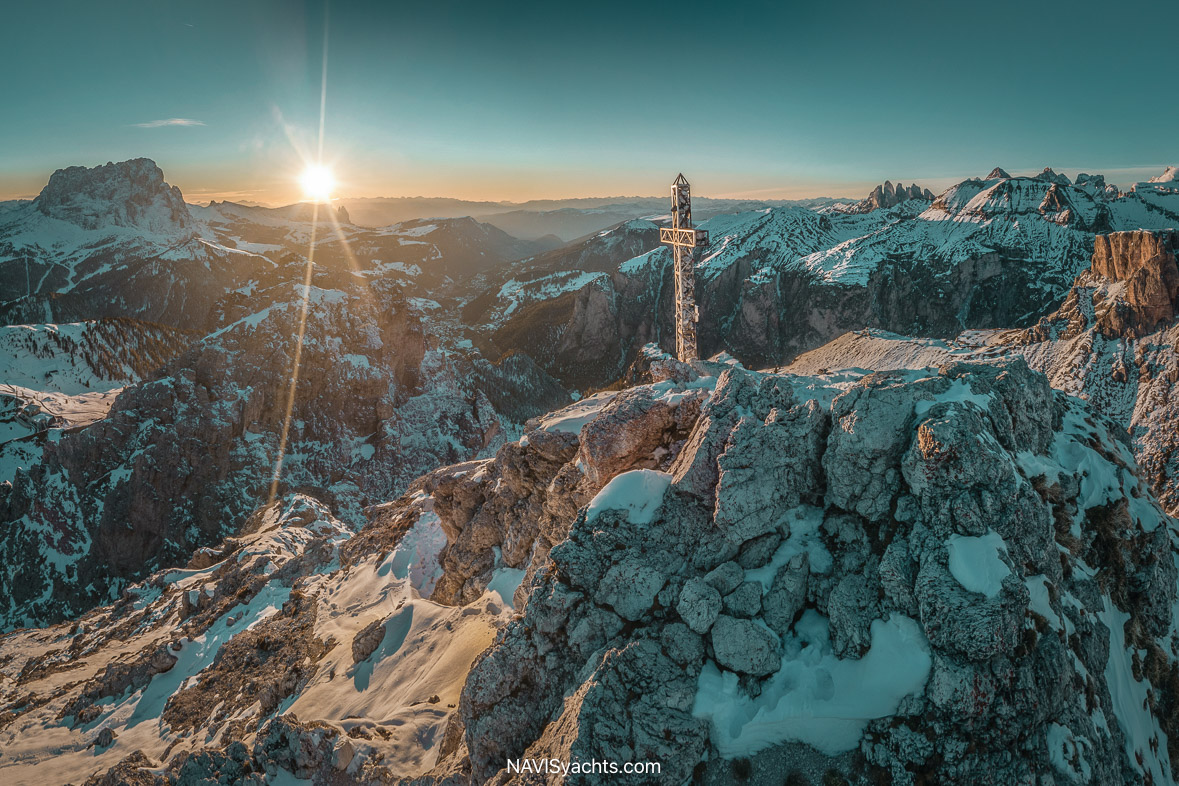
World Cup racing returns to the Saslong this December, while new developments, mountain traditions, and a full spring program set the pace for Val Gardena’s 2026/27 winter season.
The first thing you notice about Val Gardena is the rock. Great limestone walls rise almost vertically above the forests, and wherever you happen to be in the valley, Sassolungo seems to appear between the rooftops or at the end of a ski run. In the late afternoon, the pale stone takes on a reddish glow that can last only a few minutes before the mountains fall into shadow.
This is South Tyrol, a part of northern Italy where the villages still carry three names. Ortisei is also St. Ulrich and Urtijëi; Selva is Wolkenstein and Sëlva. German is widely spoken, and Ladin, the old language of these Dolomite valleys, remains part of everyday life.
Skiing has been woven into that life for well over a century. Today, the valley’s three principal villages, Ortisei, Santa Cristina, and Selva, give visitors access to an extensive network of pistes, including the famous Sellaronda. The coming winter begins on December 4, with lifts scheduled to operate through April 4, 2027, snow conditions permitting.
A Day Around the Sella
There are good reasons to start in Selva. From here, the Sellaronda makes its circuit around the Sella massif, linking four valleys through a succession of lifts and downhill runs. The entire route covers approximately 16 miles of skiing, and five hours is a reasonable allowance, provided you resist the temptation to stop at every mountain hut along the way.
That temptation is considerable. The circuit passes beneath some extraordinary Dolomite scenery, with broad passes giving way to tighter valleys and clusters of chalets. Lunch can easily become an extended affair, particularly when the sun reaches the outdoor terraces.
Back in Val Gardena, La Longia deserves a morning of its own. Starting from Seceda, the 6.5-mile descent winds toward Ortisei, passing through open terrain before entering a narrow gorge.
A frozen waterfall clings to the rock beside the piste, and farther down stands the old Costamula farmstead. Few runs offer quite this combination of distance, changing scenery, and mountain history.
For skiers looking for something more demanding, the Legendary 8 collection includes the Saslong and Ciampinoi No. 3, among other notable runs. The gentler slopes of Alpe di Siusi, meanwhile, spread across high mountain meadows where the views can be as absorbing as the skiing.
Racing on the Saslong
The valley hosted the Alpine World Ski Championships in 1970, and the Saslong has been a familiar name on the international circuit ever since.
The men’s World Cup returns on December 18 and 19, bringing the world’s leading downhill specialists back to a course famous for its speed, changing gradients, and demanding technical sections.
There is more racing on the horizon. Val Gardena will host the World Championships again in 2031, and preparations have already begun. On Ciampinoi No. 3, the lower section has been widened and redirected toward the base station, with additional work planned around the finish area.
It is worth taking a run down these slopes before watching the professionals race them. Even at recreational speeds, the terrain provides some perspective on what happens here during a World Cup weekend.
The Villages After Skiing
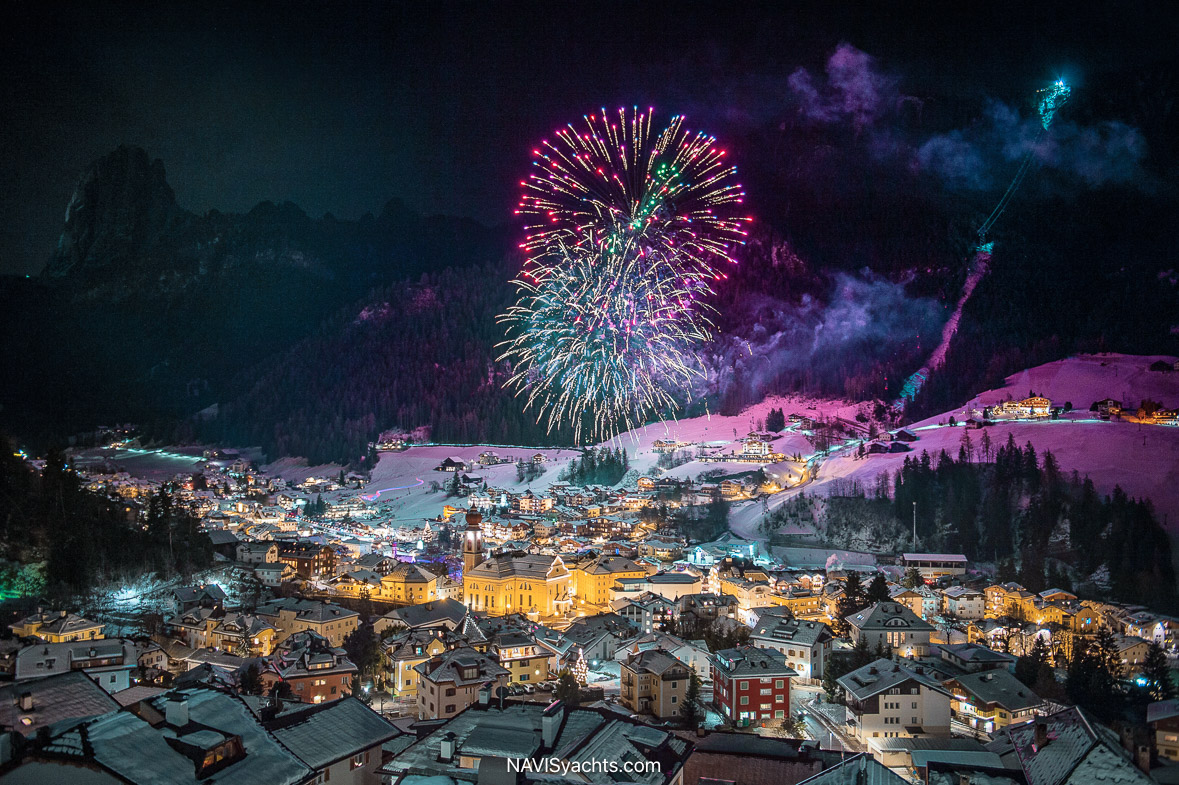
Ortisei is particularly pleasant in the early evening, once the skiers have returned and the pedestrian streets begin filling with people heading for dinner. The village has a strong tradition of woodcarving, visible in shop windows and in the elaborate figures displayed during the Christmas season.
The craft took hold here in the 17th century. By the 1800s, local workshops were producing wooden toys for export, including jointed dolls, rocking horses, and miniature acrobats. Many can now be seen at Museum Gherdëina, which also holds an unexpected exhibit: an ichthyosaur fossil discovered on Seceda in 1968.
Ortisei’s Christmas market opens November 28, followed by Selva’s Mountain Christmas on November 29. Later in the season come snow sculpture competitions, January’s ice carving displays, and the local Carnival celebrations. On Juebia Grassa, the traditional Carnival Thursday, barley soup remains part of the occasion.
Not every day needs to be spent on downhill skis. Above Santa Cristina, Monte Pana has trails for both classic and skate-style cross-country skiing. Vallunga is a fine choice for winter walking, its relatively level valley floor enclosed by imposing rock walls.
For an afternoon indoors, Mar Dolomit in Ortisei has a heated outdoor saltwater pool and eleven saunas.
Dinner offers another introduction to South Tyrol. The cooking here draws from Alpine and Italian traditions, with restaurants such as Suinsom at Hotel Tyrol and Alpenroyal Gourmet in Selva, and Anna Stuben in Ortisei, giving local ingredients a more contemporary treatment.
When Spring Reaches the Mountains
By March, the days are noticeably longer. The higher pistes can still offer excellent morning conditions, although the snow changes as the afternoon sun begins to warm the slopes.
For the 2026/27 season, Val Gardena has a useful improvement planned. From March 14 through April 4, most lifts will begin operating at 8 a.m., giving early risers additional time on the freshly groomed runs.
The SpringSkiing program starts March 13, with special accommodation and lift-pass arrangements at participating properties. There is also a considerable amount happening on the mountain.
Rock the Dolomites returns March 18–27, bringing live bands to several slopeside locations. On March 20, the Spring Race Party sends teams in costume down an obstacle course from Seceda toward Ortisei. It is one of those occasions when skiing becomes a rather less serious business.
The final weekend belongs to the Südtirol Gardenissima. Held on April 3, this 3.7-mile giant slalom draws recreational racers and seasoned competitors to Seceda for an unusually long course. Gardenissima Kids follows on April 4, the scheduled closing day of the ski season.
By that point, the café terraces in the villages will be filling with spring sunshine, even as the last skiers make their way down from Seceda.
There is still time to enjoy the Dolomites before the lifts stop turning. And for those who prefer empty morning pistes, long lunches, and the quieter weeks after the winter holidays, the closing stretch of the season may be the most appealing time to visit.
Written by Tomas Ferrero
Photographed by DOLOMITES Val Gardena