Engelberg, Switzerland: Luxury Winter & Ski Guide to Titlis
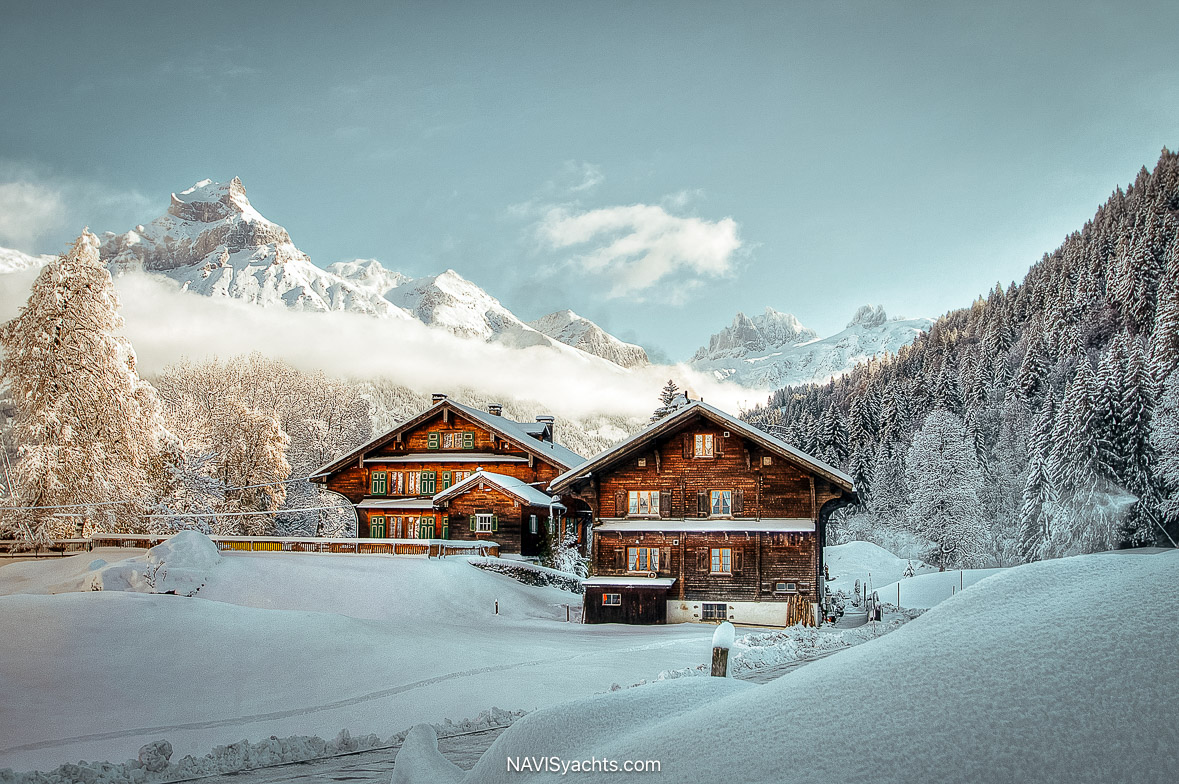
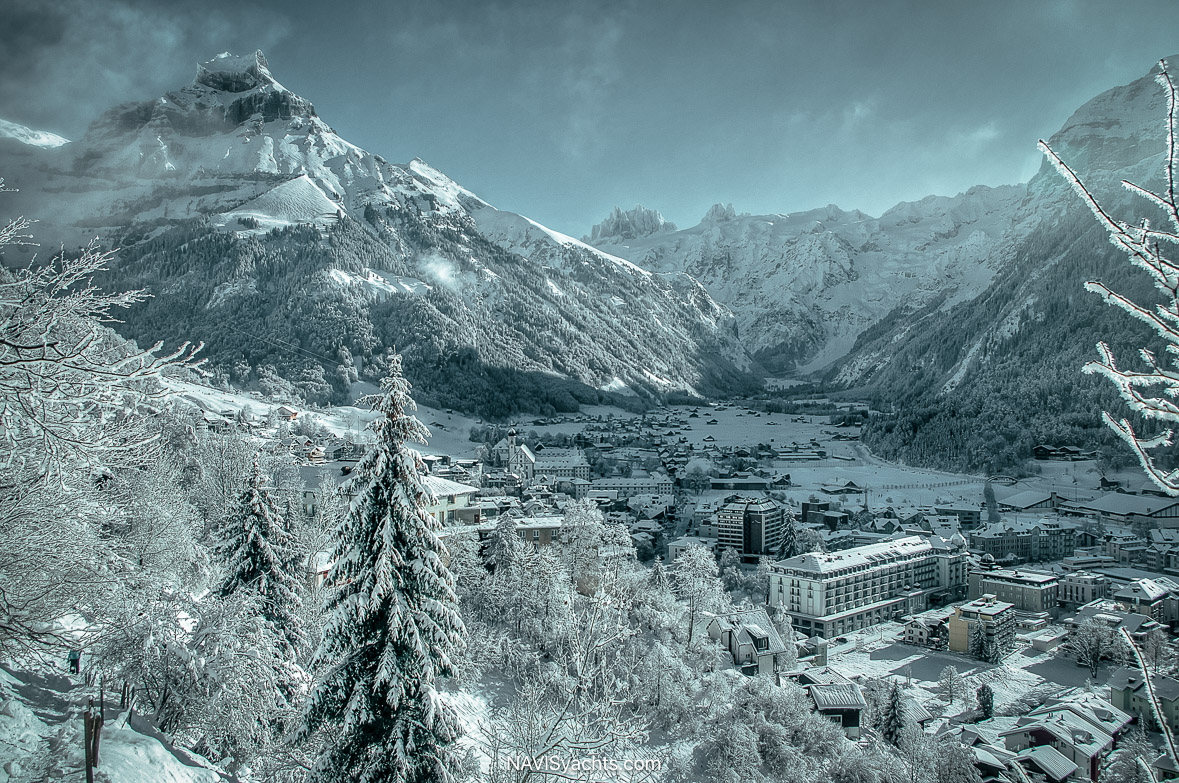
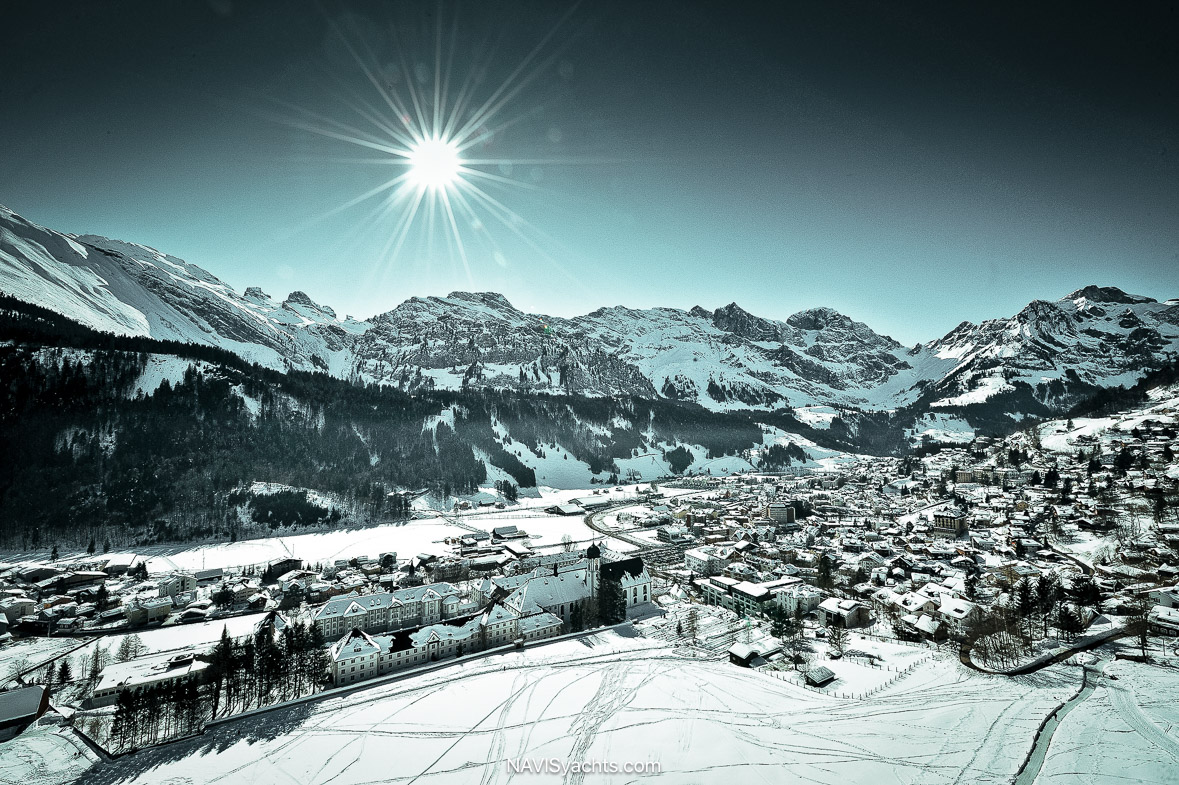
Local legend says the intrepid monks who first climbed into this valley in 1120 ventured here because they heard angels singing over it. Whether or not one believes in celestial choirs, it is not hard to understand the impulse. Engelberg (literally, “Mountain of the Angels”) sits cradled at the foot of Titlis, the highest peak in the Uri Alps. This is a pocket of Central Switzerland that feels sealed off from the rest of the world despite being just over an hour from Zurich. In winter, that sense of enclosure deepens. Snow settles thickly on the chalet roofs, woodsmoke hangs over the rooftops in that blue hour before dusk, and the cowbells that once clanged placidly through the summer pastures have hushed, replaced by the crunch of boots on packed snow and the hum of cable cars gliding overhead.
The Benedictine Abbey at the valley’s heart — founded in that same year and still home to a working community of friars — is the reason Engelberg exists at all. The village grew up in its shadow, and some of that monastic quiet still lingers. Even now, with a world-class ski resort, an array of accommodations including a Grand Hotel, and a growing constellation of design-forward restaurants, Engelberg has resisted the posh glamour of some of its Alpine sisters. It remains, at its core, a real village: a few thousand year-round residents, a church bell still marking the hours, and a community whose co-existence with that mountain long predates the first chairlift.
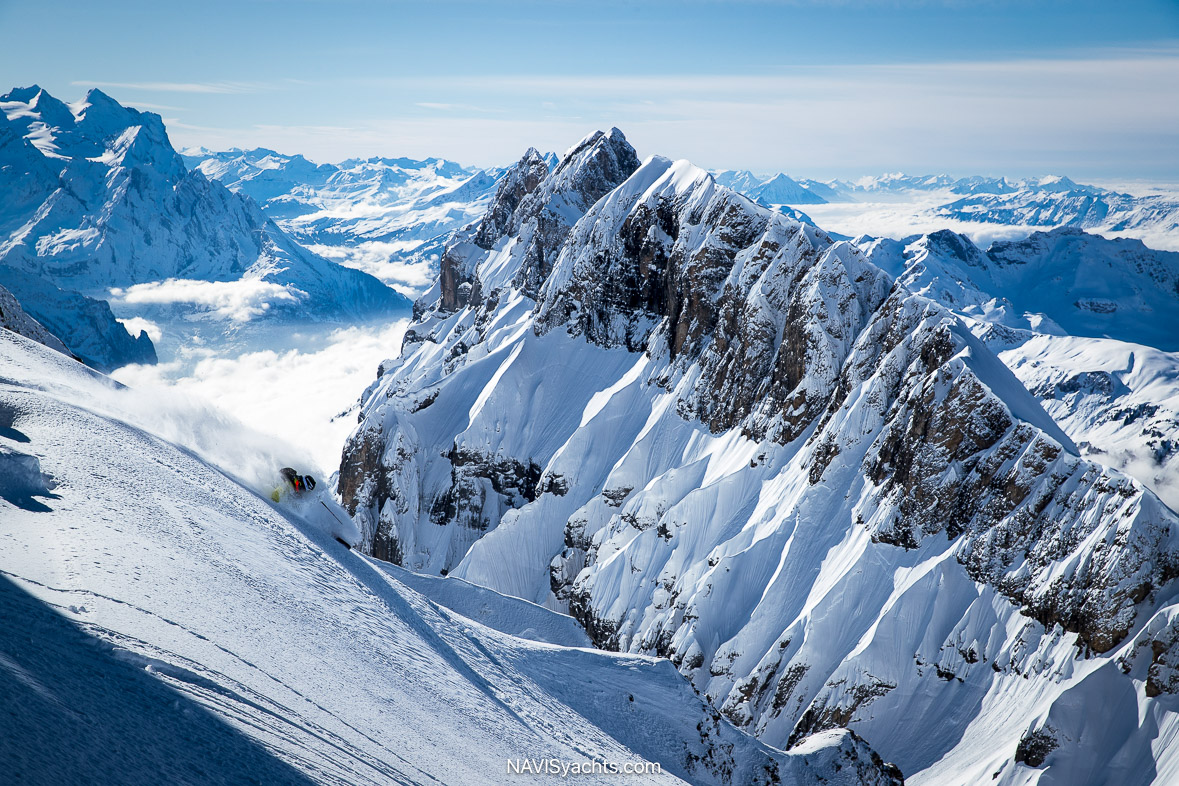
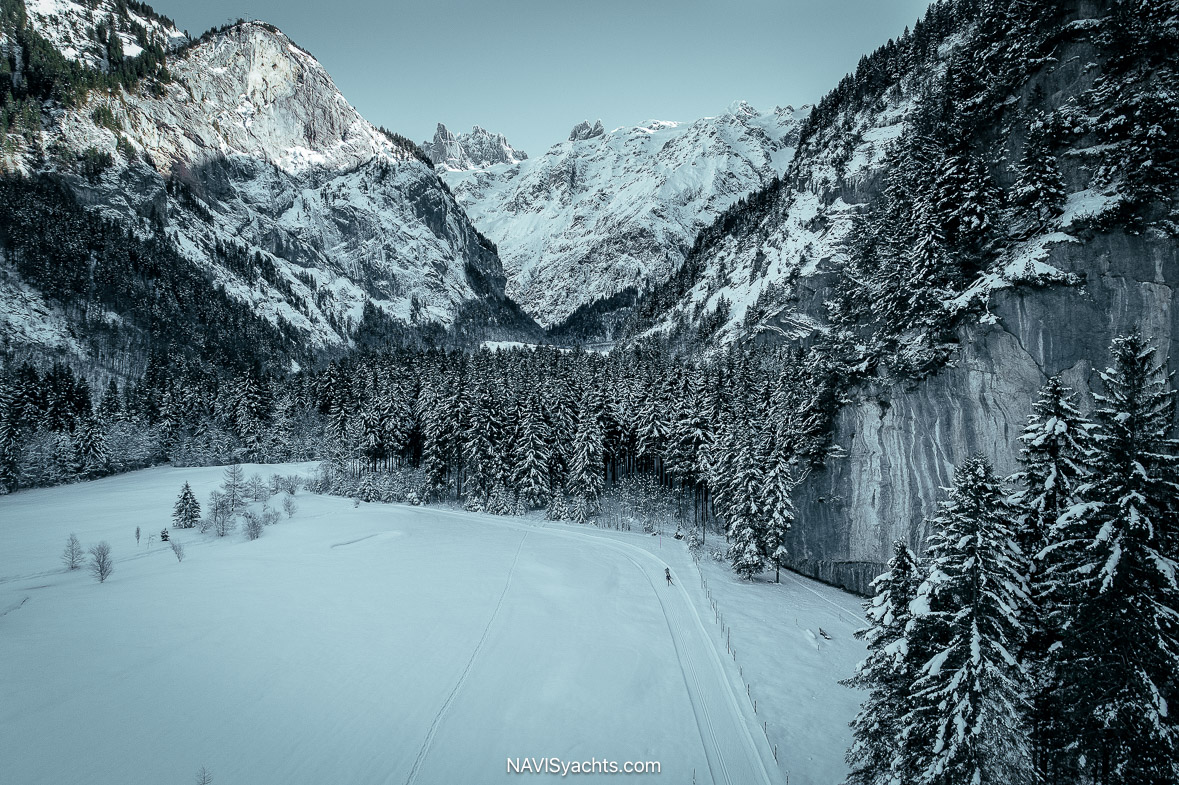
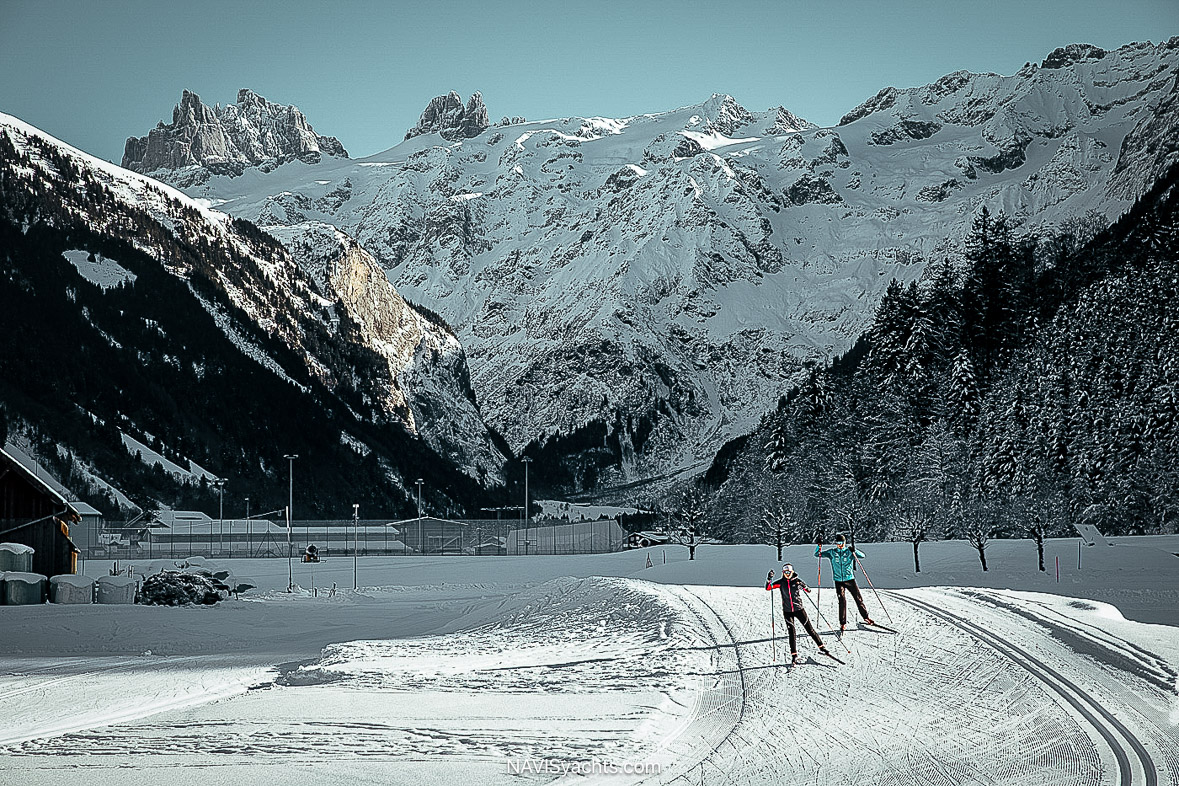
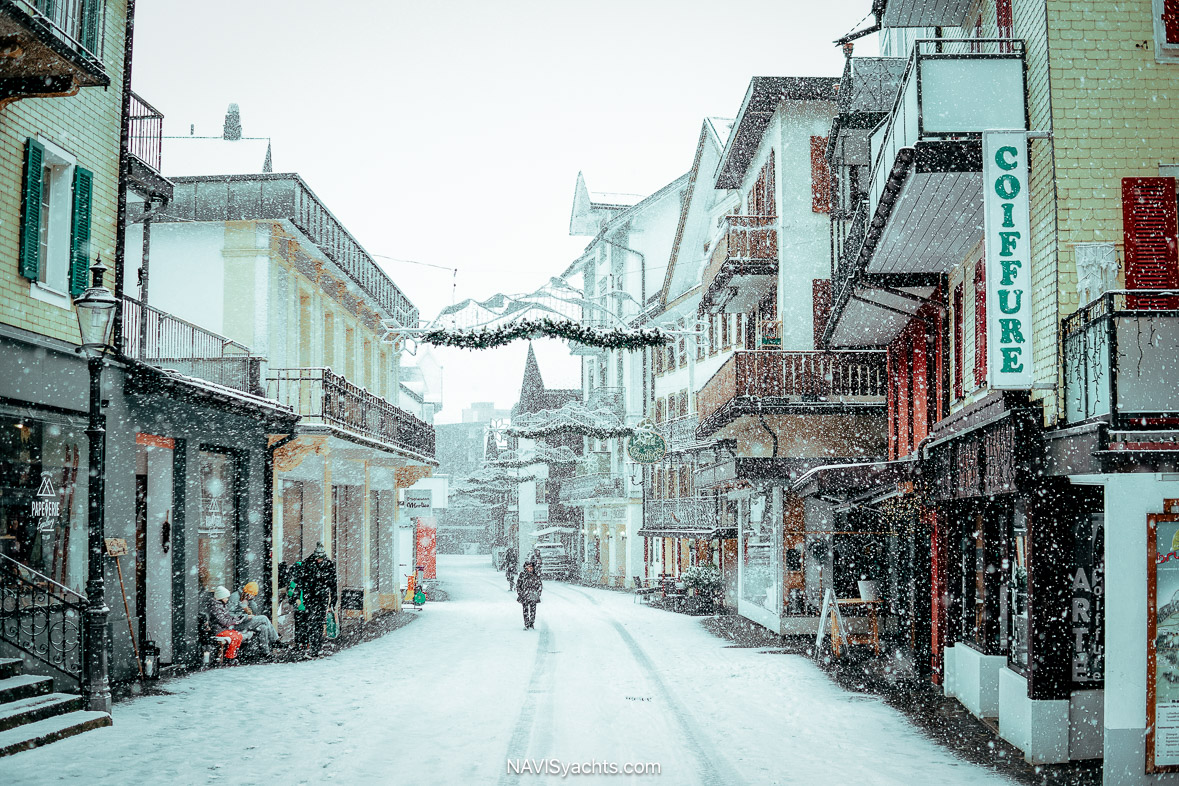
Said mountain is, of course, Titlis, the singular fact around which Engelberg’s winter identity is built. At 3,238 m, it is the tallest summit in the Uri Alps north of the Susten Pass, its glacier visible from Dorfstrasse, the village’s main street, its cable cars ferrying skiers and sightseers up through the clouds to a landscape of blue ice and impossible views. Although not our first visit here, we had come to spend a few days inside a rarified winter world: on the slopes, inside the valley’s celebrated kitchens, and within the walls of the hotel that has, more than any other, redefined what a stay in Engelberg can mean.
Journeying to Engelberg is refreshingly uncomplicated, which adds to its appeal. Driving is straightforward for those on their own schedule, with well-maintained roads connecting Engelberg to Lucerne in just under an hour, Zurich Airport (an hour and a half), and the wider Swiss autobahnen. That said, leisure time and convenience is a valued commodity and with changeable weather and snow conditions, vehicle rentals are just too chancy, which is why we arrived with the expertise of SwissChauffeur, the Zurich-based private car service, which proved a genuinely excellent decision in terms of convenience, comfort, and safety. Awaiting us in Arrivals, our dark-suited, dark-glassed driver had us efficiently settled within minutes into an extended-wheelbase Mercedes-Benz V-Class in Maybach trim. Accompanied by sparkling water, a selection of chocolates, and a handwritten welcome awaiting on the seats, our professional, unhurried driver behind the wheel turned what could have been a tense transfer into the first of many relaxing moments of our trip. SwissChauffeur went on to handle the rest of our transport through Switzerland and that effortless reliability, accompanied by the same calm competence at every destination, only elevated our travels.
For adventurous independent visitors who revel in impromptu weekend escapes, Engelberg boasts a direct train from Lucerne, arriving in just under 45 minutes or, from Zurich, in a little over an hour with just single change.
For a collection of friends or a family journeying throughout Switzerland, the Swiss Travel Pass remains one of the more brilliant tools available. Beyond unlimited travel on the robust national transit network (including lake boats) and free entry to more than 500 museums, the pass includes substantial discounts on mountain excursions — including up to half off the Titlis cable car with the train journey to Engelberg already included in the base pass. The irreplaceable convenience of a single QR code keeps one’s wallet free of dozens of individual tickets.
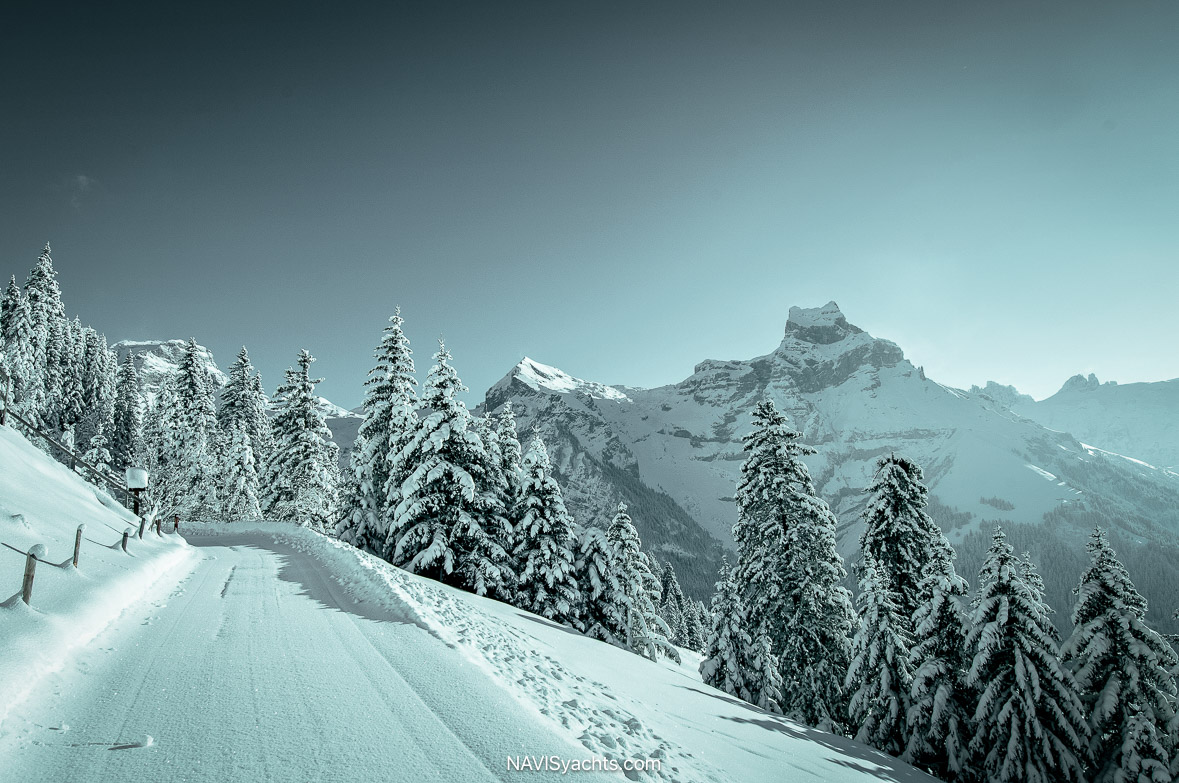
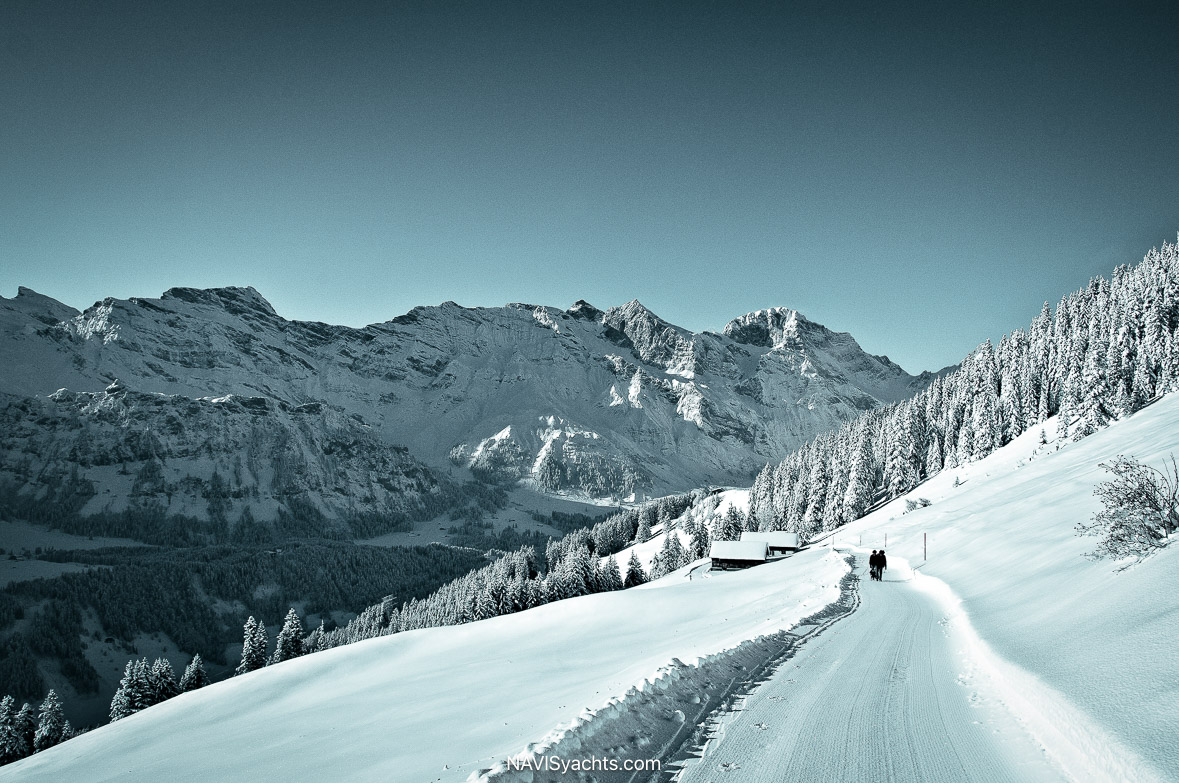
After settling into the valley of Angels, we relinquished ourselves to its more traditional rhythms. Gliding out of town on a horse-drawn carriage, the horses’ breath visible in the cold air, the route tracing a wide loop through farmland bathed in a luminous white overnight snowfall marked a return to simpler times. It is a slow, deliberately nostalgic way to see the valley, and precisely for that reason, it may be the best introduction to Engelberg’s character that exists: no engine noise, no schedule, just the creak of sleigh runners with mountains rising on every side.
Another morning took us into the monastery itself, to Chäs im Kloster — Cheese in the Monastery — a shop and bistro built into the old Klosterhof walls, where the monastery’s own dairy sells the cheeses that have anchored the local diet for nine centuries alongside a rotating cast of small, equally dedicated producers from the valley. We watched a wheel of the monastery’s own Engelberger Klosterkäse taking shape in vats nearby, equally enchanted to find that visitors can go a step further, joining hands-on cheese-making workshops where they can craft their own small wheel to take home. It is a tactile, unpretentious counterpoint to the polish of the slopes and the accommodations and restaurants here — a reminder that long before Engelberg became a popular winter ski destination, it was simply a working Alpine valley. And in many ways, it still is.
Local legend says the intrepid monks who first climbed into this valley in 1120 ventured here because they heard angels singing over it. Whether or not one believes in celestial choirs, it is not hard to understand the impulse. Engelberg (literally, “Mountain of the Angels”) sits cradled at the foot of Titlis, the highest peak in the Uri Alps. This is a pocket of Central Switzerland that feels sealed off from the rest of the world despite being just over an hour from Zurich. In winter, that sense of enclosure deepens. Snow settles thickly on the chalet roofs, woodsmoke hangs over the rooftops in that blue hour before dusk, and the cowbells that once clanged placidly through the summer pastures have hushed, replaced by the crunch of boots on packed snow and the hum of cable cars gliding overhead.
The Benedictine Abbey at the valley’s heart — founded in that same year and still home to a working community of friars — is the reason Engelberg exists at all. The village grew up in its shadow, and some of that monastic quiet still lingers. Even now, with a world-class ski resort, an array of accommodations including a Grand Hotel, and a growing constellation of design-forward restaurants, Engelberg has resisted the posh glamour of some of its Alpine sisters. It remains, at its core, a real village: a few thousand year-round residents, a church bell still marking the hours, and a community whose co-existence with that mountain long predates the first chairlift.
Said mountain is, of course, Titlis, the singular fact around which Engelberg’s winter identity is built. At 3,238 m, it is the tallest summit in the Uri Alps north of the Susten Pass, its glacier visible from Dorfstrasse, the village’s main street, its cable cars ferrying skiers and sightseers up through the clouds to a landscape of blue ice and impossible views. Although not our first visit here, we had come to spend a few days inside a rarified winter world: on the slopes, inside the valley’s celebrated kitchens, and within the walls of the hotel that has, more than any other, redefined what a stay in Engelberg can mean.
Journeying to Engelberg is refreshingly uncomplicated, which adds to its appeal. Driving is straightforward for those on their own schedule, with well-maintained roads connecting Engelberg to Lucerne in just under an hour, Zurich Airport (an hour and a half), and the wider Swiss autobahnen. That said, leisure time and convenience is a valued commodity and with changeable weather and snow conditions, vehicle rentals are just too chancy, which is why we arrived with the expertise of SwissChauffeur, the Zurich-based private car service, which proved a genuinely excellent decision in terms of convenience, comfort, and safety. Awaiting us in Arrivals, our dark-suited, dark-glassed driver had us efficiently settled within minutes into an extended-wheelbase Mercedes-Benz V-Class in Maybach trim. Accompanied by sparkling water, a selection of chocolates, and a handwritten welcome awaiting on the seats, our professional, unhurried driver behind the wheel turned what could have been a tense transfer into the first of many relaxing moments of our trip. SwissChauffeur went on to handle the rest of our transport through Switzerland and that effortless reliability, accompanied by the same calm competence at every destination, only elevated our travels.
For adventurous independent visitors who revel in impromptu weekend escapes, Engelberg boasts a direct train from Lucerne, arriving in just under 45 minutes or, from Zurich, in a little over an hour with just single change.
For a collection of friends or a family journeying throughout Switzerland, the Swiss Travel Pass remains one of the more brilliant tools available. Beyond unlimited travel on the robust national transit network (including lake boats) and free entry to more than 500 museums, the pass includes substantial discounts on mountain excursions — including up to half off the Titlis cable car with the train journey to Engelberg already included in the base pass. The irreplaceable convenience of a single QR code keeps one’s wallet free of dozens of individual tickets.
After settling into the valley of Angels, we relinquished ourselves to its more traditional rhythms. Gliding out of town on a horse-drawn carriage, the horses’ breath visible in the cold air, the route tracing a wide loop through farmland bathed in a luminous white overnight snowfall marked a return to simpler times. It is a slow, deliberately nostalgic way to see the valley, and precisely for that reason, it may be the best introduction to Engelberg’s character that exists: no engine noise, no schedule, just the creak of sleigh runners with mountains rising on every side.
Another morning took us into the monastery itself, to Chäs im Kloster — Cheese in the Monastery — a shop and bistro built into the old Klosterhof walls, where the monastery’s own dairy sells the cheeses that have anchored the local diet for nine centuries alongside a rotating cast of small, equally dedicated producers from the valley. We watched a wheel of the monastery’s own Engelberger Klosterkäse taking shape in vats nearby, equally enchanted to find that visitors can go a step further, joining hands-on cheese-making workshops where they can craft their own small wheel to take home. It is a tactile, unpretentious counterpoint to the polish of the slopes and the accommodations and restaurants here — a reminder that long before Engelberg became a popular winter ski destination, it was simply a working Alpine valley. And in many ways, it still is.
Part I: The Mountain That Tests You
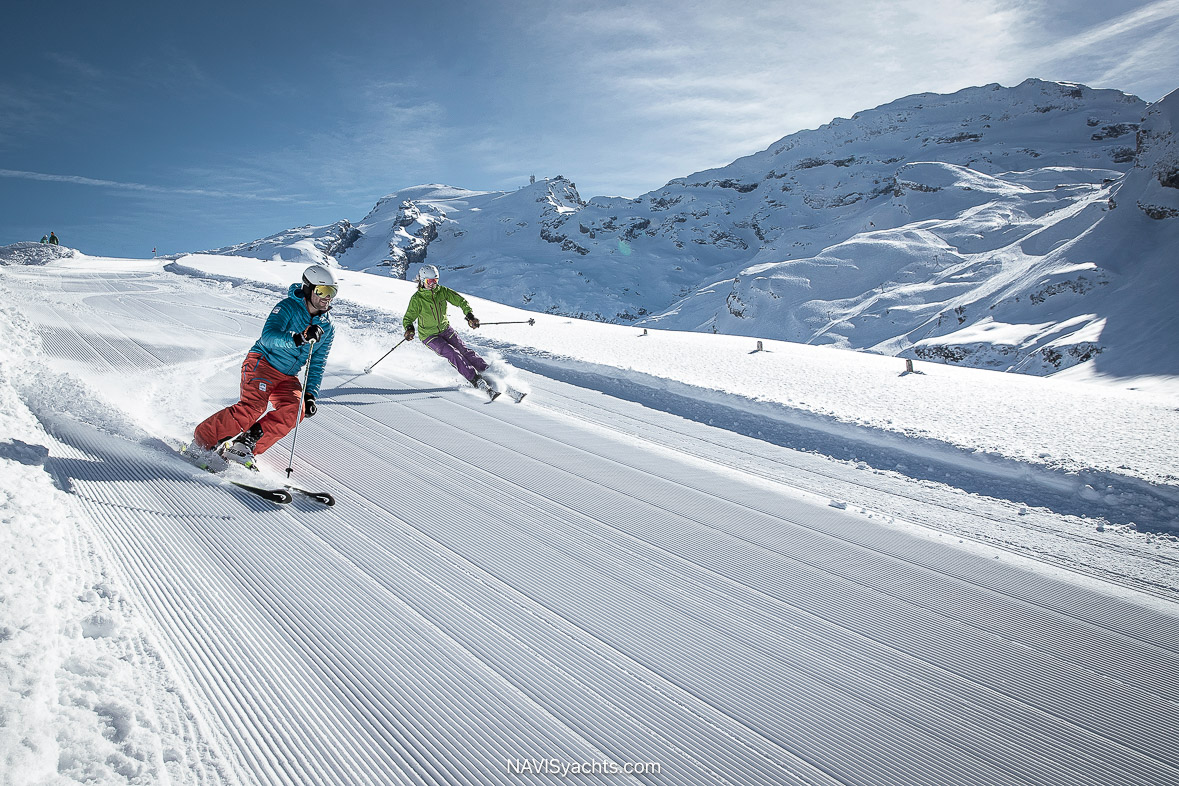
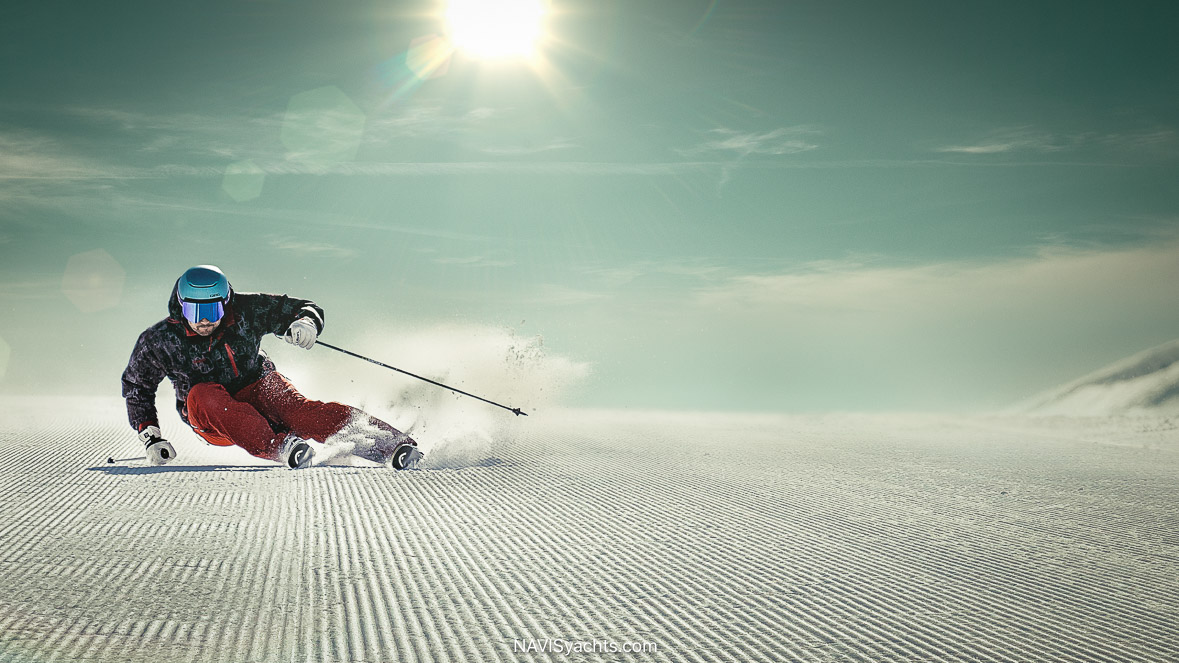
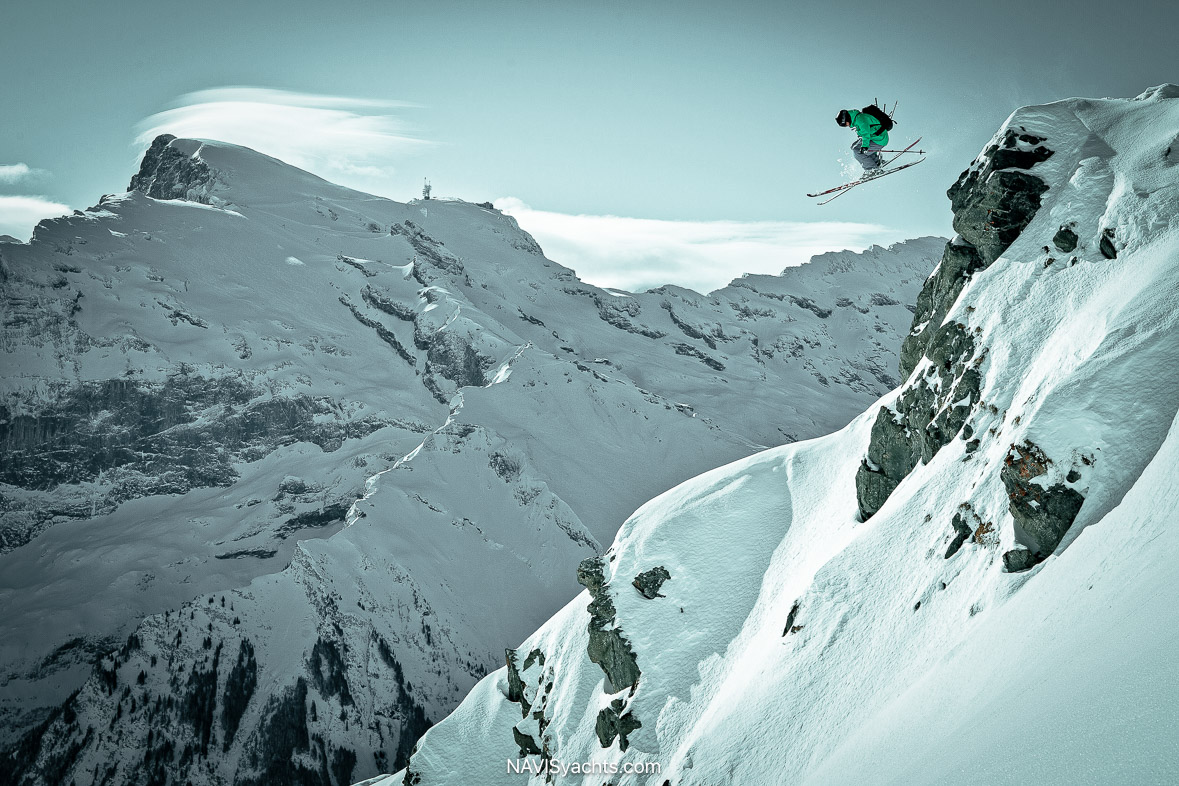
There is a saying among ski instructors and guides here, repeated with considerable local pride, that if one can ski Titlis, one can ski anywhere in the world. We are certainly inclined to believe it. Long-time NAVIS readers will realize this wasn’t our first visit and, in many ways, our passion for Engelberg and destinations like it were the impetus for this special NAVIS Winter Edition. Nowhere else on this extensive journey for this issue did we encounter black runs as consistently steep, as technically demanding, or as unforgiving of a moment’s inattention as on Titlis’ upper slopes.
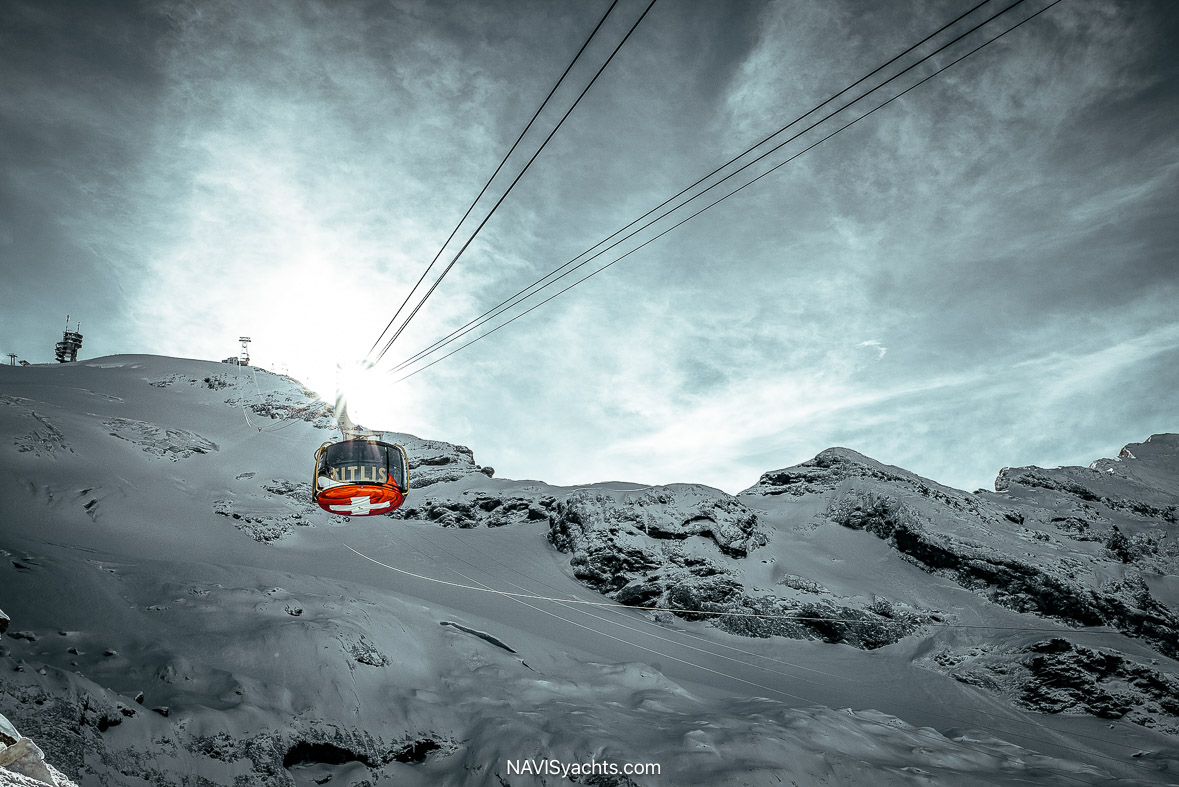
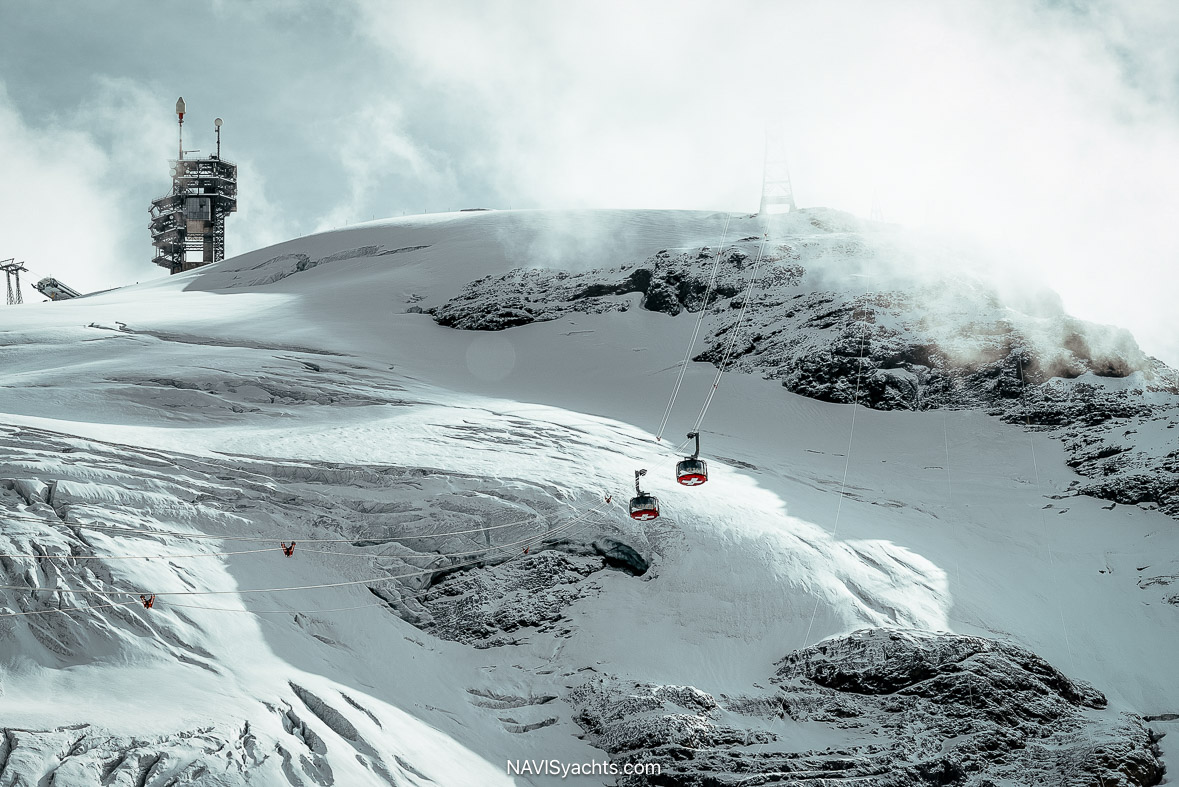
The resort’s technical profile begins with its geography. Engelberg-Titlis rises from the valley floor to a glaciated summit at 3,238 m and the mountain’s more than 80 kms of marked pistes span nearly the full range of that vertical drop. Getting to the top is part of the experience: a network of cable cars carries skiers up through Trübsee and Stand before delivering them, via the celebrated Titlis Rotair, the world’s first fully rotating aerial cable car, to the glacier itself, the cabin turning a slow 360∞ as it crosses the crevasse fields below.
One of several outstanding runs, the valley descent of roughly 11 kms, referred to locally as the Titlis–Engelberg run, gradually gathers several of the mountain’s pistes into a single, uninterrupted, gasp-inducing line all the way back down to the village floor, with no lift required. It has become something of an institution as the last run of the day: skiers converge onto it in the late afternoon and simply let it carry them down, arriving directly at the valley base station. Once there, we came across a detail we hadn’t encountered elsewhere on this trip: a bank of air compressors right at the base, where skiers can blast their boots, gloves, and outer layers dry before heading back to their hotels. It is a small, but genuinely thoughtful, feature.
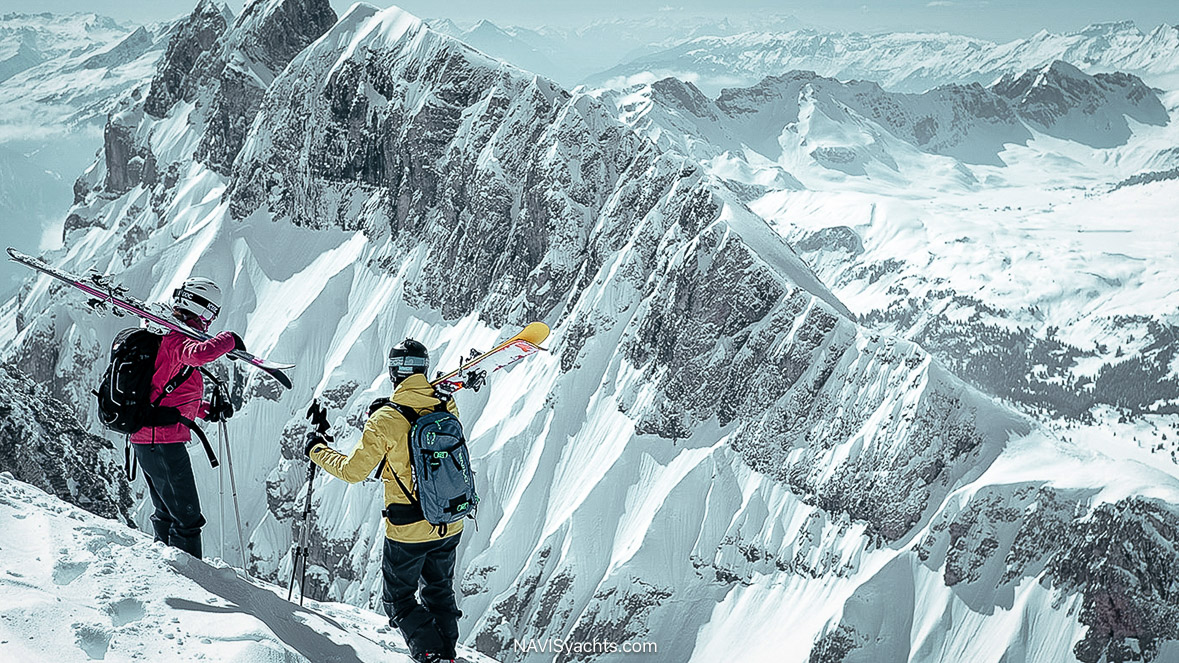
For accomplished skiers, Titlis’ appeal lies almost entirely in that upper mountain. The black runs beneath the Rotair and around the glacier’s edge are among the steepest, most sustained pitches. It is unforgiving: no gentle warm-up sections and no room for a wandering mind. This mountain rewards genuine skill and punishes overconfidence equally, and this exactitude forged its international reputation.
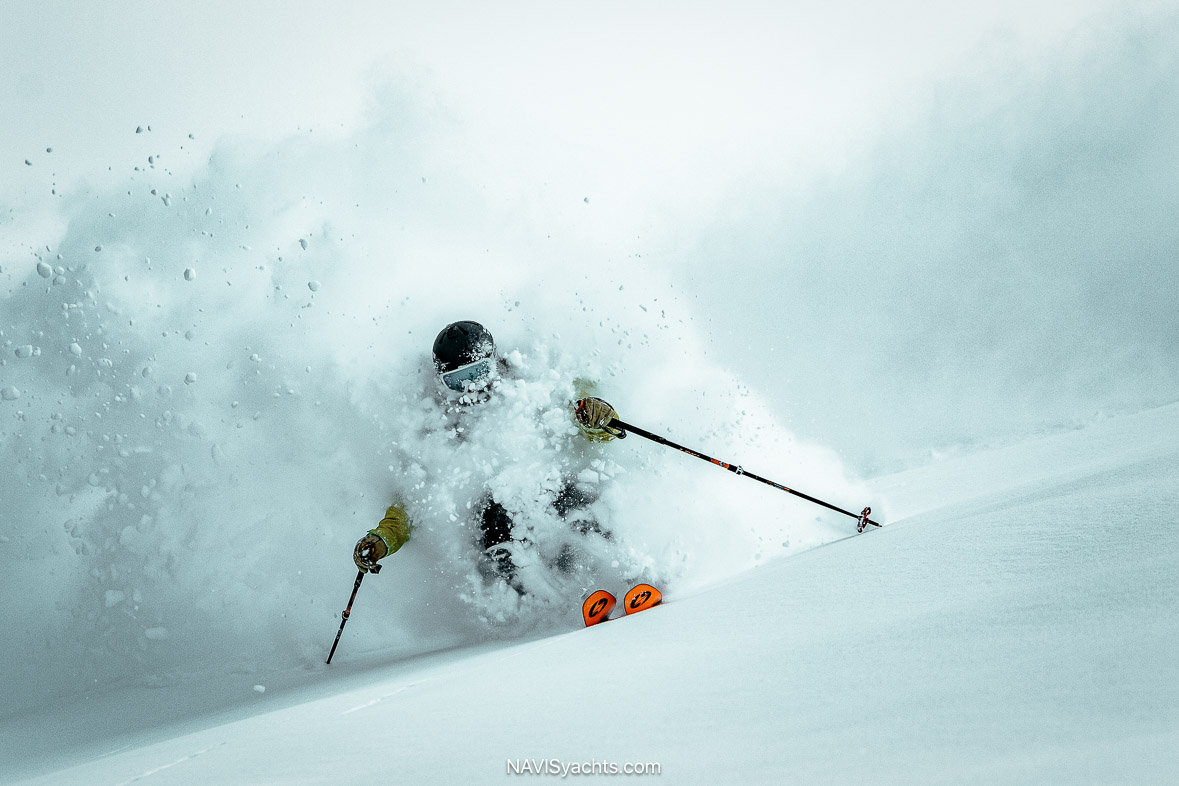
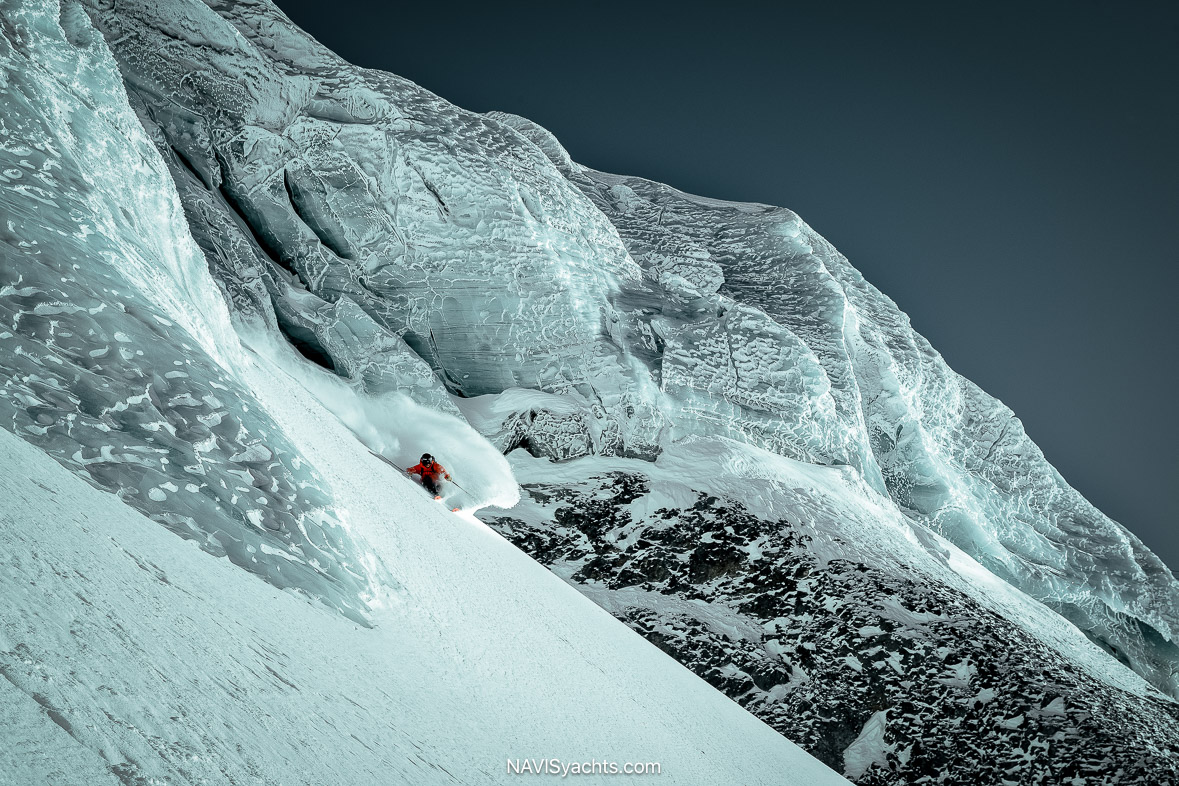
Just as impressive is the freeride terrain, which begins at the very top of the lift system above the glacier itself. What makes it remarkable is the accessibility: rather than requiring a long skin up or a helicopter drop, off-piste terrain can be reached directly from the lift, depositing skiers into a landscape of deep powder threaded between towering seracs of blue glacial ice, one of the more surreal skiing environments in the Alps. That accessibility comes with an important caveat, one worth repeating clearly: this is genuine glacier terrain, riddled with hidden crevasses, and it should only ever be explored with a certified mountain guide.
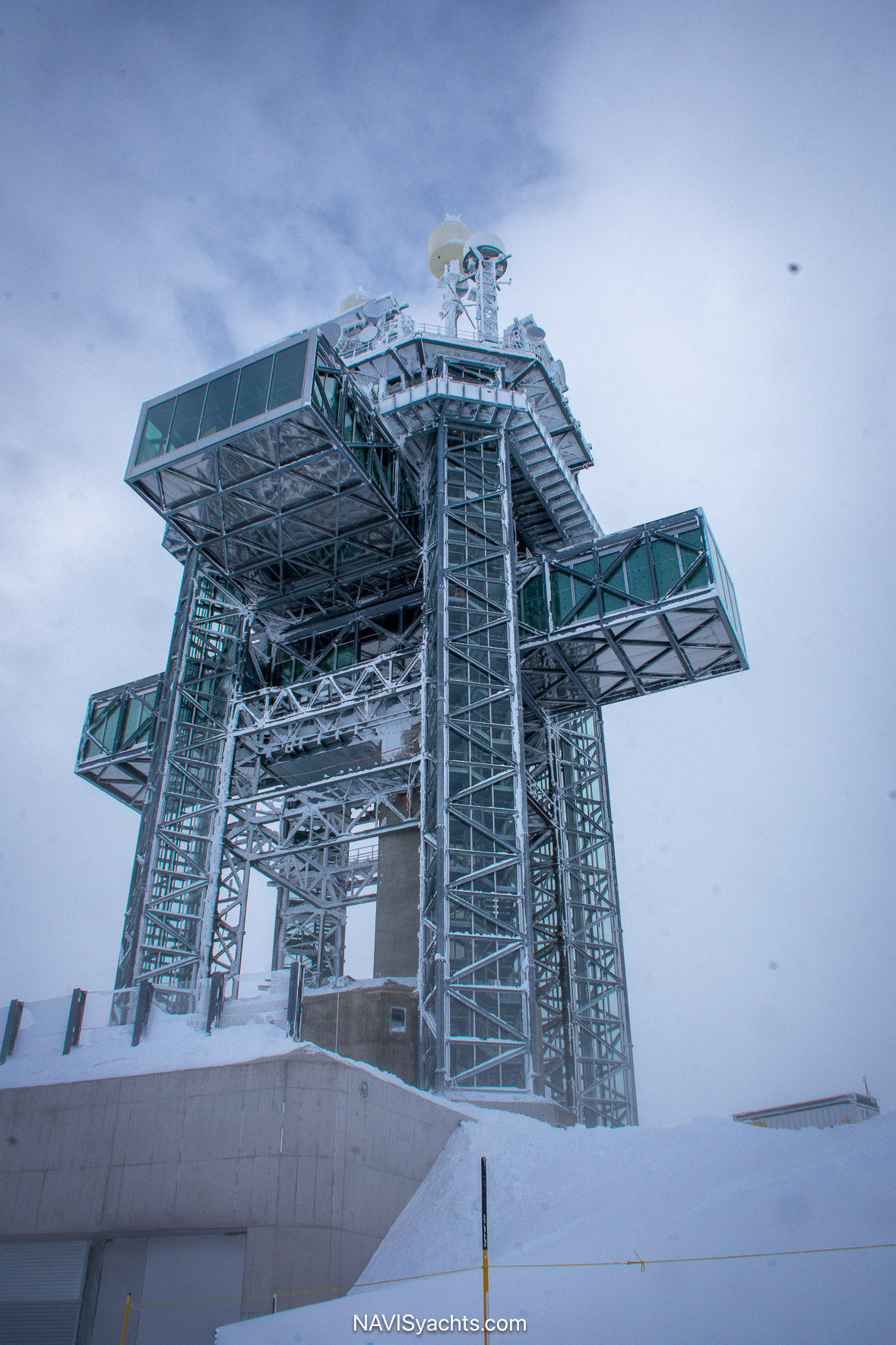
Titlis is also, at the moment, in the midst of its most significant transformation in decades. The long-standing utilitarian summit station, dating to the 1960’s, is being reimagined by the celebrated architecture firm Herzog & de Meuron as part of a multi-year master plan for the peak. The most visible result, newly unveiled just ahead of the season, is the TITLIS Tower: a 1980’s telecommunications mast reborn as a cross-shaped landmark of glass and steel, its two cantilevered volumes visible from the valley floor. Inside, visitors ride up to the Horizon Deck, a 360∞ viewing platform more than 50 m above the glacier with sightlines stretching toward Italy, France, and Germany on a clear day; below it, a 140-seat restaurant serves casual fine dining against that same panorama, and, in a detail that seems natural for Switzerland at 3,000 m, the tower houses the world’s highest Rolex boutique, operated by Bucherer. It is a genuinely striking piece of architecture and it gives Titlis a summit experience to match its slopes. Closer to ground, we noted across several days of near-constant use that the mountain’s lift infrastructure as thoroughly modern and meticulously maintained: new cabins, well-marked stations, the kind of quiet Swiss efficiency that comes from continuous, serious investment in the system.
No review of the mountain’s winter sports offering would be complete without mention of its ski school, The Schweizer Skischule Engelberg. The largest in Central Switzerland, it features some 150 instructors on its roster and is based right at the foot of the lift system. We tested the school’s offering firsthand across the full spectrum: a beginner’s group lesson, an advanced technique clinic, and a snowboard session, and found the instruction to be excellent and consistent at every level, demonstrating the kind of patient, technically precise teaching that turns a nervous first-timer into a confident intermediate over the course of a week.
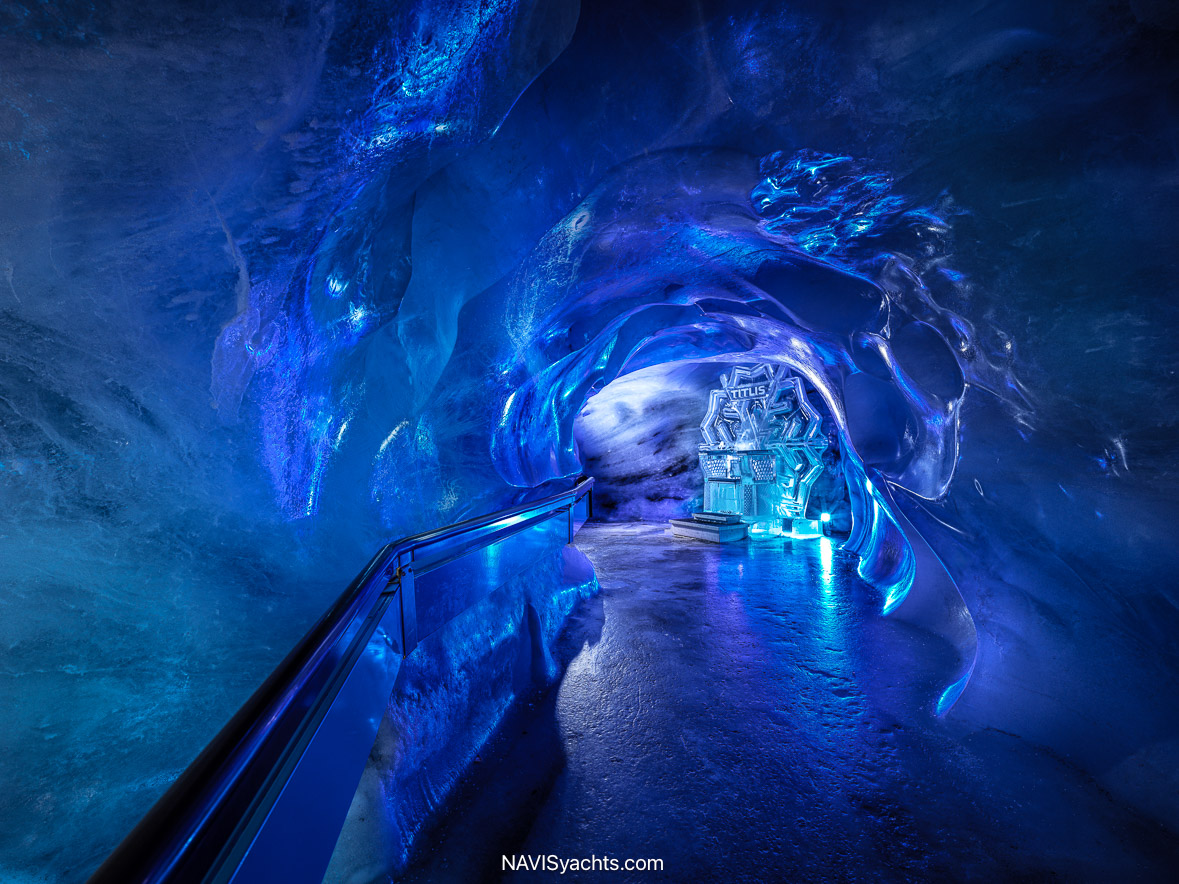
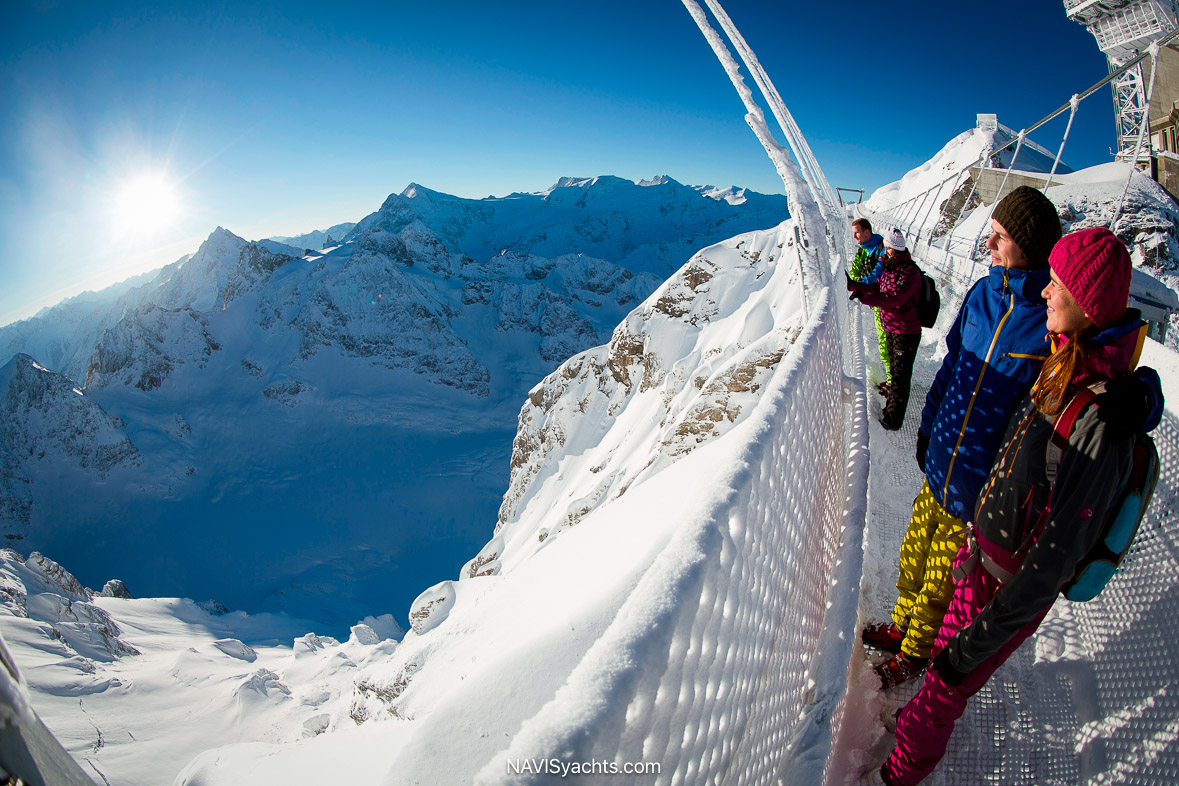
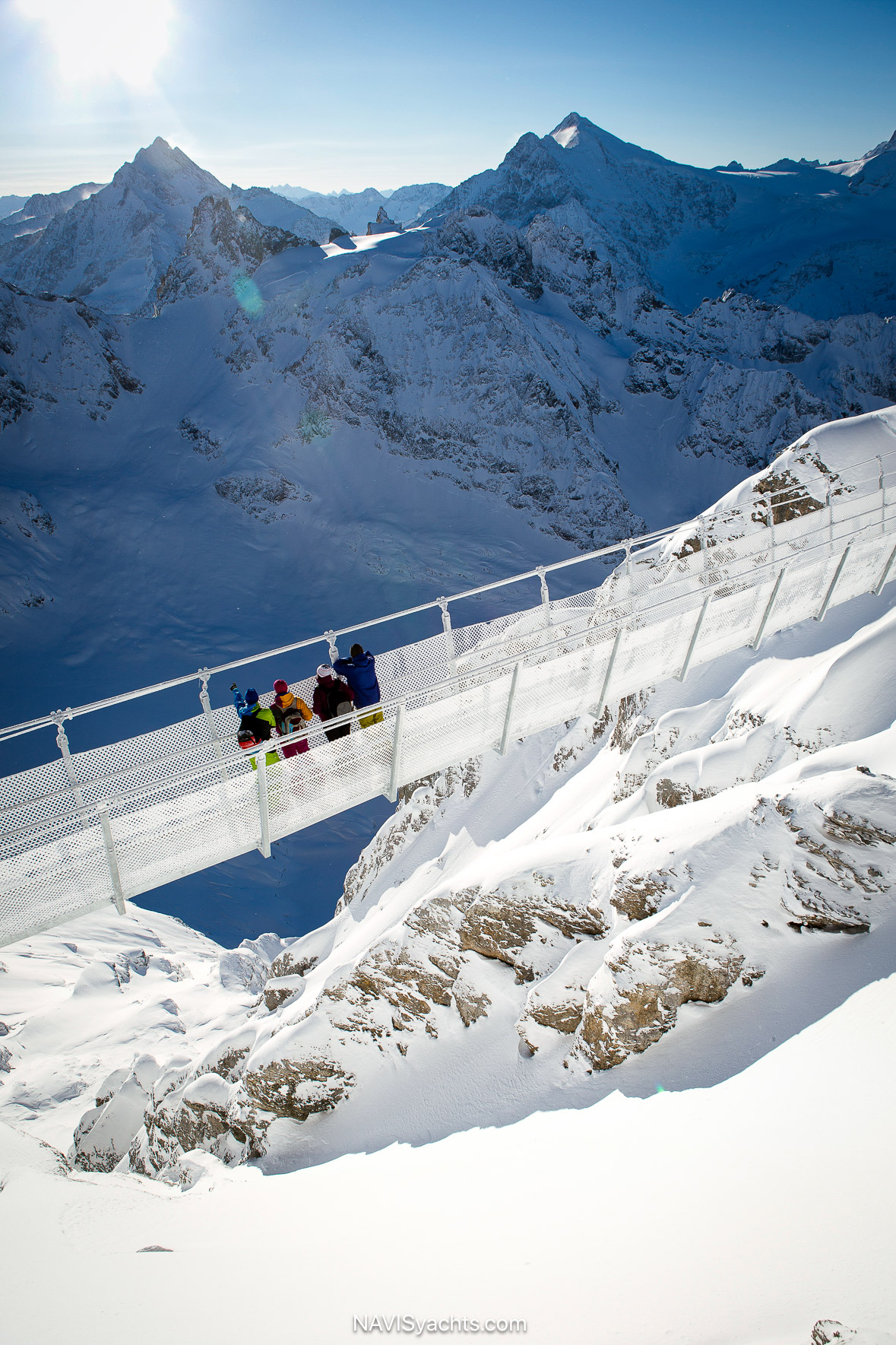
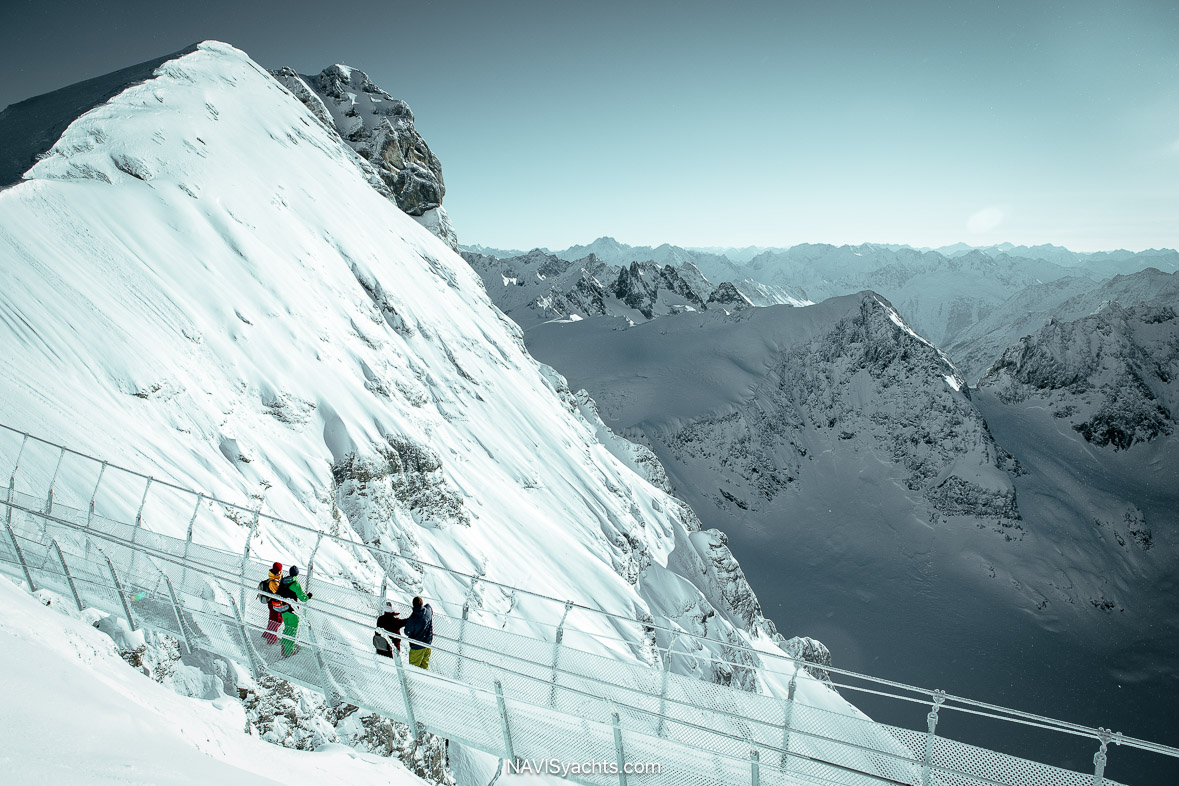
For visitors, it’s essential to know that skis and snowboards are not required equipment as Titlis offers far more than skiing adventures, with breathtaking views for all to appreciate. The Cliff Walk, Europe’s highest suspension bridge, rewards with epic views from 3,000 m above sea level and just enough sway to take one’s breath away. Venturing inward – some 150 m to be exact and two levels down on the lift system, is an equally eye-opening activity here: Glacier Cave, which rewards visitors with the glowing blue reveal of an ancient underground world of compressed glacier ice. Back outside, visitors can also opt for the Ice Flyer chairlift which climbs to 178 m in just over two minutes. Once there, Glacier Park engages the littles with safe snow tubing and dedicated play areas. SnowXPark on Trübsee provides an alternate adrenaline fix with e-snowbikes and e-snowmobiles on closed racing circuits, as well as the curiously dubbed bobsla, part sled/part snowmobile that ages 16 and older can navigate through an obstacle course.
Europe’s highest suspension bridge, rewards with epic views from 3,000 M.A.S.L. and just enough sway to take one’s breath away.
Part II: Ensconced in Heaven
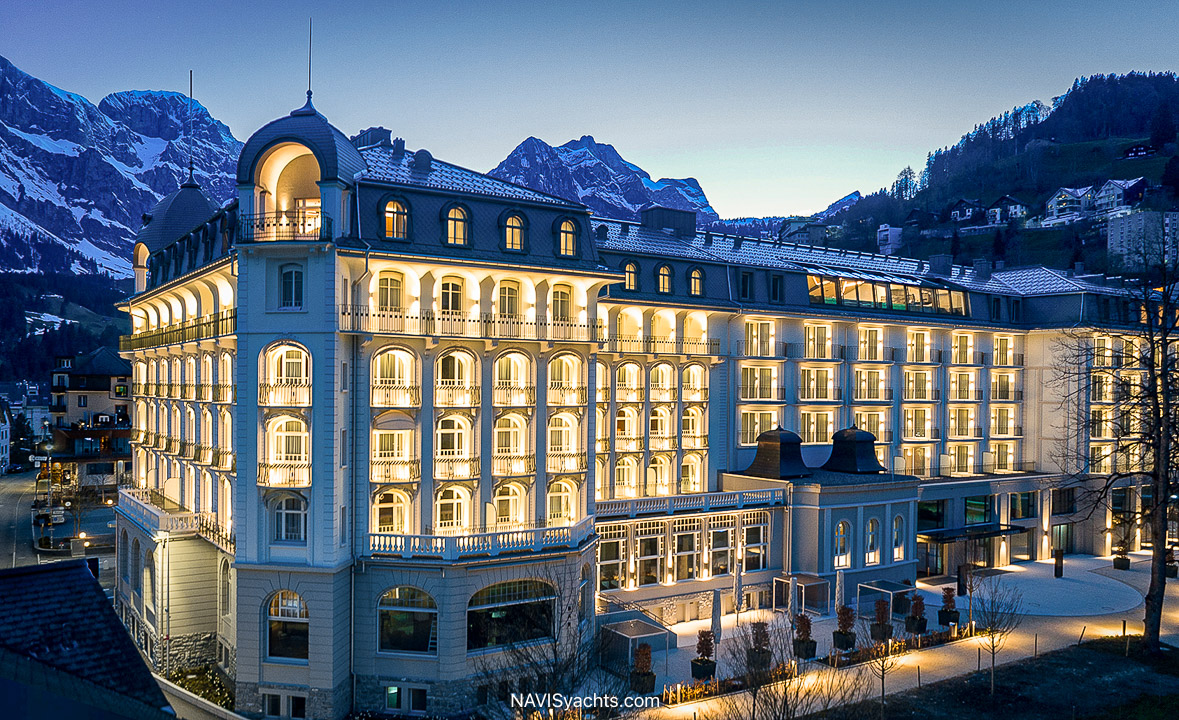
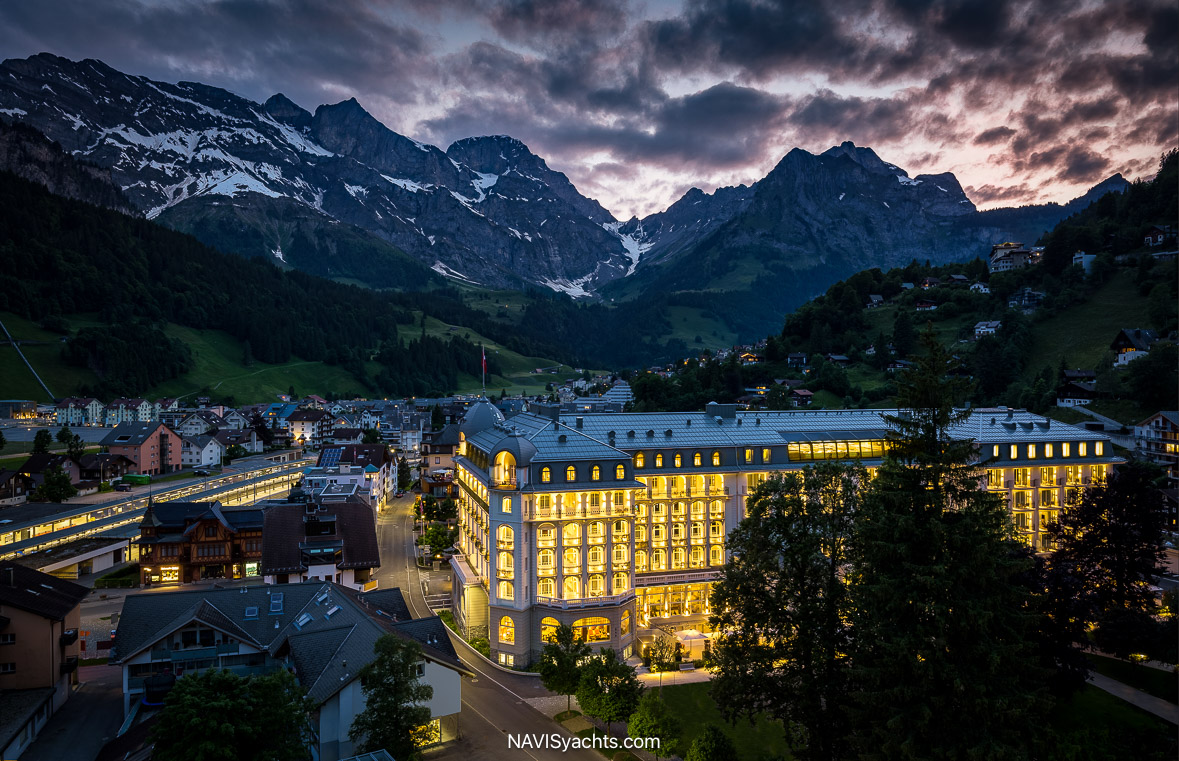
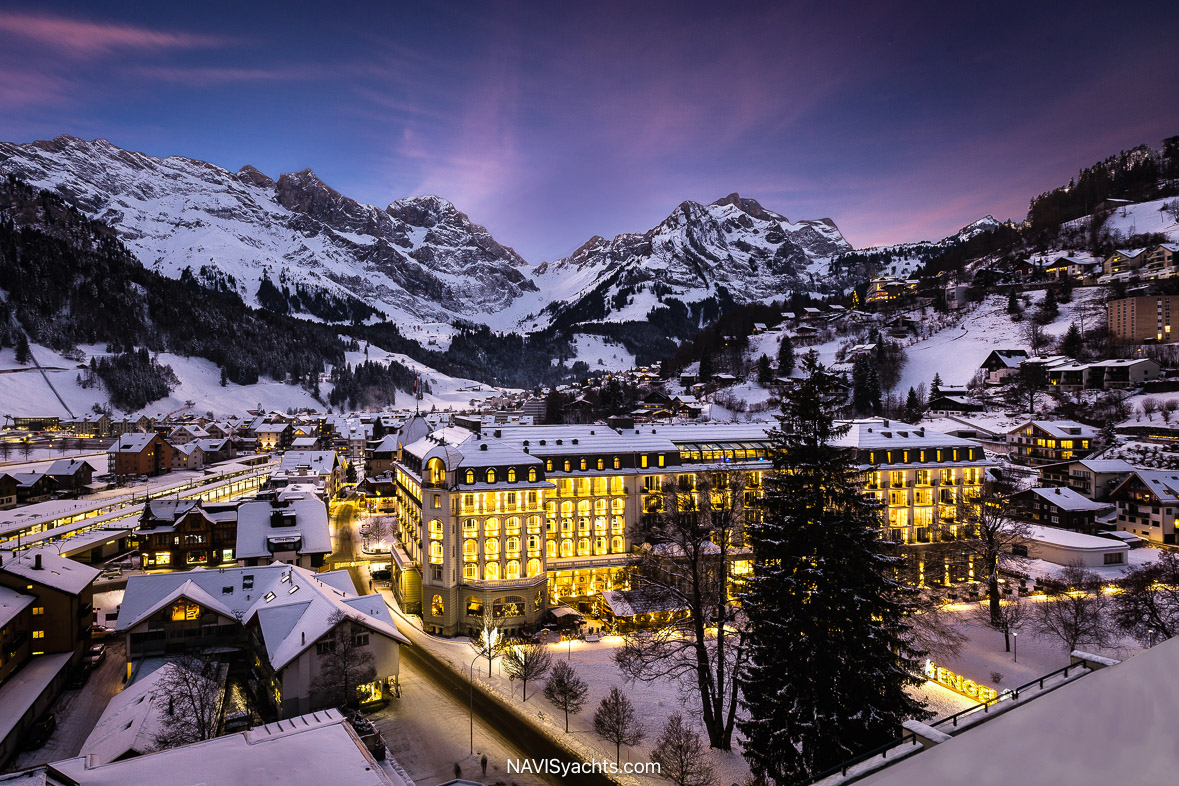
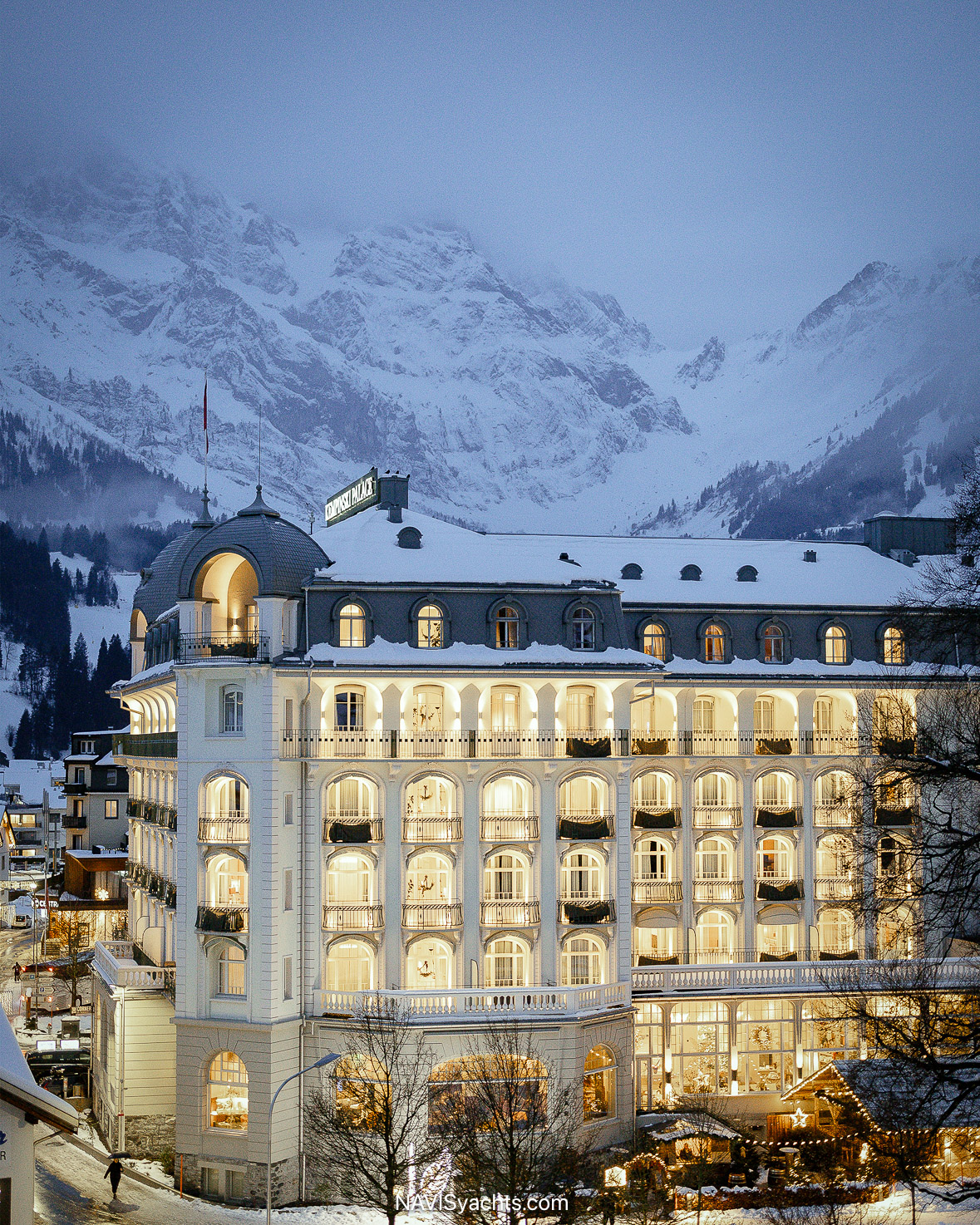
Accommodations in the village run the full spectrum, from hostels, cozy family-run chalets and garni, to sleek design hotels scattered throughout the valley. But our stay centers on the property that has become synonymous with luxury in the valley, the region’s only five-star address, Kempinski Palace Engelberg.
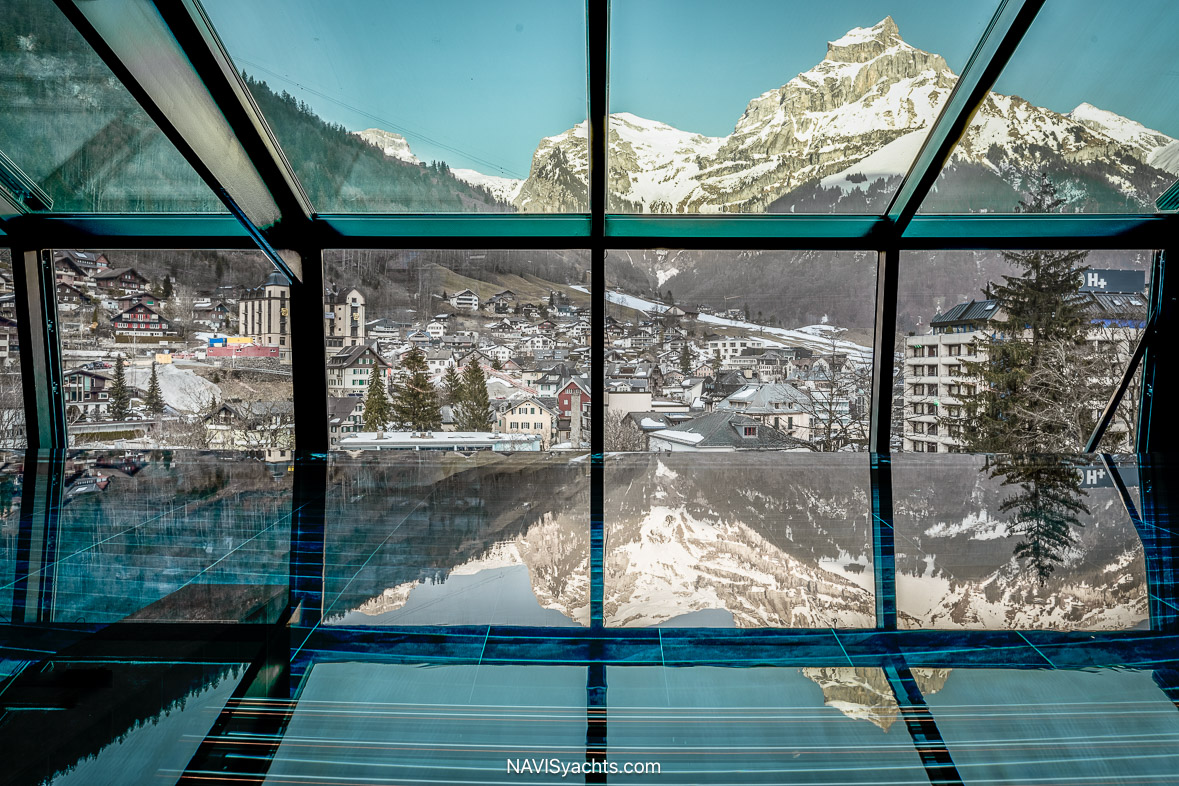
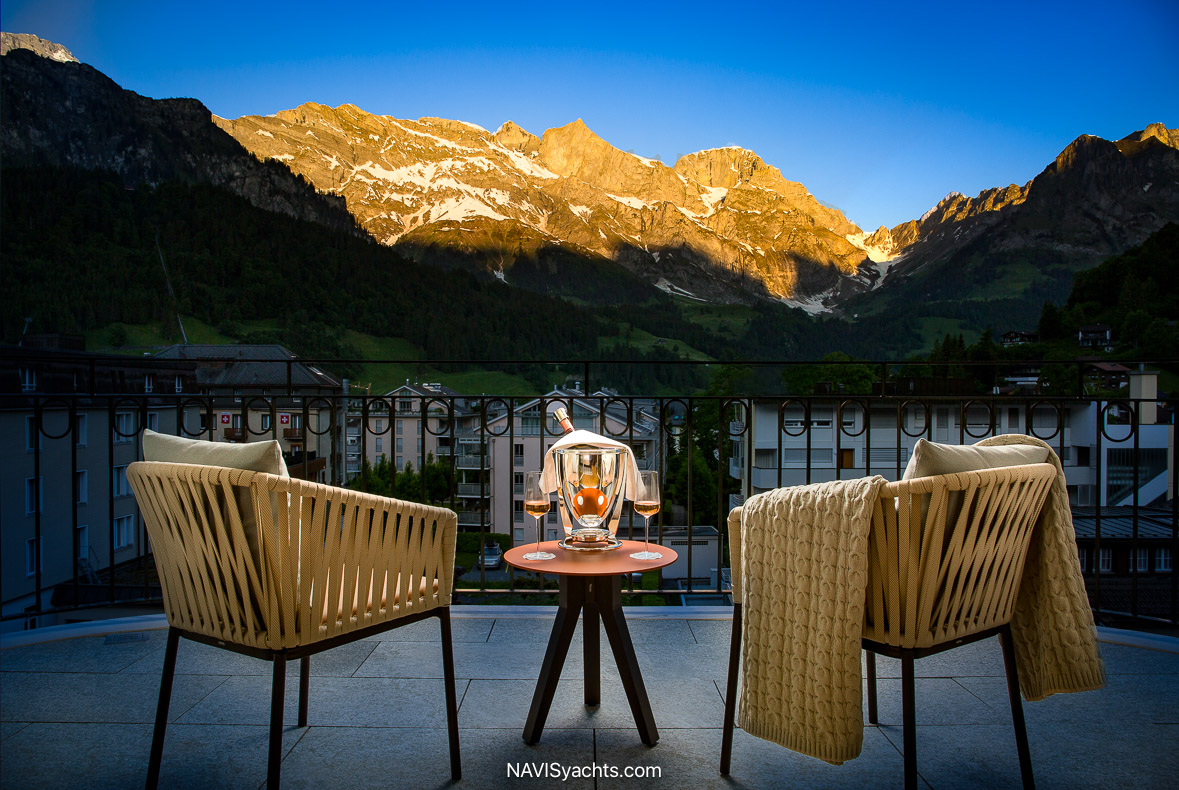
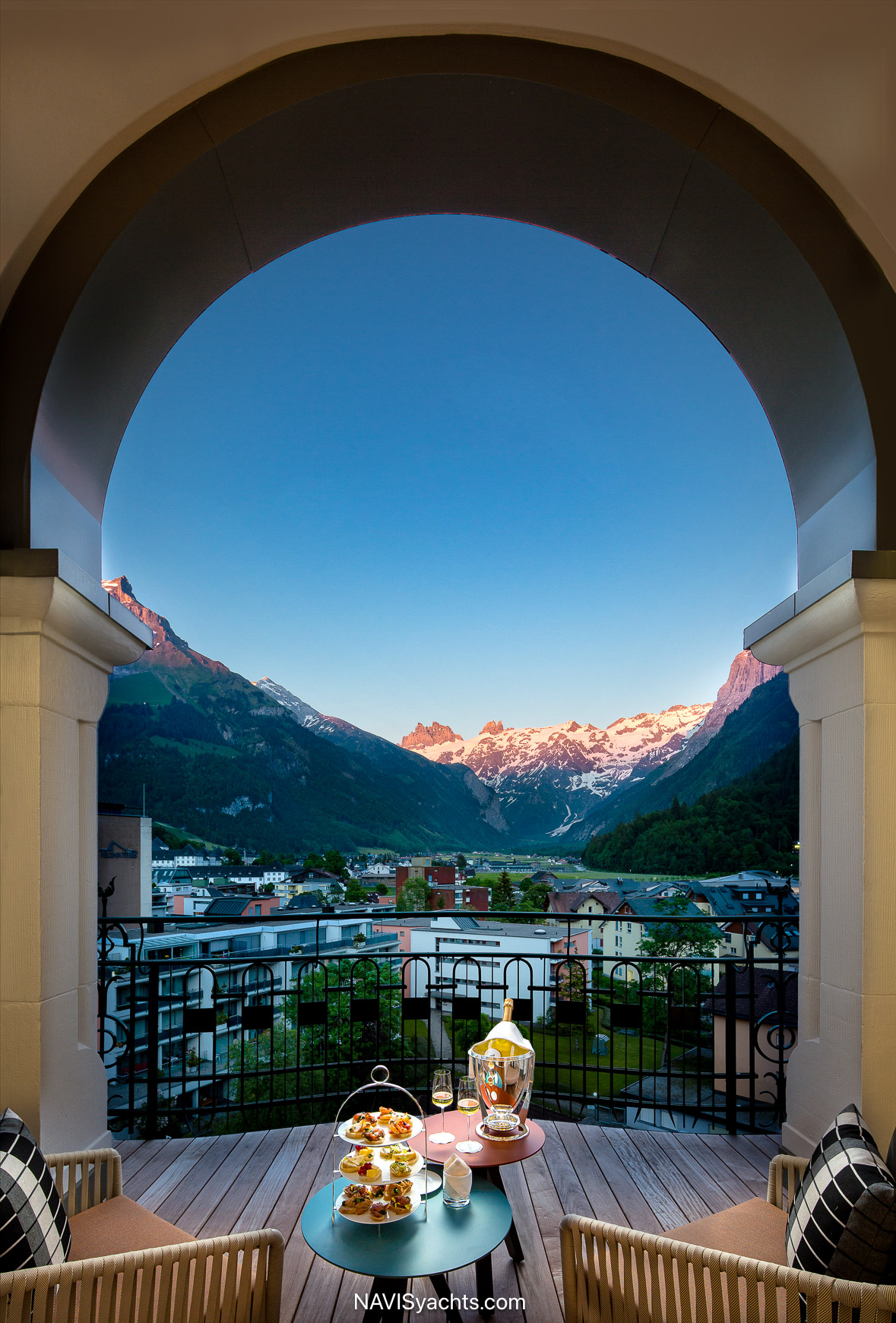
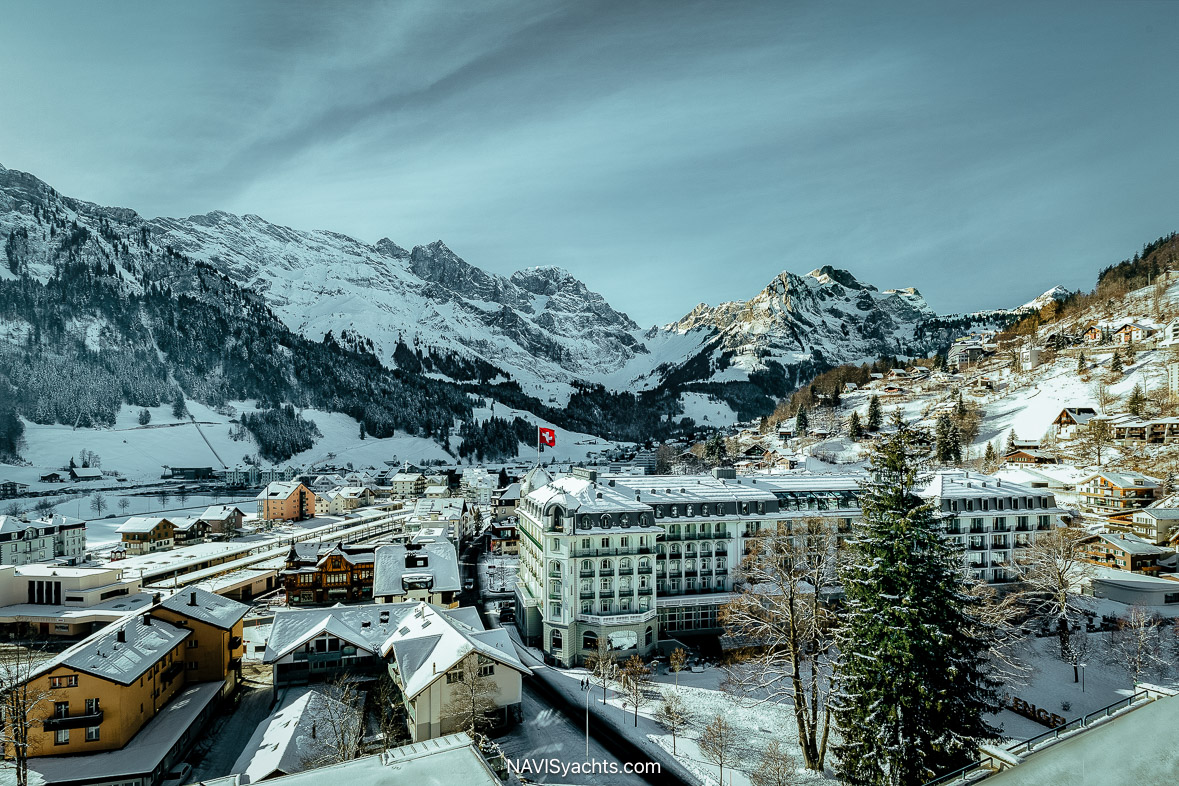
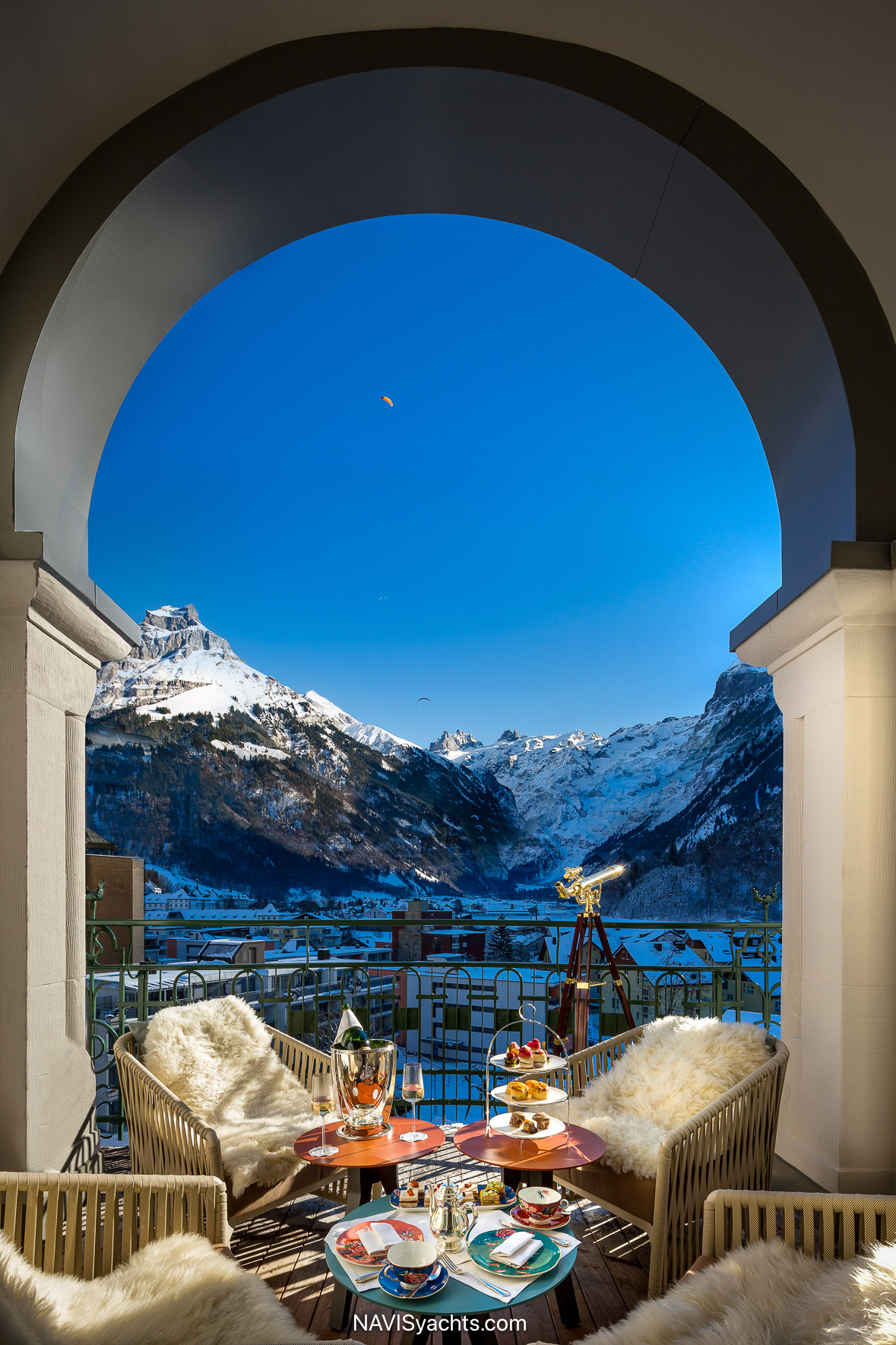
The building dates to 1905, when it opened as Hotel Europäischer Hof, a grand Belle Époque retreat built in the golden age of Alpine tourism. It reemerged in 2021 after five years of careful renovations as Kempinski Palace Engelberg. Throughout the property, carefully preserved Belle Époque elements, including marble columns and coffered ceilings that evoke the unmistakable proportions of an early-twentieth-century grand hotel, are seamlessly integrated with reimagined interiors and a modern design language that brings the guest experience fully into the present. Each of the 129 rooms and suites was built around its commanding view, with generous windows and private balconies angled toward the mountains. Within, pale parquet floors, blond wood paneling, and a palette of warm whites and grays create the kind of understated, contemporary calm that makes it too easy to simply “stay in.”
That instinct to linger is enhanced by the property’s approach to service, leaning heavily on Kempinski’s Lady in Red tradition: the striking, red-clad hostess who has served as the brand’s global signature since 2010. At Kempinski Palace Engelberg, she functions as something between a concierge and a local insider, on hand to translate any wish into an itinerary, a reservation, or a small surprise. This distinct Kempinski touch, paired with the property’s use of detailed pre-arrival questionnaires and adjustable in-room mood lighting, make for a stay tailored more closely to individual preference.
For skiers, the logistics could not be simpler. The hotel operates its own ski rental on-site, with the equipment inventory refreshed annually so guests are never on last season’s skis; a well-organized locker room where boots and gear can be left at overnight rather than hauled up to a suite, and a private shuttle delivers guests to the base of the lift in under five minutes. It is a small set of details that enhance the rhythm of a ski day. Breakfast, taken in Cattani Restaurant’s same dramatic glass-walled dining room, is similarly built with the skier in mind: substantial, varied, and clearly designed to fuel a full day on the mountain rather than a leisurely morning at the pool.
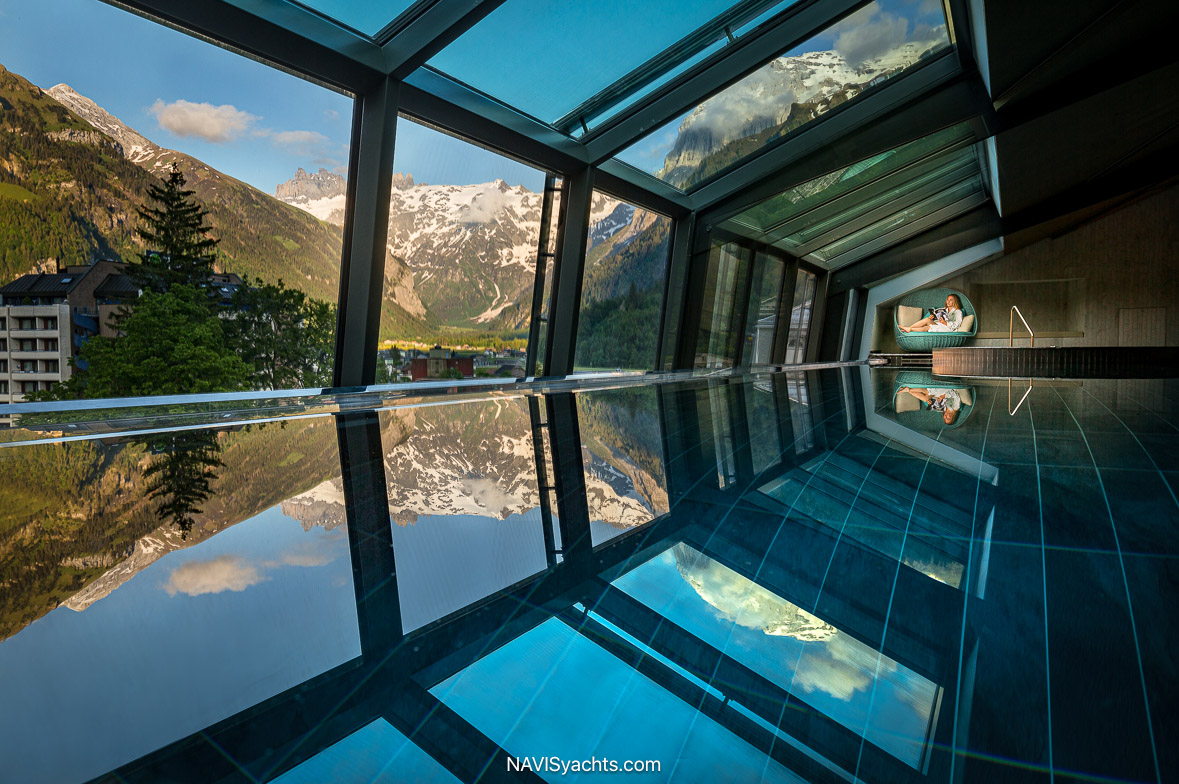
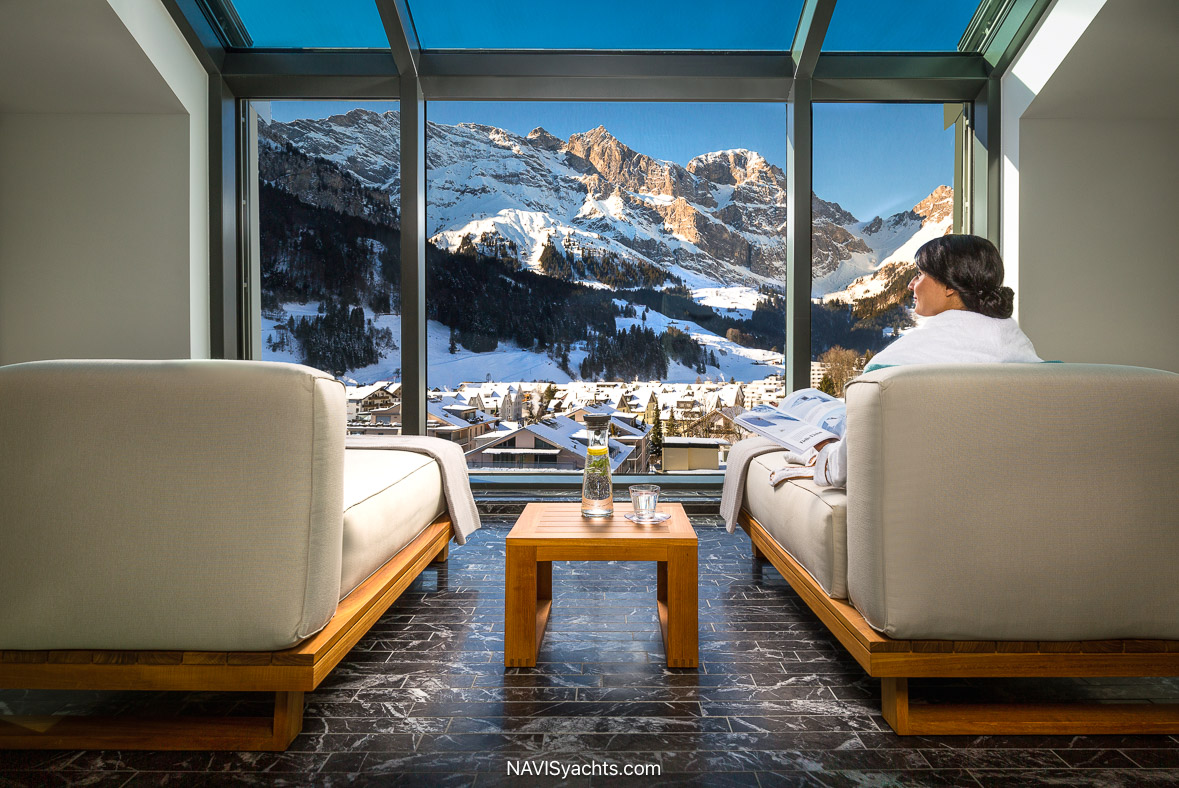
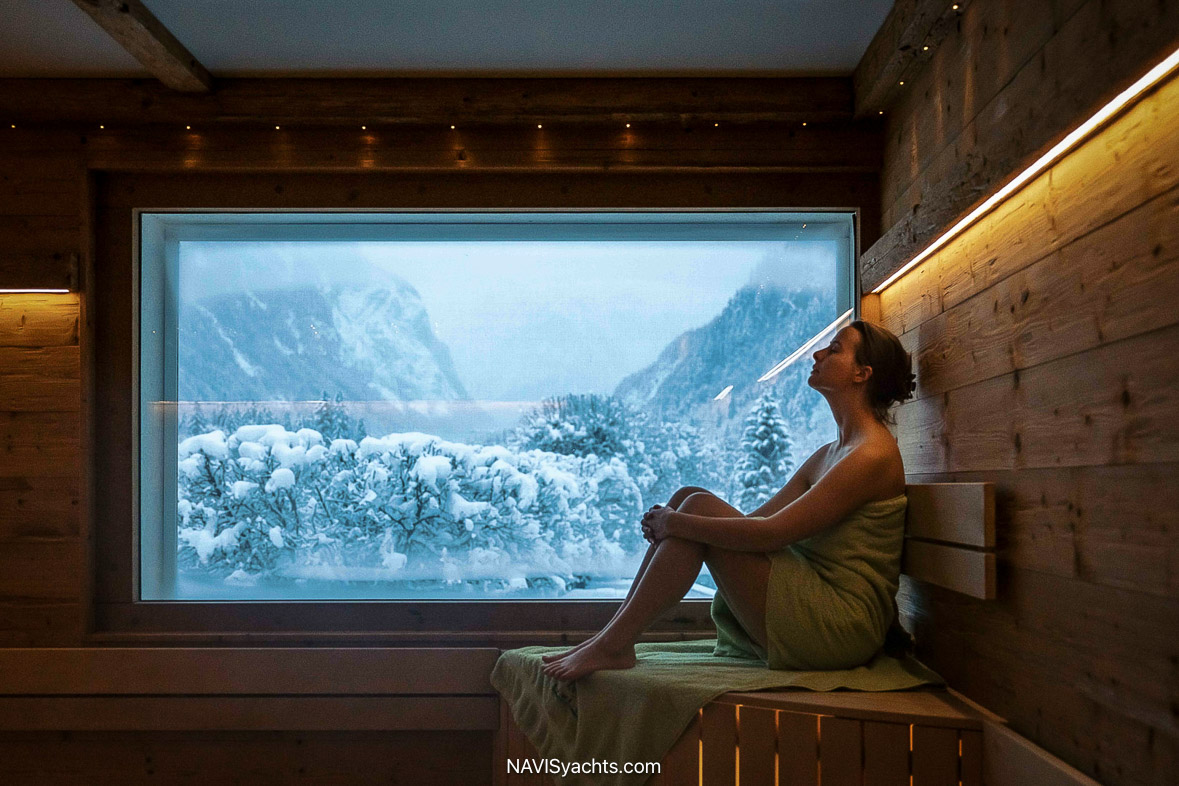
That pool, after the day is done, remains another of the hotel’s highlights. Kempinski The Spa occupies the entire top floor, its centerpiece is an infinity pool ringed almost entirely in glass, so that swimmers float with Alpine peaks seemingly within reach. The Finnish and bio saunas replicate the illusion, with glass walls affording detox a resplendent mountain view, while a salt-crystal fireplace lounge offers a gentler, low-lit alternative for anyone not quite ready for the heat. The spa’s new treatment menu is built around Kempinski’s “European Seasons” philosophy: treatments organized around the elemental character of each season which makes an excellent place to disappear for an afternoon after a hard morning on the black runs or hand-crafting cheese.
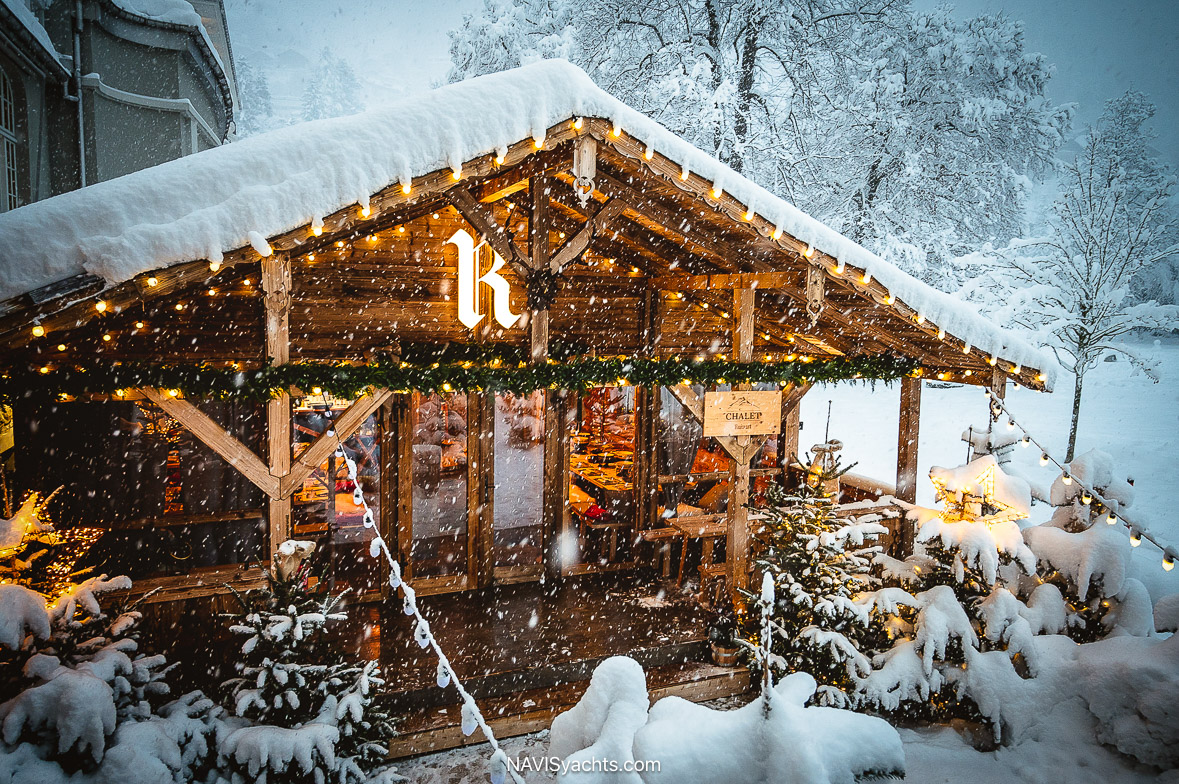
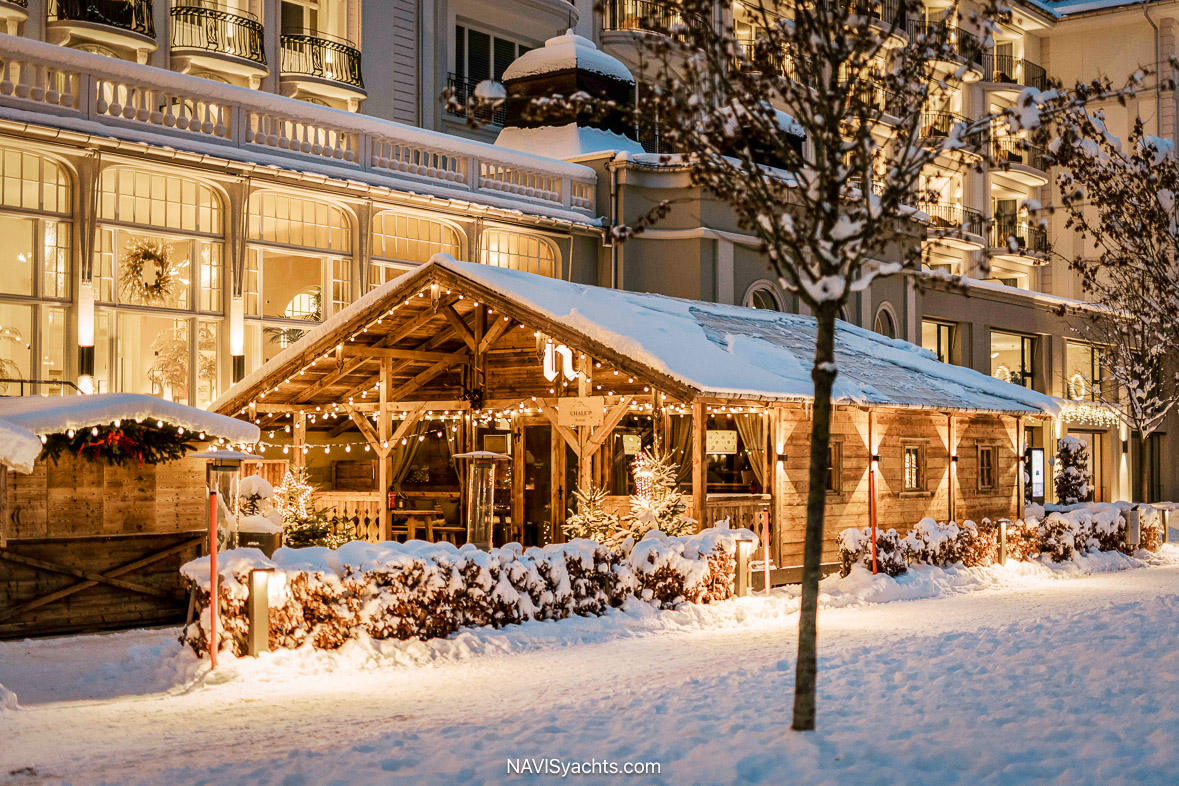
For evenings when guests would rather not leave the property, the hotel retains its own cheese culture in Chalet Ruinart, a wood-paneled den where traditional raclette and fondue are served sourced from the local cheesery, making an easy counterpoint to the grandeur of the main dining room, certainly welcome after a long day of skiing.
For those who’d like a taste of Engelberg’s more elevated après-ski scene without straying too far from home, it’s worth mentioning Hotel Terrace, perched slightly above the town with sweeping valley views. Home to Porticos Bar, the largest gin bar in Central Switzerland, its shelves are stocked with more than 1,700 varieties. Arriving as the sun drops behind the peaks, gin and tonic in hand, makes for an enjoyable hour in Engelberg.
Part III: At the Table
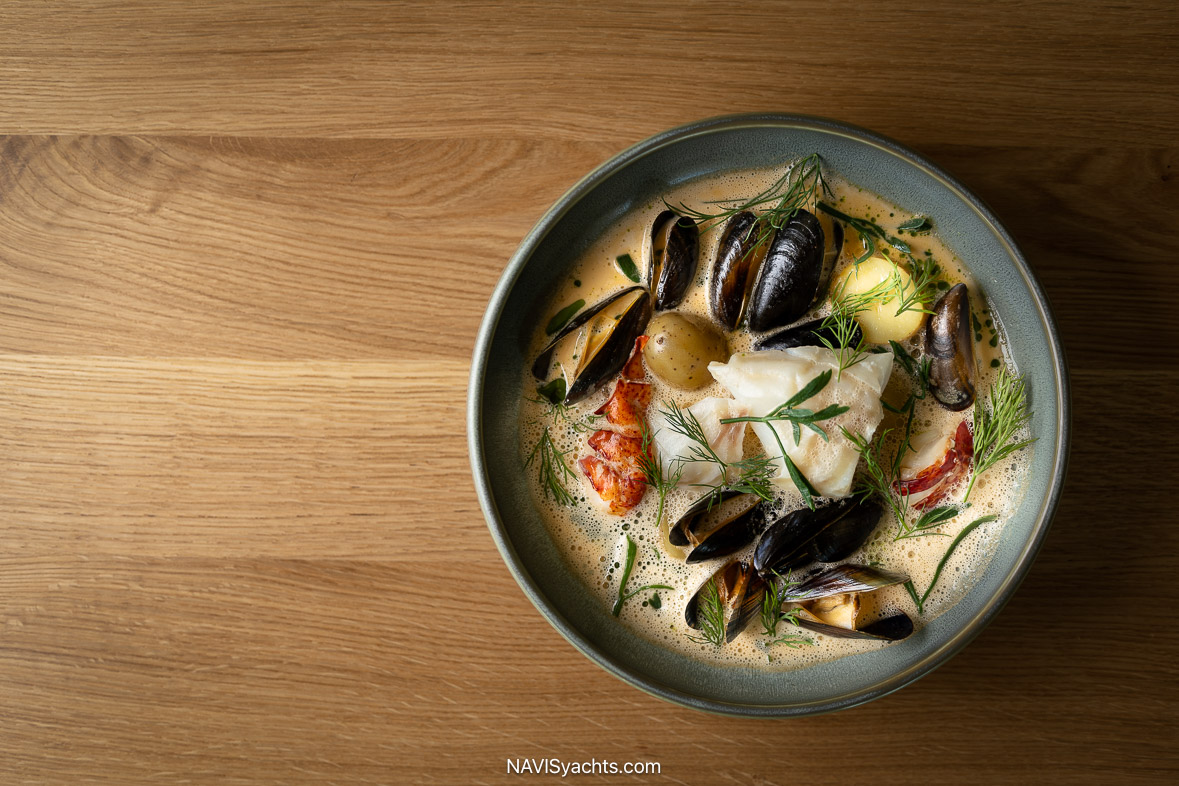
Engelberg’s gastronomy run the spectrum from rustic stubes to a genuine fine-dining destination perched above the clouds. During our stay we sampled a variety of distinct experiences, each a facet of the valley’s diverse gastronomic identity.
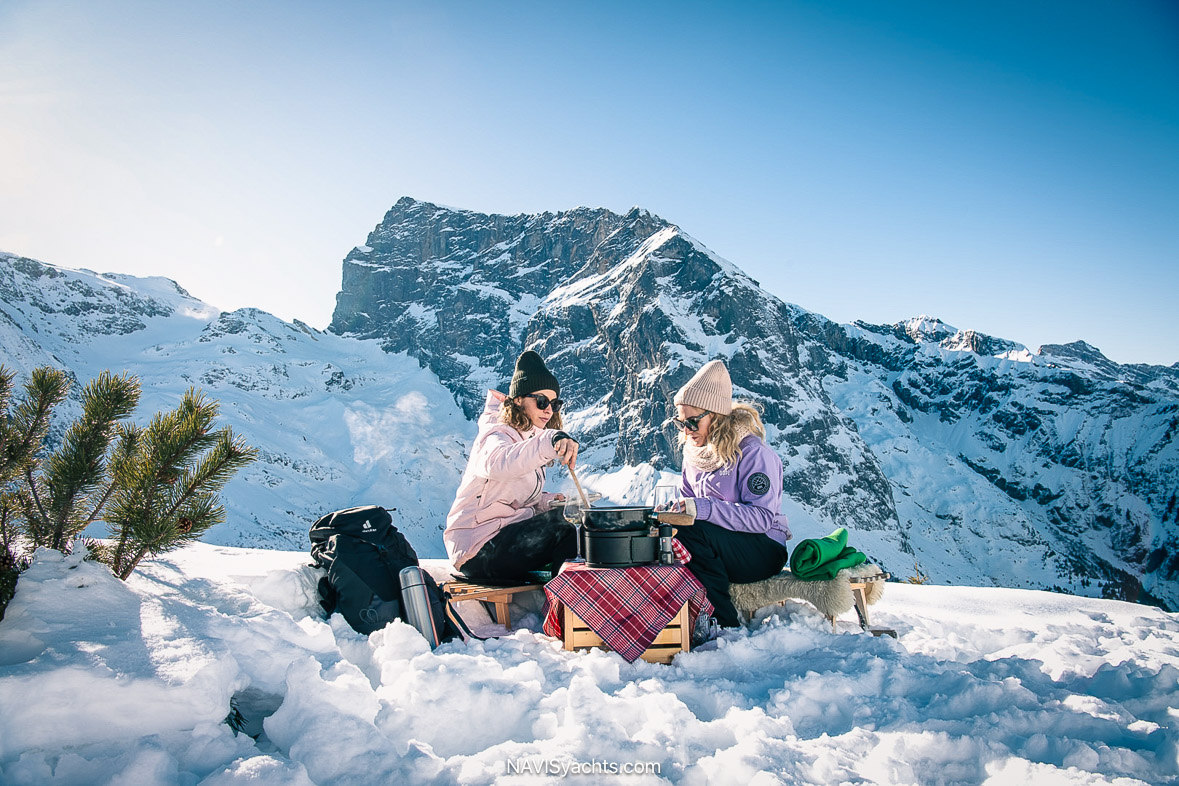
The most purely Swiss experience brings us back to Chalet Ruinart at Kempinski Palace Engelberg, where Sälmi’s Raclette transforms the wood-paneled setting into an intimate celebration of Alpine cheese culture. Sälmi’s locally produced cheese is served here daily in traditional raclette and fondue, while on Sundays, Sälmi himself is on hand to personally prepare and serve his cheese, melting and scraping it tableside, crafting a raclette-and-fondue evening that feels less like a restaurant meal than a friend’s kitchen. Wooden benches, candlelight, and the aroma of cheese and woodsmoke do more to conjure an Alpine winter than any amount of design-magazine styling could manage. While the setting is deliberately informal, with a format closer to a communal gathering than fine dining, and won’t capture the attention of MICHELIN inspectors, it does represent one of the essential Swiss winter experiences here.
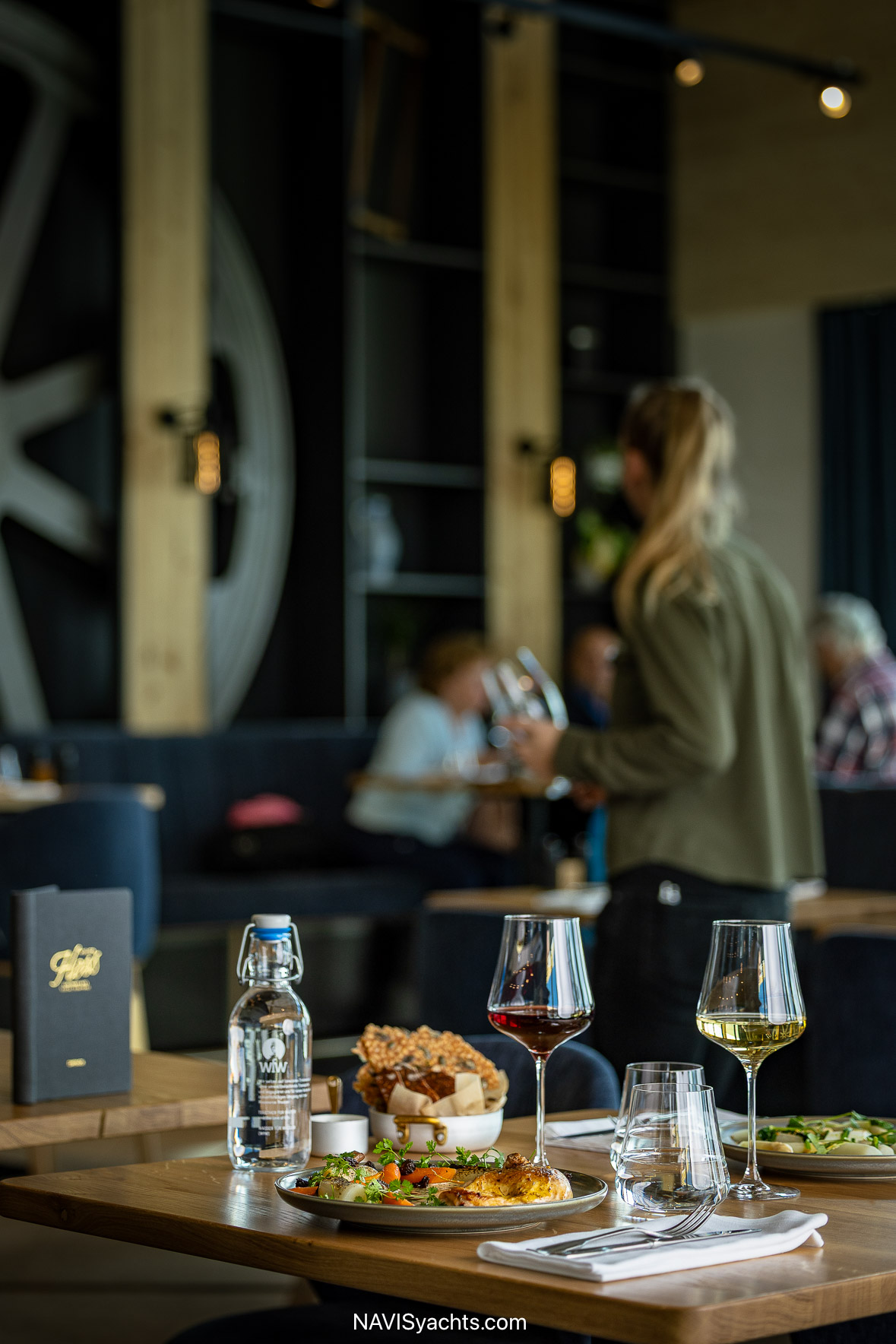
On the other spectrum sits Atelier Hess, perched at 1,800 m near the Trübsee Alpine Lodge, and an unquestionable culinary highlight. Chef Nicholas Lundgren, a relocated Swede working in dialogue with Alpine tradition, has built a menu that reinterprets classic mountain cooking via a distinctly Nordic filter: clean plating, restrained garnish, with a clear respect for the quality of the raw ingredient over any flourish of technique. The dining room itself, wrapped in glass and timber against the glacier backdrop, does not compete with the food so much as frame it. The restaurant earned a 4.98 out of 5 in our NAVIS Curated evaluation, one of the highest scores tabulated on our itinerary, and it is exactly the kind of destination-dining experience that justifies a detour partway up a mountain. We will be giving Atelier Hess a more dedicated editorial treatment in a future edition as this venue deserves more than a paragraph.
Back at Kempinski Palace Engelberg, Cattani Restaurant remained a welcome retreat. The venue itself remains exceptional: two full walls of glass framing the mountains, soaring ceilings, a sparkling Preciosa chandelier overhead. Since August 2025, the kitchen has been led by Chef de Cuisine Stefanos Ioannidis, whose Mediterranean-Alpine approach brings together the warmth and freshness of Mediterranean cooking with the ingredients and culinary traditions of the surrounding mountains. The kitchen continues to plate with real skill, delivering a cuisine that feels seasonal, confident, and well suited to its Alpine setting. We reviewed the restaurant several years ago, and while its culinary direction has evolved, the standards we’d come to expect and the kitchen’s quality have been well maintained. Cattani remains very much worth visiting for its food as well as its view.
Rounding out the list, and offering welcome informality after more serious fare, is Lago Torbido, an easygoing pizzeria at the Trübsee middle station billing itself as “a taste of Italy in the heart of the ski area.” Good beer, properly made Italian-style pizza with a wood-fired crust, and a room with authentic character, featuring exposed timber and the general clatter of a place that sees no need for pretension. Both taste and service make it an ideal lunch stop mid-mountain, the kind of place to duck into for less than an hour before clicking back into one’s bindings, already planning a return visit as one exits.
Wrapped by Wings
The natural instinct on a wrap-up of a journey is to return to where it all began. For us, that meant circling back to the two experiences that first revealed Engelberg’s character before skiing and culinary concerns took over the itinerary: the horse-drawn carriage gliding silently through snow-covered farmland, and the low hum of the monastery’s dairy, where cheese has been made in more or less the same way for the better part of nine centuries. Both say more about this valley than any single restaurant or hotel amenity. They are reminders that Engelberg’s real luxury is the kind of unhurried authenticity that press releases and renovation budgets cannot manufacture and where monastery bells and cable cars have learned to coexist.
Wellbeing, fittingly, turns out to be woven through that same fabric. The obvious anchor is Kempinski The Spa, whose glass-walled infinity pool and mountain-facing saunas we’ve already detailed, remains the single best wellness experience in the valley with its top-floor haven that turns recovery into a visual feast.
Beyond Kempinski Palace Engelberg’s offerings, Gerschnialp, at roughly 1,300 m up Titlis, offers guests a genuinely unusual local “specialty,” a warm whey bath, drawn straight from the alpine cheese dairy at the same altitude. This old farming-valley remedy is re-packaged as a spa treatment, offering a strangely beautiful bit of full-circle logic: the valley’s cheese culture folded into its wellness culture, the very whey left over from that morning’s production employed to ease a skier’s tired legs. For guests who prefer their alpine recovery more conventional, the village’s smaller hotel establishments generally feature compact spa areas, typically built around a sauna and an indoor pool, although more modest in scale than the Kempinski’s.
What lingers is the sense of operating on two clocks at once. One, fast and modern: Titlis Tower rising in glass and steel above the glacier, the Rotair spinning its slow circle over the crevasses, a five-star spa refreshing its treatment menu seasonally according to the latest word in alpine wellness. The other, centuries slower: the monastery bells marking the hour, traditional cheese recipes handed down through generations, a horse and carriage moving at exactly the pace in this century as it has in centuries past. Engelberg’s genuine achievement, and the reason it rewards a longer look than a single ski weekend for Zurichers, is that it has never had to choose between the two. This is not a resort built from nothing to service a ski season; it is what has always been: a working Alpine community, centuries in the making, which has simply learned to host contemporary guests without losing the charm or authenticity that made it worth visiting. The angels, if the legend is to be believed, chose well.
The NAVIS team acknowledges with gratitude the generosity of a variety of hosts and sponsors involved in the making of this perfect winter journey.
For insight and hospitality, we thank the following without which this trip would not be possible: Switzerland Tourism, Luzern Tourismus AG &Kempinski Palace Engelberg.
Essential equipment, tech, and performance wear made possible by: Helly Hansen, Mammut, Victorinox, CARDO Systems, Gill & USWE.
Written by Janine Devine - Photographed by ©️ roger gruetter, Kempinski Palace Engelberg Titlis Swiss Alps, ©️JFilipeWiens, Fenja Bliestle, ©️ TITLIS Cableways & Navis Media