
Industrial designers understand something that marketing departments rarely acknowledge: the final version of a product is seldom the most revolutionary. It is the most resolved.
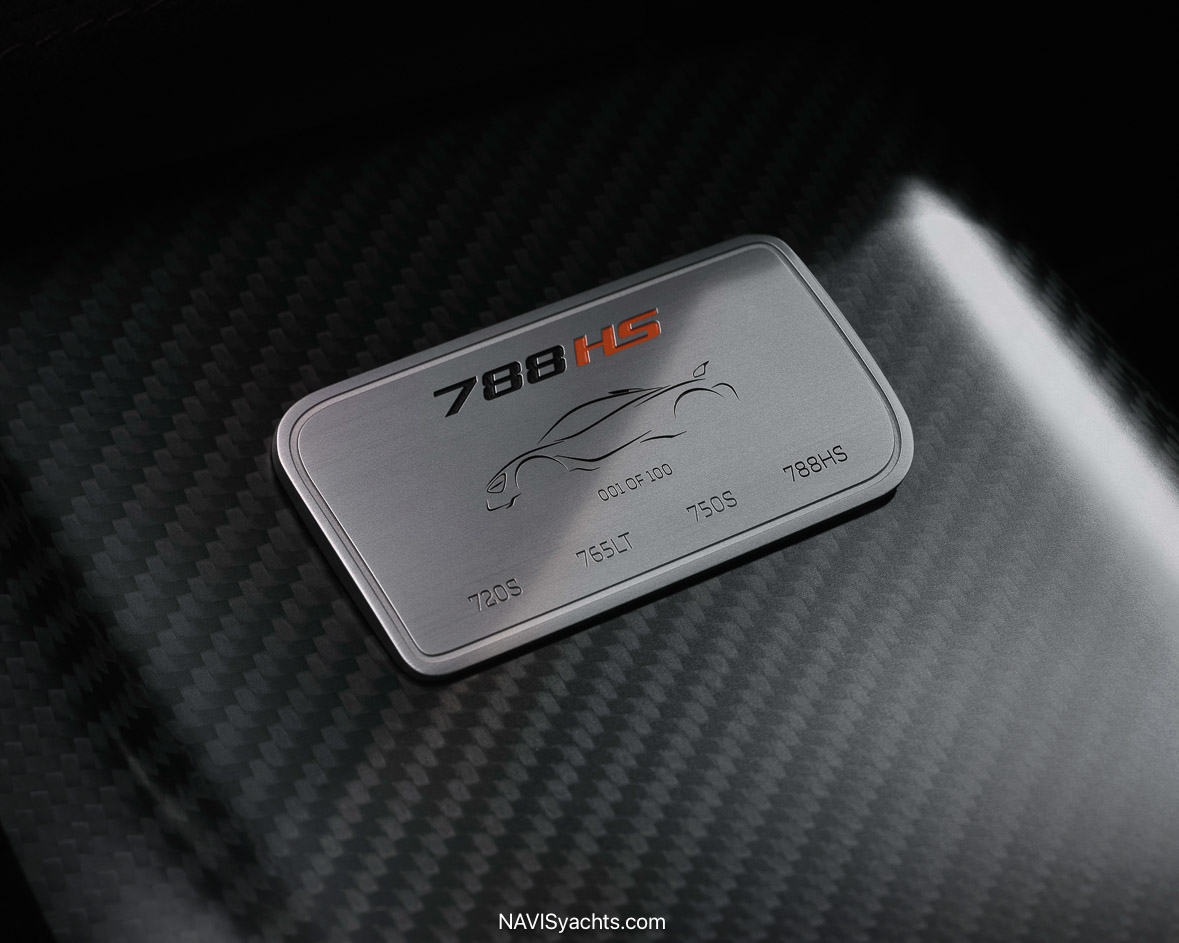
The McLaren 788HS embodies that idea. It closes a chapter that began with the 720S in 2017, evolved through the 765LT and 750S, and reaches its ultimate expression here. This is not a clean-sheet design chasing novelty. It is nearly a decade of engineering distilled into its purest form.
The philosophy begins beneath the bodywork. At its core sits McLaren’s carbon-fibre Monocage II, an exceptionally rigid passenger cell that defines everything built around it. Unlike a conventional aluminium chassis, the carbon structure resists flex under load, allowing the suspension and steering to work with remarkable precision. It also shapes the car’s architecture. The low roofline, slender pillars and expansive windscreen exist because the chassis is simultaneously lightweight, compact and extraordinarily strong.
Immediately behind the cockpit lies McLaren’s familiar M840T 4.0-litre twin-turbocharged V8. Mounted longitudinally ahead of the rear axle, it produces 788PS and 800Nm, but its greatest influence is architectural rather than numerical. Its compact dimensions allow the dramatic flying buttresses, deep side intakes and tightly wrapped rear bodywork that have defined every modern Super Series. Concentrating the engine close to the centre of the chassis reduces rotational inertia, creating the agility that has become synonymous with McLaren’s road cars. Before discussing performance, the powertrain has already determined how the car looks, balances and responds to the driver.
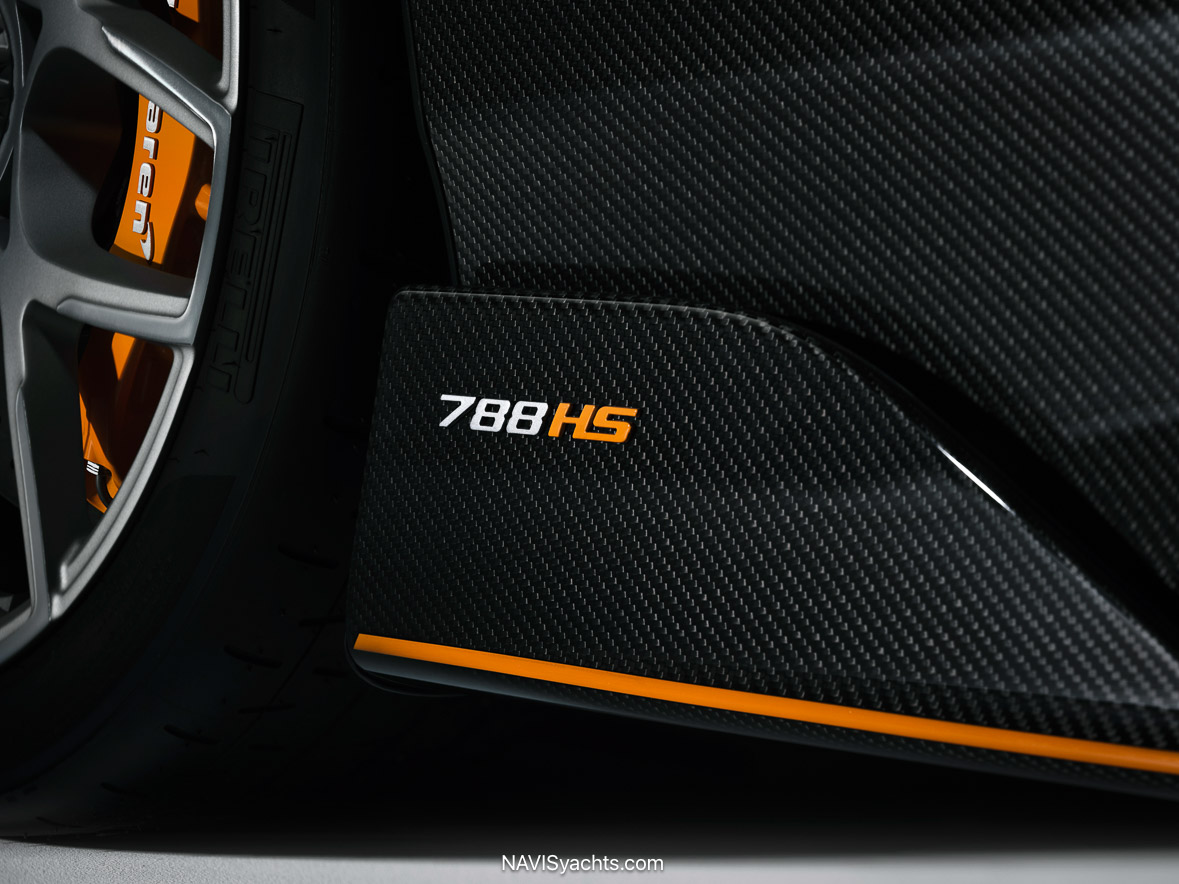
That relationship between engineering and design defines the entire 788HS. The enlarged carbon-fibre splitter, S-Duct bonnet, active rear wing and Formula 1-inspired diffuser are not styling exercises added to distinguish a limited-production model. They are the latest evolution of aerodynamic solutions refined over thousands of hours of computational analysis, wind tunnel testing and track development. Every surface exists because airflow demanded it.
Nowhere is that philosophy clearer than at the front of the car. The splitter extends further forward to generate additional downforce, while the S-Duct quietly solves a more complex problem. Air accelerated beneath the nose creates pressure that would otherwise reduce front-end grip. Instead, the duct channels that airflow through the bonnet, releasing it over the top of the car, improving stability while keeping the nose visually clean. The engineering disappears into the sculpture.
The same thinking extends underneath. McLaren’s Proactive Chassis Control III replaces conventional anti-roll bars with a hydraulically interconnected suspension system that continuously manages body movement while allowing each wheel to react independently to the road. The objective is deceptively simple: maximise tyre contact without sacrificing ride quality. Revised calibration and a five-millimetre reduction in front ride height sharpen turn-in while preserving the composure that has long separated McLaren from its rivals. The result is a chassis that inspires confidence rather than intimidation, encouraging the driver to explore its capabilities instead of merely admiring them.
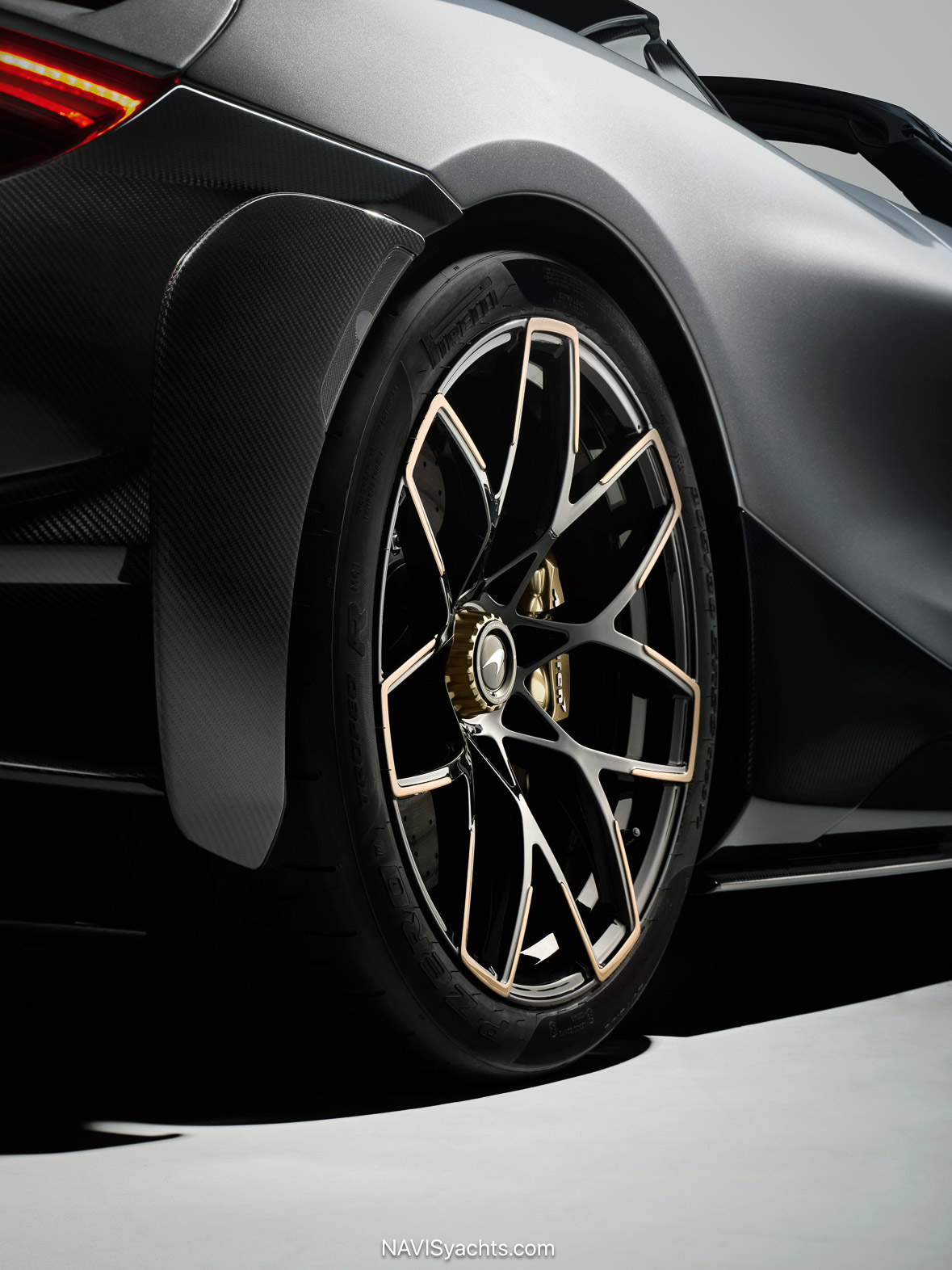
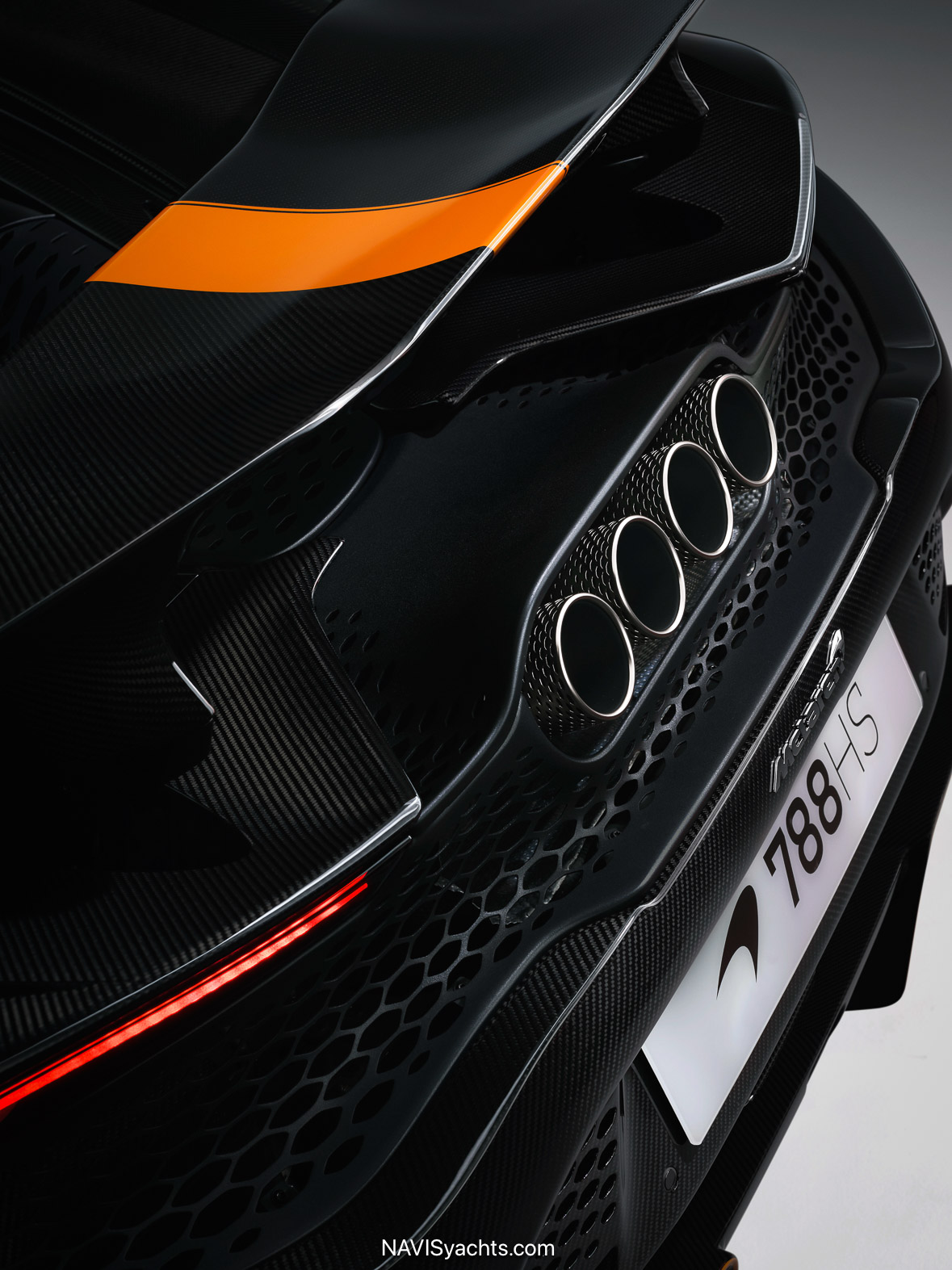
Viewed from the rear, the engineering becomes visible once again. The active rear wing rises naturally from the flying buttresses, while the deep diffuser accelerates airflow beneath the car. Above it, the quad titanium exhaust outlets occupy the centre of the composition, their elevated position shortening the exhaust path, reducing weight and freeing additional space for aerodynamic development. Even the forged centre-lock wheels follow the same philosophy. Their slender split spokes expose the Senna-derived carbon-ceramic brakes beneath, allowing mechanical function to become part of the car’s visual identity.
Rather than decorating the engineering, the 788HS allows the engineering to define its form.

Honest Materials
Carbon fibre occupies a unique place in industrial design because its structure is inseparable from its appearance. Every woven layer reflects how a component was conceived, moulded and cured. On the McLaren 788HS, exposed Visual Carbon Fibre transforms the body from painted sculpture into visible engineering. The weave becomes the finish, allowing the construction itself to define the car’s identity. Whether finished in silver or left almost entirely in exposed carbon, the message remains the same: every panel exists because it serves a purpose.
Walk around the car and that purpose becomes increasingly clear. The flying buttresses guide air toward the active rear wing while framing the compact V8 beneath. The optional roof scoop extends the airflow path established by the S-Duct, feeding the engine while reinforcing the car’s central spine. At the rear, the honeycomb fascia, quad titanium exhausts and sculpted diffuser work as a single aerodynamic assembly, balancing cooling, downforce and weight reduction within one cohesive design.
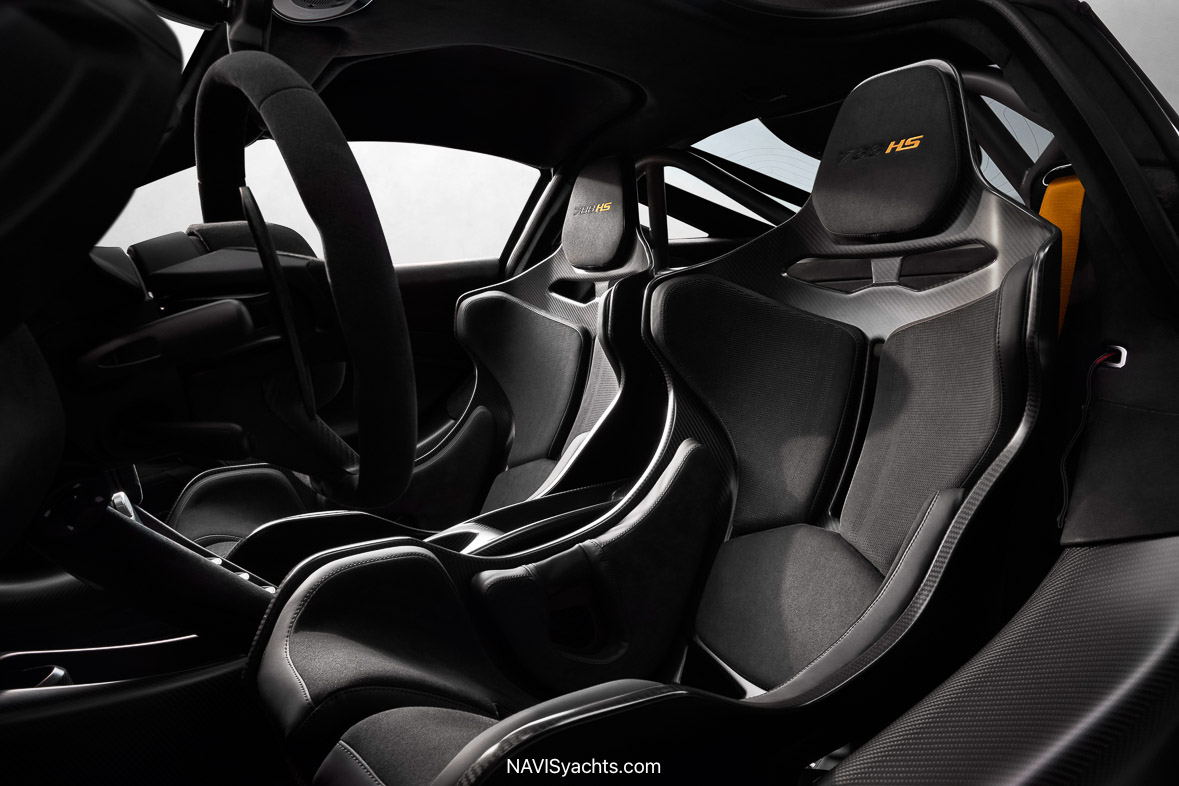
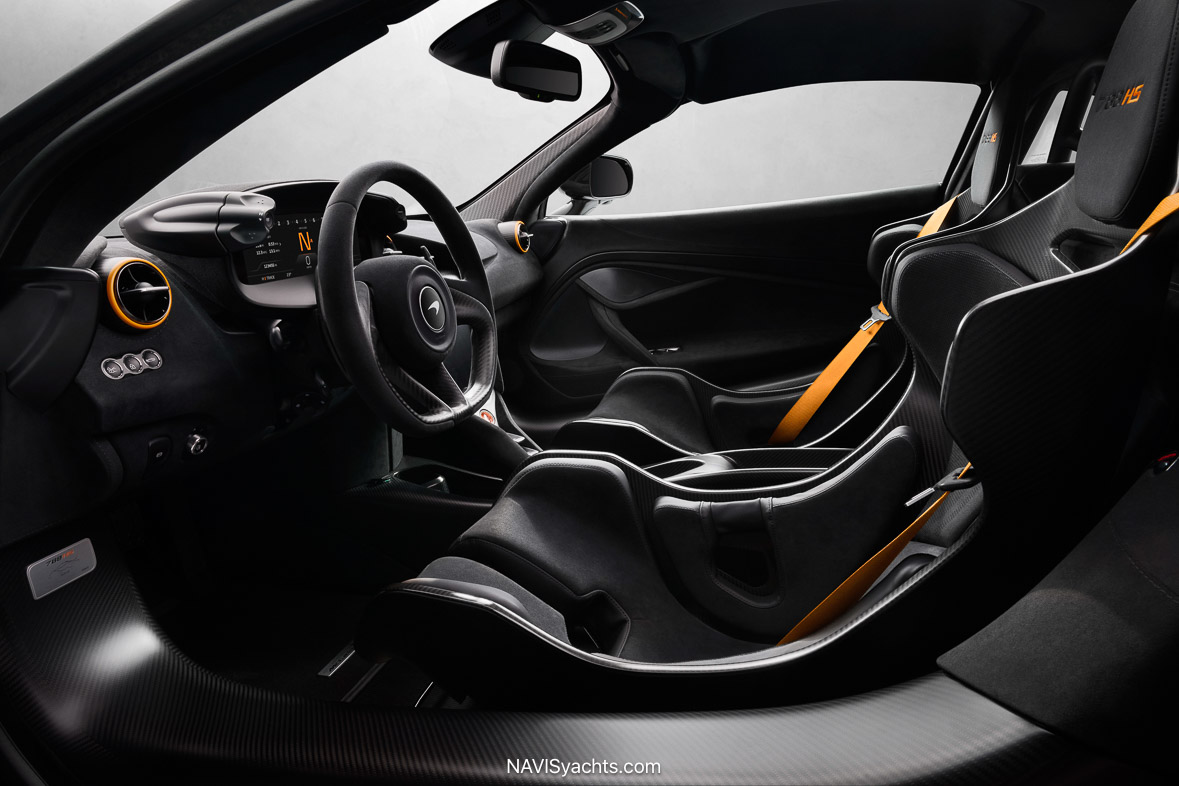
Open the signature dihedral door and the engineering becomes tangible. Crossing the wide carbon sill is a reminder that you are stepping over the structure itself. Once seated, however, the cockpit feels remarkably natural. Your hips settle deep within the Monocage, almost level with the front axle, while the slim A-pillars and expansive windscreen provide visibility rarely associated with a mid-engined supercar. Rather than surrounding the driver with dramatic styling, McLaren prioritises clarity. The steering wheel remains free of unnecessary controls, the digital instrument cluster moves with the steering column, and the exposed carbon monocoque defines the cabin with quiet confidence. Every decision reduces distraction, allowing the driver to focus entirely on the road ahead.
Then comes the defining moment: pressing the starter.
The twin-turbocharged V8 erupts with a sharper, more metallic bark thanks to its revised titanium exhaust system before settling into the unmistakable rhythm of a flat-plane crankshaft. Blip the throttle and the engine responds instantly, climbing eagerly toward its 8,500-rpm redline. Behind the seats, induction and exhaust combine into a layered soundtrack where the rush of air becomes almost as expressive as combustion itself. Revised engine mounts transmit more of the powertrain’s character into the cockpit, creating a constant reminder that the engine remains an integral part of the structure only inches behind the occupants.
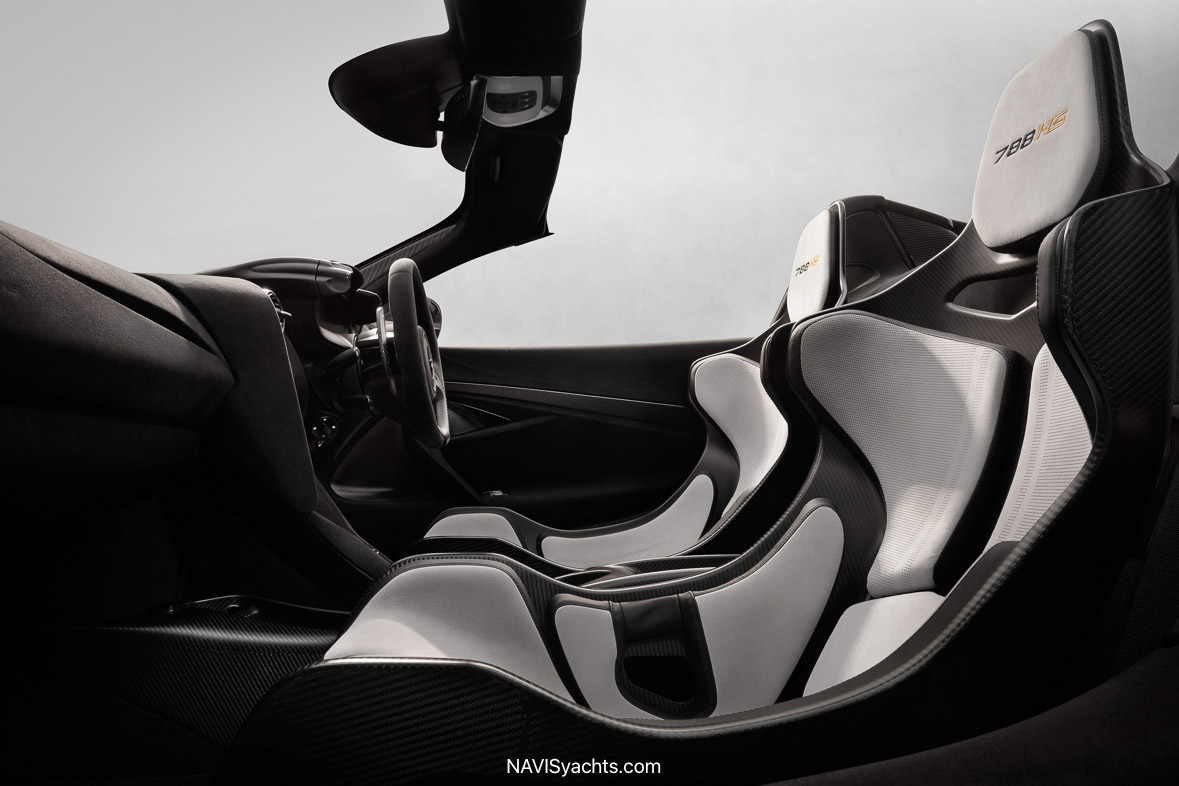
That sense of mechanical honesty defines the entire experience. The carbon tub disappears into confidence. The suspension disappears into composure. The aerodynamics disappear into stability. Rather than drawing attention to individual technologies, the 788HS allows them to work together so seamlessly that the driver experiences only their collective result.
Perhaps that is the achievement that will define the 788HS long after its production ends. Beyond its 788PS output or its place as the final evolution of the Super Series lies a machine shaped by nearly a decade of continuous refinement. The Monocage, the mid-mounted V8, the hydraulic suspension and the carefully managed aerodynamics were never developed in isolation. Each depends on the others, creating a car whose character emerges from the harmony of the whole rather than any single innovation.
Decades from now, enthusiasts will remember the figures, the rarity and the performance. Yet the 788HS leaves behind a more enduring lesson. The finest industrial design does not celebrate complexity for its own sake. It absorbs it, conceals it and allows every engineering decision to dissolve into a single, intuitive experience between driver and machine.
It is, in every sense, the final draft.









Photos: McLaren Media | Words: Pablo Ferrero