
Every morning in St. Anton, the village seems to reach the same decision at the same moment. Hotel doors open onto the main street and out come skiers in heavy boots, skis balanced on their shoulders, helmets already on, all of them walking in one direction. Not one consults a map. They are bound for the foot of a single great lift, and for a few minutes the street becomes less a commute than a procession: the mountain calls and a mass converges on it.
That was the first sign that we had arrived in a destination with a singular purpose. We came by road from Kitzbühel, one leg of a longer journey through the mountains of Switzerland and Austria that would eventually deliver us in Milan. The Rolls-Royce Cullinan we acquired in Innsbruck suited the Alps well, with its settled ride, commanding driving position, and all-wheel drive. “Magic carpet ride” or no, as ever in winter, no SUV supplants proper winter tires and close driver attention paid to both road and weather conditions.
Arriving without a car is equally easy, if decidedly less plush. Via helicopter is undoubtedly fastest at twenty minutes from Innsburck, although admittedly noisier and nippier, and subject to prevailing weather or fog conditions. The railway station sits in the middle of St. Anton and international express services stop there. Innsbruck’s airport is just over an hour away by road and Zurich about two, with the Arlberg road tunnel carrying drivers beneath the pass itself.
Dorfstrasse, St. Anton’s main thoroughfare, is lined with small, family-scale businesses before it turns into the pedestrianized old village. It is at that quiet hinge between working street and walkable heart that we found our base here, the Hotel Schwarzer Adler. Its architecture, as in other buildings here, is traditional Tyrolean: timber beams and deep eaves, decorated with intricate scrollwork paintings, nestled placidly within a compact village one navigates on foot within minutes.
What surprised us was how much sophistication has been folded into so small a place. Behind unshowy shopfronts await refined boutiques. Behind dining-room doors, some of the most accomplished cooking of our recent travels. Inside the hotels, wellness facilities of exceptional ambition. Yet nothing is paraded. The style on the street is practical and sporty: people walking in ski boots, in technical shells, with skis over their shoulders. St. Anton did not feel to us like a chic shopping resort with a ski area attached. Instead it was like a community bound by one shared and serious passion, skiing, with luxury tucked quietly inside it.
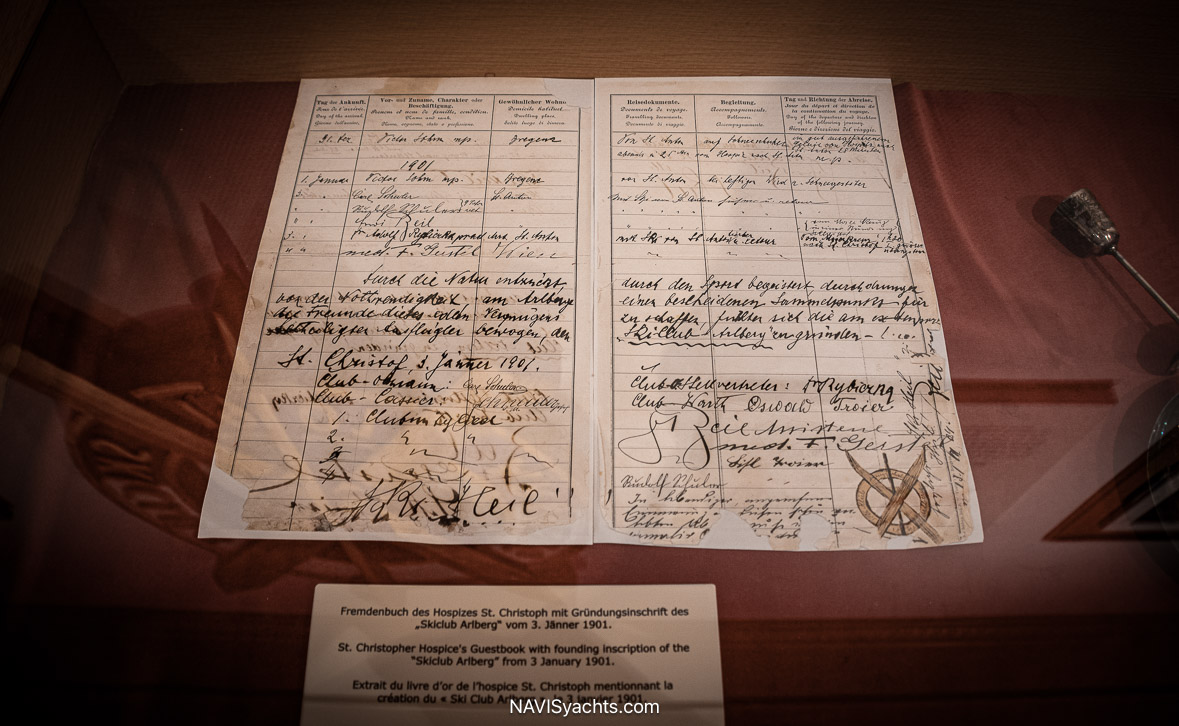
That passion has a lengthy lineage. The East portion of Ski Arlberg (of which St. Anton is a part) is often called the cradle of modern alpine skiing, although locals are quick to qualify that phrase: skiing was not invented here. What happened here is that skiing was taught, systematically, and to ordinary people, and then carried out into the world. This is a story that runs through everything that follows.
It also explains the pace of the place. Mornings are early and purposeful. Lunch happens on the mountain, often in a restaurant that would be at home in any capital. Dusk brings the return: bars filling quickly, spa doors opening, boutiques lit against the cold. There is a rhythm to a St. Anton day that visitors fall capably into within hours, and the village will reward anyone who does. The mountain sets the timetable, and everything else, from the quality of the coffee to the heat of the sauna, is arranged around it.
Part of the charm is its scale. St. Anton is a compact village, not a sprawling resort, and you can walk from the railway station to the base of the lift in minutes. Hotels, shops, restaurants, and the museum all sit within a short stroll of one another, so a day can move from ridge to table to bar without a single car journey. For a trip like ours, which was largely about movement across mountain ranges, that stillness was a gift. Once we had arrived, the village asked very little of the Cullinan.
Range Without End
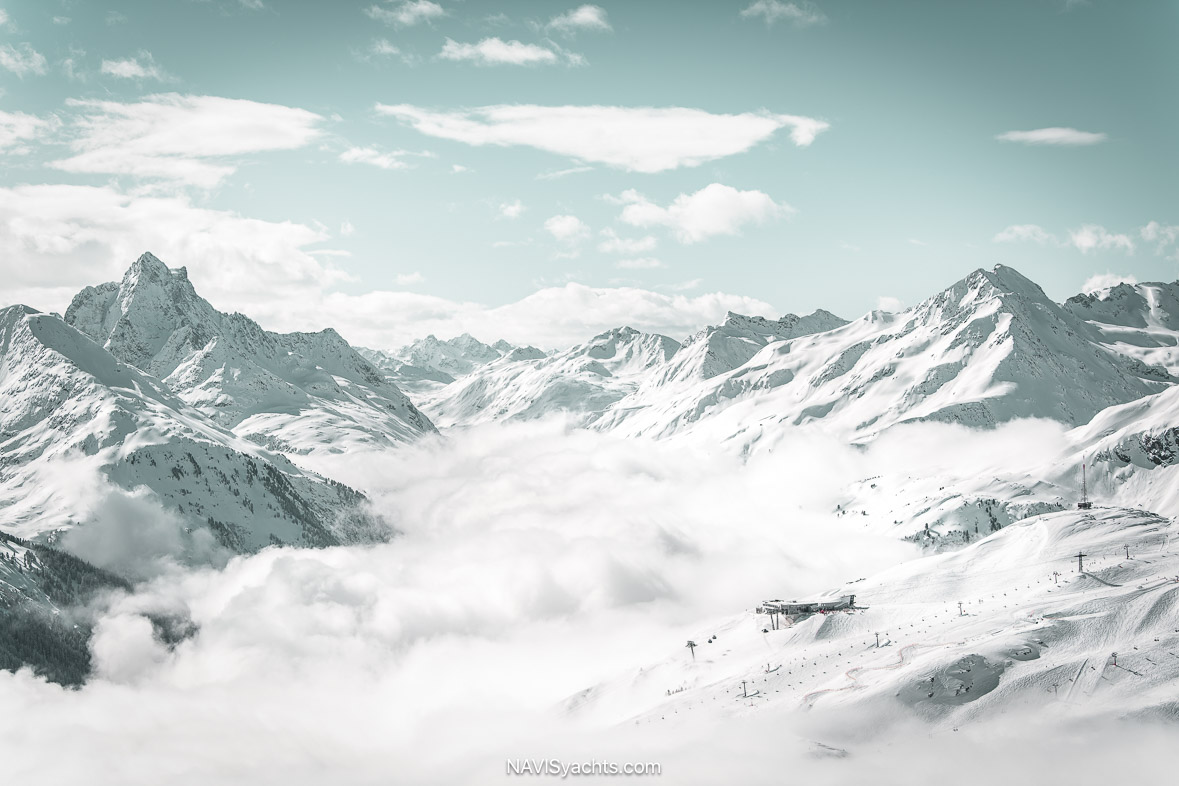
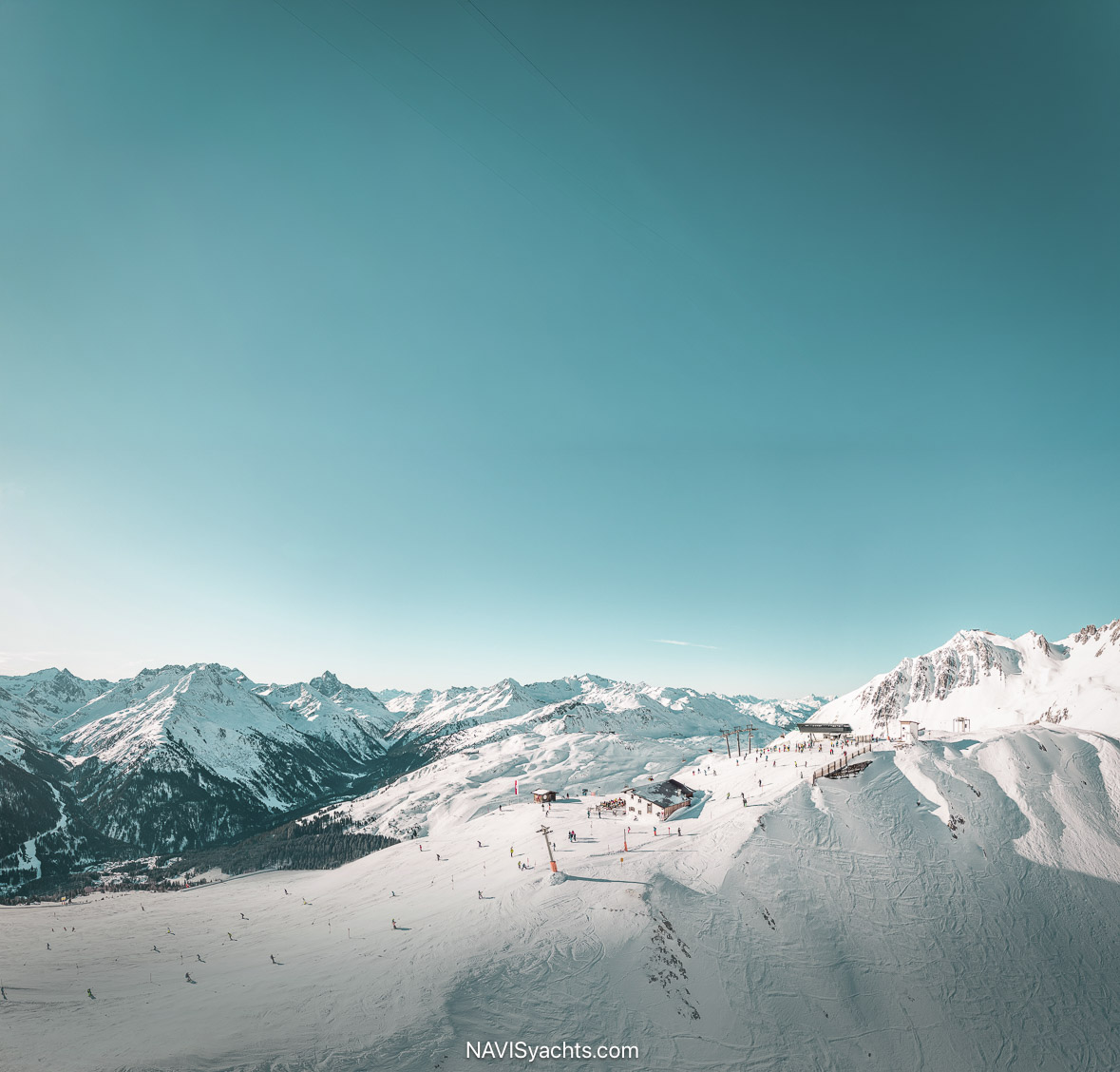
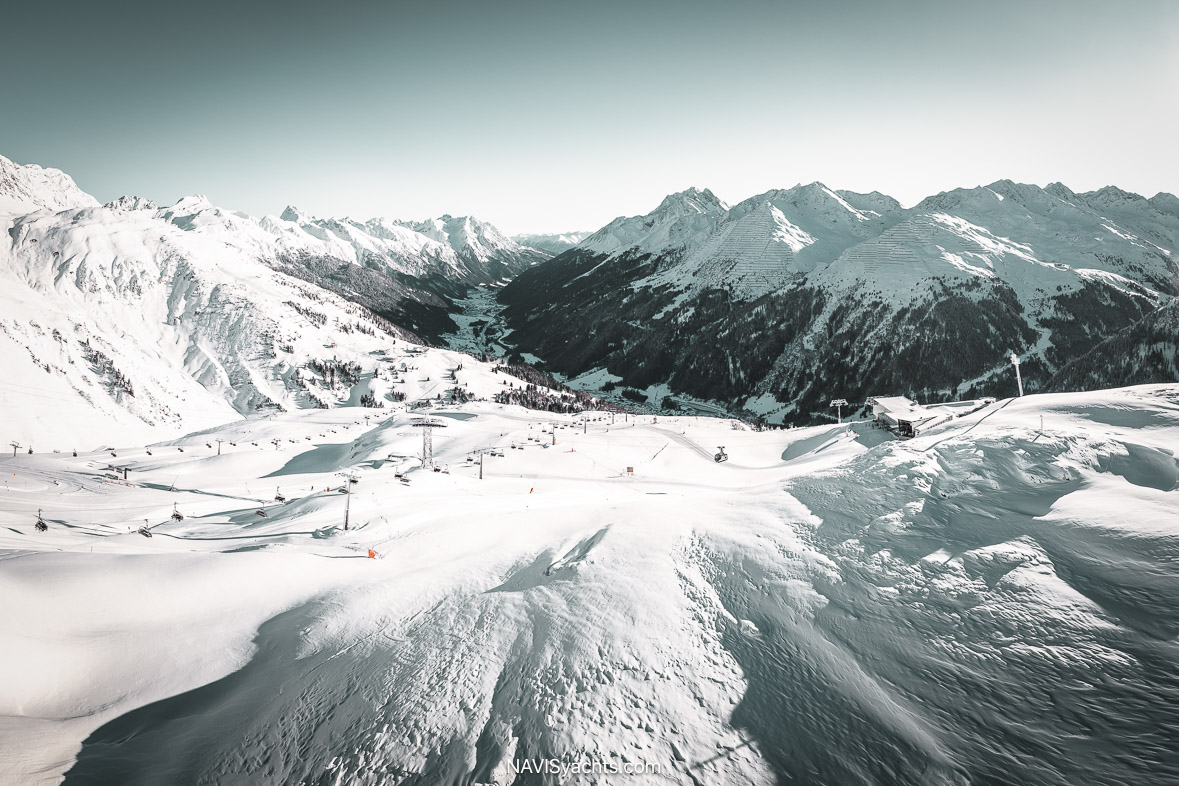
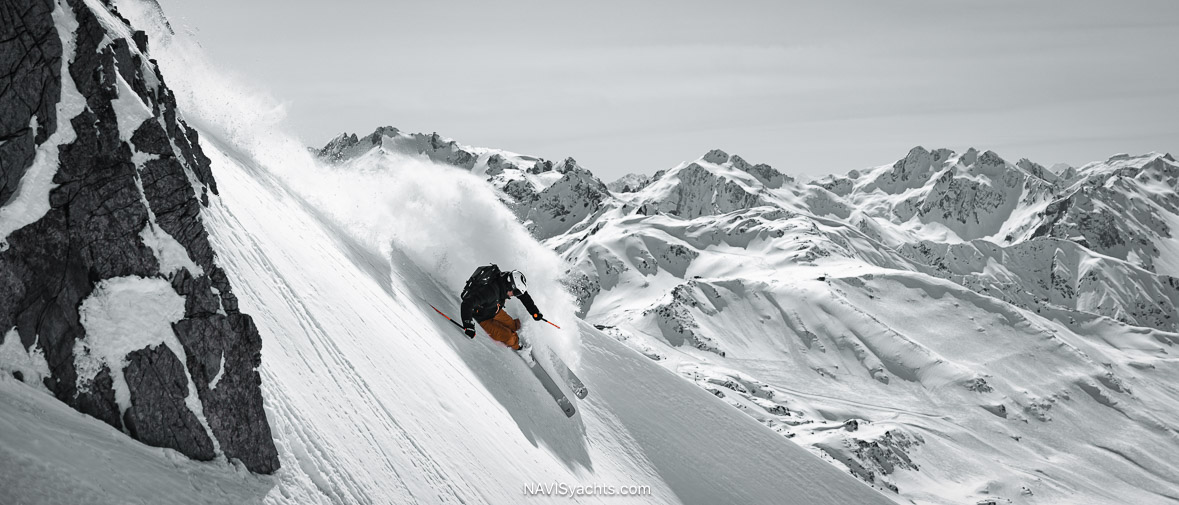
The scale of the skiing is what lingers. Here is the gateway to the massive Ski Arlberg, which joins St. Anton, St. Christoph and Stuben with Lech, Zürs and Warth-Schröcken. It offers roughly 300 kilometers of marked pistes, some 200 kilometers of off-piste routes, and around 85 lifts and cable cars. These villages were linked since the Flexenbahn opened in 2016, billing itself as Austria’s largest connected ski area. The stats, of course, are irrelevant. One week here would not exhaust Ski Arlberg; nor, we suspect, would two. Every day offers another ridge, another zone, another village to reach on skis.
We concentrated on St. Anton and the link to St. Christoph, the next hamlet sitting at 1,800 meters directly below the Valluga massif, the range’s highest point at 2,811 meters. a tiny, exclusive cluster of historic alpine lodging, and even this one corner of the range felt generous. True bliss here is freedom: skiing across to another settlement for lunch, then returning by a different set of lifts and routes. Each morning required a small decision about which direction to go, and each evening a pleasant discovery of how far the day had actually taken us. It is the opposite of the lift-line routine that defines too many ski holidays, where the same few runs are repeated until they are rote. Here, the challenge is not running out of mountain but choosing among them.
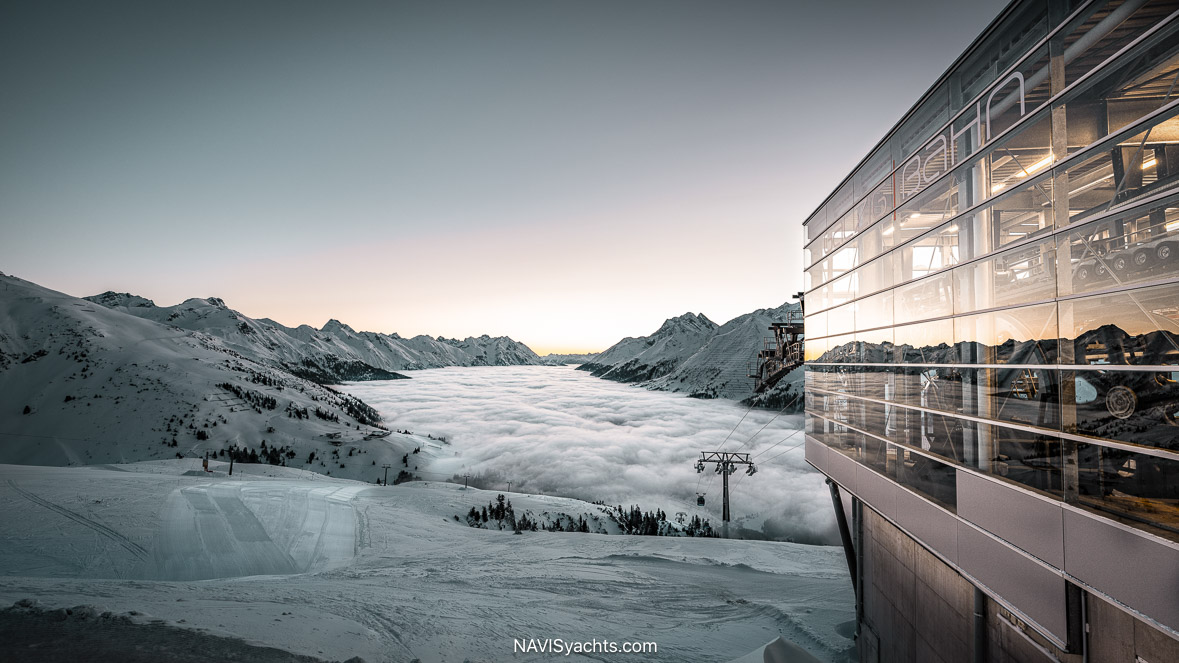
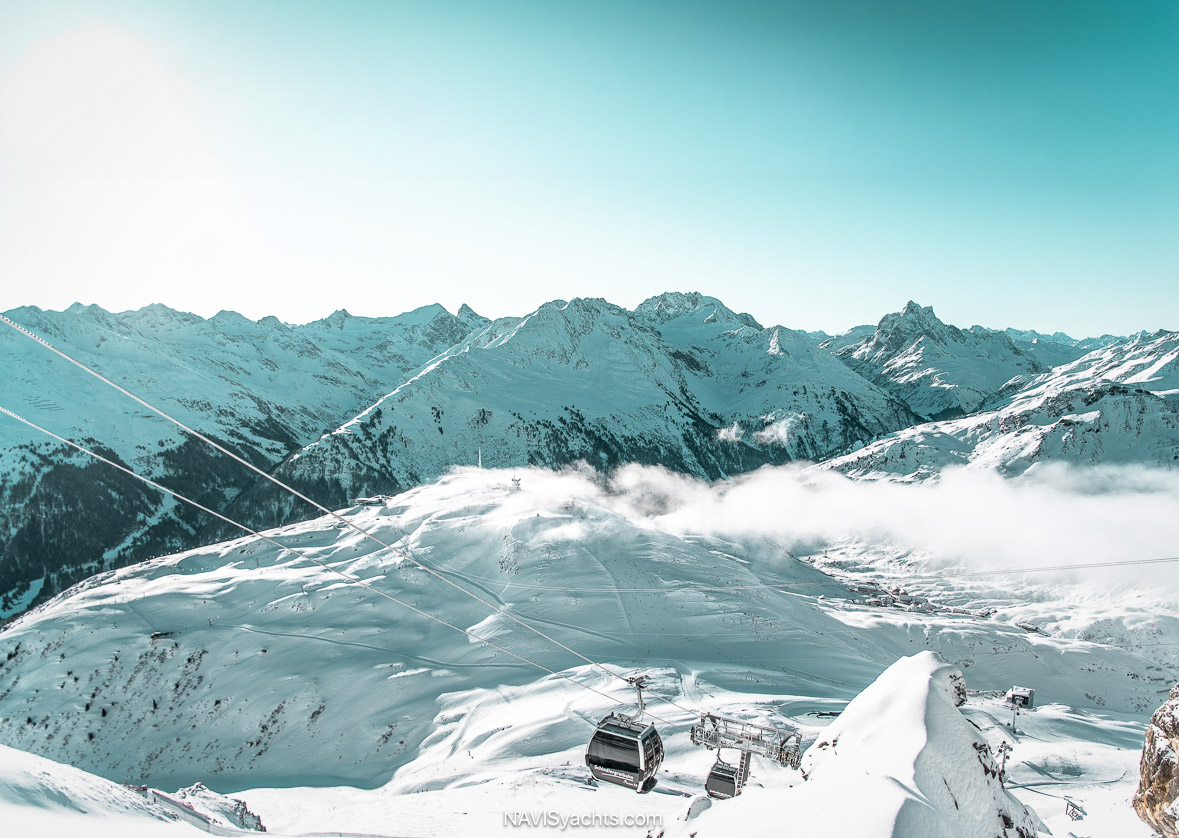
The key to the St. Anton side is the Galzigbahn, a funitel opened in 2006 whose large cabins swing around enormous turning wheels at the station. It carries skiers to Galzig, at 2,086 meters, the central interchange from which pistes and lifts radiate in every direction. At its foot, the rental operation and the ski schools conveniently stand together. The rental shop was among the most efficient we have used. We chose and paid for equipment at a touchscreen kiosk, took a ticket to the counter, and found everything already prepared. The step from rental to mountain took mere minutes.
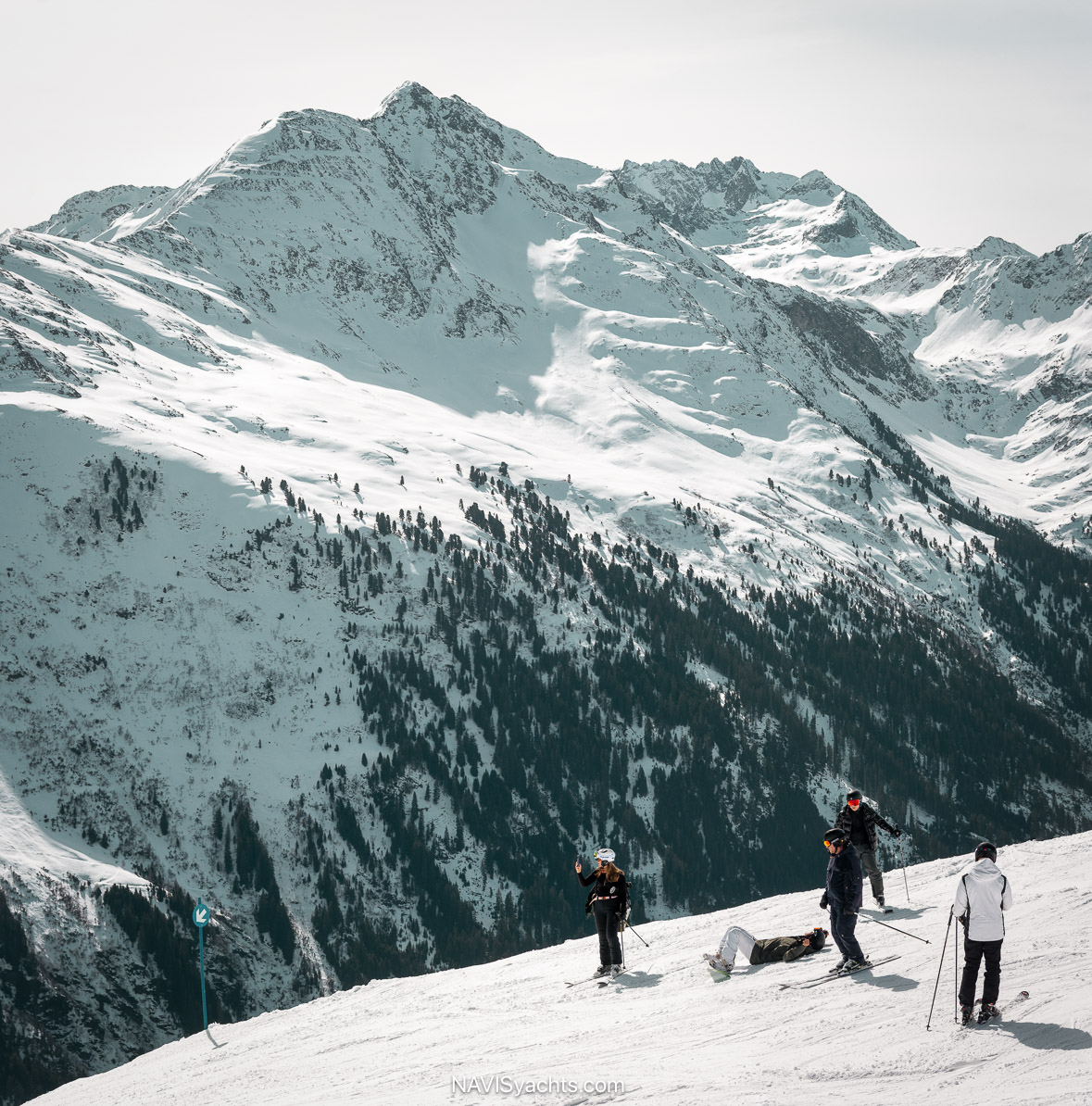
The terrain is vast and diverse. We saw generous routes for both beginners and intermediates, and a particularly impressive selection for those more accomplished, plus more adventurous skiing beyond the prepared runs. The resort distinguishes carefully between groomed and patrolled pistes, marked ski routes that are not groomed or monitored in the same way, and open freeride terrain. Avalanche conditions and closures govern access to all of them, and certainly we don’t recommend leaving the prepared runs without a local guide and the right equipment.
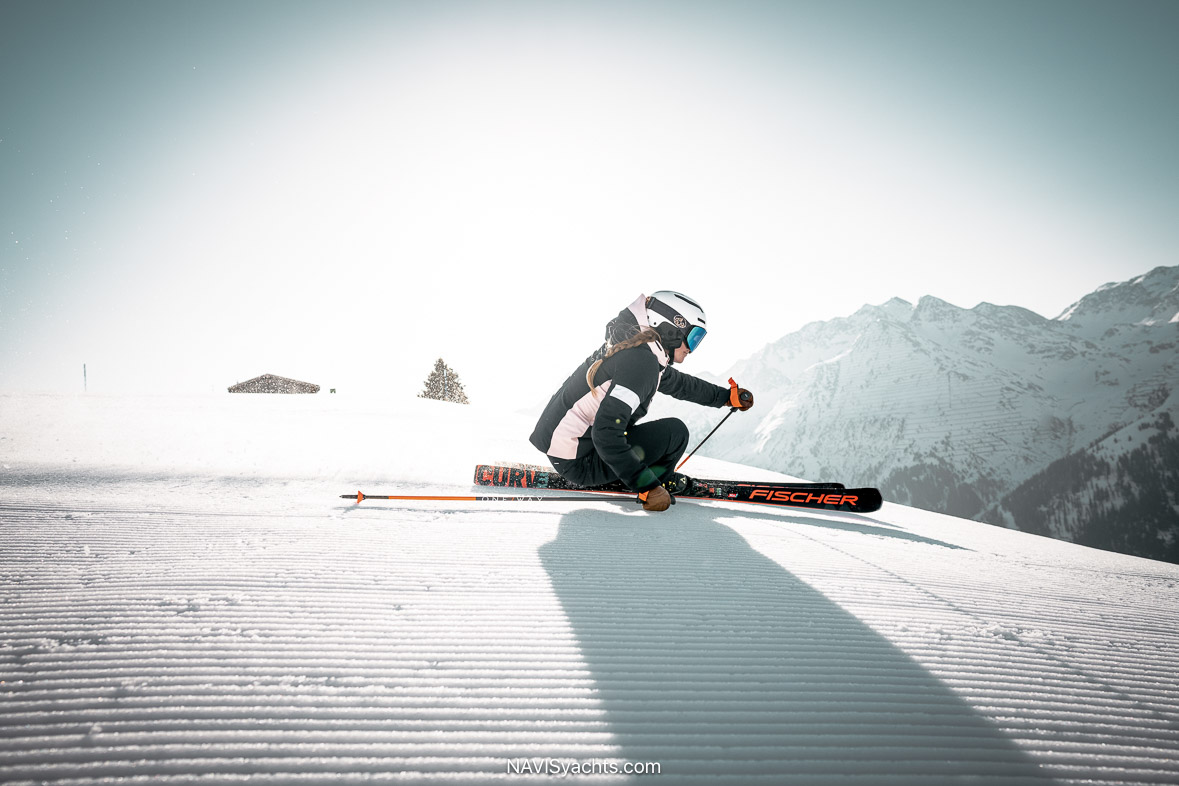
We were there between late February and early March, and the snow was spectacular. The resort was lively, with plenty of skiers about, yet with a network so spacious that lift queues were rarely more than a minute; of course, peak holiday weeks may feel different.
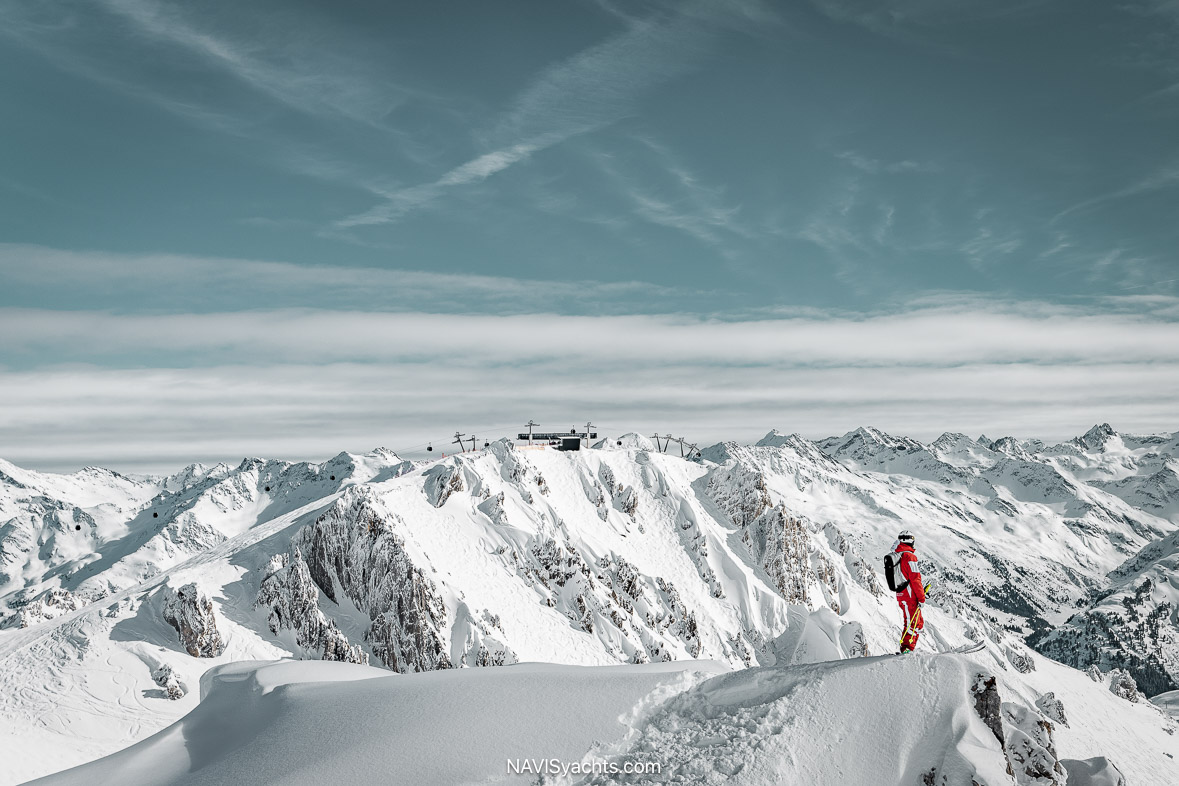
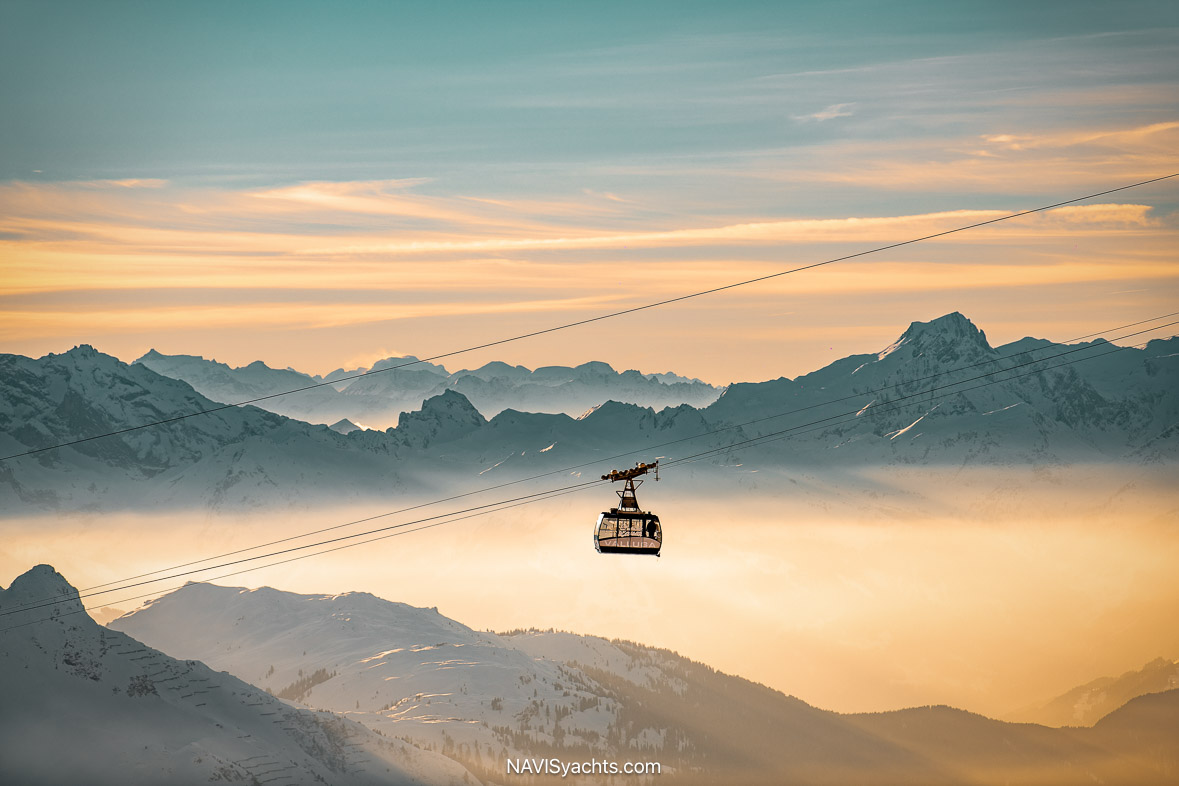
One outing stood apart: the ascent towards the Valluga, the highest point of the Arlberg massif at roughly 2,800 meters, for a 360-degree view across the range. The last cabin to the summit is, we understand, reserved for skiers travelling with a guide, so check current access before planning around it.
Over the Pass to St. Christoph
Skiing across to St. Christoph is the best history lesson on the mountain. The settlement is tiny, effectively one road and a cluster of buildings at around 1,800 meters, yet it sits on an old crossing where travelers once risked their lives. Tradition credits a man named Heinrich Findelkind with founding a hospice here in 1386 to shelter those crossing the Arlberg. Today’s Arlberg Hospiz Alm carries the name onward, though the modern buildings are of a different timeline. To ski from one Alpine community to another and stop for a long, contemplative lunch where wayfarers once sought refuge is a pleasure with centuries backing it up.
The School That Taught the World to Ski
For our first day, we arranged a guide through Skischule Arlberg: not so much a lesson as an orientation to a ski area too big to read on arrival. Our guide, Nina, grew up skiing in St. Anton. Our group was an awkward mix on paper: an expert skier, an intermediate skier, an intermediate snowboarder, along with a complete beginner. Nina made it look easy. She put the beginner’s comfort first in choosing terrain and pace, sometimes taking an easier descent with the beginner while suggesting harder runs for the others, and meeting up again below. We spent the whole day with her, pausing for a memorable lunch at Verwallstube, high on the mountain.
The real value proved its worth on the following days. We had learned how the sectors connect and, crucially, when to start for home before the lifts close, so we could lose ourselves among the pistes without actually feeling lost. Regional buses link the settlements if skiing back becomes impractical, though it is worth checking routes and times. We came to think of that first day as one of the most useful decisions of the trip. A guide in St. Anton does not simply show you the good runs. She shows you how the mountain is stitched together, which lift feeds which sector, and when it is time to turn for home. It is local knowledge handed over in a single day, and it rewards you for the rest of the week.
The idea of a guide who instructs a mixed group on a single mountain is precisely what St. Anton is known for. The Skischule Arlberg was founded in 1921 by Hannes Schneider, born in nearby Stuben in 1890, who had been instructing guests at the Hotel Post since 1907. His Arlberg technique led pupils step by step from the snowplough to the parallel turn and made skiing teachable to groups, and his method became a template for ski schools well beyond Austria. In 1939, after being jailed following the Anschluss, he emigrated to the United States, where he continued to teach in New Hampshire until his death in 1955. There were other skiing courses in the Arlberg since the early 1900’s, so Schneider’s Skischule is best described as the one that made organized ski instruction famous.
The Museum St. Anton am Arlberg brings that history to life. The Museum occupies Villa Trier, circa 1910, which is linked to Bernhard Trier, who was Schneider’s patron. It still preserves the atmosphere of early Alpine tourism and we saw period guest rooms, old skis and sleds, historic storerooms, and an archive of World Cup posters. The museum introduced us to Der weiße Rausch (The White Ecstasy), the 1931 comedy directed by Arnold Fanck and starring Schneider alongside Leni Riefenstahl, shot here and in Zürs. Fanck and Schneider had already collaborated on a silent film in 1920, and the pictures did more than entertain: they carried the glamour of the Arlberg to cinemas far from the snow. A modern ski race named after the film carries that memory forward. The Museum also boasts a Restaurant-Café where we ate lunch and more on that experience is found in Part III.
Part II: Warm Fire, Hot Sauna, Cool Pool: the Schwarzer Adler, St. Anton
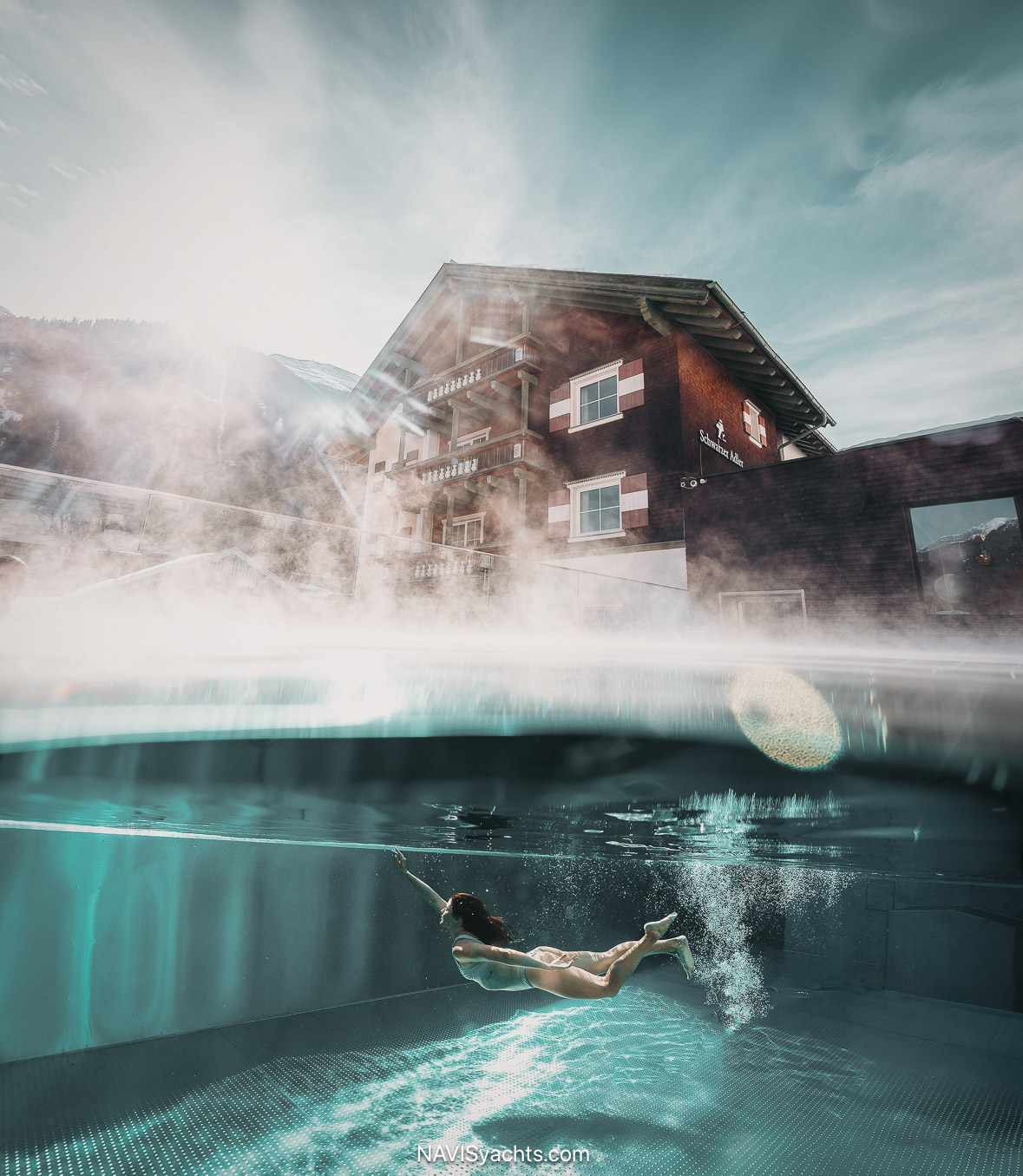
Classified four-star superior, the character and quality of our Schwarzer Adler outran its category. The hotel’s name is common enough (this St. Anton treasure should not be confused with other identically named inns in Kitzbühel, Innsbruck, or Nauders). An ultra-exclusive boutique getaway it is not, nor does it pretend to be. What it offers is warmth, dedicated family hospitality and a strong sense of place. The hotel traces its origins to 1570. The Tschol family, now in its fifth generation, has run the Schwarzer Adler since 1885. There is that continuity in the building and in the old photographs, even as each generation wisely and consistently has updated it. Guest reviews consistently rate it among the better-regarded hotels in the village, and our own impressions matched: the sort of place where the details have been thought about by people who intend to be there for decades. It is the kind of place that encourages long stays and better yet, repeat visits, which says a lot.
Those generations of family management wisely invested into lavishly extending the hotel in 2000 with a new modern wing for more bedrooms, along with a superb pool and spa. The design deserves a word. The public rooms mix Tyrolean timber and warm textures with a restrained, contemporary hand, so that nothing feels themed or staged. It is a hotel with character in the best sense, one whose atmosphere comes from use rather than decoration, and whose modernization has never erased the sense of a long-lived and loved establishment. Our rooms were contemporary and spacious, in greys and blacks with wood finishes, lush linens and wonderfully comfortable mattresses, great sound insulation, strong wifi, plus… the one thing winter travelers rarely get in sufficient quantity: proper storage for bulky clothing. Some rooms face the mountains and others the village; naturally, the mountain views were the more beautiful.
Location is the great practical gift. The hotel stands only a few minutes’ walk from the main lift, a superbly convenient base. We left skis at the mountain-side storage beside the rental operation rather than toting the equipment, an ultimate convenience.
The lobby was the emotional heart of our stay. A large central fire, a bar, and deeply comfortable seating form a room that invites you to remain. Returning from the slopes, we lingered over coffee or a cognac, scrolled through the day’s photos, and let the warmth do its work before going upstairs.
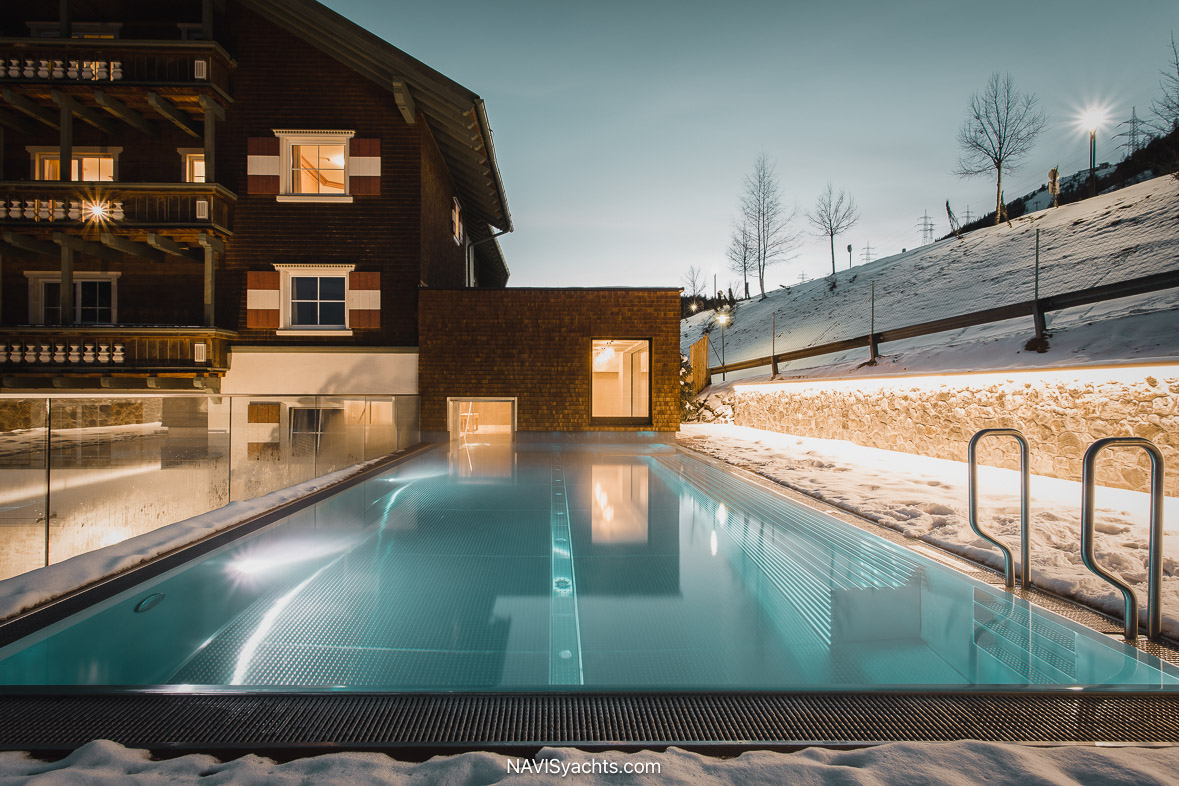
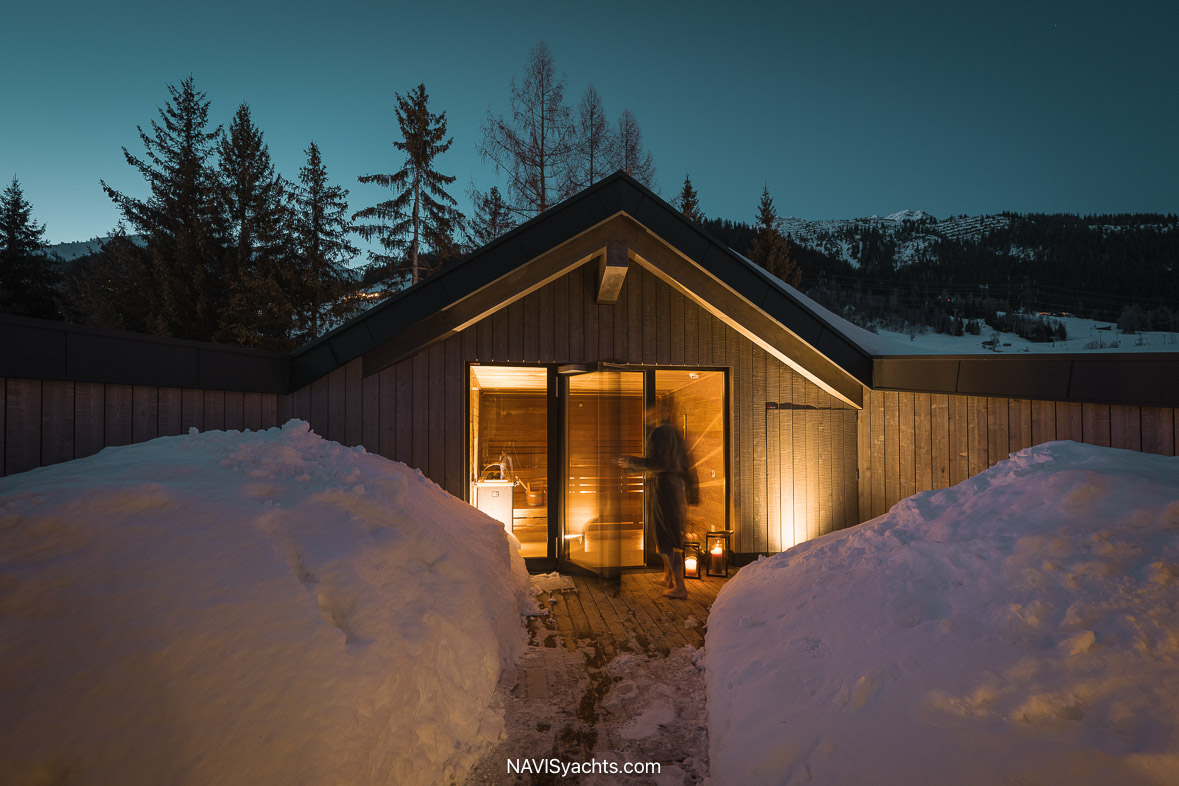
The wellness facilities proved a major strength. A heated, outdoor rooftop pool looks out to the Arlberg peaks, and the sauna features several experiences at different temperatures, from gentle to fierce. There was, as well, an indoor pool. Perhaps best of all was the private, snow-covered outdoor relaxation area. The progression from heat to snow to mountain air is an old Nordic therapy and an excellent way to soothe tired legs and rejuvenate the spirit. Treatments such as massages and facials are also available. After a full day on skis, the sequence became a ritual: a slow swim, a long sauna, a few minutes in the cold, and then the particular heaviness of limbs that have done their work. Dinner tasted all the better for it, and so did sleep. Spa customs across Austria might vary and access rules can differ between pools and saunas, so guests should confirm policies with hotel staff in advance.
Our NAVIS Curated evaluation bore out the impression. The hotel earned 4.40 out of 5 overall, with perfect marks for its pool area and for sustainability. The pool earned full scores for cleanliness, atmosphere and service: spotless, inviting by day and by night, with ample loungers, attentive staff, a comfortable water temperature, complimentary towels and fruit-infused water, with none of the harsh chlorine smell that often intrudes. On sustainability the hotel scored top marks for waste management, reduced single-use plastic, energy-efficient systems and water-saving fixtures, no small feat for a house of this age. The rooms scored 4.50, with high marks for cleanliness, bedding, layout, the generous dressing area, adjustable climate, sound insulation and fast Wi-Fi. The lobby shone for its professional, attentive reception, comfortable seating, charging points and welcome drinks, and scored lower on design, a reminder that its appeal lies in service warmth rather than ornament. To be fair, the category that scored lowest was overall impression and value, at 3.67, and largely because of arrival: check-in made only a moderate first impression against the high quality of everything that followed afterwards and we would happily return.
Beyond Skiing
St. Anton’s après-ski scene borders on legend and begins around 15:30, and the best way to understand it is the last run of the day. As the lifts close, nearly everyone funnels onto one or two pistes into the village. Piste 29 is skied by thousands in the final hour and turns into a bump piste of enormous moguls that every skier must negotiate, whatever their level. Spectators simply stop to enjoy the carnage. Halfway down, the party begins: Taps, with its open-air DJ, on the left; just below, the sprawling Krazy Kanguruh complex with its indoor bar and disco; and, some fifty meters farther on the right, Mooserwirt, the loudest and busiest of all, where, we learned, the ski instructors gather. A few drinks and some dancing later, skiers tackle the last few hundred meters to town with a confidence they didn’t know they had. It was the only resort we visited organized this way. Down in the village itself, our impression was more polished and relaxed than the spectacle on the slope: stylish bars, good music, sophisticated hospitality. That is a limited personal observation, and St. Anton certainly has its share of lively venues.
Our most memorable evening was Schneetreiben – The Snow Must Go On, an illuminated ski and snowboard demo show on the piste above the town. Performers retrace the history of the sport, from early wooden skis hauled up the mountain through the techniques and equipment of successive decades, to modern jumps and acrobatics, with lights and music turning the slope into an open-air history lesson. Watching from the slope is free, although a lounge with food and drinks is available for a fee. In recent seasons it has run on Wednesday evenings in winter, weather permitting, so confirm dates before building a trip around it.
Tastes of Heritage and History
In the sectors of Ski Arlberg East we frequented, we were never at a loss for options in fine or casual dining, both in-village and on the slopes themselves. The fine dining scene is happily unpretentious, focusing on modern executions of rustic Tyrolean classics, with casual dining elevating typical ski-resort fare beyond basic burgers and fries, not to mention an occasional Mediterranean or Asian dish to spice things up. A few highlights of what, for non-skiers, might veer into a food tour, follows. The first two recognized in MICHELIN’s guide to Austria, with the last, Ullrs Gourmetstube, which we covered in detail within NAVIS issue #90, bearing one coveted star.
Our first day with our guide, Nina, ended its morning at Verwallstube, perched at 2,085 meters beside the Galzigbahn’s summit station. We dined beneath a bright, cloudless day, with the whole Arlberg spread out before us. The cooking more than kept pace with the view. Plating was inventive, the tableware unusually original, and the wine pairings were spot-on; Nina assured us that anything on the menu would be excellent, and our table did not disagree. A complimentary dessert arrived to close. In our NAVIS Curated evaluation it scored 4.74 out of 5, with virtually perfect marks for everything on the plate.
We first reached St. Christoph on skis, the village appearing at the foot of a long, easy descent: one road, a handful of buildings, and centuries of travelers’ footsteps beneath them. Our lunch at Hospiz Alm, set beside piste 64, felt like the right reward for the crossing. The restaurant’s reputation rests on its red-wine cellar, which holds thousands of bottles, among them one of the world’s most celebrated collections of large-format Bordeaux, some of them up to 27 liters. The kitchen is no supporting act: Alpine cooking with a fine-dining sensibility, from head chef David Kurz, and the sophistication of the menu matched the cellar.
Our time at the Museum’s Restaurant-Café also held a well-deserved experience on the ground floor which offers a restaurant that treats the same history as its setting. Villa Trier’s dining rooms have each kept their own character, and the atmosphere, with its period decoration, carries the story of the house well beyond the exhibits upstairs. We found the cooking every bit as good as the surroundings: classics like wiener schnitzel, venison ragout, duck breast, saddle of lamb, ravioli, risotto and trout, plus a cheese course and desserts met with thoughtful wine pairings and service that was professional and unhurried, ticking all the right boxes for an easy review. A meal here is a worthwhile pause between exhibits and slopes.
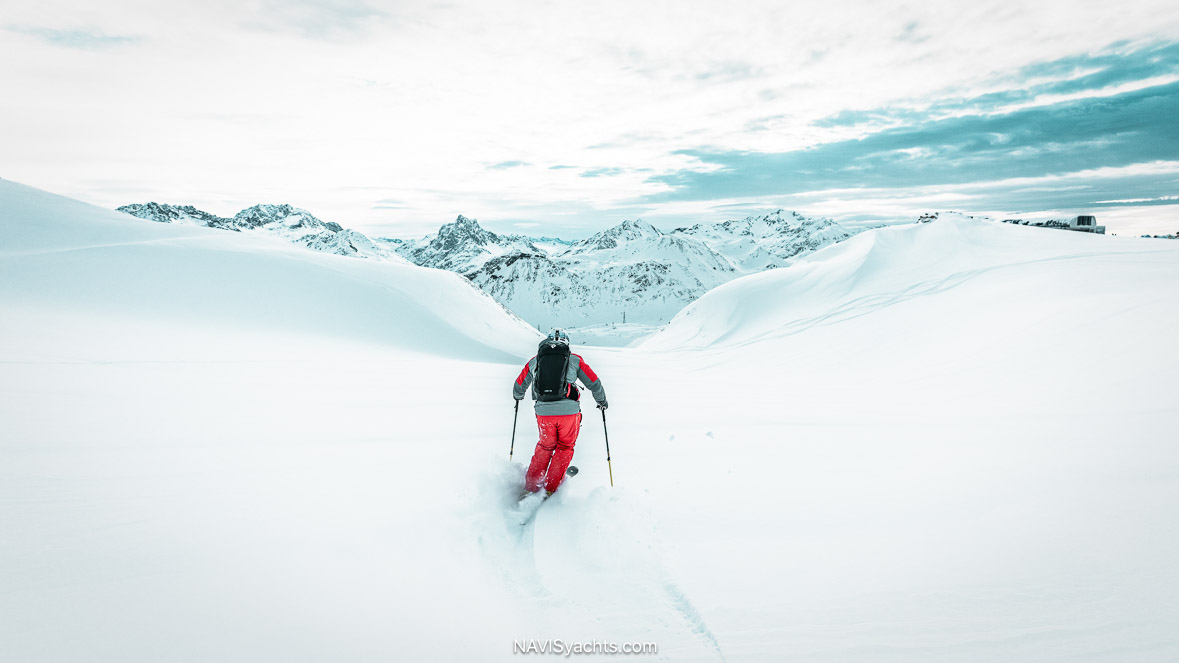
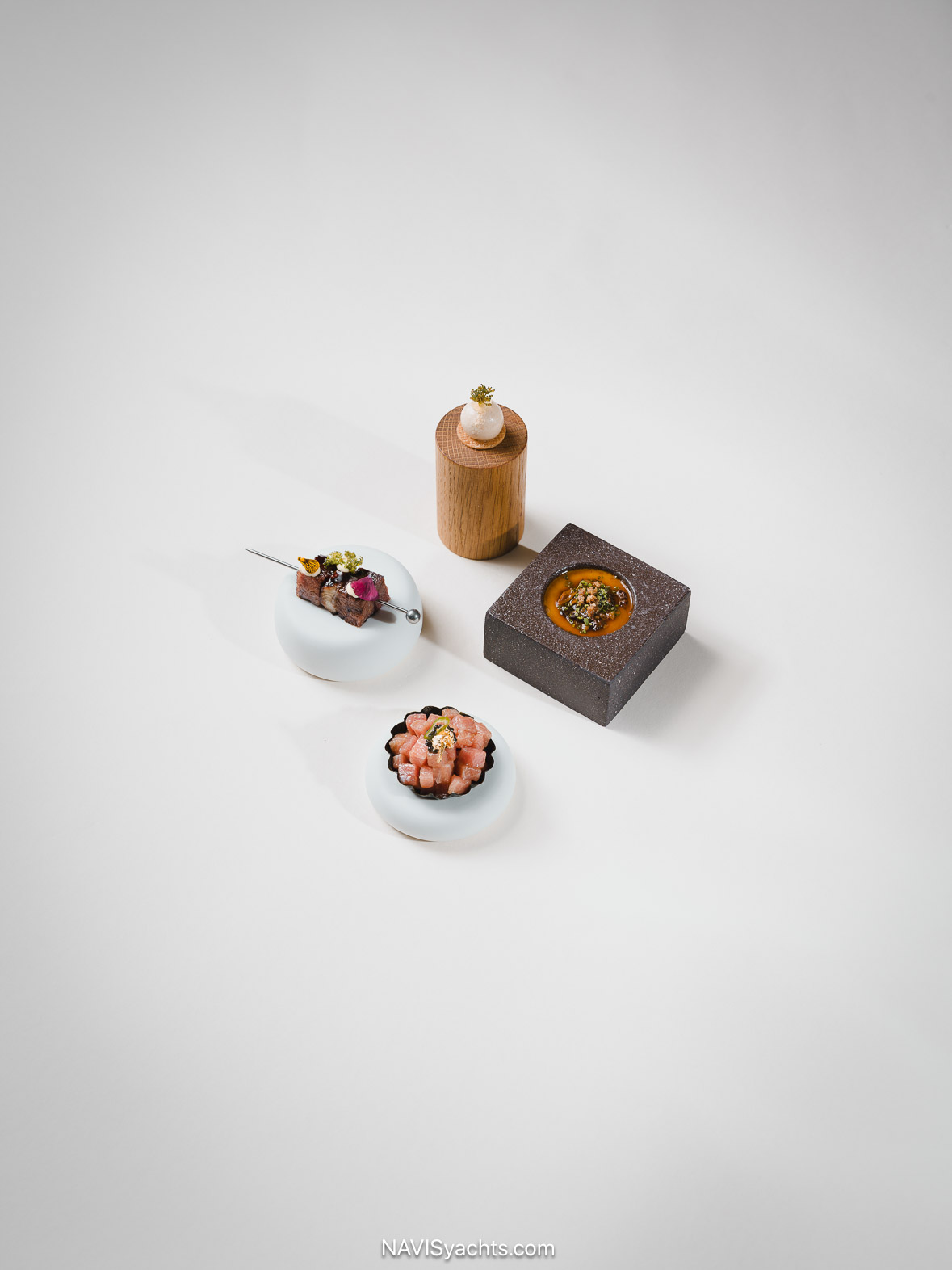
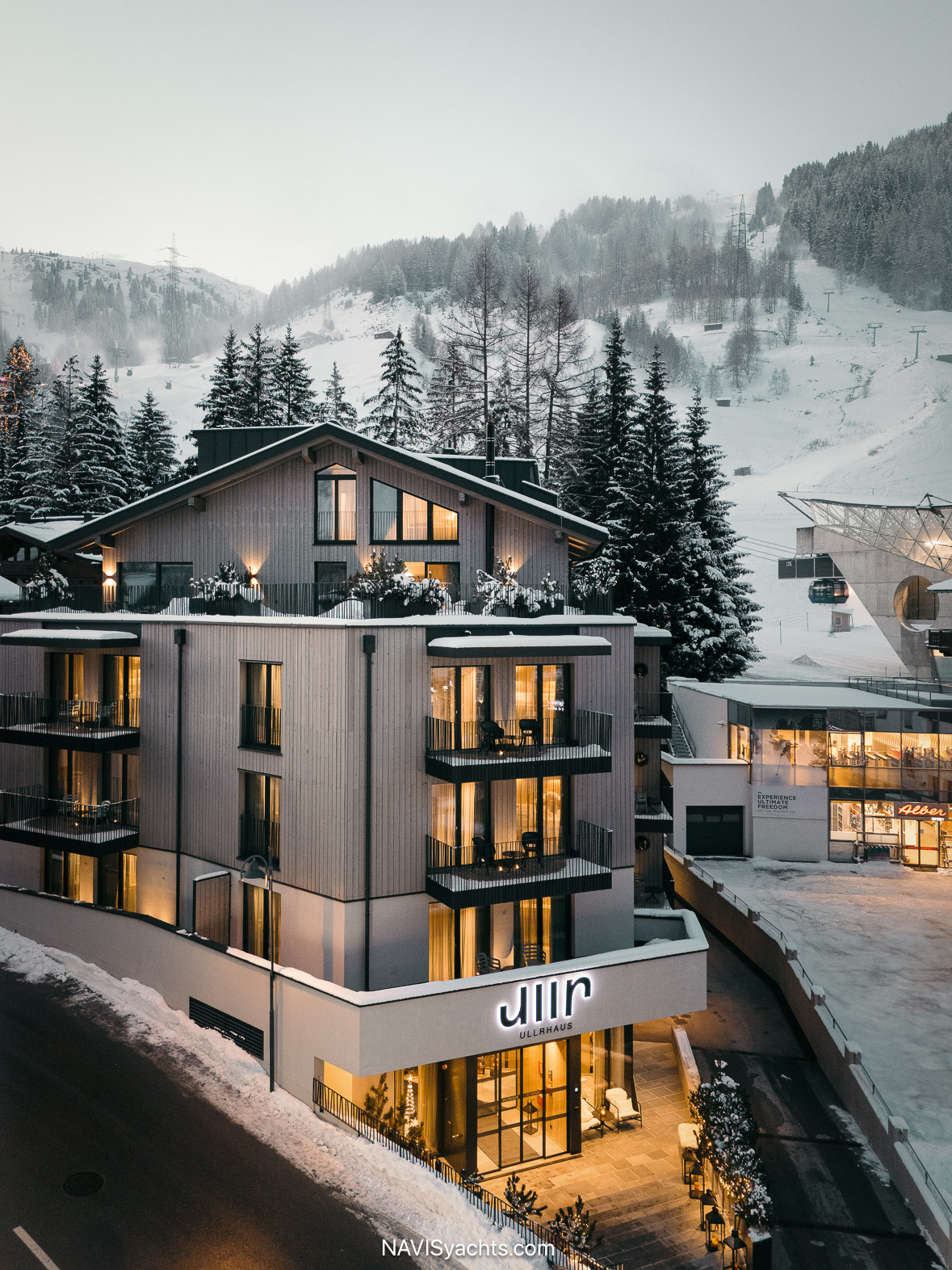
Last, and by no means, least, dinner at Ullrs Gourmetstube, the intimate, candlelit room inside the Ullrhaus design hotel, was among the finest meals of our recent travels. The gastronomy here qualifies as one of the most genuinely original tasting menus in the Austrian Tyrol right now. The nine-course “Elements” tasting menu we savored weaves Nordic air, Japanese spirit and Alpine soul into a single, coherent voice.
The Mountain Beneath the Polish
On our final morning we joined the procession again, boots clicking down the main street towards the Galzigbahn, having gradually understood it differently. At the start of the trip it had looked like a charming quirk. By the end it looked like the village’s real subject.
St. Anton’s sophistication is genuine and contemporary: the boutiques, the destination restaurants, the spa where a snow-covered terrace waits beside the sauna. But it is the surface of something older. The museum, the school whose students both past and present make history, win medals, and return to continue the legacy, and the St. Christoph Hospiz all point to the same conclusion. What defines this place, specifically St. Anton, but the Arlberg overall, is not a love of skiing so much as a profound Austrian devotion to the mountains themselves. Skiing gave people a way to move through and explore a winter landscape that once confined them, and that gift still seems to shape how the village sees itself. It is rather difficult to leave St. Anton without wanting to return. There is still so much of the Arlberg we did not ski, so many ridges, villages, and lunches left to find. And somewhere in that, we suspect, is the heart of it: a range big enough that you could spend a lifetime discovering it and still feel the pull of that morning procession.
The NAVIS team extends its sincere gratitude to the organizations and hosts whose generosity, hospitality, and local expertise made our journey through St. Anton am Arlberg possible.
Their collaboration allowed us to experience the region’s remarkable skiing heritage, Tyrolean hospitality, and distinctive culinary culture.
Our special thanks to:
- Austria Tourism | www.austria.info
- Tourismusverband St. Anton am Arlberg | www.stantonamarlberg.com
- Hotel Schwarzer Adler | www.schwarzeradler.com
- Ullrhaus St. Anton | www.ullrhaus.at
- Skischule Arlberg | www.skischule-arlberg.com
- Verwallstube | www.verwallstube.at
For making our winter journey through the Alps possible, we extend our special appreciation to:
- Rolls-Royce Motor Cars | www.rolls-roycemotorcars.com
Written by Janine Devine
Photographed by Bätz Patrick, christophschoech.com & Navis Media