
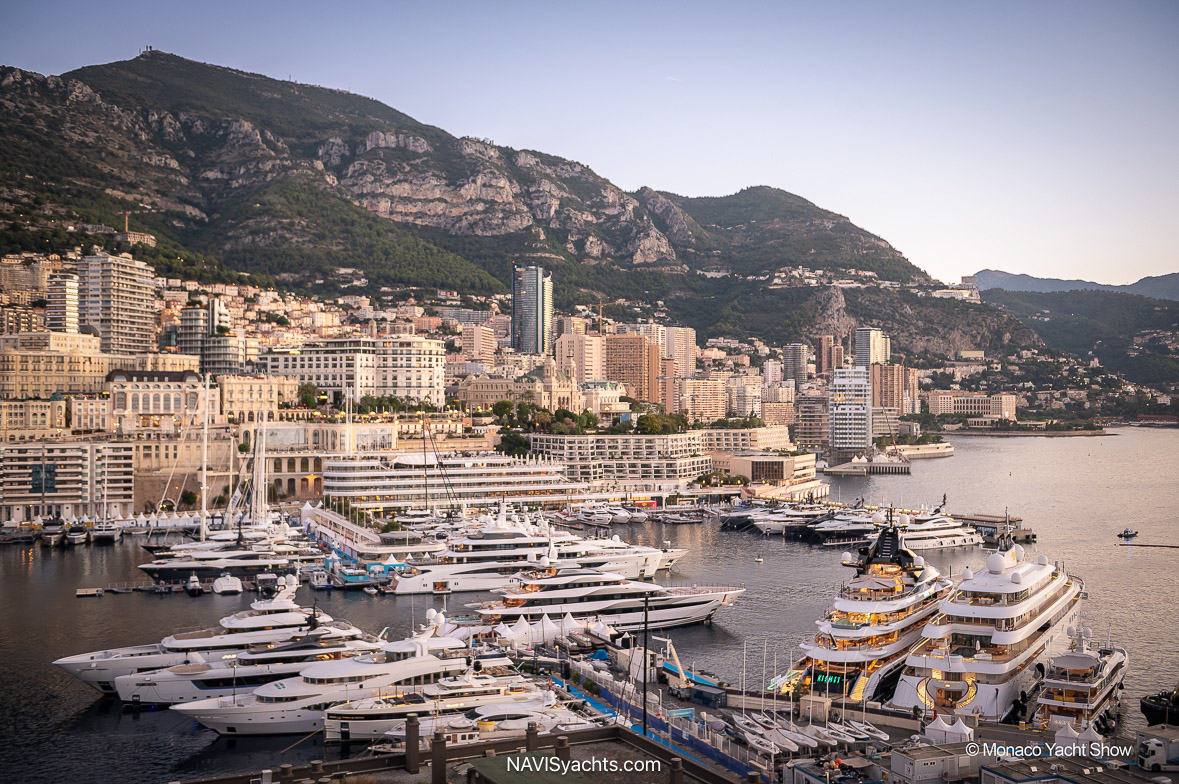
There are few places where the superyacht world comes together quite like Monaco. For four days each September, Port Hercules becomes much more than a showcase for the latest yachts. Owners, designers, shipyards, brokers and captains converge within a few blocks, and conversations that begin over an early breakfast at the Yacht Club continue aboard yachts, around the stands and, inevitably, well into the evening.
The 35th Monaco Yacht Show was particularly intense. More than 560 exhibitors gathered around Port Hercules, alongside 118 superyachts with a combined value of €4.5 billion. Forty-three were 2026 deliveries, giving this year’s show an unusually strong concentration of yachts being seen publicly for the first time.
Yet numbers only tell part of the story. Our days in Monaco often began before the show officially opened at 10 a.m., moving between press breakfasts, private presentations and yacht visits before the docks filled. By evening, the pace simply shifted to launches, receptions and dinners around the principality.
Amid all that activity, several clear ideas began to emerge about where yachting is heading, and some of the most interesting had little to do with size.
Monaco Before the Doors Open
Monaco rarely waits for the official opening. Our week began on September 22 at the Yacht Club de Monaco, where Benetti gathered the media for an early look at what it was bringing to the show. The setting was also new: a permanent Benetti Lounge designed by AMDL CIRCLE and Michele De Lucchi, with an exhibition tracing two decades of the shipyard’s work on more efficient propulsion and onboard energy systems.
The following morning, two world premieres moved that conversation onto the water. The 67-meter DAGGER paired RWD’s exterior lines and signature Oasis Deck with Sinot interiors and a hybrid system combining conventional propulsion, electric technology and salt-battery storage. Alongside her, the 50-meter PERSEVERANCE offered a very different interpretation of Benetti’s B.Now platform, developed in close collaboration with an owner involved throughout the design process.
Benetti also looked further ahead with CLEAR WAVES, a 70-meter concept developed with LUCA DINI Design & Architecture and The Longevity Suite. Its centerpiece, a two-level, 400-square-meter glass dome, places wellness at the heart of the yacht rather than treating it as another amenity.
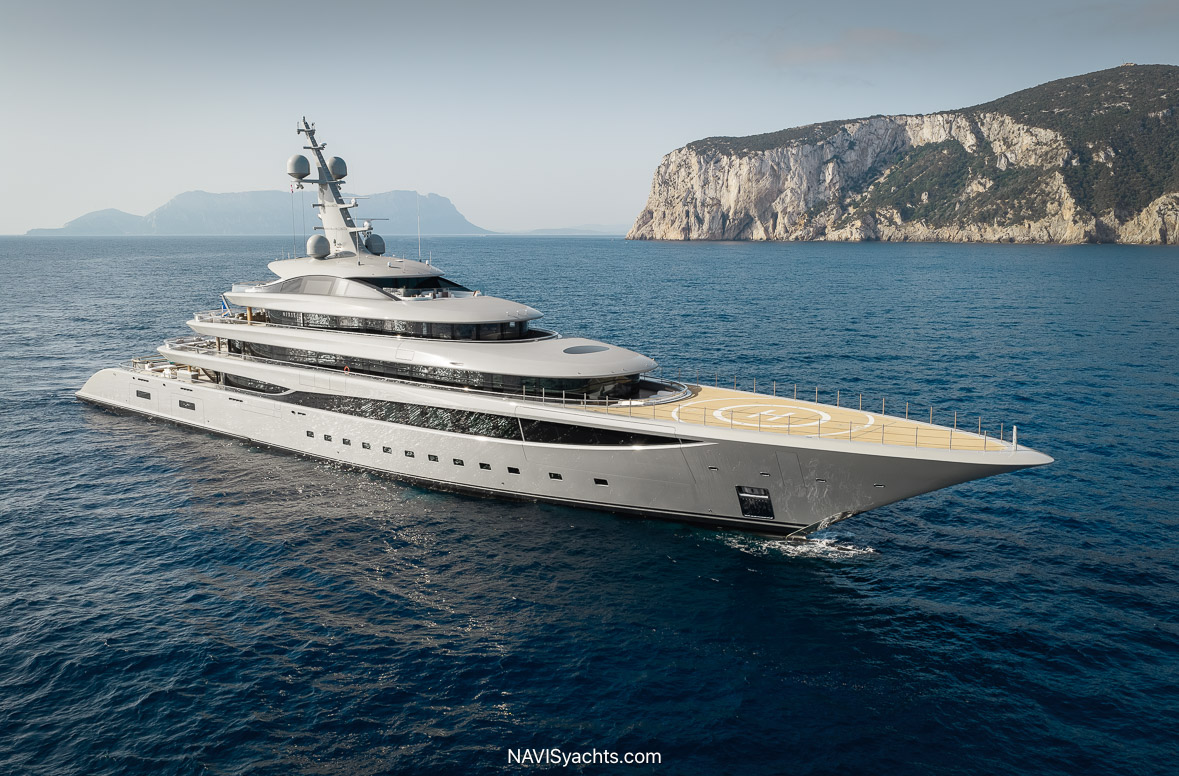
Once the show was underway, mornings quickly developed their own Monaco rhythm. One of ours began aboard NIXIE, where Lürssen and Edmiston welcomed us for breakfast before the day’s appointments took over. At 102.4 meters, she was difficult to miss in Port Hercules, but being aboard before the docks became crowded offered a rather different introduction to one of the largest new yachts at the show.
NIXIE made her global debut during an exceptional year for Lürssen. The German shipyard delivered six custom yachts in 2026, from 78 meters to well beyond 100 meters: BOARDWALK, DEEP BLUE, NAUSICAÄ, NIXIE, O3 and ODISEA.
The numbers tell only part of that story. Across those projects were immense structural glass installations, unconventional layouts, new dry-dock solutions and exterior LED installations. At this end of yacht building, almost every project brings an engineering problem that has not quite existed before.
That expertise increasingly continues long after launch. Lürssen completed six major refits during the year, representing more than 650 meters of yachts, and announced Tarragona as the Mediterranean base for its expanding Fast Operations and Repair Unit.
Still, in Monaco it was NIXIE that mattered. Breakfast aboard brought 102 meters back to human scale for a while. Away from the crowds on the quay, she stopped being another enormous profile dominating Port Hercules and became what yachts ultimately are meant to be: a place in which people live.
The Yachts Everyone Wanted to See
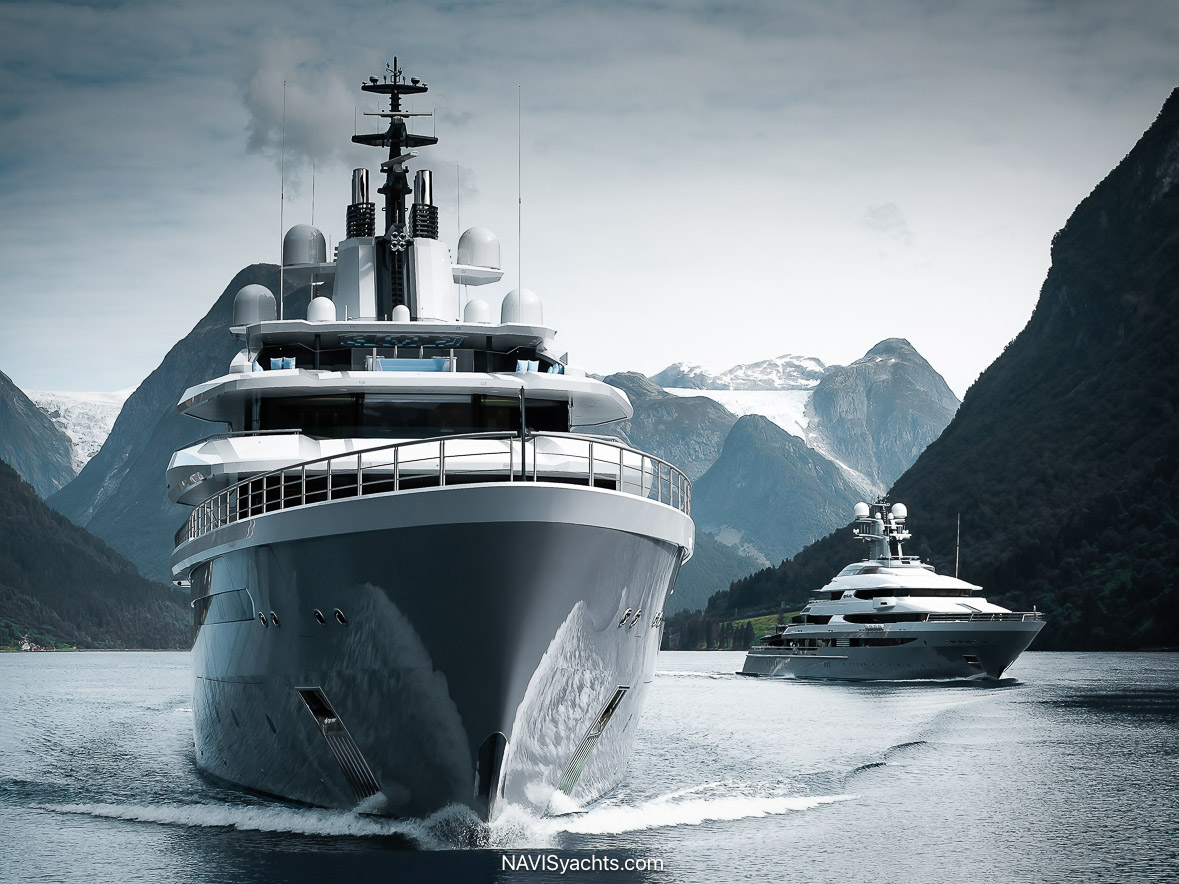
Scale took on a different meaning aboard Oceanco’s two Monaco protagonists. The 111-meter LEVIATHAN and 93-meter DRAAK, both owned by Gabe Newell, appeared together as companion yachts within his Inkfish fleet. One was a recent new build; the other had been comprehensively rebuilt by Oceanco for an entirely new role.
Delivered in late 2025, LEVIATHAN was conceived around community. Shared spaces encourage interaction between guests and crew, while materials were selected partly to reduce maintenance and give the crew more time away from routine upkeep. More unusually, a dedicated dive center, laboratory and hospital support Inkfish’s work with scientists and research programs.
DRAAK extends that mission. Redelivered in June following her rebuild by Oceanco Life Cycle Support, she carries specialist diving facilities, a substantial tender fleet and heavy-duty lifting capability for expeditions.
Seeing the two together was refreshing. In a harbor where size inevitably attracts attention, LEVIATHAN and DRAAK shifted the conversation toward purpose. The luxury is undeniable, but so is the idea that the extraordinary resources represented by a modern superyacht can become tools for exploration, science and access to places few people can reach.
At the House of Feadship, attention turned to a yacht that exists, for now, only as an idea. HIVE, the 115-meter concept presented by Senior Designer Jan Schaffers, is the largest concept Feadship has developed, although its dimensions were almost secondary to the thinking behind it.
Studio De Voogt began by considering how a family might actually live together aboard. At HIVE’s center is a four-deck communal area capable of changing throughout the day, from salon to gathering space or performance venue. A two-level beach lounge, water-level dining area and glass-enclosed library opening onto a private garden continue the idea.
A 20-meter pool extends inside the yacht as a suspended glass-bottom infinity pool, with an underwater lounge below. Behind it is serious engineering: a 5 MWh battery bank, HVO-capable variable-speed generators, fuel cells and provision for methanol, integrated within a DC electrical architecture. A virtual command center even allows the conventional bridge to disappear from some of the yacht’s most valuable forward real estate.
HIVE may never be built exactly as presented in Monaco. That hardly diminishes its value. The best concepts give designers permission to experiment, and some of those experiments eventually find their way aboard very real yachts.
Sailing, Without Compromise
Among all the numbers heard during the week, 85 meters carried particular significance. Royal Huisman revealed new details of Project 410, the 280-foot yacht that will become the world’s largest sloop-rigged sailing yacht when launched.
Designed by Frers Design with interiors by Wetzels Brown, Project 410 remains unmistakably a sailing yacht despite her extraordinary dimensions. A relatively small deckhouse, clean deck lines and a single towering Rondal carbon mast preserve a visual simplicity that becomes increasingly difficult to achieve at this scale.
The project was developed from the inside out. Principal living spaces sit on a single level, with a double-height entrance into the salon, an aft veranda opening toward the beach club and extensive glazing keeping the mast, sails and outside world present throughout the interior. Under sail, Royal Huisman’s Tidal Shift system will regenerate energy for storage in a large battery bank, allowing extended periods of quieter operation.
Nearby, Nautor Swan was crossing a milestone of its own. The 43.5-meter Swan Alloy 44 will be the Finnish builder’s largest yacht and its first aluminum yacht in 60 years. Designed by Malcolm McKeon with interiors by Studio Liaigre, it also opens a new Swan Alloy family above 40 meters.
Different in scale and character, both projects made the same point rather elegantly: sailing still has plenty of room to evolve.
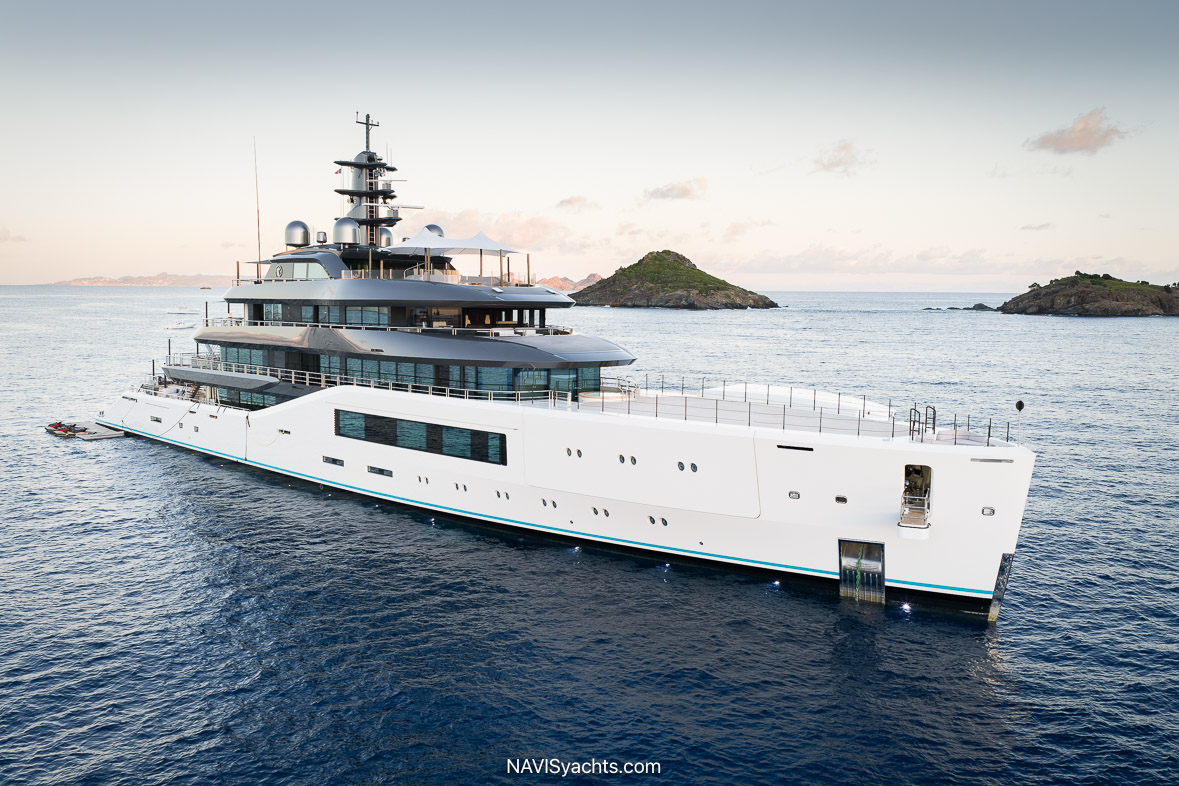
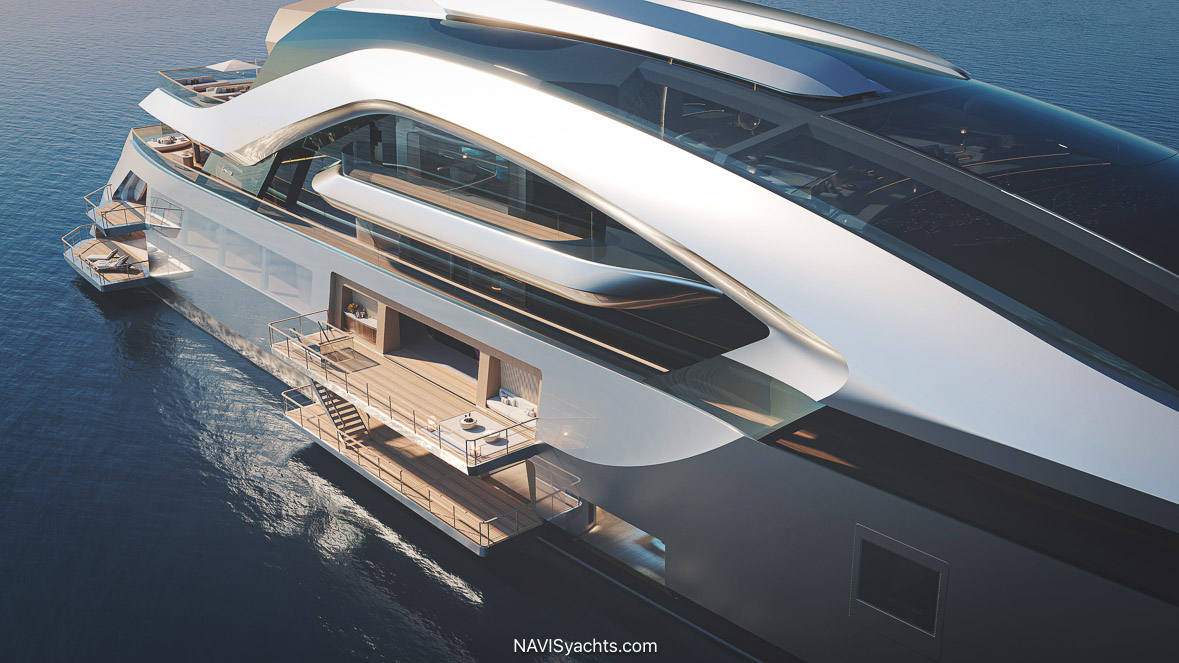
Back among the motor yachts, Damen Yachting brought an important newcomer to Monaco. PANGEA, the 80-meter flagship of the Amels Limited Editions range, made her world debut as the first Amels 80 ever presented at a yacht show.
At around 2,200 GT, PANGEA has considerable volume, but Espen Øino’s long horizontal lines and extensive glazing temper her visual mass. At the stern, an expansive beach club and glass-bottom pool place much of life aboard close to the water.
Behind the exterior is a completely custom interior by Sinot Yacht Architecture & Design, showing how far the Limited Editions philosophy has moved from any conventional notion of a standardized yacht. Hybrid technology allows quieter and more efficient operation when full propulsion capability is unnecessary.
Amels also brought the 60-meter QU2, delivered earlier this year, while the 74-meter SYNTHESIS returned following her 2026 refit. NAVIS readers will already know the latter well; we featured her in our previous edition. PANGEA was the newcomer this time, and a significant one.
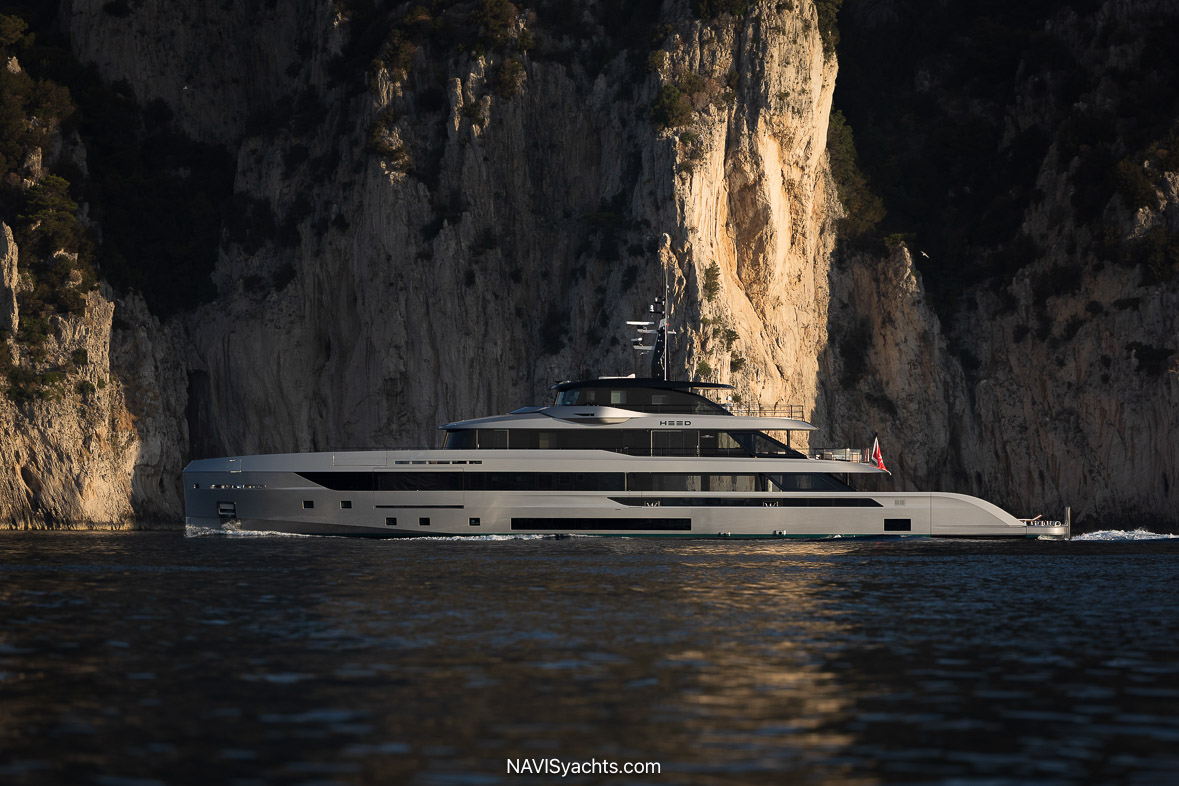
The Italian yards provided some of the week’s strongest contrasts. Rossinavi’s 53-meter HEED wrapped Alberto Mancini’s fast-displacement exterior around an Achille Salvagni interior of curved surfaces, bleached woods and sculptural forms. Her owner’s suite opens onto a private panoramic deck and pool, while batteries allow the generators to remain off at anchor, bringing welcome silence along with zero local emissions in hotel mode.
Baglietto arrived with two personalities. The 60-meter KINDA II, first of the new T60 series, gives almost the entire upper deck to the owner, complete with private pool, while a generous beach lounge pulls the social life toward the water. The aluminum FAST50 looked in another direction altogether. Four MTU engines and a 30-knot top speed reconnect Baglietto with its performance heritage, without sacrificing the folding bulwarks, glazing and open stern now expected aboard contemporary yachts.
At Tankoa, the 45-meter SINGOLARE combined an infinity-edge beach club with a gym, sauna and open-air cinema. The 52-meter SPIRIT, designed by Philippe Briand’s Vitruvius studio, brought its full-beam gym directly onto the aft terrace, with a plunge pool and the sea beyond. Hybrid propulsion makes quieter operation part of that experience.
By this point, one idea had become difficult to miss. Owners are asking less for a prescribed collection of superyacht amenities and more for yachts shaped around the way they actually intend to use them.
After the Appointments End
Of course, Monaco is never only about the yachts. Much of the real business happens between them: aboard tenders, inside brokerage lounges, over lunch, and during the succession of late-afternoon cocktails and evening receptions that gradually takes over once the formal appointments begin to thin out.
Burgess had an especially commanding presence, with nine yachts inside the show and another 13 at anchor, representing more than €1 billion in asking value. Its sales fleet included three of the show’s most valuable yachts on the market: the 71.5-meter VANISH, asking €148 million; 76.5-meter BOARDWALK V at €135 million; and SYNTHESIS at €132 million.
But Monaco’s brokerage spaces have become much more than sales stands. The Burgess base worked throughout the week as a meeting place for clients, partners and the many specialists now surrounding yacht ownership.
At The Lounge by IYC, the atmosphere was similarly social. Alongside yachts including THIS IS IT and LOON, conversations on wellbeing aboard and the state of the market gave people another reason to linger near T-Central.
Elsewhere, Cecil Wright welcomed visitors aboard the 62-meter ALCHEMIST, while tenders ran offshore to the 50-meter FELICITÀ. Northrop & Johnson mixed yacht viewings with cocktails for the Monaco launch of its latest Navigator magazine.
It is part of Monaco’s peculiar chemistry. The yachts bring everyone to Port Hercules, but much of what matters happens in the spaces between one appointment and the next.
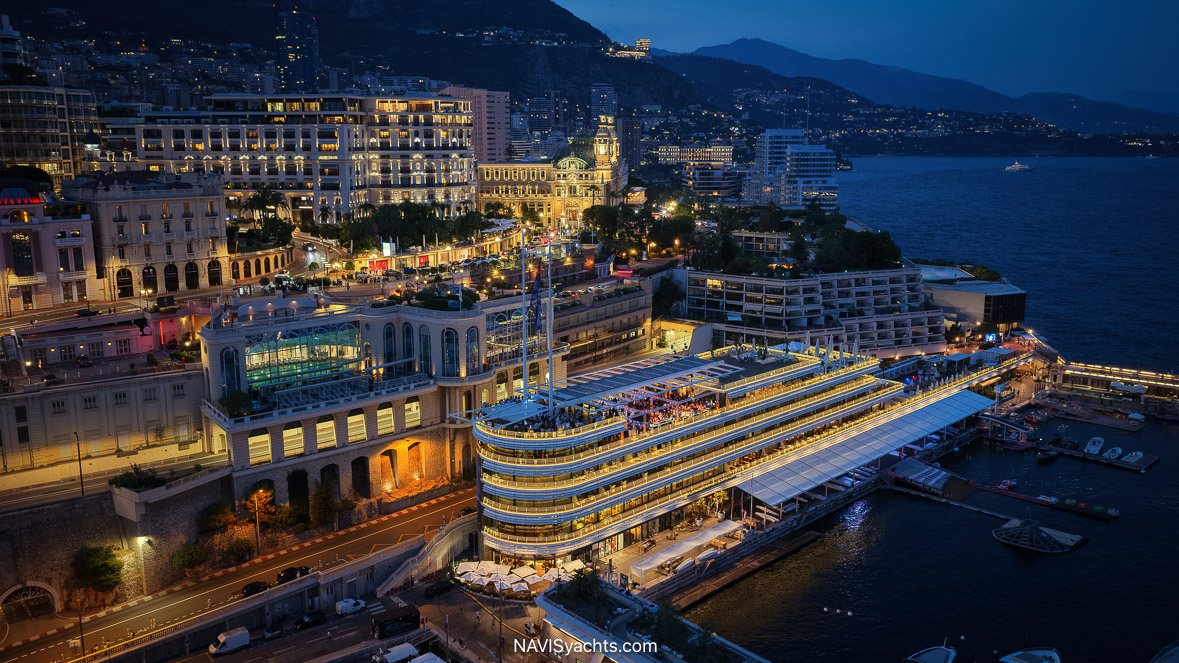
Away from the docks, the Yacht Club de Monaco offered a more serious counterpoint. At its 31st Captains’ Forum, 128 captains and industry specialists tackled a deceptively simple question: what will power the next generation of large yachts?
Batteries, HVO, methanol, hydrogen, wind and even nuclear energy entered the discussion. There was no miraculous answer. Range, available space, infrastructure and, perhaps most importantly, the way a yacht is actually used will determine which technologies make sense.
The week was looking outward geographically as well. The Red Sea Yacht Show, announced in Monaco and scheduled for October 14–17, 2027 at Jeddah Yacht Club & Marina, aims to bring more than 50 superyachts to a region rapidly developing its yachting infrastructure and luxury tourism offering.
From the opposite direction came the first unified Asia-Pacific presence at MYS, with Superyacht Australia, Echo Yachts and Bali Gapura Marina promoting a cruising region increasingly capable of offering an alternative to the familiar Mediterranean-Caribbean cycle.
And perhaps that is the best explanation for Monaco’s enduring relevance. We left with plenty of memorable yachts behind us, but also with the sense of an industry becoming more individual, more purposeful and considerably more adventurous.
For us, however, Monaco is also a beginning. Many of the yachts we stepped aboard during the show will return to the pages of NAVIS over the coming editions, when we will have the opportunity to explore them properly: to move beyond the first impressions of a busy week in Port Hercules and take our readers inside their design, their stories and the experience of life aboard.
Monaco remains yachting’s great meeting place. Increasingly, though, the most interesting conversations taking place there are about what comes next. We look forward to taking you aboard.
Photos: Ciel Azur MC, Baglietto Media, Benetti Media, Cecil Wright, Ruben Griffioen, Charl Van Rooy, Oceanco Media, Frers Design, Rossinavi Media | Words: Pablo Ferrero