
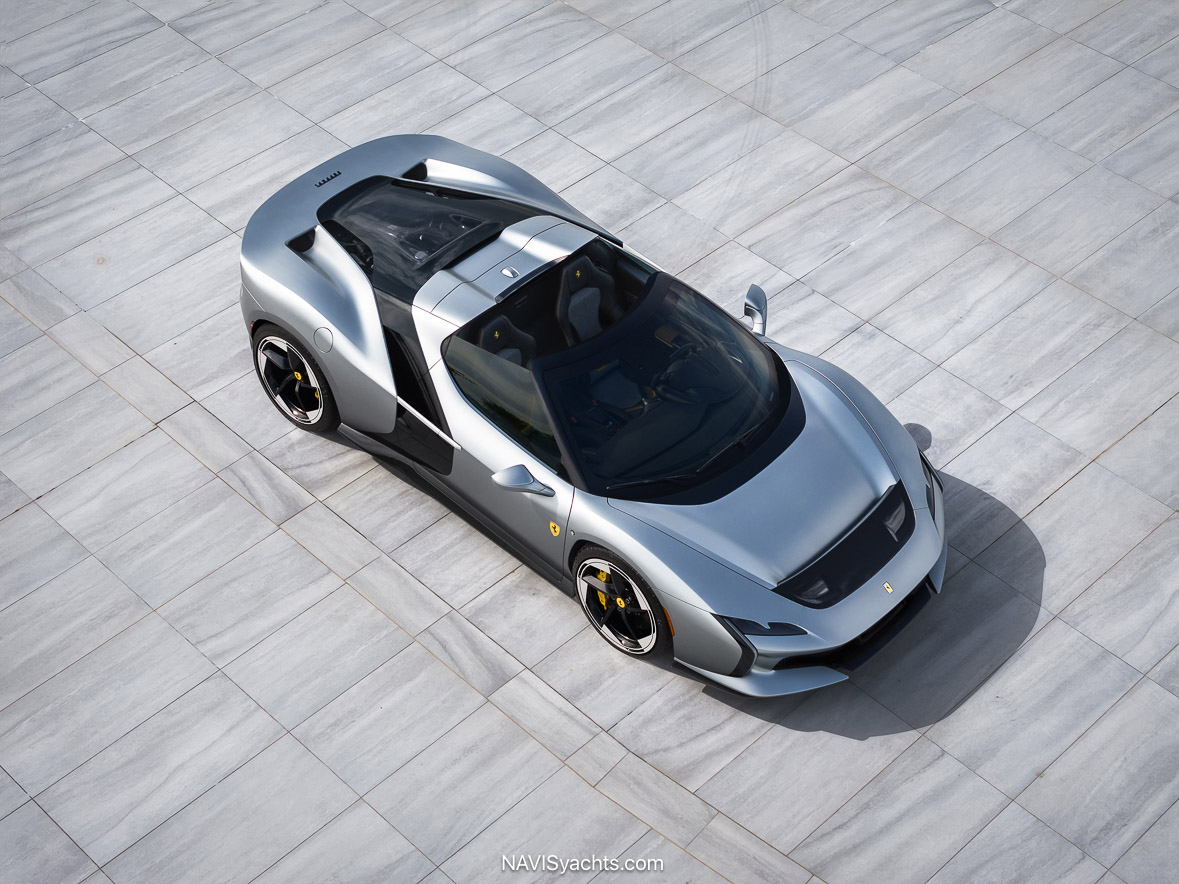
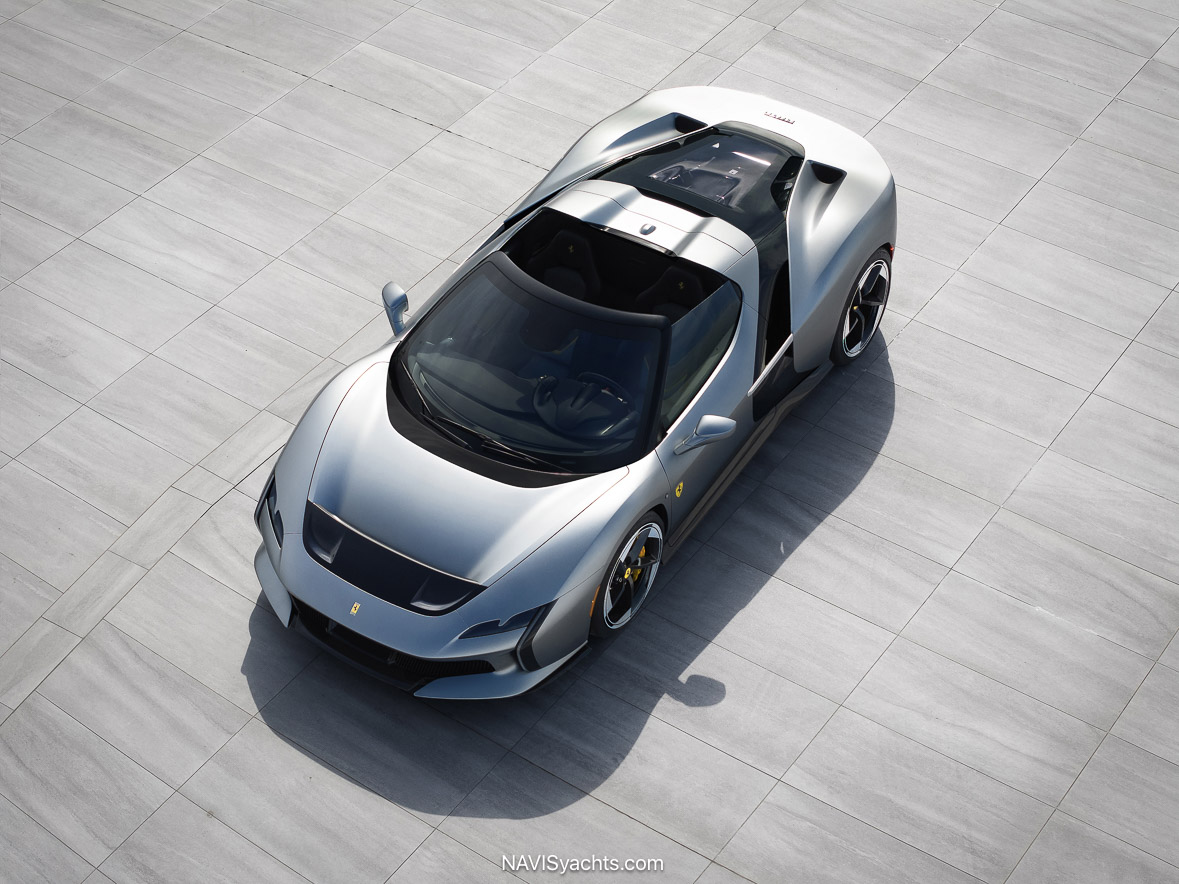
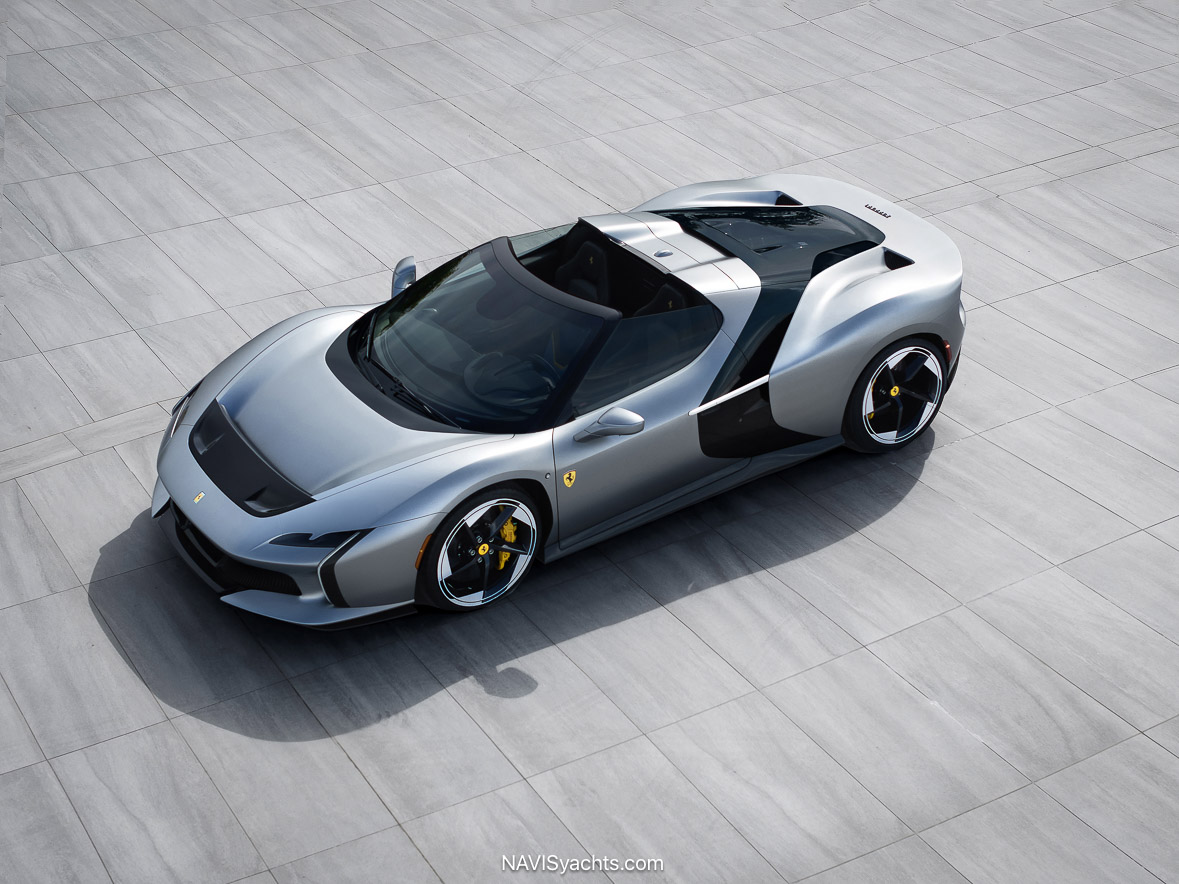
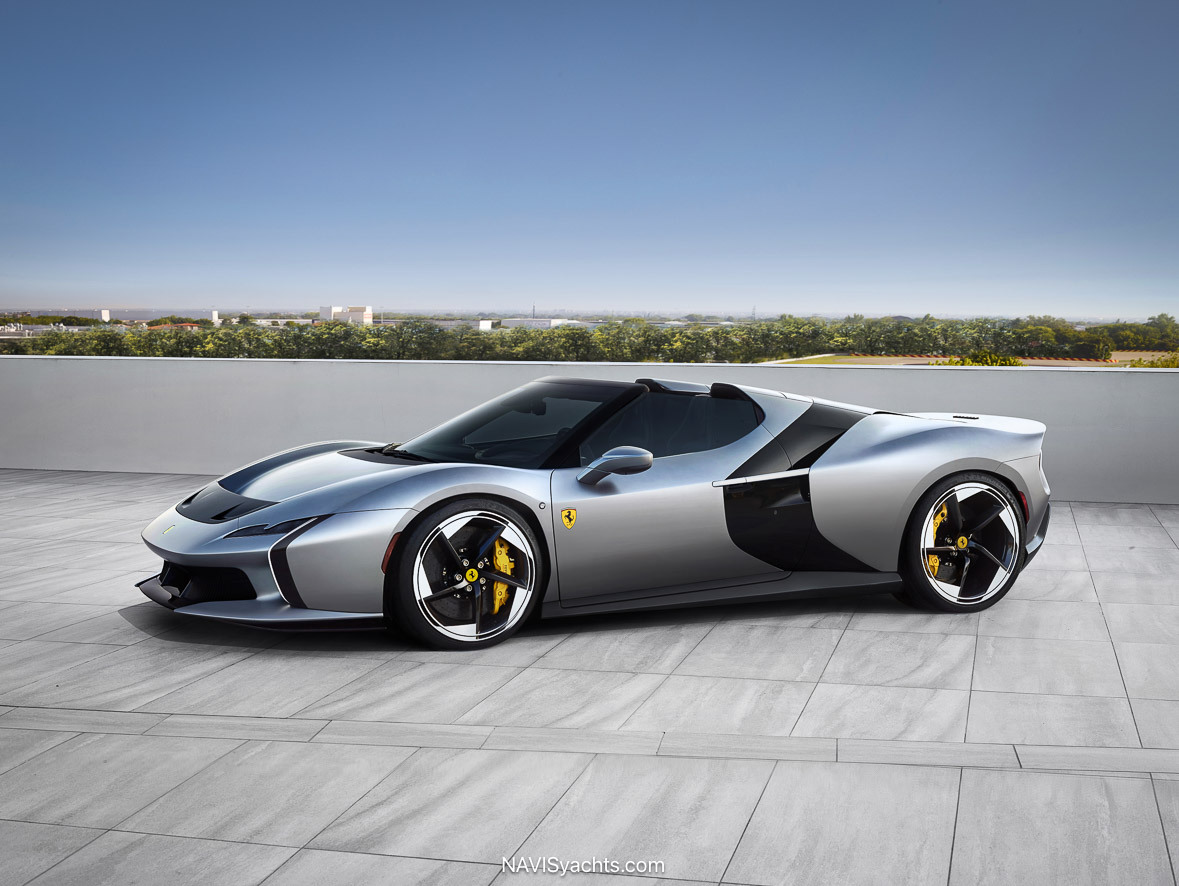
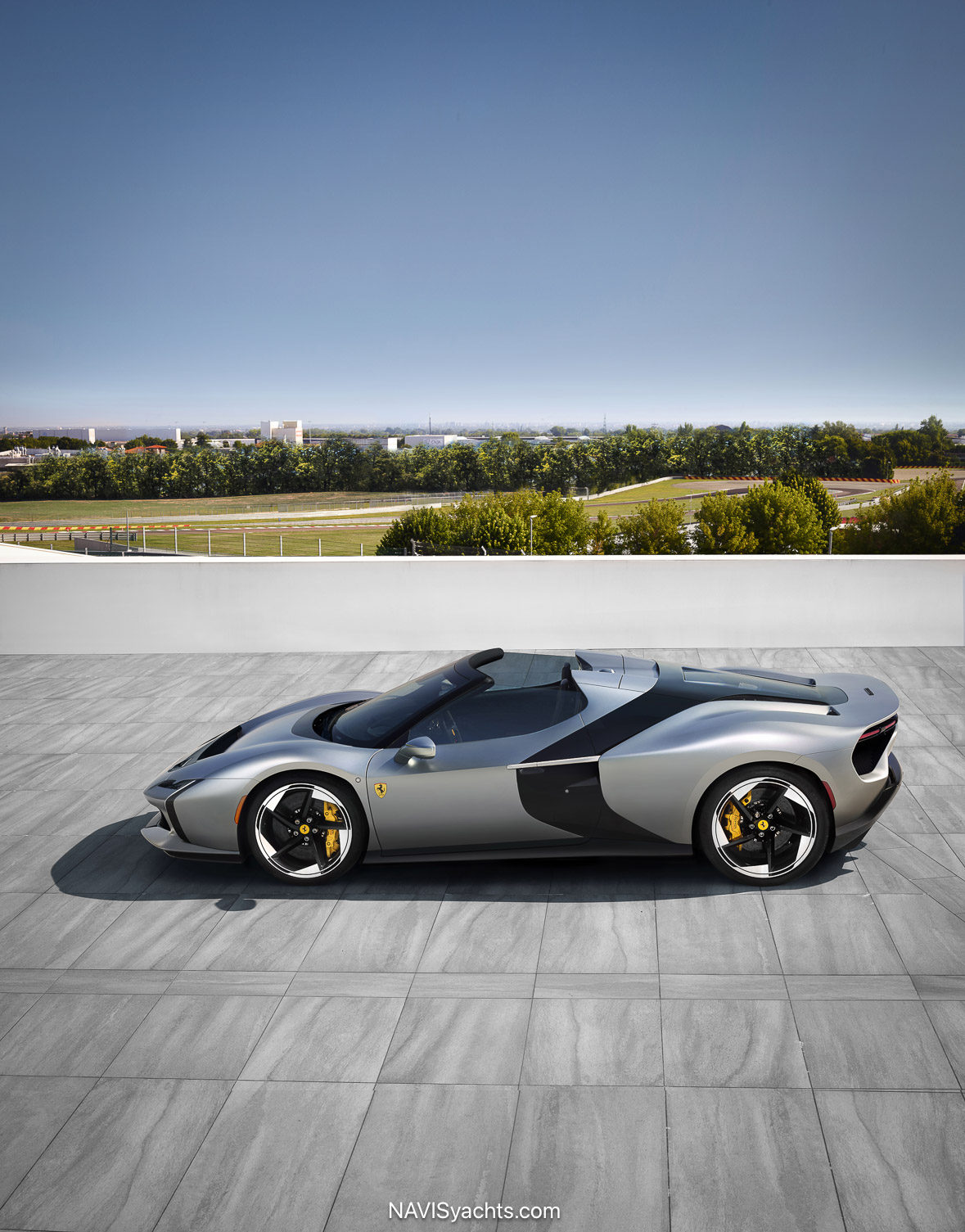
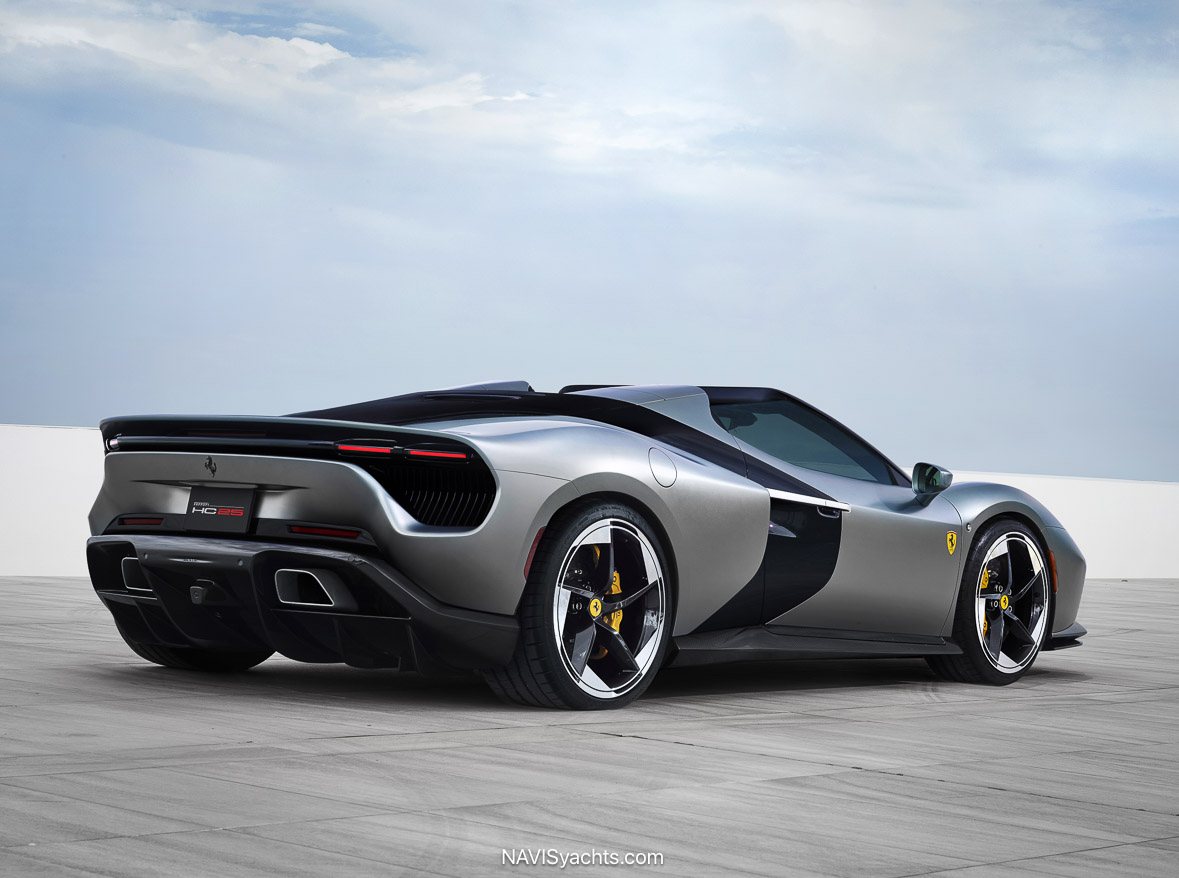
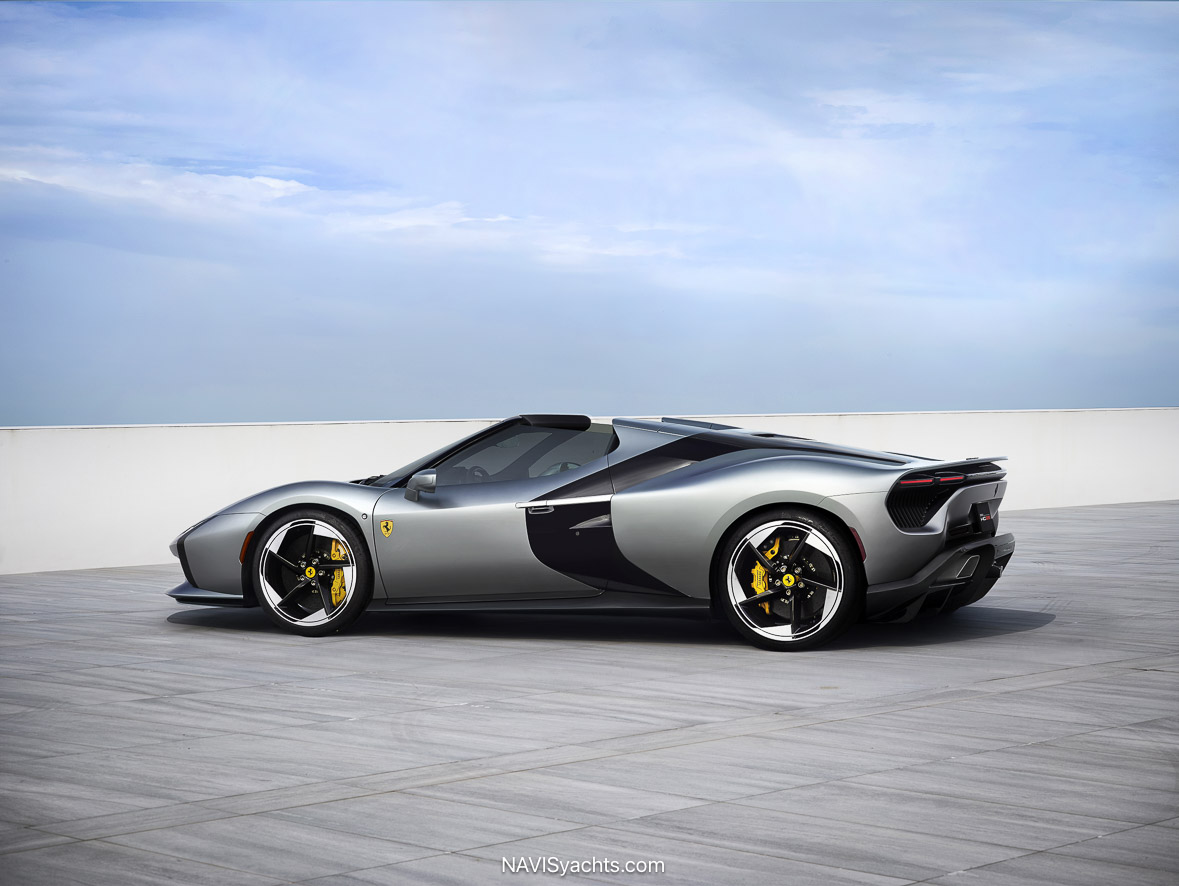
A glossy black band cuts through the Ferrari HC25’s matt grey bodywork, gathering its cooling openings into one defining gesture. It gives the roadster a distinctive identity while revealing something fundamental about its construction: a powerful engine requires the surrounding body to manage air and heat. Here, that requirement becomes the design’s organizing principle.
Unveiled at Ferrari Racing Days at the Circuit of the Americas in Austin, the HC25 is a single-client commission from Ferrari’s Special Projects program. Designed under Flavio Manzoni, it inherits the F8 Spider’s layout, chassis and combustion powertrain. Its individuality emerges through the relationship between that established mechanical architecture and an entirely personal exterior.
Architecture Beneath the Surface
The HC25 places a 3,902 cc turbocharged V8 behind the cabin, within the wheelbase. This arrangement concentrates a substantial mechanical mass between the axles, an important consideration in how a sports car responds to changes of direction. It also establishes the fundamental proportions: a compact passenger compartment ahead of an engine bay that demands both space and substantial cooling.
The 90-degree V8 produces 720 cv at 7,000 rpm and 770 Nm at 3,250 rpm, with the quoted power measured using 98-octane petrol. Its specific output of 185 cv per liter illustrates how much performance Ferrari extracts from a relatively compact displacement. Turbocharging makes this possible by supplying pressurized intake air, allowing the engine to burn more fuel and generate greater output.
That process brings thermal demands. Cooling the engine and evacuating heat become central tasks for the surrounding bodywork, giving the HC25’s black ribbon a purpose beyond its graphic effect.
The engine uses dry-sump lubrication. In general, this system stores oil separately and scavenges it from the engine, helping maintain a dependable supply under strong acceleration, braking, and cornering loads. For a car with this performance potential, consistent lubrication is a basic engineering necessity.
A seven-speed dual-clutch gearbox manages the power delivery. By preparing the next ratio on a separate clutch, this transmission architecture reduces interruptions during gear changes. Ferrari quotes 0–100 km/h in 2.9 seconds, 0–200 km/h in 8.2 seconds, and a maximum speed of 340 km/h. These are manufacturer figures; they establish the scale of the HC25’s capabilities without describing its behavior on a particular road.
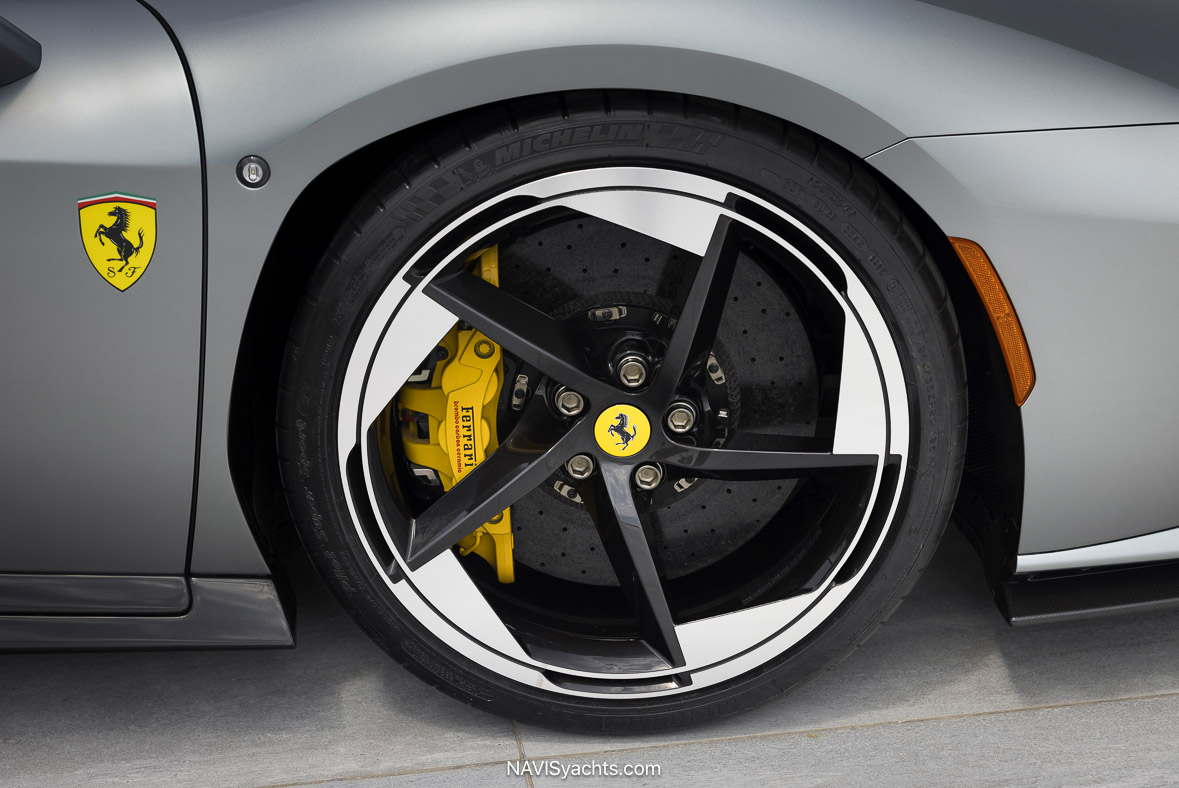
Its tire dimensions reflect the different tasks at each axle. The front uses 245/35 ZR20 tires, while the rear carries substantially wider 305/35 ZR20 rubber. That additional rear width is consistent with the demands of transmitting engine torque to the road. An electronic differential, traction control, ABS with electronic brake-force distribution, electronically controlled dampers, and Side Slip Control coordinate the HC25’s power delivery and chassis response. Their presence points to the coordination required between power delivery, braking, and chassis response.
Cooling as a Design Language
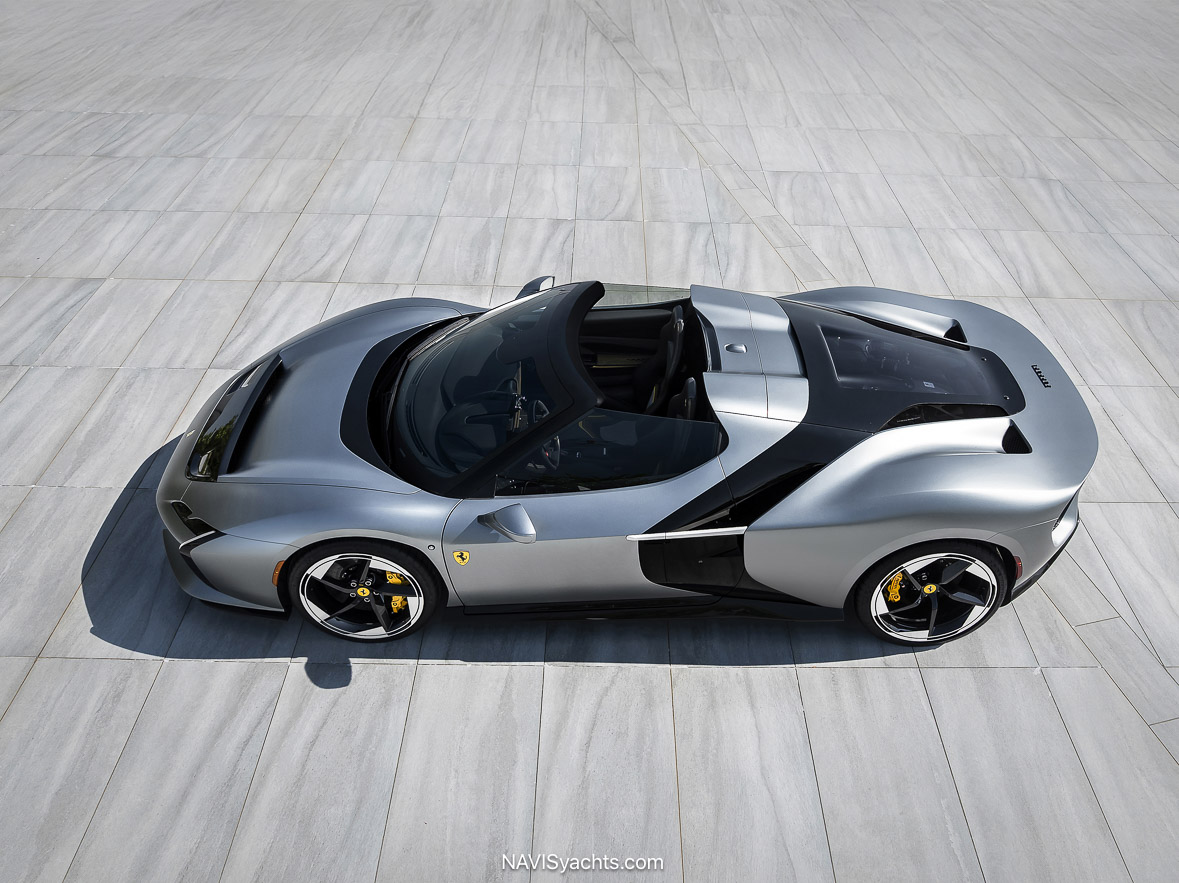
The HC25’s most interesting design decision is its division of the exterior into two apparent volumes. Front and rear read as distinct bodies connected by the deeply sculpted central band. Radiator intakes and powertrain heat-extraction openings are incorporated into this glossy black element, concentrating functional complexity within a coherent visual structure.
Along the side, the band rises over the door toward the handle before returning toward the rear screen. Its arrow-shaped movement emphasizes the rear wheel volumes and gives the cabin a visually forward position. The resulting tension suits the underlying engine placement: the body’s strongest muscular expression surrounds the machinery behind the occupants.
The handle itself forms part of a long blade milled from solid aluminum. Spanning the body sections divided by the black ribbon, it turns a familiar access component into an architectural detail. Its integration supports the uninterrupted composition.
Matt Moonlight Grey gives the principal surfaces a consistent visual weight, while the glossy band sharpens their separation. Vertical flanks, crisp crests and carved lines bring geometric definition to the rounded volumes surrounding the wheels.
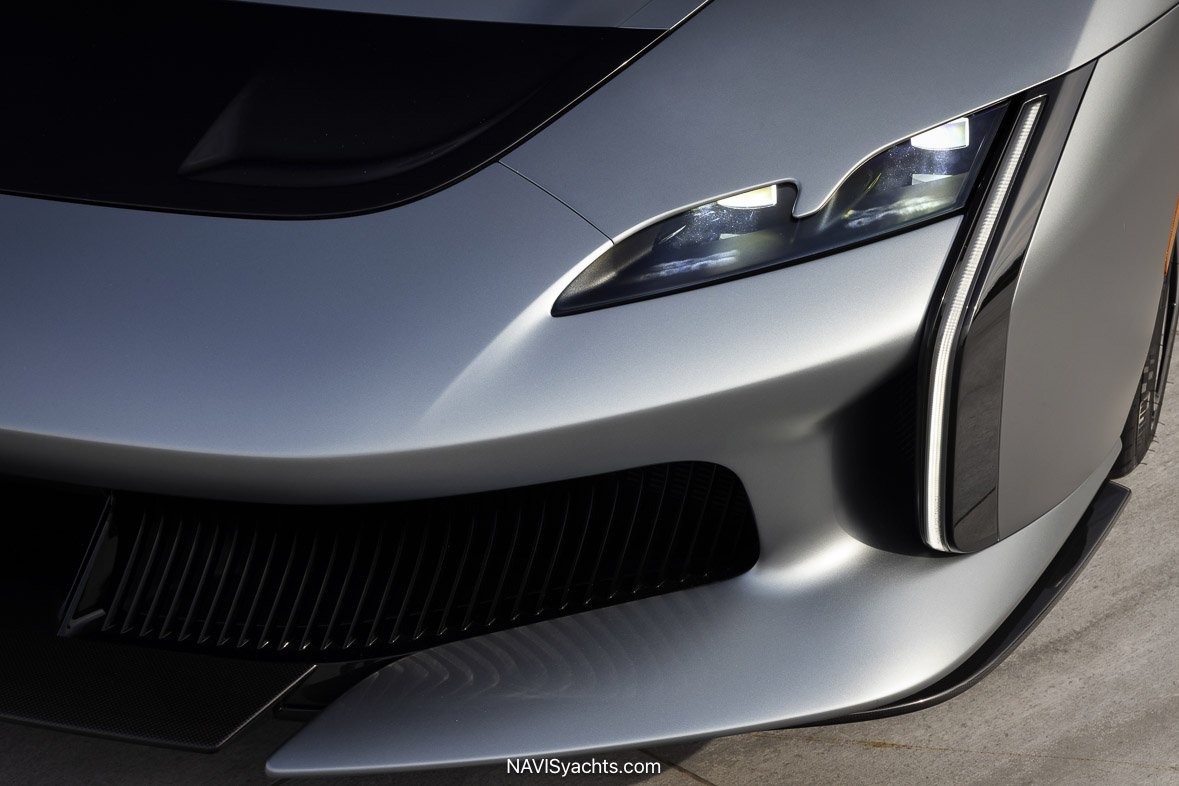
Lighting reinforces that precision. Bespoke front lamps use modules previously unseen on a Ferrari, allowing a slim lens with a central indentation that echoes the split rear lights.
Vertical daytime running lights follow the leading edges of the front wings in a boomerang shape. This repeated geometry creates continuity across surfaces that would otherwise remain visually separate.
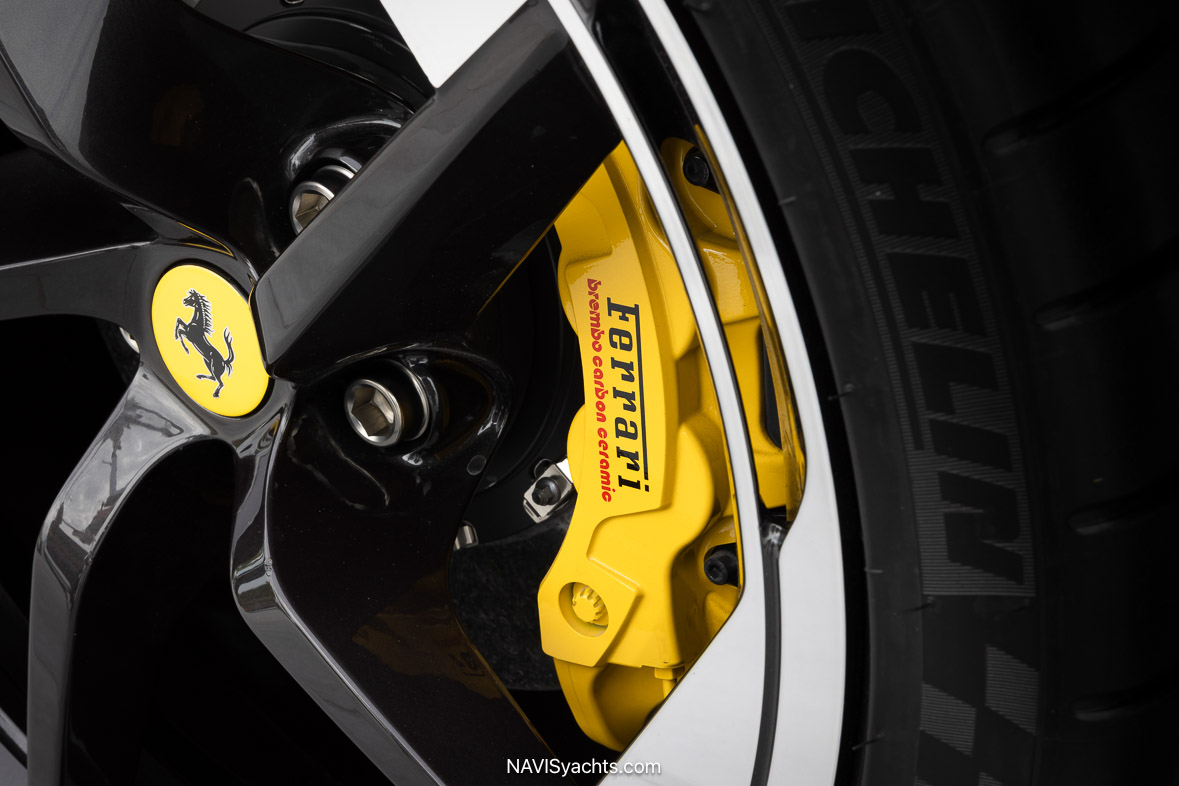
The five-spoke wheels employ a similarly deliberate optical treatment. Dark, slender spokes draw attention to a diamond-finished outer rim, while a double recessed groove makes the wheel appear larger. The effect is one of perceived proportion: the specified wheel diameter remains 20 inches.
The Cabin and the Personal Commission
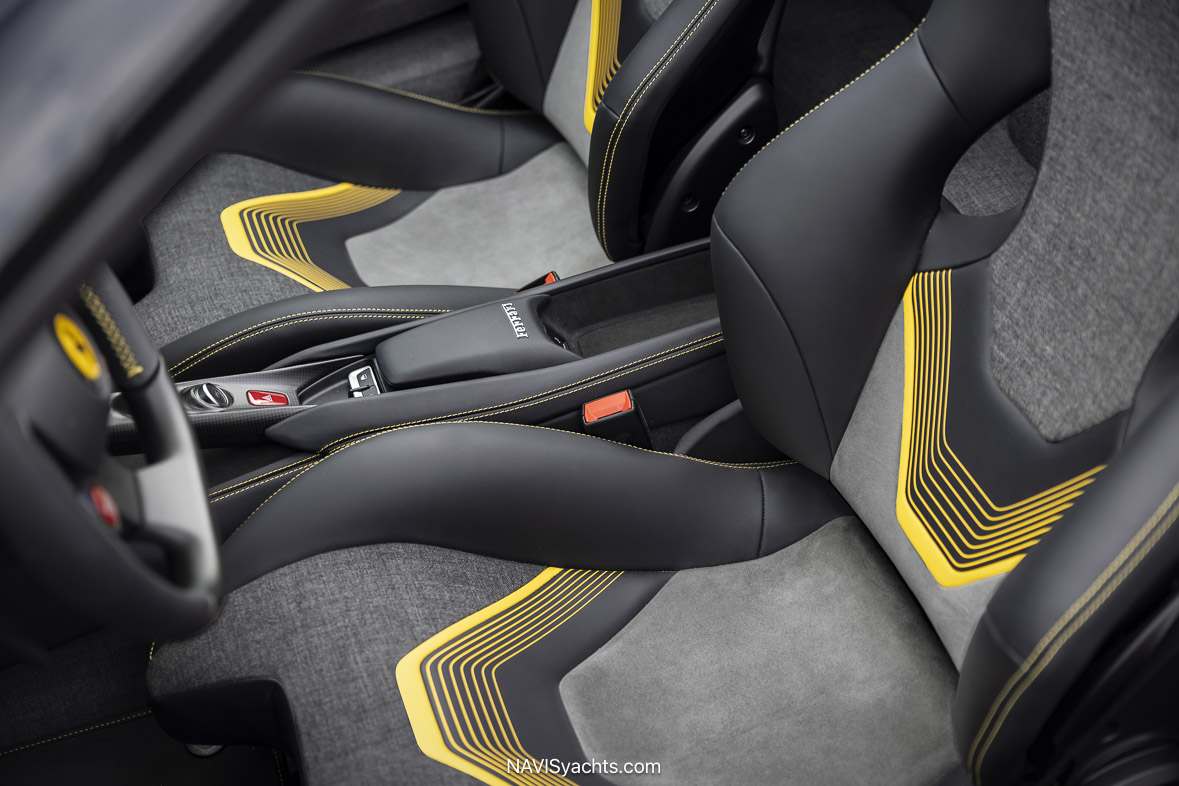
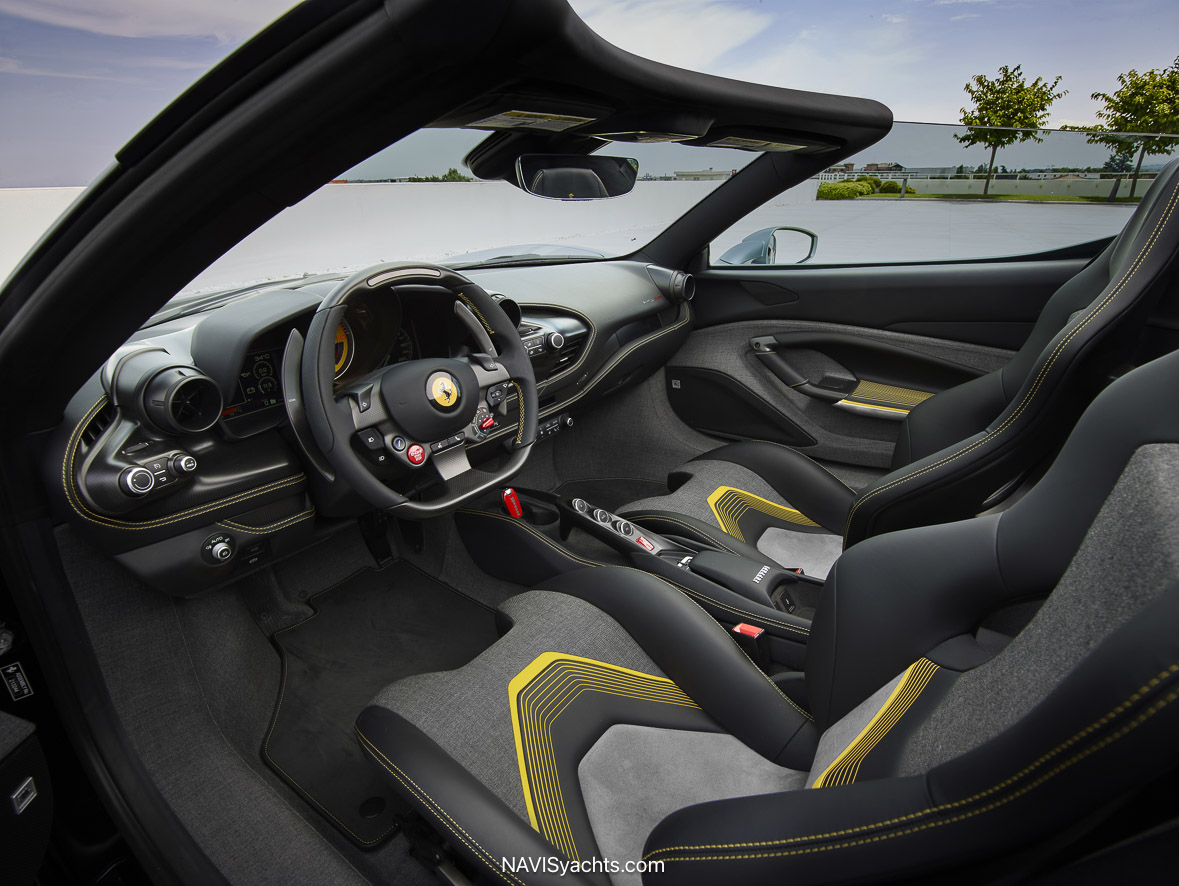
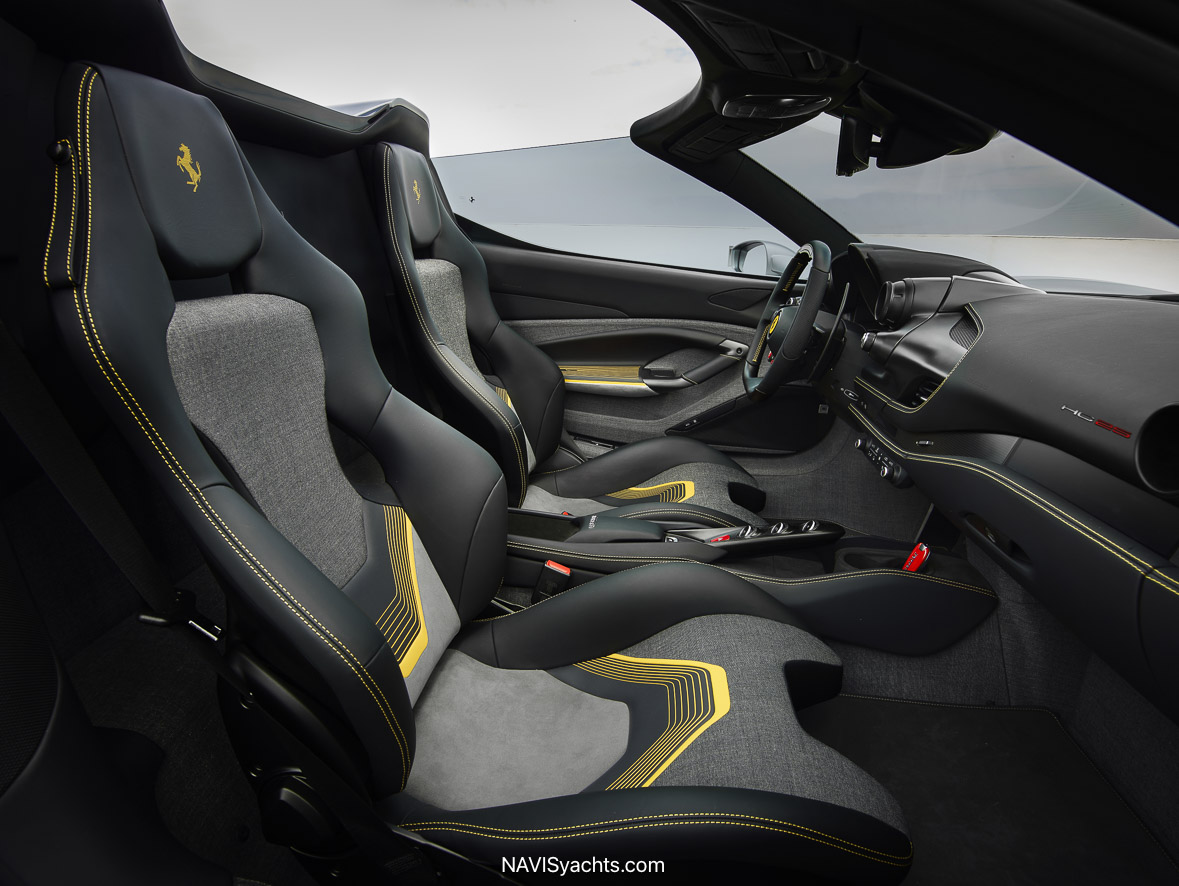
Inside, grey technical fabric and yellow graphics extend the exterior palette. The yellow connects the cabin with the brake calipers and Ferrari emblems, while its graphic shapes repeat the boomerang motif. This gives the interior a clear relationship with the body rather than treating it as an independent decorative exercise.
The Special Projects process takes around two years on average and involves the client in design assessment and verification. Proportions and surfaces progress through detailed drawings and a styling buck before manufacture.
For the HC25, that process has produced a persuasive connection between mechanical necessity and personal expression. The engine determines the demands; the designer gives those demands a visible order. Its defining black ribbon captures that relationship, turning the movement of cooling air into the signature of a unique Ferrari.
Photos: Ferrari Media | Words: Thomas Ferrero