Sailing Yacht Zero
The technical launching of the 68.91-meter sailing yacht Zero in Harlingen, the Netherlands, achieves more than simply adding another bespoke ship to the global fleet; it effectively ends the discussion as to whether an ocean-going superyacht can function completely without fossil fuels. With no internal fuel tanks, Zero is not a diesel-electric hybrid or an experimental prototype built on compromises. It is a firm 100% renewable-energy vessel which is designed to cruise autonomously for two weeks off the grid while still meeting every standard of luxury appropriate for its class.
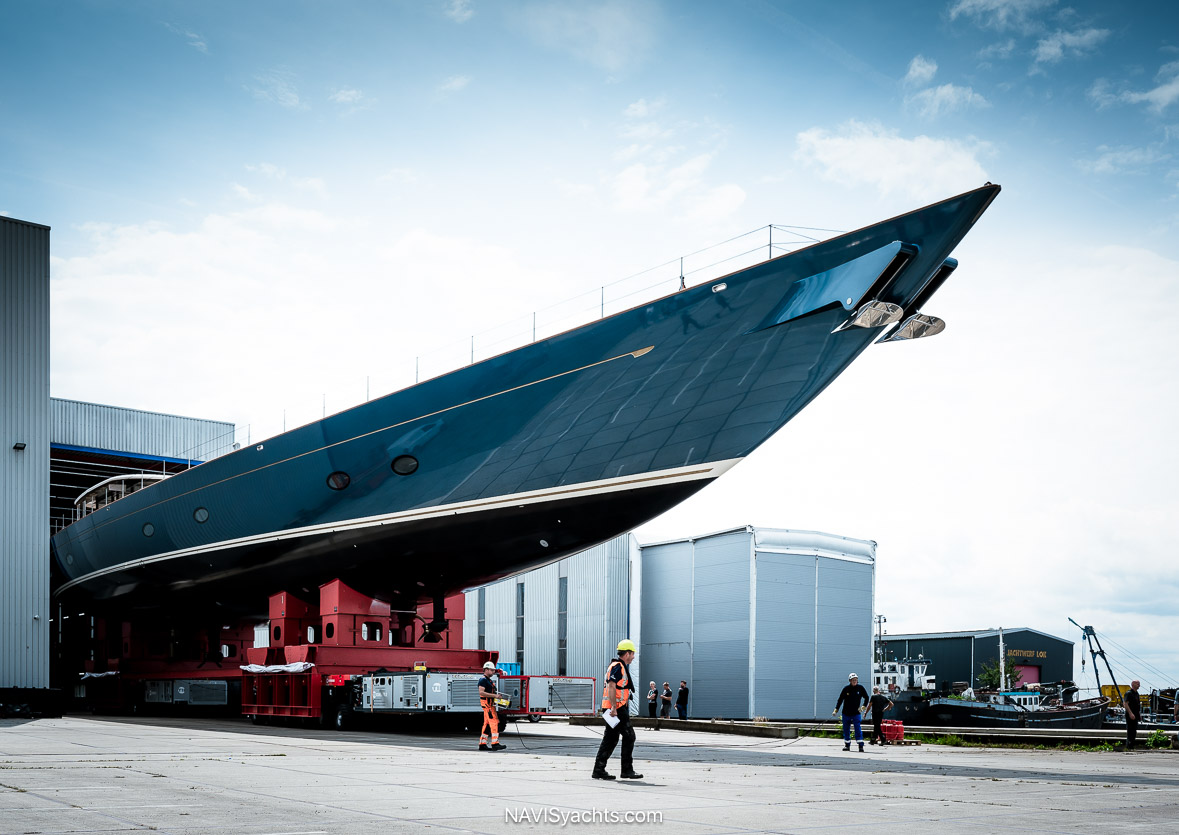
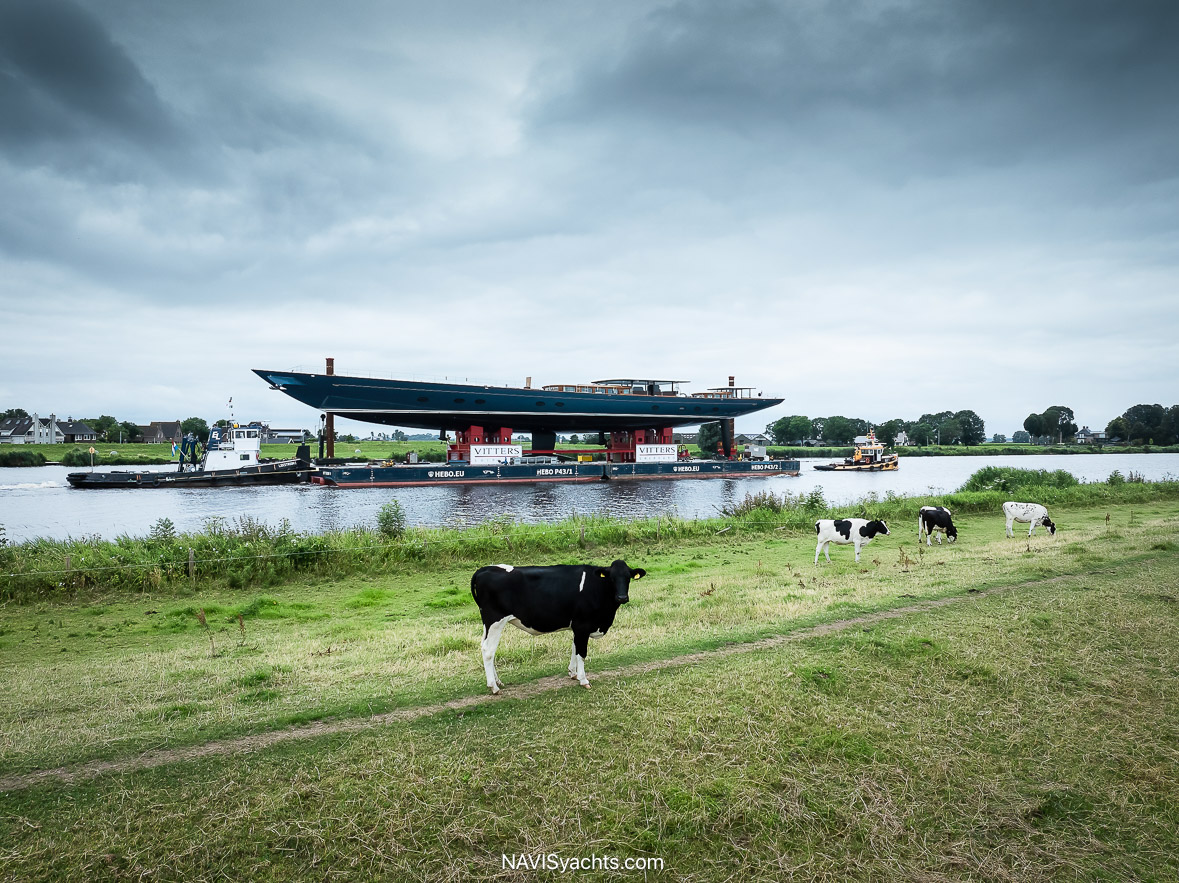
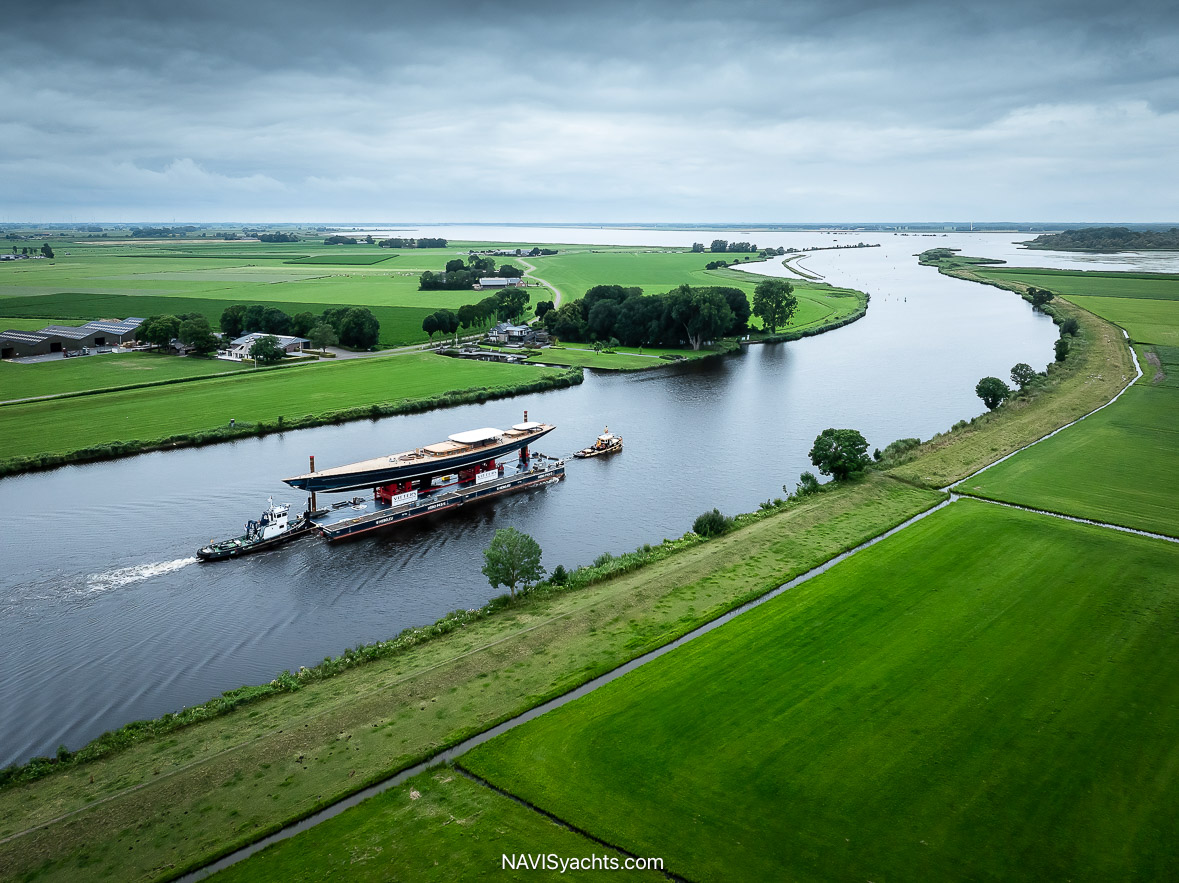
The yacht’s structure was built over three years at the Vitters Shipyard in Zwartsluis, following more than seven years of intensive research and development, before it was transported by inland waterways to Harlingen for mast stepping and technical commissioning. Vripack led the design, with naval architecture by Dykstra Naval Architects, combining classic yacht styling with mechanical engineering never before seen in the maritime industry.
Zero is more than a custom vessel; she is an open-source development platform operated by Foundation Zero (Foundationº) that makes operational data, schematics, and software code freely available across the marine sector.
A World-First Lloyd’s Register Certification
In the past, naval classification societies have regarded sailing rigs on large ships as auxiliary propulsion and have required main internal combustion machinery to meet relevant commercial and safety standards. Unlike this, Zero breaks with the established tradition since Lloyd’s Register has officially certified her sailing rig as the principal means of propulsion—a first in the case of a vessel of this size.
With an air draft of 62.5 meters equivalent to that of a Panamax ship, the main and mizzen masts were designed and manufactured in Germany by the Swiss carbon experts Carbo-Link; in addition to supporting the sail plan, these hollow carbon masts also serve a double mechanical purpose in that they act as a secondary passive ventilation system by quietly expelling air from within without requiring any mechanical power.
To manage sail-handling dynamics without hydraulic backups, the project team partnered with Reckmann Yacht Equipment to engineer high-load electric furlers capable of deploying and recovering her expansive foredeck wardrobe.
Dual-Purpose Underwater Hydrogeneration
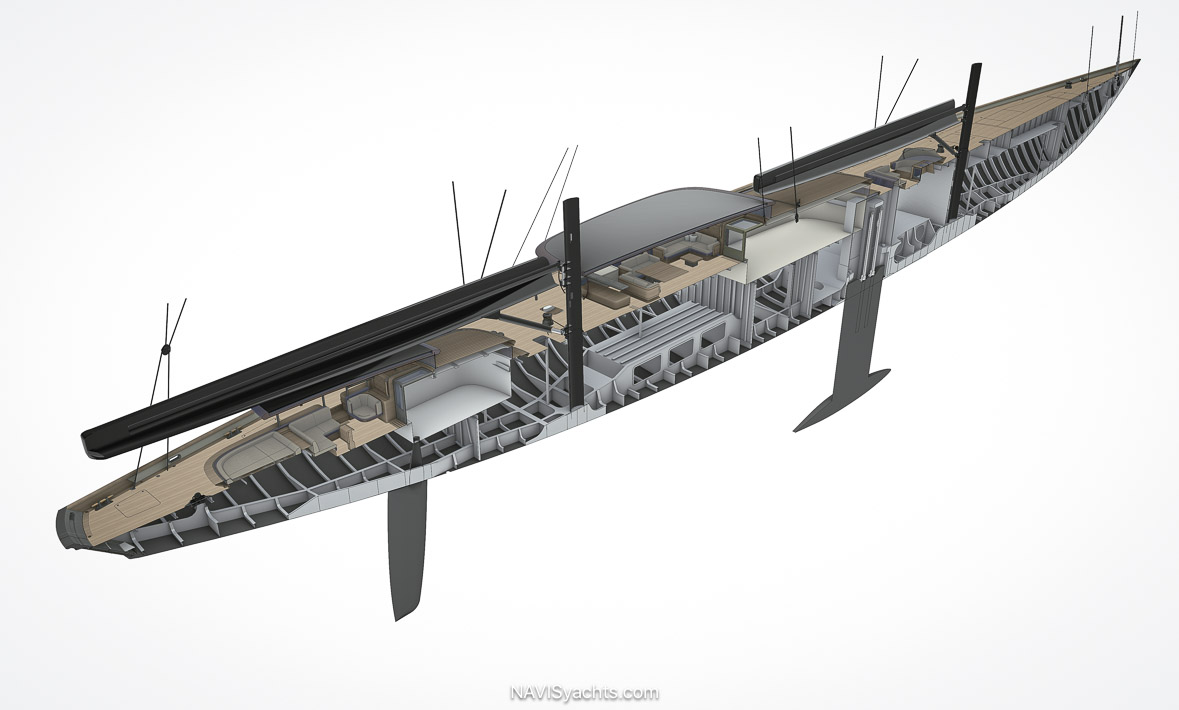
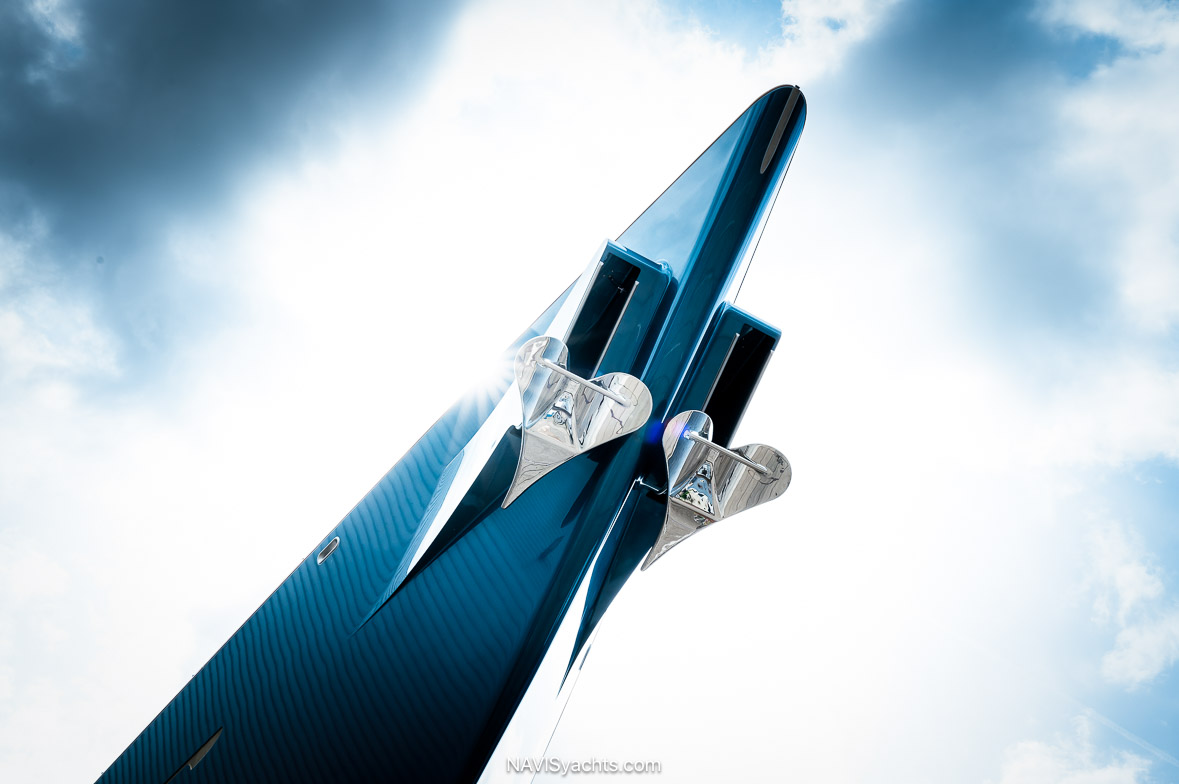
When the Zero is operated by wind, its powertrain runs in reverse to produce electricity, and this system uses two centreline thrusters developed in collaboration with the Danish company Hundested.
Instead of conventional fixed-pitch or feathering propellers, the units have blades whose shape Dykstra Naval Architects calculated. This design achieves low drag when traveling at 12 knots and high-efficiency power generation at 16.5 knots.
The forward centreline thruster is located in front of the keel and rotates forwards to enhance the laminar inflow and kinetic capture when sailing.
The aft centreline thruster is located behind the keel and points aft to provide main propulsion when electric drive is used.
Since both thrusters can rotate 360 degrees, one can provide additional power or generate energy depending on the yacht’s angle, sail position, and sea conditions.
At 8 knots or more, Zero can generate all the electricity she needs. At 16.5 knots under sail, her hydrogeneration system feeds 250 kW back into her 5.2 MWh battery bank, replenishing her power stores while she moves. She can travel as far as 400 nautical miles if she is relying solely on batteries.
“For many years Zero has been merely a vision, the result of many calculations, various design studies and engineering hypotheses,” says Mark Leslie-Miller, a partner with Dykstra Naval Architects. “Only when you see her afloat does all of that become a living experiment.”
Cutting Zero’s base electrical use
This has been achieved through advanced thermal management, such as hull insulation and hydronic panels, and highlights innovative energy-efficiency strategies essential for vessels powered by renewable energy.
In the field of superyacht engineering, achieving renewable power accounts for only half of the thermodynamic equation; just as important is the management of the base electrical load—a term used in the industry for the “hotel load”. On a typical 70-meter sailing yacht, the hotel loads (which include air conditioning, galley equipment, lighting, watermakers, and domestic pumps) average a continuous baseline of 90 kW.
On Zero, the team reduced this baseline to under 30 kW through integrated passive and active thermal management:
- Hull isolation with thermal and acoustic barriers blocks solar thermal radiation before it reaches the guest areas through the interior joinery and outer hull plating.
- Hydronic Cooling Panels: Rather than relying entirely on forced-air cooling systems, chilled hydronic panels are fitted to the bulkheads and deckheads, providing silent radiant climate control with much lower pump draw.
- Galley Air-Curtain Systems: The professional galley incorporates an aerodynamic air curtain over the induction cooktops, sequestering thermal exhaust at the pan surface and keeping ambient kitchen temperatures low without taxing extraction fans.
- Adsorption Chillers & Waste-Heat Recovery: Residual heat from electrical components is channeled into an adsorption chiller, using thermal energy rather than mechanical compression to cool living spaces.
Hybrid PVT Solar and Phase-Change Salt Storage
To supplement hydrogeneration while she is at anchor, Zero has 100 square meters of photovoltaic-thermal (PVT) panels installed over her two fixed cockpit biminis. Unlike conventional solar panels, whose electrical output decreases as the surface gets hotter, PVT panels capture thermal energy through a fluid that circulates under the cells while keeping their photovoltaic efficiency at an optimal level.
The solar cells have an internal structure that has been optimized so that there will be no drop in electrical current when the spars and sails shade parts of the array; the thermal energy that is harvested is directed straight into phase-change material (PCM) salt batteries, the energy being stored in the form of latent heat to provide domestic hot water without any discharge of the batteries.
Below the hardware is custom-written monitoring software that provides dynamic energy routing. The proprietary system compares real-time consumption with weather routing and sail-trimming software to calculate the most energy-efficient heading to keep the batteries in balance.
Timeless Design Meets Progressive Philosophy
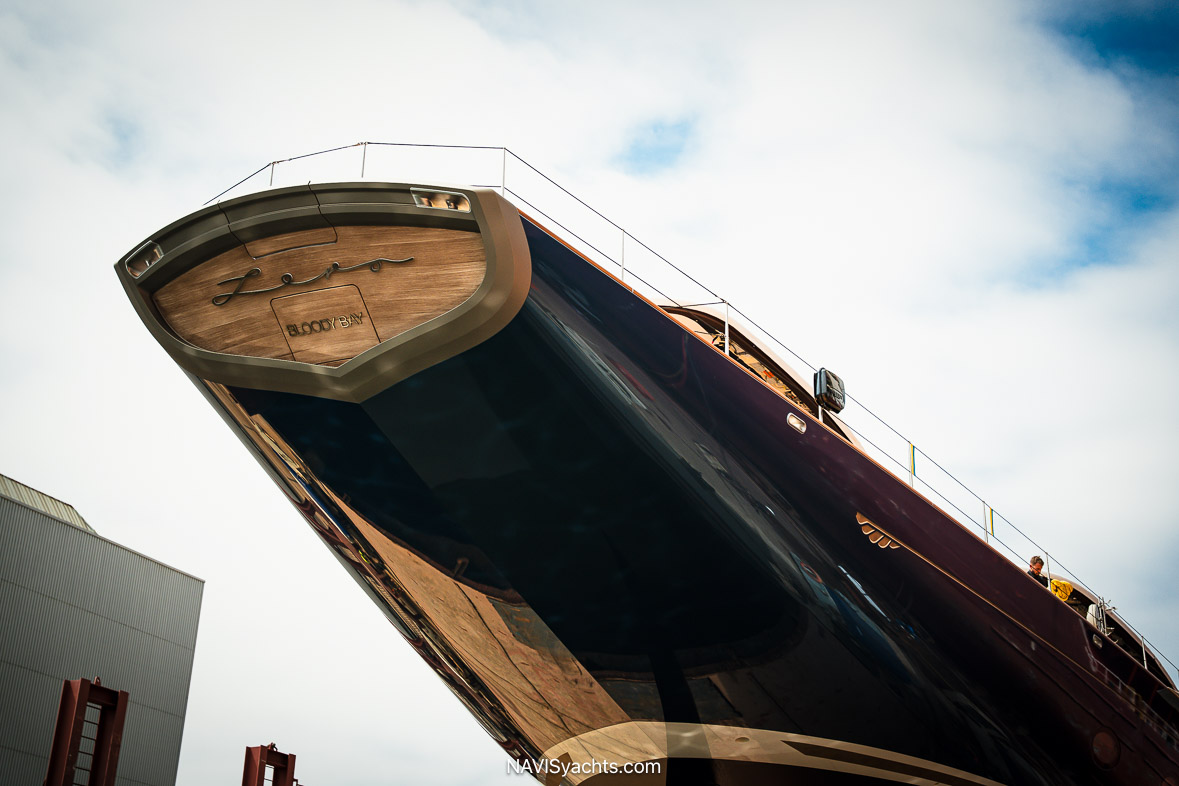
Despite its complex systems, the Zero still has the traditional proportions and elegance typical of a Spirit of Tradition type. Vripack combined modern naval architecture with classic features through a broad spoon bow, a counter stern, low-slung varnished deckhouses, and clean teak decks.
Marnix Hoekstra, Co-creative Director at Vripack, says that when it was proposed to him that he should meet the owners back in summer 2019, he could never have imagined that he would end up with such an exciting assignment. The focus and clarity they demonstrated gave us exactly the inspiration and energy we needed to dare to ask: ‘How might we create a yacht that runs entirely on renewable energy and at the same time has all the comfort and sophistication of a modern yacht?’ The studio SY Zero has been our Perfect Storm... As she now reaches this next important stage in her journey, our shared duty is to make sure that we pass on everything we have learned.
Louis Hamming, head of the Vitters Shipyard, agrees about this achievement and says, “We are looking forward to seeing SY Zero in her natural environment and demonstrating to the world what can be achieved when creative minds come together on a journey to build a yacht which shows what can be done to make the world and the seas a bit better.”
The Open-Source Precedent: Beyond Yachting
What makes Zero so significant is not that she has no fuel tanks, but that she aims to make this technology generally available. The intellectual property she possesses—ranging from CAD designs and wiring schematics to real-world performance telemetry—is being made publicly available via Foundationº (foundationzero.org).
As Eduard van Benthem, the project manager, points out, “From the very beginning we have aimed to get people to look into the work that we are carrying out, to examine the data that we are making available, and to work with us to find out where the systems can be improved.” He adds that “Zero is just as much a development platform as it is a yacht... SY
Zero is not about demonstrating how good we are; our real intention is to show how we can do things better and to inspire others to take part in our journey.”
When the sea trials start in the North Sea, Zero will serve as a working prototype for the maritime industry, proving it is possible to offer luxury cruising and a commitment to the environment without compromise.
Keep an eye on NAVIS for the technical sea-trial results and full architectural walk-throughs as the Sailing Yacht Zero finishes her commissioning.
Written by Gabriel Parra - Photographed by SY Zero media