
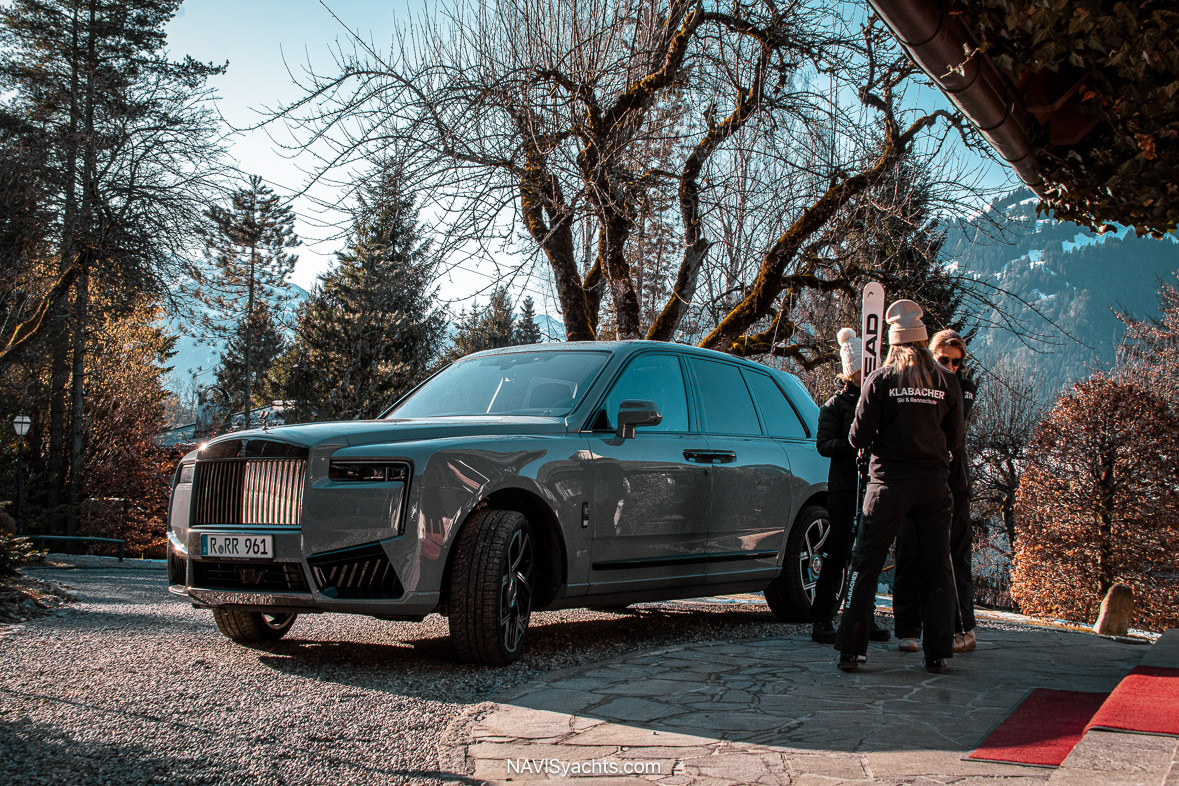
There is a moment on the road east from Innsbruck when the journey to Kitzbühel seems to change character. The highway falls behind, the road begins climbing through small Tyrolean villages, and the landscape opens into rolling white hills beneath mountains softened by the late-afternoon light. We had begun the day much farther west, travelling from St. Moritz with SwissChauffeur, before meeting our next companion in a central square in Innsbruck: a brand-new Rolls-Royce Black Badge Cullinan Series II waiting among the old city’s architecture. Soon Innsbruck was receding behind us.
There are certainly less memorable ways of entering the Kitzbühel Alps. The Cullinan has an uncanny ability to remove almost every sensation of effort from travel; mountain roads seem to unfold beneath rather than challenge it. As we climbed, villages appeared and disappeared through the windows while snow-covered pastures rolled toward the mountains beyond. It was March, late enough in the season for occasional patches of green to have begun breaking through the white at lower elevations, yet winter still held the landscape firmly. Inside, there was little indication of the cold beyond the glass. The effect was less that of driving through the Alps than floating quietly across them.
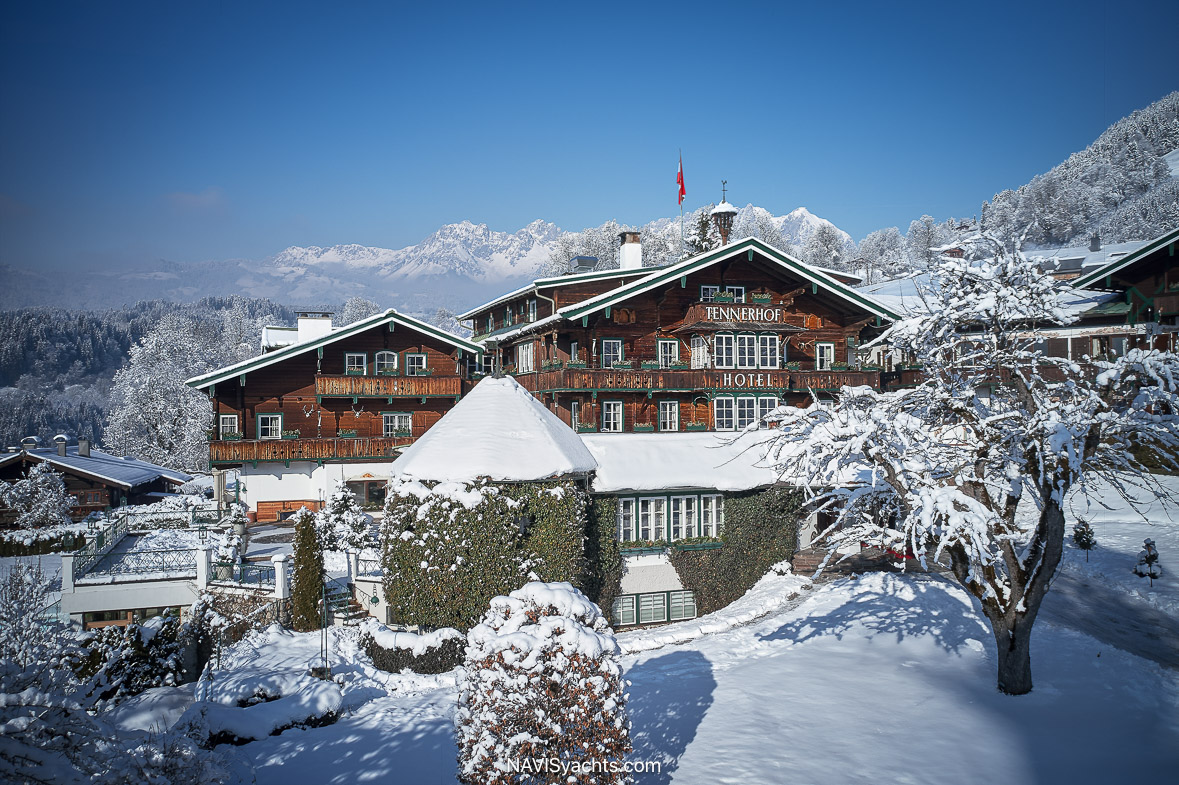
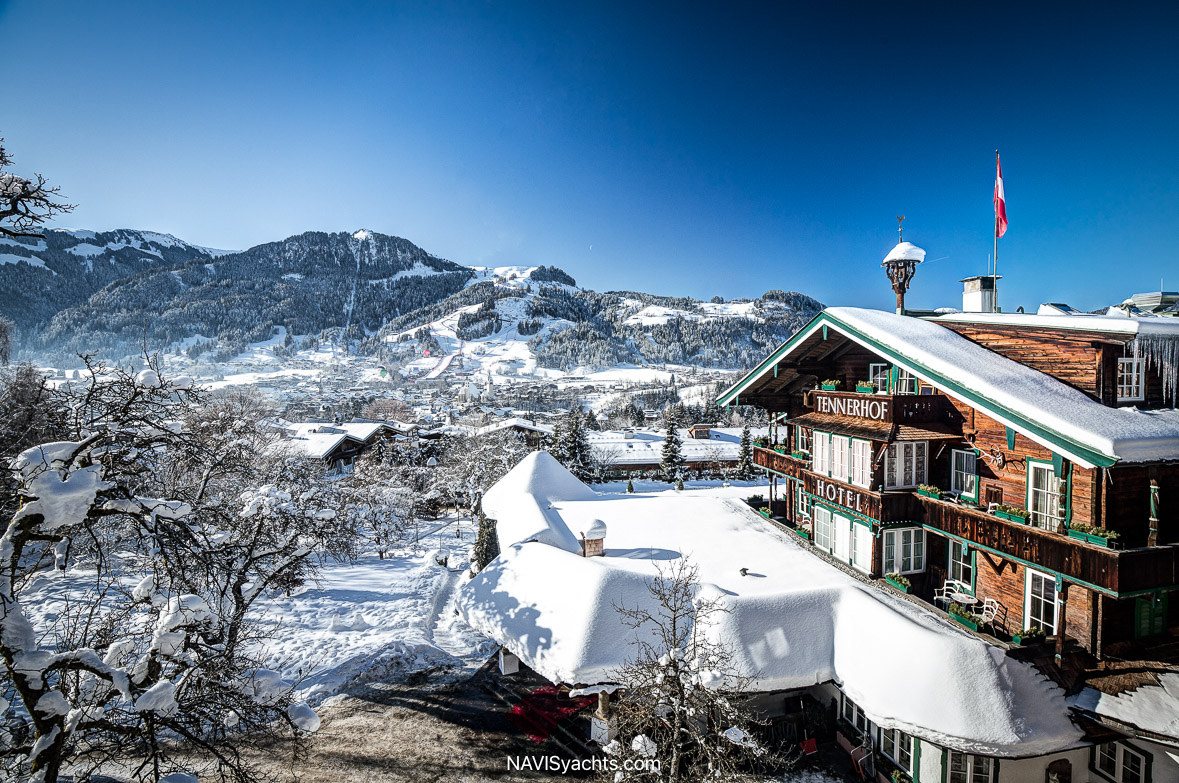
We did not immediately enter Kitzbühel when we arrived. Instead, turning left near the Hornbahn, we climbed several blocks above town toward the Tennerhof Gourmet & Spa de Charme Hotel, where we would make one of its private chalets our home. A stone gateway announced the estate; beyond it, the drive descended toward an old timbered Alpine house, where a red carpet and the hotel team were waiting. The sun was already dropping toward the mountains.
Yet the transformation that would ultimately define modern Kitzbühel came much later, and it came with snow.
Tourism had begun developing during the nineteenth century, accelerated by the arrival of the railway in 1875. Then, in 1893, Franz Reisch descended the Kitzbüheler Horn on skis.
What began as experimentation on snow would eventually alter not simply Kitzbühel’s economy but its identity. More than a century later, winter sport has become so deeply embedded here that it can be difficult to identify where the town ends and skiing begins.
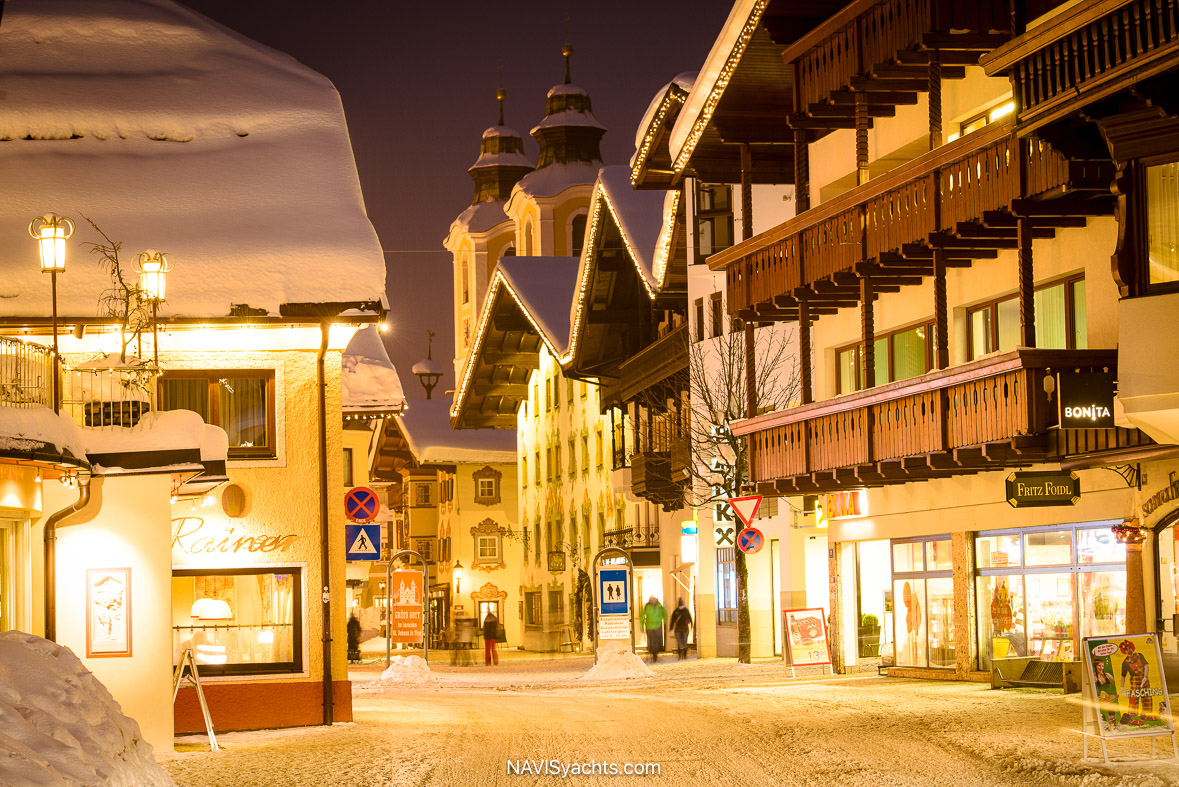
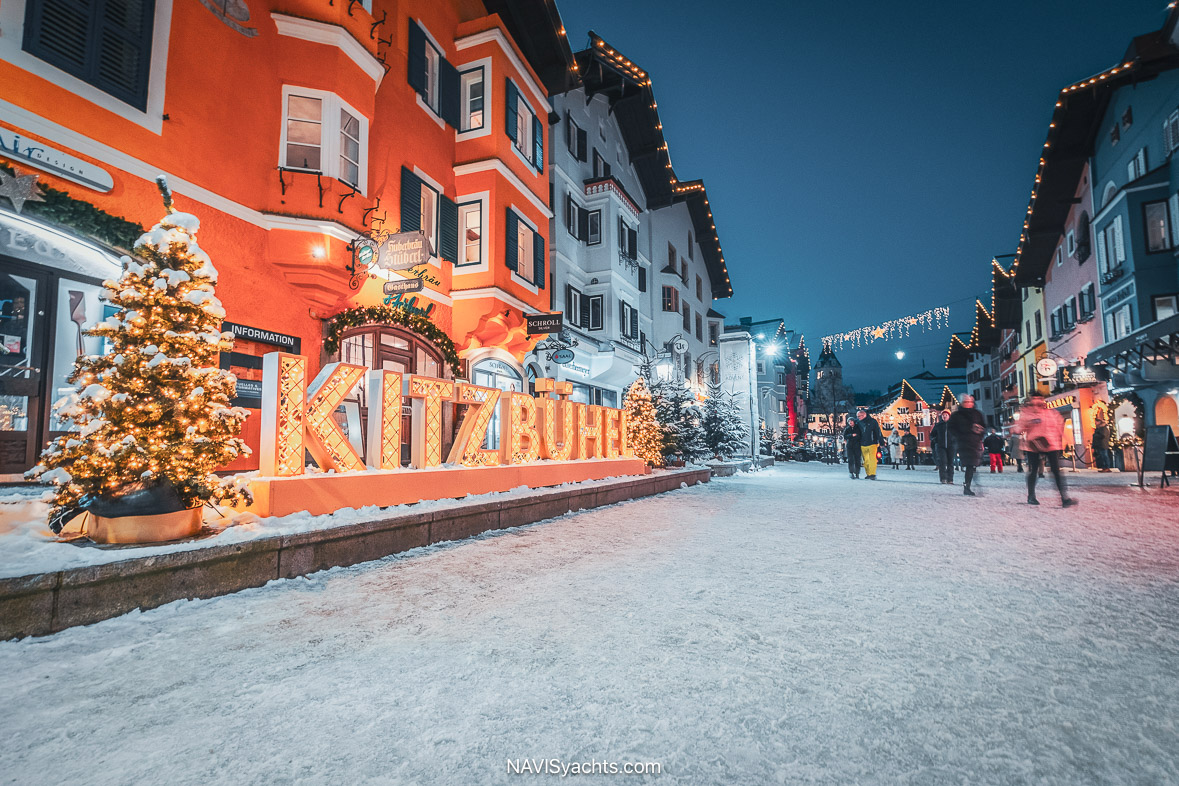
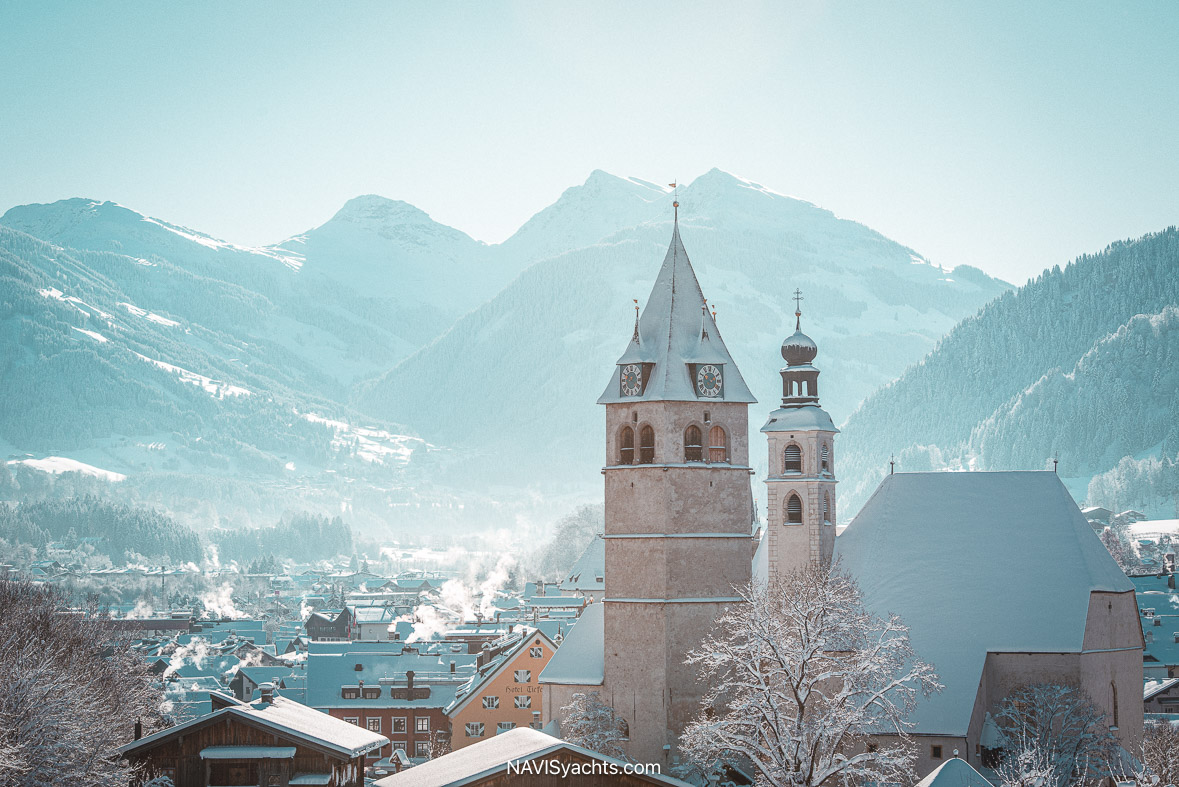
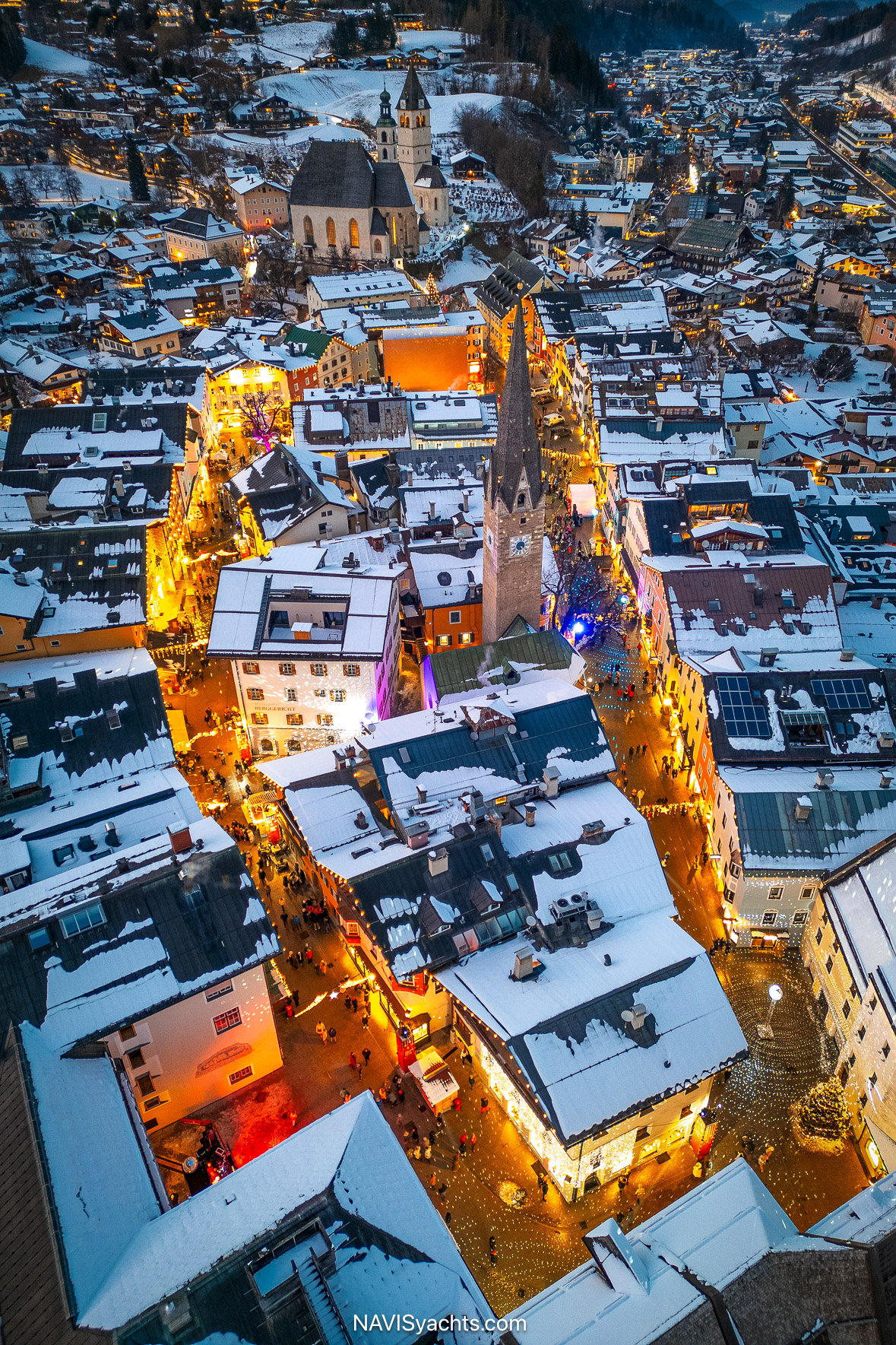
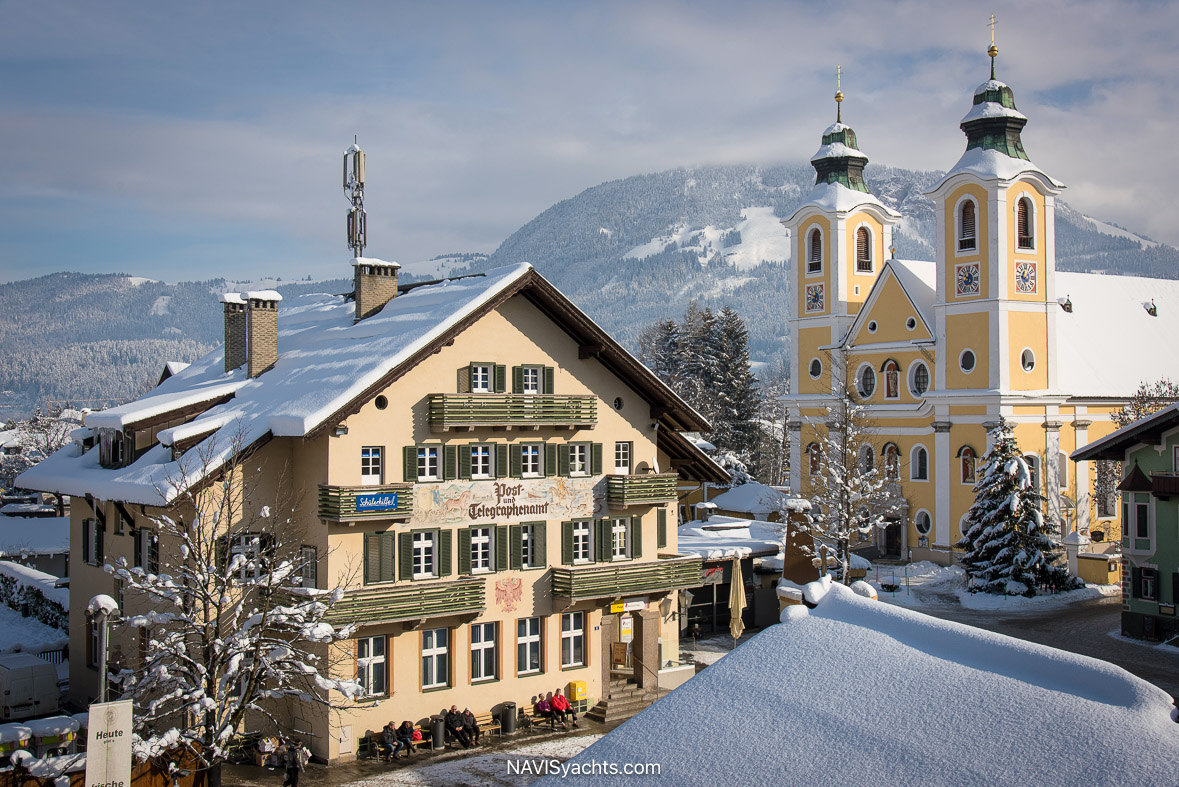
We discovered that the following day when we finally walked through the old center. Its historic footprint remains remarkably intimate, lined with tightly packed façades painted in ochres, pinks, greens and blues. Behind those old walls sit international boutiques, contemporary restaurants and shops filled with ski clothing and mountain equipment. People move through the streets in ski jackets and boots as naturally as others might in business clothes. Even as winter was beginning to loosen its grip at the valley floor, Kitzbühel still felt unmistakably governed by the season.
And everywhere, there was the race.
Images of competitors appeared throughout town. Legends Park commemorated the men and women who helped construct Kitzbühel’s sporting mythology. Inside The Londoner, photographs of famously exuberant post-race celebrations covered the walls. The Hahnenkamm Race is not simply an event that Kitzbühel hosts for several days each January. Its presence has entered the collective identity of the town.
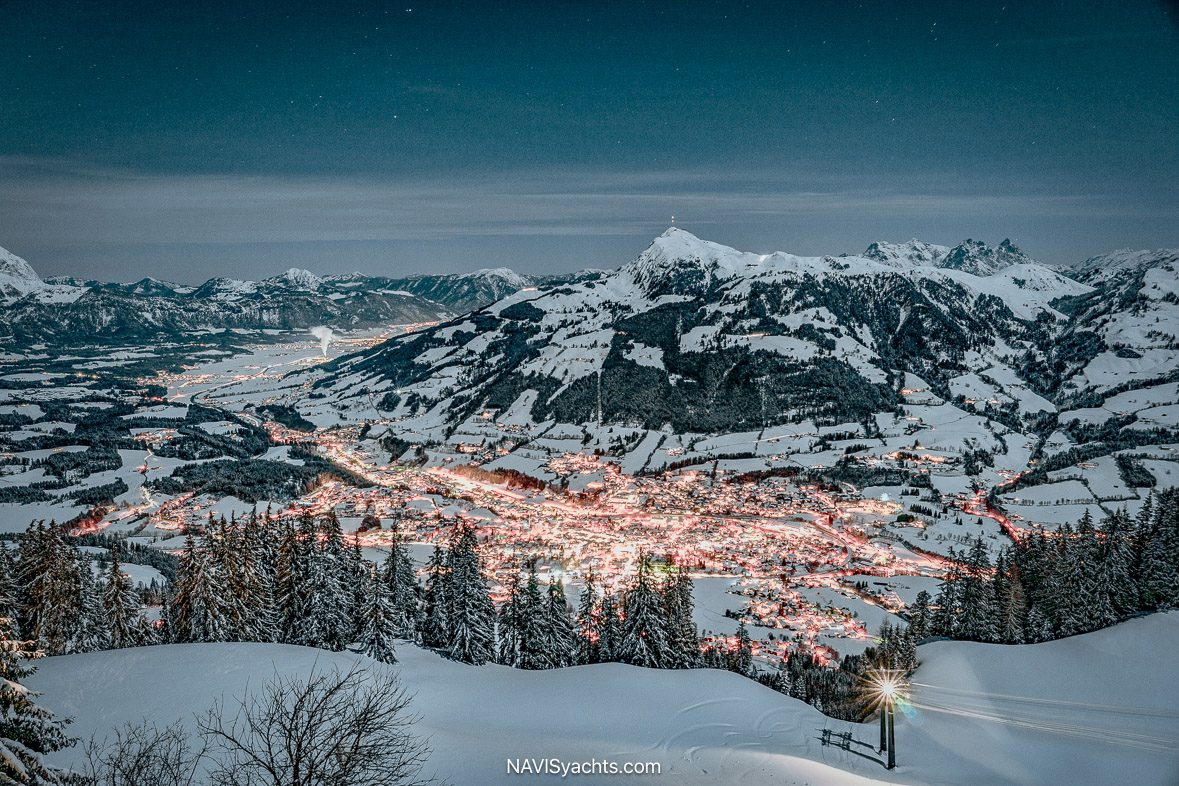
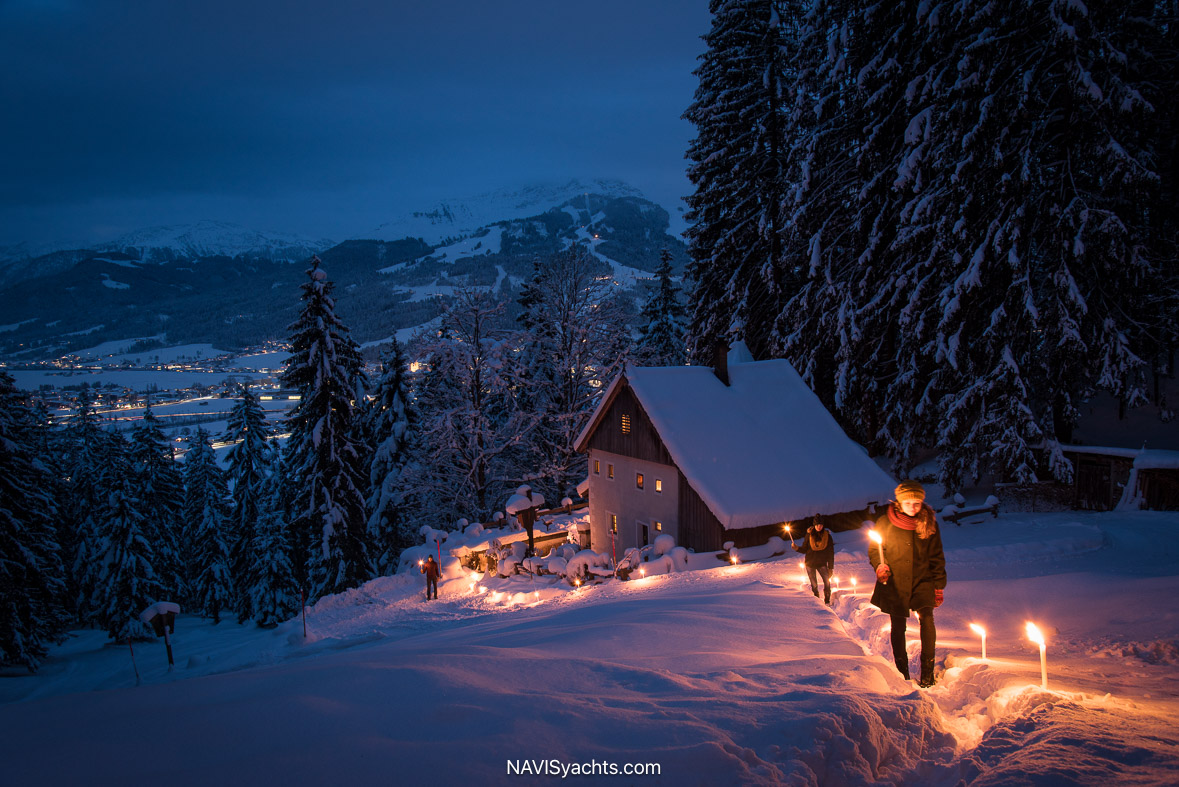
That first evening back at Tennerhof, the hourly bells carried uphill from the old town while we sat beside the fire with a cognac. Across the darkening valley was the mountain we would ski the next morning, the Streif still distinguishable on its flank.
It was difficult not to think of Franz Reisch looking toward these same mountains more than a century earlier and seeing something others had not yet imagined.
Kitzbühel had known winter for centuries.
Then it learned to ski.
Where Skiing Became Culture
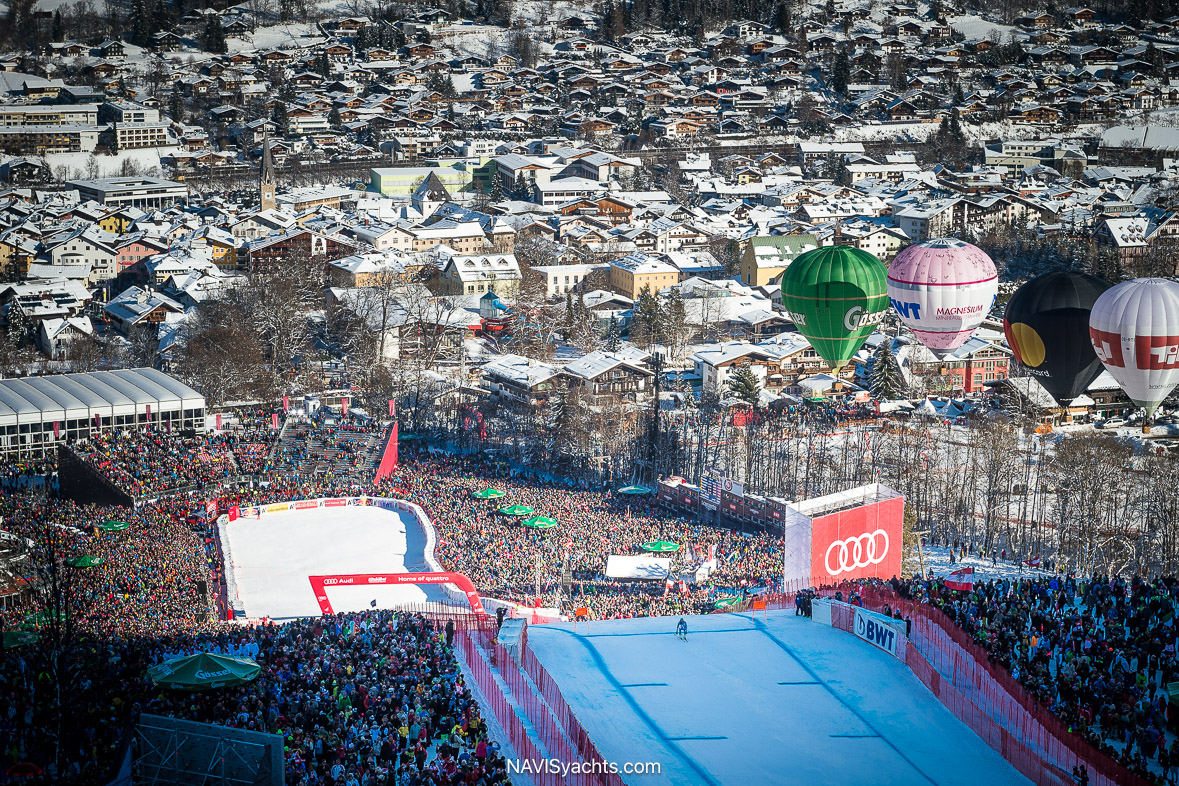
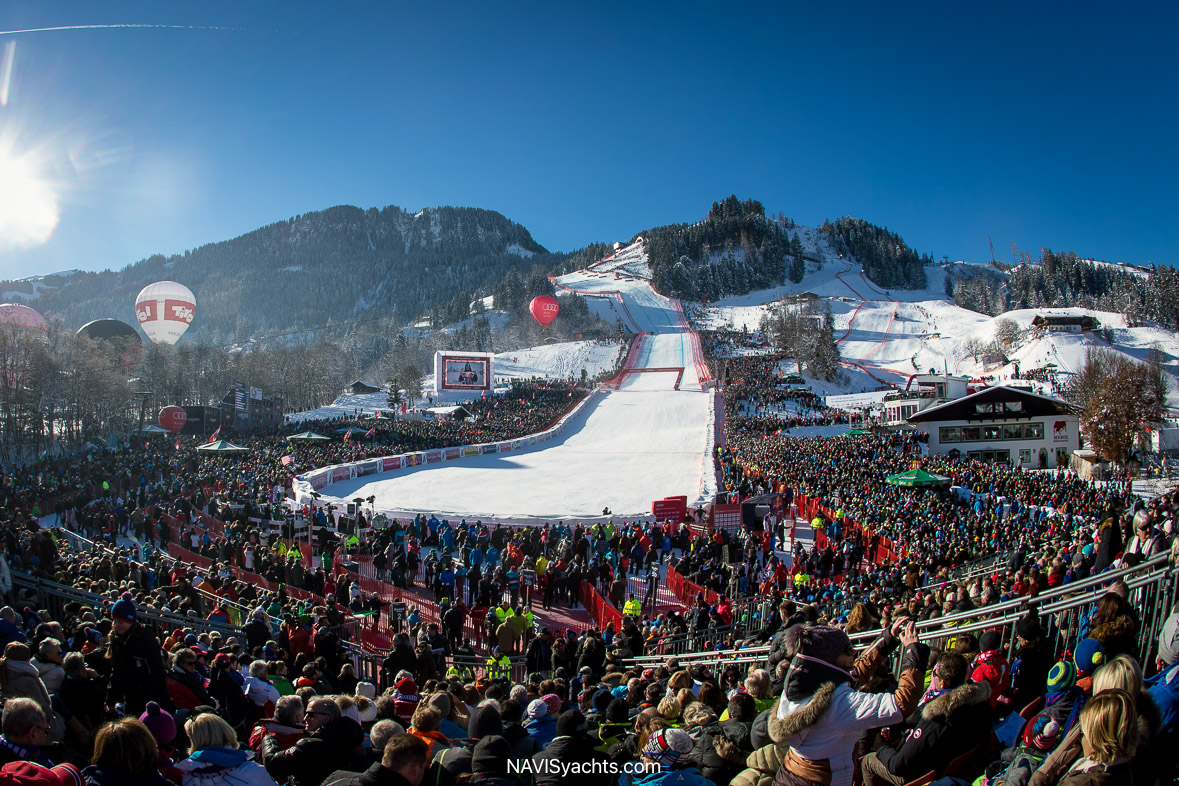
What followed Franz Reisch’s pioneering descent developed remarkably quickly. Recorded races were already being held by the winter of 1894/95, and the Kitzbühel Ski Club was established in 1902. Today the club numbers more than 9,000 members, continues to train young athletes across several winter disciplines, and organizes the event that would ultimately make this small Tyrolean town synonymous with competitive skiing: the Hahnenkamm Races.
First held in 1931, the Hahnenkamm has grown into something far greater than a sporting fixture. At its center is the Streif, a downhill course whose statistics begin to explain its reputation without quite conveying its reality: a vertical drop of approximately 2,820 feet (860 m), gradients reaching 85 percent, and race speeds approaching 93 mph (150 km/h). For the professionals who arrive here each January, its sequence of compressions, jumps, steep pitches and high-speed turns has become one of alpine skiing’s definitive tests.
Our own introduction to skiing Kitzbühel began somewhere rather more comfortable: at breakfast.
For skiers, breakfast is rarely an incidental part of a winter hotel stay. Hours of physical exertion in the cold change its purpose completely, and Tennerhof appears to understand this particularly well. Each morning began with an almost excessive spread of breads and pastries, jams, fruits and breakfast staples, supplemented by an à la carte menu of more elaborate dishes. It is the sort of breakfast that encourages lingering, precisely when the mountain outside is telling you not to.
From Tennerhof, the Hahnenkammbahn base is only a short transfer away, and here Kitzbühel’s polished approach to skiing becomes immediately apparent. At the rental center, equipment selection is handled digitally: choose the required gear at a touchscreen and, by the time you reach the service desk, it is prepared, adjusted and ready. Those who organize beforehand can reserve online and proceed directly to collection. The inventory itself is extensive and contemporary, covering skis, snowboards and accompanying equipment, with a well-stocked shop alongside it for whatever failed to make the packing list. Within minutes, we were ready for the mountain.
Waiting for us was Claudia Klabacher of Ski School Klabacher, who would guide our first day. In a town where skiing lineage carries considerable weight, Claudia fits naturally into the culture: she comes from a family deeply involved in competitive skiing and today runs the school with her son, himself a professional racer and coach. For anyone interested not simply in being shown around Kitzbühel but in actually improving technique, there could scarcely be a more appropriate companion.
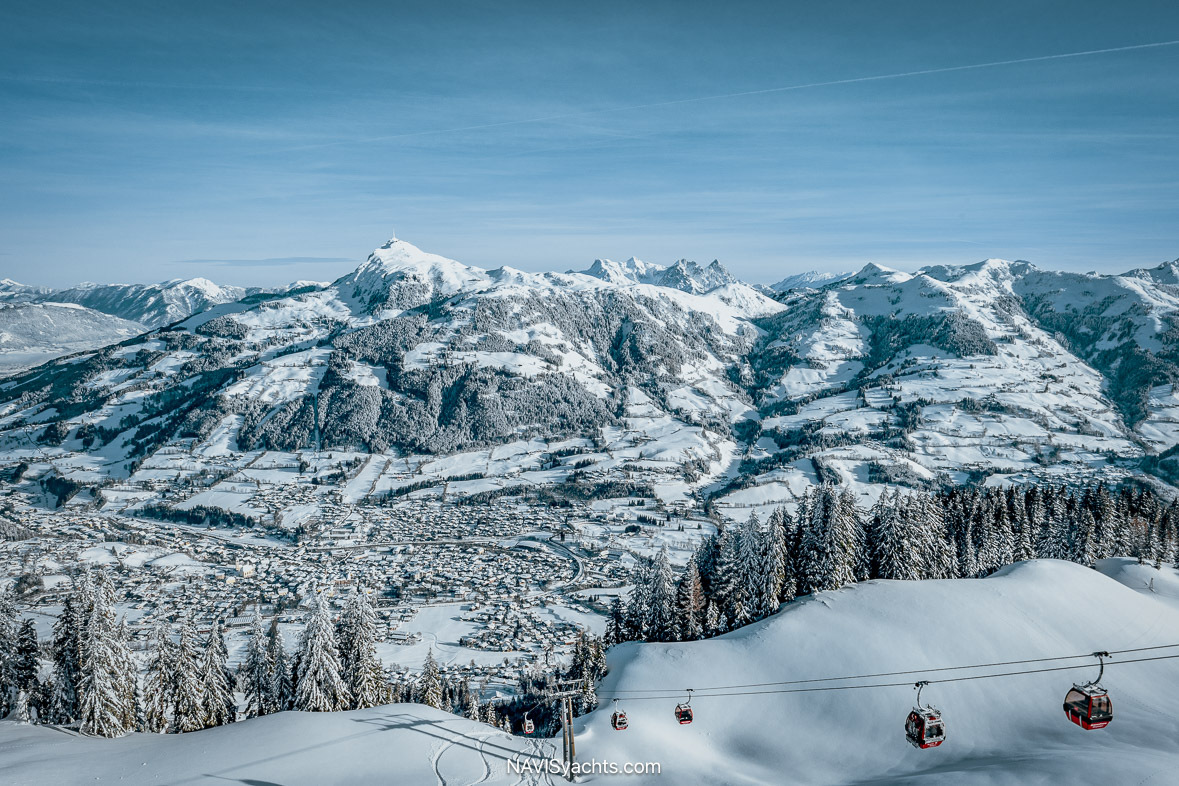
The Hahnenkammbahn delivered us above the town and into an altogether different sense of scale.
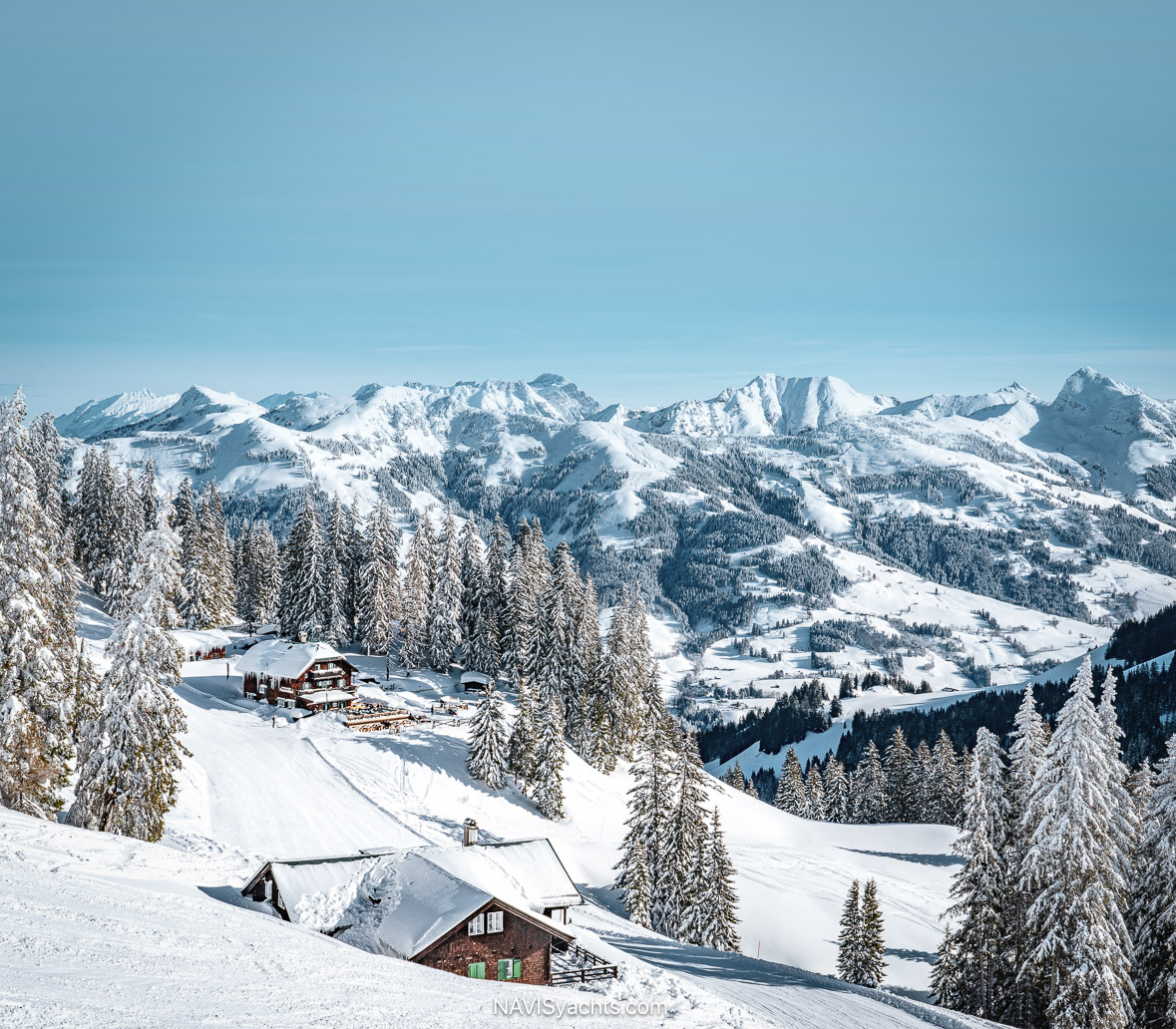
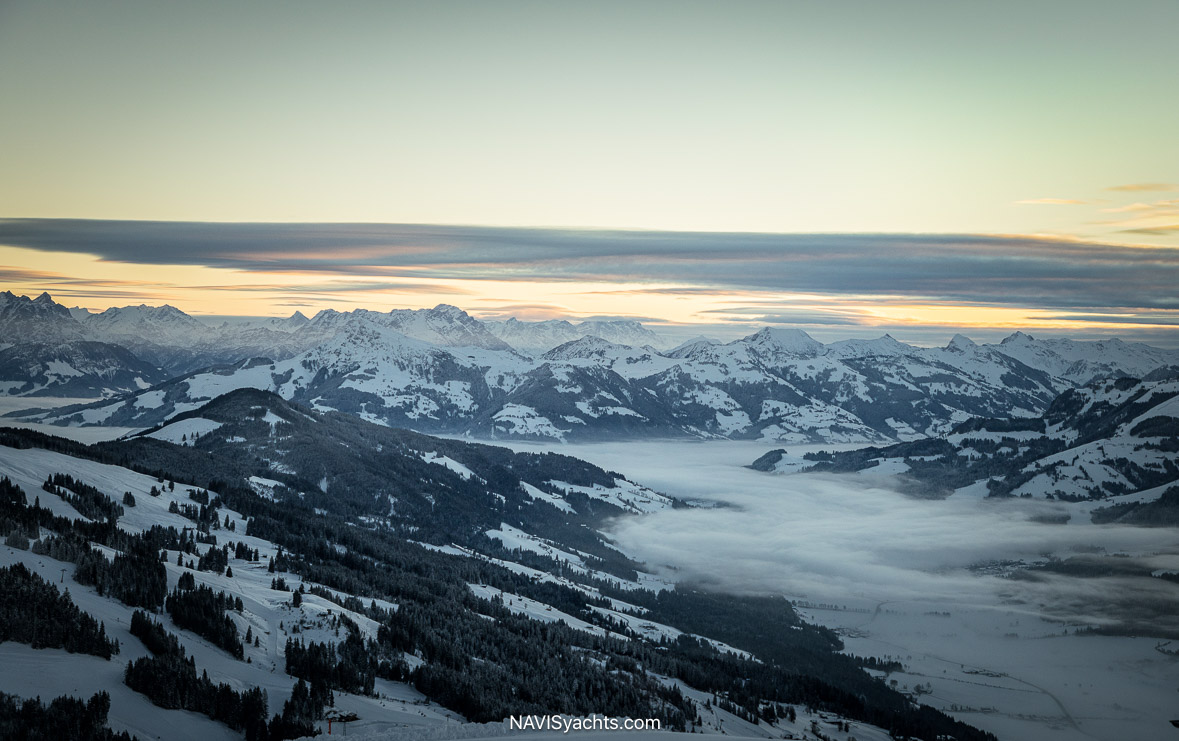
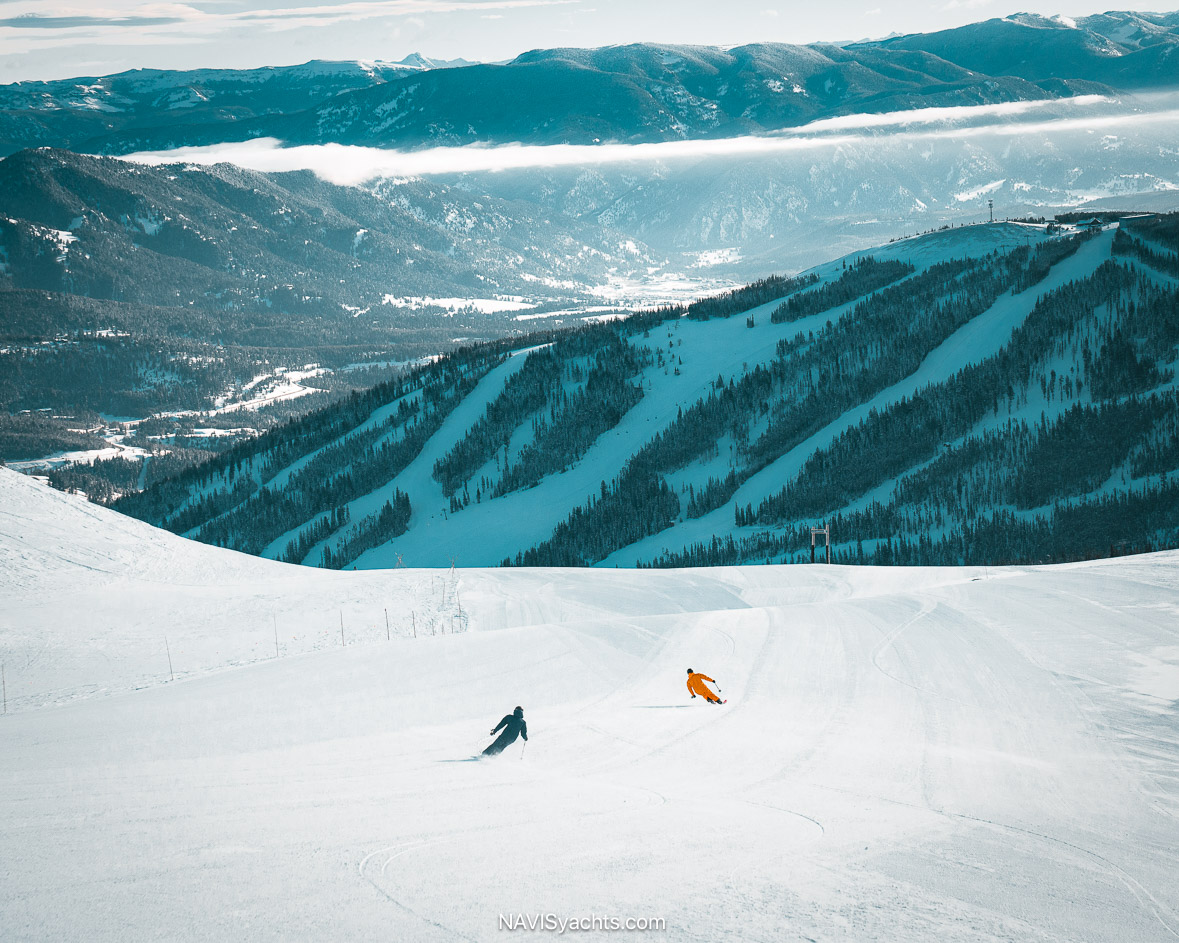
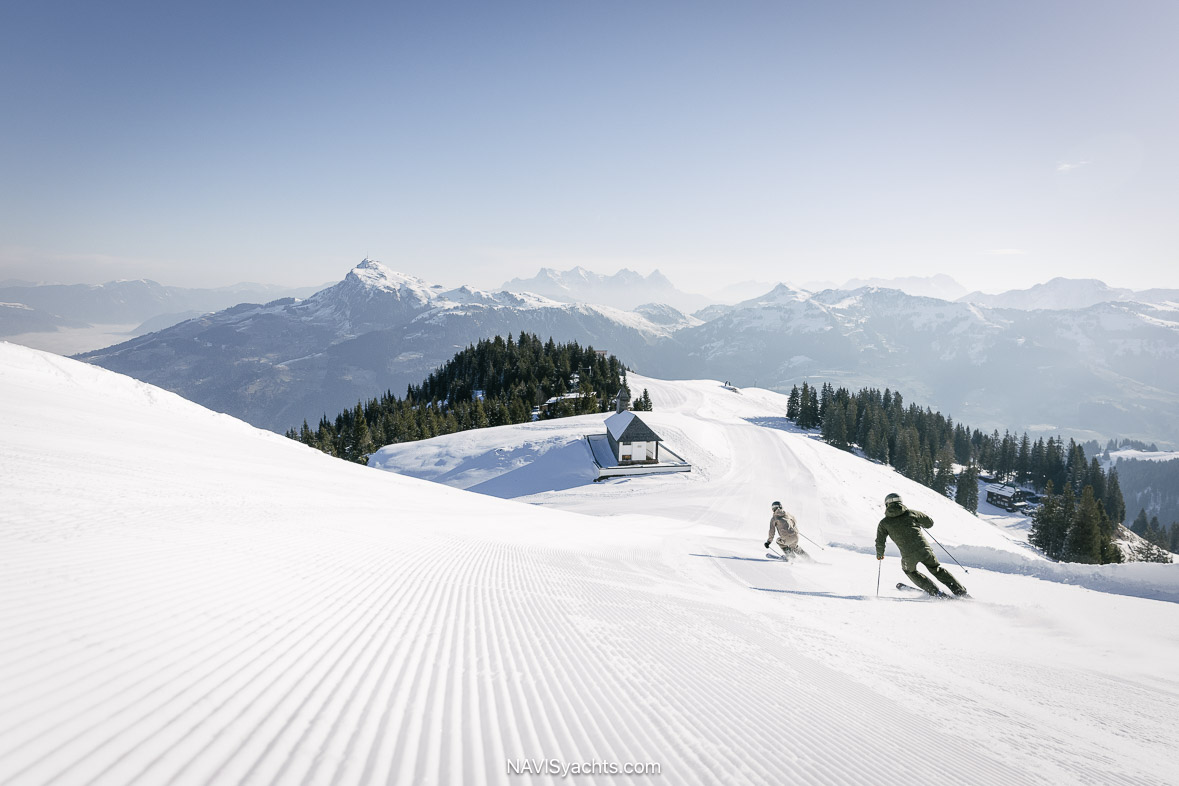
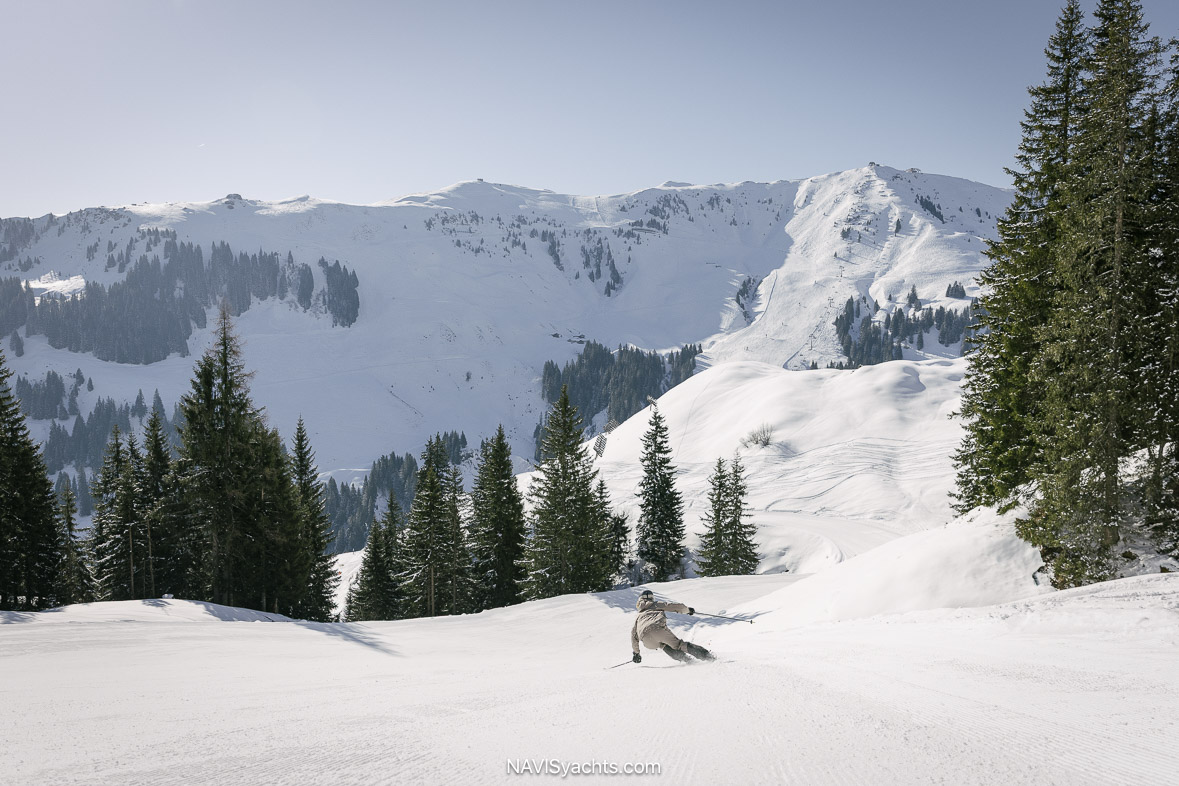
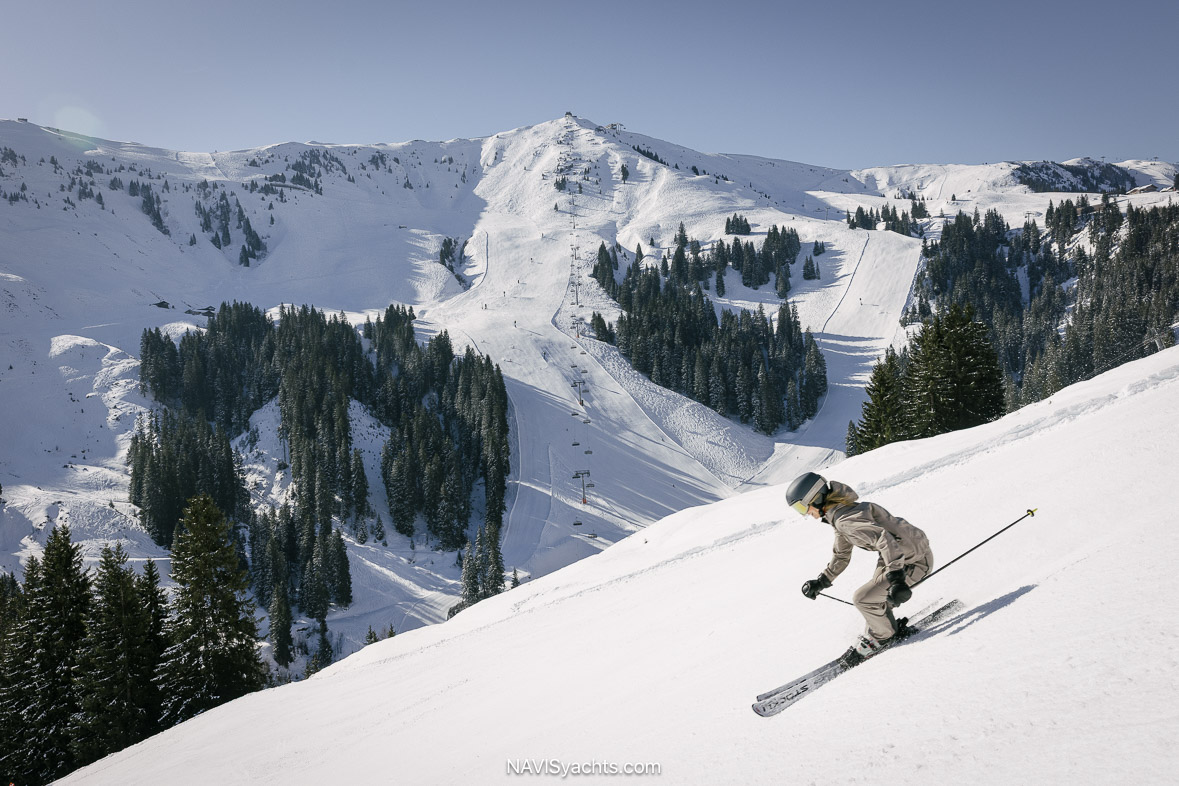
From below, particularly from our vantage point at Tennerhof, the mountain had appeared relatively comprehensible. From the summit, that illusion disappeared. Lifts and pistes extended outward toward the horizon across a white landscape of rolling ridges, valleys and successive mountain faces. We had expected the softer snow commonly associated with late-season skiing. Instead, conditions were remarkably good: beautifully groomed pistes, consistent coverage and, early in the morning, those immaculate corduroy lines that reward anyone willing to leave breakfast before everyone else.
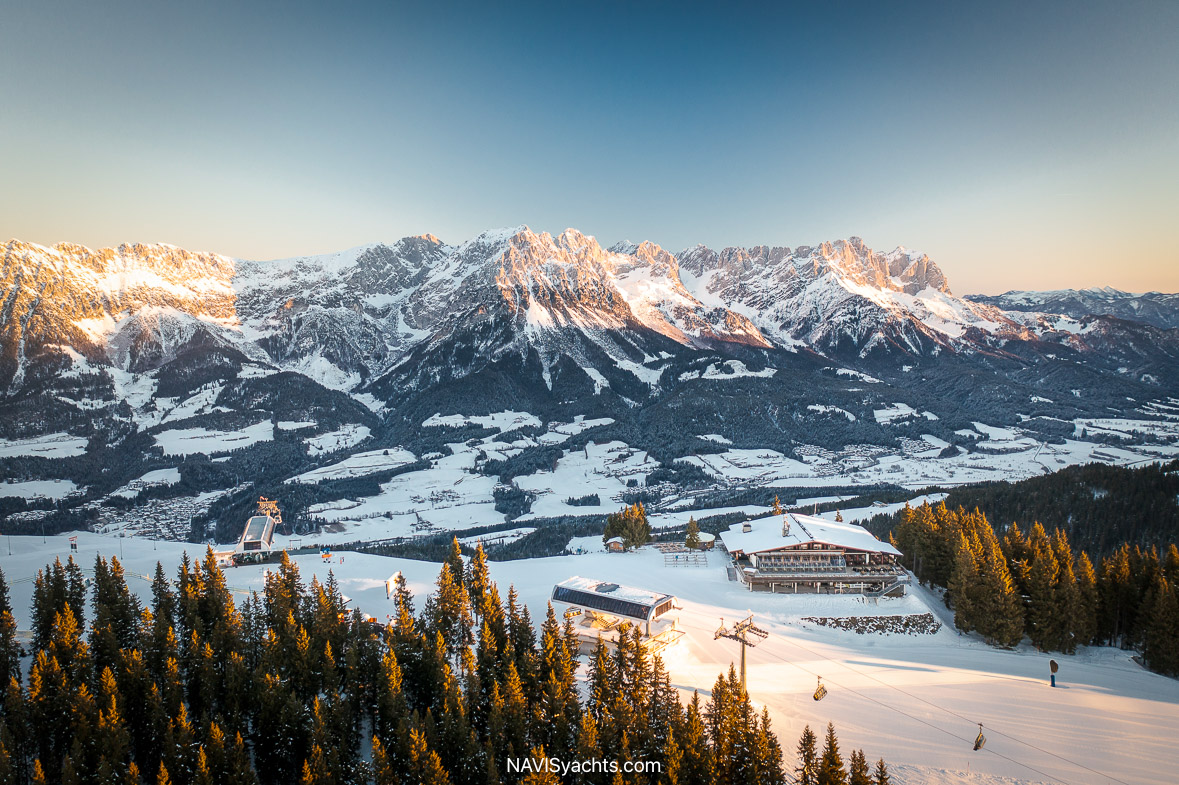
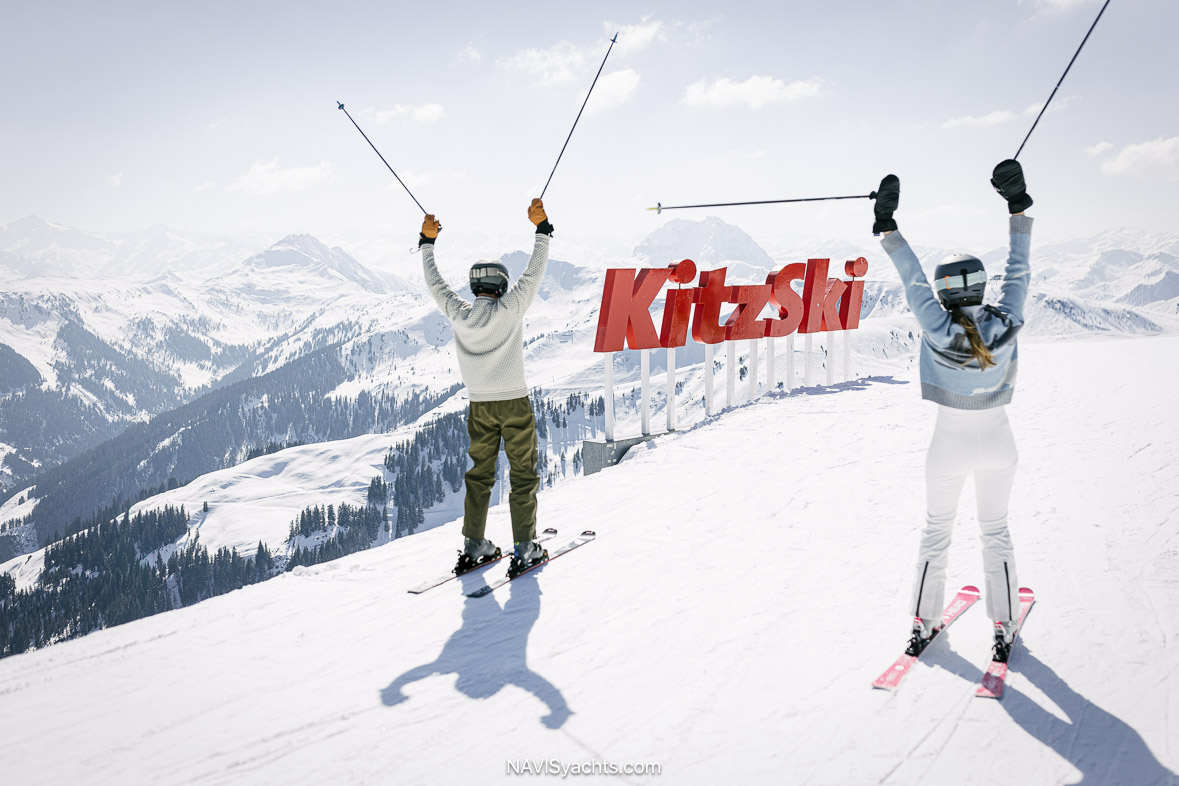
The greater KitzSki domain encompasses 145 miles (233 km) of pistes served by 58 lifts, extending across a broad interconnected mountain landscape toward Jochberg and beyond.
Numbers of that scale are useful, but they do not really explain the experience. What matters is how easily the mountain encourages movement. One lift reveals another ridge; one long descent leads naturally toward another sector; another gondola presents several more possibilities. There is always the temptation to see what lies beyond the next summit.
During our first day with Claudia we remained primarily within the broad Hahnenkamm sector. Here Kitzbühel reveals perhaps its greatest everyday strength. Much of the terrain we encountered was not designed to intimidate. It was designed to ski: long, wide and fast intermediate pistes, beautifully prepared and sufficiently varied to keep accomplished skiers entertained while remaining approachable for families and less aggressive skiers. More demanding sections appear throughout, but they are woven into a mountain that generally invites exploration rather than intimidation.
And there was space. Despite excellent weather and snow conditions, the pistes never felt oppressively crowded. On the earliest runs, there were moments when freshly groomed snow seemed almost ours alone.
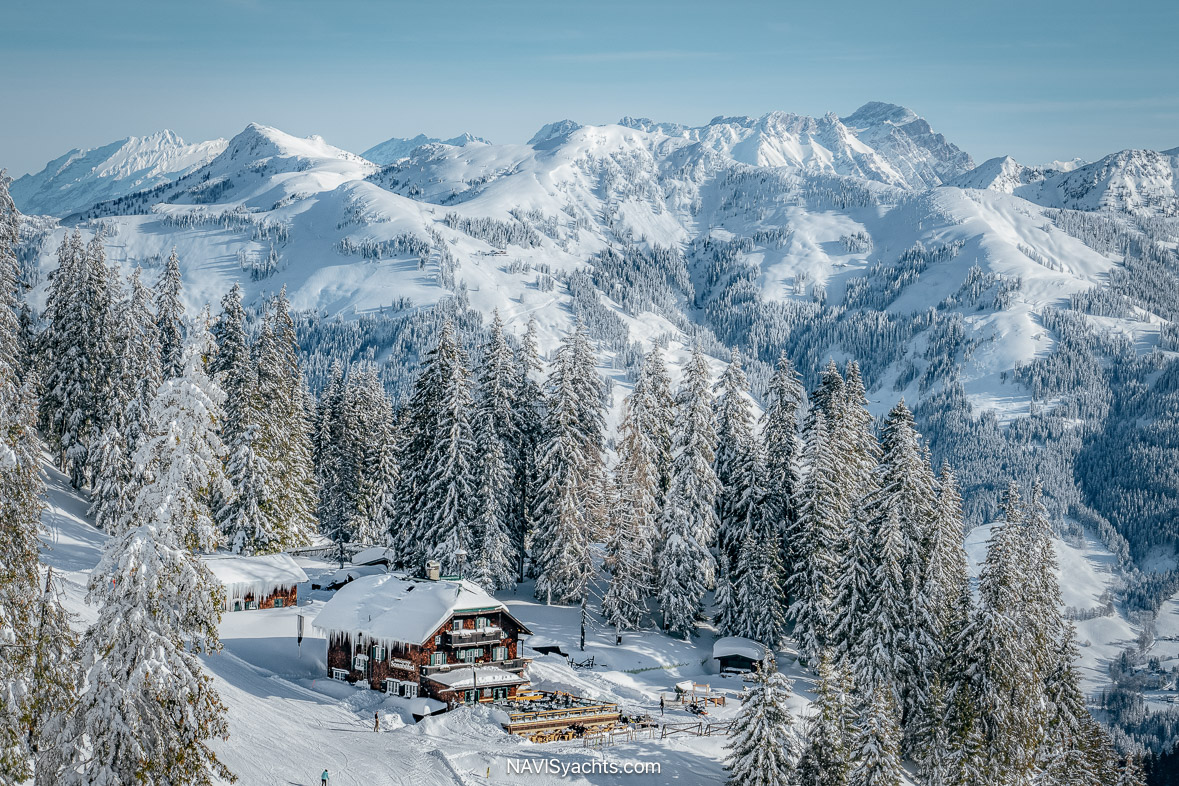
Partway through the day, we stopped at Berghaus Tirol, a traditional mountain chalet whose enclosed winter gallery overlooks the slopes. By lunchtime it was packed, with skiers filling the timbered interior over hearty Austrian cooking before returning to the pistes. Mountain restaurants are part of the rhythm of skiing here rather than simply places to refuel, and Kitzbühel has developed an impressive number of them across the resort.
By late afternoon, Claudia brought us back toward the Hahnenkamm summit for an encounter with the other Kitzbühel.
The Streif start house is surprisingly effective at stripping away the abstraction created by television.
Standing there, looking down, the racecourse ceases to be a distant white line across the valley. The gradient immediately falls away, the course enclosed by forest. From the start, it is impossible even to see very far down the track: the terrain simply disappears beyond the next change in pitch. We did not ski the racecourse, and standing at its beginning did nothing to make that seem an unfortunate omission.
The professionals do.
Every January they launch from this point onto a course where speeds can approach 93 mph (150 km/h). From the comfort of a television screen, those numbers sound impressive. Standing where the descent begins, they border on startlingly difficult to comprehend.
The contrast is essential to understanding Kitzbühel. The Streif provides the resort with its mythology, but it does not define the experience of skiing here for everyone else. Around one of the most intimidating racecourses in the sport lies an enormous and remarkably accessible playground.
We understood just how enormous on our second day.
This time our objective was less instruction than exploration. Accompanied by a younger guide from Horn 2000 Ski School, the pace changed immediately. The intention was simple: cover ground, follow the lifts, and discover how far this network could take us.
Eventually we reached the D9 3S-Bahn.
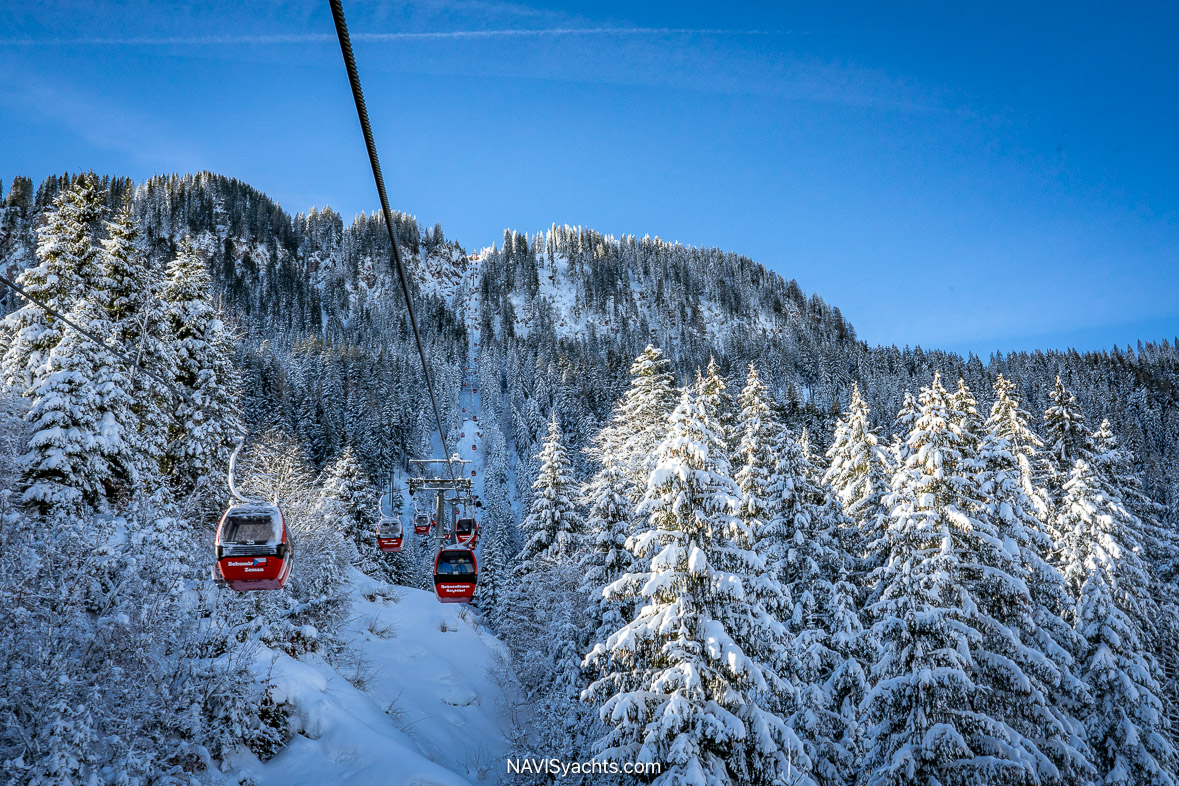
Until that point, it was still possible to imagine that we had understood the boundaries of Kitzbühel’s ski area. The 3S removes that illusion. The gondola crosses an entire valley from one mountain system to another, linking the Hahnenkamm/Pengelstein side with Jochberg and opening terrain that cannot even be seen from the summit where our first day began.
Even boarding it has its own small choreography. Unlike a conventional queue feeding skiers neatly into cabins, groups need to organize themselves across the boarding area as the large gondola continues moving. Stand single-file and the first members of the party can find themselves departing while the others wait for the next cabin. The solution, as we quickly learned, is to line up abreast and feed into the gondola together as it passes.
Across the valley, the skiing expands again.
Long pistes roll toward Jochberg and onward in the direction of Pass Thurn, with increasingly varied terrain and some more demanding descents. The trail map can tell you where you are; visually, however, the experience is one of successive white horizons: mountains folding behind mountains, groomed tracks disappearing into valleys, lifts leading toward ridges that reveal still more terrain beyond.
Lunch at Bärenbadalm provided another pause in that progression. The traditional Austrian mountain restaurant sits against an extraordinary panorama, and once again almost every table was occupied at midday. Traditional mountain dishes, timber interiors, skis parked outside and that immense view made it difficult to hurry.
Perhaps we should have.
Kitzbühel’s greatest temptation eventually caught us.
We kept going.
One more run became another lift, which revealed another slope, until late in the afternoon we looked at the map and confronted an amusing reality: we had skied too far across the system to make it back to Kitzbühel before the lifts began closing.
It is here that the quality of a large ski resort reveals itself in less glamorous ways. There was no drama. We continued downhill to Jochberg, where the resort’s transport network simply returned us to Kitzbühel. Signage throughout the mountain is excellent, connections are logical, and transportation provides a safety net for precisely this kind of overenthusiastic exploration.
It also taught us more about the scale of KitzSki than the figure of 145 miles (233 km) ever could.
Two full days had barely introduced it.
That, ultimately, may be Kitzbühel’s greatest appeal to the skier. Families can spend days on broad, forgiving pistes. Stronger skiers can move quickly across enormous distances and seek increasingly demanding terrain. Those driven by exploration can keep following lifts toward the horizon. And looming above all of it is the Streif, waiting for those with the skill, and perhaps the particular disposition, to discover what separates recreational confidence from World Cup courage.
More than a century after a single pioneering descent helped set all of this in motion, Kitzbühel has built an extraordinary winter world.
Yet once the skis are on and another empty morning piste opens beneath you, the essential pleasure is wonderfully simple:
There is always another mountain ahead.
One more run became another lift, which revealed another slope, until late in the afternoon we looked at the map and confronted an amusing reality: we had skied too far across the system to make it back to Kitzbühel before the lifts began closing... There was no drama.
The Art of Alpine Hospitality
After days discovering just how far Kitzbühel could take us on skis, there was something particularly satisfying about returning each afternoon to a place that seemed determined to make the world small again.
Tennerhof sits just above Kitzbühel, close enough that the old town can comfortably be reached on foot yet sufficiently removed from its center to feel genuinely secluded. Mountain trails begin almost at the property, while in the other direction the Hahnenkammbahn is less than five minutes away by hotel transfer. From the hillside, the view extends across Kitzbühel toward the Hahnenkamm and the Streif, a panorama that had introduced us to the town on arrival and became increasingly familiar each morning.
The property itself feels unmistakably Tyrolean. The main house is timbered and intimate rather than monumental, with interiors assembled over time rather than designed to conform to an international luxury vocabulary. Traditional details, artworks and furnishings fill the rooms, while members of the hotel team dressed in Austrian attire reinforce the sense that Tennerhof belongs specifically to this place. With only 39 rooms and suites in the main hotel, it retains proportions that allow hospitality to remain personal.
For our stay, however, we had an appealing variation on that experience: one of the Tennerhof Luxury Chalet Suites located immediately beside the main property.
The concept combines two things that luxury hotels do not always reconcile particularly well: independence and service. These are complete residences rather than oversized hotel rooms, with separate bedrooms and en-suite bathrooms, living and dining areas, kitchen facilities and private outdoor space. Depending on configuration, Tennerhof’s chalets accommodate up to six guests, while private wellness facilities extend the sense of self-containment. Yet the restaurants, spa and services of the five-star hotel remain just outside the door.
It proved particularly well suited to a winter stay. There was space to return with the inevitable accumulation of ski clothing and equipment without feeling as though everything had invaded the bedroom. There was a proper living room in which to gather at the end of the day, a fireplace, and a broad balcony opening toward perhaps the chalet’s greatest luxury: the uninterrupted view across Kitzbühel and the mountains beyond.
The result feels closer to temporarily having a home in Kitzbühel than occupying a hotel suite.
Yet being at home rarely comes with quite this level of backup. The main hotel remains only steps away, its staff exceptionally polished without allowing service to become stiff or overly ceremonial. Transfers made the journey to the lifts almost effortless, while the location allowed us to leave the property on foot when we wanted to experience town rather than the mountain. Tennerhof manages the difficult trick of feeling secluded without actually being inconvenient.
Our Rolls-Royce looked strangely at home there, too. Against the timber architecture and quiet grounds, the Cullinan’s presence felt less conspicuous than one might expect, as though both car and hotel shared an understanding that luxury need not announce itself particularly loudly.
But one of the most important elements of staying here only really revealed itself after skiing.
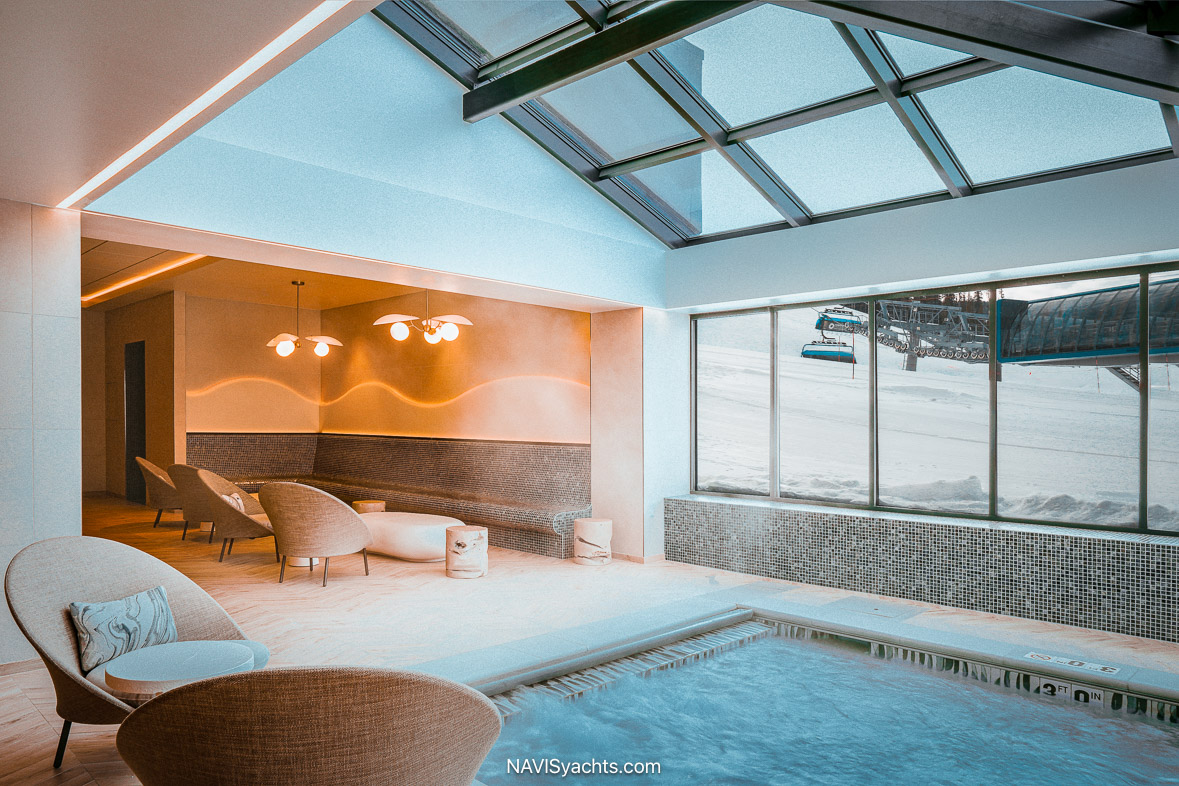
Austria takes wellness seriously, and in a winter destination that culture makes practical sense. After six or seven hours outside, skiing continuously in cold mountain air, the spa ceases to feel like an optional hotel amenity. Heat, water and rest become part of the day’s natural progression.
At Tennerhof, we developed our own ritual.
Each evening brought us to Spa de Charme, moving between sauna, cold-water immersion, the indoor pool and finally the relaxation area. Heat releases muscles tightened by hours on skis, the plunge into cold water provides a considerably less gentle awakening, and the quiet that follows becomes almost involuntary.
The hotel’s complete Spa de Charme offering extends beyond what we personally used, with a Finnish sauna, saunarium, steam bath, indoor pool, whirlpool in winter, and dedicated relaxation spaces including a panoramic room overlooking the Kitzbühel Alps.
There is also a cultural distinction worth knowing before entering the sauna area. The sauna experience we encountered follows the traditional Austrian approach: it is an adults-only, textile-free environment, with towels available for modesty as desired. For visitors accustomed to spas where swimsuits remain on everywhere, the custom may initially feel unfamiliar.
Within its proper context, however, it is simply part of a long-established Central European sauna culture, and after a demanding day on the mountain, an exceptionally effective recovery ritual.
The main hotel’s living room and rounded bar became a favorite meeting place before dinner. A skilled barwoman presided over it, equally capable of producing an elaborate cocktail or pouring the cognac that accompanied one of our most enduring memories of Tennerhof: settling beside the fire while the bells from Kitzbühel carried faintly uphill from the old town.
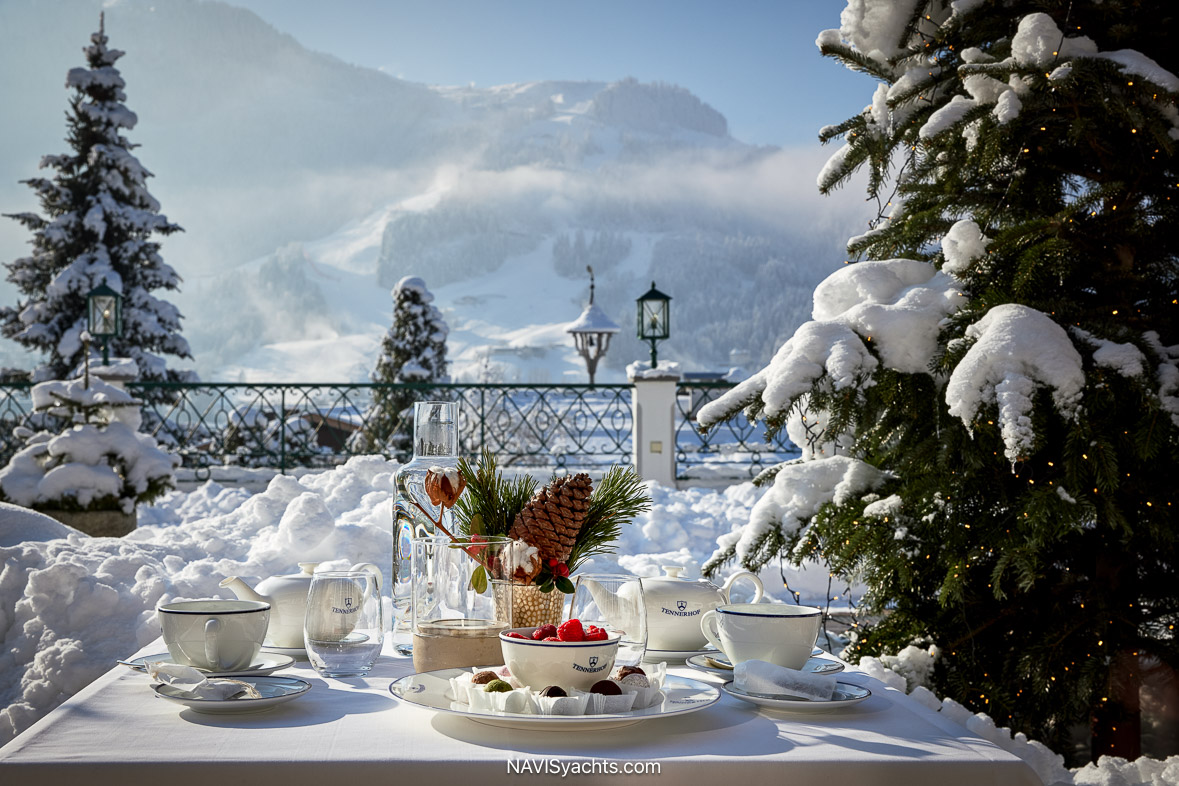
This is where the property is perhaps at its best. There are grander hotels in the Alps and certainly larger ones, but Tennerhof’s particular luxury is intimacy. It is a property we would especially recommend for couples and mature travelers seeking quiet, highly attentive hospitality rather than a hotel that attempts to become a destination unto itself.
Kitzbühel, however, offers convincing alternatives for travelers looking for something entirely different.
During our stay we visited several of them, and the contrast demonstrated just how varied the town’s upper end of hospitality has become.
Weisses Rössl presents almost the opposite proposition to Tennerhof. Its atmosphere is younger and more fashion-conscious, with contemporary interiors, modern dining and a social energy built around music and DJ-driven evenings. Its central position also places guests close to Kitzbühel’s nightlife. For younger couples, groups of friends or active skiers who want the energy to continue after the lifts stop running, it offers a compelling alternative to Tennerhof’s retreat-like character.
At the other end of the scale, Schlosshotel Kitzbühel impressed through sheer completeness. This is the option we would look toward for families or larger groups wanting much of their holiday contained within a single resort environment: expansive common spaces, substantial wellness facilities and several dining possibilities. Its current offering includes three distinct restaurants, while its Momentum Spa forms a significant component of the property in its own right. It is a considerably larger hospitality experience than Tennerhof and serves a correspondingly different type of stay.
Hotel Kitzhof occupies an interesting middle ground. Architecturally and atmospherically, it retains a recognizably Austrian mountain identity, but on a larger scale than Tennerhof, with expansive public spaces and substantial restaurant areas. Most importantly for skiers, its location places the mountain infrastructure conveniently close at hand. For guests who want the facilities and social spaces of a larger hotel while retaining a stronger sense of Alpine place, it struck us as a particularly balanced option.
These properties are different enough that ranking them against one another would rather miss the point. What Kitzbühel offers instead is the ability to choose the version of winter hospitality that suits the journey: intimate chalet living, fashionable social energy, a self-contained resort for families, or the scale and convenience of a larger Alpine hotel.
Our choice remains Tennerhof.
Not because it attempts to offer everything, but because it understands particularly well what should happen when the mountain day ends. The skis come off. The sauna heats up.
The fireplace is lit. Someone pours the cognac. Across the valley, the Streif gradually disappears into darkness.
And for a few hours, Kitzbühel slows down.
Beyond the Last Run
Eventually, even in Kitzbühel, the lifts stop turning. But the experience of the destination is far from over.
For a town of its scale, Kitzbühel has developed a remarkably diverse gastronomic scene. Traditional Tyrolean cooking, contemporary interpretations of regional cuisine, ambitious fine dining and the conviviality of mountain restaurants all coexist within a few miles. Over several days, we experienced very different sides of that world, and together they revealed something important about Kitzbühel: gastronomy here is one of the pleasures around which a winter stay can be built.
There are evenings when nothing feels more appropriate than an Austrian dining room and the classics that belong to it. At Landhotel Vordergrub, that meant Wiener Schnitzel, Tafelspitz and beer served in a ceramic mug, in an atmosphere that was warm, informal and unmistakably local. It was traditional cooking without unnecessary reinterpretation, the kind of meal that feels particularly satisfying after hours spent in the cold.
Kitzbühel, however, is equally comfortable presenting a more contemporary version of itself.
At Mocking, positioned at the foot of the Hahnenkamm, an open kitchen immediately establishes a different rhythm. Regional ingredients and familiar Austrian references remain, but they are handled with a more modern sensibility. Hand-chopped beef tartare, smoked local trout and Tyrolean cheese dumplings were among the dishes that showed how easily the local culinary language can move from tradition toward a more contemporary, chef-led experience.
At the other end of the spectrum was our dinner at Tennerhof, the gastronomic high point of the visit.
We had already evaluated the restaurant independently for NAVIS Curated, where it achieved an exceptional 4.95 out of 5, and subsequently dedicated a full NAVIS review to the experience. There is little reason to repeat that examination here. What matters in the context of Kitzbühel is what Tennerhof adds to the destination’s culinary range.
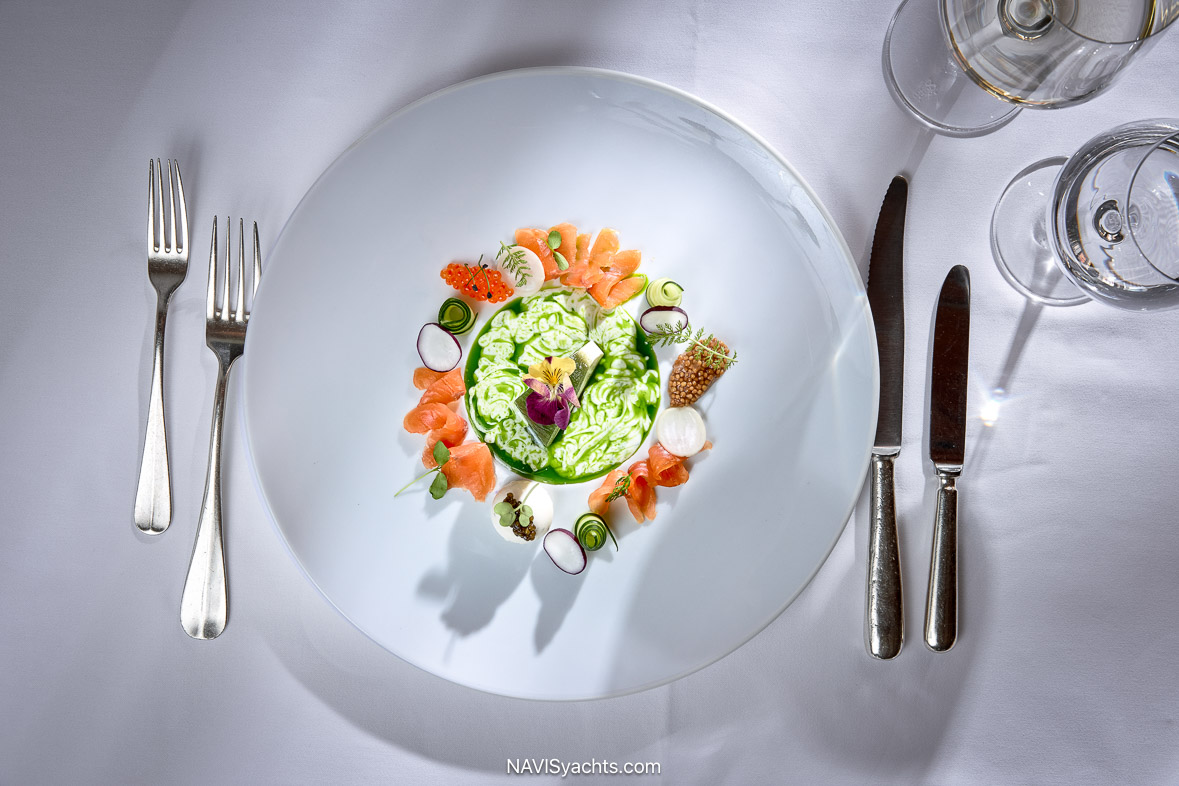
Our custom tasting menu was sophisticated without losing its connection to place. Sea urchin, scallop and white strawberries appeared early in the progression, while Tyrolean milk-fed veal with morels, wild garlic and peas brought the experience firmly back to the region. Carefully selected wine pairings accompanied the menu, while the service, among the strongest elements of our NAVIS evaluation, combined precision with the warmth one hopes to find in an Alpine hotel.
It was an accomplished fine-dining experience, but importantly, it still felt Austrian.
And Kitzbühel’s gastronomic landscape is not confined to what happens after sunset. Some of the most enjoyable meals of a ski trip inevitably happen while still wearing ski boots. During our days exploring KitzSki, Berghaus Tirol and Bärenbadalm became part of the rhythm of the mountain itself. We have already encountered both earlier in this story, so there is little value in describing them again. Their importance here is broader: they complete the gastronomic spectrum.
A winter day in Kitzbühel can therefore move from lunch high on the mountain to an uncomplicated plate of Austrian comfort food in town, from a contemporary kitchen to a carefully orchestrated tasting menu.
That range may be one of Kitzbühel’s less obvious luxuries.
The skiing may determine the shape of the day, but there is no reason for the experience to peak with the final descent.
And on some evenings, what happens next has very little to do with dinner. At The Londoner pub, the Hahnenkamm follows you indoors.
After standing at the Streif start house and looking down the course ourselves, entering this crowded pub felt like discovering an unofficial final section of the race.
Photographs cover the walls. Ski memorabilia hangs overhead. Old pieces of equipment and protective gear have accumulated around the room until the place feels somewhere between a pub and an improvised museum of Kitzbühel’s racing culture.
Nothing about it is particularly polished.
That is precisely why it works.
The stories here are not about immaculate pistes or the statistics of the race. They are about the people who have actually thrown themselves down it. During our visit, we were introduced to the idea of the Hahnenkamm’s “Heroes,” reflecting a culture of admiration that extends beyond the podium to the courage required simply to face the Streif.
The Londoner reveals something that statistics cannot. The mythology of the Hahnenkamm spills into the town. It remains in photographs, stories, old ski equipment, crowded bars and conversations long after the race barriers have disappeared.
The mountain follows everyone home.
A Town That Makes Things
There was another side of Kitzbühel that became apparent only after spending time away from the slopes.
It is easy to look at the boutiques, hotels and restaurants of a successful Alpine resort and see an economy created around tourism. Kitzbühel is certainly that, but it is not only that. Behind some of those storefronts are businesses that were born here, continue to create here and, in several cases, have carried a distinctly Kitzbühel identity far beyond the Tyrol. The Frauenschuh family provides a particularly revealing example.
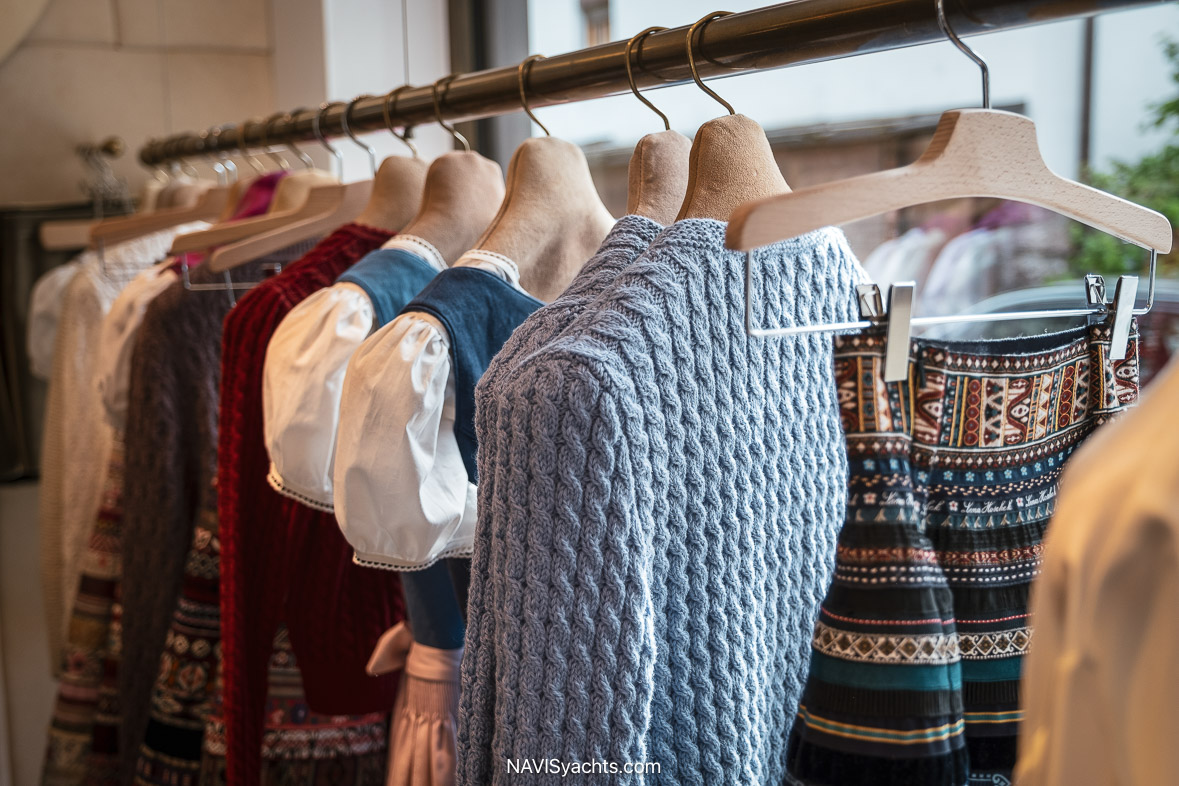
What began around 1950, when Anna and Hans Frauenschuh established a small leather tannery in Kitzbühel, has evolved across three generations and in two distinct directions. Hans Frauenschuh remains closest to those artisanal origins. In the workshop we visited, deerskin, wool, patterns, tools and worktables made clear that this was not simply retail dressed in Alpine nostalgia. Things are still made here, with traditional knowledge remaining part of an active business rather than something preserved for display.
The contemporary FRAUENSCHUH brand grew from those same family roots but followed a different trajectory. Under the next generation, the business moved into fashion and eventually technical sportswear, combining materials such as loden and wool with modern performance fabrics. What originated in a Kitzbühel leather workshop became a luxury clothing identity recognized well beyond Austria.
Sportalm offers another expression of the same larger phenomenon: a fashion business born in Kitzbühel rather than brought to it.
These companies interested us as evidence of something easily overlooked in a famous resort town. Kitzbühel does not merely consume luxury. It creates, employs, designs and produces.
Tourism may bring the world to Kitzbühel, but some of what is created here travels in the opposite direction.
More Than the Mountain
Perhaps the best destinations are the ones that become more complicated the longer you stay.
We came to Kitzbühel knowing its reputation. The Hahnenkamm, the Streif and generations of ski racing have made this small Tyrolean town one of the most recognizable names in winter sport. What we had not fully anticipated was how little that reputation explains the experience of actually being here.
What remains with us is the scale of the skiing, the feeling that another valley, another lift and another run were always waiting beyond the one we had just discovered. It is the quality of the snow and those long days when there seemed little reason to come down.
But other memories compete with the mountain.
Walking through the medieval center after dark. A remarkable dinner at Tennerhof. Discovering that behind some of those immaculate shop windows people are still cutting leather, working with wool and building businesses that have been passed from one generation to another. And entering a pub where the equipment, photographs and stories of ski racers make the Hahnenkamm feel part of the collective memory of the town.
That may ultimately be what distinguishes Kitzbühel.
Many winter destinations have excellent skiing. Some have exceptional hotels and restaurants. Others have history, glamour or a beautiful town waiting at the bottom of the mountain. Kitzbühel has somehow allowed all of them to grow together.
The skiing brought us here.
Everything around it is what made us want to stay.
The NAVIS team acknowledges with gratitude the generosity of a variety of hosts and sponsors involved in the making of this perfect winter journey.
For insight and hospitality, we thank the following without which this trip would not be possible:
- Austria Tourism
- Kitzbühel Tourismus
- Relais & Châteaux Hotel Tennerhof
Essential equipment, tech, and performance wear made possible by:
- Helly Hansen
- Mammut
- Victorinox
- CARDO Systems
- Gill
- USWE
Written by Pablo Ferrero - Photographed by ©️ Kitzbühel Tourismus & Navis Media