
Fifty Years Up Lone Peak
In December 1973, a gondola and three chairlifts began carrying skiers onto the flanks of Lone Mountain.
One of the people responsible was Chet Huntley, a Montana native better known to millions of Americans as the co-anchor of NBC’s Huntley-Brinkley Report. Huntley had left television three years earlier and returned west with an improbable second act in mind: helping create a ski resort beneath an 11,000-foot mountain in southwest Montana.
He lived only long enough to see its first winter.
Big Sky continued without him, growing across terrain Huntley could only have imagined accessing. Boyne Resorts acquired the property in 1976. New lifts reached farther around Lone Mountain. The original Lone Peak Tram arrived in 1995. Moonlight Basin’s terrain joined Big Sky two decades later.
Then, on December 20, 2025, another piece of the original resort disappeared. The Explorer chair, operating since Big Sky’s opening year, was replaced by a 10-passenger gondola.
There is something fitting about that exchange. Fifty-two years separate Huntley’s first lifts from Explorer Gondola, yet Big Sky has spent much of that time working on the same problem: how to make more of Lone Mountain accessible. For the 2026–27 winter, that idea reaches its most complete form yet.
A Mountain That Refuses to Be Background
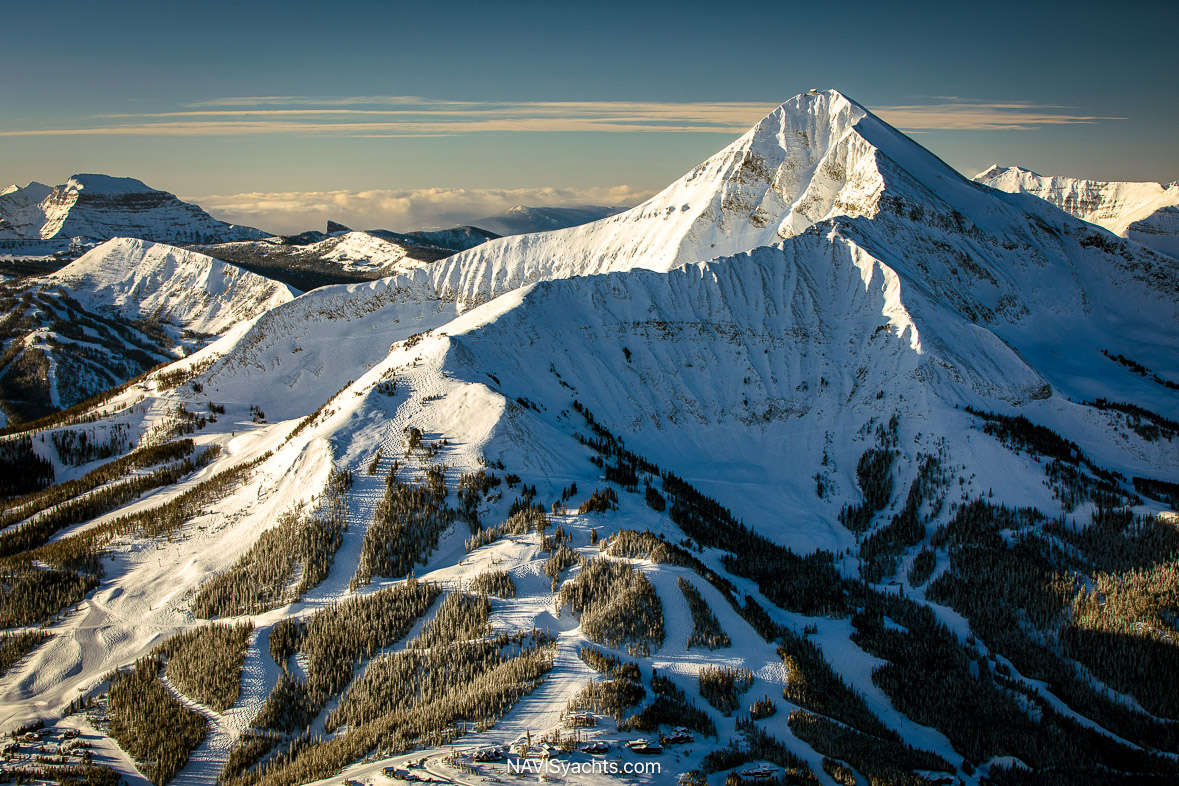
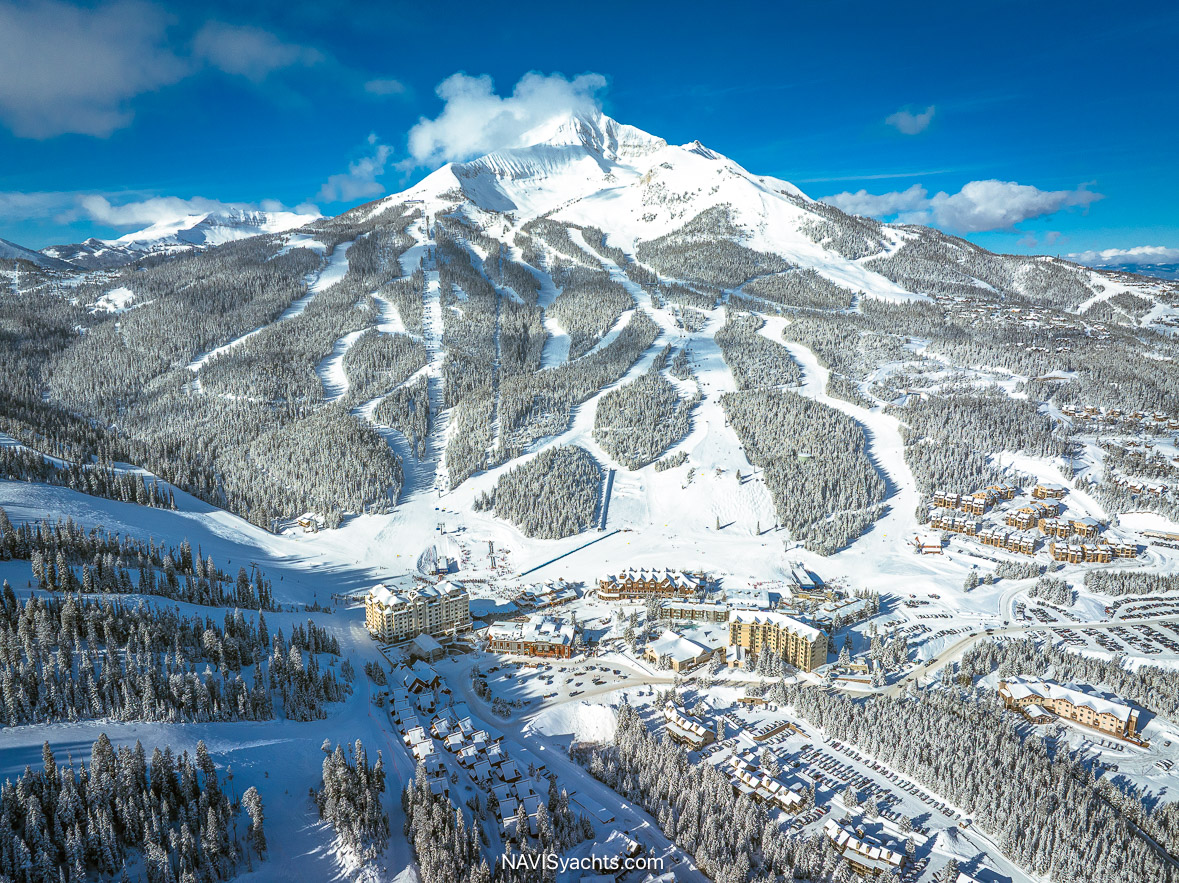
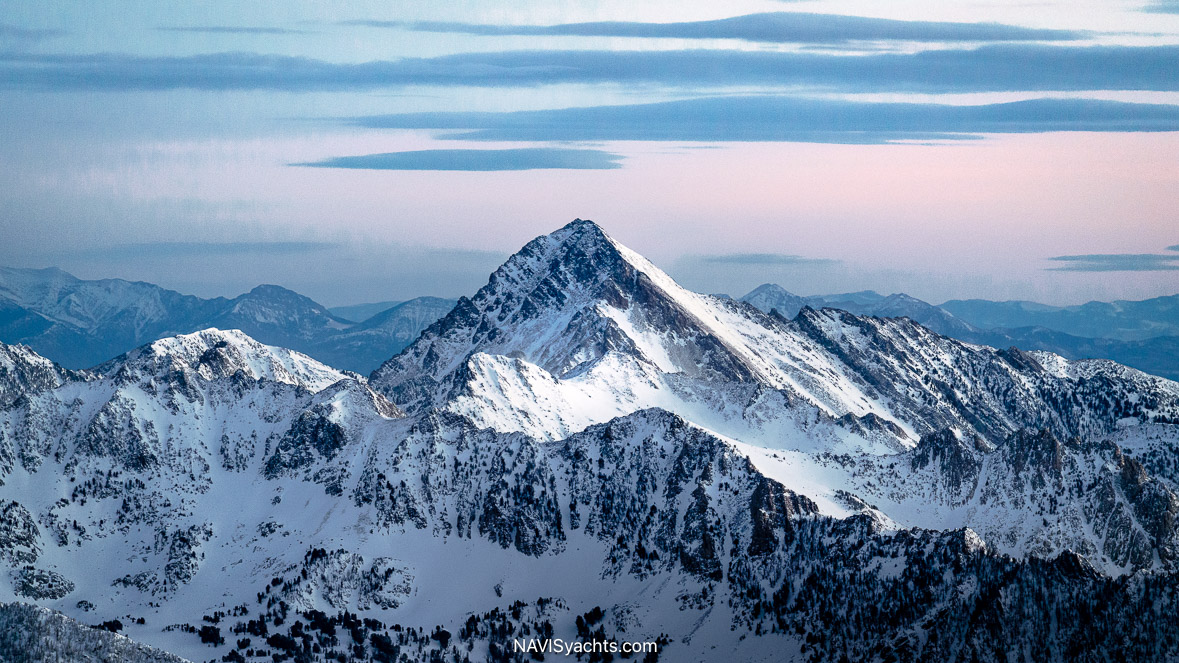
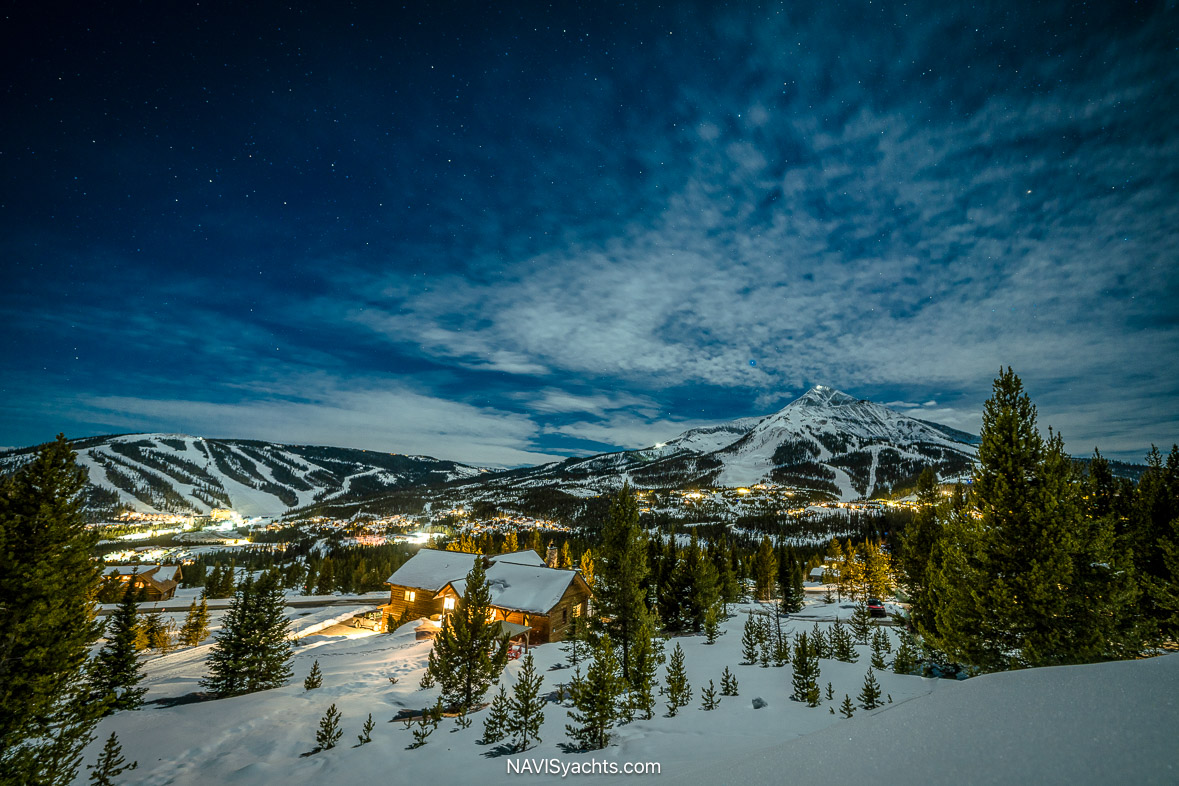
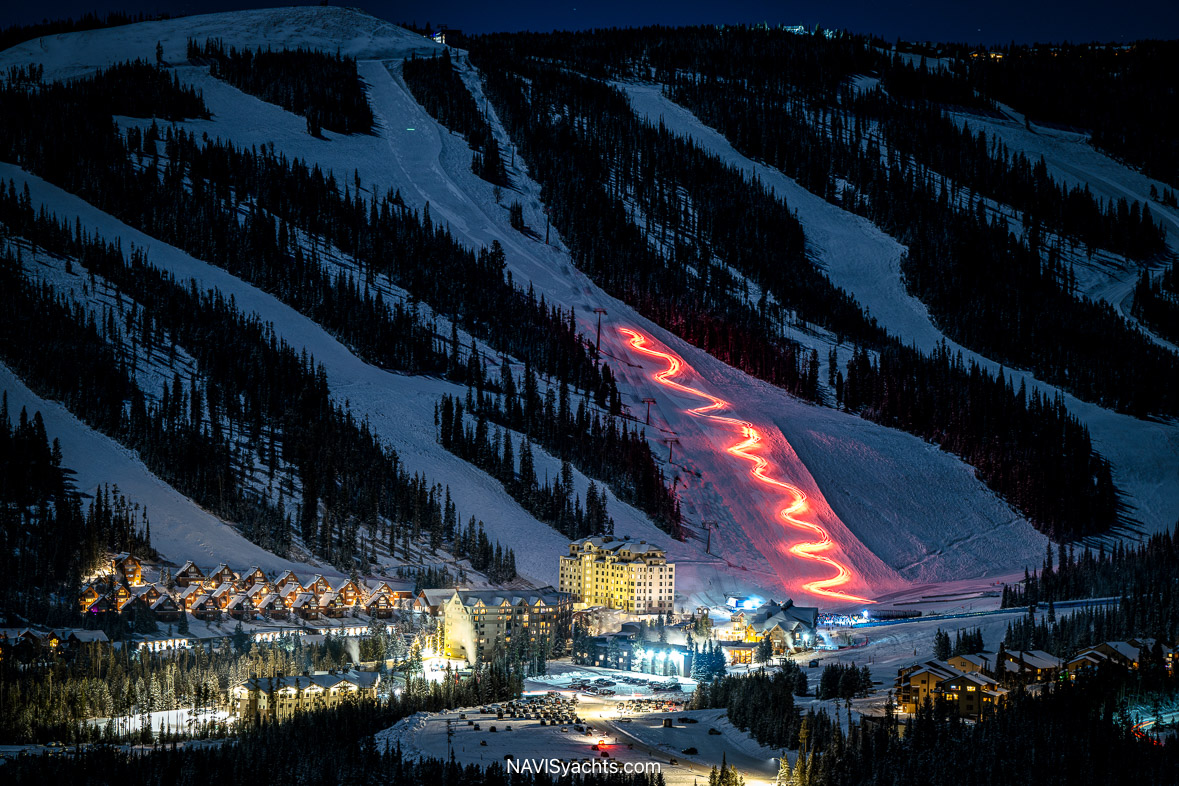
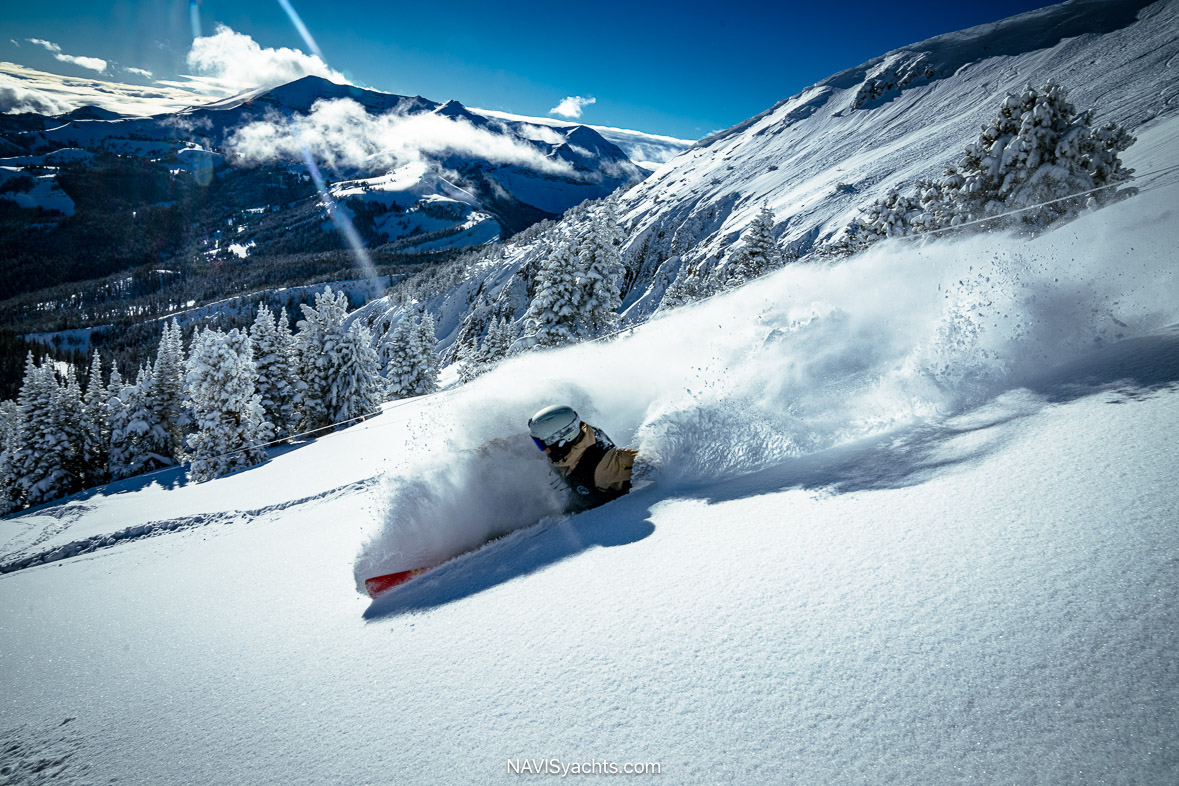
Lone Peak does not sit politely behind Big Sky. It organizes the entire place. Its summit rises to 11,166 feet (3,403 m), with skiing extending across 4,350 vertical feet (1,326 m) and around 300 degrees of the mountain. The resort currently counts 5,850 skiable acres and more than 320 named runs. Those figures put Big Sky among the largest ski areas in North America, but acreage alone does a poor job of explaining it.
What matters is how that terrain is distributed.
Lower slopes provide the expected greens, groomed cruisers and intermediate skiing, while the mountain changes character dramatically toward Lone Peak. Challenger and the Headwaters introduce steeper lines. Higher still, terrain reached from the Tram includes couloirs, narrow chutes and exposed alpine skiing where route choice and conditions matter considerably more.
Big Sky grades 31 percent of its terrain advanced, another 11 percent expert and 8 percent “extreme.” Those classifications are more revealing than its trail count. Half of the mountain, by the resort’s own current breakdown, sits beyond the beginner-to-advanced-intermediate categories.
The Big Couloir is perhaps the clearest expression of that side of the resort. Skiers entering it face controlled access requirements, including skiing with a partner, and Big Sky specifically recommends professional guidance for guests unfamiliar with its more consequential terrain. Avalanche exposure exists within the resort’s high alpine areas despite mitigation work, another reason Lone Peak should be approached as serious mountain terrain rather than another collection of marked runs.
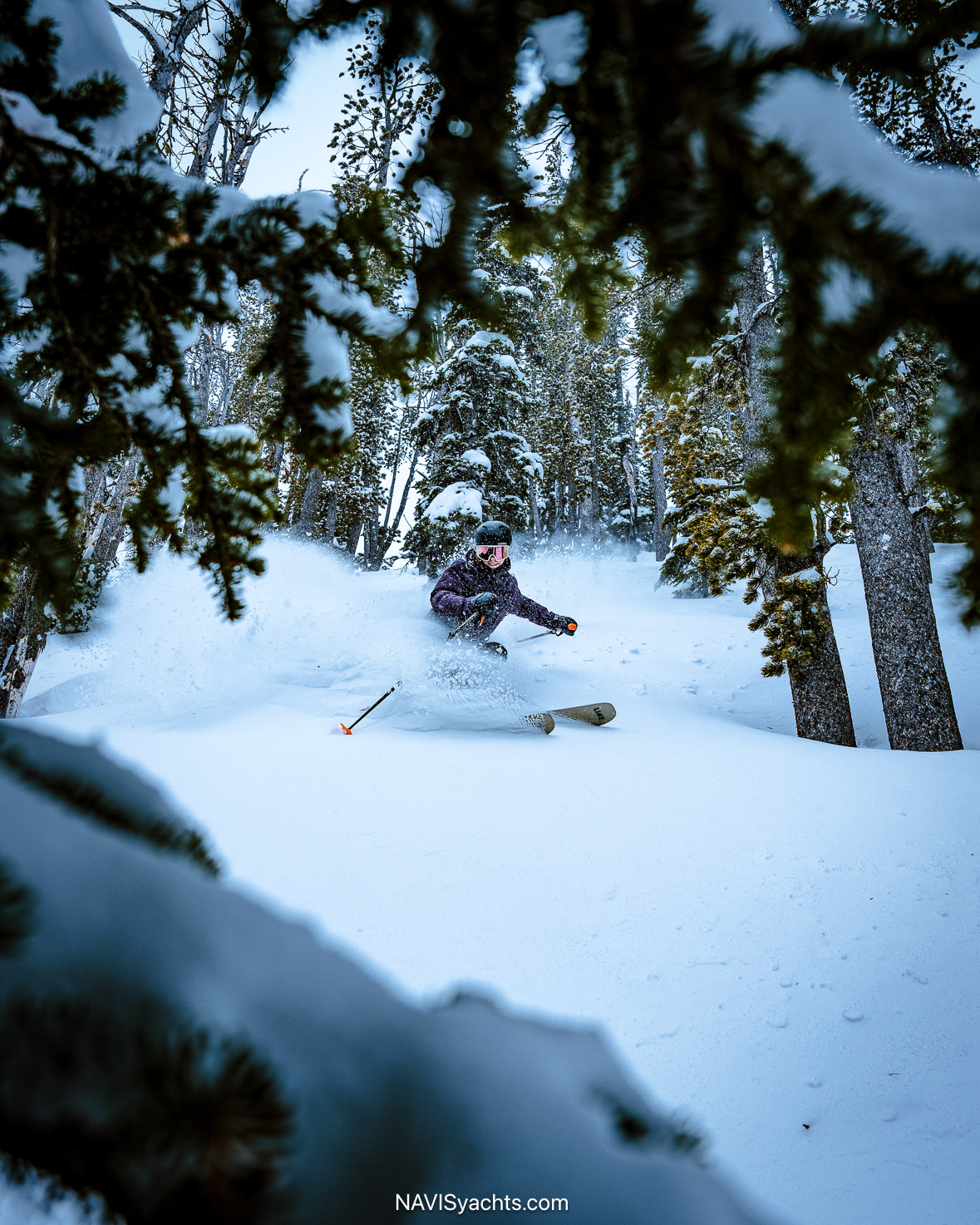
Yet expert skiing is only one version of Big Sky. A family can spend the day far below the summit. An intermediate skier can cover enormous distances without touching its most technical terrain. Six terrain parks add another layer altogether.
The mountain allows very different ski days to happen on the same piece of geography.
Reading the Snow
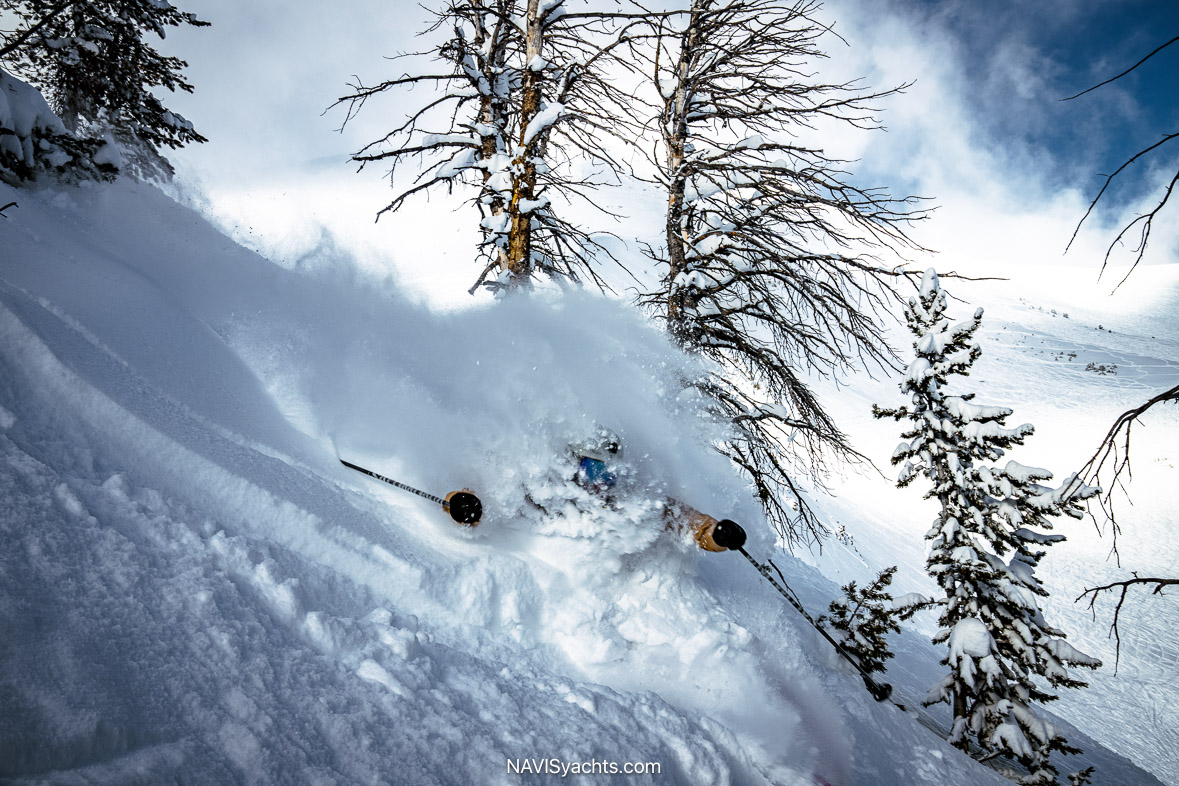
Big Sky publishes an average of approximately 400 inches (1,016 cm) of snowfall annually. The more interesting detail is that there is no single Big Sky snowpack.
The resort uses multiple weather stations because Lone Mountain produces significant differences in conditions from one sector to another. Elevation, wind, sunlight and storm direction all alter snow accumulation across its faces. Big Sky even avoids publishing a simple season-to-date snowfall total, preferring base-depth measurements that better describe the settled snow actually lying on the mountain.
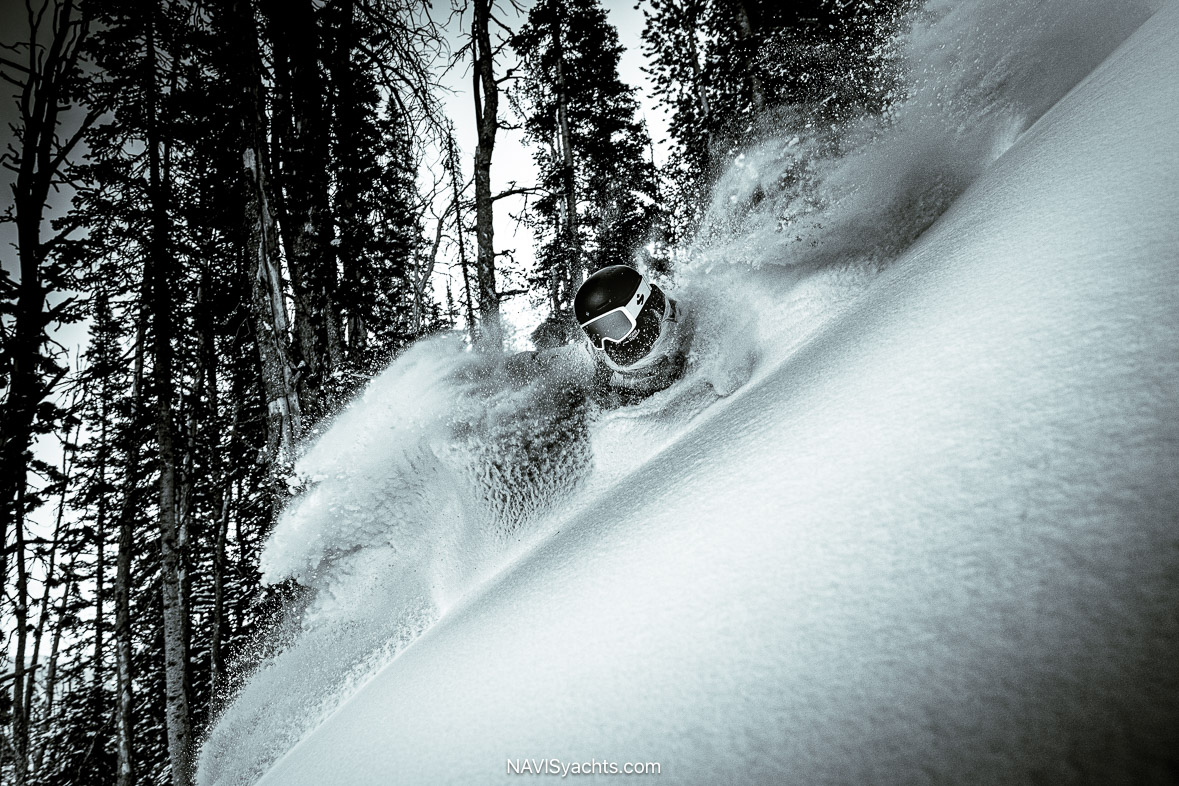
That variability matters on terrain this large and steep. A report from one part of the mountain may not describe what is happening several lifts away. Wind can redistribute snow in the alpine. Exposure can change preservation. Tree-covered areas behave differently again. For an experienced skier, that makes understanding the mountain part of skiing it.
It also helps explain why Big Sky’s scale means more than acreage. There are decisions to make here.
Fifteen Minutes to 11,166 Feet
Big Sky announced its “Big Sky 2025” plan in 2016. Nearly a decade of lift investment followed, including the replacement of the original Lone Peak Tram in 2023.
Explorer Gondola and Kircliff completed that program in December 2025.
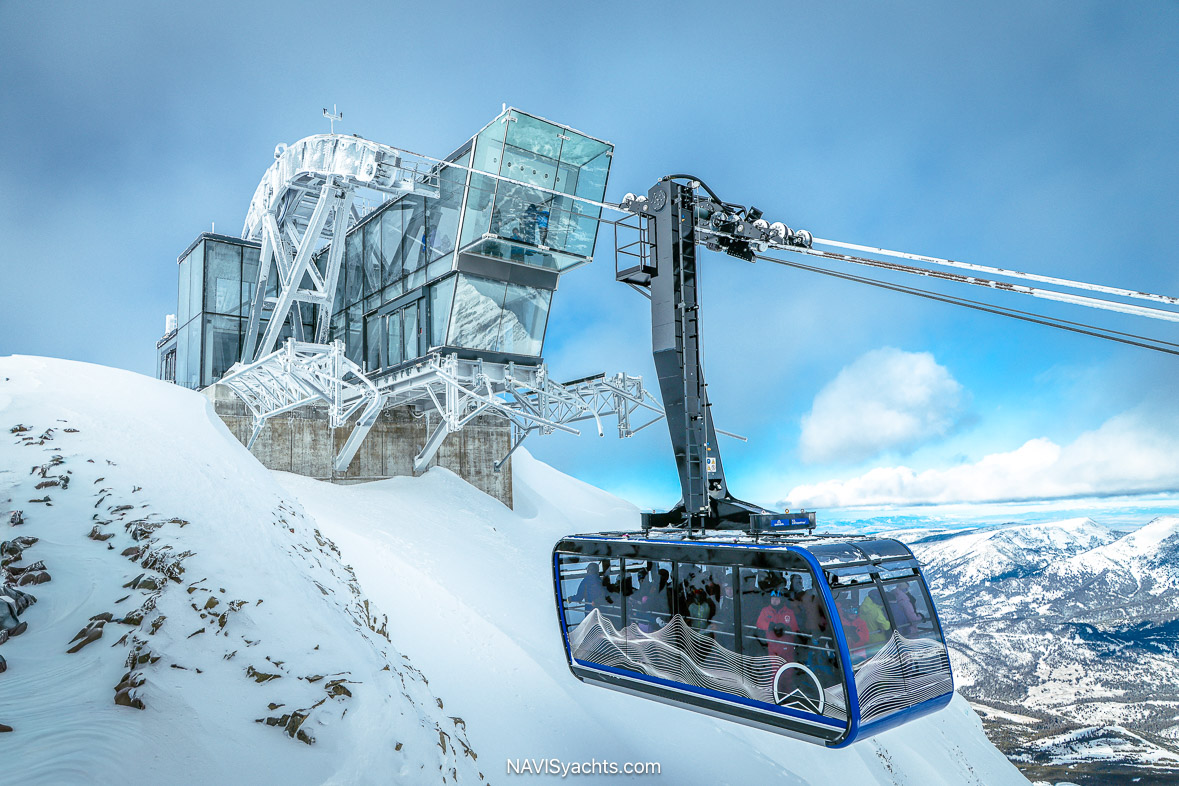
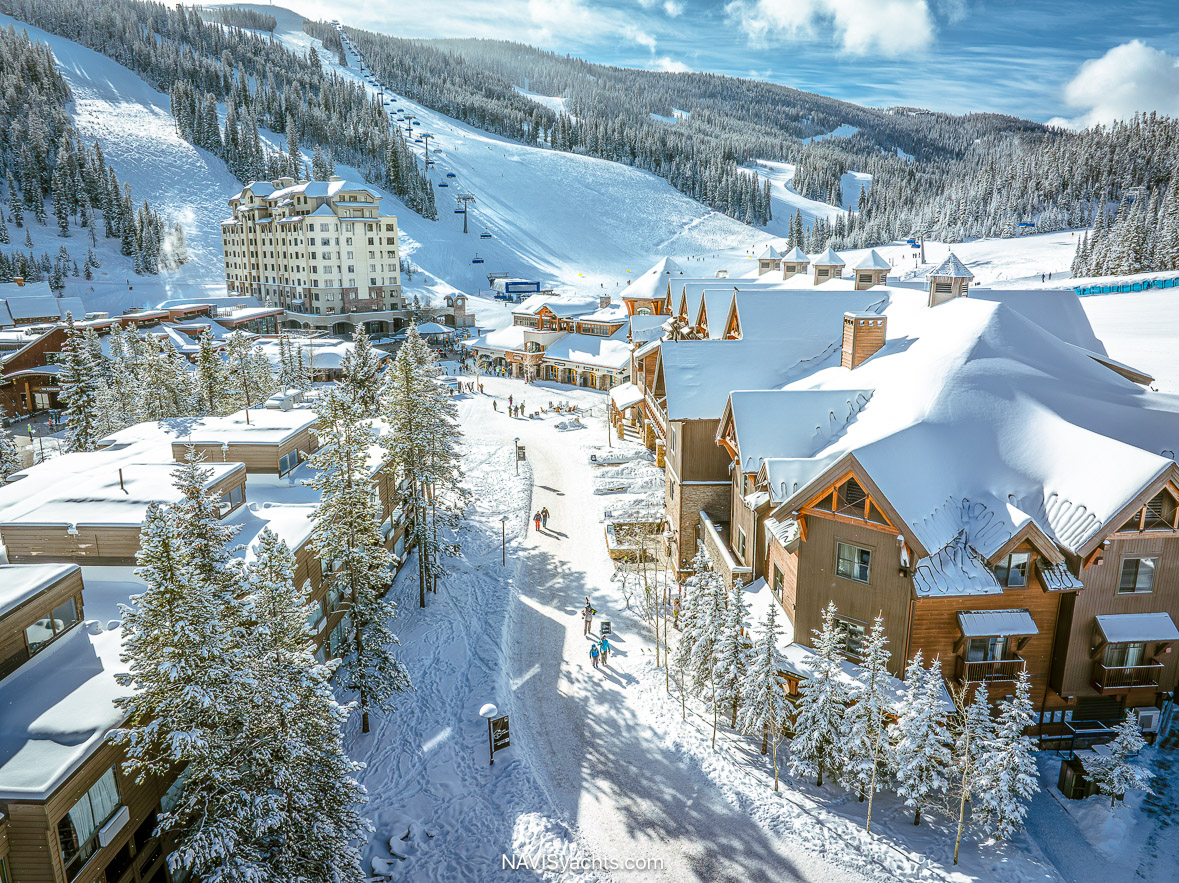
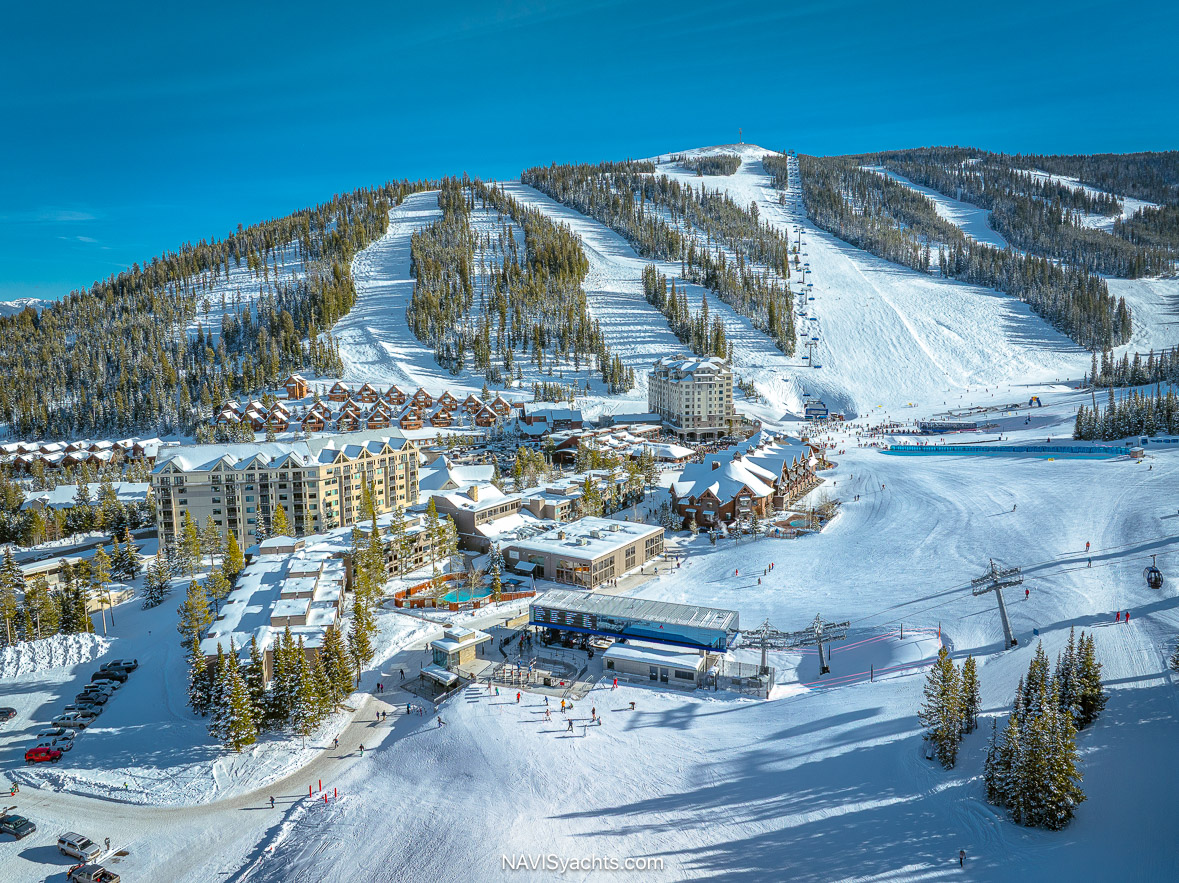
The new gondola uses 83 ten-passenger cabins and carries as many as 2,850 skiers per hour, more than twice the uphill capacity of the lift it replaced. A mid-station serves lower mountain terrain; continuing upward brings passengers to approximately 9,000 feet (2,743 m), beside the lower terminal of the Lone Peak Tram. Big Sky puts the complete Mountain
Village-to-summit journey at about fifteen minutes.
For winter 2026–27, this will be the first season in which that new route operates from beginning to end for a full winter.
Its significance goes beyond speed.
Until recently, standing on top of Lone Peak belonged largely to skiers prepared for what came afterward. Kircliff changes that relationship.
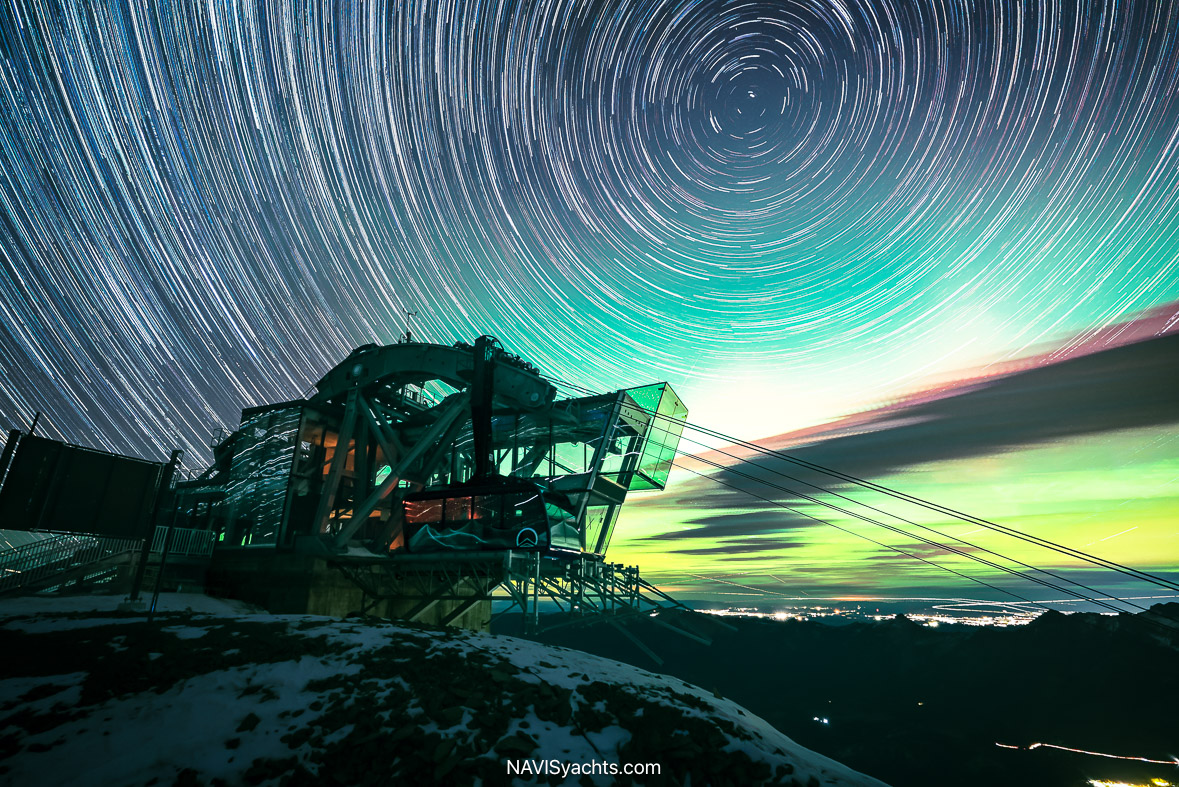
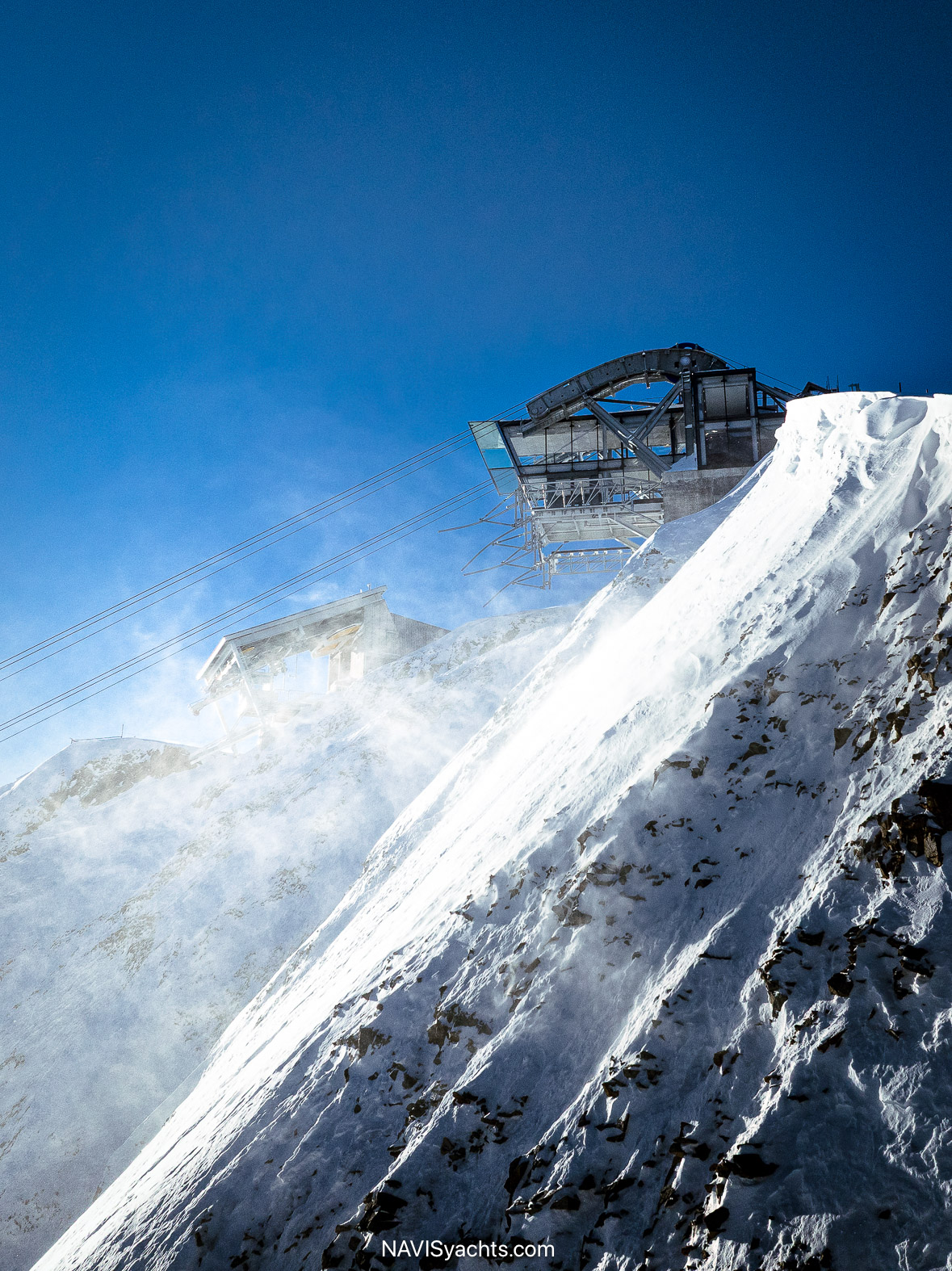
The two-story glass observatory sits at 11,166 feet. Walking guests can now board Explorer Gondola in Mountain Village, transfer to the Tram and reach the true summit without skis.
The structure includes a glass floor looking over Lone Peak’s fall line, while clear-weather views reach across more than ten mountain ranges, Yellowstone and the Tetons.
A summit once defined by the difficulty of descending from it has become part of the destination for people who may never make a ski turn.
That is a substantial change in what Big Sky offers.
The mountain allows very different ski days to happen on the same piece of geography.
Montana, Reconsidered
Another clue to the resort’s direction appears much farther down the mountain.
Chef Grant Achatz and The Alinea Group return this winter with M by The Alinea Group, operating from December 10, 2026 through April 3, 2027. It is the group’s only restaurant concept located outside a major city.
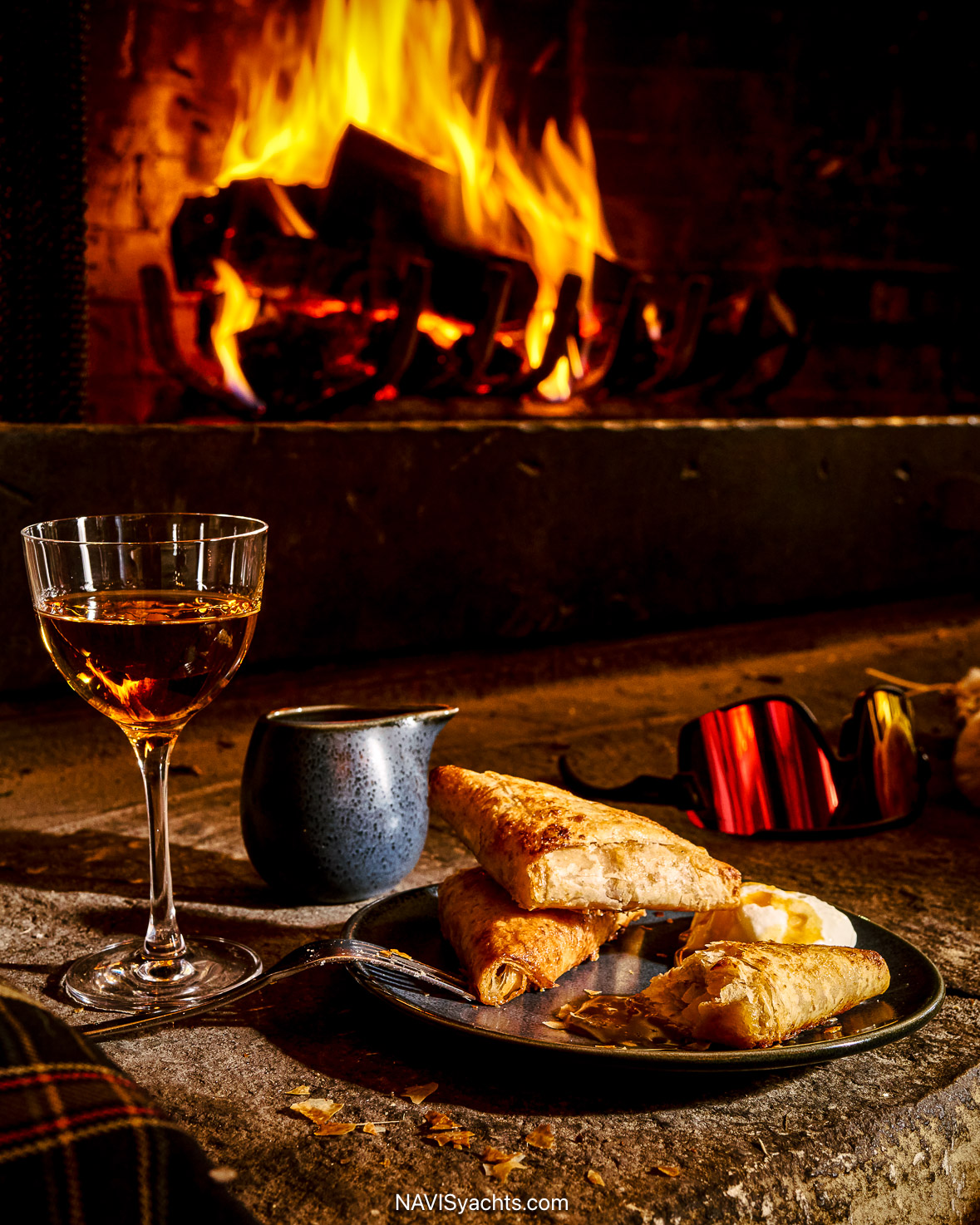
The premise is particularly interesting in Montana because Achatz’s cooking has begun borrowing directly from the surrounding landscape. Courses from the first season included a financier topped with Osetra caviar and served with spruce-tip-infused apple broth, while ponderosa pine appeared in an ice cream prepared using a charred log. New dishes for the second season are being developed from further exploration of the state.
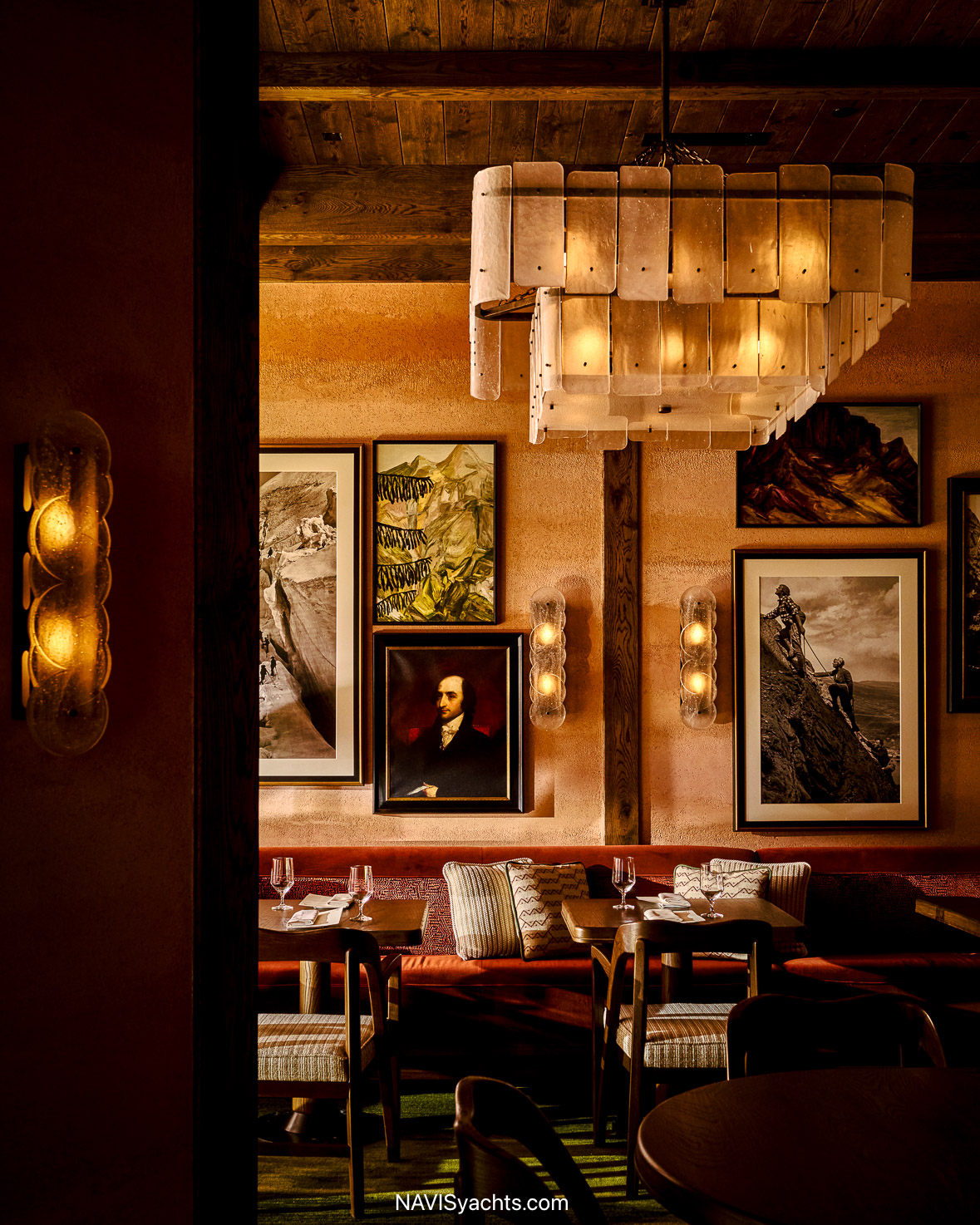
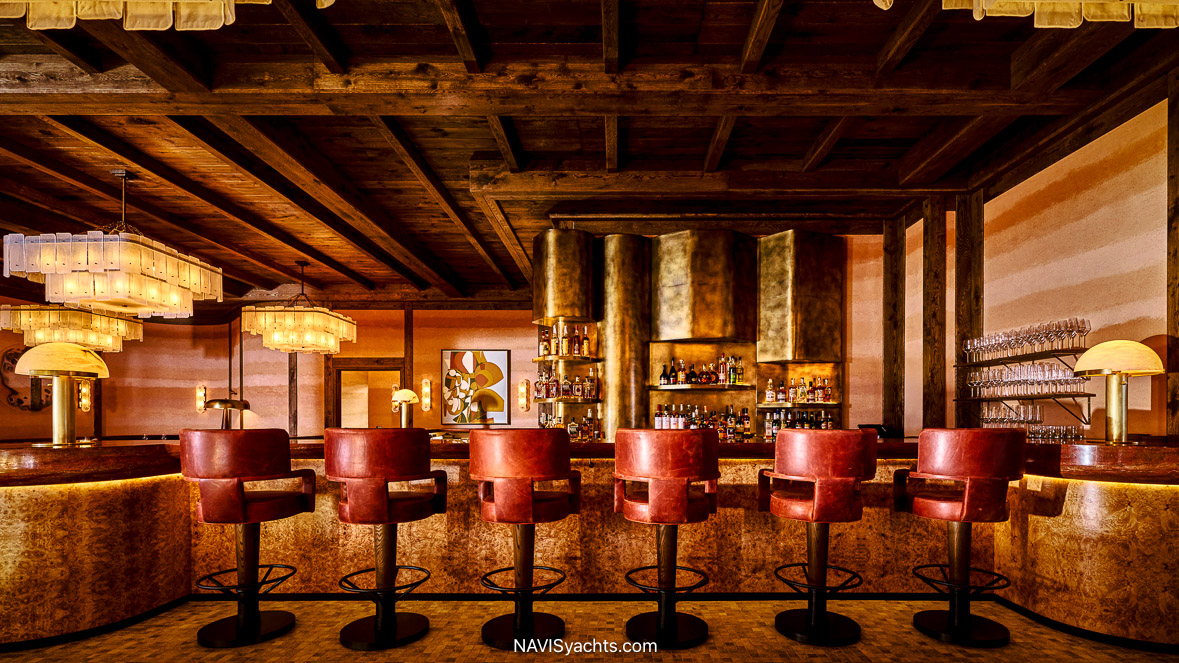
The room itself avoids transplanting a Chicago dining room into the Rockies. Fettle designed the space around a red travertine bar, restrained earth tones and locally sourced timber beams.
NAVIS has not dined there, so whether the experience lives up to its ambition remains a question for another visit. Its return is nevertheless significant. A restaurant of this kind choosing Big Sky for a second winter says something about the audience now gathering around Lone Mountain.
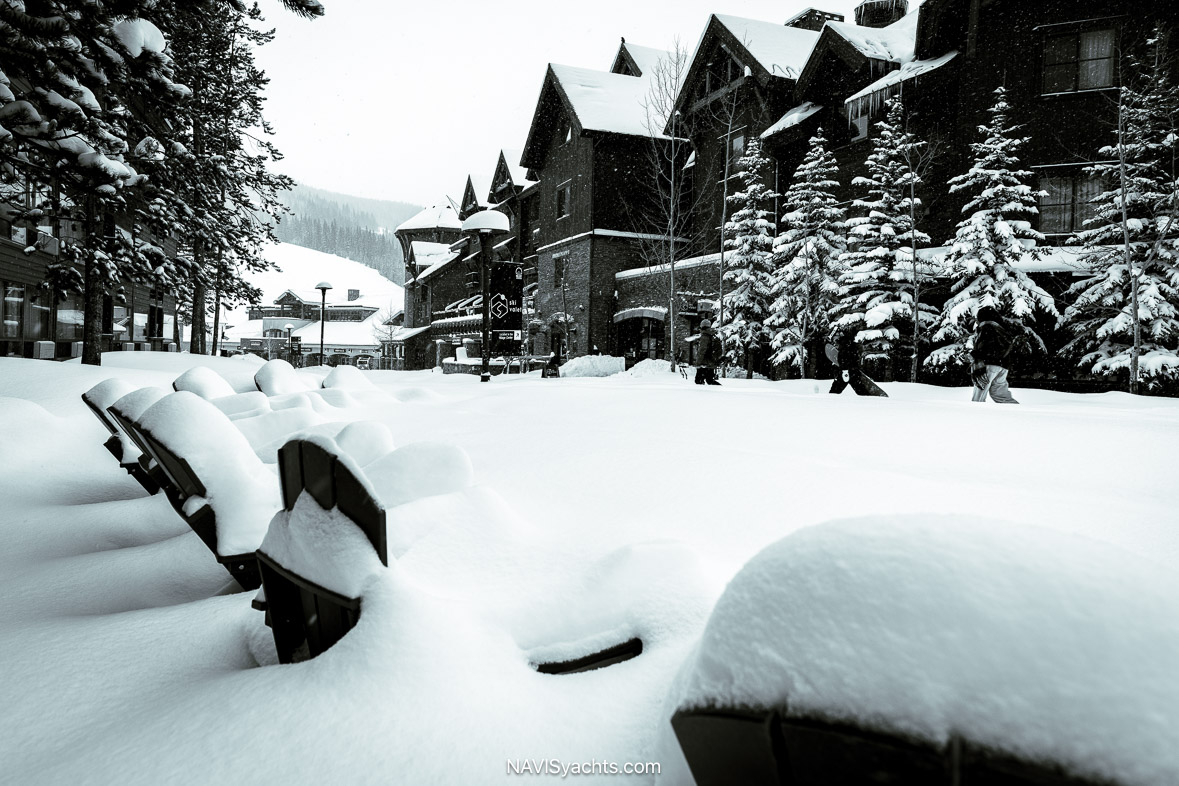
The resort is also bringing back Iglu, its snow-and-ice bar in the Bowl near the base of the Tram. For 2026–27 it will have a larger footprint, while a new staircase from Explorer Gondola makes it reachable on foot rather than only as part of a ski day.
Once again, the change is about access.
One Mountain, Several Big Skies
That growth requires a little precision.
Big Sky Resort is operated by Boyne Resorts and should not be confused with the private residential clubs that occupy other parts of the Lone Mountain landscape. Yellowstone Club remains a separate invitation-only private ski community. Spanish Peaks Mountain Club is likewise tied to private real estate ownership, while a private Moonlight Basin community continues to exist even though the former Moonlight Basin ski terrain became part of Big Sky Resort’s public network in 2013.
Together, these developments have made the wider Big Sky area one of the most closely watched luxury mountain markets in the United States. They have also altered a place that began with Huntley, four lifts and a rather audacious piece of Montana real estate.
The public resort at its center, however, still has to answer to the mountain.
Lone Peak is too large and too visible to become scenery for everything being built around it. Its upper terrain remains serious. Its weather still determines what opens. Its different faces can hold very different snow on the same morning.
And that may be the most persuasive reason to look at Big Sky now.
In 1973, the challenge was finding a way onto Lone Mountain. More than half a century later, Big Sky can move a visitor from Mountain Village to its 11,166-foot summit in roughly fifteen minutes, without requiring skis at all.
Getting there has changed almost beyond recognition.
The mountain waiting at the top has not.
Written by Pablo Ferrero - Photographed by Jackson Bland, Jonathan Stone & Justine Esslinger